
Hotel chairs usually squeak because parts of the chair move against each other under load. Loose wood joints, worn screw holes, failed adhesive, damaged glides, shifting metal hardware, and unstable frames can all create noise.
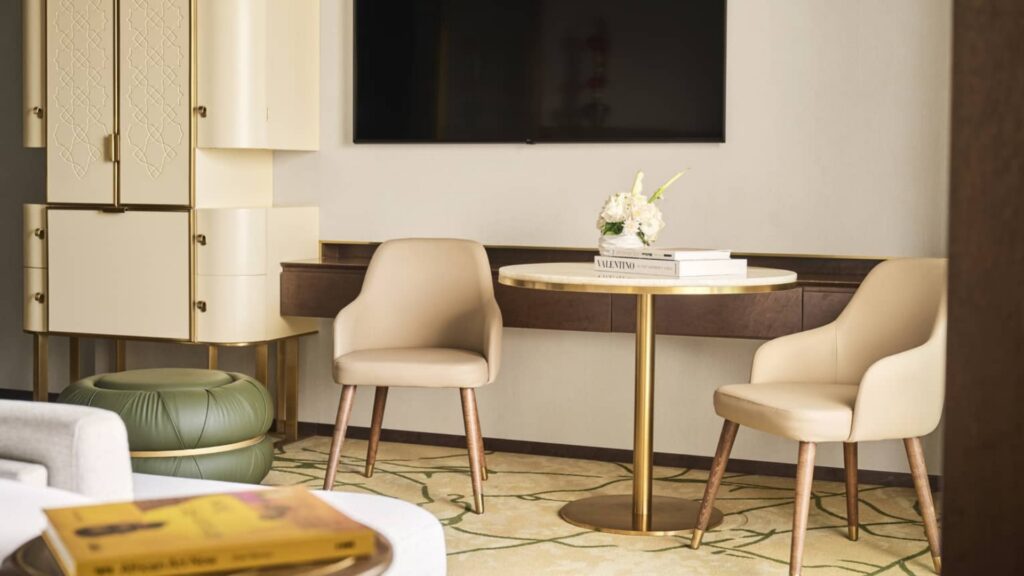
In busy restaurants, banquet halls, guestrooms and lobby areas, chair frames face repeated loading every day. Over time, small movements inside a joint can become audible. Therefore, a squeak is often an early maintenance signal rather than only a guest-comfort problem.
This guide explains why hotel chairs squeak, how to find the source, which frame details reduce noise and what procurement teams should specify before buying commercial seating.
Safety note: Remove any chair from service if it wobbles, has a cracked rail or leg, shows failed welds, exposes fasteners or has a loose structural joint. A qualified furniture technician should inspect unstable seating before guests use it again.
Key Takeaways
- Hotel chairs usually squeak when parts shift, rub or flex under weight.
- Loose frame joints often cause noise in wood chairs. However, loose glides, uneven floors, bolts, seat mechanisms and metal connections can also cause squeaks.
- Repeated guest use can reveal weaknesses in backrest joints, seat rails, leg joints, stretchers and fasteners.
- Wood changes size as its moisture content changes. Therefore, furniture makers should condition and store wood for the expected service environment.
- A properly designed joint uses more than one screw. Strong commercial chairs often combine accurate joinery, suitable adhesive, reinforcement and quality control.
- Retightening hardware may help when the fastener remains sound. In contrast, damaged wood joints may need professional repair, re-gluing, clamping or added reinforcement.
- Buyers should request clear frame-construction details, samples, test evidence, maintenance guidance and replacement-part availability before ordering commercial seating.
- ANSI/BIFMA X5.4 applies to public and lounge seating used in indoor spaces, including waiting, reception and visitor seating. It provides a common basis for evaluating safety, durability and performance of relevant seating products.
Why Do Hotel Chairs Squeak?
A chair squeaks when two surfaces move against each other under load.
For example, a guest may lean back in a restaurant chair. That movement can place force on the backrest, seat rails, joints, and fasteners. If one connection has become loose, the parts may shift slightly and create a squeak, creak, click or rattle.
The sound does not always come from the same location.
Sometimes the chair frame causes the noise. In other cases, floor glides, adjustable feet, bolts, metal brackets, seat springs or upholstery components create the sound.
As a result, maintenance teams should diagnose the chair before choosing a repair.
Common Sources of Chair Noise
| Possible Source | Typical Sound or Symptom | First Check |
|---|---|---|
| Backrest-to-seat connection | Squeak when a guest leans back | Flex the backrest while the chair is lifted slightly |
| Leg-to-seat rail joint | Creak during side-to-side movement | Apply gentle pressure to each chair leg |
| Stretcher joint | Creak when the chair twists or moves | Check frame squareness and stretcher movement |
| Loose screw or bolt | Click, rattle or repeated squeak | Inspect visible fasteners and check for movement |
| Worn glides or levelers | Noise only when the chair touches the floor | Lift the chair and inspect the feet |
| Metal frame connection | Metallic click or squeak | Inspect bolts, rivets, welds and joint alignment |
| Seat deck or upholstery | Noise when someone sits down | Test the chair while lifted and while loaded |
Diagnostic rule: Do not assume that a squeaky chair has a frame defect. First identify whether the sound comes from the frame, the seat, the fasteners or the floor-contact points.
Why Squeaks Often Appear After Years of Use
A new chair may feel solid because its joints fit tightly, fasteners hold firmly, and protective finishes remain intact.
However, commercial seating faces repeated movement. Guests sit down, lean back, pull chairs across floors, and shift weight during meals, meetings, or events.
Over time, this daily use can change how parts fit together.
For instance, a screw may loosen slightly. A wood joint may move as humidity changes. A glide may wear down. Meanwhile, a metal bolt may lose torque after repeated movement.
The chair may still look acceptable from a distance. Yet the noise can signal that one part has started to move more than intended.

Common Causes of Squeaking Over Time
- Repeated loading at high-stress joints.
- Loose screws, bolts or threaded inserts.
- Wood shrinkage or swelling caused by moisture change.
- Adhesive failure or poor adhesive coverage.
- Inaccurate joint fit during manufacturing.
- Worn glides or levelers.
- Uneven flooring.
- Loose stretchers.
- Frame distortion caused by dragging or impact.
- Seat-deck, spring or upholstery movement.
- Metal-on-metal contact.
- Corrosion in metal joints or fasteners.
Therefore, hotels should include chair inspections in preventive-maintenance plans. Early repairs are usually easier than full chair replacement.
How Chair Joints Affect Noise
A chair frame transfers a guest’s weight through the seat, rails, legs, backrest, and floor-contact points.
When a guest leans back, the connection between the back posts and the seat rails often experiences bending and twisting force. A weak or loose joint may move under that force.
Nevertheless, the joint type alone does not determine whether a chair will squeak. Joint geometry, wood species, adhesive, machining accuracy, reinforcement, moisture control and assembly quality also affect performance.
Common Commercial Chair Joint Types
| Joint Method | Typical Strength | Main Risk | Buyer Question |
|---|---|---|---|
| Mortise-and-tenon | Strong mechanical connection when accurately machined and bonded | Poor fit, weak adhesive coverage or poor grain orientation | What are the tenon dimensions, adhesive system and quality checks? |
| Dowelled joint | Repeatable factory construction when accurately drilled and glued | Misaligned holes, shallow engagement or poor adhesive use | How many dowels are used, and how deep do they engage? |
| Corner-block reinforcement | Adds support around seat-rail corners | Weak blocks, poor fastening or incorrect placement | Are corner blocks bonded and mechanically fixed where appropriate? |
| Screw-reinforced joint | Can support assembly and serviceability | Thread wear, splitting or reliance on screw friction alone | Does the screw reinforce the joint, or does it carry the main load? |
| Threaded insert or bracket | Allows some hardware replacement and adjustment | Loose insert, stripped thread or inaccessible hardware | Can staff inspect and replace the hardware without damaging the chair? |
| Welded metal frame | Can provide a continuous load path | Poor weld quality, loose brackets or fatigue around connection points | What welding, finishing and load-testing controls apply? |
Procurement rule: Do not specify “mortise-and-tenon only” without reviewing the full frame design. A durable chair depends on the complete load path, not one joinery phrase.
Wood Moisture and Frame Movement
Wood responds to moisture in the air.
As wood gains moisture, it can expand. As it loses moisture, it can shrink. The amount of movement depends on wood species, grain direction, part size, finish system, storage conditions, and the difference between factory conditions and the hotel environment.
Wood movement is usually greater across the grain than along the grain. Even a small change in moisture content can affect joint fit, especially in wide parts and cross-grain connections.
For this reason, a chair frame should be manufactured, stored, and shipped with the destination environment in mind.
What Buyers Should Ask About Wood Moisture
Instead of demanding one universal moisture number, buyers should ask the supplier to provide:
- Target moisture-content range.
- Wood species and frame material.
- Measurement method.
- Moisture-meter type.
- Sampling method.
- Factory storage conditions.
- Packaging approach.
- Container moisture-protection plan.
- Destination climate assumptions.
- Corrective-action process for out-of-range readings.
The USDA Forest Products Laboratory explains that proper drying, handling and storage help minimise moisture changes after wood enters service. It also notes that moisture control during transport and storage matters.
Material rule: Wood should be conditioned for the expected service environment. A universal moisture number cannot guarantee chair performance in every climate.
Why Screws Can Cause Chair Squeaks
Screws can play an important role in commercial chair construction. They can reinforce corner blocks, attach brackets, secure seat decks, and support removable components.
However, a screw is not always a reliable primary structural joint in wood.
A wood screw holds by gripping the surrounding fibers. Repeated loading can compress or wear those fibers. Consequently, the screw may lose holding strength, and the connection may move under load.
That movement can create a squeak or click.
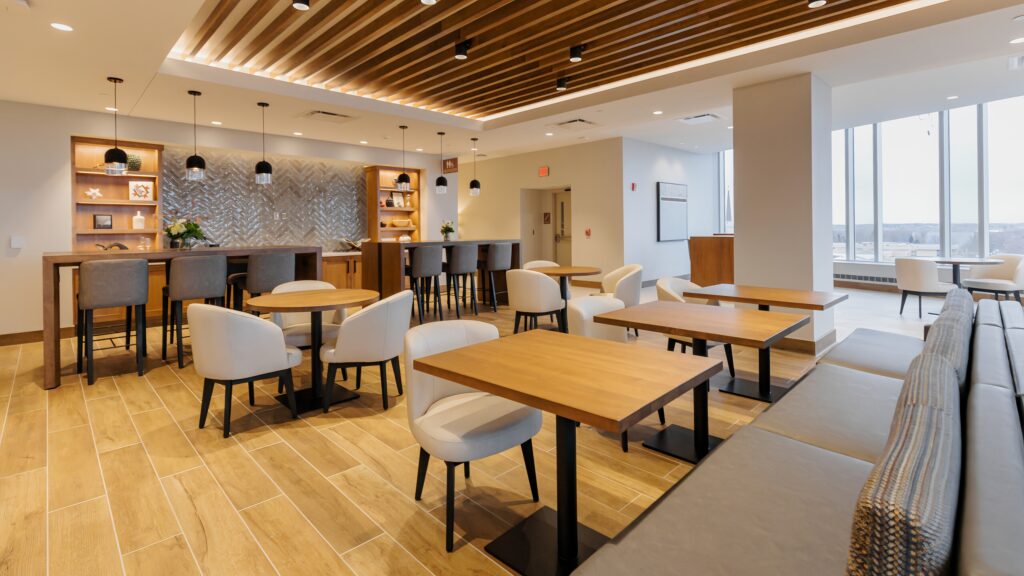
Signs of a Loose Screw Joint
Look for these signs:
- A chair leg moves when pushed sideways.
- A backrest shifts under pressure.
- The screw head stands proud of the surface.
- The wood around the screw hole looks crushed or split.
- The chair makes a clicking sound before it squeaks.
- Tightening the screw helps only briefly.
- The joint opens slightly when the chair is loaded.
A maintenance technician may restore a sound screw connection if the wood remains intact and the fastener still has adequate grip.
However, severely worn screw holes, split rails, or loose glued joints often need a more durable repair. That repair may involve disassembly, adhesive, clamping, dowels, inserts, or other reinforcement selected by a qualified technician.
Maintenance rule: Do not over-tighten a screw in damaged wood. Excess force can strip the hole, split the rail or make the repair more difficult.
How to Diagnose a Squeaky Hotel Chair
A simple test can help maintenance teams separate frame noise from floor-contact noise.
First, inspect the chair visually. Look for cracked rails, loose legs, damaged glides, exposed screws, broken welds and missing hardware.
Next, lift the chair slightly from the floor. Apply controlled pressure to the seat, backrest and arms.
If the chair squeaks while lifted, the noise may come from the frame, seat deck, joints or hardware.
If the sound appears only when the chair contacts the floor, inspect the glides, levelers and floor surface.

Basic Inspection Process
- Remove the chair from guest use if it wobbles or shows structural damage.
- Check the item code, age, location and maintenance history.
- Inspect all visible joints, rails, legs, stretchers and fasteners.
- Test the chair off the floor.
- Test each leg and backrest connection separately.
- Inspect glides, levelers and floor-contact points.
- Check bolts, brackets, rivets and adjustable parts.
- Record the issue with photographs and a short video.
- Repair a small sample group before launching a large repair programme.
- Test repaired chairs before returning them to service.
For example, if several chairs from the same restaurant zone develop the same sound, the hotel should review the full batch rather than repair only one chair at a time.
Repair or Replace?
Not every squeaking chair needs replacement.
A repair may be practical when the frame remains sound and the problem comes from loose fasteners, worn glides, small joint movement, or replaceable hardware.
On the other hand, replacement may be safer when the chair has cracked structural members, repeated joint failure, damaged welds, severe moisture damage or unavailable replacement parts.
When Repair May Work
Repair may be appropriate when:
- The frame has no visible cracks.
- The chair does not wobble after adjustment.
- The joints remain accessible.
- The upholstery remains usable.
- The supplier can provide spare parts.
- The repair cost is reasonable compared with replacement.
- The chair still meets the hotel’s design and operational needs.
When Replacement May Be Better
Replacement may be more suitable when:
- Rails, legs or back posts are split.
- Several joints have failed.
- The chair has repeated structural repairs.
- Welds or metal joints show damage.
- The seat frame has distorted.
- Parts are unavailable.
- The chair no longer matches the hotel design.
- The product cannot meet current safety or performance requirements.
A loose mortise-and-tenon joint can often be repaired by cleaning the joint, applying suitable adhesive and clamping it correctly. However, the best repair method depends on access, existing glue, wood damage, finish requirements and the chair’s structural design.
Safety first: A repair should restore structural stability, not simply stop the sound for a short period.
How to Specify Quieter Commercial Chairs
Hotel owners can reduce squeak risk before buying chairs.
The best time to ask about joint construction, moisture control and test evidence is during RFQ development and sample approval.
Chair Frame Specification Checklist
Include these points in the seating specification:
- Intended use: restaurant, banquet, guestroom, lobby, meeting room or outdoor space.
- Expected load and usage level.
- Frame material: solid wood, engineered wood, steel, aluminium or mixed construction.
- Joint method and reinforcement.
- Adhesive type and application control.
- Corner-block requirements where appropriate.
- Screw, bolt, insert and bracket details.
- Wood-conditioning and storage process.
- Glide type and floor compatibility.
- Upholstery frame and seat-deck construction.
- Product-specific durability evidence.
- Sample approval process.
- Spare-parts availability.
- Cleaning and maintenance requirements.
- Warranty scope.
- Repair and replacement procedure.
For relevant indoor public and lounge seating, buyers may request product-specific evidence against ANSI/BIFMA X5.4 or another suitable project standard. ANSI/BIFMA X5.4:2020 (R2025) covers public and lounge seating found in indoor spaces such as waiting, reception and visitor areas.
The report should identify the exact model, tested configuration, standard edition, laboratory, test date and test result. A report for one chair variation may not apply to every size, material, or frame option.

Preventive Maintenance for Hotel Chairs
Chair maintenance should begin before complaints become widespread.
Hotels can reduce repair costs by recording early issues, checking high-use seating and replacing worn glides before they damage floors or stress joints.
Recommended Maintenance Actions
- Inspect high-use chairs regularly.
- Check chair legs for movement.
- Tighten accessible hardware to the manufacturer’s instructions.
- Replace worn glides and levelers.
- Clean dirt from joints, feet and moving components.
- Record recurring issues by chair model and location.
- Remove unstable chairs from service immediately.
- Keep spare glides, bolts, inserts and approved touch-up materials.
- Train staff not to drag chairs across floors unnecessarily.
- Review seating condition before major events and busy seasons.
Meanwhile, banquet and restaurant teams should inspect chairs after large events. Repeated stacking, moving and impact can damage frames even when the upholstery still looks acceptable.
Hongye Commercial Seating Support
Hongye supports qualified hotel, restaurant and commercial seating projects with frame-construction discussions, material samples, seating drawings, quality-control planning and project-specific documentation where applicable.
The company states that it was founded in 1996 and has 30 years of commercial furniture manufacturing experience. Hongye also states that it operates a 300,000-square-metre production facility in Heshan, Jiangmen, Guangdong, China.
For qualified seating projects, Hongye can support:
- Chair frame and joint-construction discussions.
- Solid-wood, metal-frame and upholstered seating options.
- Product drawings and material schedules.
- Upholstery, foam, glide and hardware selection.
- Sample and mock-up coordination.
- Product-specific test-documentation discussions.
- Export packing and room-set labelling.
- Spare-parts planning.
- Warranty and maintenance-documentation review.
Before placing an order, buyers should verify the chair model, frame construction, joint method, materials, test evidence, intended use, maintenance guidance and warranty scope.

Hotel Furniture
Frequently Asked Questions
Why do hotel chairs squeak after a few years?
Hotel chairs can squeak when joints, fasteners, glides, frame components or seat parts move against each other under load.
Repeated use, loose screws, wood moisture changes, adhesive failure, worn glides and floor contact can all contribute to chair noise.
How can I tell whether a chair squeak comes from the frame or the floor?
Lift the chair slightly and flex the seat and backrest carefully.
If the chair squeaks while it is off the floor, the sound may come from the frame, joints, seat deck or fasteners. If the sound appears only when the chair touches the floor, inspect glides, levelers and floor-contact points.
Do not return an unstable chair to service until it has been inspected.
Can a loose chair joint be repaired?
Yes, in many cases.
If the frame remains structurally sound, a furniture technician may repair loose joints by disassembling the connection, cleaning the joint, applying suitable adhesive, clamping it and adding appropriate reinforcement.
However, cracked rails, split legs, major frame distortion and failed welds may require replacement instead.
Does humidity make hotel chairs squeak?
Humidity can contribute to chair noise because wood expands and shrinks as moisture levels change.
For coastal, tropical or highly seasonal locations, buyers should ask furniture suppliers about wood conditioning, storage, packaging, finish systems and maintenance requirements.
Do metal-frame hotel chairs squeak?
Yes. Metal chairs can squeak when bolts loosen, brackets shift, rivets wear, joints rub or frame parts move under load.
A technician should inspect metal connections, fasteners, weld areas and glides before applying any repair method.
What should I include in a commercial chair RFQ?
Specify the intended use, chair type, frame material, joint method, reinforcement, upholstery or finish, glide type, dimensions, weight capacity, product-specific test requirements, samples, warranty, maintenance guidance and spare-parts availability.
Does ANSI/BIFMA X5.4 apply to hotel chairs?
ANSI/BIFMA X5.4 applies to public and lounge seating used in indoor spaces. Depending on the chair type and project requirements, it may be relevant to lobby, reception, waiting-area, visitor and some public seating applications.
However, buyers should confirm whether it fits the exact chair category. Restaurant chairs, banquet chairs, bar stools, outdoor seating and guestroom chairs may require different standards or project-specific testing.
Specify the Frame Before the Squeak Starts
Hotel chairs often squeak because small movements develop at joints, fasteners, glides or frame connections.
The best solution begins before production. Buyers should review how the chair carries load, how the frame joints connect, how wood is conditioned, how hardware is reinforced and how the product will be tested and maintained.
In addition, hotels should inspect seating before small noises become structural failures. A documented maintenance plan, suitable spare parts and early repair can help keep commercial chairs stable, quiet and guest-ready.