Metal furniture frames can look similar when they leave the factory. However, their appearance can change greatly after years of cleaning, guest use, impact and movement.
For example, hotel chairs face shoe contact, luggage strikes, floor abrasion, and frequent wiping. Meanwhile, outdoor furniture may also face rain, sun, salt air and changing temperatures.
Therefore, buyers should not choose a frame finish only by colour, gloss or price. Instead, they should review the base metal, weld quality, surface preparation, finish system, cleaning routine and use environment.
This guide compares powder coat, liquid paint and anodized metal furniture frames. In addition, it explains how hotel owners and procurement teams can select a system that supports long-term use.
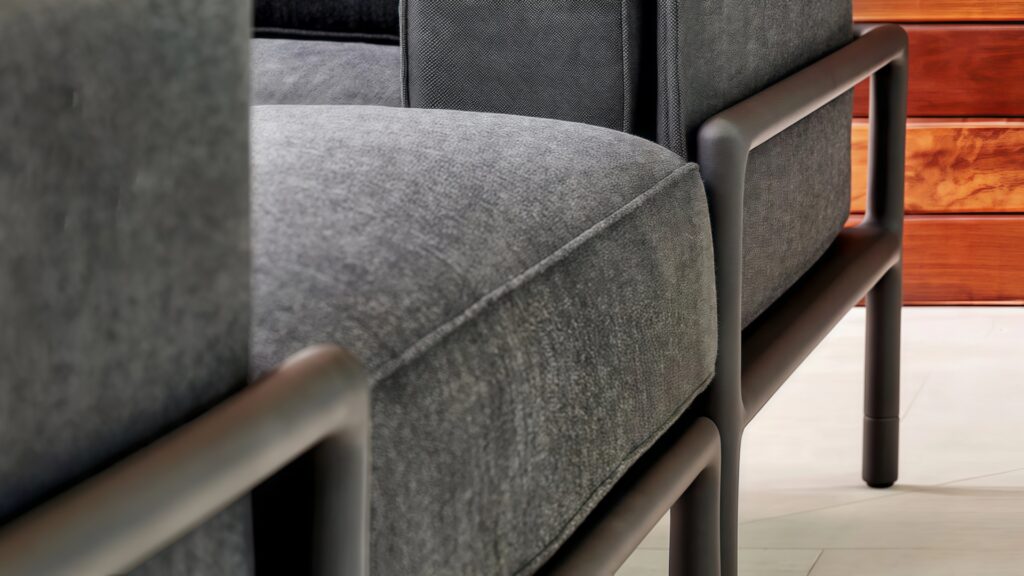
Quick answer: Powder coating often works well for indoor commercial steel frames. However, liquid paint can suit complex shapes, special colour matching and field repair. Anodizing applies only to aluminum, yet it creates an oxide layer within the metal surface rather than a separate paint film.
Key Takeaways
- First, powder coating, liquid paint and anodizing protect metal frames in different ways.
- Therefore, buyers should compare the full finish system instead of comparing colour samples alone.
- For many indoor steel chair and table frames, powder coating offers a practical factory-applied finish.
- However, liquid paint may work better for custom colours, smaller production runs, complex geometry and on-site repair.
- In contrast, anodizing applies only to aluminum and does not form a separate paint film.
- Even so, anodized aluminum can still scratch, stain, wear or corrode when exposed to unsuitable conditions.
- In addition, ASTM B117 salt-spray testing can help compare corrosion resistance under controlled conditions. However, test hours do not equal real-world years of furniture life.
- Finally, a strong specification should define the metal, pretreatment, finish, thickness, cleaning compatibility, testing method and warranty scope.
Why Furniture Frame Finishes Matter
A metal frame supports more than a chair seat or table top. It also affects appearance, cleaning, maintenance, corrosion resistance and replacement cost.
For instance, restaurant chairs may hit walls, tables and service carts. Likewise, hotel lobby furniture may face luggage, cleaning machines and repeated repositioning.
Over time, finish damage often starts at corners, welds, feet, fastener holes, underside surfaces and water-trap areas.
As a result, the finish must protect more than the visible front surface.
A suitable commercial furniture frame should consider:
- Base metal type.
- Metal thickness.
- Weld quality.
- Grinding and smoothing.
- Surface cleaning.
- Pretreatment.
- Coating or anodizing system.
- Film thickness.
- Curing or sealing.
- Frame shape.
- Drainage.
- Fasteners.
- Cleaning chemicals.
- Repair method.
- Warranty scope.Finish rule: A durable frame depends on the full finish system. No single coating name can guarantee long-term performance.
The Full Finish System
Before comparing powder coat, liquid paint and anodizing, buyers should understand the steps behind the visible colour.
First, the supplier selects a base metal. Steel, aluminum and stainless steel each have different corrosion risks and different finishing options.
Next, the factory cuts, bends, welds and grinds the frame. Poor welds, sharp corners, open tube ends and rough grinding can create weak points.
After fabrication, the factory cleans and prepares the metal. Then, it applies powder, liquid paint or an anodized finish.
Finally, the supplier checks coating thickness, curing, sealing, colour and surface quality.
Therefore, two frames with the same colour may perform very differently. Their results can change because of different metal grades, weld quality, pretreatment, film thickness or curing control.
| Finish System | Suitable Base Metal | Main Strength | Main Limitation | Typical Use |
|---|---|---|---|---|
| Powder coating | Steel, aluminum and selected metals | Durable factory-applied finish with many colour options | Field repair may not perfectly match the original finish | / |
| Liquid paint | Steel, aluminum and mixed-metal frames | Flexible colour matching and easier local touch-up | Performance depends on paint system and application control | / |
| Anodizing | Aluminum only | Oxide layer becomes part of the aluminum surface | Limited colour and repair options; not suitable for steel | / |
| Stainless steel finish | Stainless steel only | Natural corrosion resistance without paint | Welds, fingerprints and tea staining still need care | / |
Powder Coating for Commercial Furniture
Powder coating uses dry resin particles. The factory applies the powder to a prepared metal frame and then heats the frame to cure the finish.
As a result, the powder melts into a continuous film around the accessible parts of the frame.
Many commercial furniture factories use powder coating for chair legs, table bases, bed frames, storage legs, lounge bases and public-area furniture.
When Powder Coating Works Well
Powder coating can suit projects that need:
- Consistent colour across many furniture pieces.
- Matte, gloss, textured or special-effect finishes.
- Factory-controlled production.
- Durable indoor frame protection.
- Higher furniture quantities.
- Broad RAL colour options.
- Consistent frame appearance.
In addition, powder coating can help designers match chair frames with fabric, timber, stone, flooring or hotel brand colours.
However, the factory still needs to control the full coating process.
What Can Affect Powder-Coat Quality
Powder coating can perform well. Nevertheless, it can develop weak areas if the supplier does not control frame geometry, cleaning, pretreatment, film build and curing.
For example, tight recesses and deep corners may receive less powder because of electrostatic application effects. This issue is often called the Faraday-cage effect.
Likewise, sharp corners, poor weld grinding, trapped moisture and incomplete curing can reduce finish performance.
Therefore, buyers should ask more than “What colour is the powder?”
They should also ask:
- What base metal is used?
- How does the factory clean the metal?
- Which pretreatment process applies?
- What powder chemistry is proposed?
- What thickness range does the supplier target?
- How does the factory verify curing?
- How does the supplier inspect welds and corners?
- Which cleaners are approved?
- How will staff repair scratches?
- Does the frame allow water to drain?Powder-coat rule: A thick finish cannot fully protect poor fabrication, weak pretreatment or trapped water.
Liquid Paint for Commercial Furniture
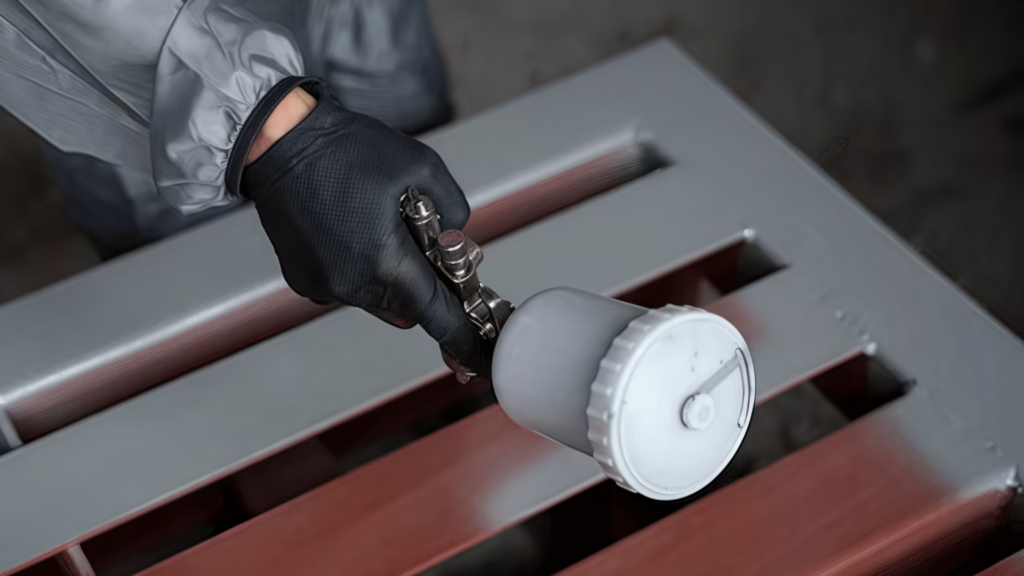
Liquid paint uses a fluid coating. Depending on the system, the factory may spray, brush or apply the paint through another controlled process.
Some buyers assume that liquid paint is always weaker than powder coating. However, that conclusion is too simple.
A suitable liquid coating can perform well when the paint chemistry, surface preparation, primer, film thickness and curing process match the intended use.
When Liquid Paint Can Help
Liquid paint may suit projects that need:
- Exact colour matching.
- Custom metallic effects.
- Multi-layer decorative finishes.
- Complex frame geometry.
- Small production batches.
- Retrofit work.
- On-site repair.
- Local repainting.
- Frames that cannot enter a curing oven.
For example, a hotel may need a metal finish that matches a custom brass, bronze or dark champagne sample.
In that case, liquid paint can provide useful colour flexibility.
Likewise, a repair team can usually apply liquid touch-up products more easily than factory powder coating.
However, touch-up paint may differ from the original surface in gloss, texture or thickness. Therefore, buyers should approve the repair method before the hotel receives the furniture.
What a Liquid-Paint Specification Should Include
A clear liquid-paint specification should identify:
- Base metal.
- Surface preparation method.
- Primer system.
- Topcoat chemistry.
- Colour reference.
- Gloss level.
- Texture.
- Number of coats.
- Target thickness.
- Cure method.
- Cleaning compatibility.
- Repair process.
- Approved touch-up product.
- Warranty limits.Liquid-paint rule: Do not accept a vague “spray-painted frame.” Instead, define the complete paint system and inspection plan.
Anodized Aluminum Furniture Frames
Anodizing is different from powder coating and liquid paint.
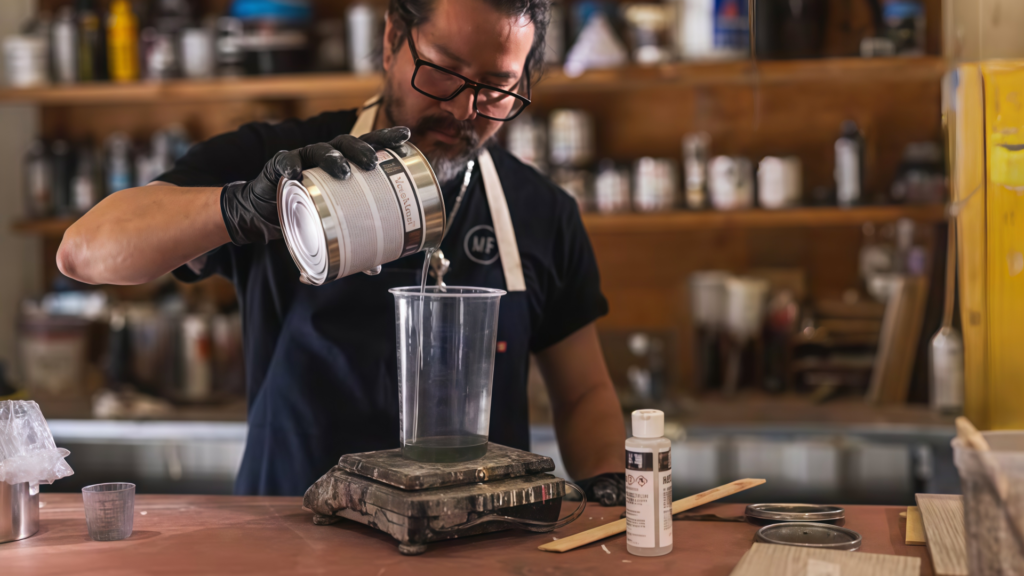
Instead of adding a separate film, anodizing grows an oxide layer on an aluminum surface through an electrochemical process.
Therefore, the finish becomes part of the aluminum rather than sitting on top of it like paint.
As a result, anodized aluminum does not delaminate in the same way as a powder or liquid paint film.
However, anodized surfaces can still scratch, wear, stain or corrode under unsuitable conditions.
When Anodizing Makes Sense
Anodizing may suit:
- Aluminum chair frames.
- Aluminum table bases.
- Outdoor aluminum furniture.
- Coastal hospitality projects.
- High-touch aluminum components.
- Furniture with a metallic appearance.
- Brushed, satin or natural metal finishes.
Because anodizing works only on aluminum, it cannot protect steel chair frames or steel table bases.
What Buyers Should Specify
Do not write only “anodized aluminum frame.”
Instead, specify:
- Aluminum alloy.
- Aluminum temper.
- Surface preparation.
- Finish type.
- Colour.
- Anodic-film thickness range.
- Sealing process.
- Visible finish sample.
- Cleaning instructions.
- Repair expectations.
- Measurement method.
- Project-specific test evidence.
For aluminum applications, ISO 2360 can support non-destructive thickness measurement where applicable. This method uses eddy current to measure non-conductive coatings on non-magnetic electrically conductive base metals.
Anodizing rule: Anodized aluminum does not peel like paint. However, it still needs the right alloy, sealing process, cleaning routine and installation environment.
Why Pretreatment Matters
Pretreatment prepares metal before powder or liquid coating.
First, the factory removes oil, dust, welding residue and other surface contaminants. Next, it may apply a conversion treatment that helps the coating bond to the metal.
After that, the factory rinses and dries the frame before applying the visible finish.
Because this process happens before coating, buyers often cannot see it in a finished chair or table base.
However, pretreatment can strongly affect coating adhesion and corrosion resistance.
Some projects restrict chromium-containing pretreatment systems. Therefore, many suppliers use chrome-free pretreatment alternatives.
Still, no single process suits every project.
The final result depends on:
- Base metal condition.
- Surface cleanliness.
- Weld quality.
- Conversion treatment.
- Rinse control.
- Drying.
- Coating chemistry.
- Coating thickness.
- Cure control.
- Frame shape.
- Exposure conditions.
- Cleaning practices.Pretreatment rule: Request process information before production. Then verify the proposed finish with approved samples and project-specific records.
ASTM B117 and Corrosion Testing
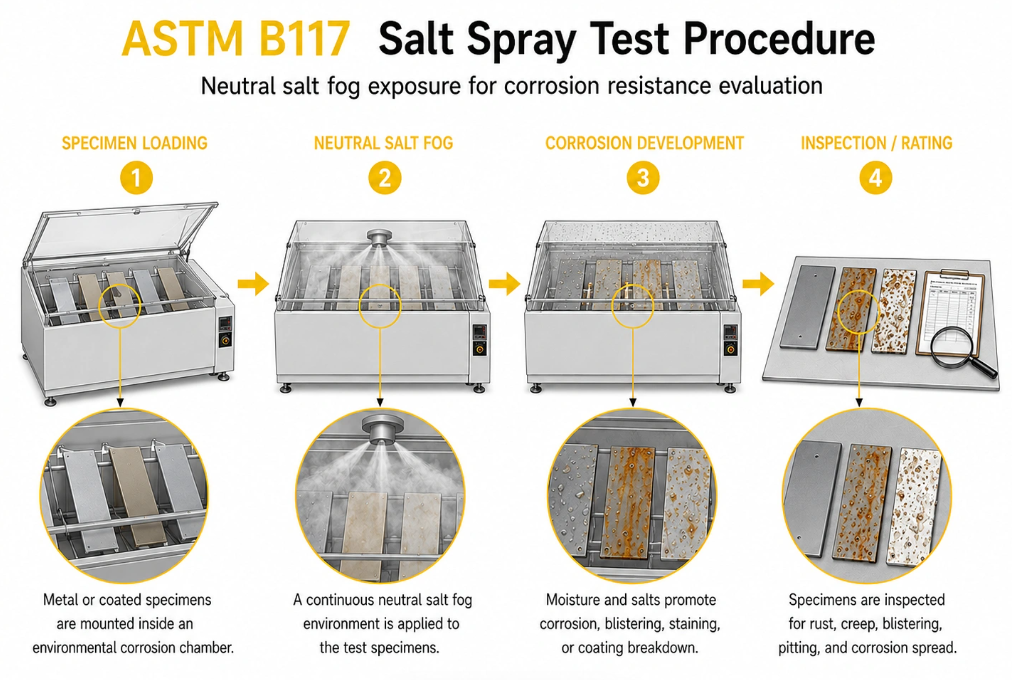
ASTM B117 is a standard practice for operating a salt-spray or salt-fog test apparatus.
The test places samples in a controlled salt-fog environment. As a result, laboratories can compare corrosion behaviour across selected materials and coating systems.
However, ASTM B117 does not tell buyers how many years furniture will last in a hotel, restaurant, terrace or coastal resort.
Likewise, it does not set one universal number of salt-spray hours for every frame, finish or environment.
Real-world performance also depends on UV, rain, wet-dry cycles, chloride exposure, cleaning chemicals, standing water, scratches, frame design and local climate.
Therefore, buyers should use ASTM B117 as controlled comparison evidence. They should not convert salt-spray hours directly into a furniture-life guarantee.
What to Check in a Test Report
| Report Item | Buyer Check |
|---|---|
| Base metal | Is the tested panel steel, aluminum or another metal? |
| Pretreatment | Which cleaning and conversion process did the sample receive? |
| Finish system | Which powder, paint or anodizing system was tested? |
| Thickness | What film or anodic-layer thickness did the sample have? |
| Panel type | Was the sample flat, bent, welded, cut or scratched? |
| Scribe condition | Did the laboratory cut through the finish before exposure? |
| Test duration | How long did the test run? |
| Evaluation | How did the report rate rust, blistering, corrosion or creepage? |
| Test method | Which standard edition and procedure did the laboratory use? |
| Report date | Does the report match the proposed finish system? |
Testing rule: A salt-spray report has value only when the tested metal, pretreatment and finish match the proposed furniture frame.
Choosing the Right Finish System
The best finish depends on the frame material and the operating environment.
For example, a hotel guestroom chair may need a different system from an outdoor poolside table.
Likewise, a healthcare chair frame may need stronger chemical compatibility than a restaurant chair.
| Application | Suitable Direction | Main Requirement |
|---|---|---|
| Indoor hotel chairs and tables | Powder coating or suitable liquid paint | Good pretreatment, consistent finish and cleaning compatibility |
| Banquet furniture | Powder coating often works well | Impact resistance, stacking durability and repair plan |
| Guestroom furniture bases | Powder or liquid finish | Colour coordination and scratch-repair plan |
| Outdoor aluminum furniture | Anodizing or outdoor-rated aluminum coating | Suitable pretreatment, drainage and exposure review |
| Coastal aluminum furniture | Anodizing or project-specific coated aluminum | Salt exposure, fasteners, drainage and maintenance plan |
| Coastal steel furniture | Project-specific corrosion-protection system | Metal grade, coating, drainage, weld finish and cleaning controls |
| Healthcare furniture frames | Powder, liquid or anodized aluminum system | Compatibility with facility cleaning products |
| Sculptural or custom frames | Liquid coating may offer useful flexibility | Colour matching, coverage and cure control |
| Retrofit furniture repair | Liquid repair system | Approved repair product and finish-match expectations |
For coastal or outdoor projects, the finish should form part of a larger corrosion strategy.
That strategy should include metal selection, drainage, weld finishing, tube-end treatment, fasteners, glides, cleaning products and maintenance planning.
How to Write a Frame Finish Specification
A good specification helps suppliers quote, sample, manufacture and inspect the correct finish system.
Steel Frame Powder-Coat Example
Steel frame: manufacture from the approved steel grade. Prepare the frame using the supplier’s documented cleaning and conversion-coating process. Apply the approved powder chemistry, colour and texture within the agreed dry-film-thickness range. Submit pretreatment records, thickness readings, curing controls, finish samples and project-specific corrosion evidence where required.
Liquid-Coated Frame Example
Metal frame: prepare the approved substrate using the supplier’s documented surface-preparation process. Apply the approved primer and liquid topcoat system to the approved colour, gloss, texture and thickness range. Submit finish samples, technical data, cleaning guidance, repair method and quality-control records before mass production.
Anodized Aluminum Frame Example
Aluminum frame: manufacture from the approved alloy and temper. Anodize to the approved finish, colour, thickness range and sealing process. Measure the anodic film using a method suitable for the aluminum substrate, such as ISO 2360 where applicable. Submit technical data, finish samples, thickness records and cleaning instructions before production.
Specification rule: Do not write only “durable powder coat” or “premium anodized finish.” Instead, define the metal, preparation, finish, thickness, appearance, test evidence, cleaning method and warranty.
Cleaning and Maintenance
Furniture finishes can fail faster when staff use incompatible cleaning products.
For example, strong acids, strong alkalis, chlorine-based cleaners, abrasive pads and solvent-heavy products can affect certain coatings, anodized finishes and metal surfaces.
Therefore, hotel teams should share their cleaning programme with the furniture supplier before furniture production begins.
Ask for written guidance about:
- Approved cleaners.
- Prohibited chemicals.
- Dilution instructions.
- Contact-time limits.
- Rinsing needs.
- Drying requirements.
- Touch-up process.
- Scratch repair.
- Corrosion-inspection points.
- Warranty exclusions.
In addition, maintenance teams should inspect welds, corners, glides, feet, underside surfaces and fasteners regularly.
If they repair minor damage early, they may reduce the risk of corrosion spreading beneath the finish.
Hongye Metal Furniture Frame Support
Hongye supports qualified hotel, workplace, healthcare and education furniture projects with metal-frame material discussions, finish samples, product drawings, coating documentation and project-specific records where applicable.
For commercial furniture projects, Hongye can support:
- Powder-coat discussions.
- Liquid-finish discussions.
- Anodized-aluminum options.
- Steel, aluminum and mixed-metal frame options.
- Colour, gloss and texture samples.
- Frame drawings and weld-detail review.
- Cleaning and maintenance guidance.
- Sample and mock-up coordination.
- Export packing and surface-protection planning.
- Spare-parts and touch-up planning.
- Warranty-scope discussions.
Founded in 1996, Hongye states that it has more than 30 years of commercial furniture manufacturing experience. In addition, the company states that it operates a 300,000-square-metre production facility in Heshan, Jiangmen, Guangdong, China.
Before production, buyers should verify the frame material, finish system, pretreatment, approved sample, thickness range, test evidence, cleaning guidance, repair method and warranty scope.
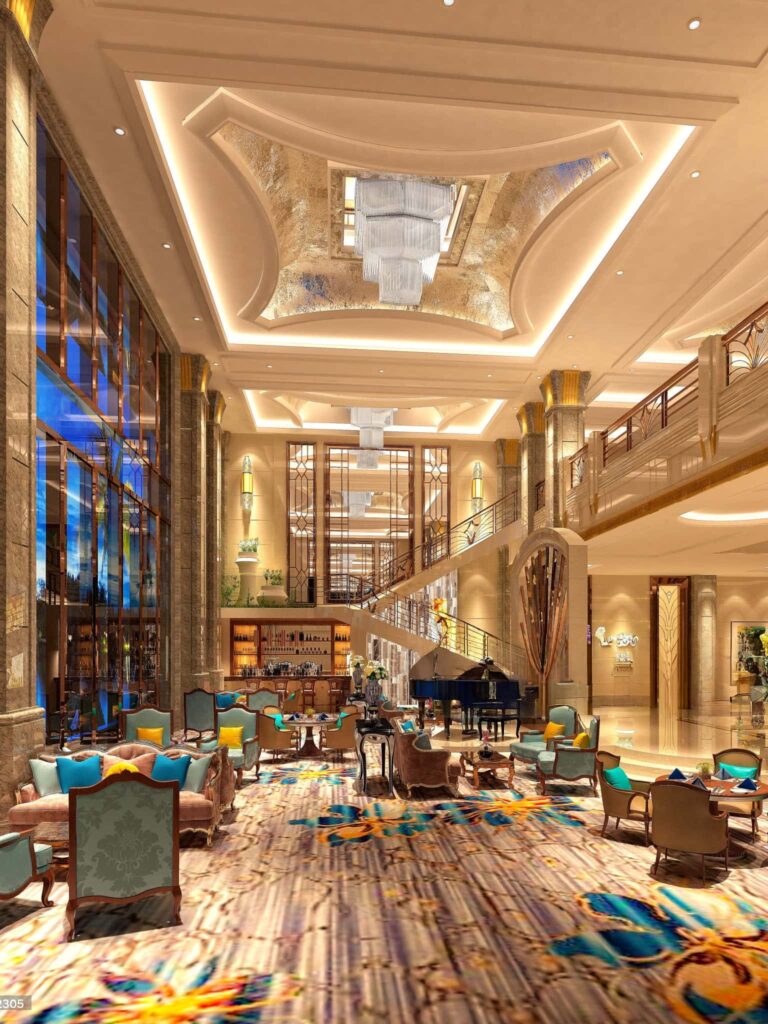
Hotel Furniture
Frequently Asked Questions
Is powder coating better than liquid paint for furniture frames?
Not always.
For many indoor commercial steel frames, powder coating can offer a durable and consistent factory-applied finish. However, liquid paint may work better for special colour matching, complex geometry, small production runs or field repair.
Therefore, buyers should choose the system that matches the metal, use environment, cleaning routine and repair plan.
Does ASTM B117 predict outdoor furniture life?
No.
ASTM B117 provides controlled salt-spray comparison data. However, it does not convert directly into real-world years of outdoor or coastal furniture life.
Actual performance also depends on UV, rain, wet-dry cycling, scratches, drainage, cleaning chemicals, fasteners and local climate.
Can anodized aluminum peel?
Anodizing creates an oxide layer that becomes part of the aluminum surface.
Therefore, it does not delaminate in the same way as paint or powder coating. However, anodized aluminum can still scratch, stain, wear or corrode in unsuitable conditions.
Can powder coating be repaired on site?
Yes, technicians can repair minor powder-coat damage with approved touch-up products.
However, field repairs may not match the factory finish in gloss, texture, thickness or long-term performance. Therefore, buyers should agree on repair procedures before furniture delivery.
What most affects metal furniture corrosion resistance?
No single factor decides the result.
Instead, corrosion resistance depends on the complete system: base metal, weld quality, cleaning, pretreatment, finish, thickness, cure or sealing, drainage, fasteners, maintenance and exposure conditions.
Does AAMA 2604 apply to steel furniture frames?
AAMA 2604 primarily addresses high-performance organic coatings on aluminum extrusions and panels.
Therefore, buyers should not use it as a universal powder-coat requirement for steel hotel furniture frames. Instead, they should specify a finish system and test plan that fit the actual metal and use environment.
Does ISO 2360 apply to powder-coated steel frames?
No, not as a general thickness-measurement method for steel frames.
ISO 2360 uses eddy current to measure non-conductive coatings on non-magnetic electrically conductive base metals. Therefore, it is particularly relevant to anodized aluminum and other suitable non-magnetic metal substrates.
For powder-coated steel, buyers should require a thickness-measurement method suitable for a magnetic steel substrate.
Which finish works best for coastal hotel furniture?
The right choice depends on the base metal and exposure zone.
For aluminum furniture, anodizing or an outdoor-rated coated aluminum system may be suitable. For steel furniture, buyers should specify a complete corrosion-protection plan that includes metal grade, pretreatment, coating, drainage, weld finishing, fasteners and maintenance.
Choose the Full Finish System
Powder coating, liquid paint and anodizing each have useful roles in commercial furniture.
For example, powder coating can suit many indoor steel frames. Liquid paint can offer flexibility for custom colours, complex shapes and repair work. Meanwhile, anodizing can provide a durable metallic finish for aluminum furniture.
However, no finish performs well by name alone.
Therefore, buyers should define the full system before ordering. Confirm the base metal, fabrication, welds, pretreatment, finish chemistry, thickness, curing or sealing, cleaning requirements, test evidence, repair method and warranty.
By comparing complete finish systems instead of only colour chips and salt-spray hours, hotel and commercial buyers can select furniture frames that better match their project conditions and maintenance plans.