
Introduction
Is your office showing signs of age? As businesses evolve, so do their workspace requirements. Office renovations represent a critical investment that directly impacts employee productivity, brand perception, and long-term operational efficiency. While hotel renovations follow a widely accepted 7-year cycle, commercial office environments require a more nuanced approach to furniture replacement and workspace optimization.
According to recent industry research, the average lifespan of office furniture ranges from 7 to 15 years, depending on quality, usage intensity, and maintenance practices. However, the decision to renovate extends far beyond simple time-based replacements. Understanding when and how to refresh your office environment requires a comprehensive analysis of multiple factors—from employee health and safety to cost efficiency and competitive positioning.
This guide explores the optimal timeline for office renovations, the strategic factors driving workspace updates, and how investing in modern furniture directly translates to measurable business outcomes. Whether you’re managing a startup workspace or a corporate headquarters, you’ll discover why strategic office renovation isn’t an expense—it’s an investment in organizational success.
Understanding the Office Furniture Lifecycle
The 7-10 Year Standard: Why It Matters
The commercial office furniture industry has established a widely recognized replacement timeline, though this differs notably from the hotel industry’s 7-year standard. Most commercial office furniture is designed for a 7-15 year lifespan, with specific components varying by type and usage intensity.
The science behind this timeline is rooted in both physical degradation and evolving workplace standards. Over time, office furniture undergoes measurable wear:
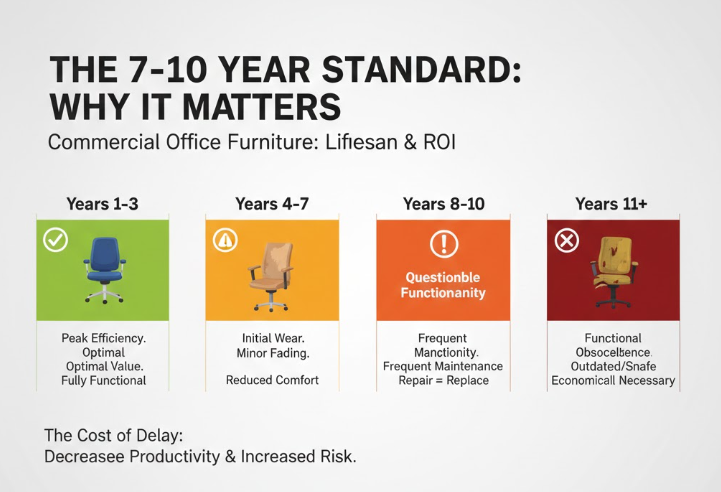
Years 1-3: Furniture performs at peak efficiency. Components remain fully functional, and aesthetic appearance is maintained. This is the “honeymoon period” where investments deliver optimal value.
Years 4-7: Initial signs of wear become apparent. Upholstery may show minor fading, mechanical components begin experiencing occasional friction, and cumulative use patterns reduce comfort levels. Yet the furniture remains functional for most applications.
Years 8-10: Functionality becomes questionable. Ergonomic components lose effectiveness, mechanical systems require frequent maintenance, and structural integrity may be compromised. Repair costs begin approaching replacement costs.
Years 11+: Most furniture reaches functional obsolescence. While it may technically “work,” it no longer meets modern ergonomic standards, safety regulations, or employee expectations. Replacement becomes economically necessary.
Specific Component Lifespans
Different office furniture components have distinct replacement timelines:
| Furniture Type | Standard Lifespan | Factors Affecting Longevity |
|---|---|---|
| Office Chairs | 5-10 years | Daily 40-hour use accelerates wear; ergonomic components degrade faster |
| Desks/Work Surfaces | 10-15 years | Depends on surface material (solid wood lasts longer than laminate) |
| Conference Tables | 10-20 years | Heavy-duty construction extends lifespan; conference rooms see moderate use |
| Filing Cabinets | 10-20 years | Metal construction offers superior longevity vs. wood alternatives |
| Reception Furniture | 5-10 years | High guest traffic and frequent cleaning accelerate degradation |
| Cubicles/Partitions | 8-12 years | Modular systems may be reconfigured, extending perceived lifespan |
Critical insight: Office chairs—often overlooked—represent the furniture category requiring most frequent replacement. With employees spending 40+ hours weekly seated, ergonomic chair components deteriorate faster than other furniture pieces, typically necessitating replacement every 7-10 years at most.
Key Factors Driving Office Renovation Decisions

1. Ergonomics and Employee Health
The most compelling reason to renovate office furniture is often overlooked by traditional cost-focused analysis: employee health and wellness directly impact organizational profitability.
Modern ergonomic research reveals compelling data:
Musculoskeletal Disorders and Productivity Loss: Approximately 25% of office workers experience work-related musculoskeletal pain. Poor ergonomic setups contribute to chronic back pain, neck strain, and repetitive stress injuries. Each case results in reduced productivity, increased absenteeism, and elevated healthcare costs for organizations.
Productivity Impact: Organizations that invest in ergonomic office furniture report 10-15% productivity improvements within the first six months. This uplift stems from:
- Reduced discomfort-related interruptions
- Enhanced concentration and mental focus
- Decreased fatigue-related errors
- Improved employee morale and engagement
Absenteeism Reduction: Ergonomic furniture investments directly reduce sick leave. A typical organization implementing comprehensive ergonomic furniture can expect 0.5-1 day reduction in annual sick leave per employee. For a 100-person office, this translates to 50-100 fewer sick days annually—approximately $7,500-$15,000 in recovered productivity value.
Employee Retention Benefits: Beyond immediate productivity gains, ergonomic investments signal organizational commitment to employee wellbeing. Companies prioritizing workplace comfort report 15-22% improvements in employee satisfaction scores and measurably lower turnover rates. The cost of recruiting and training replacement employees typically exceeds $75,000 per position, making even modest retention improvements highly valuable.
2. Design Obsolescence and Brand Perception
Office environments communicate powerful organizational messages before employees or clients speak a single word. An outdated, worn office workspace undermines brand authority and competitive positioning.
Evolution of Workplace Design (2010-2026):
- 2010s: Open-plan cubicle farms dominated
- 2015-2018: Collaborative spaces emerged
- 2019-2022: Hybrid and flexible furniture gained prominence
- 2023-2026: Tech-integrated workstations and wellness-focused design became standard
An office still furnished in 2015-era styles signals organizational stagnation to both employees and clients. In competitive industries—law, finance, consulting, technology—workspace aesthetics directly influence client perception and hiring success.
Client Impression Data: Organizations with modernized office environments report 12-18% higher client confidence in organizational capability compared to those with outdated furnishings. For professional services firms billing hourly rates, this confidence differential directly impacts engagement decisions and contract values.
Talent Acquisition Impact: When recruiting top talent, the office environment matters profoundly. Candidates touring modern, well-designed offices accept offers at 8-12% higher rates than those presented with outdated spaces. For knowledge-intensive organizations, this difference significantly impacts hiring success.
3. Technological Integration Requirements
Workplace technology has fundamentally transformed office furniture requirements. What was once purely furniture—a desk, chair, table—is now an integrated system requiring seamless technology integration.
Modern Office Expectations:
- USB charging ports integrated into desks and conference tables
- Wireless connectivity and cable management solutions
- Adjustable sit-stand desks supporting health-conscious work styles
- Video conferencing-optimized seating arrangements
- Power distribution systems managing complex electrical loads
Older furniture predates these technological requirements entirely. While retrofitting older furniture with technology is possible, integration typically appears clumsy and proves less effective than purpose-designed solutions.
Remote/Hybrid Work Considerations: The pandemic permanently altered workplace requirements. Modern office furniture must accommodate:
- Hot-desking arrangements (standardized, flexible seating)
- Meeting room configurations supporting video conferencing
- Focus spaces and quiet zones for concentration work
- Collaboration areas supporting both in-person and remote participation
Furniture from 2015 and earlier rarely accommodates these requirements effectively, making replacement necessary for organizations supporting hybrid work models.
4. Sustainability and Environmental Responsibility
Environmental consciousness has evolved from corporate nice-to-have to competitive necessity and regulatory requirement. Modern organizations face increasing stakeholder pressure—from investors, employees, and clients—to demonstrate environmental responsibility.
Sustainable Office Furniture Benefits:
| Sustainability Dimension | Business Benefit | Implementation |
|---|---|---|
| Recycled Materials | Reduced waste, improved brand perception | Use furniture made from reclaimed wood, recycled fabrics |
| Energy Efficiency | Lower operational costs | LED-integrated lighting in furniture; efficient HVAC integration |
| Extended Lifespan | Better ROI, reduced replacement frequency | High-quality construction supports 15+ year use |
| Take-Back Programs | Eliminated disposal costs | Manufacturers manage end-of-life furniture recycling |
Employee Expectations: Particularly among younger demographics (Gen Z and younger millennials), 72% prioritize working for environmentally responsible organizations. Sustainable office design directly impacts recruitment success and employee satisfaction for this critical talent segment.
Corporate ESG Commitments: Many organizations face regulatory or stakeholder pressure to achieve Environmental, Social, and Governance targets. Office renovation represents a visible, measurable ESG initiative demonstrating organizational commitment beyond mere statements.
5. Compliance with Health and Safety Standards
Office furniture and workspace design increasingly fall under health and safety regulations. Display Screen Equipment (DSE) Regulations and OSHA standards establish ergonomic requirements for computer-based work.
Regulatory Landscape:
- DSE Regulations: Mandate ergonomic assessment of computer workstations; non-compliant furniture creates organizational liability
- ADA Compliance: Accessible furniture and workspace design required for organizations with disabled employees
- Fire Safety Codes: Modern furniture must meet updated fire safety standards
- Accessibility Standards: Reception areas, meeting spaces, and collaborative zones must accommodate diverse mobility requirements
Organizations continuing to use furniture not meeting current standards face legal liability, potential citations, and reduced insurance coverage. Furniture replacement often becomes compliance necessity rather than discretionary choice.
Strategic Benefits of Timely Office Renovations
Enhanced Employee Satisfaction and Retention
The connection between office environment quality and employee satisfaction is well-documented. Organizations implementing comprehensive furniture renovations report:
- Satisfaction Score Improvements: 15-25 point increases on standard employee satisfaction surveys
- Retention Rate Improvements: 20-30% reduction in voluntary turnover following workplace renovations
- Engagement Metrics: 22-35% improvements in employee engagement scores
- Morale Benefits: Visible organizational investment in workspace quality significantly improves team morale
Operational Efficiency and Space Optimization
Modern furniture design incorporates space optimization principles that older furniture cannot match.
Modular Design Advantages:
- Reconfigurable layouts accommodate changing organizational structures
- Multi-functional furniture maximizes utility per square foot
- Flexible spaces support both focused work and collaboration
- Scalable systems enable cost-effective expansion
Space Utilization ROI: Organizations that renovate with space optimization focus report 15-25% improved space efficiency without requiring additional square footage. This effectively provides expansion capacity without corresponding real estate cost increases.
Productivity and Collaboration Enhancement
Modern office design directly supports productivity and collaboration:
Collaboration Spaces: Furniture designed for collaborative work—mobile tables, flexible seating, writable surfaces—measurably improves team dynamics and innovation.
Focused Work Zones: Dedicated quiet spaces with ergonomic furniture support deep work and concentration.
Meeting Spaces: Conference furniture optimized for technology integration and flexible configurations improves meeting effectiveness.
Research indicates organizations implementing modern office designs report 12-18% productivity improvements attributable directly to workspace optimization.
Competitive Differentiation
In talent-competitive markets, office environment quality becomes a differentiator:
- Organizations attract top talent more successfully
- Clients gain confidence in organizational stability
- Competitive positioning in industry strengthens
- Organizational culture strengthens through environmental investment
The True Cost of Office Renovation: Financial Analysis
Initial Investment Considerations
Comprehensive office renovation costs vary widely but follow general patterns:
Small Office (10-20 people):
- Furniture and design: $20,000-$40,000
- Installation and setup: $3,000-$5,000
- Potential downtime/relocation: $2,000-$5,000
- Total: $25,000-$50,000
Mid-Size Office (50-100 people):
- Furniture and design: $80,000-$150,000
- Installation and coordination: $10,000-$20,000
- Downtime and transition: $10,000-$25,000
- Total: $100,000-$195,000
Large Office (200+ people):
- Furniture and design: $250,000-$500,000+
- Professional installation and coordination: $30,000-$75,000
- Phased implementation and downtime: $50,000-$150,000
- Total: $330,000-$725,000+
Long-Term Cost-Benefit Analysis
While initial costs appear substantial, multi-year cost analysis demonstrates compelling returns:
| Factor | Annual Impact | 5-Year Impact |
|---|---|---|
| Productivity Gains (12% improvement) | $150,000-$250,000 | $750,000-$1,250,000 |
| Absenteeism Reduction | $25,000-$50,000 | $125,000-$250,000 |
| Turnover Reduction | $50,000-$100,000 | $250,000-$500,000 |
| Maintenance Cost Reduction | $10,000-$25,000 | $50,000-$125,000 |
| Total Annual Benefits | $235,000-$425,000 | $1,175,000-$2,125,000 |
Renovation Cost: $100,000-$200,000 (assuming mid-size office)
5-Year ROI: 580%-2,125% ⚠️
Even conservative benefit calculations demonstrate ROI between 100-400% within five years.
Avoiding the Cost Trap: Phased Renovation Strategy
Organizations with budget constraints can implement successful renovations through phased approaches:
Phase 1 (Months 1-3): Replace the highest-impact items
- Office chairs (greatest usage, highest ergonomic impact)
- Executive seating (client-facing, visible investment)
- Meeting table (high-visibility collaboration space)
Phase 2 (Months 4-8): Expand to supporting areas
- Reception and lobby furniture
- Collaborative workspace pieces
- Additional desk and workstation updates
Phase 3 (Months 9-12): Complete transition
- Filing and storage systems
- Public area furnishings
- Technology-integrated solutions
This phased approach allows:
- Budget distribution across multiple fiscal periods
- Operational continuity during transition
- Testing new furniture before full commitment
- Iterative design refinement based on employee feedback
Indicators That Your Office Needs Renovation
Beyond the standard timeline, specific signals suggest renovation necessity:
Visual and Functional Deterioration
- Visible wear on chairs: tears, stains, fading, sagging cushions
- Wobbly or unstable desks and tables
- Damaged or obsolete locking mechanisms
- Faded, outdated color palettes and finishes
- Missing or non-functional casters, drawers, or adjustment mechanisms
Employee Health and Safety Concerns
- Increasing complaints about back pain, neck strain, or discomfort
- Rising ergonomic-related workers’ compensation claims
- Elevated sick leave patterns correlating with workspace issues
- Employee surveys indicating dissatisfaction with workspace comfort
Performance and Engagement Decline
- Declining employee satisfaction scores
- Increased voluntary turnover, particularly among high performers
- Reduced collaboration or team engagement
- Difficulty attracting talent during recruitment
Client and Visitor Perception Issues
- Negative comments about office appearance from clients or partners
- Office environment noted as unfavorable in client feedback
- Competitive disadvantage during client facilities visits
- Reputational concerns regarding organizational stability
Technology Integration Gaps
- Insufficient charging stations or power access
- Poor video conferencing setup quality
- Cable management creating unprofessional appearance
- Inability to accommodate remote or hybrid work requirements
Best Practices for Office Renovation Planning
1. Comprehensive Assessment Phase
Before committing to renovation, conduct detailed assessment:
Furniture Audit:
- Document each furniture piece: type, condition, functionality
- Identify high-priority replacement areas
- Assess what can be refurbished vs. must be replaced
- Calculate current furniture depreciation and value
Employee Consultation:
- Survey employees regarding comfort, needs, and preferences
- Identify pain points through focus groups
- Gather design preferences and suggestions
- Incorporate employee input into planning
Space Analysis:
- Map current space utilization
- Identify underutilized or overcrowded areas
- Determine collaboration vs. focus work space requirements
- Assess technology infrastructure needs
2. Design and Planning
Work with professional design resources:
Hire Experienced Consultants:
- Interior design professionals understand modern office best practices
- Ergonomic specialists ensure health-focused design
- Project managers coordinate complex renovations
- Technology specialists integrate systems effectively
Create Detailed Plans:
- Document furniture specifications and layouts
- Establish clear timelines and milestones
- Define budget parameters and contingencies
- Plan phasing strategy minimizing operational disruption

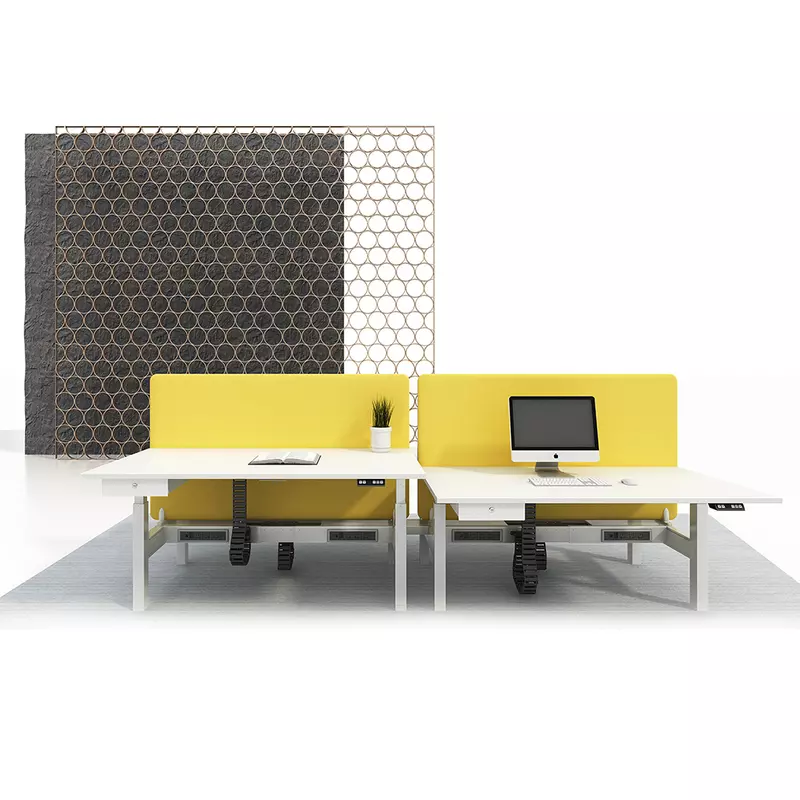
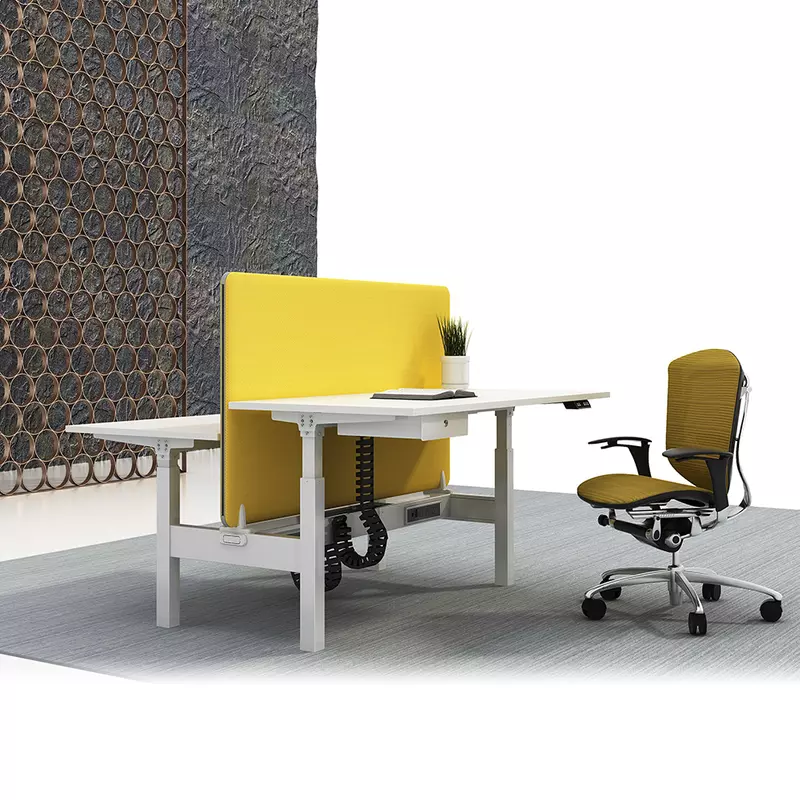
Hongye Height Adjustable Standing Desk for Office
3. Vendor Selection and Procurement
Make informed supplier choices:
Quality Evaluation:
- Prioritize durability and build quality over lowest cost
- Verify certifications and compliance standards
- Review warranty and support offerings
- Assess customization capabilities
Timeline Management:
- Coordinate delivery timing with installation schedules
- Plan for lead times and potential delays
- Schedule installation during low-activity periods
- Establish clear completion milestones
4. Implementation and Change Management
Execute renovation successfully:
Communication Strategy:
- Keep employees informed throughout process
- Explain renovation benefits and timeline
- Address concerns and gather feedback
- Celebrate completion and new environment
Phasing Approach:
- Minimize operational disruption through strategic phasing
- Maintain productivity during transition
- Test new systems and processes
- Allow adjustment period before full evaluation
Training and Adoption:
- Train employees on new furniture (ergonomic chairs, adjustable desks)
- Establish new workspace norms and culture
- Monitor adoption and gather feedback
- Make refinements based on actual usage
Conclusion: Strategic Office Renovation as Competitive Advantage
The question “When should your office be renovated?” has no single answer. While the 7-15 year furniture lifespan provides general guidance, strategic renovation decisions must consider employee health, competitive positioning, technological requirements, and long-term organizational objectives.
Key Takeaways:
- Standard Lifespan is a Starting Point: The 7-10 year office furniture replacement cycle represents average guidance; your specific timeline depends on usage, quality, and organizational needs.
- Health and Productivity Are Primary Drivers: The most compelling renovation justification is employee wellness and productivity improvement, delivering ROI of 100-400% within five years.
- Modern Design is Business-Critical: In competitive talent markets, office environment quality directly impacts recruitment success, client confidence, and competitive positioning.
- Phased Approaches Enable Success: Organizations can implement effective renovations through phased approaches distributing investment across multiple periods.
- Long-Term Thinking Drives Success: Viewing renovation as investment rather than expense fundamentally changes decision-making, often resulting in higher-quality outcomes and superior returns.
The office environment directly shapes employee experience, organizational culture, and competitive position. By understanding when and how to renovate strategically, organizations create workspaces that attract talent, inspire productivity, and deliver measurable business value for years to come.