
A turnkey furniture solution means one supplier takes responsibility for everything between an empty shell and a space that is ready for occupants. In practical terms, that includes the entire chain: site survey, specification writing, shop drawings, sample approval, production, quality control, export packing, ocean freight, customs clearance, on‑site delivery, installation, punch‑list rectification, and final handover. For developers and procurement managers, a turnkey furniture solution is the closest thing to a “turn‑the‑key and move in” interior fit‑out model.
Over the past decade, we have delivered more than 120 turnkey projects across the Middle East, Southeast Asia, and Africa, ranging from 50‑room boutique hotels to 5,000‑workstation office towers. Over that time, one pattern has been very clear: projects that define the scope correctly before production starts usually finish on time and on budget. In contrast, projects that treat a turnkey furniture solution as “just ordering furniture” tend to run into overruns and disputes at the installation stage.
Because of these recurring patterns, this guide explains how a properly structured turnkey furniture solution works, step by step. It also highlights where projects typically go off‑track so that you can avoid the most common problems in your own turnkey interior fit‑out.
What This Turnkey Furniture Guide Covers
Before we dive into tables and timelines, it helps to see the full picture. This turnkey furniture solution guide for developers and facility owners covers:
- What turnkey furniture actually includes and how responsibilities are divided across phases.
- A realistic eight‑phase turnkey interior fit‑out timeline from site survey to handover.
- How FF&E turnkey solution China projects combine cost savings with project management.
- Quality control, logistics, and installation practices that keep projects on schedule.
- How Hongye structures one‑stop furniture projects for hotels, offices, and healthcare.
With these pieces in mind, you can plan a turnkey furniture solution proactively instead of reacting to delays and defects.
What “Turnkey Furniture” Actually Covers
Every turnkey furniture solution can be broken into eight phases. Together they form a one‑stop furniture project that links design intent, FF&E specification, and on‑site installation.
| Phase | Inclusions | Typical Duration |
|---|---|---|
| 1. Site Survey & Measurement | Site visit or detailed drawings, dimension verification, MEP coordination | 5–10 days |
| 2. Specification & Shop Drawings | FF&E schedule, material specifications, detailed shop drawings | 10–15 days |
| 3. Sample Approval | Physical samples for fabrics, finishes and key dimensions | 7–14 days |
| 4. Production | Manufacturing, in-process QC, pre-shipment inspection | 30–50 days |
| 5. Export Packing | Protective packing for ocean freight, container loading supervision | 3–5 days |
| 6. Logistics & Customs | Ocean freight, customs clearance, drayage to site | 20–35 days |
| 7. On‑Site Installation | Delivery scheduling, room‑by‑room installation, debris removal | 10–20 days (staggered) |
| 8. Punch List & Handover | Defect rectification, as‑built documentation, warranty handover | 7–14 days |
Overall, the total typical duration is 90–150 days from site survey to final handover, depending on project size and logistics route. For developers who want a single FF&E turnkey solution from a China provider, understanding this full cycle is essential before signing any contract.
Phase 1: Site Survey — The Foundation
In any turnkey furniture solution, a project lives or dies on the quality of the site survey. If the drawings do not match real site conditions, furniture may not fit through doorways, around corners, or under ceiling beams. Therefore, the first phase of any turnkey interior fit‑out should focus on measurement and coordination.
| Survey Element | Why It Matters | Common Omission |
|---|---|---|
| Doorway clearances | Minimum width for fully assembled furniture | Not measuring door swings |
| Elevator dimensions | A freight elevator may be smaller than passenger | Assuming the freight elevator fits all |
| Ceiling heights | Affects tall headboards and wardrobes | Ignoring drop ceilings vs real height |
| Column / beam projections | Controls furniture placement around structural elements | Drawing furniture without verifying columns |
| MEP penetrations | Sprinklers and conduits behind furniture | Not coordinating with MEP drawings |
| Floor finish levels | Different finishes affect furniture leveling. | Ignoring floor finish transitions |
In practice, practical advice is to insist on a site visit by the turnkey furniture solution provider before finalizing specifications. If an overseas visit is not possible, require at least 10 photos per room type, full MEP drawings, and architectural layouts with dimensions. A supplier willing to work from old drawings alone, without asking questions, represents a clear risk in any one‑stop furniture project.
Phase 2: Specification — Getting It in Writing
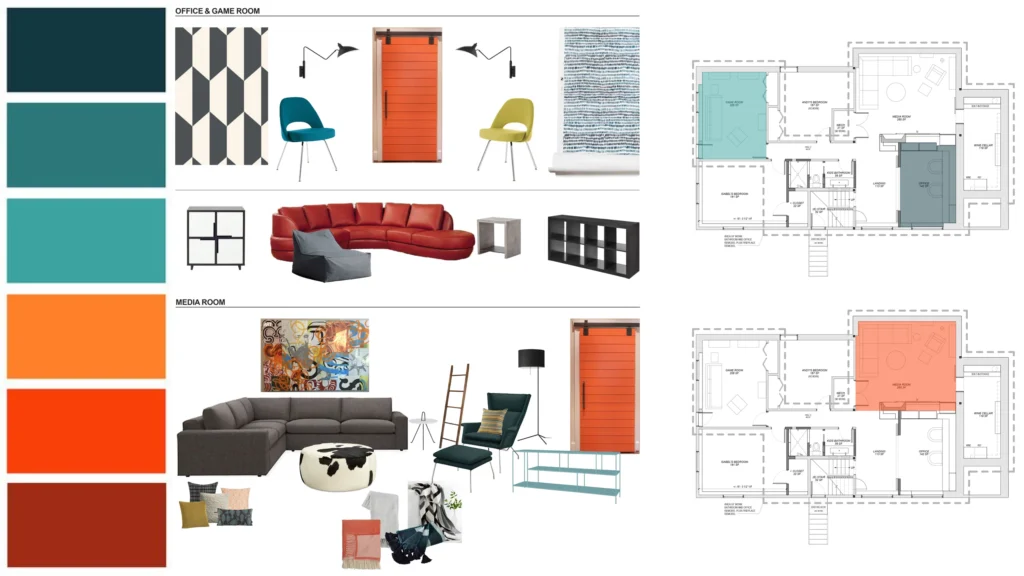
Next, the FF&E specification schedule effectively becomes the contract. In any turnkey interior fit‑out, vague specifications create disputes later during installation, especially when multiple stakeholders are involved.
| Specification Field | What to Include | Consequence of Omitting |
|---|---|---|
| Dimensions (W×D×H) | Exact millimetres or inches | “Standard” sizes differ by supplier |
| Material specs | MDF thickness, steel gauge, fabric brand/model | Supplier substitutes lower grades |
| Finish specs | RAL/Pantone colour codes, texture samples | Colour mismatch across rooms |
| Hardware specs | Hinge brand, slide brand, weight ratings | Failures within 12 months |
| Packing specs | Carton dimensions, protective materials | Damage in transit |
| Warranty terms | Duration per component: what is covered | Disputes when foam collapses at month 18 |
However, a major red flag is a supplier who says “our standard specification is fine” without reviewing your project’s specific requirements. Every project has unique constraints, from seismic codes to brand standards, and the specification must capture them.
Phase 3: Production—Where QC Either Happens or Doesn’t
During production, a turnkey furniture solution must therefore align fabrication schedules with the overall construction timeline. Furniture that arrives three months before handover risks damage in storage; furniture that arrives one week after handover delays opening and revenue.
| Production Milestone | QC Checkpoint | Verification Method |
|---|---|---|
| Steel frame welding | Dimensional accuracy, weld integrity | Factory visit or video call |
| Panel cutting & edging | Edge quality, dimensional tolerance | Third‑party inspection (SGS/Intertek) |
| Upholstery framing | Foam density and frame stability | Foam density test report |
| Final assembly | Functional testing (drawers, doors, recliners) | Pre‑shipment inspection |
| Protective packing | Carton strength, drop‑test performance | ISTA 1A or 3A test report |
For example, one simple key insight is to request a detailed production schedule plus photos at each milestone. A turnkey furniture solution provider who cannot supply production photos is unlikely to be tracking quality systematically.
Phase 4: Logistics — Where Most Delays Occur

In many FF&E turnkey solution China projects, logistics is where schedules most often slip. Typically, ocean freight times vary by lane:
- China to the Middle East is approximately 18–25 days port‑to‑port.
- China to Southeast Asia is approximately 10–18 days port‑to‑port.
- China to East Africa is approximately 25–35 days port‑to‑port.
You should add 7–14 days for customs clearance and drayage to the site.
| Logistics Risk | Mitigation |
|---|---|
| Container offloading delays at destination | Preclear customs and book drayage before the vessel berths |
| Furniture arriving before storage is ready | Coordinate with construction schedule; secure climate‑controlled storage if needed |
| Damage in transit | Request ISTA 1A or 3A packing tests; supervise container loading |
| Customs rejecting materials (missing fire certificates) | Confirm destination requirements before production begins |
To avoid bottlenecks, practical advice is to stagger shipments for projects over ten containers. Shipping all furniture in one month creates a storage and installation bottleneck. Instead, spreading shipments over two to three months aligns better with installation capacity and real site conditions.
Phase 5: Installation — The Most Underestimated Phase
Similarly, many clients underestimate the installation workload in a turnkey furniture solution. Yet this is the phase where your project becomes visibly complete.
Typical durations:
- Installation for a 200‑room hotel: 15–20 days with a six‑person team.
- Installation for a 1,000‑workstation office: 20–30 days with staggered floor‑by‑floor work.
| Installation Factor | Typical Duration / Practice | Risk if Omitted |
|---|---|---|
| Site access coordination | 2–3 days for permits and passes | The installation team sits idle |
| Debris removal | Daily removal required | Site becomes unsafe; work stoppage |
| Room‑by‑room QA | 1–2 days after installation | Punch list items found by owner later |
| Protection of furniture | Use plastic or stretch wrap | Damage from other trades on site |
On the other hand, a clear red flag is a supplier quoting five days for a 200‑room hotel installation. Realistic turnkey interior fit‑out schedules require at least 15 days with proper QA, plus coordination with other trades such as painting and cleaning.
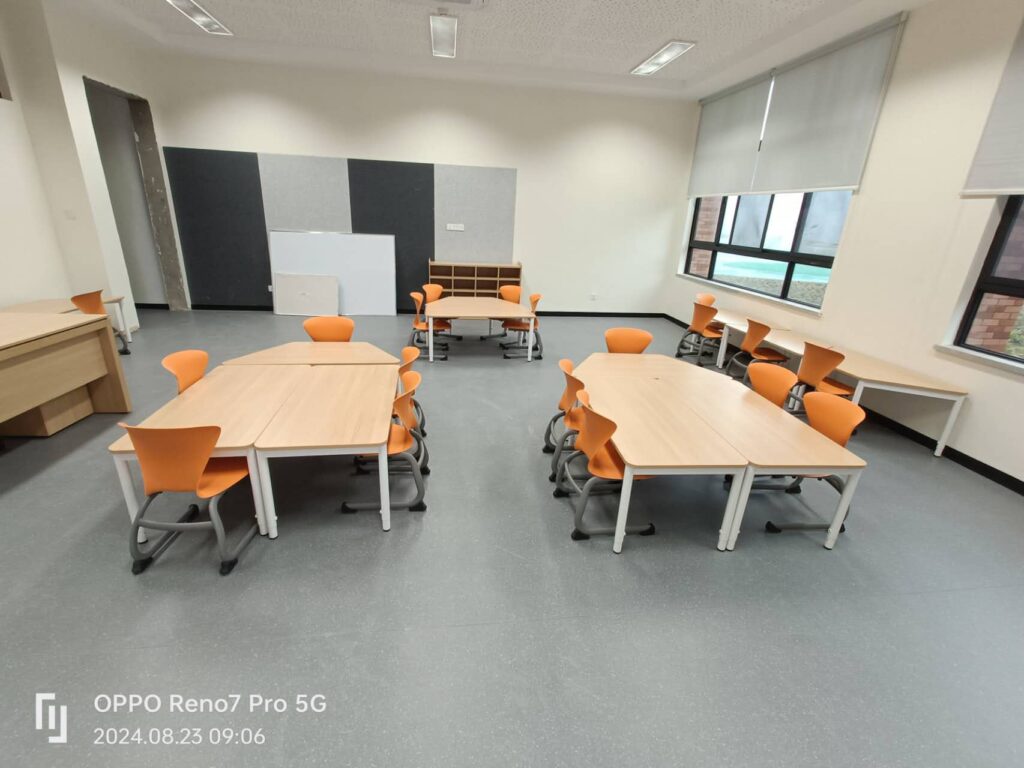
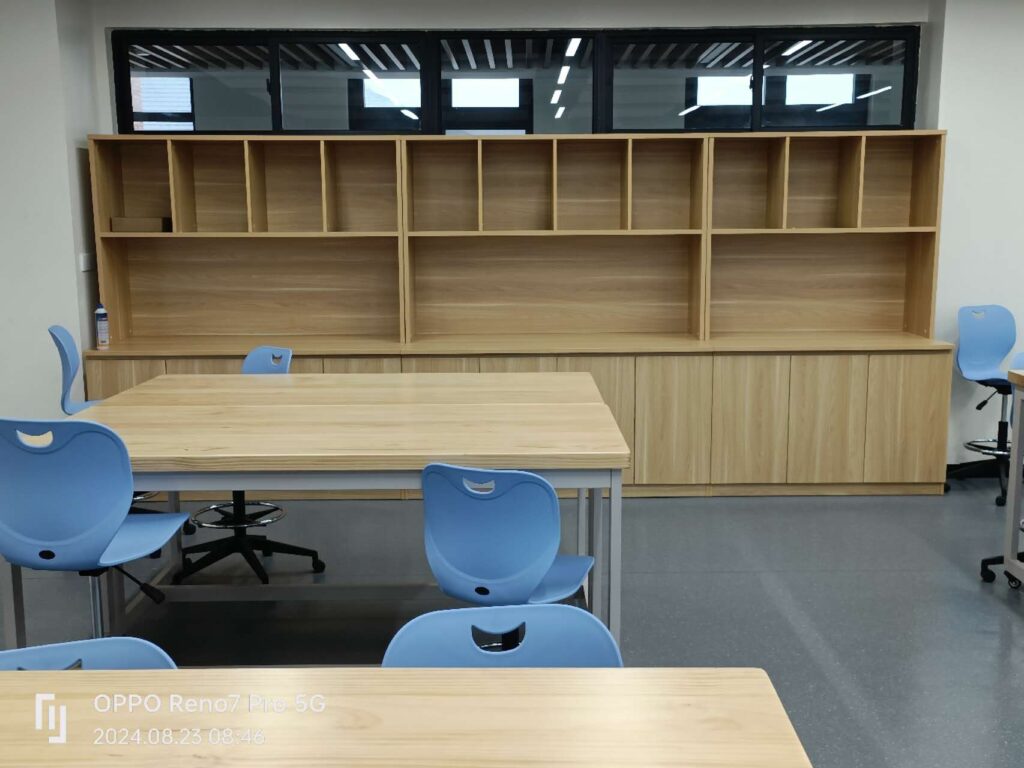
Hongye’s installation team
Phase 6: Handover — Documenting What You Received
Finally, the handover package closes the loop on your turnkey furniture solution. Without proper documentation, future maintenance and replacements become guesswork.
| Document | Purpose |
|---|---|
| As‑built furniture schedule | Records what was actually installed vs. specification |
| Warranty certificates | Defines warranty terms per component |
| Care & maintenance guide | Explains cleaning methods and what to avoid |
| Replacement parts list | Lists part numbers and lead times for future orders |
| Contact information | Provides project manager and after‑sales contacts |
Finally, practical advice is to insist on a 24‑hour punch‑list response commitment in your turnkey contract. Defects discovered at handover should be addressed within 24–48 hours, not “within two weeks.”
Cost Structure of a Turnkey Furniture Solution
From a budgeting perspective, understanding cost structure helps you evaluate whether a turnkey quote is realistic. In most projects, a one‑stop furniture project budget looks like this:
| Cost Component | Typical Share | Notes |
|---|---|---|
| Furniture FOB price | 60–70% | Varies by specification level |
| Protective packing | 3–5% | Critical for ocean freight |
| Ocean freight | 8–12% | Depends on destination and container count |
| Customs duties | 0–15% | Depends on destination country |
| On‑site installation | 5–10% | Varies by room count and site conditions |
| Project management | 3–5% | Includes site survey, coordination, QC |
| Contingency | ~5% | Recommended for all turnkey projects |
How to Interpret Turnkey Pricing
Consequently, a turnkey quote that is 20% or more below market usually omits one of these components. Most often, missing items are protective packing (leading to damage claims) or project management (leading to coordination failures). When comparing turnkey interior fit‑out offers, always ask for a cost breakdown by component.
How Hongye Delivers Turnkey Projects
Hongye Furniture Group operates three production facilities in Guangdong with in-house steel, panel, upholstery, and assembly lines. Since 2008, we have delivered more than 120 turnkey furniture solution projects across 15+ countries, covering hotels, offices, and healthcare facilities.
Key points:
- Dedicated project managers for orders over 50 rooms or workstations.
- Integrated FF&E turnkey solution China model, from engineering to onsite installation.
- 97.3% on-time delivery rate in 2025, measured at installation start date rather than at port departure.
The on‑time rate matters most at the installation phase. If furniture does not arrive when the installation team is scheduled, the cost of delay is measurable in labor, financing, and lost revenue.
For a detailed comparison of how Hongye positions itself versus other manufacturers, you can also read our Top 10 Office Furniture Brands 2026: A Procurement Manager’s Comparison Guide.
FAQ: Turnkey Furniture Solution
How long does a typical turnkey furniture project take?
Typically, a turnkey furniture solution takes 90–150 days from site survey to handover, depending on project size and logistics routes. The longest phases are production (30–50 days) and ocean freight (20–35 days). Projects under 75 days usually require air freight on critical‑path items, which can multiply shipping costs by four to six times.
What is the typical budget range for a turnkey hotel project?
For example, for a 100‑room three‑ or four‑star hotel, expect 250,000–500,000 USD FOB China for guest‑room furniture (casegoods plus seating). Budget‑tier specifications may fall in the 150,000–250,000 USD range, while premium specifications can exceed 500,000 USD. You should then add 30–40% for logistics, duties, installation, and project management to estimate the full turnkey cost.
Should I use separate suppliers for furniture and installation?
For true turnkey furniture solutions, separate contracts are not recommended. When furniture supply and installation are split between vendors, responsibility for defects becomes disputable. A single-point turnkey interior fit-out supplier takes full responsibility for delivery condition and installation quality.
How do I verify a supplier’s turnkey experience?
Request at least three reference projects, including (1) contract value, (2) room or workstation count, (3) project timeline, and (4) contact information for the owner or project manager. Then call at least one reference and ask, “Did they deliver on time? Did they respond to punch list items within 48 hours? Would you use them again?”
What should I include in the turnkey contract to protect myself?
At minimum, include: (1) payment terms tied to milestones (for example, 30% deposit, 40% before shipment, 20% after installation, 10% after a 30‑day punch‑list period); (2) liquidated damages for delay (often 500–1,000 USD per day); (3) defect liability periods (for example, 12 months for foam and fabric, 24 months for frames and mechanisms); and (4) a performance bond valued at 5–10% of the contract.