Hotel furniture refurbishment vs. replacement is one of the most important CapEx decisions a general manager, owner or asset manager will make during a renovation cycle. The wrong decision can create avoidable downtime, weak guest reviews, repeat maintenance costs and a large unplanned capital expense.
The practical answer is straightforward: refurbish furniture when its structural core remains sound, its design still supports the hotel brand and the required work is mainly cosmetic. Replace furniture when frames fail, moisture has damaged core materials, the style is no longer relevant, hygiene cannot be restored or current compliance requirements cannot be met.
In most hotel renovation projects, structurally sound casegoods, solid-wood tables and selected headboards are strong refurbishment candidates. By contrast, heavily used upholstered seating, damaged particleboard furniture, unstable bed bases and high-abuse restaurant chairs often require closer evaluation and may justify replacement.
This guide gives hotel decision-makers a practical framework to compare refurbishment and replacement costs, downtime, lifecycle value and compliance risk before committing capital.
Key Takeaways
- Refurbishment can lower upfront renovation spending when the furniture frame, core material and hardware remain structurally sound.
- Replacement is usually the better option when furniture has moisture swelling, loose joints, repeated structural failures, hygiene concerns or obsolete fire-compliance documentation.
- Casegoods, headboards, solid-wood tables and selected bed frames are often the strongest refurbishment candidates.
- Upholstered seating requires more caution because foam, internal framing, suspension, fabric performance and fire requirements may limit the value of reupholstery.
- A refurbishment-first strategy can reduce immediate CapEx and spread renovation spending over several years, but it does not always reduce total lifetime cost.
- The best decision should consider total cost of ownership, including labour, logistics, lost room revenue, warranty, maintenance, compliance and financing.
- A structured furniture audit every three years helps hotels identify which assets to maintain, refurbish or replace before failures become expensive.
Quick Answer: Refurbish or Replace?
Use this initial decision guide before requesting quotes.
| If Your Furniture Has… | Initial Direction |
|---|---|
| Sound frames, stable joints and mostly cosmetic wear | Refurbish |
| Solid wood, durable veneer or stable casegood construction | Refurbish or selectively upgrade |
| Minor surface scratches, faded finishes or dated hardware | Refurbish |
| Water-swollen particleboard, MDF delamination or pest damage | Replace |
| Cracked frames, loose structural joints or recurring squeaks | Replace or conduct a structural assessment |
| Flattened foam, odours, damaged suspension or difficult-to-clean upholstery | Evaluate carefully; replacement may be preferable |
| Missing or outdated fire-compliance documentation | Confirm requirements before refurbishing |
| More than 60% of units visibly damaged or repeatedly repaired | Compare replacement and refurbishment quotes side by side |
The decision is not based on age alone. A well-built solid-wood casegood may remain a strong refurbishment candidate after eight years, while a poorly constructed upholstered chair may require replacement after only three years.
The 5-Factor Hotel Furniture Decision Model
A consistent scoring model helps hotel teams avoid decisions based only on appearance or unit price. Score each furniture category, room type or floor separately.
| Decision Factor | Weight | Score 1 | Score 3 | Score 5 |
|---|---|---|---|---|
| Age and maintenance history | 25% | Over 10 years or repeated repairs | 6–9 years with manageable wear | Under 5 years with documented maintenance |
| Structural integrity | 30% | Cracks, joint failure, corrosion or moisture swelling | Isolated repairable defects | Stable frame, tight joints and no core-material failure |
| Design relevance | 15% | Does not fit current brand or renovation direction | Needs selected visual updates | Timeless design needing only a finish or fabric refresh |
| Visible damage rate | 15% | More than 60% of units visibly damaged | 30–60% visibly damaged | Less than 30% visibly damaged |
| Compliance and hygiene | 15% | Cannot meet requirements or cannot be hygienically restored | Needs documentation or targeted upgrades | Current documentation and cleanable condition |
How to Use the Score
| Weighted Score | Recommendation |
|---|---|
| 3.5–5.0 | Prioritise refurbishment and request a detailed scope and sample |
| 2.5–3.4 | Obtain both refurbishment and replacement quotations; compare total cost of ownership |
| 1.0–2.4 | Prioritise replacement or a detailed structural assessment |
Before applying the score property-wide, test it on a representative sample of guest rooms, public-area pieces and restaurant furniture. A pilot helps confirm actual repair quality, downtime, colour matching and labour requirements.
Refurbishment vs Replacement: Cost and Downtime
Refurbishment often has a lower upfront price, while replacement can offer greater consistency, longer warranty protection and easier alignment with new brand standards.

| Metric | Refurbishment | Replacement |
|---|---|---|
| Upfront cost | Usually lower when structure is sound | Usually higher because new materials and production are required |
| Typical project duration | Often faster for local or onsite work | Custom overseas production may require 8–14+ weeks, plus shipping |
| Quality consistency | Depends heavily on the refinisher, approved sample and site controls | Usually more consistent when factory QC follows approved specifications |
| Warranty | Often limited to workmanship or selected components | Varies by contract and component; confirm frame, finish, hardware and upholstery coverage |
| Sustainability | Extends asset life and may reduce disposal waste | Requires new materials, packaging and transport |
| Design flexibility | Limited by existing dimensions and structure | Full freedom to update dimensions, materials, finishes and functionality |
| Compliance upgrades | Can be complex when internal materials need replacement | Easier to specify current compliance requirements from the start |
| Guest disruption | Can be lower with phased work | May be higher if installation depends on full shipment and room closures |
A lower refurbishment quote does not automatically mean a lower project cost. Include temporary storage, room closures, labour, dust control, cleaning, repairs, replacement parts, fire testing, freight, installation and warranty exposure in the final comparison.
Category-by-Category Recommendations
Different furniture categories age differently. Therefore, a hotel should not apply one decision to every item in a guest room or public area.
Casegoods: Often Strong Refurbishment Candidates
Casegoods include desks, wardrobes, nightstands, credenzas, vanities and TV panels. When built with stable materials and solid joinery, they can often be refinished, repaired and updated at a lower cost than replacement.
| Casegood Condition | Recommended Action |
|---|---|
| Minor scratches, faded finish or outdated pulls | Refinish and upgrade hardware |
| Stable solid wood or quality veneer construction | Refinish, repair edges and replace selected hardware |
| Functional drawers with worn slides | Upgrade drawer slides and soft-close hardware |
| Surface chips or limited edge damage | Repair, color-match, and apply protective topcoat |
| MDF delamination or particleboard swelling | Replace |
| Moisture damage around bathroom vanities | Replace or conduct a detailed core-material assessment |
| Repeated drawer failure or structural sagging | Replace or rebuild only if the core structure is sound |
A well-executed casegood refurbishment can update stain colour, hardware, drawer function and visual consistency without changing the room layout. However, it is not suitable for furniture with large-scale moisture damage, failed core boards or structural instability.
Upholstered Seating: Evaluate More Carefully
Lounge chairs, sofas, banquettes and desk chairs require deeper inspection before reupholstery. The visible fabric is only one part of the product; the frame, foam, suspension, webbing and fire-performance requirements may be more important.
| Upholstered Seating Condition | Recommended Action |
|---|---|
| Solid hardwood or metal frame, resilient foam and dated fabric | Reupholster after structural and compliance review |
| Minor fabric damage with matching material available | Repair or selectively reupholster |
| Flattened foam or loss of comfort | Replace foam only if frame and suspension remain sound |
| Loose joints, broken suspension or degraded composite frame | Replace |
| Persistent odour, contamination or poor cleanability | Replace or use a specialist remediation assessment |
| New fabric required for brand refresh | Compare reupholstery cost with new compliant seating |
| No documentation for required fire performance | Confirm compliance path before proceeding |
Reupholstery can make financial sense when the original frame is durable and the hotel is changing fabrics as part of a design refresh. However, reupholstery becomes less attractive when the internal materials are failing or when achieving current fire-performance requirements requires extensive reconstruction.
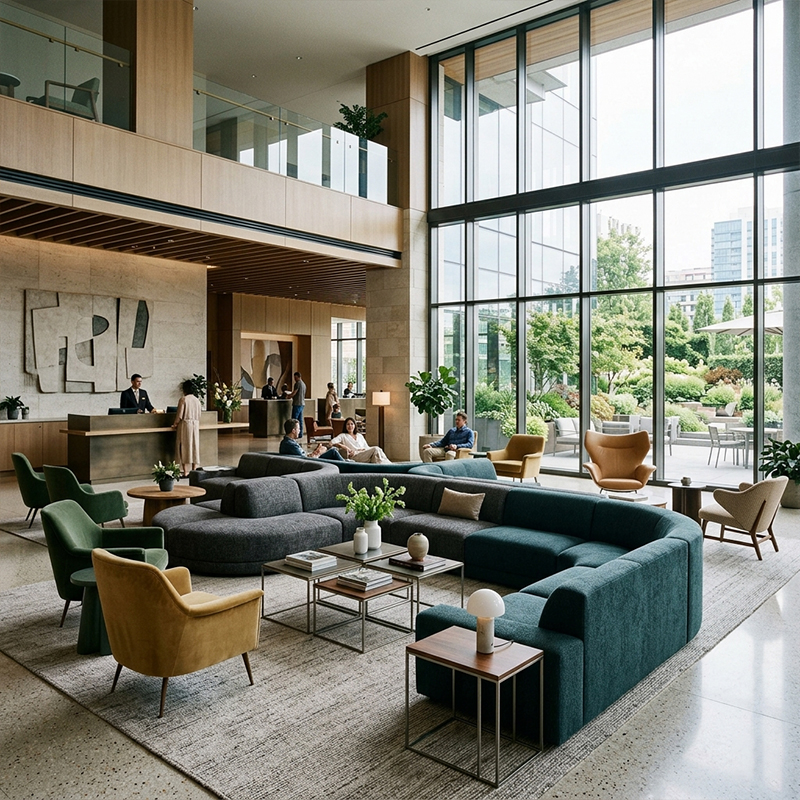
Public Area Furniture Solutions Custom Hospitality Lounge Seating
Transform your hotel’s first impression with our premium Public Area Furniture solutions, specifically engineered for high-traffic luxury environments. This collection showcases sophisticated Hotel Lobby Furniture and Commercial Lounge Seating that seamlessly blends modern aesthetics with rugged durability. Each piece—from the modular leather sofas to the bespoke fireplace consoles—features signature gold metal inlays and precision-crafted joinery, reflecting the peak of Custom Public Space Furniture design. Whether you are outfitting a 5-star reception hub or an executive social lounge, our Hospitality Common…
In the United States, NFPA 260 addresses cigarette ignition resistance of components of upholstered furniture. It is a useful reference for relevant projects, but it is not a complete substitute for local code, insurance, brand-standard or project-specific fire requirements.
Bed Frames and Headboards: Separate the Decision
Hotels should assess bed frames and headboards separately because they fail in different ways.
| Item | Refurbishment-Friendly Condition | Replacement-Indicating Condition |
|---|---|---|
| Headboard | Stable structure, cosmetic wear, replaceable fabric or finish | Water damage, loose wall fixing, damaged upholstery core |
| Bed base | Stable centre support, tight joints and no persistent noise | Cracked structure, repeated squeaks, worn connections or inadequate support |
| Metal frame | Sound welds and stable components | Loose metal-to-metal connections, corrosion or recurring noise |
| Wood frame | No splitting, pest damage or joint movement | Cracks, weakened joints or moisture damage |
Headboards often respond well to refinishing, reupholstery or panel replacement. Bed bases need a more conservative approach because they affect guest comfort, mattress performance and room-maintenance workload.
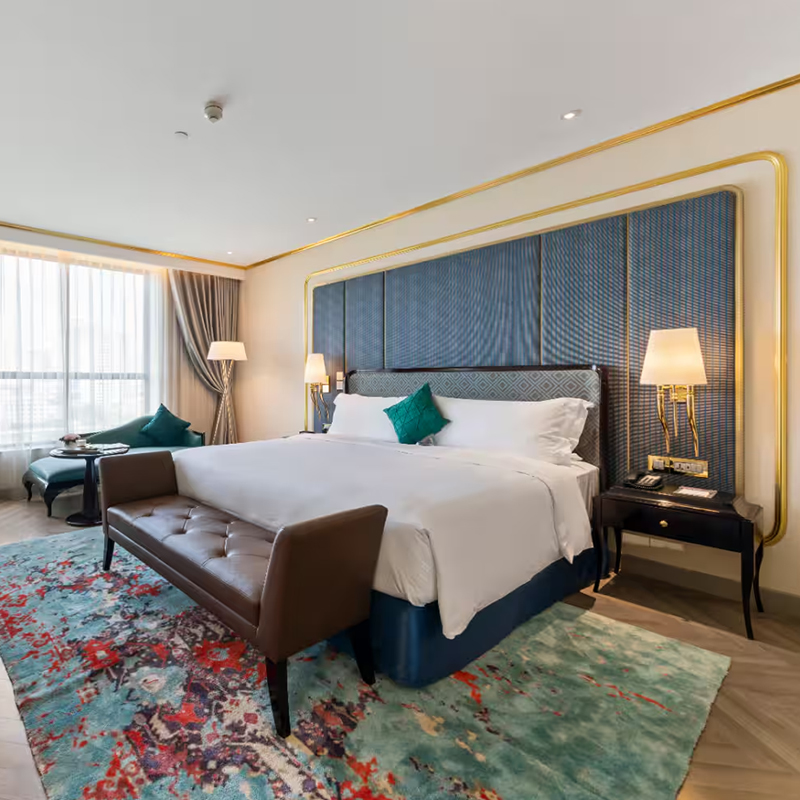
Bespoke Hotel Furniture & Luxury Bedroom Furniture
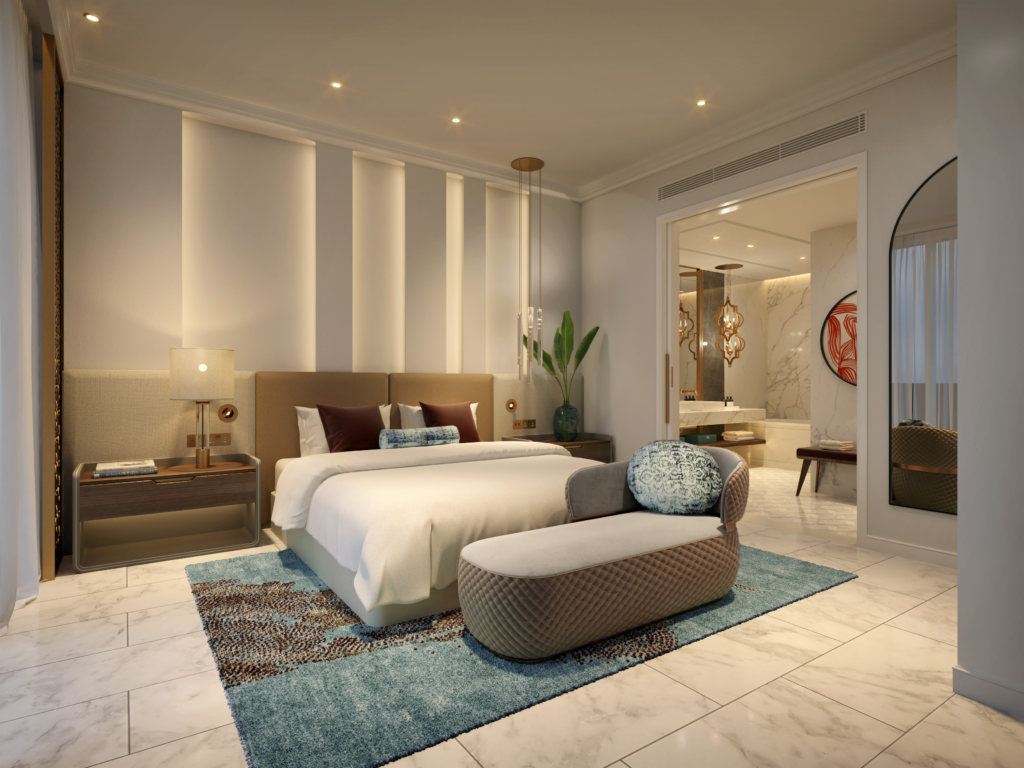
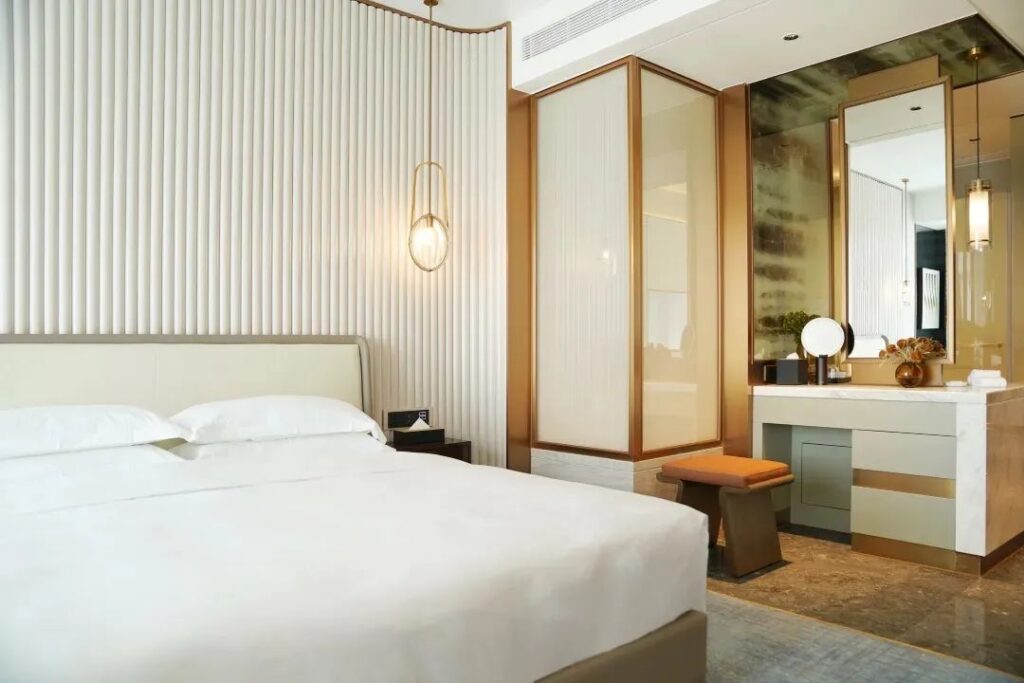
Experience the perfect synergy of aesthetics and durability with our Bespoke Hotel Furniture collection. This Luxury Bedroom Furniture suite is meticulously engineered for 5-star hospitality environments, featuring an iconic integrated headboard defined by precision-crafted gold metal trim and premium textured upholstery.
Restaurant Furniture: Assess Usage and Hygiene
Restaurant furniture experiences more frequent use, movement, spills and chemical cleaning than guest-room furniture. Consequently, restaurant seating should be assessed more conservatively.
| Restaurant Item | Typical Recommendation |
|---|---|
| Solid-wood table tops | Often suitable for sanding and refinishing if stable |
| Metal table bases | Refinish or replace depending on corrosion and stability |
| Upholstered banquettes | Reupholster if frame, foam and cleaning requirements remain acceptable |
| Dining chairs with loose joints | Replace if structural repairs will not remain stable |
| High-use metal or wood chairs | Replace when repeated repairs, instability or hygiene issues occur |
| Outdoor restaurant furniture | Replace when corrosion, UV degradation or weakened structural components are present |
Restaurant tables are usually better refurbishment candidates than restaurant chairs. A stable solid-wood table top can often be sanded and refinished several times. By contrast, chairs experience repeated movement and concentrated structural stress, which can make repair unreliable.
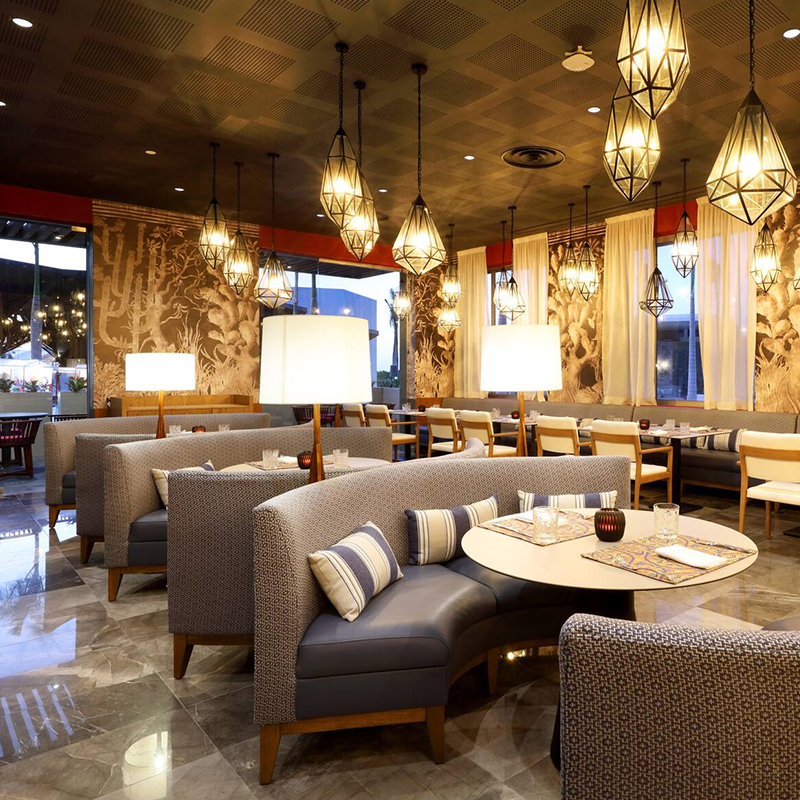
Commercial Dining Booth Seating Hospitality Space Solutions
Elevate your dining venue with our Commercial Dining Booth Seating, where bespoke craftsmanship meets modern hospitality needs. Unlike traditional setups, these Commercial Dining Sets leverage soft, curved geometries—as showcased in our latest high-end projects—to create intuitive flow and intimate social pockets. Each piece of Contract Restaurant Furniture is meticulously constructed to offer unparalleled lumbar support while serving as a bold architectural statement. By integrating our Luxury Hotel Seating into your floor plan, you transform open spaces into sophisticated dining destinations…
Lobby and Public-Area Furniture: Balance Appearance and Durability
Public-area furniture strongly influences guest perception. A lobby chair with a small scratch may be functionally acceptable but visually damaging if it appears prominently in guest photos or arrival areas.
For these pieces, combine structural assessment with brand impact:
- Refurbish high-quality custom pieces when frames are strong and the original design remains relevant.
- Replace low-quality seating with repeated failures, especially in high-visibility zones.
- Consider phased replacement when full public-area closure is not practical.
- Use approved finish and fabric mock-ups before committing to large-scale refurbishment.
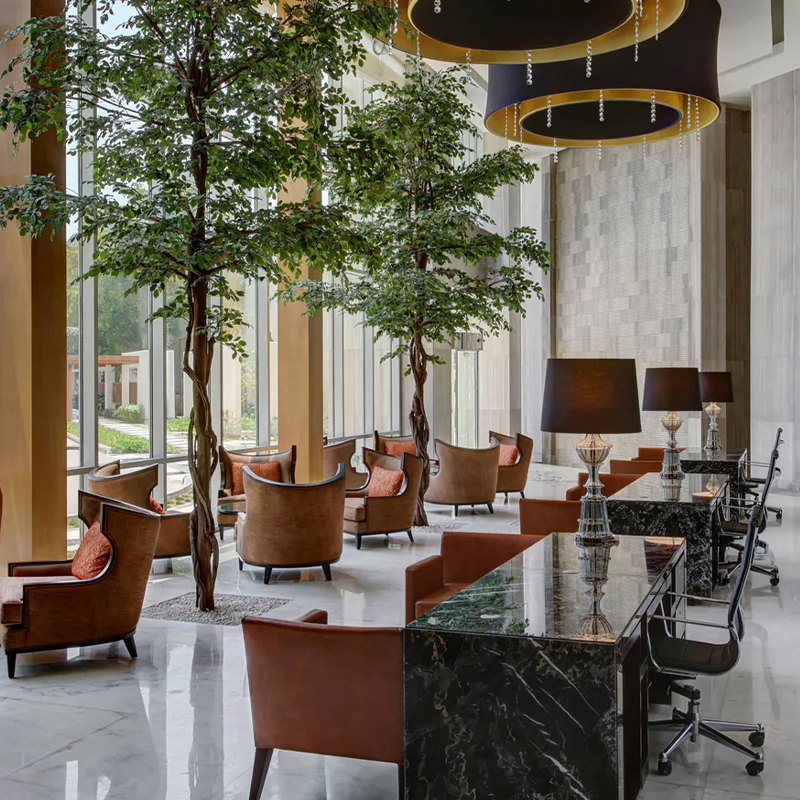
Hotel Lobby Furniture HBA Interior Design
Our hotel-grade Lobby Furniture is crafted to create a welcoming and sophisticated first impression for hotels, resorts and boutique accommodations. Made with premium, durable materials and modern design, it offers comfortable seating and functional layouts for guests to relax and socialize, while boasting an elegant, timeless appearance that enhances any hotel lobby interior. Easy to clean, maintain and coordinate, this lobby furniture meets the strict quality standards of hotel furniture, helping hotels elevate guest experience and strengthen brand image.
200-Room Hotel Renovation Cost Scenario
The following model is an illustrative scenario, not a quotation. It assumes:
- A 200-room midscale hotel.
- Structurally sound casegoods suitable for refinishing.
- Local refurbishment labour available.
- Replacement of items that fail structural, hygiene or compliance assessment.
- A phased renovation strategy rather than full hotel closure.
- Costs excluding taxes, financing, ADR loss and property-specific construction work.
| Category | Scope | New Replacement Cost | Strategic Refurbishment Cost | Illustrative Saving |
|---|---|---|---|---|
| Bed frame and headboard | 200 sets | $96,000 | $36,000 | $60,000 |
| Nightstands | 400 units | $88,000 | $34,000 | $54,000 |
| Desk and chair | 200 sets | $76,000 | $30,000 | $46,000 |
| Wardrobes | 200 units | $104,000 | $32,000 | $72,000 |
| Lounge chairs | 200 units | $70,000 | $70,000 | $0 |
| Luggage racks | 200 units | $17,000 | $17,000 | $0 |
| Guest-room subtotal | — | $451,000 | $219,000 | $232,000 |
| Lobby and public areas | Selected furniture | $120,000 | $65,000 | $55,000 |
| Restaurant furniture | 150 seats | $85,000 | $72,000 | $13,000 |
| Illustrative project total | — | $656,000 | $356,000 | $300,000 |
In this scenario, the hotel reduces immediate project spending by approximately 45.7%. However, this is only the initial comparison. Before selecting the refurbishment plan, the hotel should also price:
- Room-out-of-service days.
- Local labour and night-shift costs.
- Dust, odour and guest-protection measures.
- Temporary storage and moving.
- Fire-compliance testing or documentation.
- Hardware and replacement-part availability.
- Cleaning and post-work inspection.
- Maintenance and warranty risk over the next three to five years.
Downtime and Lost-Revenue Impact
Downtime can be more expensive than furniture itself. A hotel should compare not only how long each option takes, but also how many rooms must be unavailable each day.
| Project Factor | Refurbishment Strategy | Replacement Strategy |
|---|---|---|
| Typical work method | Onsite or local workshop, phased by floor | Production, shipping, delivery and installation |
| Possible room closures | Smaller room blocks if phased correctly | May require larger installation windows |
| Main disruption risks | Dust, noise, odour, finish curing and moving furniture | Late production, shipping delays, storage and installation congestion |
| Schedule control | Depends on local labour availability and room turnover | Depends on supplier capacity, freight and site readiness |
| Best use case | Cosmetic refresh with stable furniture cores | Full brand repositioning or structurally failed furniture |
A phased renovation may allow a hotel to keep part of its inventory active. For example, a property can close one floor at a time, complete inspection and work in a controlled sequence, then reopen the area before moving to the next phase.
Before choosing onsite refurbishment, conduct a pilot on one room type or floor. The pilot should measure daily output, guest disruption, dust containment, finish quality, odour control and housekeeping turnaround time.
Why Cash Flow Matters More Than Initial Cost
A refurbishment-first strategy does not always reduce total lifetime spending. In some cases, the hotel spends more over a long period because it pays for audits, refreshes, repairs and later replacement.
Its value often lies in cash-flow timing. It can defer a large replacement cycle, preserve liquidity and give owners more flexibility to align capital spending with occupancy, financing and brand-renovation requirements.
Sample CapEx Timing Model
| Year | Full Replacement Strategy | Audit and Refurbishment Strategy | Financial Effect |
|---|---|---|---|
| 0 | $656,000 | $656,000 | Same initial FF&E investment |
| 3 | $0 | $42,000 | Minor audit and targeted repairs |
| 6 | $0 | $356,000 | Mid-cycle refresh and selective replacement |
| 7 | $656,000 | $0 | Full replacement deferred |
| 9 | $0 | $656,000 | Major replacement occurs later |
| 12 | $0 | $50,000 | Additional audit and targeted maintenance |
| 14-year nominal total | $1,312,000 | $1,760,000 | Refurbishment strategy may cost more in nominal terms |
This example shows why hotels should not assume refurbishment is automatically cheaper over the full lifecycle. The right comparison is present value, not only total nominal spend.
Use your own required return, borrowing cost or weighted average cost of capital to calculate net present value:

Where:
- (Cash\ Flow_t) is renovation, maintenance or replacement spending in year (t).
- (r) is the hotel’s selected discount rate.
- (n) is the number of years being evaluated.
A hotel with expensive debt, limited liquidity or a short ownership horizon may value deferred CapEx differently from an owner planning to hold the asset for 15 years.
How to Run a 3-Year Furniture Audit Program
A structured audit program turns reactive replacement into planned asset management.
1. Build an Asset Register
Record every major furniture item by room, floor or area. Include:
- Product category and model.
- Purchase or installation date.
- Material and finish.
- Warranty information.
- Supplier and manufacturer.
- Maintenance history.
- Photos of current condition.
- Fire, emissions or performance documentation where relevant.
2. Score Every Item Consistently
Use the five-factor model above. Avoid broad statements such as “the rooms look tired.” Instead, record specific defects:
- Scratches, chips and finish fading.
- Loose hardware and drawer failures.
- Water damage and swelling.
- Upholstery tears, stains and odours.
- Structural movement and squeaks.
- Non-compliance or missing documentation.
3. Sort Furniture Into Action Groups
| Action Group | Typical Condition | Recommended Action |
|---|---|---|
| Maintain | Good condition with minor wear | Cleaning, tightening, touch-up and preventive maintenance |
| Refurbish | Structurally sound with cosmetic or functional upgrades needed | Refinish, reupholster, replace hardware or repair surfaces |
| Monitor | Borderline condition but still usable | Reinspect at the next audit or after peak season |
| Replace | Failed structure, failed core material or compliance problem | Specify and purchase new furniture |
4. Complete a Pilot Before Full Rollout
A pilot room, floor or public-area zone helps confirm:
- Actual labour time per item.
- Surface and colour consistency.
- Fabric and finish approval.
- Guest-impact controls.
- Housekeeping and engineering feedback.
- Whether the contractor can meet daily output targets.
5. Build a Phased CapEx Plan
Prioritise items based on guest visibility, failure risk and revenue impact. High-value suites, lobby areas, restaurant seating and rooms with repeated maintenance complaints may require earlier action than back-of-house furniture.
When Replacement Is the Better Decision
Replacement is usually the safer option when one or more of the following conditions apply:
- Core materials are swollen, delaminated, cracked or structurally compromised.
- The furniture repeatedly fails after repair.
- The item cannot meet hygiene, cleanability or fire-performance requirements.
- The existing design conflicts with a new hotel brand, PIP or repositioning strategy.
- The refurbishment cost approaches the cost of a new warrantied item.
- Replacement allows a better room layout, improved storage, USB/power integration or accessibility.
- The hotel needs guaranteed consistency across a large number of rooms.
- New furniture will reduce maintenance calls and improve guest comfort over the holding period.
If replacement is the stronger option, plan early. Custom hotel furniture may require design development, sample approval, production, inspection, ocean freight and installation coordination. For more planning detail, read Hotel Furniture Lead Times and Production Planning.
How Hongye Supports Hotel Renovation Projects
Hongye Furniture Group supports hotel owners, operators and procurement teams with replacement planning for guest rooms, public areas, restaurants and commercial hospitality spaces.
For renovation projects where new furniture is the preferred route, Hongye can support:
- Custom hotel furniture design and engineering.
- Guest-room casegoods, bed bases, headboards and wardrobes.
- Lobby, restaurant and public-area furniture packages.
- Material, finish and upholstery sample approval.
- Factory quality control and pre-shipment inspection.
- Export packing, logistics coordination and phased delivery planning.
- Replacement projects designed around room-by-room or floor-by-floor installation.
A responsible renovation decision should remain neutral: refurbish when the existing furniture has a sound and compliant core; replace when a new solution offers better lifecycle value, reliability and guest experience.
For procurement planning, read FF&E Procurement Explained: A Hotel Developer’s Complete Guide.
FAQ
What is the biggest mistake hotels make with furniture refurbishment?
The biggest mistake is approving cosmetic refurbishment before assessing the structural core. New fabric, stain or hardware cannot solve swollen boards, loose joints, failed foam, corrosion, unstable bed frames or missing compliance documentation. Start with a room-by-room audit and complete a pilot before approving a property-wide programme.
How long can hotel furniture refurbishment extend usable life?
The extension depends on material quality, usage intensity, maintenance history and workmanship. Structurally sound casegoods, solid-wood tables and quality headboards may gain several additional years after professional refinishing. Upholstered seating requires a more cautious assessment because foam, suspension, internal framing and fire-compliance requirements may limit its usable life.
Can hotel furniture be refurbished while the hotel is operating?
Yes. Many hotels refurbish furniture in phases by floor, wing or room block. However, onsite work can introduce dust, odour, noise, curing time and room-out-of-service constraints. Conduct a pilot floor first and coordinate the schedule with housekeeping, engineering, front office and guest-service teams.
What fire-safety checks are needed before reupholstering hotel seating?
Confirm the destination market’s regulations, hotel brand standards, insurance requirements and project specifications. Check whether the new fabric, foam, barrier materials and completed construction require testing or documentation. In the United States, NFPA 260 addresses cigarette ignition resistance for upholstered furniture components, but it should not be treated as the only fire-safety requirement for a hotel project. nfpa
Is any hotel furniture category never worth refurbishing?
No category is automatically unsuitable for refurbishment. However, replacement is usually more appropriate when structural components have failed, composite panels have moisture damage, hygienic surfaces cannot be restored, required compliance evidence cannot be achieved or repair costs approach the price of a new warrantied item.
Make the Decision Before the Budget Is Fixed
Hotel furniture refurbishment vs replacement should be decided through inspection, not assumption. The best choice depends on structural condition, design relevance, compliance requirements, operational downtime and total lifecycle cost.
Refurbishment can protect short-term cash flow and extend the useful life of sound furniture. Replacement can deliver better reliability, consistency, compliance and guest experience when existing assets have reached the end of their practical service life.
Before committing capital, audit the furniture, test a representative sample, compare full project scopes and measure the decision against your hotel’s operating plan—not only the lowest unit price.