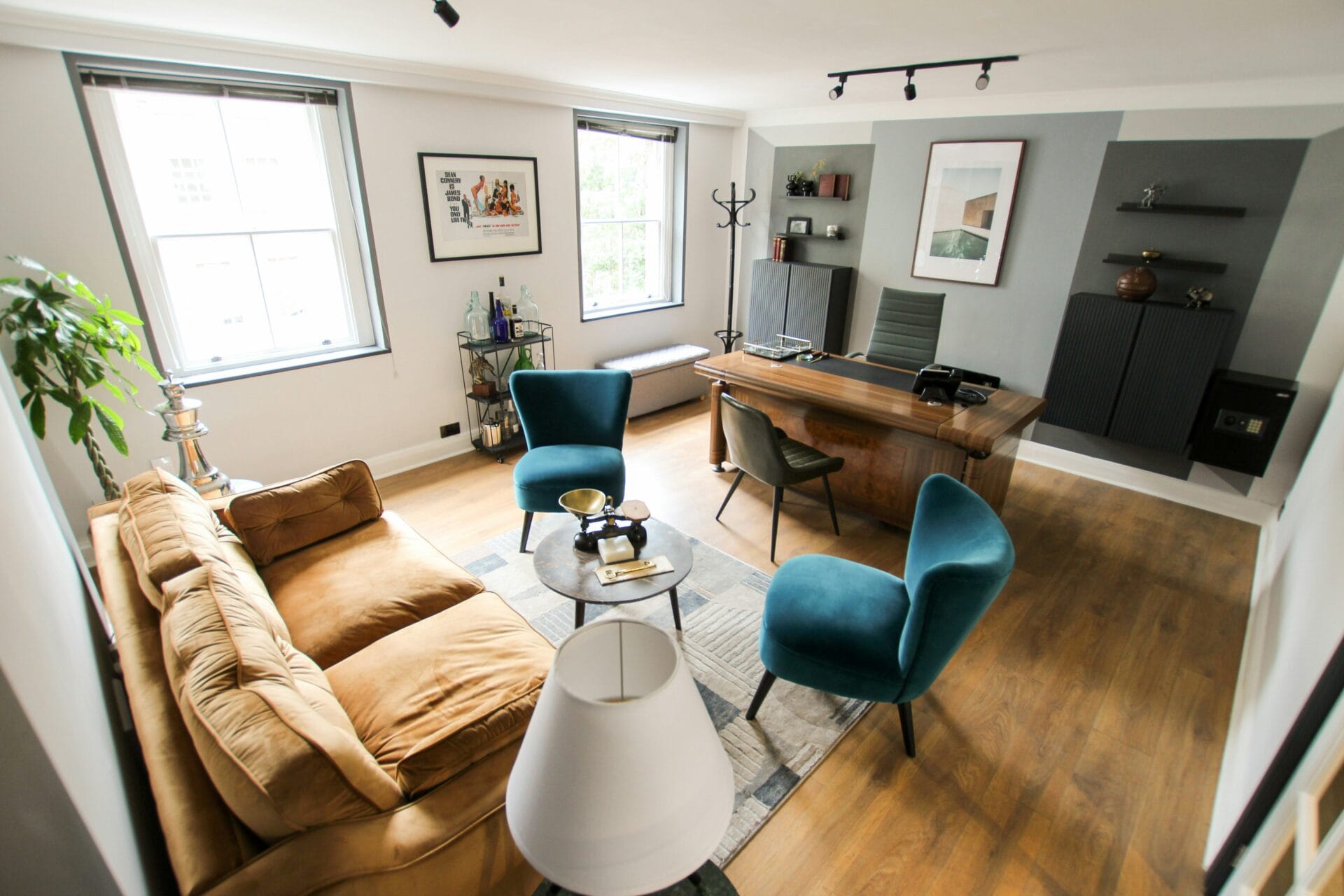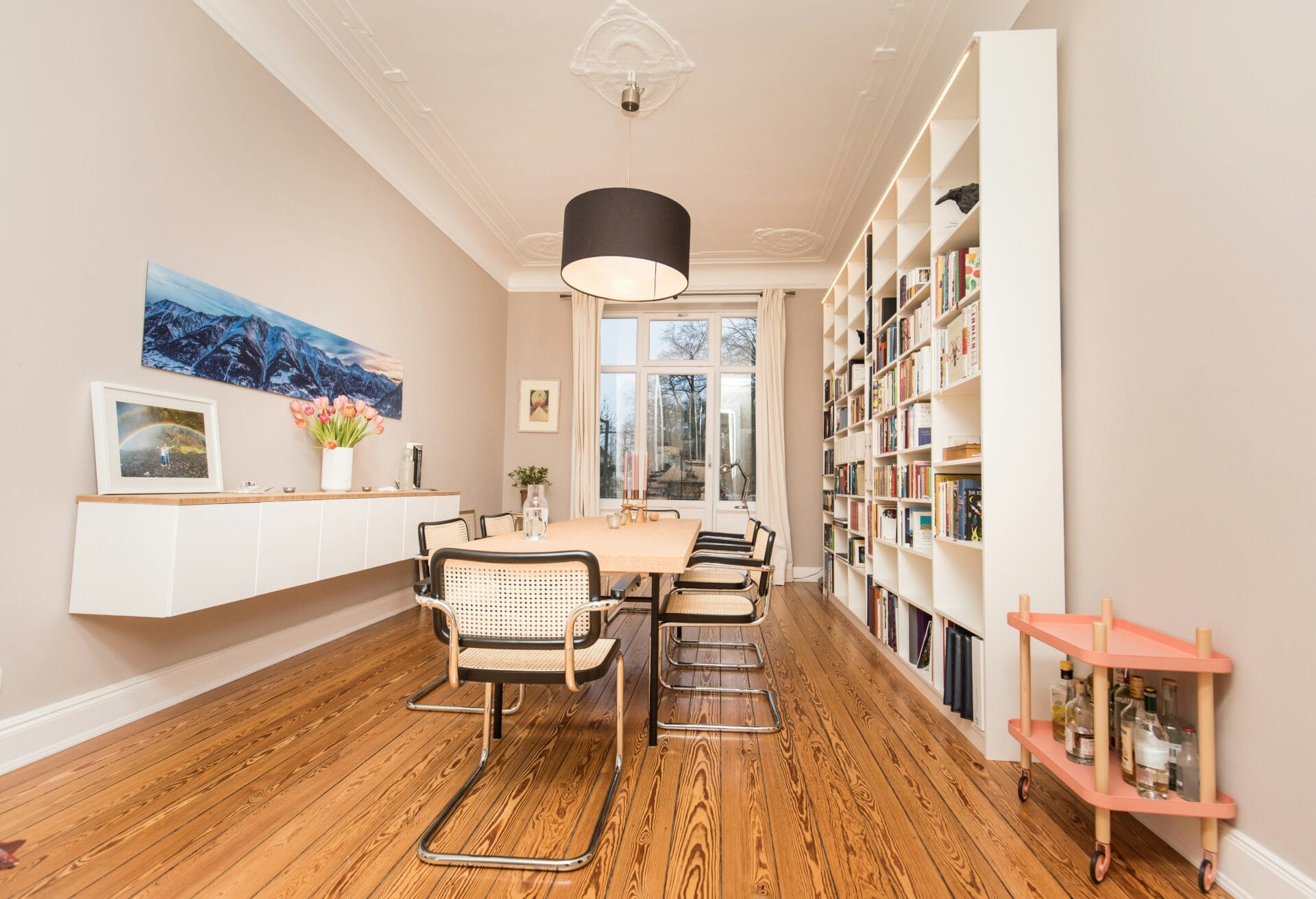
Hotel casegoods and loose furniture serve different purposes in a hotel project. However, both categories affect the FF&E budget, guest experience, maintenance plan and replacement strategy.
Casegoods generally include storage-oriented or case-built furniture. Loose furniture generally includes freestanding seating and occasional pieces. Still, some hotel items sit between the two categories. For example, a headboard, bench, mirror, media panel or banquette may fall under FF&E, fixed millwork or construction scope depending on the project contract.
Therefore, hotel owners should not build an FF&E budget from broad labels alone. Instead, they should use a room matrix, furniture schedule, BOQ and scope definition to identify what each category includes.
This guide explains the difference between hotel casegoods and loose furniture. It also shows how hotel teams can budget, specify, procure and maintain both categories more clearly.
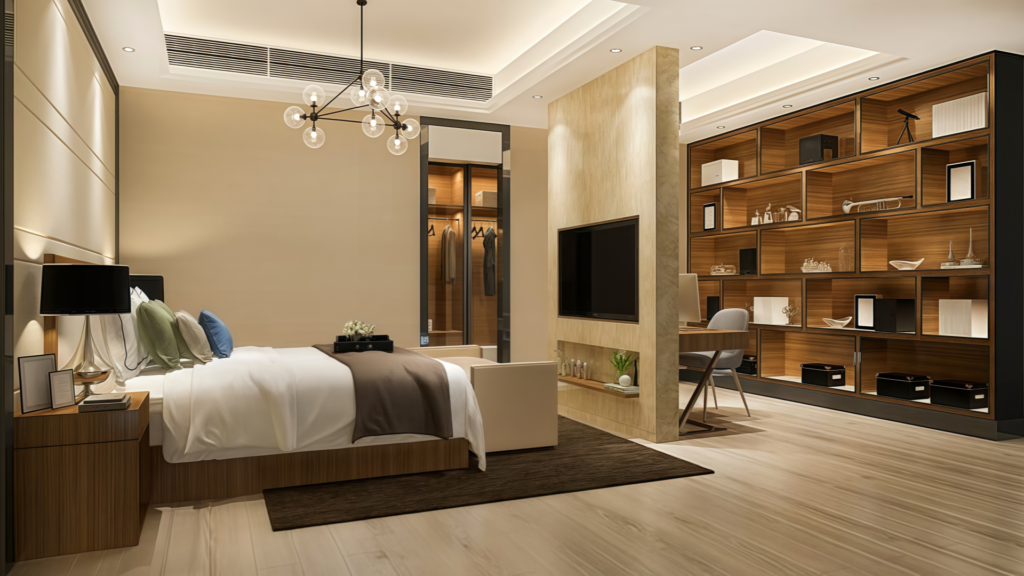
Quick answer: Hotel casegoods usually include wardrobes, nightstands, desks, dressers, credenzas, TV units and minibar cabinets. Loose furniture usually includes lounge chairs, desk chairs, sofas, ottomans, side tables, coffee tables and dining chairs. The final classification should follow the project furniture schedule, installation scope and contract.
Key Takeaways
- Hotel casegoods generally include storage-oriented or case-built furniture, such as wardrobes, desks, nightstands, dressers, TV units and minibar cabinets.
- Loose furniture generally includes freestanding seating and occasional items, such as lounge chairs, sofas, ottomans, side tables, coffee tables and dining chairs.
- However, some furniture items can fall into different categories depending on the project scope. Headboards, benches, mirrors, media panels, banquettes and reception desks may sit in FF&E, fixed millwork or construction packages.
- A clear furniture schedule helps buyers separate guestroom casegoods, loose furniture, public-area furniture, fixed millwork and delivery-related costs.
- Casegoods often depend on core material, finish, hardware, edge treatment, wall fixing and installation details.
- Loose furniture often depends on frame construction, upholstery, foam, glides, cleanability, comfort and expected traffic.
- Product testing and compliance should match the furniture category, destination market and hotel requirements.
- Hotels should use condition audits, maintenance records, brand requirements and renovation plans instead of one fixed replacement cycle.
- Hongye supports qualified hotel projects with casegoods, loose furniture, public-area furniture, selected fixed millwork, samples and project-specific documentation where applicable.
What Are Hotel Casegoods?
Hotel casegoods are generally furniture items built around a structural carcass or storage body.
They often include drawers, doors, shelves, panels, cabinets, work surfaces or internal storage.
Typical hotel casegoods may include:
- Wardrobes.
- Nightstands.
- Desks.
- Dressers.
- Credenzas.
- TV units.
- Minibar cabinets.
- Vanity cabinets.
- Drawer units.
- Storage benches.
- Luggage benches.
- Cabinet-style room dividers.
- Selected reception storage units.
Casegoods can be freestanding, wall-mounted or built into the room.
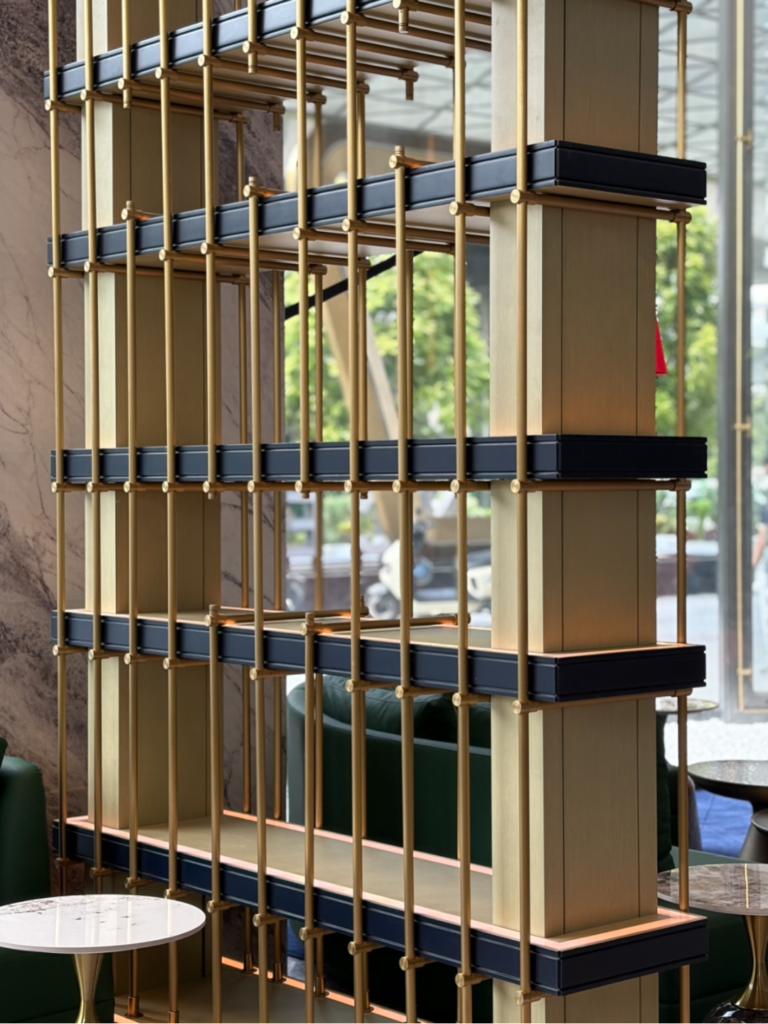
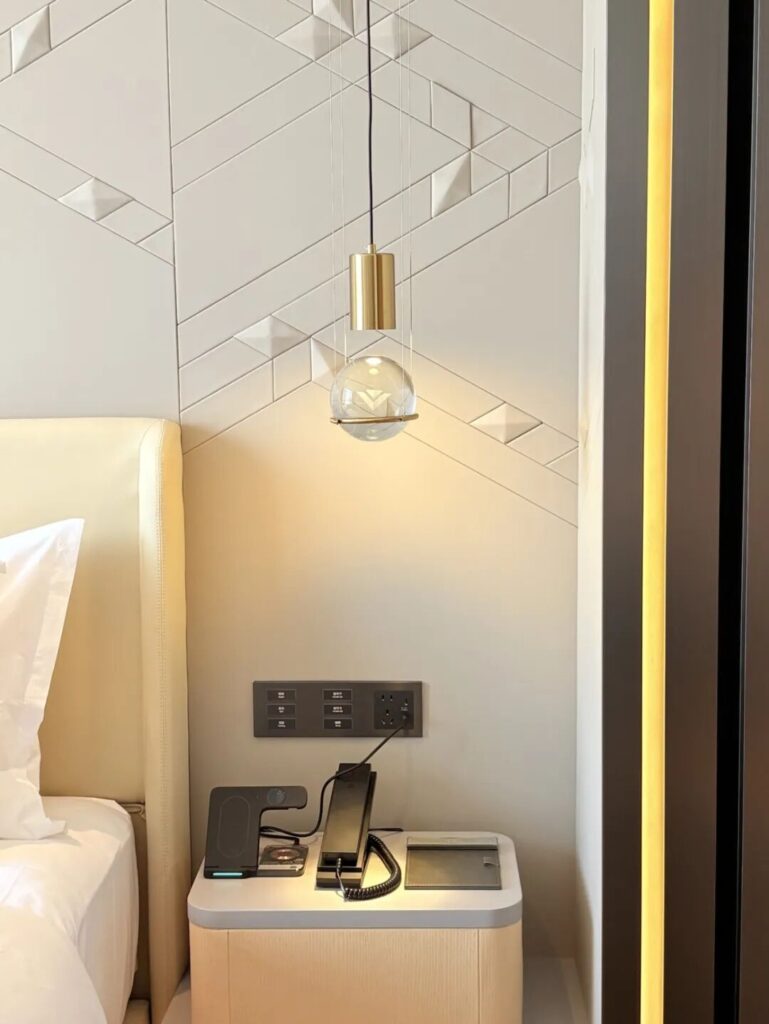
For example, a freestanding nightstand can still be a casegood because it has a cabinet body and drawer construction. Likewise, a wall-mounted minibar cabinet can be classified as casegoods even though it requires installation.
Casegoods rule: Classification depends on the furniture construction and project schedule, not only on whether the item is fixed to the wall.
What Is Loose Furniture?
Loose furniture generally refers to freestanding items that can move without building work.
These items often provide seating, comfort, dining support or occasional use.
Typical loose furniture may include:
- Lounge chairs.
- Desk chairs.
- Dining chairs.
- Bar stools.
- Sofas.
- Ottomans.
- Benches.
- Side tables.
- Coffee tables.
- Nesting tables.
- Accent tables.
- Lobby seating.
- Restaurant seating.
- Meeting-room chairs.
- Outdoor tables and chairs.
Loose furniture often needs less site coordination than built-in furniture. However, it may receive more direct guest contact, movement, cleaning and impact.
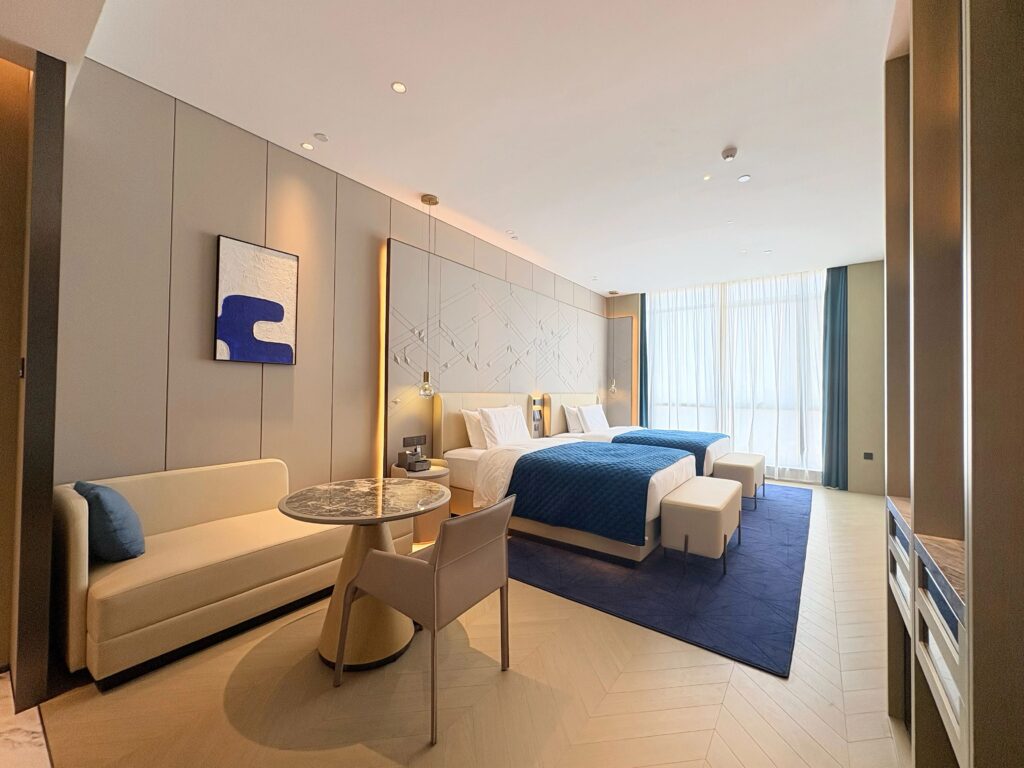
For example, a guestroom lounge chair may be moved during housekeeping, used by several guests each week and cleaned after spills. A desk chair may face constant rolling, adjusting and pulling.
Therefore, loose furniture procurement should consider comfort, stability, upholstery, glides, frame strength, cleaning needs and replacement-part availability.
Loose-furniture rule: Freestanding furniture may be easier to move or replace. However, it still requires strong performance, maintenance and quality-control planning.
The Grey Areas in Hotel FF&E
Some hotel furniture does not fit neatly into one category.
The final classification should follow the contract, furniture schedule, installation scope, BOQ and responsibility matrix.
| Furniture Item | Possible Classification | Why It Can Vary |
|---|---|---|
| Headboard | Casegoods, upholstered furniture or fixed millwork | It may be a freestanding panel, wall-mounted item or integrated architectural element |
| Mirror | FF&E, decorative accessory or fit-out item | It may be framed furniture, wall-mounted décor or part of a vanity assembly |
| Luggage bench | Casegoods or loose furniture | It may be cabinet-style, upholstered, fixed or freestanding |
| Media panel | Casegoods, wall panel or construction joinery | It may include power, lighting, TV mounting or architectural cladding |
| Banquette | Loose seating, fixed furniture or millwork | It may be movable, wall-fixed or integrated with a restaurant layout |
| Reception desk | Casegoods, public-area furniture or fixed millwork | It may include MEP interfaces, lighting, stone, storage and site-built elements |
| Wardrobe | Casegoods or fixed millwork | It may be freestanding, wall-fixed or built into a niche |
| Outdoor sofa | Loose furniture or built-in seating | It may be movable or permanently integrated into a terrace design |
For example, a hotel may place wall-mounted headboards in the FF&E package to maintain finish consistency with nightstands and desks.
Another project may place the same headboard in the construction or fit-out package because it requires site-built wall support and MEP coordination.
Therefore, buyers should not assume that an item belongs to one category on every project.
Why Classification Matters for Your Budget
Correct classification affects much more than the BOQ.
It also affects:
- Supplier responsibility.
- Design drawings.
- Material schedule.
- Budget ownership.
- Installation scope.
- Wall-fixing requirements.
- Freight planning.
- Packaging.
- Storage.
- Quality inspection.
- Warranty.
- Maintenance.
- Replacement parts.
- Renovation planning.
For example, a wall-mounted media panel may need electrical coordination, backing support, cable routing and installation drawings.
If the team lists it only as “TV panel,” the furniture supplier, general contractor and electrical contractor may each assume that another party will handle those items.
As a result, unclear classification can create cost gaps, installation delays and change orders.
Budget rule: Every furniture item should have a code, location, quantity, drawing reference, material description, installation responsibility and delivery phase.
Build an FF&E Budget by Scope
Hotel teams should build the FF&E budget from the room matrix and furniture schedule.
Do not apply one fixed percentage to every hotel.
A limited-service property with repeated standard guestrooms may place more budget emphasis on guestroom casegoods.
In contrast, a full-service hotel with a restaurant, lobby, ballroom, spa, executive lounge or pool deck may spend more on public-area loose furniture.
Start With Four Cost Layers
| Budget Area | Buyer Question |
|---|---|
| Furniture-only product cost | Does the price include casegoods, loose furniture, mirrors, bed base, seating and occasional furniture? |
| Landed furniture cost | Does the price include packing, freight, insurance, duty, customs, delivery and storage? |
| Installed furniture cost | Does the price include unloading, room delivery, assembly, wall fixing, final cleaning and waste removal? |
| Full FF&E cost | Does the budget include lighting, mattresses, soft goods, artwork, electronics, public areas and operating equipment? |
Budget by Room Type
Next, price each room type separately.
For example, a hotel may need:
- Standard king rooms.
- Standard twin rooms.
- Accessible rooms.
- Deluxe rooms.
- Junior suites.
- One-bedroom suites.
- Family rooms.
- Extended-stay rooms.
- Villas.
- Public-area zones.
A suite may include a larger wardrobe, more storage, minibar furniture, dining furniture, lounge seating and additional mirrors.
Therefore, applying the standard-room budget to every key can create a misleading total.
Scope rule: Build the hotel FF&E budget by room type, public area and product category. Then calculate the weighted average per key.
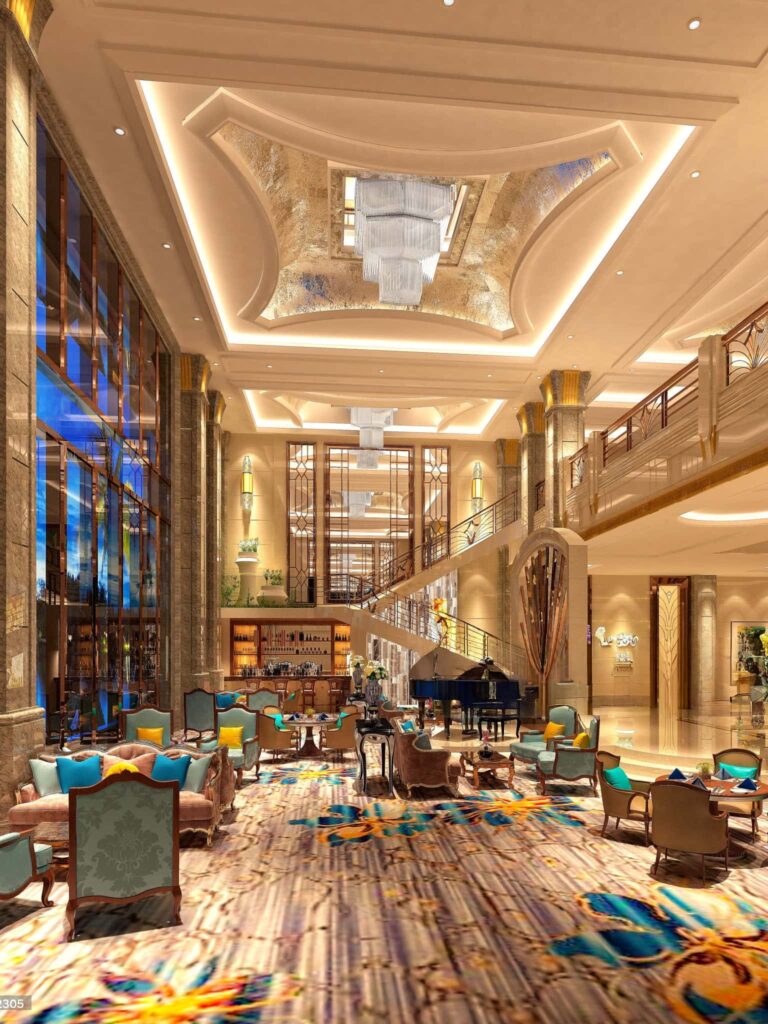
Hotel Furniture
Casegoods Cost Drivers
Casegoods cost depends on the structure behind the visible finish.
For example, two guestroom desks may look similar in a rendering. However, one desk may use a standard board core, simple laminate and basic hardware. Another may use moisture-resistant plywood, natural veneer, solid timber edging, premium slides, power modules and complex metal details.
Key casegoods cost drivers include:
- Board core.
- Board thickness.
- Moisture resistance.
- Veneer or laminate.
- Lacquer or paint finish.
- Solid timber edges.
- Drawer construction.
- Drawer slides.
- Hinges.
- Locks.
- Pulls and handles.
- Power modules.
- Cable management.
- Wall brackets.
- Anti-tip fittings.
- Metal components.
- Stone or solid-surface tops.
- Custom shapes.
- Curved panels.
- Installation method.
- Packaging requirements.
Casegoods Procurement Questions
Before ordering, ask:
- What core material does the supplier propose?
- Which edges need sealing or solid edging?
- Which hardware model and performance level applies?
- Does the item need wall fixing?
- Does the design include power, lighting or cable access?
- Does the furniture need to fit an existing niche?
- Which parts are replaceable?
- Which finish sample controls production?
- What packaging protects corners, mirrors and finished surfaces?
- Which drawings control installation?Casegoods rule: Specify the core, finish, hardware, edge treatment, fixing method and packaging. A furniture rendering cannot show all of these details.
Loose Furniture Cost Drivers
Loose furniture cost often depends on direct guest contact and movement.
For example, a lounge chair can require a solid frame, upholstery, foam, suspension, glides, metal legs and removable cushions. A dining chair may need cleanable upholstery, strong joints, floor protection and stable stacking or moving performance.
Key loose-furniture cost drivers include:
- Frame material.
- Frame construction.
- Upholstery fabric.
- Leather or faux leather.
- Foam type.
- Cushion construction.
- Suspension system.
- Stitching.
- Seams.
- Metal finish.
- Timber finish.
- Glides.
- Castors.
- Swivel or recline mechanisms.
- Arm details.
- Cleanability.
- Fire requirements.
- Outdoor exposure.
- Replacement covers or components.
Loose furniture may be easier to replace than built-in casegoods. However, it may require more frequent inspection because guests sit on it, move it, spill on it and clean around it.
Therefore, hotel teams should record maintenance issues by item code and location.
Loose-furniture rule: Consider comfort, cleanability, repairability and replacement-part availability before choosing upholstery and frame construction.
Materials, Testing and Compliance
Furniture testing and compliance should match the actual product category, destination market and hotel requirement.
One standard does not apply to every furniture item.
For example, ANSI/BIFMA X5.9 may be relevant to office storage products. However, it is not a blanket standard for all hotel wardrobes, headboards, minibars, TV units or built-in furniture.
Likewise, ANSI/BIFMA X5.1 and ANSI/BIFMA X5.4 apply to different seating categories.
Therefore, buyers should identify the product type first. Then, they should request product-appropriate testing or performance evidence.
Composite Wood Requirements
Composite wood requirements also depend on the destination market.
For products entering the United States, relevant composite-wood panels may require EPA TSCA Title VI documentation.
However, buyers should confirm:
- Panel category.
- Material supplier.
- Certificate scope.
- Current documentation.
- Finished-product applicability.
- Destination market.
- Project specification.
E0 and E1 are not universal substitutes for EPA TSCA Title VI documentation.
Therefore, buyers should follow the applicable project and market requirement rather than using broad labels.
Other Project Documents
Depending on the product and market, buyers may need:
- Product-specific test reports.
- FSC claims for eligible wood-based materials.
- Indoor-emissions documentation.
- Fire-performance reports.
- Electrical conformity documents.
- Upholstery specifications.
- Cleaning and maintenance instructions.
- Warranty information.
- Packaging records.Compliance rule: Request evidence for the exact product, material configuration and destination market. A company-level certificate does not prove that every furniture item meets every project requirement.
Lifecycle and Replacement Planning
Hotels should use condition audits and maintenance records instead of one fixed replacement year.
Loose seating often needs earlier review because upholstery, foam, glides, joints and frames receive direct contact and repeated movement.
Casegoods may remain in service longer when the core, edges, finish, hardware and installation details are properly specified and maintained.
However, either category may need early attention when a property faces:
- Heavy occupancy.
- Frequent guest damage.
- High humidity.
- Water leaks.
- Aggressive cleaning products.
- Brand PIP requirements.
- New accessibility requirements.
- Design repositioning.
- Renovation.
- Replacement-part shortages.
- Material obsolescence.
Build a Furniture Asset Register
A hotel asset register can help the operations team plan maintenance.
Record:
- Item code.
- Room or area.
- Product description.
- Drawing reference.
- Material and finish.
- Hardware.
- Supplier.
- Installation date.
- Warranty term.
- Cleaning instructions.
- Spare-part code.
- Maintenance history.
- Repair history.
- Replacement decision.
This record helps teams identify patterns.
For example, if several nightstands show the same drawer-slide problem, the hotel can review the full batch instead of repairing one room at a time.
Lifecycle rule: Track condition by product category and location. Then plan repair, refurbishment or replacement before furniture affects guest experience.
Hongye Hotel Furniture Support
Hongye supports qualified hotel projects with guestroom casegoods, loose seating, public-area furniture, selected fixed millwork, furniture schedules, material samples and project-specific documentation where applicable.
During budget development, Hongye can help buyers separate:
- Casegoods.
- Loose furniture.
- Fixed millwork.
- Public-area furniture.
- Guestroom furniture.
- Furniture-only product cost.
- Landed furniture cost.
- Installation-related costs.
Hongye states that it has more than 30 years of commercial furniture manufacturing experience and operates a 300,000-square-metre production facility in Heshan, Jiangmen, Guangdong, China.
Before production release, buyers should verify the exact furniture scope, room matrix, material configuration, product requirements, packing, delivery term, installation responsibility and warranty coverage.
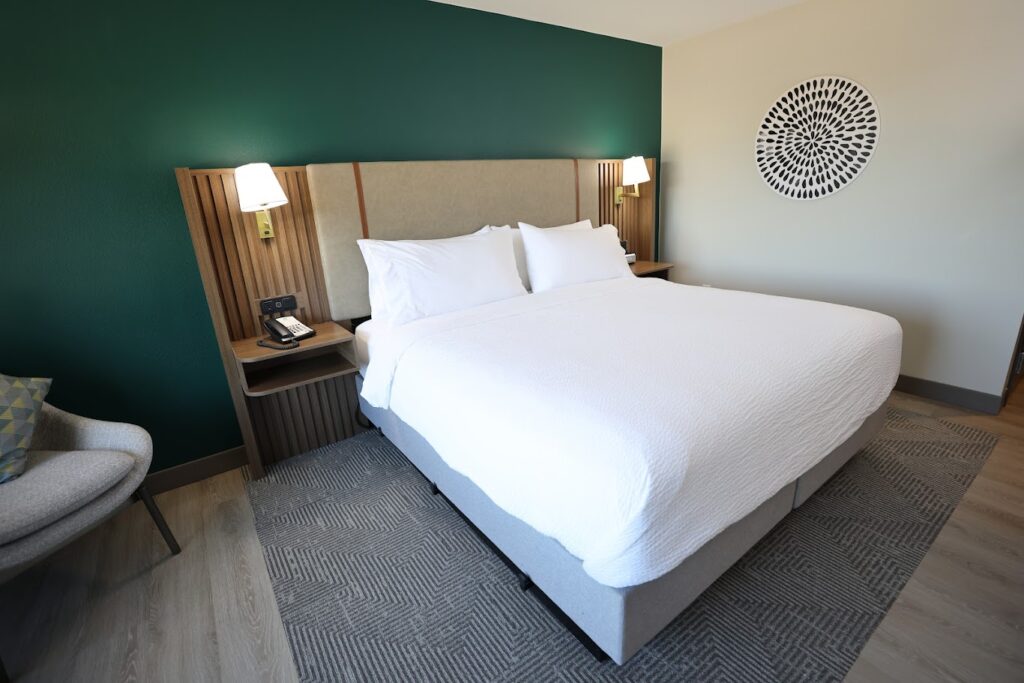
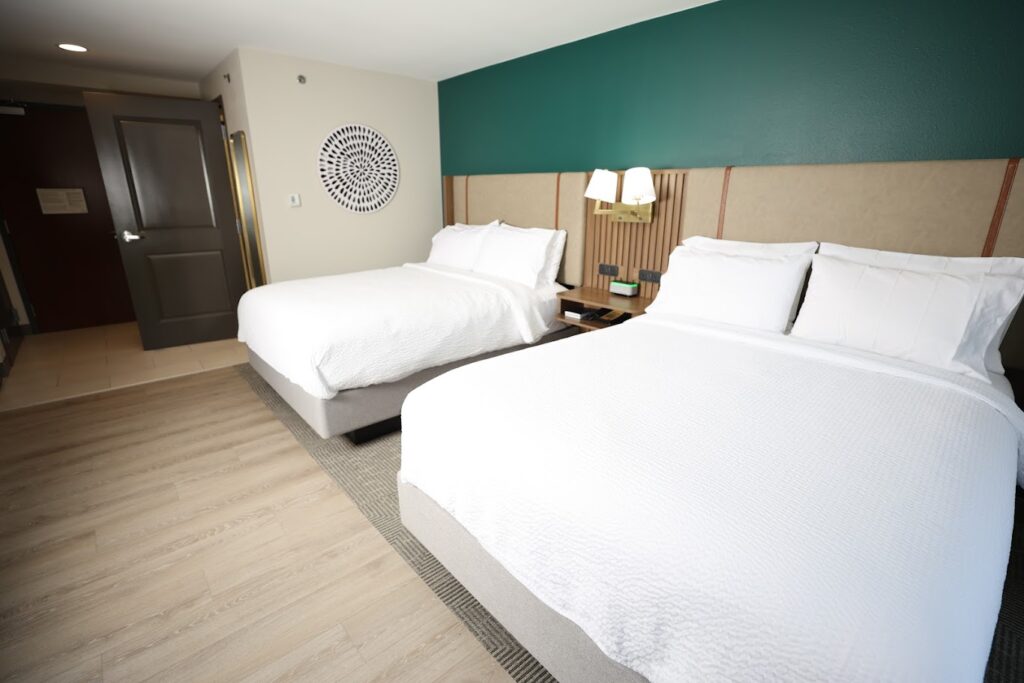
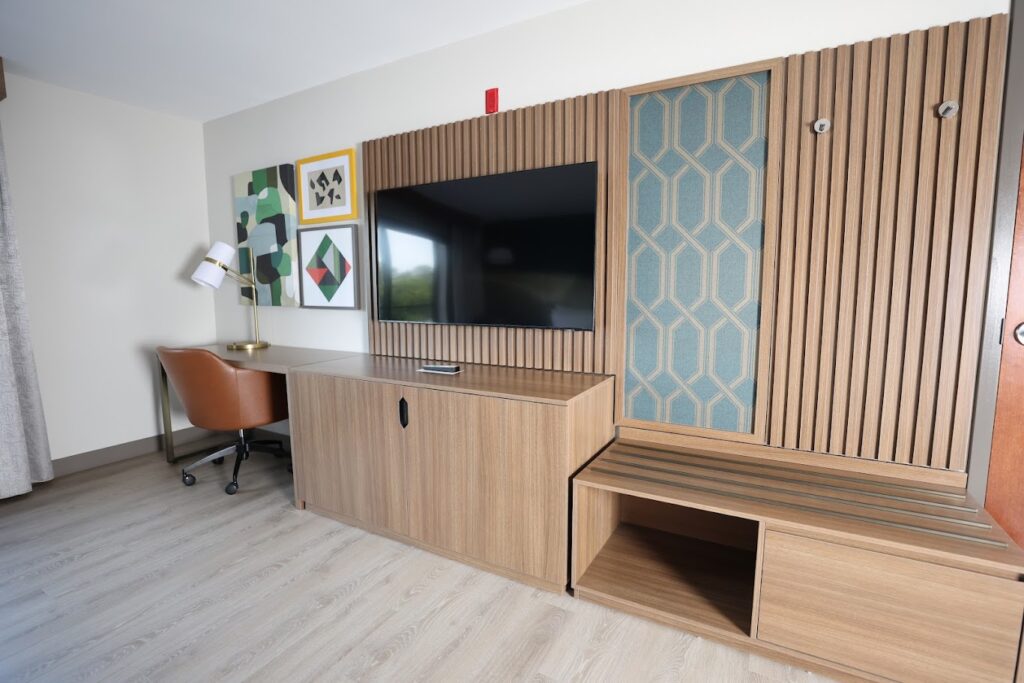
Holiday Inn Fairview Heights | Hospitality Project Solution By Hongye Furniture
Frequently Asked Questions
What are casegoods in a hotel?
Hotel casegoods are generally storage-oriented or case-built furniture items.
They may include wardrobes, nightstands, desks, dressers, credenzas, TV units, minibar cabinets, drawer units and vanity cabinets.
However, some items, such as headboards, mirrors, luggage benches and media panels, may be classified differently depending on the project schedule and contract scope.
What is the difference between hotel casegoods and loose furniture?
Casegoods usually include cabinet-style, storage-oriented or structural furniture.
Loose furniture usually includes freestanding seating and occasional furniture, such as lounge chairs, sofas, ottomans, desk chairs, dining chairs, coffee tables and side tables.
The final classification should follow the furniture schedule, installation method and project contract.
Are headboards casegoods or fixed millwork?
They can be either.
A headboard may be classified as casegoods, upholstered furniture, fixed millwork or construction joinery depending on its construction, wall fixing, MEP coordination and project scope.
Buyers should define the classification in the BOQ and responsibility matrix.
How should a hotel budget casegoods and loose furniture?
Start with the room matrix and furniture schedule.
First, separate casegoods, loose guestroom furniture, public-area furniture and fixed millwork. Next, decide whether freight, installation, lighting, soft goods, mattresses, public areas and operating equipment are included.
Then, price each room type and public area separately before calculating a weighted per-key budget.
Should a hotel buy custom casegoods or standard loose furniture?
Custom casegoods can support room fit, brand consistency, storage needs and finish continuity.
Standard loose furniture can reduce engineering work and may support easier replenishment in some locations.
However, the right choice depends on room repetition, brand requirements, design intent, replacement strategy, lead time, material specification and total landed cost.
What testing should hotel casegoods and loose furniture require?
Testing should match the product type, destination market and project requirements.
For example, some BIFMA standards may apply to specific office, public or lounge seating categories. Composite wood panels entering the United States may require EPA TSCA Title VI documentation.
Fire, emissions, electrical and structural requirements should match the exact furniture item and use environment.
How can hotels plan furniture replacement?
Hotels should use condition audits, maintenance records, warranty information, guest feedback, brand requirements and renovation plans.
Loose seating may need earlier review because it experiences direct use, movement and upholstery wear. Casegoods may need hardware repair, edge repair, refinishing or replacement depending on material condition and room design.
Build the Budget Around the Furniture Schedule
Hotel casegoods and loose furniture should not compete for one vague FF&E allowance.
Instead, the project team should define each furniture item, assign it to the correct category and price it against the relevant room type or public area.
First, identify casegoods, loose furniture and fixed millwork. Next, separate furniture-only cost from landed and installed cost. Then, confirm material requirements, testing, warranty, packing and maintenance responsibilities.
By building the budget around a clear furniture schedule, hotel owners can reduce scope gaps and make better decisions about customisation, replacement and long-term value.