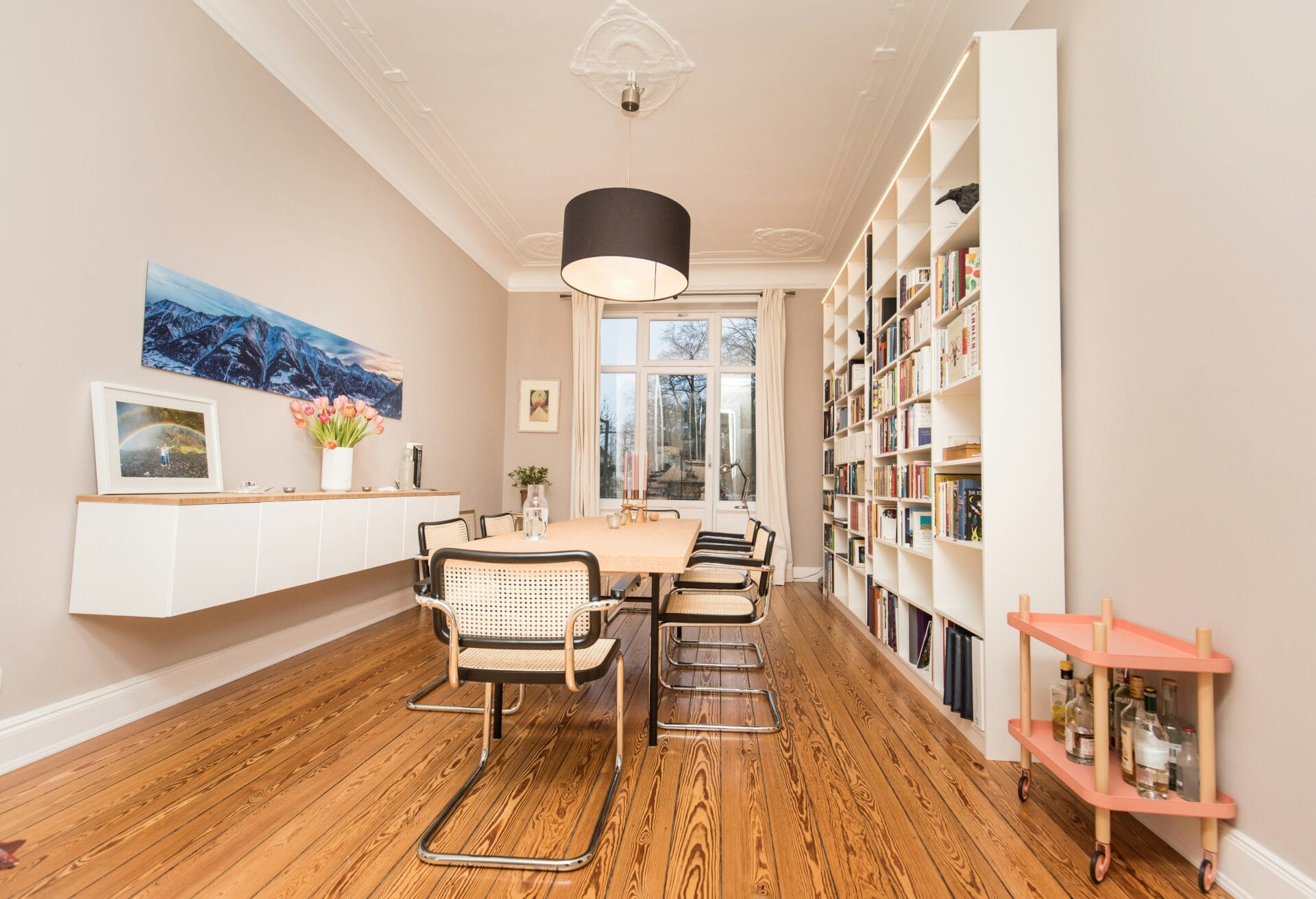
FF&E sourcing from China can work well for hotel, office, healthcare and education projects. However, a low quotation or polished website does not prove that a supplier can deliver the required furniture.
Before sending a purchase order, buyers should verify the legal supplier, manufacturing site, product capability, samples, quality plan, delivery scope and contract terms.
Therefore, the goal is not to decide whether sourcing from China is “safe” or “unsafe.” The goal is to build a process that verifies the supplier, the products and the project responsibilities before production begins.
This guide explains how to vet a China FF&E manufacturer before sending a PO. It covers factory verification, certificates, samples, inspections, contracts, payment milestones and shipping preparation.
Quick answer: Start with the legal supplier. Next, confirm the actual manufacturing site and product capability. Then review project-specific documents, approve a production-ready sample, define inspection rights and lock commercial responsibilities in the purchase order.

Key Takeaways
- FF&E sourcing from China requires supplier due diligence before the buyer releases a purchase order.
- First, buyers should verify the legal supplier, contract entity, payment recipient and manufacturing-site address.
- Next, the buyer should confirm that the factory can make the actual furniture product, not only show a similar catalogue item.
- Certificates support supplier review. However, product documents must match the exact furniture configuration, materials and destination market.
- A live factory video can support early screening. Nevertheless, it should not replace sample approval, independent inspection or a site audit for higher-risk projects.
- Buyers should approve drawings, materials, hardware, finishes and a production-ready sample before bulk production begins.
- The purchase order should define inspection rights, packaging, Incoterms, payment milestones, warranty terms, change control and corrective-action responsibilities.
- Direct sourcing may reduce product cost for some programmes. However, buyers should compare total landed cost, quality-control scope, freight, duty, installation and warranty support.
- Hongye supports qualified furniture projects with drawings, samples, production planning, export packing, inspection coordination and project-specific documentation where applicable.
What Is FF&E Sourcing From China?
FF&E means furniture, fixtures and equipment.
For a hotel project, FF&E sourcing from China may include:
- Guestroom casegoods.
- Headboards.
- Nightstands.
- Wardrobes.
- Desks.
- Bed bases.
- Guestroom seating.
- Lobby furniture.
- Restaurant tables and chairs.
- Meeting-room furniture.
- Outdoor furniture.
- Reception desks.
- Decorative furniture.
- Selected mirrors and equipment.
China sourcing can offer manufacturing capacity, customisation options and access to many furniture materials.
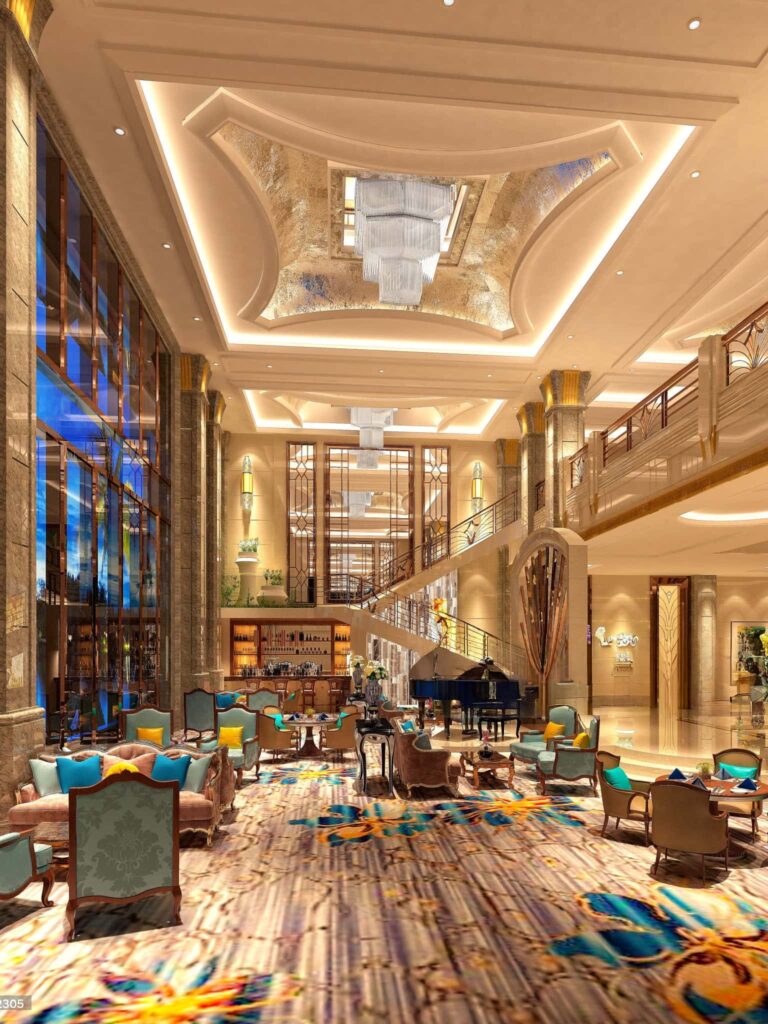
Hotel Furniture
However, international sourcing also creates additional responsibilities.
For example, the buyer must consider:
- Supplier verification.
- Product drawings.
- Material approval.
- Samples.
- Production control.
- Export packing.
- Freight.
- Customs.
- Local delivery.
- Installation.
- Warranty.
- Replacement parts.
Therefore, a furniture order should not move directly from quotation to deposit.
Sourcing rule: Verify the supplier, products, quality plan and commercial terms before releasing production.
Start With the Legal Supplier
The first review should confirm who the buyer is actually contracting with.
A sales representative, showroom, website or online marketplace page may not identify the same legal entity that will manufacture or export the furniture.
Therefore, buyers should check the contracting supplier before discussing samples or payment.
Legal Supplier Checks
Request and compare:
- Business licence.
- Legal company name.
- Registered address.
- Unified social credit code, where applicable.
- Factory address.
- Contracting entity name.
- Invoice entity name.
- Bank account beneficiary name.
- Export entity name.
- Company contact details.
- Authorised signatory details.
The names should make sense together.
For example, a supplier may use a separate export company from its manufacturing company. This structure is not automatically a problem.
However, the buyer should understand the relationship between the manufacturer, exporter, contract entity and payment recipient.
If the names do not match, ask for a written explanation before sending funds.
Legal-entity rule: The purchase contract, invoice and payment instructions should identify the correct legal entities and their roles.


Confirm the Manufacturing Site
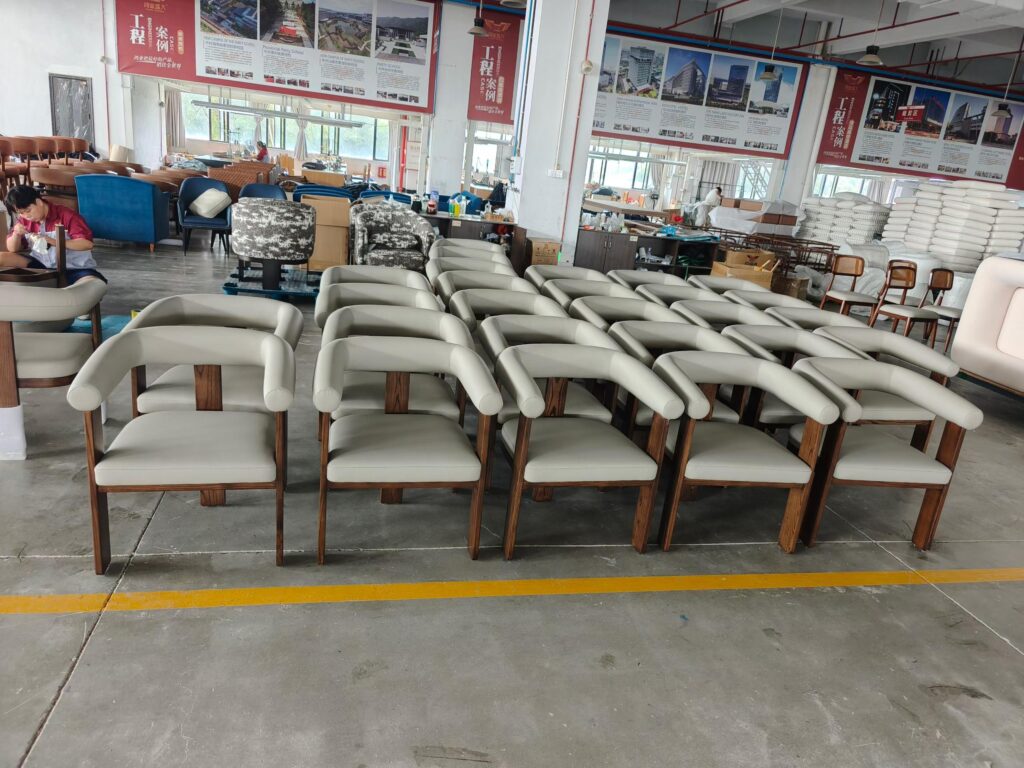
A supplier may operate its own factory, use affiliated plants, subcontract selected processes or act as a trading company.
None of these models is automatically unacceptable.
However, the buyer should know which site will make the furniture and which steps are subcontracted.
For example, a supplier may produce casegoods in-house but outsource metalwork, upholstery, stone cutting, glass or outdoor cushions.
Therefore, ask the supplier to explain its production model.
Manufacturing Questions to Ask
- Which factory will make the ordered products?
- What is the factory address?
- Which processes are completed in-house?
- Which processes are subcontracted?
- Who controls subcontracted production?
- Which production line will handle the order?
- What equipment supports the product category?
- What is the current production capacity?
- What is the factory’s expected production schedule?
- How does the supplier control incoming materials?
- How does the supplier handle non-conforming products?
- How does the supplier manage corrective actions?
A live factory video can help with initial screening.
During the video, ask the supplier to show the areas relevant to your order, such as panel processing, metalwork, upholstery, finishing, packing and warehouse storage.
However, video is only one source of information.
For higher-risk, high-value or highly custom projects, buyers should also consider a physical site audit, independent inspection or both.
Factory rule: Verify the relevant production capability, not only the size of the factory or the appearance of a showroom.
Review Product Capability Before Certificates
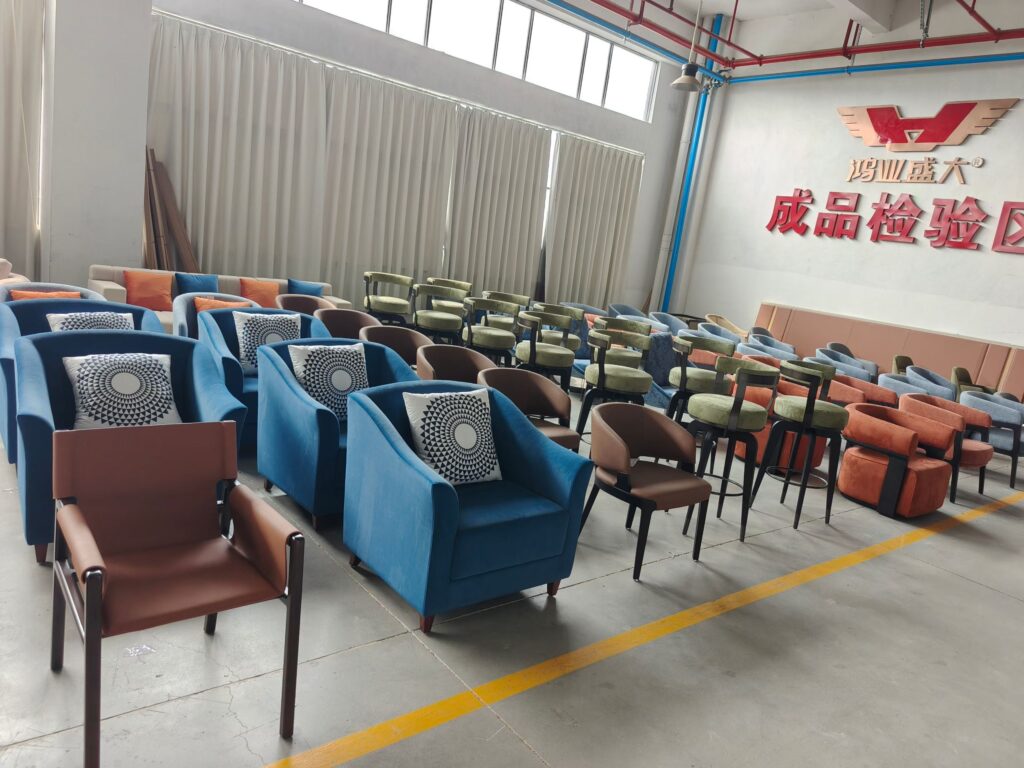
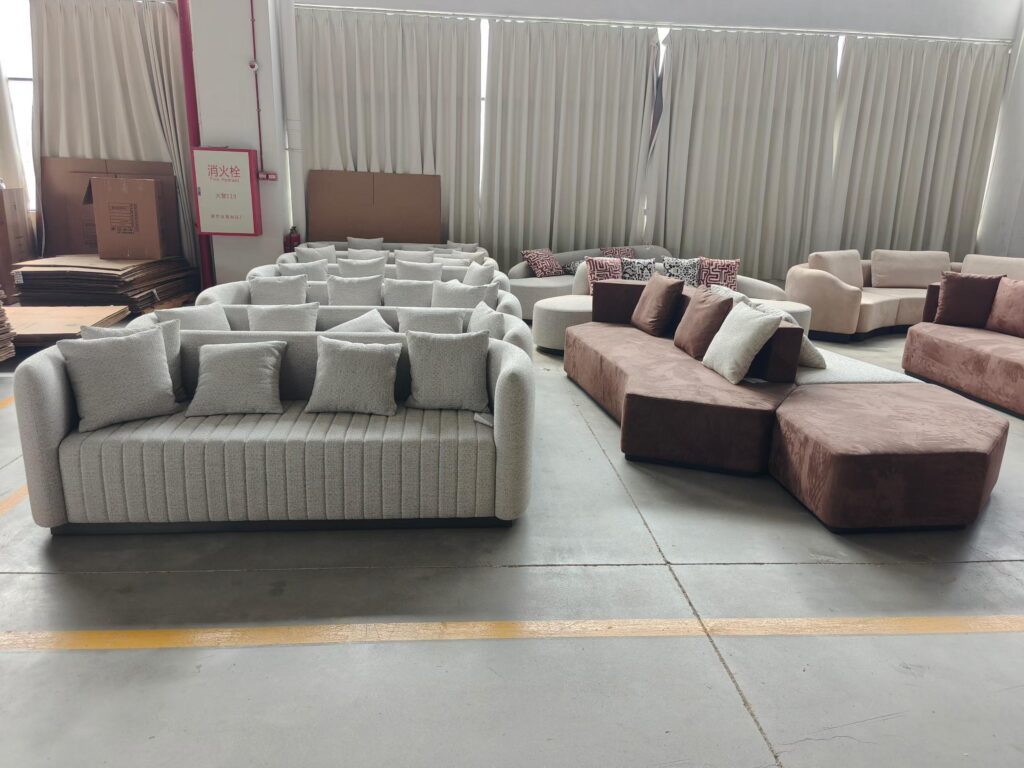
A factory certificate does not prove that the supplier can make your exact furniture item.
For example, a factory may make office desks well but lack experience with hotel wardrobes, upholstered headboards, fire-rated seating or outdoor furniture.
Therefore, buyers should first confirm product capability.
Ask for:
- Comparable product photos.
- Product drawings.
- Sample-room photos where available.
- Material schedules.
- Furniture BOMs.
- Production-process explanation.
- Similar project scope.
- Relevant test reports.
- Packaging examples.
- Warranty examples.
- Replacement-part availability.
- Subcontractor details where applicable.
In addition, compare the supplier’s experience with your project requirements.
A supplier may be suitable for:
- Standard office workstations.
- Custom hotel casegoods.
- Public-area lounge seating.
- Restaurant furniture.
- Healthcare seating.
- Outdoor furniture.
- Education furniture.
However, these categories often need different materials, hardware, standards, packing and quality controls.
Capability rule: Ask whether the supplier has made the same product type, for the same use environment, with similar materials and similar quantities.
Match Certificates to the Product
Certificates and test reports can support supplier due diligence.
However, buyers should request only documents that apply to the actual product, material and destination market.
A certificate from one product category does not automatically apply to another.
Supplier and Product Evidence
| Buyer Question | Evidence to Request |
|---|---|
| Is the legal supplier real? | Business licence, legal entity details, contract information and payment confirmation |
| Does the factory manage quality processes? | ISO 9001 certificate covering the relevant site and scope |
| Does the factory manage environmental aspects? | ISO 14001 certificate covering the relevant site and scope |
| Can the supplier make this product? | Drawings, samples, production-process review and comparable project evidence |
| Does the chair meet a performance requirement? | Product-specific test report for the applicable product category |
| Does the wood product carry an FSC claim? | Valid Chain of Custody certificate and order-level FSC claim where required |
| Does the product meet emissions requirements? | Product- or material-specific emissions documentation |
| Does an electrical item meet market requirements? | Applicable electrical conformity documents for the voltage, plug and destination market |
| Does the upholstered item meet fire requirements? | Project-specific fire evidence matching the supplied construction and destination market |
Use BIFMA Carefully
BIFMA standards apply to specific furniture categories.
For example:
- ANSI/BIFMA X5.1 applies to general-purpose office chairs.
- ANSI/BIFMA X5.4 applies to public and lounge seating.
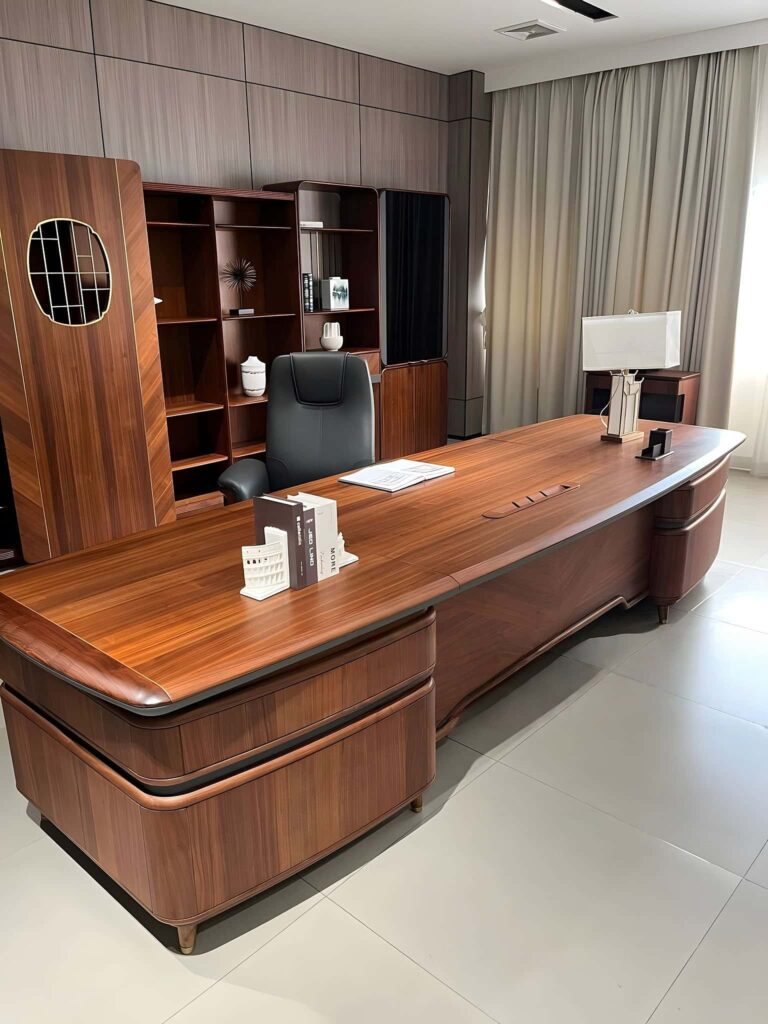
- ANSI/BIFMA X5.5 applies to desk and table products.
Therefore, buyers should not ask for a generic “BIFMA certificate” for every hotel chair, banquet chair, bar stool, outdoor chair or casegood.
Instead, they should identify the correct product category and project requirement.
BIFMA standards have different scopes for office, lounge, public and other furniture products.
Office Furniture
Use FSC Carefully
FSC is not a general factory environmental certificate.
For furniture projects, FSC may apply to eligible forest-based materials.
Therefore, buyers should confirm:
- Supplier Chain of Custody certificate.
- Certificate scope.
- Eligible product or material.
- Required FSC claim.
- Transaction-level claim on sales documents where applicable.
Use Indoor-Emissions Documents Carefully
GREENGUARD, GREENGUARD Gold or other indoor-emissions documentation may apply to specific products or materials.
Therefore, the buyer should confirm that the certificate matches:
- Product model.
- Material configuration.
- Upholstery or panel type.
- Finish system.
- Current certificate status.
- Required project or market standard.
Use CE Carefully
CE marking applies only when relevant European Union requirements apply to the product.
For example, an electrical power module may need applicable electrical conformity documentation. However, ordinary wood furniture should not be described as “CE certified” without a relevant legal basis.
Document rule: A supplier should explain which documents apply to the exact furniture product. Broad claims without verifiable scope should be treated as a risk indicator.
Approve a Production-Ready Sample
A sample is one of the strongest supplier-verification tools.
Before bulk production begins, the buyer should review a production-ready sample, also called a PP sample.
The PP sample should use the approved:
- Drawings.
- Dimensions.
- Board core.
- Veneer or laminate.
- Finish.
- Hardware.
- Upholstery.
- Foam.
- Metal components.
- Packaging method.
- Labelling method.
The buyer should not approve the sample only by photograph.
Instead, review:
- Dimensions.
- Construction.
- Joint quality.
- Edge treatment.
- Finish.
- Colour.
- Sheen.
- Hardware operation.
- Drawer and door alignment.
- Frame stability.
- Wall-fixing details.
- Upholstery seams.
- Cushion comfort.
- Packing protection.
- Carton labels.
- Product code.
After approval, the project may retain the sample as a golden sample.
The golden sample should be identified by item code, drawing revision, date, material references and approval signature.
However, the sample does not replace the written specification.
Sample rule: Use the approved sample together with drawings, BOMs, finish schedules and inspection criteria.
For more guidance, read Pre-Production Sample Approval Checklist: Before Hotel Furniture Mass Production.
Use an Independent Quality Plan
Furniture sourcing needs more than one final inspection.
A strong quality plan can include checks before, during and after production.
Typical Quality Stages
- Pre-production review: Confirm drawings, materials, hardware, samples and packing requirements.
- In-process inspection: Check dimensions, construction, finish, hardware and repeated defects during production.
- Pre-shipment inspection: Check finished products, quantity, function, appearance and packaging before shipment.
- Loading inspection: Check container condition, carton count, labels, product protection and loading sequence.
- Receiving inspection: Record visible damage, shortages and carton condition at destination.
- Installation inspection: Check furniture placement, assembly, wall fixing, function and finish condition.
Where a buyer uses sampling inspection, the contract should define the inspection plan.
This plan may refer to ISO 2859-1 or another agreed sampling method.
However, “AQL 2.5” alone is not enough.
The buyer should also define:
- Lot size.
- Inspection level.
- Sample size.
- Critical defects.
- Major defects.
- Minor defects.
- Acceptance criteria.
- Re-inspection process.
- Corrective-action responsibility.
- Shipment-release authority.Inspection rule: Quality control works best when the buyer defines the standard, sample, defect criteria and corrective-action process before production starts.
Review the Contract Before Payment
A purchase order should do more than confirm price and quantity.
It should also define the scope, quality requirements, payment milestones, delivery term and remedies.
Key Contract Items
Before paying a deposit, confirm:
- Legal supplier.
- Manufacturing site.
- Product list.
- Room matrix.
- Furniture drawings.
- Material schedule.
- Approved sample requirement.
- Inspection plan.
- Packing specification.
- Carton labels.
- Incoterm.
- Delivery location.
- Production schedule.
- Payment milestones.
- Change-control process.
- Warranty scope.
- Spare-parts plan.
- Corrective-action process.
- Claims procedure.
- Governing law.
- Dispute-resolution process.
Payment Milestones
Payment terms should reflect project risk, supplier credit, delivery term, inspection plan and product complexity.
For example, the parties may link payment to:
- Approved samples.
- Material release.
- Production milestones.
- Passed pre-shipment inspection.
- Shipment documents.
- Delivery.
- Final acceptance.
The right payment structure depends on the contract.
Therefore, buyers should not copy one payment formula from another project without considering the Incoterm, inspection rights, delivery scope and local legal advice.
Payment rule: Connect payment milestones to measurable project events and documented acceptance conditions.
Plan Shipping and Delivery Early
Factory completion does not mean furniture is ready for the hotel site.
The shipment still requires export packing, freight booking, documents, customs, local delivery, storage and installation planning.
Before production ends, buyers should confirm:
- Export packing requirements.
- Room-set labels.
- Carton dimensions.
- Container-loading plan.
- Freight booking window.
- Port cut-off.
- Cargo insurance.
- Customs broker.
- Importer-of-record responsibilities.
- Destination warehouse.
- Site delivery route.
- Freight-lift access.
- Storage conditions.
- Installation sequence.
- Waste removal.
For international sourcing, buyers should compare total landed cost.
This cost can include:
Landed Furniture Cost=Product Price+Packing+Origin Charges+Freight+Insurance+Duties and Taxes+Customs Clearance+Local Delivery+Storage+Installation+Spare Parts+Contingency
Direct sourcing may reduce product cost for some standardised or higher-volume projects.
However, the final outcome depends on specifications, samples, inspection, freight, customs, storage, installation, warranty and project risk.
Landed-cost rule: Compare like-for-like total cost, not only EXW or FOB price.
Hongye FF&E Sourcing Support
Hongye supports qualified hotel, office, healthcare and education furniture projects with furniture schedules, product drawings, material samples, production planning, export packing, inspection coordination and shipment documentation.
During supplier review, buyers can request information about:
- Contracting entity.
- Manufacturing site.
- Product capability.
- Sample process.
- Material and finish options.
- Quality-control plan.
- Packaging approach.
- Export documentation.
- Inspection coordination.
- Spare-part planning.
- Warranty documentation.
Where applicable, Hongye can discuss project-specific product evidence, including performance reports, FSC claims for eligible wood-based materials, indoor-emissions documentation, fire-performance evidence and market-specific electrical documents.
Hongye states that it has more than 30 years of commercial furniture manufacturing experience and operates a 300,000-square-metre production facility in Heshan, Jiangmen, Guangdong, China.
Before production release, buyers should confirm that the final documents match the exact furniture product, manufacturing site, material configuration, destination market and purchase-order scope.
Frequently Asked Questions
How do I choose an FF&E manufacturer in China?
Start with the legal supplier.
Verify the contract entity, payment recipient and manufacturing-site address. Next, review product capability, samples, drawings, materials, quality controls and project-relevant documents.
Finally, define inspection rights, payment milestones, packing, delivery scope and warranty terms in the purchase order.
What should I check before ordering hotel furniture from China?
Check the legal supplier, factory site, furniture drawings, material schedule, PP sample, golden sample record, inspection plan, packing specification, Incoterm, payment milestones, warranty scope and customs responsibilities.
In addition, confirm the furniture product meets the required destination-market and project requirements.
Is it safe to source FF&E from China?
It can be, when buyers use structured due diligence.
The main risks are not unique to one country. They include unclear supplier roles, weak product controls, undocumented subcontracting, incorrect materials, poor packing, weak inspection rights and unclear contract remedies.
Therefore, buyers should verify the supplier, approve samples, define quality gates and use clear contractual controls.
How much can FF&E sourcing from China save?
Direct sourcing may reduce product cost for some large or standardised furniture programmes.
However, savings depend on product design, order quantity, materials, inspection, freight, duty, customs, storage, local delivery, installation and warranty support.
Buyers should compare total landed cost and specification equivalence instead of relying on a fixed percentage saving.
What certifications should a hospitality furniture supplier provide?
The required documents depend on the furniture type and destination market.
Buyers may need ISO management-system certificates, product-specific performance reports, FSC claims for eligible wood-based materials, indoor-emissions documents, fire reports, electrical conformity documents, packaging records and warranty information.
Can I verify a China furniture supplier audit remotely?
A remote review can support early screening.
For example, buyers can verify legal documents, certificates, product reports and a live factory video. However, high-value or high-risk projects may also need independent inspection, a physical audit, approved samples or reference checks.
What should I include in a China furniture purchase order?
Include the legal supplier, product list, BOQ, drawings, material schedule, sample requirements, inspection plan, packing specifications, Incoterm, payment milestones, delivery schedule, warranty, spare parts, change-control process and dispute-resolution terms.
Vet the Supplier Before You Release the PO
FF&E sourcing from China can deliver strong value when the buyer controls the process.
First, verify the legal supplier and manufacturing site. Next, confirm product capability and project-specific documents. Then, approve a production-ready sample and define quality checks before bulk production begins.
Finally, lock the commercial and logistics responsibilities into the purchase order.
A structured review takes more effort than accepting a low quote. However, it gives hotel and commercial buyers clearer control over materials, quality, schedule, cost and supplier accountability.