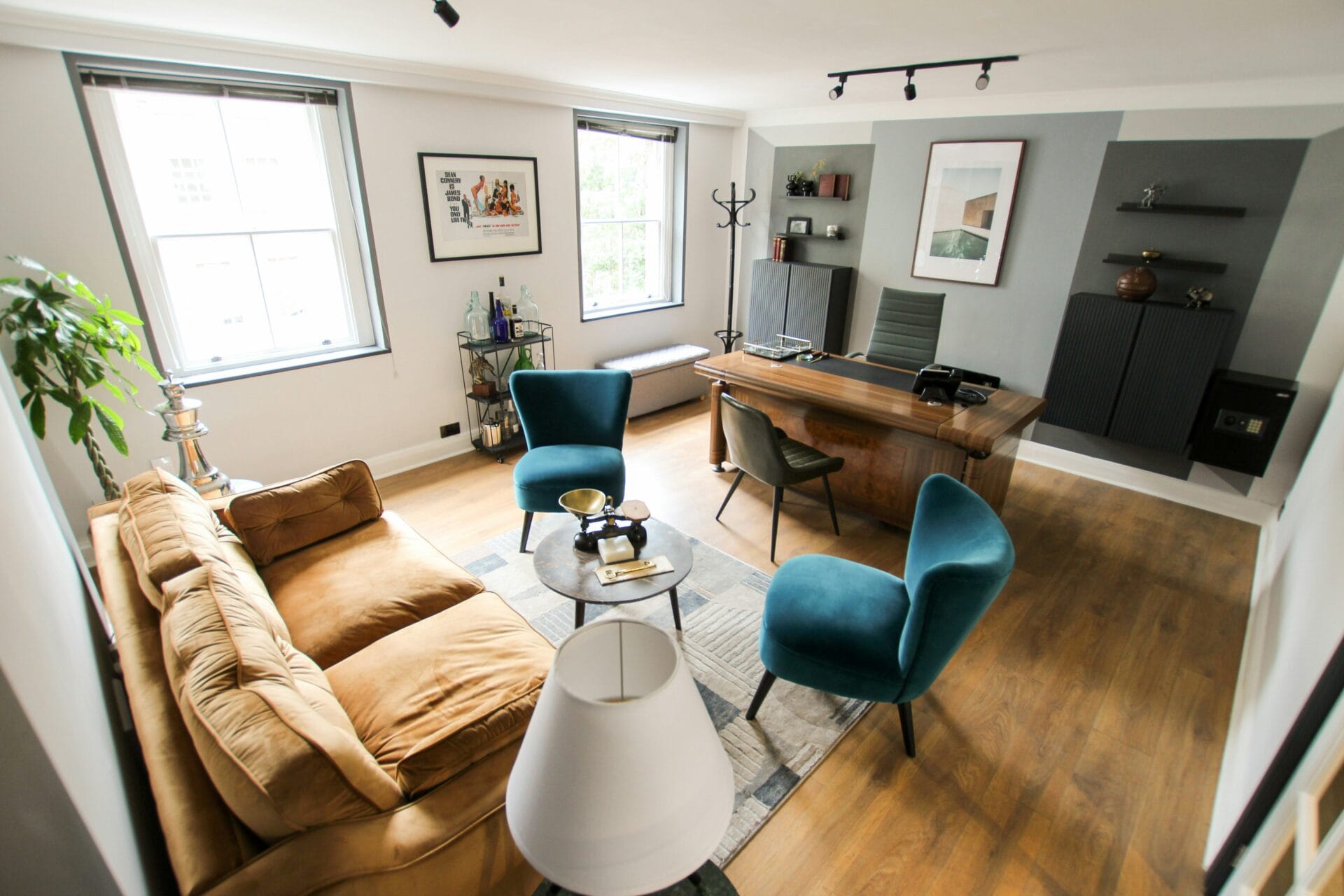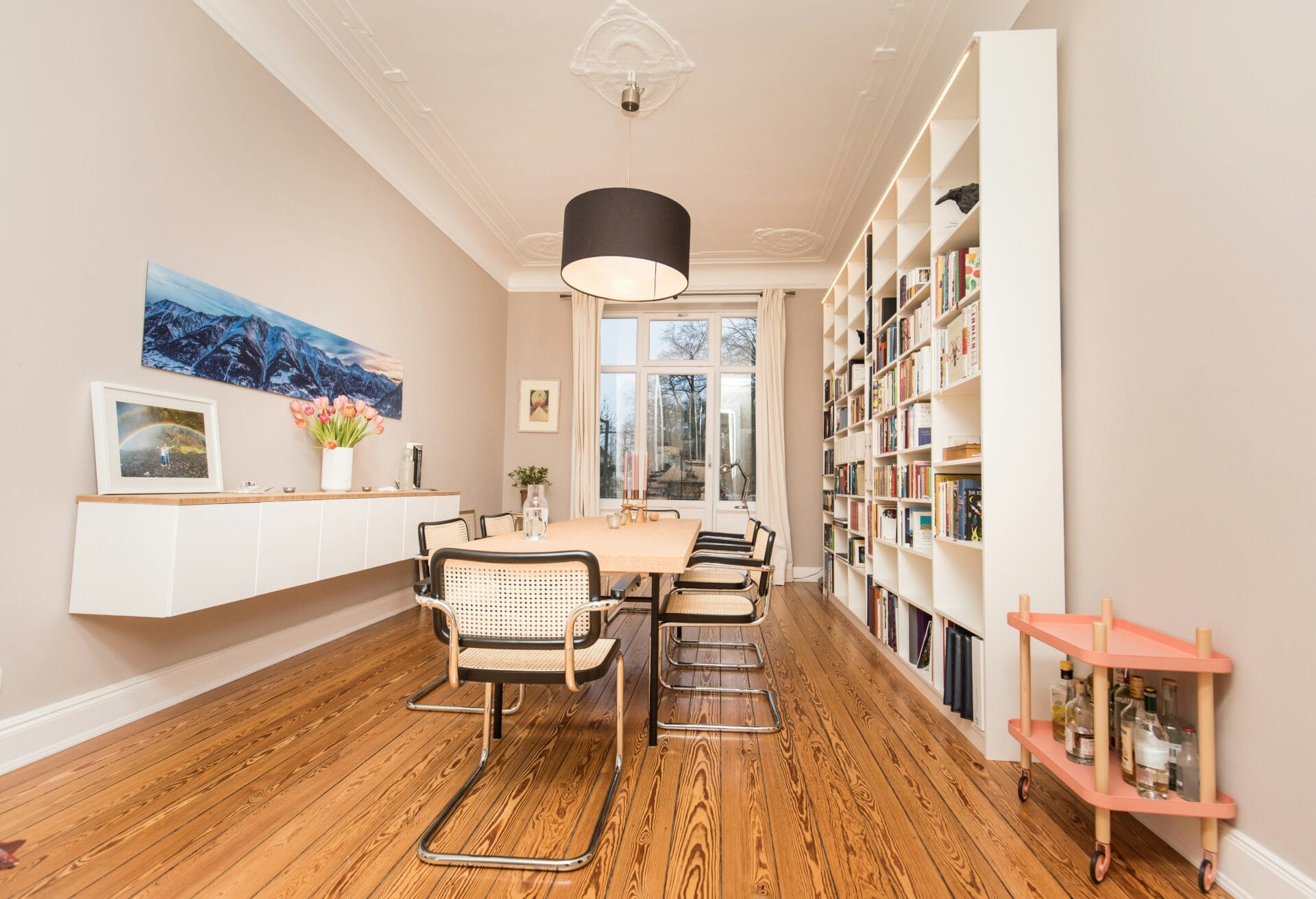
Trump’s China visit has brought strong global attention to China’s ability to host heads of state, top business leaders, and international delegations in true state-level hospitality spaces. During such visits, every detail in the environment—from lighting and acoustics to the high-end hotel ballroom furniture solutions used in banquets and forums—contributes to a nation’s soft power narrative. For hotel developers, government project planners, and international buyers, these events provide a live benchmark of what “world-class” hospitality looks like.
Against this backdrop, Trump’s China visit hospitality projects show that furniture is no longer just background decor. It has become a strategic asset that supports protocol, comfort, security, and media image. Decision-makers responsible for new hotels, government complexes, or university halls increasingly look for a Chinese hospitality furniture manufacturer that can deliver state-level conference room furniture, VIP reception room custom sofas, and multifunctional meeting room furniture design that meet these higher expectations.
Outline Overview
This article first connects Trump’s China visit with the standards that define true state-level hospitality venues. It then explains the design logic behind world-class banquet, conference, and VIP spaces, with a clear focus on engineering, comfort, and layout flexibility. Next, it offers practical selection criteria for buyers sourcing high-end hotel ballroom furniture solutions and premium commercial furniture for government venues. Finally, it describes how custom hospitality furniture projects move from concept to completion and how a partner like Hongye Furniture uses its experience to support hotels, government centers, and institutional clients that aim to host world-class dignitaries.
Trump’s China visit highlights the standard of state-level hospitality spaces.
Diplomatic Events as a Performance Stage
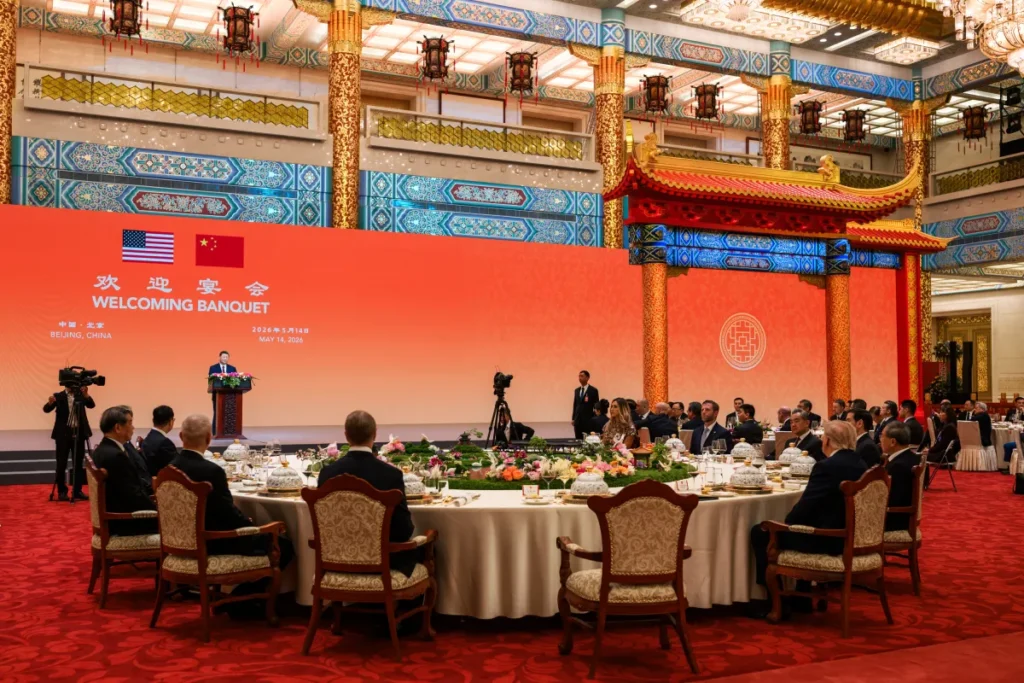
Trump’s China visit hospitality projects demonstrate how national image, diplomatic protocol, and guest experience come together in a single physical environment. State banquets, bilateral meetings, and large-scale forums are not ordinary events. They are carefully staged occasions where every camera angle captures the setting as much as the speakers. In this context, state-level conference room furniture and high-end hospitality layouts become critical parts of the overall narrative.
Venue Types and Usage Intensity
Trump’s itinerary typically includes several state banquets, closed-door bilateral meetings, business forums, and media-facing press events. These activities usually take place in five-star hotels, national-level conference centers, or government reception halls. Venue operators design and furnish these spaces to handle intensive use during peak periods, sometimes hosting events back-to-back for 8–12 hours a day. Furniture must stay visually flawless and structurally stable despite frequent turnover and constant handling.
Capacity, Density, and the State-Level Standard
The standards for such spaces are much higher than those for typical commercial projects. A standard hotel ballroom might host 150–300 guests. In contrast, state-level hospitality spaces often accommodate 500–1,000 attendees in one session. Seating density can reach 1–1.5 square meters per person. This requires five-star hotel banquet chair supplier capability that balances compact footprints with real comfort. At the same time, table layouts must allow staff to switch quickly between banquets, plenary sessions, and breakout discussions. In these environments, premium commercial furniture for government venues and national-level hotels must deliver three core values: durability, comfort, and visual impact. Durability ensures safe, stable use under heavy loads and high-frequency operation. Comfort sustains guests through long speeches and multi-course meals. Visual impact reinforces the prestige and authority of the host nation. Together, these elements create what we can call the “state-level reception standard,” a benchmark that many global hospitality and conference projects now aim to reach.
Key Design Logic Behind World-Class Banquet and Conference Furniture
World-class venues do not simply place attractive furniture in a beautiful room. They apply clear, repeatable design logic to every banquet chair, conference table, and lounge sofa. From Trump’s China visit hospitality projects to international summits, the same principles appear again and again: capacity, flexibility, status, and technical functionality.
Ballroom Furniture – Balancing Density, Comfort, and Flexibility
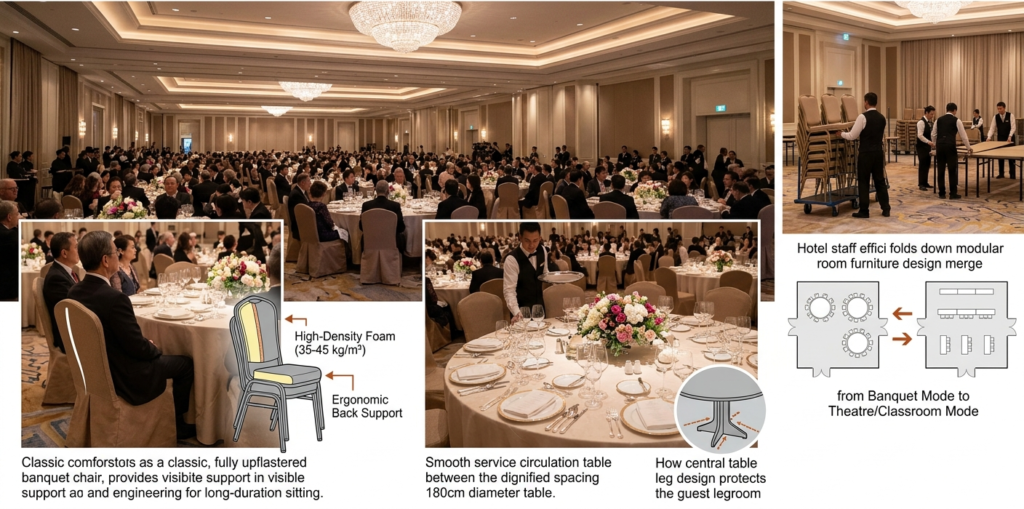
Ballrooms that host state banquets must seat large numbers of guests while maintaining dignified spacing and smooth service circulation. A typical state-level ballroom setup may serve 200–1,000 guests at round tables, with each table seating 8–10 people. In this scenario, high-end hotel ballroom furniture solutions must support both human comfort and operational efficiency.
Banquet chairs provide a clear example. They often look slim and simple on camera, but designers engineer them for long-duration sitting. A capable five-star hotel banquet chairs supplier uses high-density foam, typically 35–45 kg/m³, ergonomic back curves; and seat heights of around 450–480 mm. These features help guests maintain proper posture over 2–3 hour meals. At the same time, frames must cope with constant stacking, moving, and reconfiguration. In many hotels, chairs need to deliver 8–10 years of service under heavy use.
Round banquet tables must support practical demands as well. They carry full tableware sets, decorative centerpieces, and sometimes live serving equipment. Common diameters range from 150 to 180 cm. Table bases often use designs that protect legroom while ensuring stability. In venues that host many event types, modular layouts allow staff to switch from banquet mode to theater or classroom mode in 60–90 minutes. Here, multifunctional meeting room furniture design and hospitality requirements merge, because ballrooms often double as conference halls and furniture must perform well in both roles.
Conference Hall Furniture – Stability and Functionality at Scale
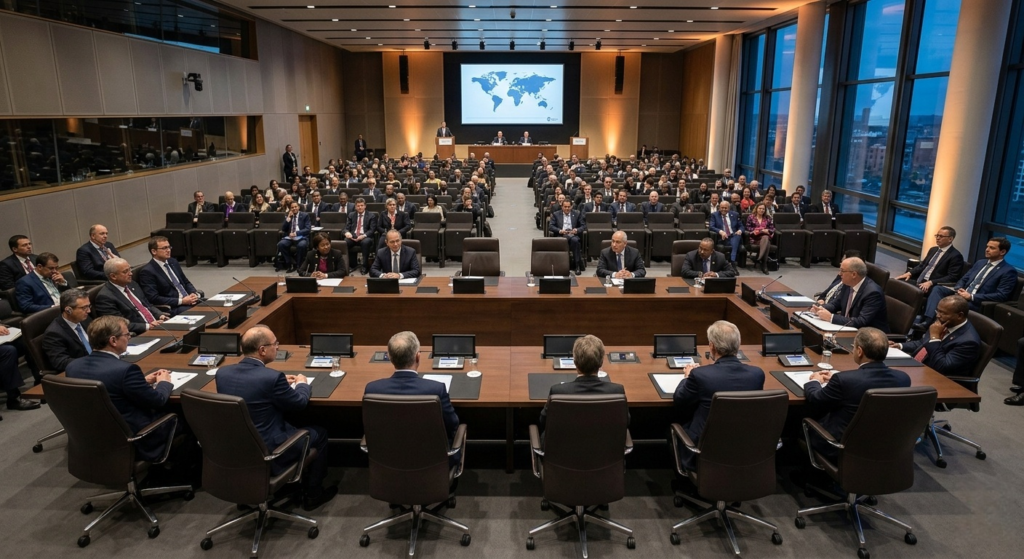
Conference halls that host bilateral talks, forums, and press conferences have a different set of priorities. In these spaces, state-level conference room furniture must focus on structural stability, integrated technology, and protocol alignment.
Large-span conference tables used for head-of-state or minister-level meetings often run from 6 to 12 meters in length. Custom conference tables for dignitaries need internal steel frames or reinforced understructures to avoid sagging and vibration. A standard boardroom table may only support moderate loads. In contrast, state-level tables carry microphones, monitors, translation devices, and cables, and still need to appear seamless on camera.
Effective cable management is also essential. Visible cable clutter is unacceptable in high-level meetings. Designers route power and data from floor boxes through the table structure to each seat position. This approach becomes even more important in hybrid or media-heavy forums where each participant may use several devices. Lecture hall and auditorium seating systems benefit from similar snap-in power and data modules to support modern digital use.
Seating in conference halls tends to prioritize ergonomic support instead of extreme density. Chairs often use mid-back or high-back designs with padding and armrests that maintain comfort during 2–4 hour sessions. Tilt mechanisms and contoured cushions help reduce fatigue. In larger plenary halls, fixed seating systems must balance legroom, sightlines, and acoustic performance so that audiences can stay focused throughout long keynote sessions.
VIP Reception Spaces – Creating Authority and Comfort
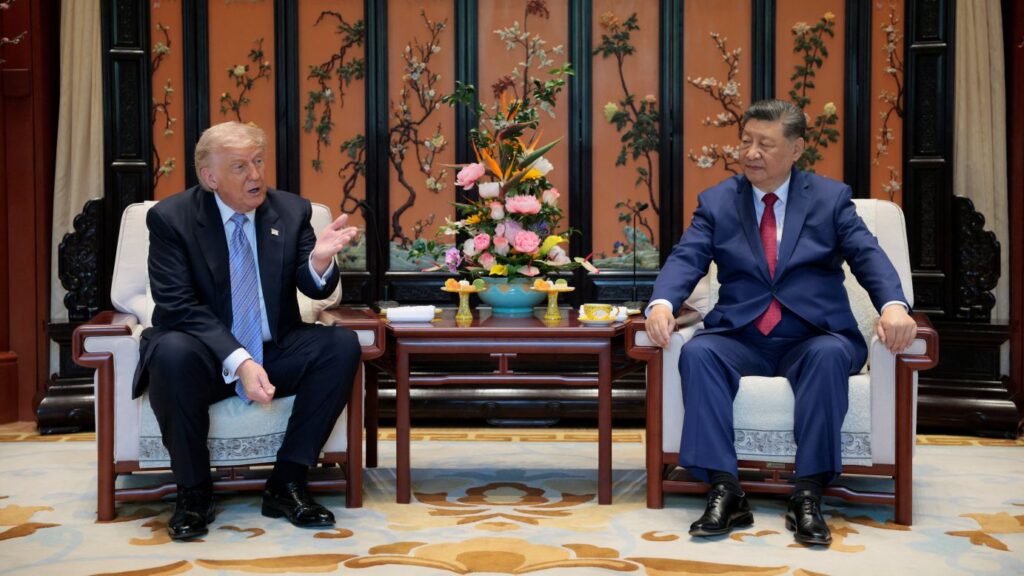
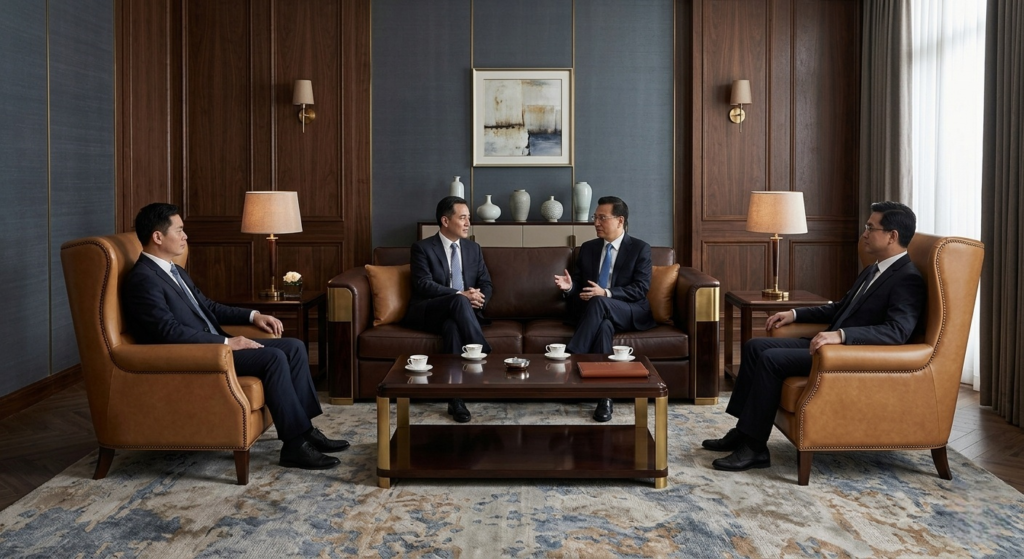
If ballrooms and conference halls serve as the “public stage,” VIP reception rooms act as the “inner circle” where the most sensitive and high-level discussions take place. In these spaces, VIP reception room custom sofas and lounge seating send strong signals about status, hierarchy, and hospitality.
Designers often choose premium materials such as top-grain leather, high-quality veneer, and metal accents to express authority and refinement. Color palettes are usually controlled and elegant: deep neutrals, warm woods, and subtle metallic tones create a calm yet impressive backdrop. Sofas and armchairs may have slightly higher backs and firm but comfortable cushions to project both hospitality and professionalism.
Spatial layout matters as much as the furniture itself. Seating arrangements must reflect protocol. Leaders usually sit centrally, often in slightly elevated positions, while supporting officials and guests take places at carefully defined distances. Side tables, coffee tables, and credenzas support service flow and document handling. For designers and buyers, this makes it essential to work with a China hospitality furniture manufacturer that understands aesthetic expectations and cultural nuances at the same time.
Key Furniture Selection Criteria for High-End Hospitality Projects
For decision-makers who plan Trump’s China visit–level environments, furniture selection is a strategic process, not just a visual choice. The points below provide a clear framework when you assess potential solutions and suppliers for high-end hotel ballroom furniture solutions and premium commercial furniture for government venues:
When designing or sourcing furniture for high-level hospitality and conference spaces, several critical factors must be considered:
- Structural durability: Furniture should handle high-frequency use, often 8–12 hours per day during events and 250–300 event days per year. Frames need to pass industry-standard load tests and deliver a typical lifespan of 8–10 years in professional environments.
- Comfort performance: Seating must preserve ergonomic support over long durations, whether during multi-course banquets or extended plenary sessions. Banquet chairs with high-resilience foam and well-shaped backrests can significantly reduce guest fatigue.
- Material quality: Fire-resistant fabrics, high-density foam, and scratch-resistant surfaces are essential. For public venues and government spaces, upholstery usually needs to meet fire safety standards such as BS 5852 or CAL TB 117.
- Flexibility and storage: Stackable banquet chairs, often stackable 8–10 pieces high, and foldable tables help staff change layouts quickly and optimize storage space. This flexibility is crucial for multifunctional meeting room furniture design, where rooms take on new functions daily.
- Aesthetic alignment: Furniture must match the architectural and branding style of the venue, whether modern minimalist, classic European, or culturally themed. Color, shape, and detailing should all support a coherent visual story that works both in person and on camera.
- Compliance and safety: Beyond fire performance, furniture for high-end hospitality projects should comply with durability and stability standards. This is especially important for lecture hall and auditorium seating systems, where public safety and evacuation routes are key considerations.
For a deeper exploration of how to define specifications and performance standards before procurement, you can link to a dedicated resource such as a guide on hotel and conference furniture specification planning (https://www.[my-domain].com/hospitality-furniture-specification-guide).
Hotel Furniture
From Concept to Completion – How Custom Furniture Projects Are Delivered
Large-scale hospitality projects, especially those inspired by Trump’s China visit hospitality projects, need a clear and reliable workflow. A structured process turns conceptual design into furniture that performs well, meets standards, and looks right on day one and many years later. Understanding this process helps buyers choose partners who can deliver on time and to specification.
From the perspective of an experienced China hospitality furniture manufacturer, a typical project flow includes the following stages:
- Requirement analysis: The project team collects detailed information on venue type, such as ballroom, lecture hall, or VIP lounge, as well as capacity, usage patterns, and brand positioning. A hotel that targets global conferences may prioritize high-density seating and quick reconfiguration, while a government reception hall may focus on protocol-driven layouts and symbolic materials.
- Design development: Based on the requirements, furniture designers and engineers create layout plans, product proposals, and finish schemes. 2D drawings and 3D visualizations help stakeholders understand sightlines, circulation, and how state-level conference room furniture will look under stage lighting and camera angles.
- Engineering validation: Structural engineers verify critical items such as custom conference tables for dignitaries and high-density banquet seating. They check load capacity, stability, joinery, and hardware selection. Many projects include prototypes or mock-ups for review and testing before mass production.
- Production: After final approval, manufacturing begins. Teams handle material preparation, cutting, machining, assembly, upholstery, and finishing. Quality control checks occur at each key stage to maintain consistency, which is vital when producing hundreds or thousands of identical banquet chairs or fixed seating units.
- Delivery and installation: Logistics teams plan packing, shipping, and on-site delivery, often under tight construction schedules. Installation crews then set up lecture hall and auditorium seating systems, align conference tables, and position VIP reception room custom sofas according to the final layout. A final inspection ensures the result matches the design intent and meets safety standards.
You can present this process in a short table to make it easier for readers to scan and remember:
| Parameter / Option | Description |
|---|---|
| Requirement Analysis | Define capacity, usage, and style |
| Design Development | Layouts, product selection, visuals |
| Engineering Validation | Structural safety, mock-up testing |
| Production | Mass manufacturing with QC checks |
| Delivery & Installation | Logistics, on-site setup, final QA |
This structured approach helps complex projects—from hotel ballrooms to government conference centers—run smoothly. It reduces the risk of late changes, performance problems, or visual inconsistencies. To support this part of the content, you can reference a more detailed article on hospitality project delivery best practices (https://www.[my-domain].com/hospitality-project-delivery-process).
HYSD Furniture’s Experience in High-End Hospitality and Conference Projects
In this demanding landscape, Hongye Furniture, operating as a specialized China hospitality furniture manufacturer, has built strong capabilities to support projects that aim for the same standard shown in Trump’s China visit hospitality projects.
The company has proven experience supplying furniture for five-star hotels and large conference venues. Its team understands that high-end hotel ballroom furniture solutions must combine visual prestige with daily practicality. The portfolio includes banquet chairs designed for intensive stacking and long-term comfort, modular banquet tables that support quick layout changes, and customizable fixed seating for lecture hall and auditorium seating systems.
Hongye Furniture’s project references cover lecture halls, university auditoriums, government buildings, and international event spaces. These sites often involve complex acoustic, sightline, and safety requirements. As a result, furniture design must move beyond pure aesthetics into true technical performance. Hongye Furniture’s engineers work closely with architects and interior designers so that furniture systems integrate smoothly with flooring, lighting, and AV infrastructure.
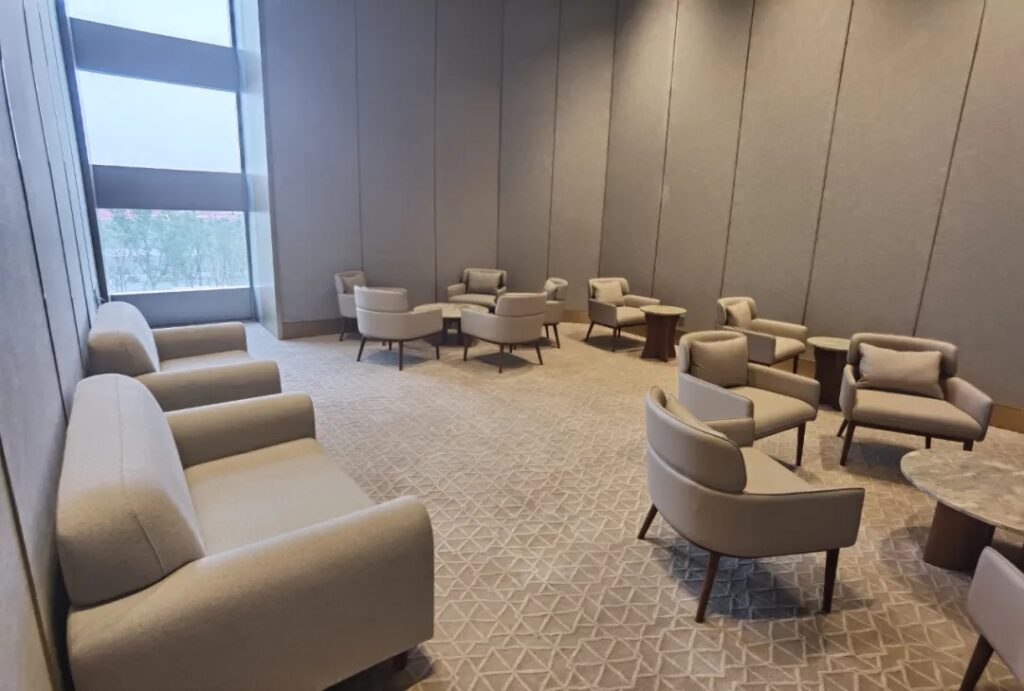
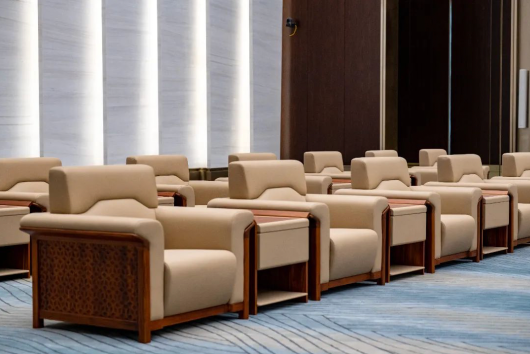
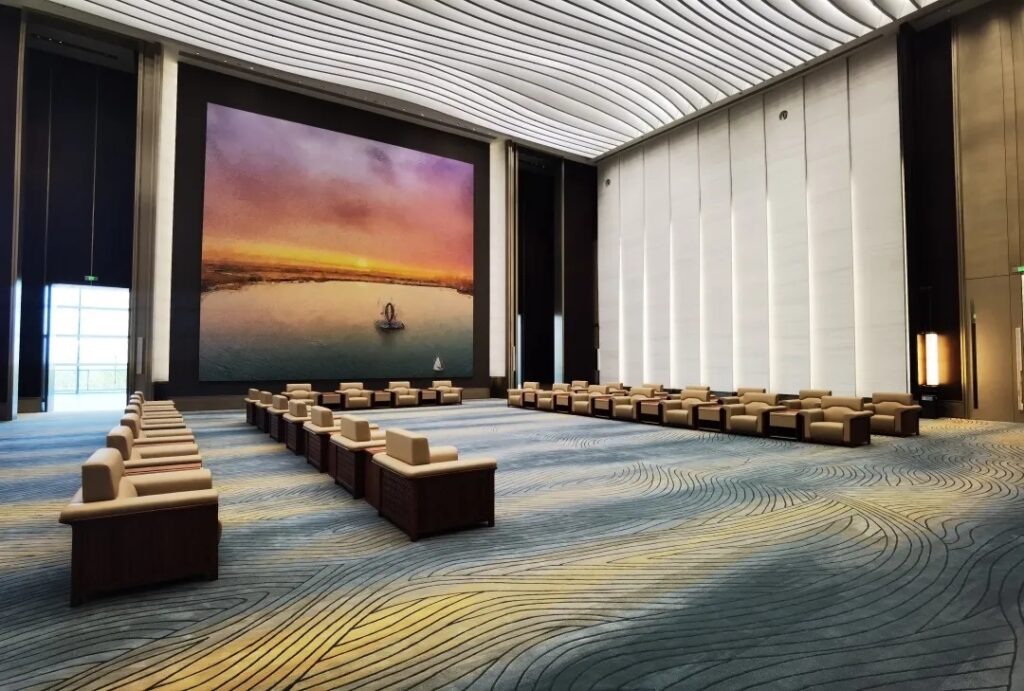
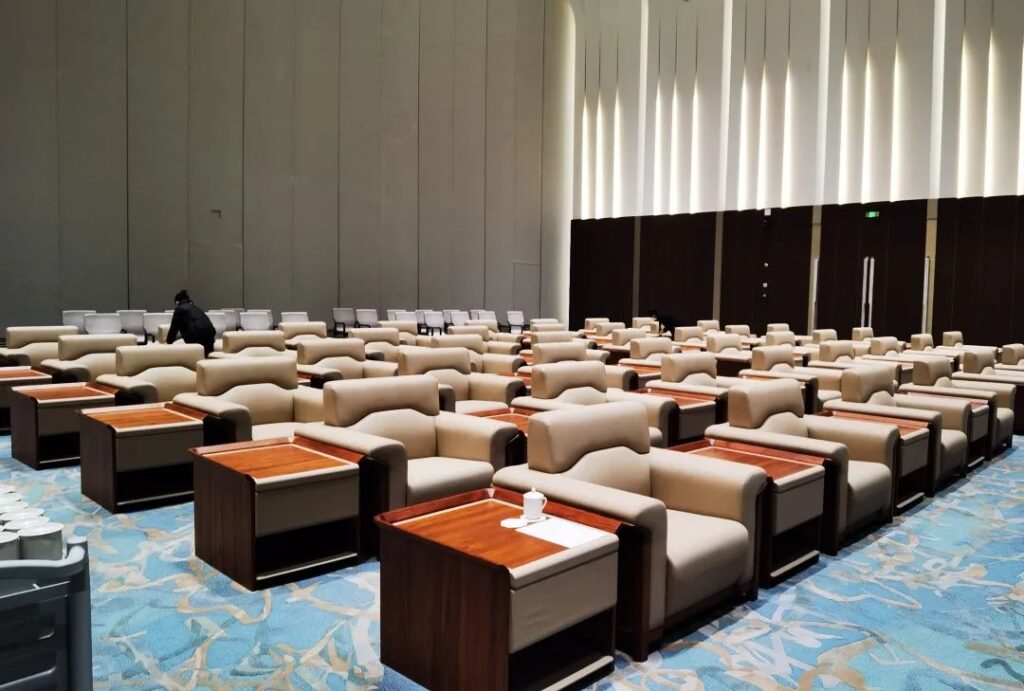
Customization remains one of Hongye Furniture’s core strengths. Clients can select fabric grades, foam densities, metal finishes, and veneer species to align with their branding and design goals. This high level of control is particularly important for premium commercial furniture for government venues and VIP spaces, where symbolic colors and materials carry diplomatic meaning.
Advanced manufacturing facilities allow Hongye Furniture to deliver consistent quality at scale. Automated cutting, CNC machining, and precision upholstery processes help the factory maintain tight tolerances across large batches and reduce variation at the job site. Rigorous quality control systems ensure that every batch meets structural and finish standards suitable for state-level conference room furniture.
Hongye Furniture also supports global project delivery with professional export processes and coordinated installation services. Whether the client is a five-star hotel chain, a national convention center, or a university campus, the team understands the documentation, compliance, and scheduling demands that international projects impose.
Conclusion
Trump’s China visit has again highlighted the power of state-level hospitality environments to express national strength, cultural confidence, and organizational excellence. Behind the scenes, carefully planned ballrooms, conference halls, and VIP lounges rely on furniture systems that meet demanding standards of durability, comfort, flexibility, and visual impact. For hotel developers, government planners, and institutional leaders, these events provide a clear roadmap for what truly world-class hospitality and conference spaces should deliver.
To reach this level, you need the right partner. A capable China hospitality furniture manufacturer must offer more than attractive designs. It should bring engineering expertise, real project experience, and reliable execution across large-scale installations. From high-end hotel ballroom furniture solutions to VIP reception room custom sofas and multifunctional meeting room furniture design, the ultimate goal is to create spaces that can host world-class dignitaries at any time.
As an industry leader in this field, Hongye Furniture combines advanced manufacturing, strong customization capabilities, and extensive project experience to help clients achieve true state-level reception quality. If you are planning a new hospitality or conference project—or upgrading existing ballrooms, lecture halls, or government venues—consider contacting Hongye Furniture to request a quotation, explore custom solutions, or review a detailed project case catalog. Working with a trusted, compliant, and socially responsible manufacturer will help ensure that your next venue looks outstanding on opening day and remains ready to welcome the world’s most important guests for many years to come.