In 2026, hotel FF&E procurement is moving beyond appearance and unit price. Hotel owners, operators, and designers increasingly need furniture that supports accessible power, maintainable technology integration, traceable materials, lower-emission requirements, and flexible space planning.
The practical priority is not to add more technology or certifications by default. Instead, buyers should specify furniture features that the property can operate, maintain, and verify throughout the asset lifecycle.
Three 2026 hotel FF&E trends are shaping both new-build and renovation projects:
- Technology is becoming more integrated and less visible.
- Sustainability claims are being replaced by auditable documentation.
- Modular furniture is helping operators adapt spaces across different dayparts and guest needs.
For procurement teams, these trends create opportunity. However, they also add technical, operational and compliance risks if specifications are vague or suppliers cannot provide relevant evidence.
Key Takeaways
- Smart hotel furniture increasingly includes accessible power, USB-C charging, wireless charging, cable routing and service-access features.
- Wireless charging, sensors and lighting controls should be specified with clear ownership between the furniture supplier, electrical contractor, MEP team and hotel IT team.
- Sustainability requirements should be verified through material declarations, certificate numbers, current validity dates, and product-specific test reports.
- Modular furniture can support flexible lobbies, extended-stay rooms and event spaces, but only when storage, staffing, cleaning and safety are planned.
- A model room remains the most effective way to test furniture dimensions, finish quality, technology integration, and guest usability before mass production.
- Hotels should compare FF&E suppliers based on specification compliance, documentation, lead-time planning, service access, and lifecycle value—not only FOB price.
The 2026 Hotel FF&E Market: More Complex Procurement
Hotel renovation activity, brand refresh cycles, and changing guest expectations continue to increase demand for commercial furniture and FF&E packages. However, procurement has become more complex because each furniture item may now require design approval, technical integration, sustainability documentation, testing records, logistics planning, and after-sales support.
Market forecasts vary depending on whether they include furniture only, fixtures, operating supplies, installation services or broader hospitality construction categories. Therefore, hotel teams should not rely on one market-size figure when building a procurement strategy.
What matters more is the project-level impact: hotel FF&E specifications increasingly involve multiple teams, including design, operations, engineering, procurement, IT, MEP, housekeeping, and brand representatives.
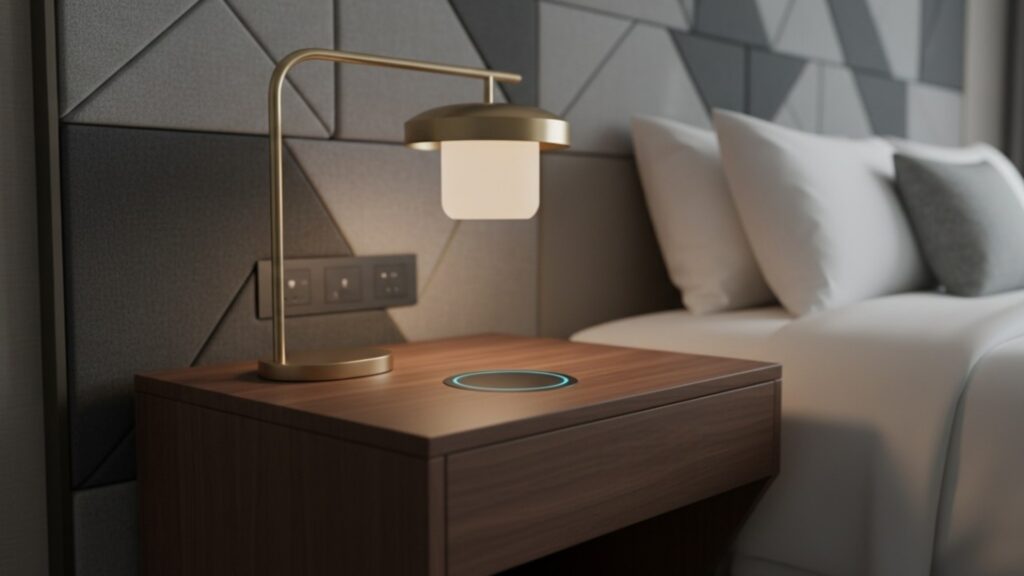
A bedside table, for example, may need to meet finish standards, support USB-C charging, provide a service route for electrical components, protect guests from exposed cables, and remain easy for housekeeping to clean. These requirements must be coordinated before production, not solved during installation.
Trend 1: Integrated Technology That Stays Invisible
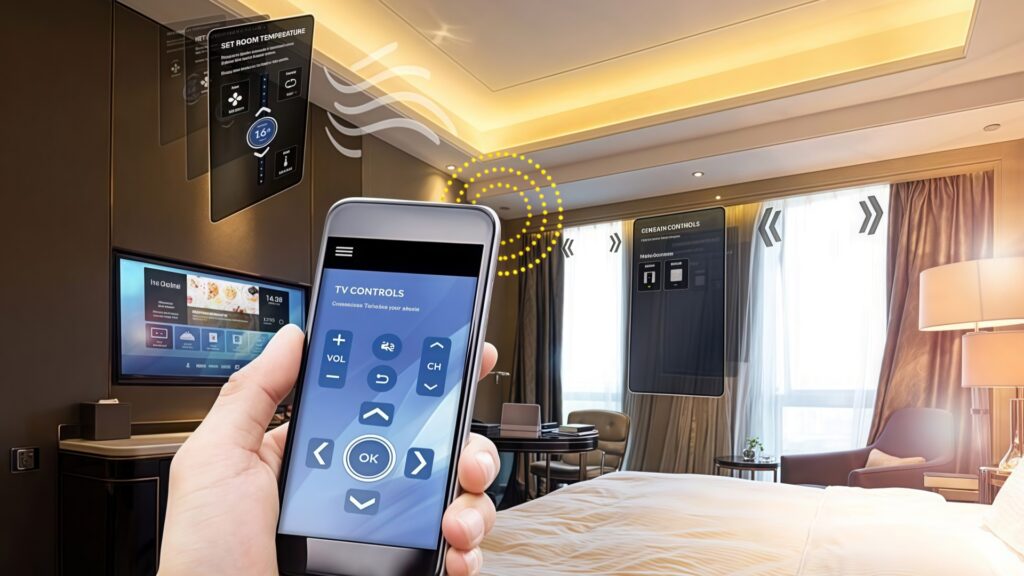
The strongest smart hotel furniture trend is not visible gadgets. It is well-integrated technology that improves guest convenience without making the room look cluttered or difficult to maintain.
In upper-midscale, upscale, lifestyle, and extended-stay properties, buyers increasingly request furniture that supports charging, data routing, room controls, and service access. Nevertheless, technology should only be integrated when it delivers a clear operational or guest-experience benefit.
Power, USB-C and Wireless Charging
Guests expect convenient charging near beds, desks and seating areas. In 2026, hotel furniture specifications increasingly include USB-C charging, AC outlets, cable-routing pathways, and where appropriate, Qi or Qi2-compatible wireless charging.
Qi2 uses magnetic alignment to improve charging consistency between compatible devices and chargers. However, hotel teams should verify device compatibility, local electrical certification, power rating, thermal performance, and replacement-module availability before selecting any integrated charging solution.
| Smart Feature | Typical Furniture Application | Procurement Requirement |
|---|---|---|
| USB-C charging modules | Nightstands, desks, lounge tables | Confirm wattage, module brand, plug type, and replacement availability. |
| AC power outlets | Desks, bedside units, public-area tables | Confirm local electrical code, surge protection, and cable routing. |
| Qi or Qi2 wireless charging | Nightstands, lobby tables, and lounges | Specify charging module, heat management, service access, and surface thickness. |
| Integrated power and data | Work desks, media walls, and meeting tables | Coordinate with MEP, IT, and electrical teams before final shop drawings. |
| Cable-management systems | Desks, wardrobes and public-area furniture | Include channels, grommets, access covers and cleaning requirements |
Procurement rule: Do not permanently seal charging pads, power modules, or data connections inside furniture. Every technology-integrated item should include a documented service route, replacement-part reference, and clear responsibility for future maintenance.
Sensor-Ready Furniture and Service Access
Occupancy sensors, room-control systems, and smart devices can improve energy management and guest convenience. However, furniture suppliers should not promise a complete IoT system unless they also control the chosen sensor, software platform, electrical connection, and installation environment.
In most projects, the furniture supplier’s role is to provide:
- Sensor mounting locations.
- Cable-routing paths.
- Ventilation or access openings.
- Removable service panels.
- Coordinated dimensions for control modules.
- Protection for sensitive devices during transport and installation.
The hotel’s IT, MEP and room-control teams should separately confirm:
- Sensor type and supplier.
- Power source and battery-replacement process.
- System protocol and BMS compatibility.
- Data security and privacy requirements.
- Network coverage.
- Commissioning responsibility.
- Long-term maintenance ownership.
| Technology Element | Furniture Supplier Responsibility | Hotel or Technical Team Responsibility |
|---|---|---|
| Occupancy sensor housing | Mounting cut-out, access panel and protection | Sensor selection, network and commissioning |
| Room-control panel | Correct dimensions and cable route | System integration, programming and testing |
| Smart lock or access device | Door or furniture interface only where relevant | Security platform, credentials and access management |
| Lighting control interface | Coordinate furniture openings and cable management | Dimming protocol, control scenes and electrical installation |
| Smart glass interface | Provide compatible joinery or partition dimensions | Glass system, driver, IP rating and warranty |
Circadian Lighting Requires Coordination
Circadian lighting is increasingly considered in wellness-focused hotels, resorts and premium guest-room concepts. However, it is primarily a lighting and controls decision, not a furniture-only specification.
FF&E teams should coordinate furniture design with lighting, electrical and controls teams to ensure that:
- Headboards do not block or create glare around lighting fixtures.
- Dimming controls remain accessible.
- Driver locations remain serviceable.
- Lighting colour temperature and colour-rendering requirements are documented.
- Cable routes are protected and concealed.
- Guest controls are intuitive and durable.
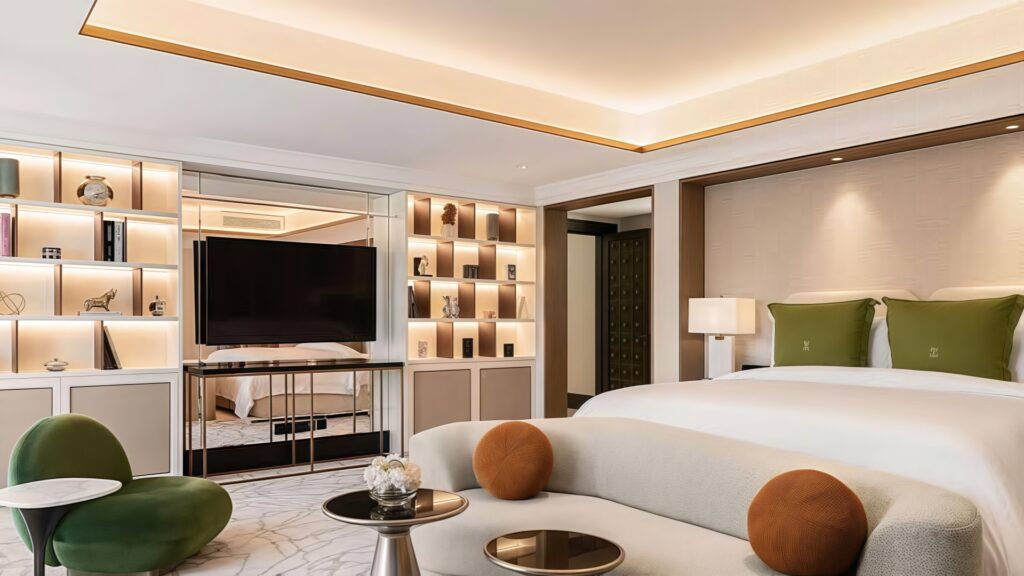
For example, a headboard with integrated reading lights may look simple in a rendering. In practice, it needs wiring access, replacement procedures, heat management and approved control positions before it can work reliably across hundreds of rooms.
Trend 2: Sustainability Must Be Verifiable
Sustainability is no longer only a design preference. In many hotel projects, owners, brands, investors, and consultants now request documented evidence for material sourcing, indoor air quality performance, recycled content, repairability, and product lifespan.
However, requirements vary by country, hotel brand, certification target, and furniture category. Therefore, procurement teams should avoid generic claims such as “eco-friendly furniture” or “green materials” unless they are supported by project-relevant documentation.
Material Traceability and Certified Wood
For wood furniture, buyers may request evidence that timber and veneers come from responsibly managed sources. FSC Chain of Custody documentation is commonly used for this purpose when a project requires certified wood sourcing.
Before accepting an FSC claim, verify:
- The certificate number.
- The legal entity listed on the certificate.
- The certificate’s active status.
- The product-group scope.
- Whether the supplier can make an FSC claim for the specific product configuration.
FSC certificates can be checked through the FSC public certificate search database.
| Sustainability Area | Evidence to Request | Buyer Verification Question |
|---|---|---|
| Wood traceability | FSC Chain of Custody certificate and product claim | Is the certificate current and does it cover the factory and product scope? |
| Recycled content | Supplier declaration and material data | What portion is post-consumer or post-industrial recycled content? |
| Metal recycling | Material declaration or mill documentation | Can the supplier identify the recycled-content source and calculation method? |
| Textile sustainability | Fibre content and supplier documentation | Does the fabric documentation match the approved upholstery selection? |
| Packaging reduction | Packaging specification and loading plan | Can protective packaging be reduced without increasing transit damage? |
Low-Emission Materials and Indoor Air Quality
Indoor air quality matters in guestrooms, healthcare spaces, education projects and other enclosed environments. Adhesives, coatings, composite panels, foam and upholstery can all affect emissions performance.
BIFMA M7.1 is a test method associated with VOC emissions from office furniture systems, components and seating. It may be relevant for projects with specific emissions requirements, but it should not be treated as a universal certification requirement for every hotel FF&E package. Buyers should confirm the exact project requirement and whether the test report covers the actual product and material configuration. cdn.ymaws
| Material Area | Documentation to Request | What to Confirm |
|---|---|---|
| Composite panels | Panel emission test report or supplier declaration | Formaldehyde and VOC requirements for the destination market |
| Upholstery foam | Material specification and emissions documentation | Foam type, treatment, durability and project requirements |
| Adhesives | Technical data sheet and emissions evidence where required | Compatibility with indoor-air-quality requirements |
| Coatings and finishes | VOC documentation and finish sample approval | Emissions, scratch resistance and cleaning compatibility |
| Completed furniture | Product-level test report where specified | Whether the tested configuration matches your production model |
Circular Design and Repairability
Circular design does not mean furniture must be recycled immediately. In hospitality, the most practical circular-design principle is to extend useful life through maintainable components, replaceable hardware and repairable finishes.
When writing FF&E specifications, include:
- Replacement hardware and spare-part references.
- Removable or replaceable upholstery components.
- Repair guidance for finishes and edges.
- Standardised power-module cut-outs.
- Accessible service panels for integrated technology.
- Availability of matching veneer, laminate, fabric or paint codes.
- Disassembly guidance for end-of-life handling.
- Warranty terms separated by component.
| Circular Design Feature | Why It Matters |
|---|---|
| Replaceable drawer slides and hinges | Extends casegood life without replacing the full unit |
| Removable charging modules | Allows technical upgrades without replacing nightstands |
| Standardised fabric codes | Simplifies future repairs and reduces colour mismatch |
| Bolt-on legs or bases | Makes transport, repair and component replacement easier |
| Accessible back panels | Allows technicians to reach wiring and service components |
| Spare-part schedule | Reduces downtime when high-use parts fail |
| Repairable finishes | Supports touch-up after luggage, cleaning or moving damage |
Trend 3: Modular Furniture for Flexible Revenue Spaces
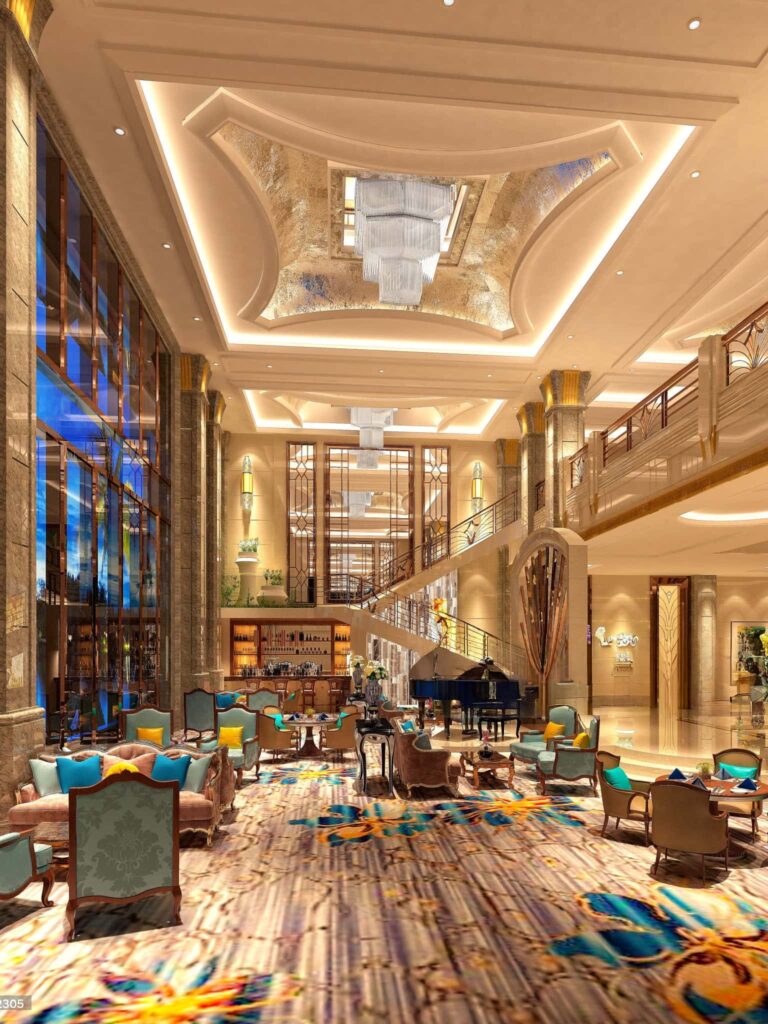
Hotels are using lobbies, restaurants, lounges, and extended-stay rooms more intensively than before. A lobby may need to support breakfast service in the morning, laptop work during the day, social events in the evening, and private functions on weekends.
Modular furniture can help operators adapt these spaces. However, modularity only creates value when the property has an operating plan, adequate storage, staff capacity, and furniture that remains stable and safe in every layout.
Where Modular Furniture Works Best
| Furniture Type | Possible Conversion | Operational Benefit |
|---|---|---|
| Modular lounge system | Breakfast seating to co-working to evening lounge | Supports different dayparts without buying separate furniture |
| Nesting side tables | Compact storage to flexible guest table clusters | Allows rapid layout changes for groups or events |
| Modular banquettes | Open lounge to semi-private meeting zone | Supports privacy and flexible guest circulation |
| Expandable dining tables | Two-person dining to group dining | Improves seating flexibility in limited floor area |
| Reconfigurable wardrobes | Extended-stay layout to standard-stay layout | Supports different room-use models |
| Bench-storage hybrids | Seating plus luggage or blanket storage | Adds functional storage in compact guestrooms |
Hotel Furniture
What Modularity Cannot Solve
Modular furniture is not automatically a revenue solution. It may create new operating issues if the property does not plan for storage, staffing, cleaning and guest safety.
Before specifying modular furniture, check the following:
| Procurement Check | Why It Matters |
|---|---|
| Storage for unused modules | Prevents back-of-house congestion and damage |
| Reconfiguration time | Determines whether staff can realistically change layouts daily |
| Module weight and handling | Protects staff and reduces injury risk |
| Locking and anti-tip features | Keeps furniture stable in every approved layout |
| Accessibility clearances | Maintains usable circulation paths and guest access |
| Power and data locations | Prevents unsafe extension-cord use |
| Cleaning access | Ensures modules can be moved and maintained properly |
| Replacement-module availability | Preserves visual consistency after damage or loss |
| Approved layout plans | Prevents unsafe or impractical ad hoc arrangements |
Practical advice: Ask the supplier to show at least three approved furniture configurations in the model room or showroom: the daily layout, an event layout and a storage layout. If the hotel cannot store or reconfigure the furniture easily, modularity may become a burden rather than an advantage.
The Model Room: Where Trends Become Reality
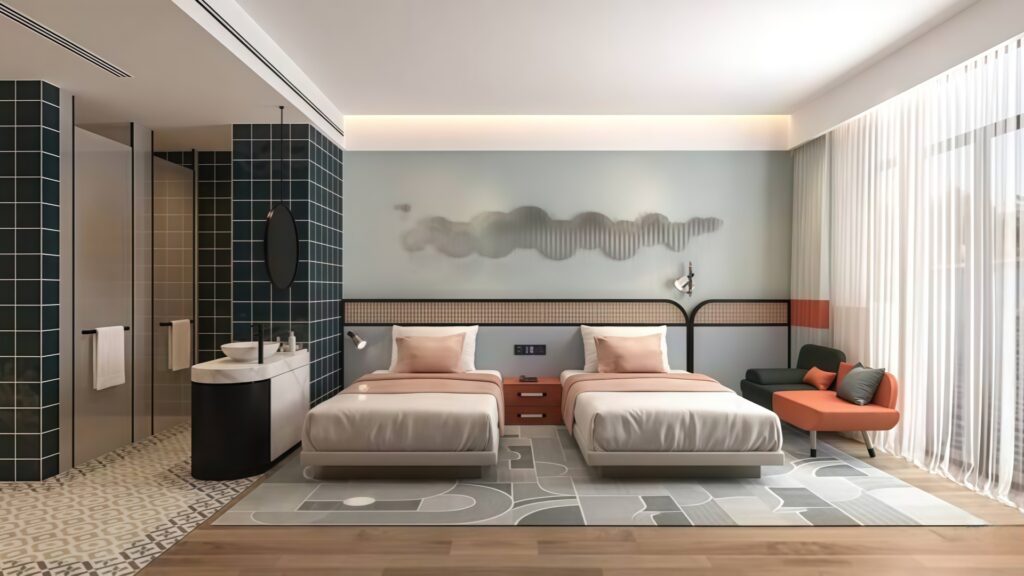
A model room is the most reliable way to test whether smart, sustainable, and modular FF&E requirements work together before mass production.
The model room should be reviewed by representatives from design, procurement, engineering, IT, operations, housekeeping, and brand management. It should test both appearance and use.
Model-Room Approval Checklist
| Review Area | What to Check |
|---|---|
| Furniture dimensions | Guest circulation, luggage clearance, bed access, and door swing |
| Power access | USB-C, AC outlets, charging pad position and cable access |
| Serviceability | Ability to replace power modules, lights, sensors and hardware |
| Finish quality | Colour, sheen, grain direction, edge quality and sample matching |
| Sustainability evidence | Certificate scope, material declarations and required reports |
| Cleaning | Housekeeping access, stain resistance and cleaning-product compatibility |
| Modular function | Stability, reconfiguration time, storage and layout options |
| Guest usability | Reach ranges, seating comfort, task-light placement and intuitive controls |
| Installation | Packaging, room access, elevator limits and assembly requirements |
| Warranty | Component-specific warranty terms and spare-part availability |
A signed model-room checklist should become part of the project record. It gives the factory, installation team and hotel a single reference point when disputes arise later.
2026 Hotel FF&E Procurement Framework
The following five-step framework helps hotel teams convert trend ideas into practical project requirements.
| Step | Action | Required Deliverable | Risk if Skipped |
|---|---|---|---|
| 1 | Align design intent with brand and operating requirements | Approved FF&E specification matrix | Off-brand finishes, impractical layouts or unclear responsibilities |
| 2 | Define technology ownership and service access | Power, data and maintenance drawings | Unmaintainable charging, sensors or lighting systems |
| 3 | Validate sustainability and performance evidence | Certification and test-report register | Unverifiable environmental claims or failed brand review |
| 4 | Build and approve a model room | Signed model-room approval checklist | Fit, scale, finish and usability problems repeated across rooms |
| 5 | Lock production, logistics and installation sequencing | Critical-path schedule and delivery plan | Missed opening dates, damaged goods or site congestion |
Step 1: Align Specifications Before Pricing
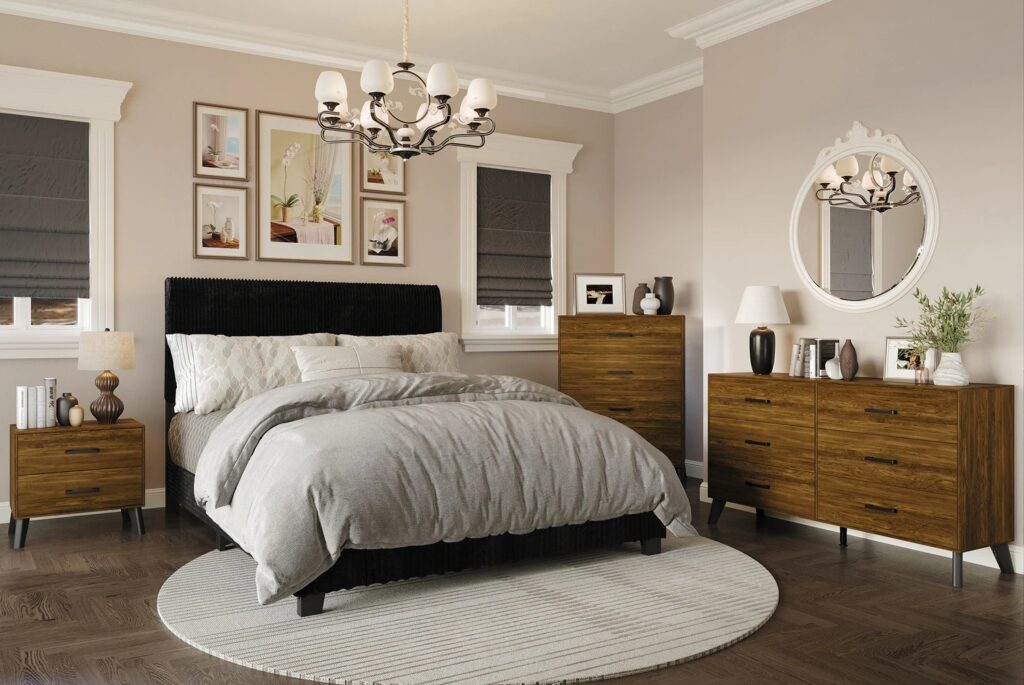
Do not ask suppliers to quote from mood boards alone. A quote should be based on a documented specification that identifies dimensions, materials, finish codes, hardware, power modules, performance requirements, packaging and warranty expectations.
Step 2: Define Technology Responsibility
Create an ownership matrix for every integrated technology element. The matrix should identify who selects, purchases, installs, commissions, services and replaces each component.
Step 3: Verify Sustainability Documentation
Create a document register that lists every required certificate, test report, material declaration and expiry date. Confirm which documents apply to the company, the factory, the material and the finished product.
Step 4: Approve a Model Room
Do not begin mass production until the model room confirms furniture fit, power access, finish consistency, cleaning practicality and maintenance access.
Step 5: Coordinate Delivery and Installation
Coordinate delivery windows, storage, elevator access, room sequencing, installation teams, furniture protection and punch-list management before containers arrive at the site.
For a more detailed process view, read our Hotel FF&E Procurement Sourcing Guide.
How Hongye Supports Smart, Sustainable, and Modular Hotel FF&E
Hongye Furniture Group supports hotel FF&E projects through custom engineering, sample development, factory production, quality control, and project coordination.
For technology-enabled furniture, Hongye can integrate approved power modules, charging units, cable-routing systems, and service-access features into casegoods, bedside units, desks, and selected public-area furniture. The exact module, electrical requirement, and service method should be approved during the shop-drawing and model-room stage.
For sustainability requirements, Hongye can provide project-relevant material documentation and certification records where applicable. Buyers should verify certificate scope, product eligibility, and current validity before using any environmental claim in brand submissions or project documentation.
For modular applications, Hongye can develop sample layouts and model-room prototypes. This enables hotel teams to evaluate dimensions, stability, storage, finishes, service access, and reconfiguration time before mass production.
Hongye also supports commercial furniture projects with:
- Guest-room casegoods, headboards, wardrobes and bed bases.
- Lobby, restaurant and public-area seating.
- Custom tables, desks and storage systems.
- Material and finish sample development.
- Factory quality-control processes.
- Export packing and logistics coordination.
- Phased delivery plans for hotel renovation and new-build projects.
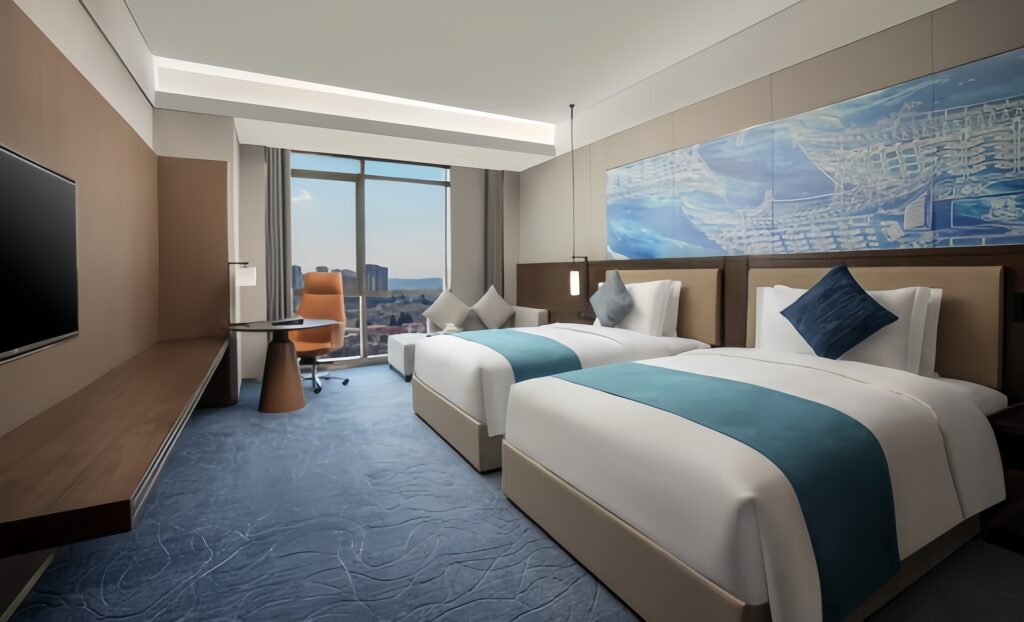
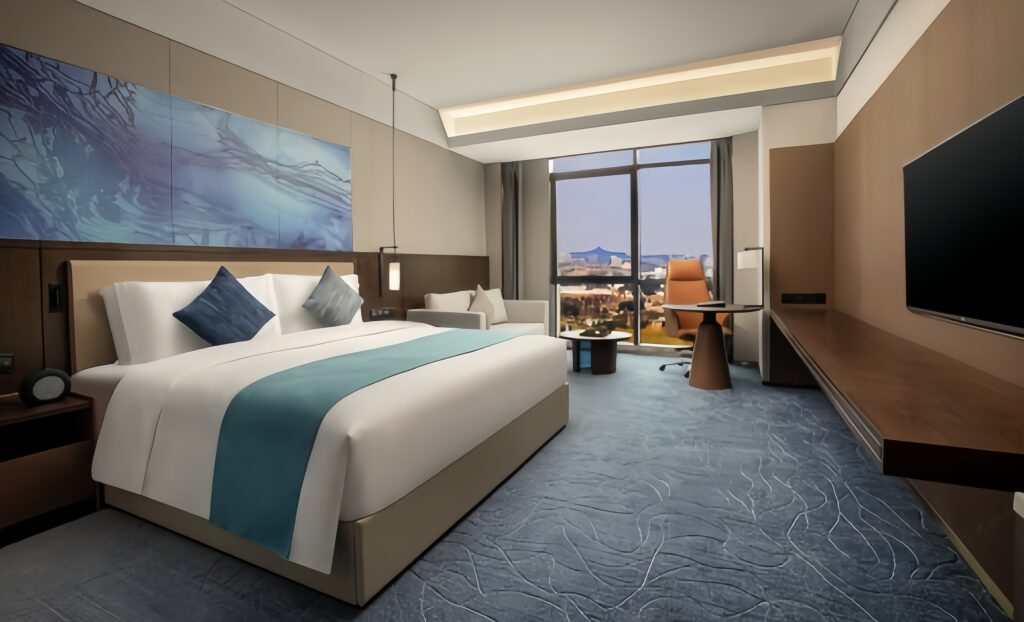
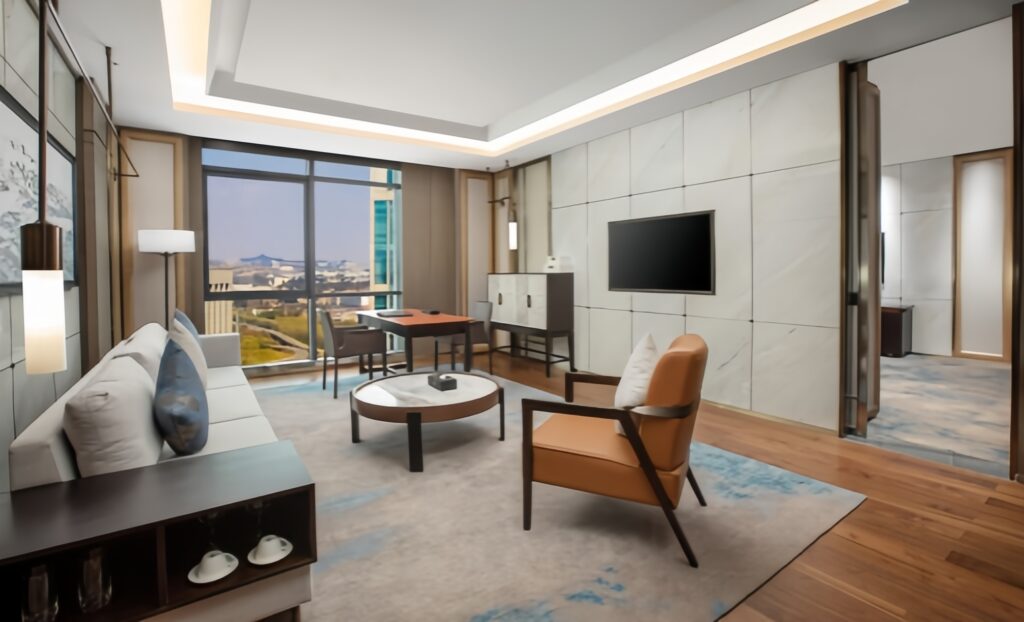
Wingate By Wyndham | Hospitality Project Solution By Hongye Furniture
FAQ
How much should a hotel budget for FF&E per room in 2026?
Hotel FF&E budgets vary widely by hotel tier, location, room size, brand standards, local labour, whether OS&E is included, import duties, freight and installation scope. Limited-service properties may focus on durable standardised packages, while luxury, resort and lifestyle projects often require higher-cost custom materials, public-area furniture and technical integration. Build the budget from an itemised FF&E schedule rather than relying on a single per-room benchmark.
Is smart furniture technology worth the premium for hotel owners?
Smart furniture is worth considering when it improves a real guest or operational need, such as convenient charging, cleaner cable management, improved workspace functionality or easier room-control access. It is less valuable when the property cannot maintain the technology, replace failed modules or integrate it with existing electrical and IT systems. Specify maintainability and replacement access before approving any smart feature.
How can hotels verify furniture sustainability claims?
Hotels should request certificate numbers, current validity dates, product scope, material declarations and relevant test reports. For FSC claims, check the supplier’s certificate through the FSC public search system. For low-emission claims, verify that the report covers the actual material or finished product configuration specified for the project. Do not rely only on logos, marketing brochures or generic supplier statements.
What is a realistic timeline for a full hotel FF&E project?
The timeline depends on design completion, technical approvals, sample development, material sourcing, production, inspection, shipping, customs clearance and installation. Selected standardised production scopes may be completed in approximately 45–60 days after final approval. However, custom full-hotel packages commonly require longer planning, particularly when model rooms, specialist materials, large quantities or international shipping are involved.
Can modular furniture replace fixed FF&E in hotel guestrooms?
Modular furniture can support flexibility in selected guestrooms, extended-stay rooms, suites and public areas. However, fixed furniture often remains more practical for standard hotel guestrooms because it provides stability, predictable cleaning access and brand consistency. Before selecting modular furniture, assess storage, anti-tip requirements, room circulation, acoustic performance, cleaning and staff capacity to reconfigure layouts.
Plan Trends as Operating Systems
The best 2026 hotel FF&E trends are not decorative ideas. They are operating decisions.
Technology should remain accessible and maintainable. Sustainability should be documented and verifiable. Modular furniture should support a real operating plan, not simply create more pieces to move.
Hotel teams that define these requirements early, approve a model room and verify supplier evidence before production will reduce renovation risk while creating guestrooms and public spaces that stay useful longer.