
Casegoods vs Millwork: The Direct Answer
The short answer is simple: casegoods are better for most standard hotel guest rooms, while millwork is better for custom and feature areas.
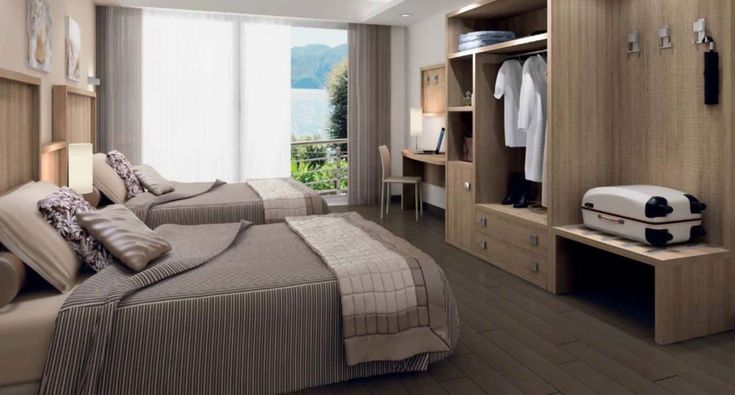
Casegoods are freestanding furniture made in a factory and delivered ready to place or assemble. For example, they include nightstands, desks, wardrobes, and TV consoles.
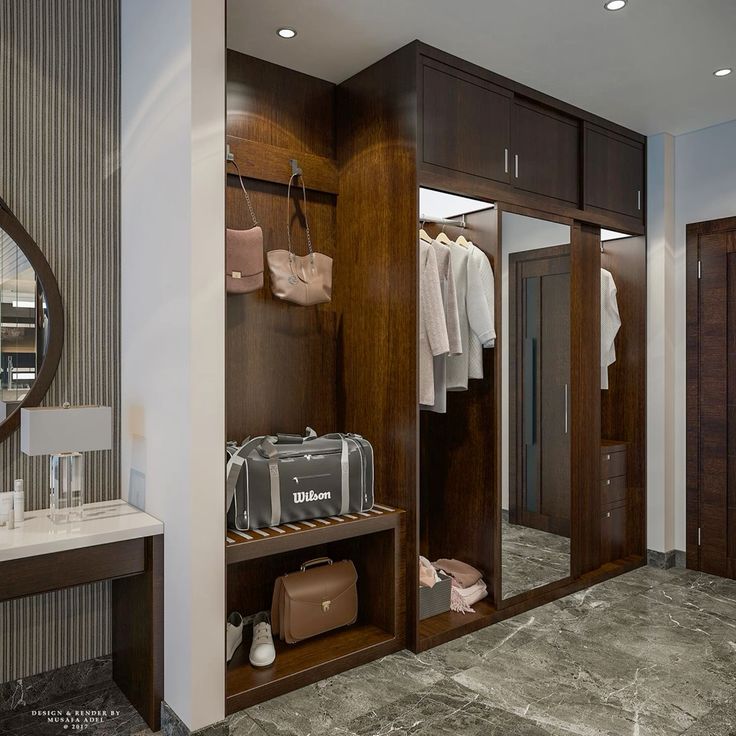
By contrast, millwork is custom woodwork that is fabricated and then permanently installed. It is commonly used for reception desks, feature walls, built-in wardrobes, and other areas that require a precise fit.
Therefore, for standard hotel guest rooms, casegoods are usually the more cost-effective choice. They are cheaper, faster to install, easier to replace, and more consistent in quality.
However, millwork has an important advantage: design flexibility. It can follow irregular walls, integrate electrical systems, and create custom brand details.
As a result, many hotel projects use a hybrid approach. Casegoods handle standardized furniture, while millwork is used for areas where custom design has a greater impact.
This guide compares the two options using factory-level cost data, installation timelines, quality-control factors, and project examples.
What Are Casegoods?
Casegoods are freestanding furniture pieces with a box-like construction. The term comes from the word “case,” which refers to the enclosed structure of the furniture.
In hotel FF&E, casegoods are commonly used for guest room furniture. Typical examples include:
- Nightstands
- Dressers
- Desks
- Wardrobes
- TV consoles
- Mini-bar cabinets
Because these products are manufactured in a controlled factory environment, they can be produced in large quantities with consistent dimensions and finishes.
Casegoods Characteristics
| Characteristic | Casegoods |
|---|---|
| Construction | Factory-built in a quality-controlled environment |
| Installation | Delivered assembled or RTA; usually placed in the room |
| Mobility | Freestanding and easy to reposition |
| Lead Time | 45–60 days for China manufacturing |
| Quality Consistency | Very high with CNC machining and automated finishing |
| Customization | Moderate; sizes, finishes, and hardware can be configured |
| Replacement | Easy; individual units can be reordered |
| Warranty | Typically 5-year manufacturer warranty |
Why Factory Production Matters
One major advantage of casegoods is factory control.
For example, CNC machining allows manufacturers to maintain consistent dimensions across large production runs. In addition, automated finishing systems help maintain a uniform appearance from one unit to another.
As a result, casegoods are particularly suitable for hotels with hundreds of similar rooms.
They are also easier to replace. If one nightstand is damaged during a hotel operation, the owner can normally order a replacement unit instead of rebuilding an entire section of cabinetry.
Casegoods Materials and Construction Quality
The material and hardware specifications can vary significantly by hotel positioning.
| Quality Tier | Core Material | Edge Banding | Finish | Hardware | Typical Use |
|---|---|---|---|---|---|
| Economy | MDF | PVC edge banding | Melamine laminate | Basic hinges/slides | Economy hotels, 2-star |
| Standard | Plywood, E1 grade | PVC or ABS edge banding | UV lacquer or water-based paint | Blum / Hettich slides | Mid-scale, 3–4 star |
| Premium | Solid wood + plywood | Wood veneer edge | Multi-coat PU lacquer | Blum soft-close / Hafele | Upper mid-scale, 4–5 star |
| Luxury | Solid hardwood such as oak or walnut | Matching solid wood | High-gloss or matte PU | Premium Hafele / Grass | Luxury, 5-star |
Hongye Casegoods Specifications
Hongye’s casegoods are manufactured in its Foshan facility using E1-grade plywood as standard, with solid wood available as an upgrade.
In addition, Hongye uses GREENGUARD Gold-certified finishes and BIFMA-tested hardware.
Its CNC machining centers are designed to maintain tolerances of approximately ±0.5 mm across production runs of 500+ units.

What Is Millwork?
Millwork refers to custom woodwork that is fabricated off-site and then assembled, fitted, and permanently installed on-site.
Unlike freestanding casegoods, millwork becomes part of the building interior.
Typical hotel millwork includes:
- Built-in wardrobes
- Feature walls
- Wainscoting
- Crown molding
- Custom reception desks
- Built-in bar fronts
- Built-in AV cabinets
- Seating niches
Because millwork is designed for a specific location, it provides much greater design flexibility.
However, this flexibility also creates additional installation requirements.
Millwork Characteristics
| Characteristic | Millwork |
|---|---|
| Construction | Components fabricated off-site and assembled on-site |
| Installation | Fixed to walls or floors |
| Mobility | None; removal may require demolition |
| Lead Time | 60–90 days for fabrication and installation |
| Quality Consistency | Depends partly on installation quality |
| Customization | Very high |
| Replacement | Difficult; usually requires custom refabrication |
| Warranty | Typically 2–3 year installer warranty |
Why Choose Millwork?
Millwork becomes more valuable when standard furniture cannot achieve the required result.
For example, a lobby may have curved walls, structural columns, integrated lighting, or custom electrical requirements. In such cases, a standard cabinet may not fit properly.
Instead, millwork can be designed around the exact dimensions of the space.
Furthermore, millwork can create a seamless floor-to-ceiling appearance. Therefore, it is often used in reception areas, luxury suites, restaurants, and other high-visibility spaces.
Cost Comparison: Casegoods vs Millwork
Cost is often the deciding factor for hotel developers.
In general, casegoods have a lower total cost because most of the production takes place in a factory. Therefore, less skilled labor is required on-site.
The following example compares equivalent-quality casegoods and millwork for a standard hotel king room.
| Furniture Item | Casegoods (FOB China) | Millwork (On-Site Built) | Cost Difference | Notes |
|---|---|---|---|---|
| Wardrobe (2.0m × 0.6m × 2.1m) | $280–$450 | $500–$850 | 44–47% cheaper | Millwork requires carpenter labor |
| Nightstand (pair) | $85–$180 | $160–$320 | 44–47% cheaper | Millwork rarely used |
| Desk (1.2m × 0.6m) | $150–$350 | $280–$550 | 36–46% cheaper | Millwork allows integrated power |
| TV console / media wall | $120–$280 | $400–$900 | 56–70% cheaper | Millwork works well for feature walls |
| Mini-bar cabinet | $90–$200 | $200–$400 | 50–55% cheaper | Casegoods are sufficient for most rooms |
| Total per room | $725–$1,460 | $1,540–$3,020 | 47–52% cheaper | — |
These figures show why casegoods are often preferred for standardized guest rooms.
However, the lowest purchase price is not always the most important factor. Developers should also consider installation, schedule, replacement, and site conditions.
Installation Cost Comparison
Installation is another major difference between the two solutions.
| Cost Factor | Casegoods | Millwork |
|---|---|---|
| On-site labor per room | 0.5–1 hour ($25–$50) | 2–4 days ($400–$800) |
| Tools required | Basic hand tools | Table saw, nail gun, router, and other specialized tools |
| Site preparation | Minimal; mainly floor-level checks | Extensive; may include wall preparation and electrical rough-in |
| Waste/disposal | Minimal; mainly packaging | More significant; wood scraps, dust, and paint waste |
| Defect remediation | Replace unit, typically 5–7 days | On-site repair, typically 1–2 days |
Because casegoods arrive largely finished, installation is much simpler.
By comparison, millwork installers may need to cut, adjust, level, fasten, and finish components on-site. As a result, labor costs can increase quickly when a project has hundreds of rooms.
When to Choose Casegoods vs Millwork
The right choice depends on the room type, project schedule, design requirements, and budget.
Choose Casegoods When:
| Scenario | Why Casegoods Win |
|---|---|
| Standard rectangular guest rooms | Dimensions are predictable |
| Tight project timeline (<90 days) | Factory production and fast installation reduce schedule pressure |
| Budget optimization is a priority | Can provide significant cost savings |
| Multi-property rollout | Consistent products can be repeated across properties |
| Future flexibility is needed | Freestanding units can be replaced during PIP cycles |
| Limited skilled labor is available | Less on-site carpentry is required |
For standard guest rooms, casegoods usually provide the best balance of cost, quality, and speed.
Moreover, they make future renovations easier. A hotel can replace individual desks, nightstands, or wardrobes without rebuilding the entire room.
Choose Millwork When:
| Scenario | Why Millwork Wins |
|---|---|
| Irregular room shapes | Custom components can follow angled walls and columns |
| Lobby feature walls | Seamless, floor-to-ceiling integration is possible |
| Custom reception desks | Complex shapes and integrated systems can be built in |
| Brand-mandated custom design | Bespoke details can support brand standards |
| Historic renovation | Custom fitting can address non-standard dimensions |
| Acoustic or structural integration is required | Built-ins can incorporate additional functions |
In these situations, millwork can justify its higher cost.
For example, a custom reception desk may become a major part of the hotel’s first impression. In that case, design impact may be more important than the savings achieved with standard casegoods.
The Hybrid Strategy: Best of Both Worlds
For many hotel projects, the best solution is not casegoods or millwork.
Instead, it is a combination of both.
Casegoods can handle standardized furniture. Meanwhile, millwork can be reserved for areas where custom fabrication adds meaningful value.
Recommended Hybrid Split
| Area | Casegoods % | Millwork % | Rationale |
|---|---|---|---|
| Standard guest rooms | 90–100% | 0–10% | Standardized dimensions and cost efficiency |
| Suites | 60–70% | 30–40% | Feature walls and custom bar areas |
| Lobby | 30–40% | 60–70% | Reception desks and feature walls |
| Restaurant / F&B | 50–60% | 40–50% | Banquettes plus tables and chairs |
| Corridors | 80–90% | 10–20% | Seating plus wainscoting |
| Conference rooms | 70–80% | 20–30% | Tables and chairs plus built-in AV cabinetry |
Why the Hybrid Model Works
The hybrid approach reduces unnecessary customization.
For example, there is usually little value in building a custom millwork nightstand for every guest room. A factory-produced casegood can provide the same function at a lower cost.
At the same time, a lobby reception desk may require custom dimensions, integrated lighting, cable management, and brand-specific details. Millwork is therefore more suitable for that application.
As a result, developers can spend more of the design budget on areas that guests actually notice.
Hybrid Cost Example: 150-Room Mid-Scale Hotel
The following example shows how a hybrid strategy can affect the overall furniture budget.
| Component | Casegoods Portion | Millwork Portion | Total |
|---|---|---|---|
| 140 standard guest rooms | $140,000 | $0 | $140,000 |
| 10 suites | $20,000 | $35,000 | $55,000 |
| Lobby + reception | $15,000 | $40,000 | $55,000 |
| Restaurant | $20,000 | $15,000 | $35,000 |
| Corridors + conference | $10,000 | $8,000 | $18,000 |
| Total | $205,000 | $98,000 | $303,000 |
| All-millwork equivalent | — | — | ~$520,000 |
| Hybrid savings | — | — | $217,000 (42%) |
Therefore, the hybrid strategy can deliver substantial savings while preserving custom design where it matters most.
Project Snapshot: Waldorf Astoria — 120-Room Luxury Hotel
A luxury hotel project can also benefit from a hybrid strategy.
| Metric | Value |
|---|---|
| Project | Waldorf Astoria, Middle East |
| Rooms | 120, including 15 suites |
| Strategy | Hybrid: casegoods for guest rooms, millwork for suites and lobby |
| Casegoods portion | 85 rooms × full casegoods package |
| Millwork portion | 15 suites + lobby reception |
| Production time | 55 days casegoods, concurrent with 40-day millwork fabrication |
| Installation | Casegoods: 6 days; Millwork: 18 days |
| Total on-site time | 22 days |
| Cost savings vs all-millwork | 38% (~$190,000) |
| Certifications | BIFMA, GREENGUARD Gold, FSC |
In this example, casegoods and millwork were produced concurrently.
As a result, the project could maintain a shorter overall schedule while still using custom millwork in high-impact areas.
Quality Control: Casegoods vs Millwork
Quality control is another important consideration.
Factory production provides a controlled environment for machining, finishing, moisture management, and hardware installation.
By contrast, on-site millwork is more exposed to site conditions and installation variables.
| QC Factor | Casegoods (Factory) | Millwork (On-Site) |
|---|---|---|
| Dimensional accuracy | ±0.5 mm with CNC control | ±2–5 mm with hand cutting |
| Finish consistency | Uniform with automated spray booth | More variable with hand application |
| Moisture control | Climate-controlled factory, 40–60% RH | More dependent on site conditions |
| Hardware alignment | Jig-guided and consistent | Manual and potentially variable |
| Defect rate | <2% according to factory QC data | 5–15% according to project estimates |
| Third-party inspection | SGS/TÜV inspection possible before shipping | More difficult after installation |
Therefore, casegoods generally provide stronger repeatability for large hotel projects.
However, millwork quality can still be excellent when the manufacturer and installation team have strong quality-control processes.
How to Decide Between Casegoods and Millwork
Before making a procurement decision, hotel developers should evaluate five factors.
1. Room Standardization
If most rooms have the same dimensions, casegoods are usually more efficient.
2. Design Complexity
If the project requires curved walls, integrated lighting, custom AV systems, or unusual dimensions, millwork may be more appropriate.
3. Installation Schedule
If the hotel has a tight opening schedule, factory-built casegoods can reduce on-site installation time.
4. Long-Term Flexibility
Casegoods can be removed and replaced individually. Therefore, they are often better for hotels that expect future PIP or renovation cycles.
5. Budget Allocation
Finally, consider where customization creates the most value.
Instead of using millwork everywhere, many developers can achieve better results by concentrating custom work in the lobby, suites, restaurants, and other high-visibility areas.
Frequently Asked Questions
What is the difference between casegoods and millwork in hotels?
Casegoods are freestanding, factory-built furniture units such as nightstands, desks, wardrobes, and TV consoles. They are delivered assembled or ready-to-assemble and can usually be placed without permanent installation.
Millwork, by contrast, is custom woodwork that is fabricated and then permanently installed. It is commonly used for feature walls, reception desks, built-in wardrobes, and other fixed elements.
Therefore, casegoods are generally more cost-efficient, while millwork provides greater design flexibility.
Are casegoods or millwork better for hotel guest rooms?
For standard hotel guest rooms, casegoods are usually the better option.
They can cost 25–40% less than equivalent millwork and can be installed much faster. In addition, factory-controlled production helps maintain consistent dimensions and finishes.
However, millwork may be appropriate for suites, feature walls, or rooms with unusual dimensions.
How much money do casegoods save vs millwork?
The savings depend on the project scope, materials, labor rates, and design requirements.
For a 150-room mid-scale hotel, the example in this guide shows potential savings of approximately 42%, or about $217,000, by using a hybrid strategy.
On a per-room basis, the example compares casegoods at approximately $725–$1,460 with millwork at $1,540–$3,020.
In addition, casegoods can reduce on-site labor costs because installation is much faster.
Can Hongye manufacture both casegoods and millwork?
Yes. Hongye Furniture Group manufactures both factory-built casegoods and millwork components at its 350,000 m² facility in Foshan, China.
In addition, its CNC machining centers and controlled finishing environment support consistent production.
For large hotel projects, Hongye recommends combining casegoods and millwork according to the function of each area. In general, casegoods are suitable for standardized rooms, while millwork is better for feature areas and custom applications.
How long does casegoods production take vs millwork?
Casegoods typically require 45–60 days from purchase order to factory shipment for a standard hotel project.
Millwork fabrication typically requires 60–90 days, followed by additional on-site installation.
Furthermore, casegoods can usually be placed in a room in less than one hour, while millwork may require several days of on-site work.
Therefore, casegoods are generally better suited to projects with tight installation schedules.
About the Author
Edward Tse is Sourcing Operations Director at Hongye Furniture Group, established in 1995 with a 350,000 m² manufacturing facility.
He has specified casegoods and millwork solutions for 47+ international hotel brands across 30+ countries, including projects for Hilton, Marriott, Accor, and Waldorf Astoria properties.
Quality Certifications and Factory Information
Hongye Furniture Group is FSC-certified, GREENGUARD Gold certified, and BIFMA-compliant.
These quality and sustainability claims can be verified through FSC International, UL GREENGUARD, and BIFMA.
Factory tours are available by appointment at the Foshan, Guangdong facility.
Final Recommendation
For most hotel projects, the choice does not have to be casegoods versus millwork.
Instead, consider where each solution creates the most value.
Use casegoods for standardized guest rooms and other repeatable furniture applications. They offer lower costs, faster installation, easier replacement, and consistent factory quality.
Use millwork for feature areas, irregular spaces, and brand-specific elements. It provides the customization needed for reception desks, feature walls, luxury suites, and other high-impact spaces.
As a result, a hybrid strategy of approximately 70–80% casegoods and 20–30% millwork can provide a practical balance between cost, schedule, quality, and design flexibility.
For hotel developers, the goal is not to choose the most expensive solution. Instead, it is to use the right solution in the right area.
Quick Answer
Casegoods are generally better for standard hotel guest rooms because they are faster, more consistent, easier to replace, and often significantly less expensive than millwork.
Millwork is better for custom areas where design flexibility and permanent integration are more important than cost and installation speed.
For most projects, therefore, a hybrid casegoods + millwork strategy provides the best balance of budget control and design impact.