
Trump brought Elon Musk, Jensen Huang, and America’s top CEOs to Beijing for the “world’s most consequential economic relationship.” Beyond the diplomatic headlines, this summit sends a clear signal to every project manager, interior designer, and procurement director: the US commercial furniture market is about to reopen — and the window to lock in your supply chain is closing fast.
When the US presidential motorcade rolled into Beijing on May 3, 2026, flanked by an honor guard and schoolchildren bearing flowers, it was theater. But for the commercial furniture industry, it was a business signal.
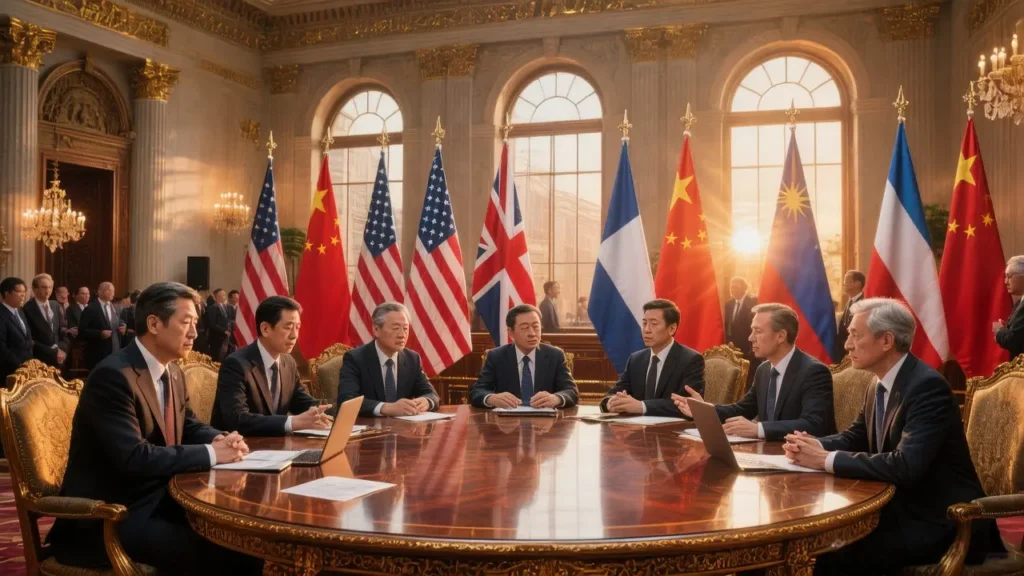
President Trump did not come to Beijing alone. He brought an entourage of America’s most powerful CEOs — Elon Musk of Tesla and DOGE, Jensen Huang of Nvidia, and senior executives from aviation, agriculture, and the AI sector. This was not a diplomatic courtesy. It was a statement of commercial intent.
Within days, China committed to purchasing 200 Boeing aircraft — the largest Boeing order from China in nearly a decade. A US-China Board of Trade was established to manage bilateral commercial relations. Trump publicly called the US-China relationship “the world’s most consequential economic relationship” and invited President Xi to the White House in September 2026 for what analysts are already calling the most important bilateral summit in a generation.
For those of us in commercial furniture procurement, the question is not whether this matters. The question is: what do you do about it before your competitors act?
What the CEO Delegation Actually Signals for Commercial Furniture
The presence of Musk and Huang — leaders in AI, EVs, and technology infrastructure — signals something specific: the United States is preparing for a broad commercial expansion into Chinese markets. That expansion creates downstream demand.
1. US Corporate Expansion → New Commercial Properties
When American companies scale operations in China, they need office space. When Chinese companies invest in the US, they need facilities. Both vectors require fitted commercial interiors — and those interiors require furniture. The historical pattern following US-China thaws is a measurable spike in commercial construction starts within 12–18 months.
2. Hospitality Sector Recovery
The hotel industry was among the hardest hit by travel restrictions and geopolitical tension during the peak tariff years (2025). A thaw in US-China relations typically triggers a recovery in inbound business and leisure travel between the two countries. More travelers means more hotel openings, renovations, and expansions — all of which require bulk commercial furniture procurement.
3. Hospital and Healthcare Infrastructure
With Boeing’s aircraft order came reciprocal Chinese commitments in aviation and infrastructure. Healthcare infrastructure projects — including international-standard hospitals — represent a significant long-term demand vector for durable commercial furniture, from patient room case goods to reception seating.
4. Educational Exchange Programs
US universities have long sought partnerships with Chinese institutions. A warmer diplomatic climate historically correlates with increased exchange programs, which drive demand for student housing, campus furniture, and academic building fit-outs.
The Tariff Context: What Changed at the Geneva Talks
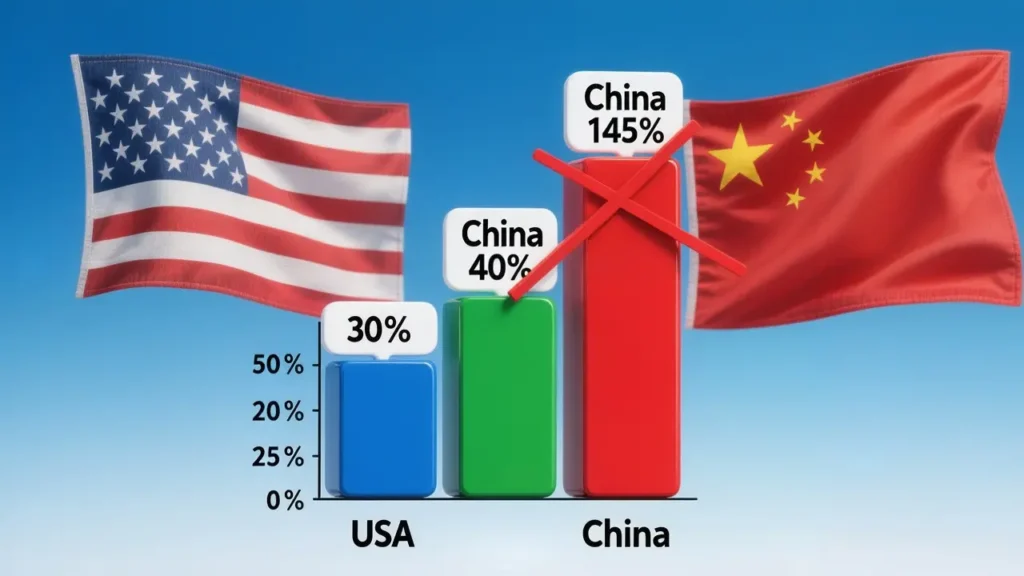
While the Beijing summit set the political tone, the practical trade relief came from the Geneva negotiations on May 12, 2026, where US and Chinese negotiators agreed to a significant mutual tariff reduction:
| Tariff Scenario | Pre-Geneva (2025 Peak) | Post-Geneva (May 2026) | Impact on Furniture |
| US tariffs on Chinese goods | 145% | 30–50% (tiered) | Meaningful cost reduction |
| Chinese retaliatory tariffs on US goods | 125% | 10–20% (partial) | Reduced import friction |
| Furniture-specific category rate | 25–35% (Sec 301) | ~10–15% | Closest to pre-war baseline |
| Timeline for implementation | — | Phased through Q3 2026 | Q4 2026 projects benefit most |
Source: Joint US-China Geneva Communiqué, May 12, 2026; Reuters, BBC, Financial Times.
The bottom line: if you were holding off on new project quotes because tariffs made Chinese sourcing unviable, the math has now changed. The window to negotiate favorable terms with established Chinese manufacturers — before demand surges — is
US Commercial Interior Design Market Outlook 2026–2028
Based on the convergence of diplomatic signals, tariff relief, and sector-specific demand drivers, here is the projected trajectory for the US commercial interior design and furniture market:
Table 1: US Commercial Furniture Demand Forecast by Sector (2025–2028)
| Sector | 2025 Market Size (Est.) | 2026 Projected Growth | 2027 Projected Growth | Key Driver |
| Hotel Furniture | $8.2B | +6% | +11% | Diplomatic thaw → travel recovery |
| Healthcare Furniture | $5.7B | +4% | +8% | Infrastructure investment |
| Office Furniture | $12.4B | +3% | +7% | Corporate expansion |
| Educational Furniture | $3.1B | +5% | +9% | Exchange + campus build |
| Restaurant/Casual Dining | $4.6B | +8% | +12% | Consumer confidence |
| Total Commercial | $34.0B | +5.2% | +9.4% | — |

China Sourcing Viability — Before vs. After Tariff Reduction
| Cost Factor | Pre-Reduction (2025) | Post-Reduction (May 2026) | Change |
| Avg tariff on Chinese furniture | 27% | 12% | -15 pp |
| Shipping (40ft, Asia to US West) | $3,800 | $2,400 | -37% |
| Landed cost index (normalized) | 100 | 84 | -16% |
| Price gap vs. Vietnam (per unit) | +12% | +4% | Near-competitive |
| Price gap vs. Mexico (per unit) | +8% | +1% | Marginal difference |
| Lead time advantage (China) | +4 weeks | +4 weeks | Unchanged |
What This Means for Your Current Project Pipeline
If you have projects in your pipeline scheduled for 2026 Q4 or 2027, the Trump-Xi summit and the Geneva tariff agreement change your procurement calculus. Here is what a prudent procurement director should evaluate today:
For Hotel Projects
The hotel furniture procurement cycle is typically 16–24 weeks from order confirmation to delivery. If you are targeting a Q4 2026 opening or a 2027 soft launch, you should be finalizing supplier quotes now. Chinese manufacturers with established export experience — like Hongye Furniture — can offer the combination of competitive pricing, quality certification (ISO 9001, CE, UL), and on-time delivery that large hotel chains require.
For Healthcare and Hospital Projects
Healthcare furniture specifications are rigorous and often project-specific. Chinese manufacturers who have supplied international hospital groups understand the compliance requirements (antimicrobial surfaces, fire retardancy standards, ergonomic certifications) that US projects demand. With tariffs reduced, the cost advantage of Chinese manufacturing for custom healthcare furniture has returned to viability.
For School and University Projects
Student housing furniture, library fit-outs, and classroom furniture for new campus construction are cost-sensitive categories where Chinese manufacturing delivers the best value. With the diplomatic thaw likely to boost educational exchange and international student enrollment, university procurement teams should anticipate increased demand — and longer lead times — in 2027.
For Office Fit-Out Projects
Corporate office projects often prioritize speed and customization. Chinese manufacturers offering OEM and ODM services — including space planning support, CAD drawings, and modular furniture systems — can deliver turnkey solutions that reduce the coordination burden on interior design firms and general contractors.
How to Position Your Firm for the Coming Surge
The projects that get built in 2027 and 2028 are being planned and quoted right now. Here is a strategic checklist for procurement teams and interior designers:
Table 3: Pre-Project Procurement Readiness Checklist
| Action Item | Priority | Timing | Notes |
| Request updated supplier quotes reflecting new tariff rates | Critical | This week | Capture tariff savings now |
| Verify supplier certifications and export docs | Critical | Before PO | ISO, CE, test reports for US compliance |
| Lock in container shipping slots for Q4 delivery | High | June–July 2026 | Rates expected to rise with demand |
| Conduct China vs. Vietnam vs. Mexico cost comparison | High | Before finalizing | Tariffs shifted the calculus |
| Engage OEM manufacturer for custom specs | High | 12+ weeks before build | Custom needs lead time |
| Review payment terms and LC structure | Standard | Before PO | New trade may unlock better terms |
| Monitor September 2026 White House follow-up | Monitoring | Aug–Sep 2026 | Potential further tariff reductions |
The China Manufacturing Advantage Is Back — With Better Quality
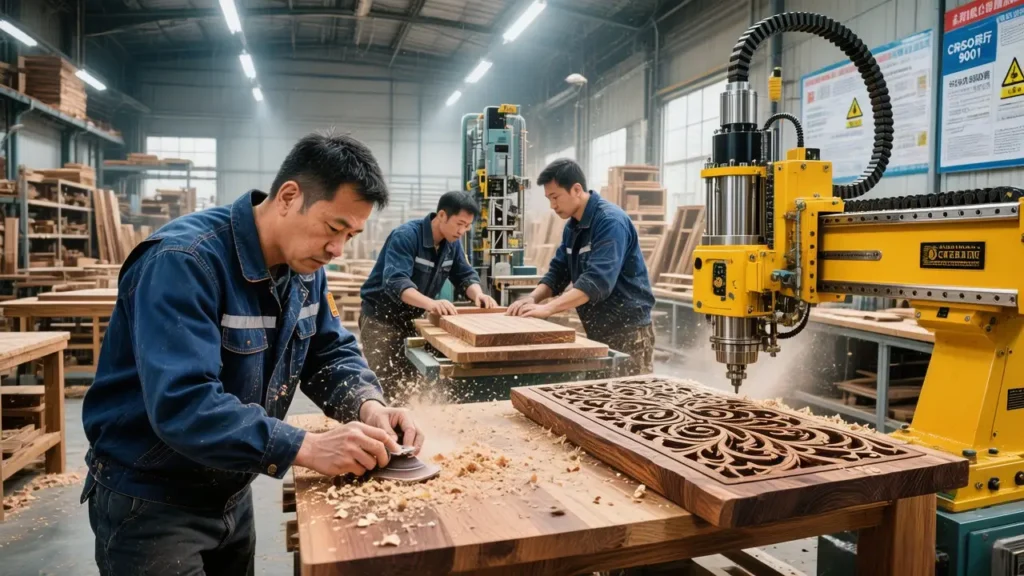
It is worth addressing a common misconception: that Chinese manufacturing is a commodity product suitable only for low-end applications. The reality in 2026 is significantly different.
Chinese commercial furniture manufacturers serving the export market — particularly those with 10+ years of international project experience — have invested heavily in quality infrastructure:
| Capability | 2018 | 2026 |
| ISO 9001 certified manufacturers (export-grade) | ~30% | ~68% |
| Manufacturers with US project references | Limited | Extensive |
| Custom/OEM capability | Basic | Full turnkey |
| ESG and sustainability certifications | Rare | Common (FSC, CARB P2, GREENGUARD) |
| English-speaking project management | Exceptional | Standard (export firms) |
| Lead time (custom hotel project) | 16–20 weeks | 12–18 weeks |
Frequently Asked Questions
Q: How significant is the tariff reduction for commercial furniture specifically?
A: The Geneva agreement reduced tariffs on most Chinese goods from the 145% peak to a tiered structure averaging 30–50%. For furniture-specific categories (HS codes 9401–9403), the effective rate is now approximately 10–15%, down from 25–35% under Section 301 tariffs. While not back to pre-trade-war levels, this reduction restores China as a cost-competitive sourcing option for most commercial furniture categories.
Q: When will the commercial furniture demand surge actually materialize?
A: Based on historical patterns from previous US-China diplomatic thaws, the typical lag between diplomatic normalization and measurable project activity is 12–18 months. This means the surge in new hotel, office, and healthcare furniture projects will likely begin in late 2026 and accelerate through 2027–2028. Projects quoting now and ordering in mid-2026 will be among the first to benefit from both lower tariffs and favorable shipping rates.
Q: What are the risks if I wait to place orders?
A: Two primary risks: (1) Shipping congestion and container shortages — historically associated with post-thaw demand surges — could extend lead times and increase freight costs. (2) If the September 2026 White House summit produces further tariff reductions, demand will surge again, creating a second wave of supply chain pressure. The firms that quote and lock in orders now will have delivery priority.
Q: Does the Trump-Xi relationship affect only hotels and hospitality?
A: No. While hospitality is the most visible beneficiary, the commercial furniture demand chain extends to healthcare facilities, educational institutions, corporate offices, and restaurant/hospitality venues. Any organization with a facilities expansion or renovation plan should evaluate Chinese sourcing as part of its procurement strategy.
Q: What certifications do I need when sourcing commercial furniture from China for US projects?
A: Key certifications include: ISO 9001 (quality management), CARB P2 / TSCA Title VI (formaldehyde emissions, mandatory for US), UL certification (for electrical furniture components), CAL-133 / TB 133 (fire safety for seating in public buildings), GREENGUARD / SCS Indoor Advantage (indoor air quality), and FSC Chain of Custody (if using wood components with sustainability claims). Always verify third-party test reports and request samples before bulk orders.
Conclusion: Act Now on the Diplomatic Window
The Beijing summit was a political event. But politics is the leading indicator of commerce. When Trump brought the world’s most powerful CEOs to Beijing and called the US-China relationship “the world’s most consequential economic relationship,” he was telegraphing a commercial expansion that will create real demand for commercial furniture across the United States.
Hotel chains, hospital administrators, university procurement officers, and interior design firms with active project pipelines should treat the Geneva tariff agreement and the Beijing summit as a procurement trigger — not a political footnote.
The companies that move now — locking in supplier relationships, updating quotes, and securing shipping slots — will have a structural advantage over those who wait for “more certainty” that never comes.
Hongye Furniture Group
has served international commercial furniture projects for over 15 years, supplying hotels, hospitals, schools, and corporate offices across North America, Europe, and the Middle East. Our team offers turnkey furniture solutions including custom OEM manufacturing, space planning support, and full export documentation for US compliance.
Ready to explore what a China-based commercial furniture partner can do for your next project?