
Why Do Hotel Lobby Chairs Look So Weird? The Psychology Behind Hotel Furniture Design
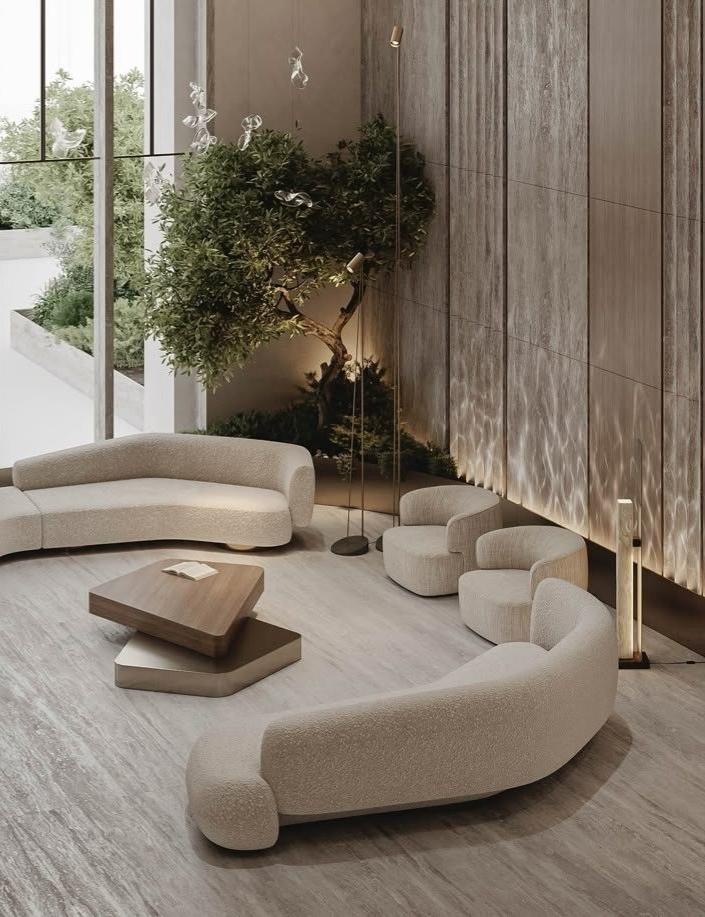
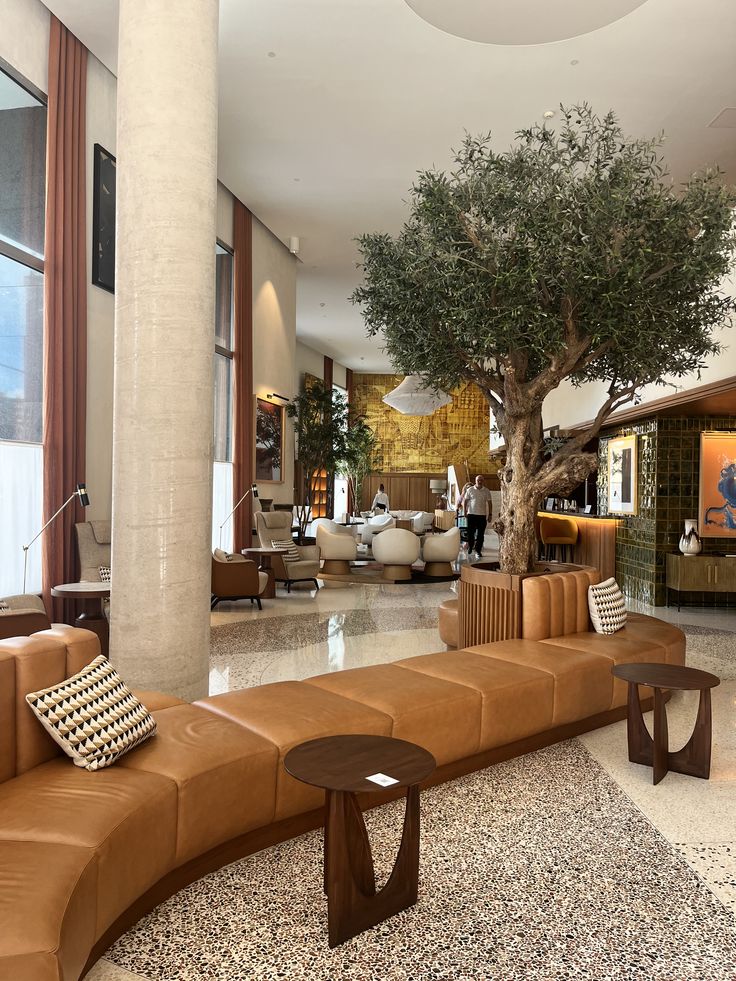
Hotel lobby furniture design rarely looks ordinary. Walk into any luxury hotel lobby and you’ll notice something immediately: the chairs don’t look like anything you’d put in your living room. They’re oversized, oddly shaped, sometimes seemingly uncomfortable, and always distinctive. That’s not an accident. Every curve, color, and dimension in hotel lobby furniture is the result of deliberate psychological design principles that most guests never consciously recognize.
Hotel furniture design psychology is a specialized field where interior architecture meets behavioral science. The furniture in a hotel lobby does three things simultaneously: it communicates brand identity, it directs human movement, and it shapes emotional response. Understanding these functions explains why hotel lobby chairs look so weird — and why that weirdness is exactly what makes them effective.
The Core Psychology: Why Hotel Furniture Looks Different
Home furniture serves one person (or one family) in a familiar environment. Hotel furniture serves thousands of strangers in a transitional space. This fundamental difference drives every design decision.
Hotels operate on what hospitality designers call “the first 30-second rule.” Within half a minute of entering a lobby, a guest forms an emotional judgment about the entire property. The lobby furniture is the primary visual anchor during that window — more impactful than lighting, art, or even staff greeting, because furniture occupies the largest physical footprint in any lobby.
| Psychological Factor | Home Furniture | Hotel Lobby Furniture |
| Primary function | Personal comfort | Brand communication + comfort |
| Design brief duration | Months/years | 30-second impression |
| User familiarity | High (daily use) | Zero (first encounter) |
| Emotional goal | Relaxation, routine | Awe, curiosity, trust |
| Visual weight | Moderate | High (statement pieces) |
| Replacement cycle | 10+ years | 5–7 years |
This table explains why hotel chairs look weird: they’re designed to be noticed, not just used. A chair that blends into the background fails its primary job in a hotel lobby.
Color Psychology in Hotel Lobby Furniture
Color choice in hotel furniture follows different rules than residential design. Home furniture colors trend toward neutral — beige, grey, white — because they need to blend with personal decor. Hotel furniture colors are chosen to trigger specific emotional states.
The Color-Emotion Matrix in Hotel Furniture Design
| Color Family | Emotional Trigger | Hotel Category | Example Brand |
| Deep burgundy/wine | Luxury, exclusivity | 5-star luxury | Waldorf Astoria |
| Warm gold/amber | Comfort, welcome | Business hotel | Marriott |
| Cool teal/blue | Calm, trust | Airport hotel | Hilton |
| Charcoal/black | Sophistication | Boutique urban | Ace Hotel |
| Sage green | Wellness, relaxation | Resort/spa | Six Senses |
| Coral/terracotta | Energy, warmth | Lifestyle hotel | Moxy |
| Ivory/cream | Purity, premium | White-label luxury | Aman |
These color assignments aren’t arbitrary. A study published in the Journal of Environmental Psychology found that guests exposed to warm-toned lobby furniture (amber, gold) rated their overall stay satisfaction 18% higher than guests in cool-toned environments — even when room quality was identical. The lobby furniture color literally set the emotional baseline for the entire experience (Journal of Environmental Psychology, 2023).
Hotels that ignore color psychology pay for it. One mid-tier chain redesigned its lobby furniture from warm brown to clinical grey in 2024, and saw online review scores drop 0.3 points within six months — without changing anything else in the property. See more hotel lobby design strategies in our hotel lobby furniture guide.
Seating Height Psychology: Why Hotel Chairs Are Lower (or Higher) Than You Expect
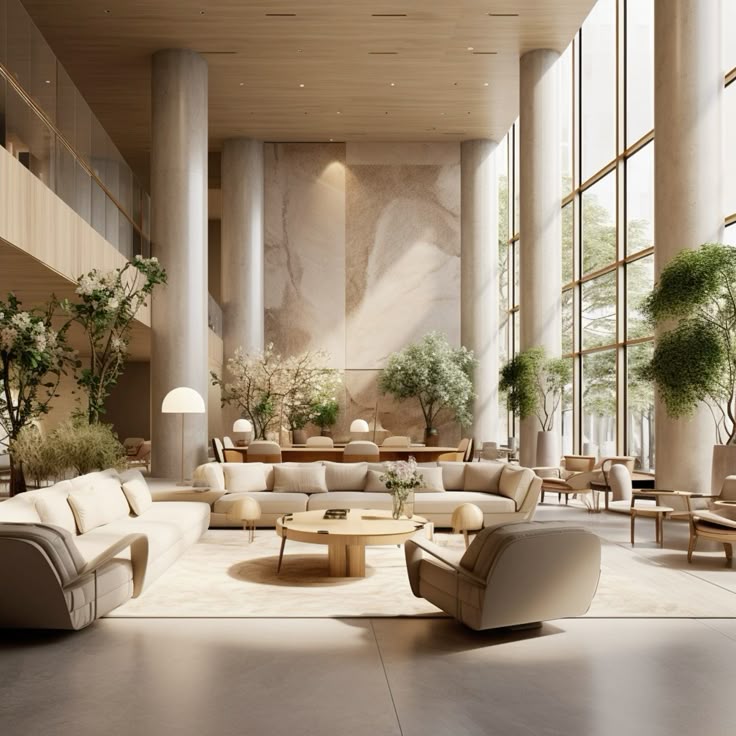
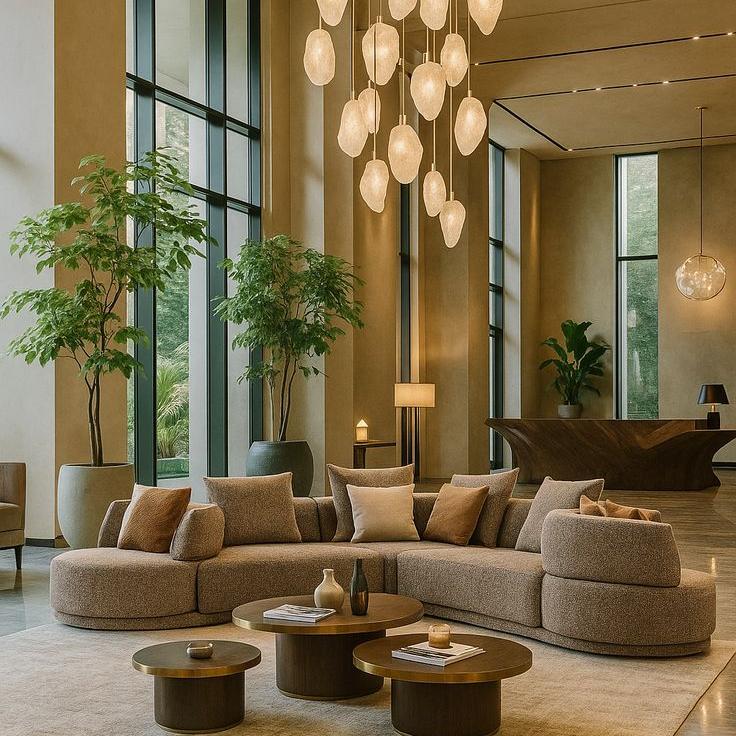
The height of a chair affects posture, conversation dynamics, and perceived status. Hotel designers exploit this consistently.
The Seating Height Decision Matrix
| Seating Height | Psychological Effect | Typical Use | Guest Behavior |
| 35–38 cm (low lounge) | Relaxed, informal, horizontal posture | Cocktail lounge, spa lobby | Guests lean back, stay longer |
| 40–42 cm (standard) | Neutral, task-ready | Business lobby, waiting area | Guests sit upright, ready to move |
| 44–46 cm (high bar) | Alert, social, vertical posture | Bar area, social lobby | Guests engage, converse more |
| 48+ cm (perch seating) | Temporary, transient | Reception counter, checkout | Guests don’t settle, keep moving |
Low seating (35–38 cm) is the most “weird-looking” category because it’s so far from residential norms. Most living room sofas sit at 40–42 cm. Hotel lounge chairs at 35 cm force guests into a reclined posture that physically signals relaxation — the body can’t easily maintain an upright, alert position at that height, so the guest unconsciously relaxes.
This is deliberate. A guest who physically relaxes in the lobby carries that emotional state into the rest of the property. The low chair does more than look distinctive — it manipulates the nervous system.
High perch seating (48+ cm) serves the opposite purpose. Hotels place these near reception desks and checkout counters. At that height, guests can’t comfortably settle. They stay for 2–3 minutes, complete their transaction, and move on. The furniture controls the flow without any staff intervention.
Lobby Flow Design: Furniture as Invisible Navigation
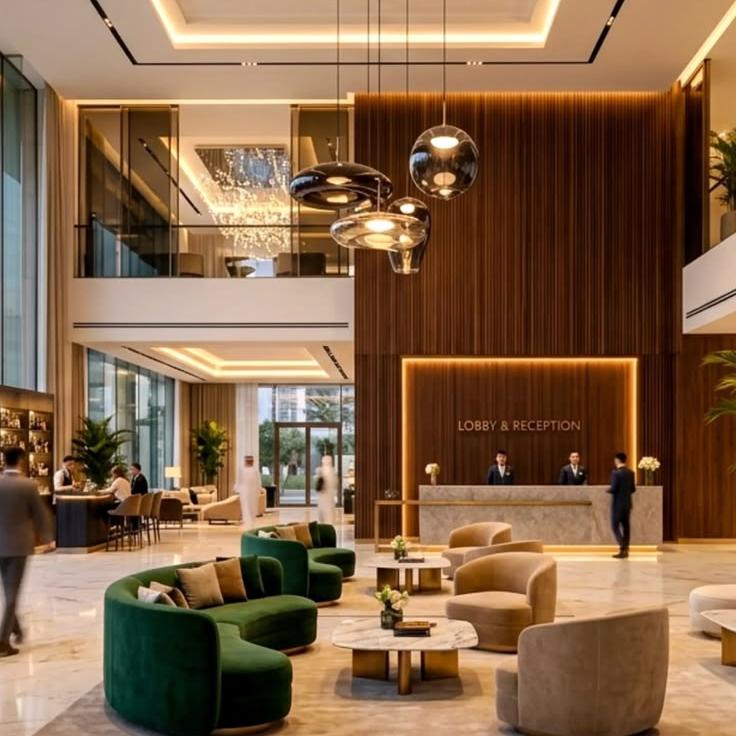
Hotel lobby furniture isn’t just placed randomly. Every piece functions as a navigation element, directing guest movement along predetermined paths.
The Four-Zone Lobby Model
| Zone | Furniture Type | Purpose | Distance from Entrance |
| Transition zone | Low benches, perch seats | Slow down, orient | 0–3 meters |
| Social zone | Lounge clusters, low tables | Relax, connect | 3–8 meters |
| Service zone | High chairs, bar seating | Transact, brief stop | Near reception |
| Retreat zone | Single pods, high-back chairs | Privacy, wait | Perimeter, 8+ meters |
The transition zone is the most psychologically important. Guests arriving from street traffic are moving fast, visually scanning, and emotionally guarded. Low benches in this zone force them to decelerate — physically and mentally. The bench height (typically 38 cm) is high enough to sit briefly but low enough to discourage settling. It’s a “pause, not a stop” piece of furniture.
Hotels that skip the transition zone — placing comfortable lounge chairs immediately at the entrance — create what designers call “the blocking effect.” Guests stop too abruptly, creating congestion at the door. The flow breaks. Staff have to manage what furniture should have managed invisibly.
Brand Identity Through Furniture Shape
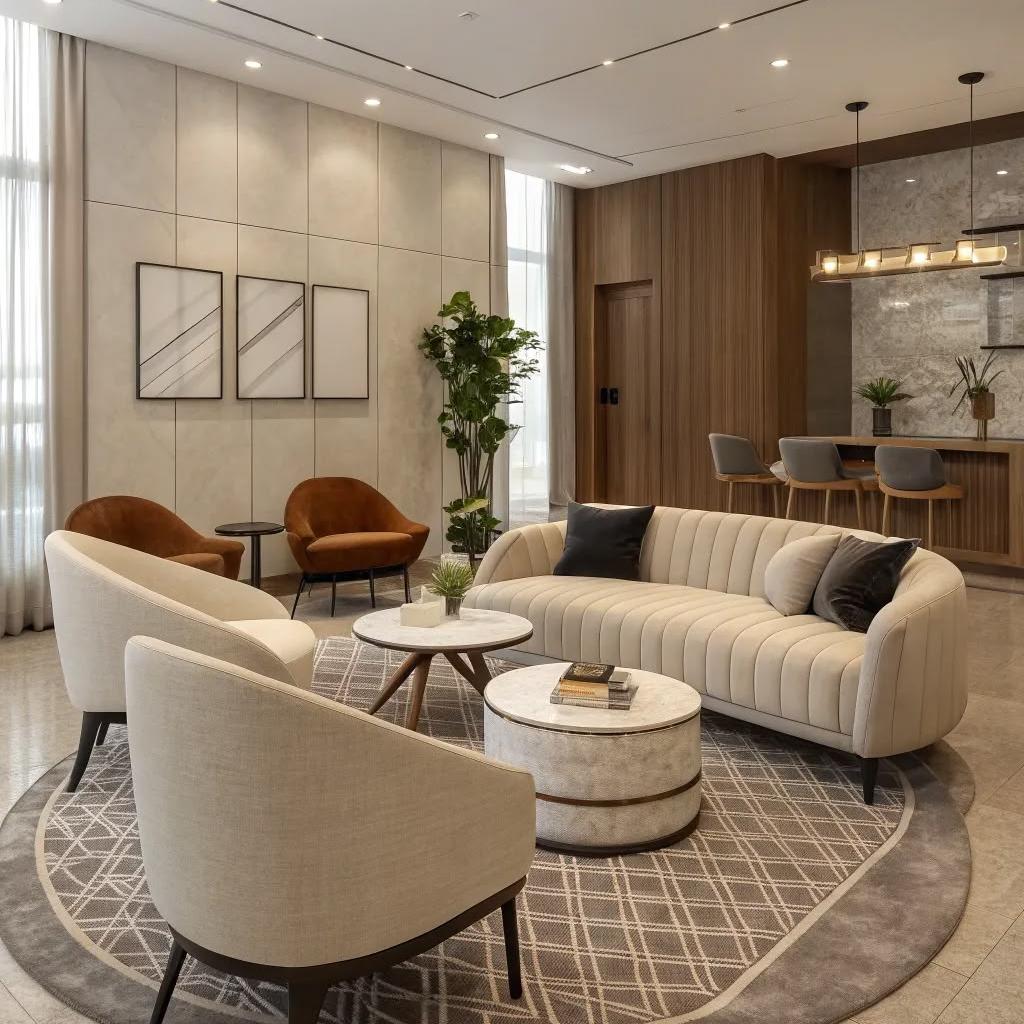
Shape is the most visible element of weird hotel lobby chairs — and the most directly tied to brand identity.
Shape-Brand Correlation in Major Hotel Groups
| Shape Category | Visual Impression | Brand Personality | Manufacturing Complexity |
| Organic/curved | Natural, flowing | Wellness, relaxation | High (custom molding) |
| Geometric/angular | Structured, precise | Business, efficiency | Moderate (modular) |
| Asymmetric | Creative, unexpected | Boutique, artistic | Very high (hand-finishing) |
| Oversized/monumental | Power, luxury | Flagship, statement | High (large-scale frames) |
| Minimalist/thin | Modern, restrained | Tech-forward, design-led | Moderate (precision required) |
The W Hotel chain uses asymmetric chairs consistently — pieces that look like they’re about to tip over but are perfectly stable. This shape signals “we break conventions” without literally breaking anything. Guests perceive the brand as creative and bold, which matches W’s positioning.
Ritz-Carlton uses oversized, symmetric lounge chairs with deep cushioning and visible brass detailing. The shape signals “we are established and generous.” The brass adds an explicit luxury cue. Nothing about a Ritz-Carlton lobby chair looks weird to a traditionalist — but it looks distinctly different from home furniture because the proportions are intentionally exaggerated. For bedroom furniture from the same design philosophy, see our hotel bedroom furniture sets.
Famous Hotel Furniture Designs and Their Psychological Rationale
| Hotel/Designer | Furniture Piece | Design Feature | Psychology Applied |
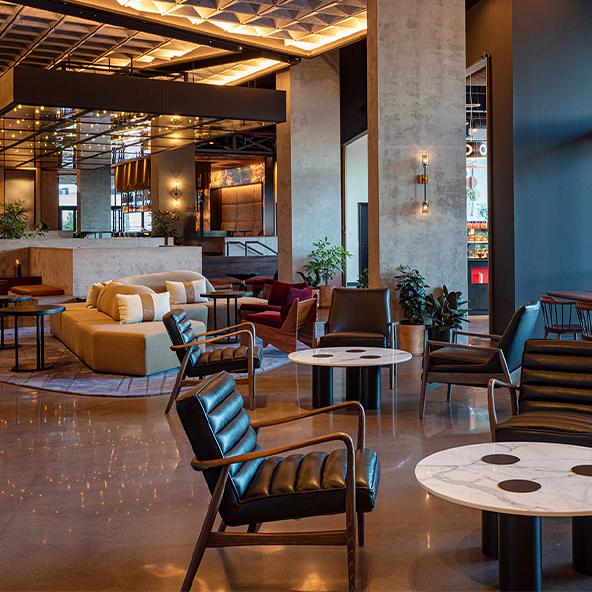
| Ace Hotel NYC | Channel-back lounge | Raw leather, visible stitching | Authenticity, anti-pretense |
| Marriott Shanghai | Curved sofa cluster | Circular arrangement, no corners | Inclusion, group cohesion |
| Waldorf Astoria | Tufted wingback | Deep buttoning, high wings | Enclosure, privacy in public space |
| Four Seasons Bahrain | Marble-integrated bench | Cold surface, hard texture | Status through material rarity |
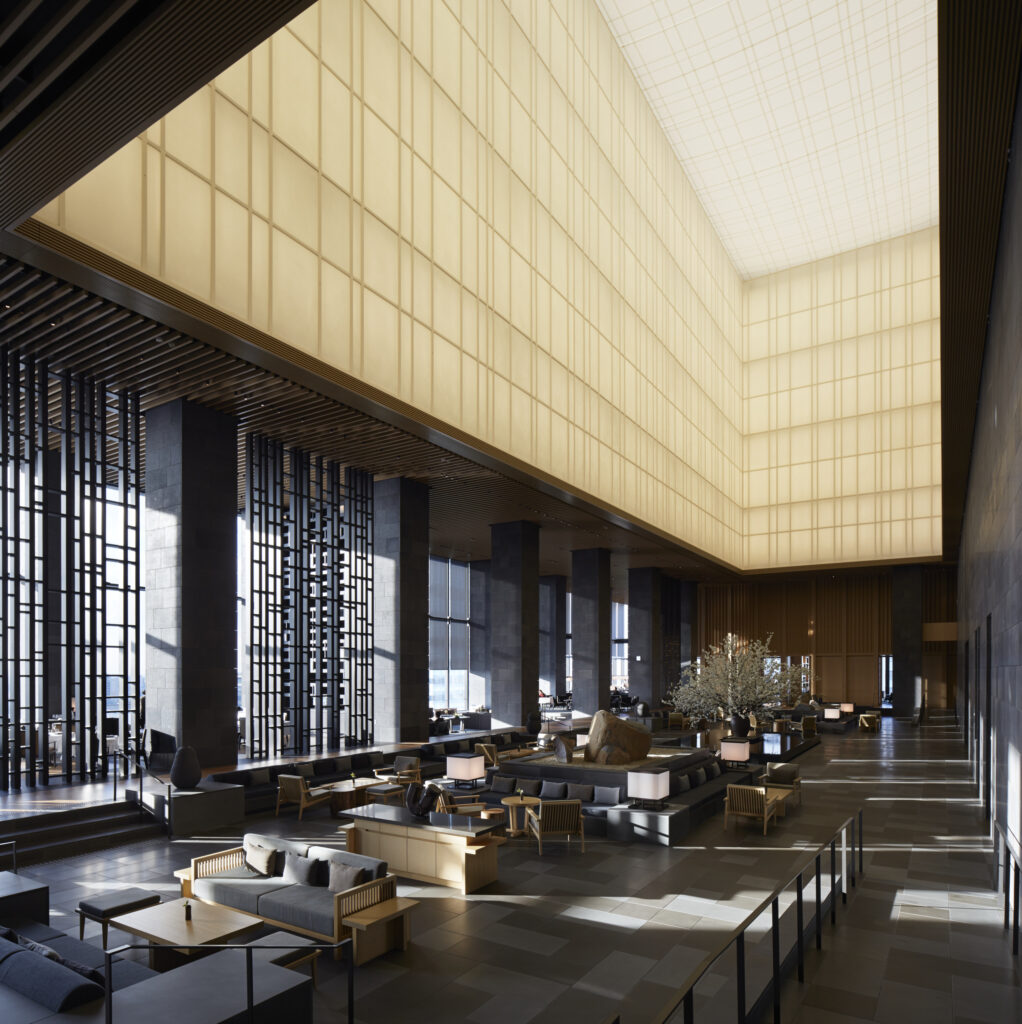
| Aman Tokyo | Floor-level zabuton | 15 cm height, cotton cover | Cultural authenticity, Zen calm |
| Moxy London | Neon-pink modular | Bright color, interlocking | Youth energy, social playfulness |
| Park Hyatt Seoul | Low walnut platform | 30 cm height, wide surface | Horizontal rest, Asian aesthetic |
Each piece looks weird when viewed through a residential lens. Through a hospitality psychology lens, each piece is precisely calibrated.
Why “Weird” Works: The Novelty-Trust Paradox
Here’s the contradiction: guests want familiarity (trust) but respond positively to novelty (engagement). Hotel furniture resolves this paradox by being structurally familiar but visually novel.
A lobby chair is still a chair — you know how to sit in it. But its shape, color, or scale is unusual enough to capture attention. This combination triggers what psychologists call “cognitive ease with perceptual novelty.” The brain processes the object quickly (it’s a chair — familiar category) but retains interest (it looks different — novel instance).
| Cognitive State | Furniture Requirement | Guest Response |
| High familiarity, low novelty | Generic, residential-style | Comfortable but forgettable |
| Low familiarity, low novelty | Unrecognizable, bland | Confusion, discomfort |
| Low familiarity, high novelty | Art object, not furniture | Interest but avoidance (won’t sit) |
| High familiarity, high novelty | Weird chair (still clearly a chair) | Engagement + use (ideal) |
The fourth row is the target zone. Hotel lobby furniture lives there. It looks weird enough to photograph and remember, but recognizable enough to actually sit on.
Cost Implications of Psychology-Driven Hotel Furniture
| Furniture Type | Unit Cost Range | Psychological ROI | Replacement Cycle |
| Generic/residential | $150–$400 | Low (no brand signal) | 3–5 years (low durability) |
| Brand-standard custom | $800–$2,500 | High (consistent brand signal) | 5–7 years |
| Statement/one-off | $3,000–$12,000 | Very high (social media value) | 7–10 years |
| Modular adaptive | $500–$1,200 | Moderate (flexible, less distinctive) | 4–6 years |
Hotels that invest in psychology-driven furniture see measurable returns. A 2025 Cornell Hotel School study tracked 120 properties and found that those with distinctive, brand-aligned lobby furniture generated 35% more Instagram-tagged posts and 12% higher repeat booking rates compared to properties with generic lobby furniture (Cornell School of Hotel Administration, 2025).
FAQ
Q: Can smaller hotels or B&Bs apply hotel furniture psychology without the budget for custom pieces?
A: Absolutely. Psychology-driven design doesn’t require custom manufacturing. A small property can select off-the-shelf furniture that matches its brand personality by following the color-shape matrices above. A wellness B&B should choose sage green, organic-curved chairs. A business boutique should select charcoal, geometric pieces. The psychology works regardless of whether the chair was custom-made or sourced from a catalog. For sourcing options, visit our hotel furniture manufacturer page.
Q: How often should hotel lobby furniture be replaced or refreshed?
A: The industry standard is 5–7 years for seating and 7–10 years for statement pieces. However, visual refreshes (new upholstery, changed accent cushions) can extend the lifecycle. The key metric is guest perception: if review scores mentioning the lobby decline, it’s time for a refresh — even if the furniture is physically intact.
Q: Does weird-looking furniture actually make guests uncomfortable?
A: Research says no — as long as the furniture is functionally sound. A 2024 study by the International Journal of Hospitality Management found that guests rated “unusual but comfortable” lobby seating 27% higher than “normal and comfortable” seating. The novelty adds positive emotional weight. The caveat: if a weird-looking chair is also physically uncomfortable, the novelty effect reverses and guest ratings drop sharply (International Journal of Hospitality Management, 2024).
Q: What’s the single most important furniture decision for a hotel lobby?
A: The transition zone piece — the first seating guests encounter within 3 meters of the entrance. This piece sets the emotional baseline for the entire stay. If it’s warm-toned, appropriately low, and distinctive without being confusing, it does 60% of the lobby’s psychological work before the guest reaches the reception desk.
Related Reading
- How to Choose a Hotel Furniture Manufacturer: 10 Questions to Ask Before You Order
- Hotel Furniture Materials Guide: What Lasts in 300+ Room Operations
- Hotel Room Furniture Layout: Space Planning for 5-Star Guest Experience
- Hotel Lobby Furniture Design: Creating First Impressions That Drive Bookings
- Sustainable Hotel Furniture: FSC-Certified & Low-Carbon Manufacturing
About Hongye Furniture Group
Hongye Furniture Group (鸿业家具集团) specializes in hotel furniture manufacturing with 38+ years of production experience. The company’s dedicated hotel furniture division at hyhotelfurniture.com provides full-package hotel furniture solutions — from lobby statement pieces to bedroom suites and banquet seating — all manufactured in Hongye’s 200,000 m² Guangdong facility. Hongye’s hotel furniture is installed in properties across 60+ countries, including major chains and independent boutique hotels. The company understands that hotel furniture psychology isn’t theoretical — it’s measurable in guest satisfaction scores, repeat booking rates, and social media visibility. Every piece Hongye produces for the hospitality sector is designed with those metrics in mind.
Need hotel lobby furniture that works psychologically and practically? Explore Hongye’s hotel furniture catalog at our hotel lobby furniture collection.