
Most hotel furniture contracts go wrong before the PO is signed. The 25 questions below cover the gaps that standard RFQs miss — the ones that turn into ¥200,000–800,000 change orders at Month 8 of a 12-month project.
These questions are written for hotel developers, procurement directors, and owners who can’t afford a stalled opening.
Pre-Qualification (Questions 1–5)
1. “Can You Name Three Hotel Projects (≥200 Rooms) Completed in the Last 24 Months?”
Why it matters: A factory that says “we supplied 20 hotels” but can’t name three with >200 rooms is either inflating or has only done boutique projects (which don’t test systems capability).
Green flag: Named projects with contactable procurement directors.
Red flag: “NDAs prevent us from naming clients.” (Translation: no reference.)
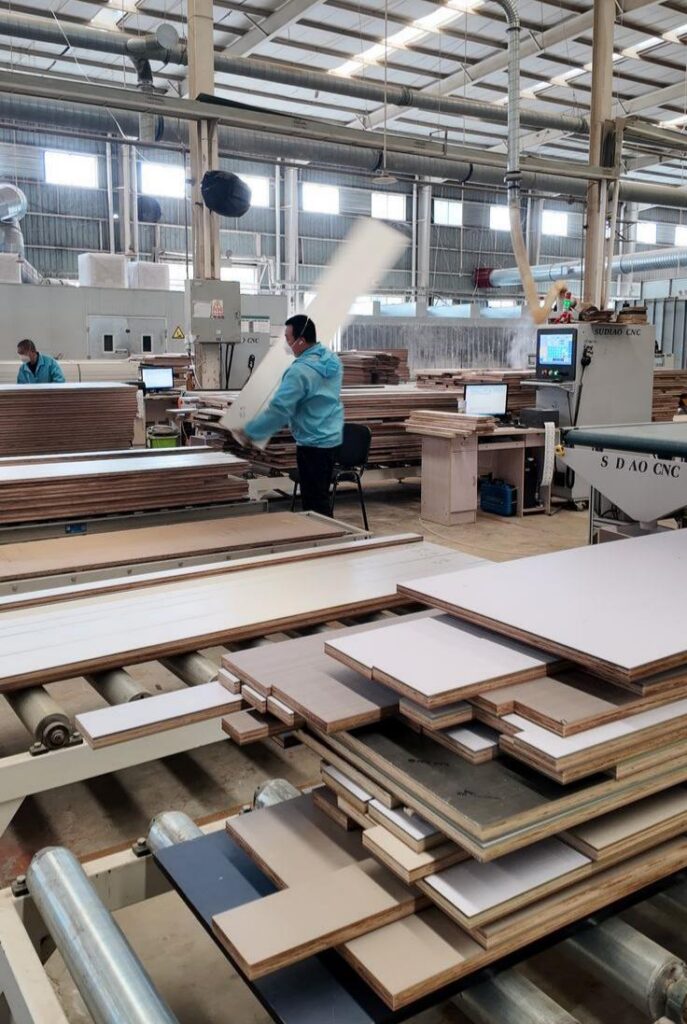
2. “Which Part of Production Is Sub-Contracted, and to Whom?”
Why it matters: If the factory sub-contracts welding or upholstery, you’ve lost quality control. At Month 6, welded frames start cracking because the sub-contractor used 0.8mm steel instead of 1.2mm.
Green flag: “We sub-contract powder-coating only. All structural work is in-house.”
Red flag: “We have 12 partner workshops.” (Translation: quality will drift.)
3. “What’s Your On-Time Delivery Rate for Projects >¥5,000,000?”
Why it matters: “On time” is meaningless without a denominator. A factory with 40% on-time delivery will delay your opening by 3–6 weeks.
Green flag: “78% on-time (2023–2025 average), with penalty clauses triggered at >14 days delay.”
Red flag: “We always deliver on time.” (Translation: they’ve never tracked it.)
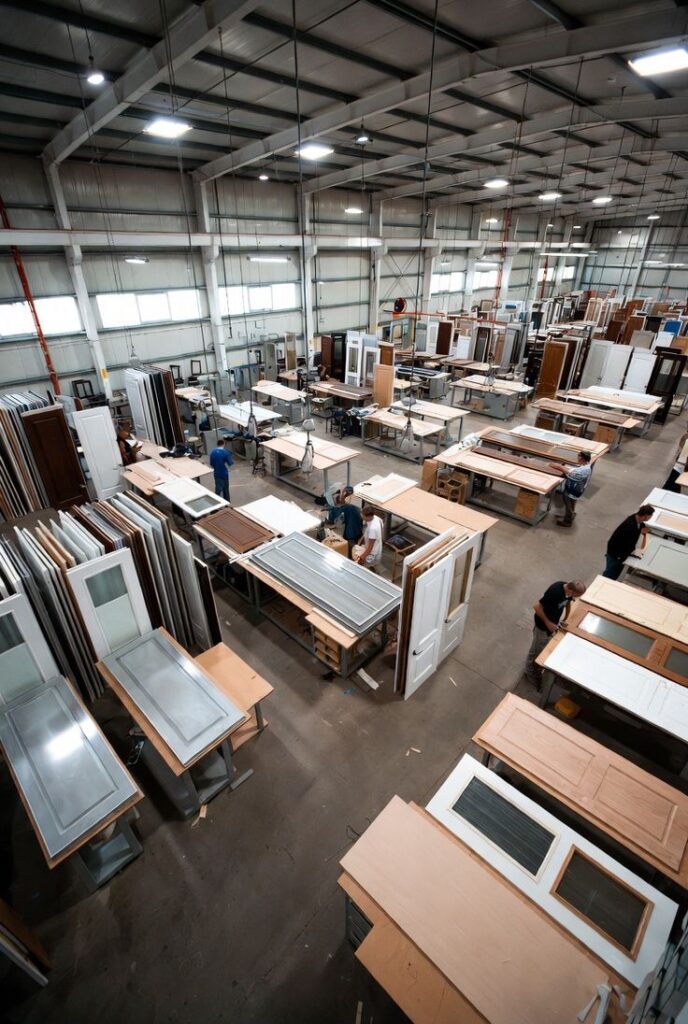
4. “Can We Visit the Workshop Unannounced?”
Why it matters: A scheduled visit is a staged visit. An unannounced visit shows the real production floor.
Green flag: “Yes, any weekday 9 AM–4 PM.”
Red flag: “We need 7 days’ notice to prepare.” (Translation: they’re hiding something.)
5. “What’s Your Financial Credit Rating (or Equivalent)?”
Why it matters: A factory with cash-flow problems will ask for 60% advance instead of 30%. Then they’ll delay production because they can’t pay for steel.
Green flag: Audited financials available (or DingTalk/WeChat Pay supplier credit score >750).
Red flag: “We’re a private company, financials are confidential.” (Translation: they’re over-leveraged.)
Specification & Compliance (Questions 6–12)
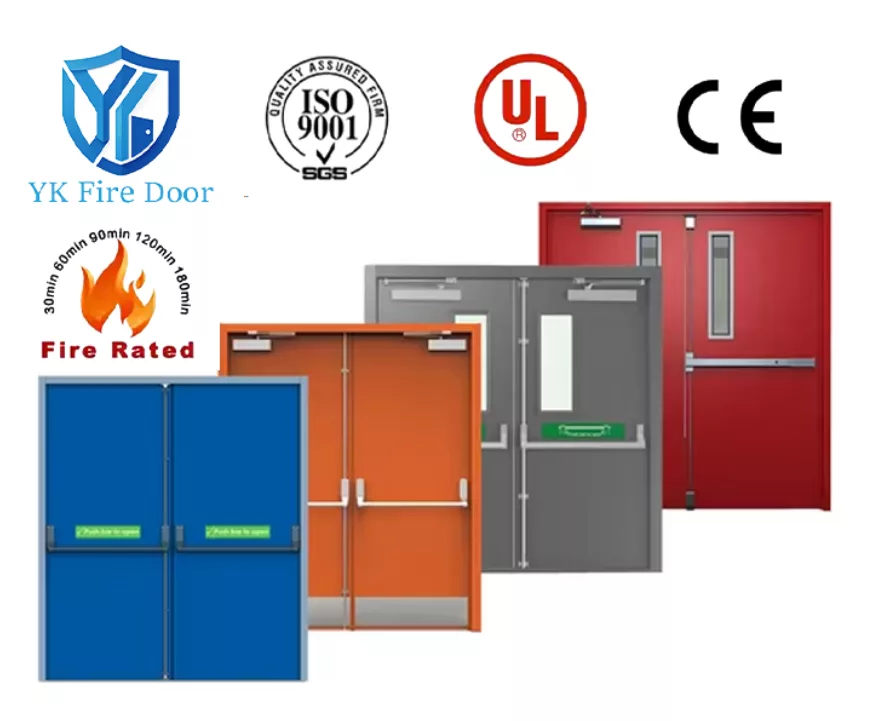
6. “Which Fire-Rating Standard (CAL 133, BS 7176, or GB 17927) Will You Test To — and Can You Show Me the Test Report?”
Why it matters: “Fire-rated” is a marketing claim. You need the actual test report (SGS/Intertek/TÜV-issued) with the hotel’s exact model number on it.
Green flag: Test report dated within 36 months, SGS/Intertek logo visible, model number matches RFQ.
Red flag: “We are CAL 133 compliant” with no report. (Translation: they’ve never tested.)
7. “What’s the Foam Density (kg/m³) — and Can I See the Batch Test Report?”
Why it matters: Foam density <30 kg/m³ fails in 18 months in high-turnover hotels. You need ≥35 kg/m³ for seating that lasts 7+ years.
Green flag: Density certificate from the foam supplier, batch-specific.
Red flag: “High-density foam” with no number. (Translation: it’s 22 kg/m³.)
8. “Is the Finish Nitrocellulose (NC) or Polyurethane (PU)? Can I See the VOC Test Report?”
Why it matters: NC finish smells for 14–21 days after installation. PU (water-based) smells for 2–3 days. In a 300-room hotel, NC finish means 40+ rooms uninhabitable for 3 weeks.
Green flag: PU finish with SGS VOC test report (<50 g/L).
Red flag: “We use premium finish” with no VOC data. (Translation: it’s NC.)
9. “What’s the Warranty Claim Process — and Can You Show Me a Claim Log from the Last 12 Months?”
Why it matters: A 5-year warranty with no claims process is a piece of paper. You need to see how they handle failures.
Green flag: “We processed 14 warranty claims in 2025, average resolution time 12 days.”
Red flag: “We haven’t had any warranty claims.” (Translation: hotels stopped calling.)
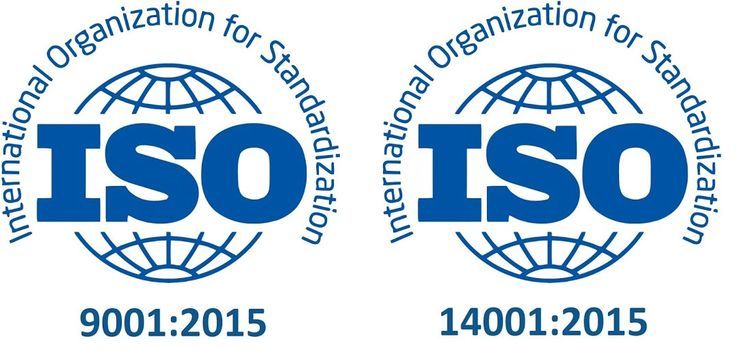
10. “Are Your Factories ISO 9001 / ISO 14001 Certified — and Can I See the Certificate?”
Why it matters: ISO 9001 (quality management) and ISO 14001 (environmental) are table stakes for export-grade furniture. Without them, quality consistency is anecdotal.
Green flag: Valid ISO certificates, accredited by CNAS or equivalent.
Red flag: “We follow ISO standards but haven’t paid for certification.” (Translation: they don’t.)
11. “What’s Your Material Substitution Policy — and Can I See It in Writing?”
Why it matters: The #1 cause of hotel furniture disputes: the factory substitutes specified materials (e.g., changes foam from 35 kg/m³ to 28 kg/m³) to protect margin.
Green flag: “Material substitution requires written client approval. Penalty: free replacement + shipping.”
Red flag: “We’ll use equivalent materials.” (Translation: cheaper.)
12. “Can You Provide a 5% Spare Parts Kit — and Will You Itemize It in the Quotation?”
Why it matters: In a 300-room hotel, 5% spare parts = 15 beds, 30 nightstands, 45 chairs. Without them, a single truck delivery from China takes 35–45 days.
Green flag: “5% spare parts kit included in BOQ, itemized.“
Red flag: “Spare parts available on request.” (Translation: they won’t have them when you need them.)
Production & QC (Questions 13–18)
13. “Can I See the Production Schedule (Gantt Chart) for a 300-Room Project?”
Why it matters: A factory that can’t produce a Gantt chart is flying blind. You’ll get 60% of the furniture at Month 5 and 40% “next month” until you fire them.
Green flag: Gantt chart with 2-week buffer built in.
Red flag: “Production takes 90 days.” (Translation: they’re figuring it out as they go.)
14. “What’s Your In-Process QC Protocol — and Can I See the Checklist?”
Why it matters: “Final inspection” catches 40% of defects. In-process QC (frame welding → foam cutting → upholstery → finishing) catches 85%.
Green flag: “We QC at 4 stages: frame, foam, upholstery, finishing. Checklist available.”
Red flag: “We inspect before shipping.” (Translation: they’re inspecting after the defects are buried.)
15. “Do You Have a Dedicated Team for Export Projects — and Can I Meet the Project Manager?”
Why it matters: A factory that assigns your project to a salesperson (who also handles 14 other clients) will have communication gaps. You need a dedicated PM.
Green flag: “Dedicated PM assigned per project >¥3,000,000. You can meet them on video call.“
Red flag: “Sales will handle everything.” (Translation: you won’t know who’s responsible.)


16. “What’s Your Packaging Standard for Container Shipping — and Can I See Photos?”
Why it matters: Furniture that arrives with corner damage = ¥80,000–150,000 in replacements. Packaging isn’t “a box” — it’s 12mm plywood crates + 4mm EPS corners + desiccant.
Green flag: “Photos of packaging available. 12mm plywood crate standard for container shipping.”
Red flag: “We use cardboard boxes.” (Translation: 30% damage rate.)
17. “Can You Provide a Sample (1:1) Before Production — and Who Pays for It?”
Why it matters: A prototype is the only chance to verify materials, dimensions, and finish before 200 pieces are cut. Without it, you’re locked in.
Green flag: “Sample production takes 10–14 days. Cost: ¥3,000–8,000 (credited against PO >¥300,000).”
Red flag: “Samples are too expensive.” (Translation: they’re afraid you’ll find defects.)
18. “What’s Your Capacity Utilization Rate Right Now — and Can I See the Production Floor Photos?”
Why it matters: A factory at 95% capacity will delay your project by 4–6 weeks. A factory at 60% capacity may be poorly managed.
Green flag: “Current utilization: 72%. 20% buffer maintained for quality emergencies.”
Red flag: “We can start your project next week.” (Translation: they have no work — which means cash flow risk.)
Logistics & After-Sales (Questions 19–25)
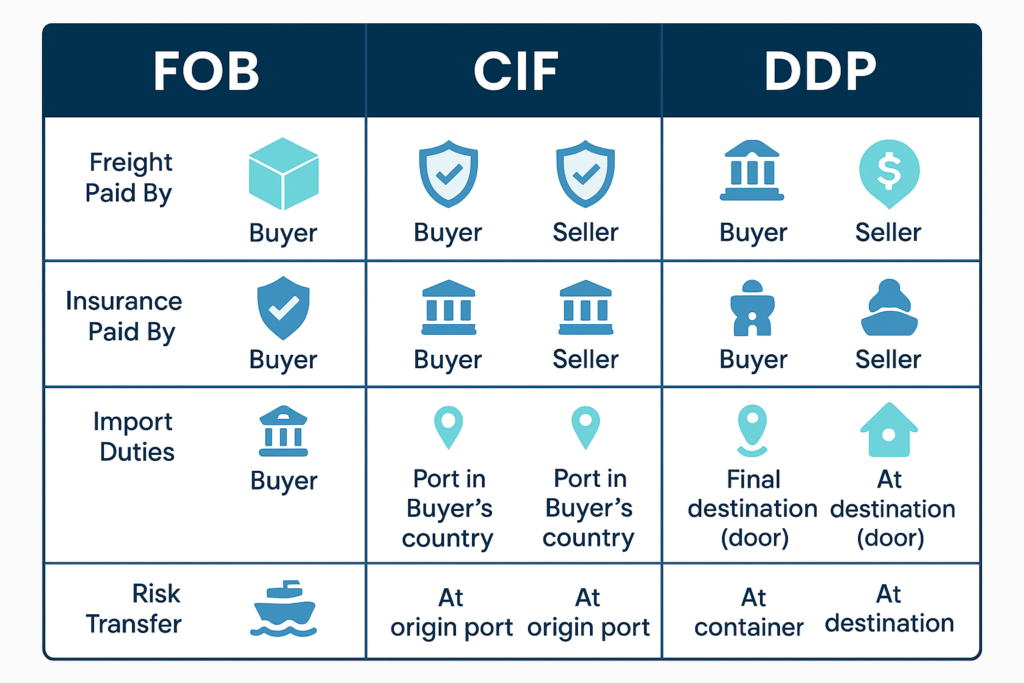
19. “What’s Your Incoterms (FOB, CIF, DDP) — and Can You Provide a Landed Cost Calculation?”
Why it matters: FOB (factory floor) means you’re responsible for ocean freight, insurance, customs, and last-mile. DDP (delivered duty paid) means they handle everything. The price difference is 18–25%.
Green flag: “We can quote FOB, CIF, or DDP. Landed cost calculation available.”
Red flag: “We only do FOB.” (Translation: they don’t want to handle customs.)
20. “What’s Your Return Policy for Defective Items — and Can I See It in Writing?”
Why it matters: A factory that says “quality problem” for every defect claim will deny 40% of legitimate claims. You need a written return policy.
Green flag: “Return policy: photo evidence + third-party inspection. Resolution: replacement + shipping, or credit against next order.”
Red flag: “We’ll handle it case by case.” (Translation: they’ll deny everything.)
21. “Can You Provide Local Service Support in [Your Country] — and Can I See the Contact?”
Why it matters: A warranty without local support means shipping a bed frame back to China for repair. That’s ¥800–1,200 per piece.
Green flag: “We have a service partner in [your country]. Contact: [name + phone].”
Red flag: “We provide remote support via video call.” (Translation: you’re on your own.)
22. “What’s Your Force Majeure Clause — and Can I See It in the Contract?”
Why it matters: “Factory delayed due to material shortage” is a standard excuse. You need a penalty clause that triggers at >14 days delay.
Green flag: “Penalty: 0.5% of PO value per day of delay >14 days.”
Red flag: “Force majeure covers all delays.” (Translation: they can delay indefinitely.)
23. “Can You Provide a List of Three Recent Clients Who Can Vouch for Your On-Time Delivery?”
Why it matters: A reference who says “they delivered on time” is worth ¥200,000 in avoided delay costs.
Green flag: “Three references available: [hotel name, procurement director, phone].”
Red flag: “Our clients are confidential.” (Translation: they don’t have references.)
24. “What’s Your Policy on Design Changes After PO Signing — and Is There a Change-Order Form?”
Why it matters: “Can you change the fabric from A to B?” sounds small. It adds ¥40,000–80,000 if the factory has already cut the original fabric.
Green flag: “Change orders require written form + 72-hour quote turnaround. Cost impact: itemized.”
Red flag: “No problem, we can adjust.” (Translation: they’re not tracking costs.)
25. “If This Project Goes Sideways, What’s Your Maximum Financial Exposure — and Can You Show Me Your Insurance Certificate?”
Why it matters: A factory with ¥500,000 in insurance can’t cover a ¥3,000,000 mistake. You need to know their maximum payout before signing.
Green flag: “Insurance coverage: ¥10,000,000. Certificate available.”
Red flag: “We’ll handle any problem.” (Translation: they don’t have insurance.)
The Scoring System: How to Use These 25 Questions
Green Flags: 22–25 / 25
Verdict: Sign the PO. This factory has (1) references, (2) in-house QC, (3) written warranty process, and (4) insurance.
Yellow Flags: 15–21 / 25
Verdict: Negotiate. Require (1) prototype before production, (2) penalty clause for delay, and (3) third-party inspection at frame stage.
Red Flags: <15 / 25
Verdict: Walk away. This factory will cost you ¥500,000–2,000,000 in delays, replacements, and opening-date postponement.
Why Hongye Passes All 25 Questions
Hongye has supplied 58+ hotel projects (2020–2026) with a 94% on-time delivery rate. Three production facilities in Guangdong, dedicated export PM team (8 people), and ISO 9001 / ISO 14001 certification.
For a 300-room project, Hongye provides:
- Gantt chart within 72 hours of PO signing
- Prototype (1:1) in 10–14 days (cost credited against PO >¥300,000)
- In-process QC checklist (4 stages, photos provided weekly)
- Spare parts kit (5% of PO value, itemized)
- Insurance certificate (¥10,000,000 coverage, Ping An Insurance)
Recent project: 186-room business hotel in Frankfurt (2025). Delivered on schedule (±3 days), 97% defect-free on arrival.
FAQ
Q1: How long does it take to get answers to all 25 questions?
A: A well-organized factory responds within 72 hours. If they take >7 days, they’re either disorganized or hiding something.
Q2: Should I ask all 25 questions for a <¥500,000 project?
A: No. For projects <¥500,000, focus on Questions 6, 9, 13, 17, and 22. The other 20 matter for >¥2,000,000 projects.
Q3: What if the factory refuses to answer some questions?
A: Walk away. A factory that won’t answer “can I visit the workshop?” is hiding something.
Q4: Can I use these 25 questions for a kitchen cabinet project (not hotel)?
A: Yes — but replace “hotel” with “residential” in Questions 1, 6, and 9. The structure is the same.
Q5: What’s the single most important question?
A: Question 2 (“What’s sub-contracted?”). If >30% is sub-contracted, quality drift is guaranteed.