
The Problem Nobody Talks About: Why Nursing Homes Need Better Furniture
Every year, someone in a nursing home falls. And falls in elderly people? They’re expensive and dangerous. We’re talking about $62,521 per fall—not just the hospital bill, but all the recovery costs, time away from activities, and sometimes permanent injury.
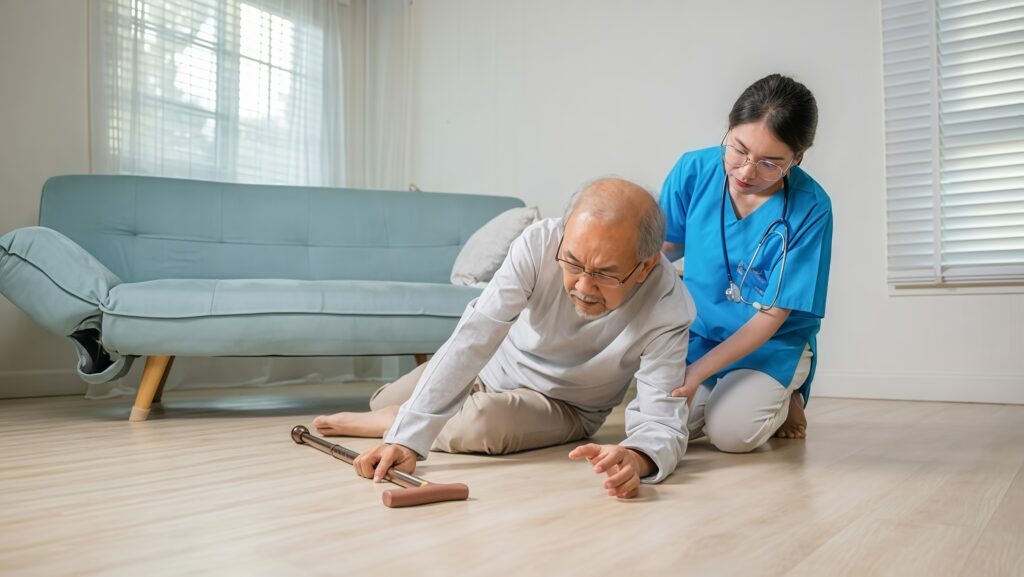
But here’s the thing that surprises most people: many of these falls aren’t really about the person being weak or clumsy. They’re caused by something you can actually fix with the right furniture design.
Imagine you have Alzheimer’s disease. You’re sitting in the nursing home, and you look at a dark chair against the floor. Your eyes see it, but your brain can’t quite figure out what it is. It looks like a hole. A dark spot on the ground? That might be a gap or a void. Sounds crazy, right? But that’s actually what’s happening inside the brains of dementia patients.
People with Alzheimer’s disease fall about 1.3 times per year. People without dementia? They fall about 0.2 times per year. That’s more than 6 times higher. And a lot of these falls can be prevented by simply choosing the right colors and materials for furniture.
How Dementia Changes What People See
When someone gets Alzheimer’s disease, the disease doesn’t just affect their memory. It physically damages parts of the brain that help them understand what they’re looking at.
Think of it this way: Your eyes work fine. You can see clearly. But your brain is the one that makes sense of what your eyes see. It turns that flat 2D picture into a real 3D world that you can move around in safely. In Alzheimer’s disease, that part of the brain starts to shrink and not work as well.
So a person with Alzheimer’s might look at a dark carpet on a light floor and see… a hole. An actual hole. Not “oh, there’s a carpet,” but “there’s a dangerous pit I might fall into.” This isn’t made up—this is real neuroscience. It’s called “visual agnosia,” which basically means the brain can’t interpret what the eyes are seeing correctly.

The same thing happens with chairs. A dark colored chair cushion? The patient might look at it and not be able to tell where the seat actually is. They might try to sit down and miss the chair completely. Or they might refuse to sit down at all because they can’t see where the seat is.
This is so common in dementia care that it has a name: “the black hole effect.” And it’s one of the main reasons dementia patients fall so much.
The Magic Number: Why 30 Points of Color Difference Saves Lives
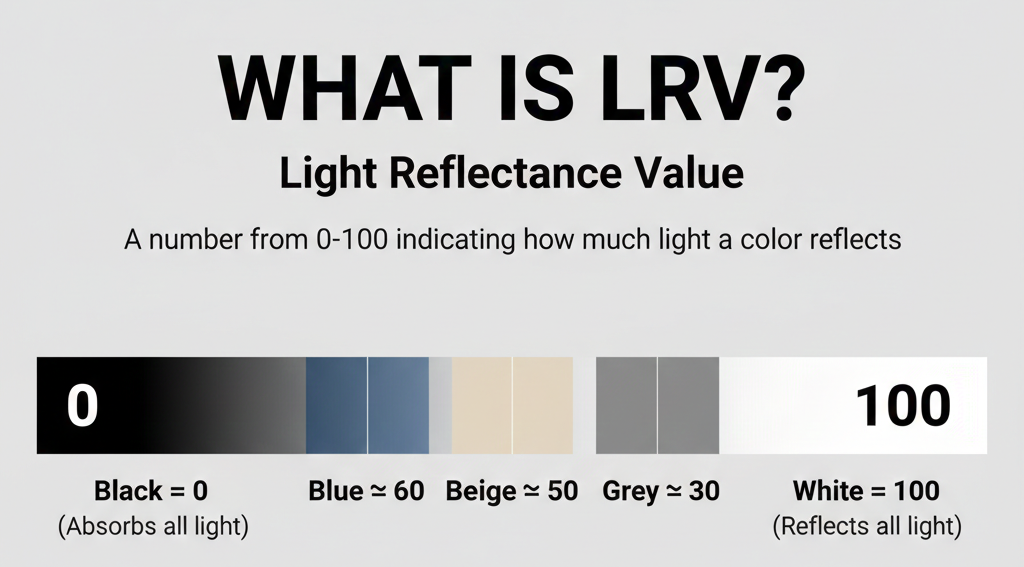
Here’s something most people have never heard of: LRV. It stands for Light Reflectance Value. Sounds technical, but it’s actually pretty simple.
LRV is just a number from 0 to 100 that tells you how much light a color reflects.
- Black = 0 (absorbs all light)
- White = 100 (reflects all light)
- Most colors in between (blue might be 60, beige might be 50, etc.)
Now, here’s the important part: researchers at the University of Stirling in Scotland found something really important. When the color difference between a chair and the floor is at least 30 LRV points, people with dementia can actually see the chair. When it’s less than 30 points? They can’t tell it’s there.
This is huge. It’s not fancy. It’s not about making things pretty. It’s about making things visible enough that a damaged brain can process them.
Example:
- Light tan floor = LRV 80
- Blue chair = LRV 50
- Difference = 30 points ✓ (Perfect! The patient can see it)
Compare that to:
- Light tan floor = LRV 80
- Beige chair = LRV 65
- Difference = 15 points ✗ (Not enough contrast. Patient might not see the chair at all)
That’s why when HY Healthcare designs memory care furniture, they don’t just pick pretty colors. They actually calculate the LRV numbers. A Serene Blue chair is chosen specifically because it creates strong contrast against typical light-colored nursing home flooring. The difference is about 33 points—safely above the critical 30-point threshold.
Why the Flooring Color Matters Just as Much
Here’s something that seems backwards: while furniture needs high contrast with the floor, the floor itself should be pretty much the same color throughout the whole facility.
If the bedroom has light flooring and the hallway has dark flooring, the patient’s brain reads that as a step or a cliff. They might freeze up. They might refuse to walk through the hallway. They might do risky things like high-stepping dangerously to avoid what their brain thinks is a drop.
The recommendation from experts? Keep the floor color the same throughout, with less than 8 points of LRV difference between connected areas. This way, patients don’t get confused and scared by sudden color changes that look like physical drops.
It’s a simple idea: make the furniture stand out (30+ point difference), but keep the flooring consistent (8 point or less difference).
The Power of Color: Blue and Green Actually Calm People Down
Color isn’t just decoration in a nursing home. Different colors actually affect how people feel and act. This is especially true for people with dementia.
Serene Blue: The Calming Color
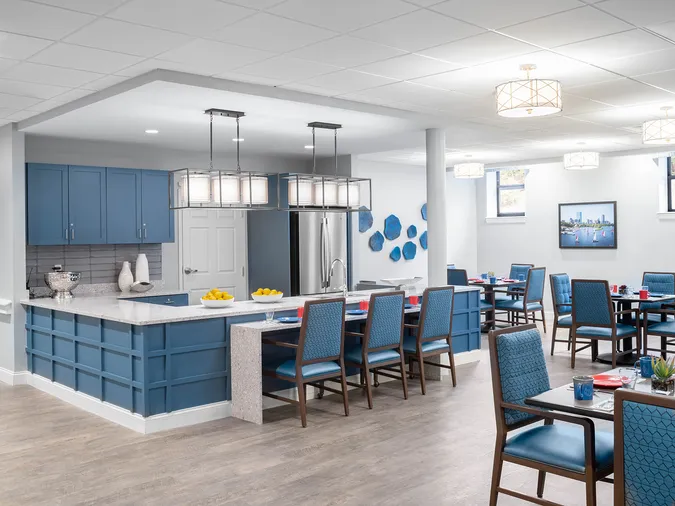
Blue is the color that works best in dementia facilities. Here’s why: blue actually slows down your heart rate. It lowers blood pressure. It reduces anxiety. This is measurable—not just “feels nice,” but actual medical improvements.
For dementia patients, this is crucial. A lot of them get agitated and anxious. About 39% of dementia patients in hospitals experience agitation or aggression. When they’re sitting in a blue room or on blue furniture, that agitation goes down. They’re calmer. They sleep better. They have fewer behavioral problems.
Mealtime becomes easier. Nightly confusion (something called “sundowning”) happens less often. It’s not magic—it’s just what blue does to the human nervous system.
Healing Green: Nature’s Color
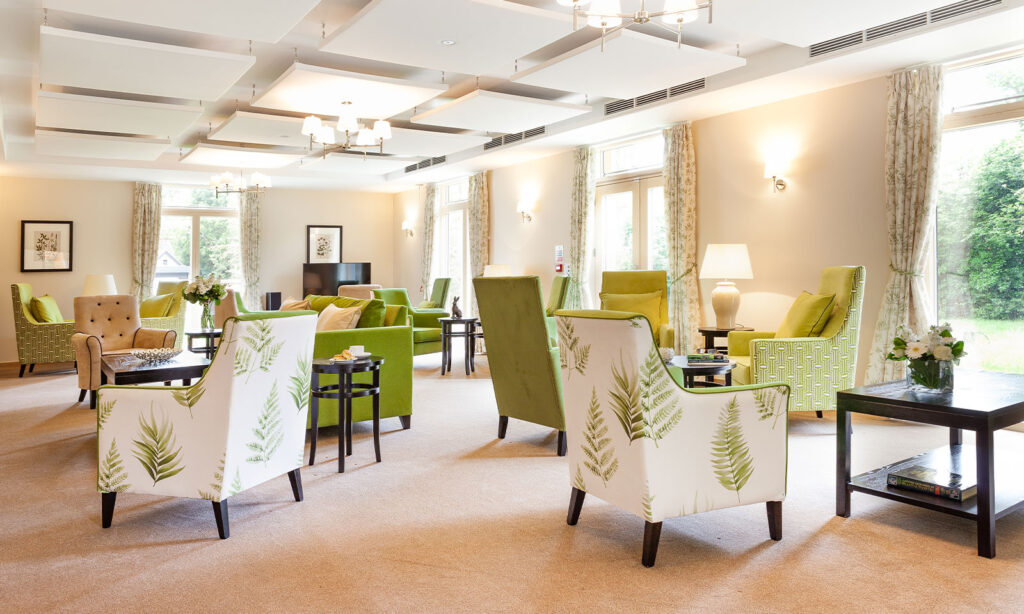
Green is special for elderly people. As we age, our eyes change—the lens gets a bit yellowed. This actually makes green harder for older people to see in some ways, BUT research shows that green is still the last color older people can really process well as their vision ages. It’s like their brains still understand green even when other colors get confusing.
Green also does something emotional: it reminds people of nature. For elderly people stuck in nursing homes, green furniture and accents create a connection to gardens, trees, and the natural world. They feel calmer. They move around more. They interact more with other residents.
A Little Bit of Warm Color: When to Use Red and Orange
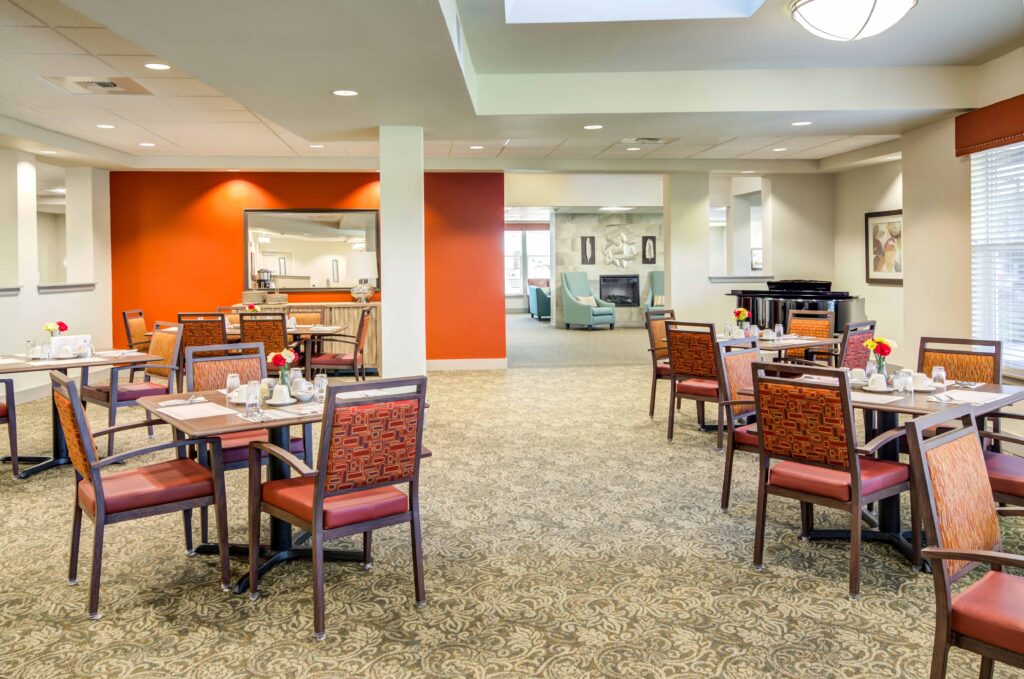
While cool colors (blue and green) are the main palette, warm colors like red and orange are actually useful for specific things. Red especially makes people hungry. For dementia patients who aren’t eating enough, red accents in the dining area can literally increase how much they eat. This might sound trivial, but nutrition is a huge problem in dementia care—when people stop eating, they decline faster.
The key is balance: mostly blue and green to keep things calm, but strategic touches of red in dining areas to stimulate appetite.
Why This Furniture Design is Actually a Medical Treatment
In psychology, there’s something called the “Environmental Press Model.” It basically says: when the environment is too confusing or hard for someone’s abilities, they stress out. When the environment is easy to understand, they do better.
For dementia patients, this is the whole game. Their brains are damaged. They have very little ability left to figure out confusing environments. But you can design an environment that their damaged brains CAN understand.
A room with good color contrast? Clear furniture edges? Consistent colors? That room becomes readable even to a dementia brain. The patient feels safe. They move around more independently. They’re less anxious. They have fewer behavioral problems.
This isn’t just comfort—it’s medicine.
Research backs this up. Nursing homes that implemented proper dementia-friendly design saw a 20% reduction in incident reports and a 40% reduction in residents needing behavioral medication after the changes. That’s not small. That’s transformative.
The Real-World Example: Saudi German Hospital in Makkah
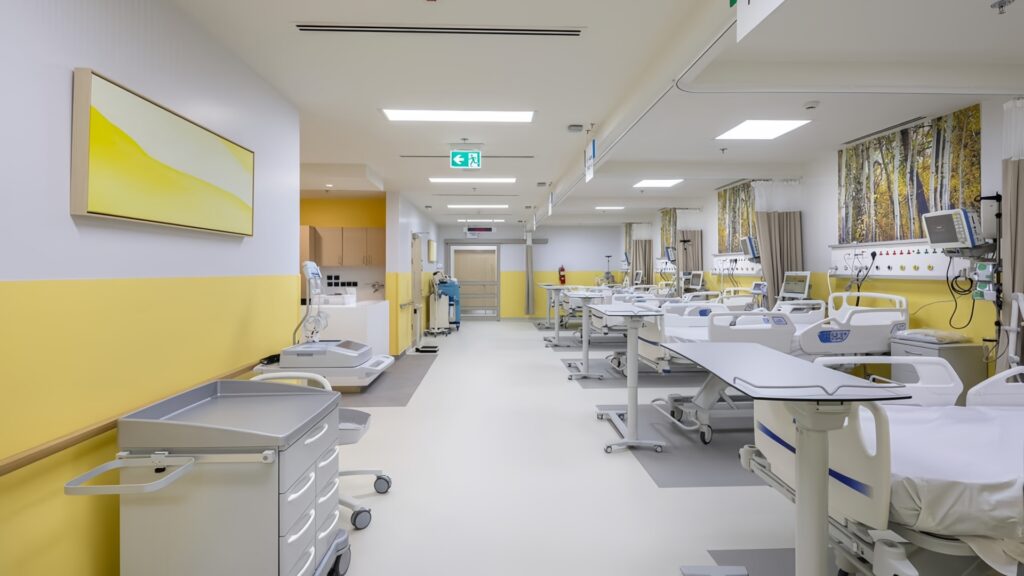
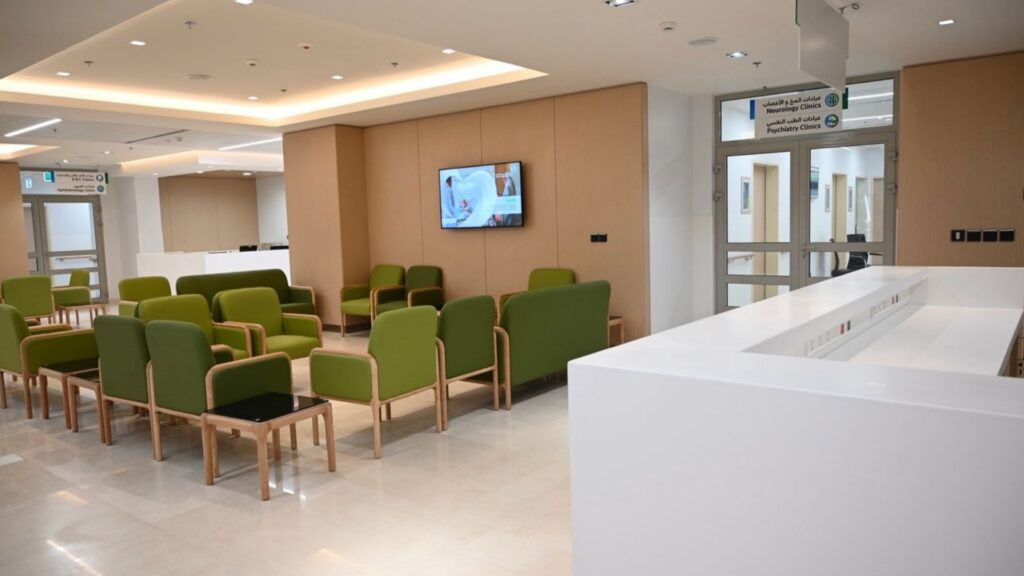
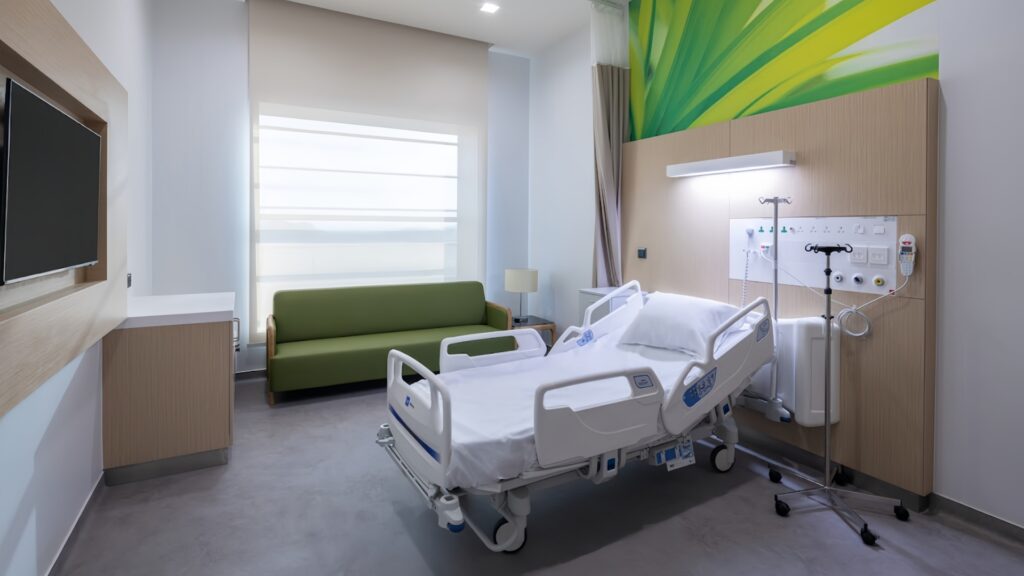
When the Saudi German Hospital in Makkah was designing their memory care wing, they faced a unique challenge: “We want it to look like a nice place, not an institution. But we also need it to be safe and medically appropriate for dementia patients.”
HY Healthcare designed the solution:
What they did:
- Blue furniture (LRV 52) against light flooring (LRV 85) = 33 point difference ✓
- Natural wood armrests for visual contrast and safe handholds
- Warm colored cushions in the dining area (reds and oranges) to help with eating
- Consistent flooring colors throughout, no scary transitions
What happened:
- Patients felt safer (the room made sense to their brains)
- Falls decreased
- Mealtime became less chaotic
- Staff reported fewer behavioral incidents
- The place actually looked nice—not institutional and sterile
You could be elegant AND safe. Those two things don’t have to fight each other.
The Money Side: This Furniture Actually Saves Money
Most people think dementia-friendly furniture costs more, so it’s a luxury. The numbers tell a different story.
Cost per fall: $62,521
Number of falls in a 50-bed dementia unit per year: About 65 falls (since patients fall 1.3 times per year)
Total fall costs: $4.06 million per year
Cost of good furniture per chair: Maybe $700 more than bad furniture
Total extra cost for 50 chairs: $35,000
Even if you ONLY prevented a 20% reduction in falls, that’s 13 fewer falls. That’s $812,773 in costs you didn’t have to pay. Your furniture investment pays for itself in literally a few weeks.
But you get way more than fall prevention:
- Behavioral problems decrease (fewer medications needed)
- Patients move around more (better health)
- Staff have fewer injuries (fewer violent behavioral incidents)
- Quality of life improves (patients feel safer and less confused)
So when you compare the cost of good furniture to the cost of NOT having good furniture, it’s not even close. The good furniture actually saves money while improving lives.
What to Look For When Buying Furniture for Dementia Care
If you’re responsible for a nursing home or memory care facility, here’s what matters:
1. Ask about LRV numbers
Don’t just look at colors. Actually ask the furniture company: “What’s the LRV of this chair against our flooring?” If they don’t know, find another company. The fact that they CAN calculate this shows they understand dementia-friendly design.
2. Check for the DSDC standard
The University of Stirling in Scotland has something called DSDC (Dementia Services Development Centre). Their standards are the gold standard worldwide. If furniture is specified to meet DSDC guidelines, you know it’s been thought through properly.
3. Look at edge details
Good dementia furniture has clear edges. You can see where the seat ends. You can see where the armrest is. This isn’t decoration—it’s essential safety.
4. Ask about infection control
The furniture needs to be easy to clean. Seams are bad (they hide pathogens). Piping (decorative edge trim) should be there for visual contrast, not just looks. Everything should be wipeable with bleach and disinfectants.
5. Think about color consistency
If you’re specifying new furniture, make sure all your memory care units use the same color palette. Your patient shouldn’t experience different blue shades in different rooms. That’s confusing. Pick a standard palette and stick with it everywhere.
The Bigger Picture: Why This Matters Right Now
Here’s a fact that should concern everyone: the number of people with dementia is expected to nearly triple by 2050. We’re talking about going from 57 million people in 2019 to 153 million people by 2050.
In regions like the Middle East and North Africa, the increase will be even faster. Healthcare systems are already stretched thin. You can’t throw more money at the problem. You have to be smarter about design.
That’s where this matters: good furniture design is one of the cheapest, most effective ways to improve dementia care. It doesn’t require new drugs. It doesn’t require more staff. It’s just smart design choices that dementia brains can actually understand.

Conclusion: Design That Works
Dementia-friendly furniture design sounds complicated, but it’s really just about a few simple ideas:
- Make furniture stand out (30+ point color difference from the floor)
- Keep floors consistent (less than 8 point color difference between areas)
- Use calming colors (blue and green for general areas)
- Add warm colors strategically (red and orange in dining areas)
- Make edges clear (piping, contrasting materials, things patients can see and grab)
These aren’t fancy ideas. They’re based on how dementia actually damages the brain and what kind of environment helps that damaged brain function better.
When you get these details right, falls decrease. Behavioral problems decrease. Quality of life increases. And it actually saves money compared to what happens when you get these details wrong.
That’s why healthcare facilities worldwide are paying attention to dementia-friendly furniture design. It’s not about being nice or trendy. It’s about keeping people safe, helping them maintain independence, and respecting their dignity.
For companies like HY Healthcare that specialize in this, it’s not just about selling furniture. It’s about providing a solution to one of the biggest healthcare challenges of our time: how to keep dementia patients safe and comfortable as the disease progresses.