
Introduction
The term “executive cuck chair” has quietly emerged within office design circles, workplace humor communities, and furniture industry discussions as a distinctly modern phenomenon that blends practical office furniture design with internet meme culture. While the phrase may sound provocative, understanding its origins, applications, and implications reveals deeper insights into workplace dynamics, office furniture psychology, and the evolution of executive seating arrangements in contemporary business environments.
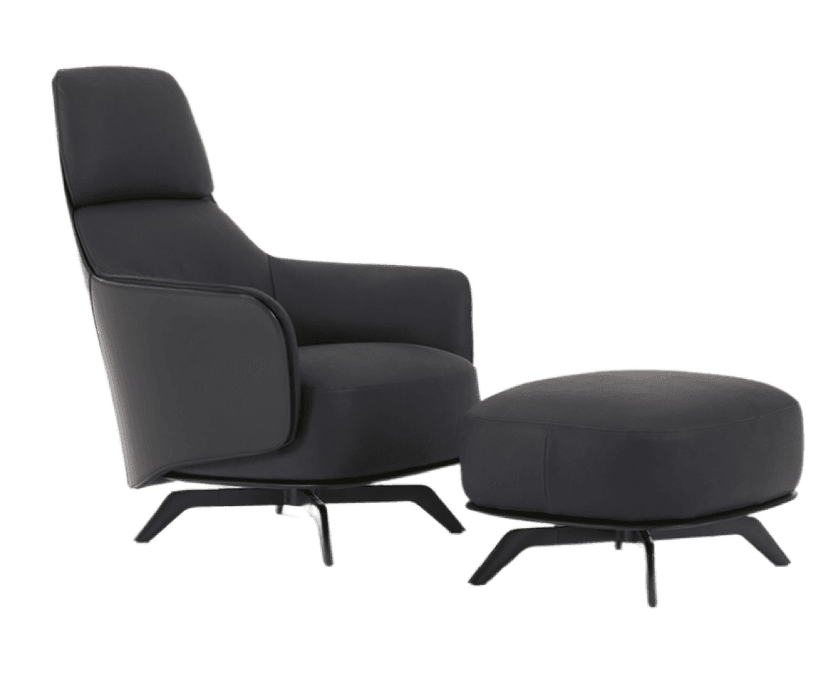
An executive cuck chair is a specialized office seating arrangement where a high-end executive chair or premium office seat is deliberately positioned to face a conference table, window, or door—creating an observation-oriented perspective rather than a participatory one. The term itself draws from the broader “cuck chair” phenomenon popularized across social media platforms like Reddit, TikTok, and Twitter, but applies specifically to professional executive office settings rather than hotels or casual spaces.
This comprehensive guide explores the history, design characteristics, workplace psychology, and practical applications of executive cuck chairs in modern professional environments.
The Etymology and Historical Context of Executive Seating
The Linguistic Origins
The terminology surrounding executive seating arrangements has deep historical roots that trace back centuries. Understanding these origins provides context for why modern professionals use such specific terminology to describe contemporary office furniture placements.
The term “cuck” itself originates from “cuckold,” a term dating back to Middle English (approximately 1250 AD) that originally referred to a man whose wife was unfaithful. The etymological connection stems from the cuckoo bird, which was known in medieval Europe for its deceptive nesting behaviors—laying eggs in other birds’ nests and allowing them to raise the bird’s young.
In traditional linguistics and cultural history, this metaphorical extension created associations with passivity, observation, and perceived powerlessness. By the 21st century, particularly with the rise of internet culture in the 2010s, the term evolved to describe various forms of perceived passivity or disempowerment in different contexts—from relationships to workplace dynamics.
Executive Seating Evolution Timeline
| Time Period | Office Culture | Seating Philosophy | Status Indicator |
|---|---|---|---|
| Pre-1980s | Hierarchical | Corner offices only for executives | Office size = power |
| 1980s-2000s | Corporate Formality | Executive suites with private spaces | Physical separation = authority |
| 2000s-2015 | Early Open Plan | Mixed seating, glass offices | Visibility with boundaries |
| 2015-2020 | Collaborative Era | Open seating, equality emphasis | Proximity = teamwork |
| 2020-Present | Hybrid/Remote | Flexible arrangements, psychology focus | Comfort = productivity |
The evolution of executive seating directly correlates with broader shifts in workplace management philosophies. Research from MIT Sloan and organizational psychology journals reveals that seating arrangements significantly impact team effectiveness, communication patterns, and executive decision-making quality.
Understanding Executive Office Chair Design
Modern Executive Chair Specifications
Contemporary executive office chairs designed for premium workplaces incorporate sophisticated features that distinguish them from standard office seating. These high-performance chairs represent significant investments in workplace infrastructure, often ranging from $800 to $3,500+ per unit.
Key Design Elements of Premium Executive Chairs:
| Feature | Function | Ergonomic Benefit | Professional Impact |
|---|---|---|---|
| Lumbar Support System | Adjustable spinal alignment | Reduces lower back strain during extended sitting | Supports 8+ hour workdays |
| Mesh or Premium Upholstery | Breathability and durability | Maintains comfort during long meetings | Professional appearance |
| Synchro Mechanisms | Synchronized back/seat movement | Adapts to body positioning automatically | Reduces manual adjustments |
| Height Adjustable Design | 4-6 inch vertical range | Accommodates various body types | Inclusive design principle |
| Armrest Customization | Multiple arm positions | Reduces shoulder and neck tension | Executive comfort standard |
| Headrest Options | Neck and upper back support | Eliminates neck strain during calls | Professional presentation |
| Heavy-Duty Base | 5-star caster wheels | Smooth movement across executive offices | Functional mobility |
According to 2025 office furniture design trend analysis, synchro mechanism chairs displayed significant market growth, with more furniture designers embracing flexible ergonomics than traditional three-lever systems. Industry leaders at NeoCon 2024 demonstrated that contemporary executive seating prioritizes adaptive support that moves in harmony with the body throughout the working day.
Positioning Psychology and Executive Dynamics
The placement of an executive chair within an office space carries profound psychological implications that extend far beyond mere furniture arrangement. This concept connects directly to workplace hierarchy, communication patterns, and team effectiveness.
Research from organizational behavior studies demonstrates:
When executive chairs face toward windows or doors rather than toward work surfaces, they create a observation-oriented perspective that subtly communicates:
- Authority over the surrounding space
- Awareness of broader office dynamics
- Slight psychological distance from operational tasks
- Openness to environmental monitoring
Conversely, when executive seating positions the occupant facing toward collaborative spaces or conference tables, it signals:
- Active participation in team discussions
- Engagement with peer-level interactions
- Collaborative rather than supervisory stance
- Inclusive decision-making approach
The Executive Cuck Chair Phenomenon in Modern Offices
The Internet Meme Origins
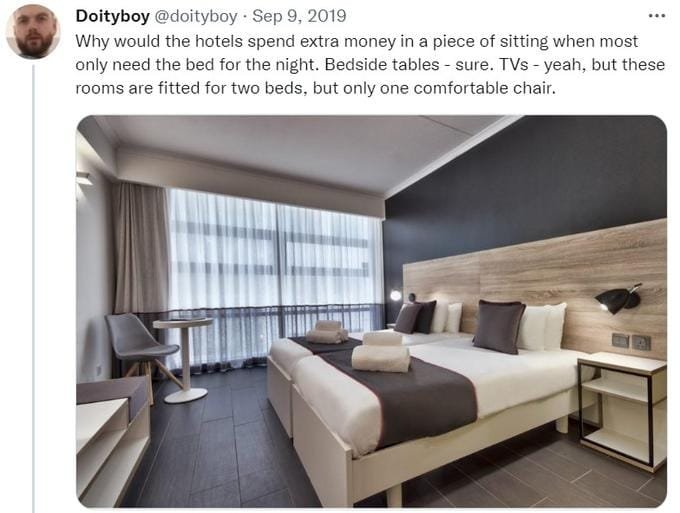
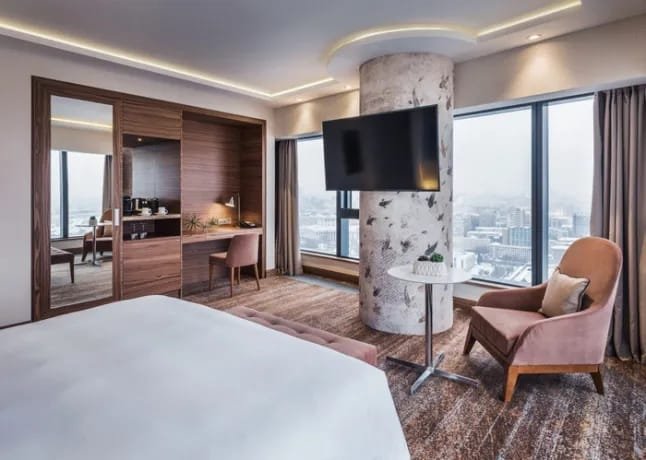
The broader “cuck chair” meme phenomenon began gaining traction around 2019 when Reddit users started humorously documenting hotel room furniture placements. What began as an innocent observation evolved into a viral internet phenomenon with dedicated communities, TikTok accounts accumulating millions of views, and comprehensive YouTube analyses.
The timeline of this cultural phenomenon illustrates how internet culture transforms ordinary observations into widespread cultural touchpoints:
February 2019: Initial Reddit post documenting hotel room chair placements gained unexpected traction in design and hospitality forums
September 2019: Comprehensive Twitter thread showcasing 14 different furniture arrangement examples received over 1,200 likes and generated sustained discussion
July 2020: YouTube educational content explaining the meme trend and chair placement psychology accumulated more than 43,000 views, introducing the concept to mainstream audiences
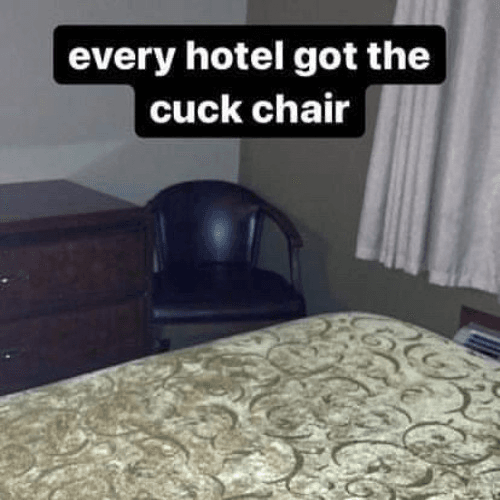
September 2022: The phrase “Every Hotel Got the Cuck Chair” achieved viral status across social media platforms, spawning derivative content and meme variations
2023-2025: The concept evolved beyond hotels into office settings, with professionals joking about executive office furniture arrangements using similar terminology
This viral progression demonstrates how internet humor has the capacity to reshape language, cultural perception, and even influence professional design discourse.
Adaptation to Executive Environments
The term “executive cuck chair” emerged as professionals within corporate environments began applying this humorous framework to their own workplace furniture arrangements. This adaptation reflects several important trends:
Professional Context Shift: What began as hotel humor evolved into office furniture discussion, indicating that workplace environments had begun incorporating similar seating arrangements
Design Pattern Recognition: Professionals across industries noticed that executive offices frequently featured chairs positioned to observe rather than participate—mirroring the hotel phenomenon
Corporate Humor Integration: The terminology provided a light-hearted way for office workers to discuss workplace hierarchies and power dynamics that might otherwise feel uncomfortable or inappropriate
Furniture Industry Awareness: Some office furniture manufacturers began responding to this terminology, either by incorporating it into marketing or by redesigning office layouts to address the concerns it highlighted
Practical Explanations for Executive Chair Placement
Functional Office Design Considerations
While the terminology carries humorous undertones, the actual placement of executive chairs in professional environments typically reflects practical, functional design principles rather than intentional psychological manipulation.
Space Optimization in Executive Offices:
| Design Factor | Practical Purpose | Implementation Strategy | Productivity Impact |
|---|---|---|---|
| Window Placement | Natural lighting for video calls | Positioning chair to face windows and glass walls | Reduced screen glare, professional appearance |
| Conference Access | Proximity to meeting spaces | Chairs angled toward common areas | Facilitates spontaneous collaboration |
| Sight Lines | Monitoring office activities | Strategic positioning in open layouts | Enables quick visual checks without interruption |
| Furniture Efficiency | Maximizing limited square footage | Using corners and edges strategically | Better space utilization in premium offices |
| Technological Integration | Placement near power outlets, IT infrastructure | Positioning for cable management | Supports modern workplace technology |
| Meeting Facilitation | Enabling observation of presentations | Chairs angled toward projection screens or conference tables | Improved meeting participation quality |
Industry design experts emphasize that “the executive office layout should have distinct zones for focused work, collaborative discussion, and strategic observation, based on the role’s specific responsibilities.” This multi-functional approach explains why executive chairs are often positioned in ways that may superficially resemble the “cuck chair” phenomenon but actually serve practical purposes.
The Psychology of Executive Space Design
Contemporary workplace psychology reveals that executive seating arrangements significantly impact decision-making quality, team dynamics, and organizational effectiveness. Research published in organizational behavior journals demonstrates clear correlations between physical arrangement and business outcomes.
Key Psychological Findings:
Executives who sit in isolated corner offices with closed doors demonstrate reduced collaboration scores compared to those in open or semi-open arrangements. Conversely, executives positioned within sight lines of team members report higher awareness of operational issues and stronger team cohesion.
The positioning of an executive’s chair can subtly communicate organizational values:
Observation-Focused Positioning (facing outward): Signals a supervisory, monitoring stance that emphasizes executive oversight and environmental awareness
Participation-Focused Positioning (facing team members): Communicates collaborative leadership and equal-footing decision-making
Task-Focused Positioning (facing desk/work surface): Emphasizes focused work and individual contribution, sometimes perceived as less available for informal interaction
Understanding these psychological dimensions helps organizations design executive spaces that align with their stated values and leadership philosophies.
Premium Executive Chair Trends in 2025
Market Evolution and Ergonomic Innovation
The office chair market has experienced significant evolution, with ergonomic seating becoming non-negotiable in premium executive environments. Current market analysis reveals distinct categories of executive seating solutions:
Ergonomic High-Back Executive Office Chairs: The dominant market category with highest consistent demand (769.14 search volume), demonstrating that primary users prioritize comfort for 8+ hour workdays and include 91.48% home office setups. Analysis of Amazon reviews reveals that comfort (33.4% of positive feedback) and easy assembly (8.7%) drive purchasing decisions, while long-term discomfort (18.2% of negative feedback) represents the primary pain point for users.
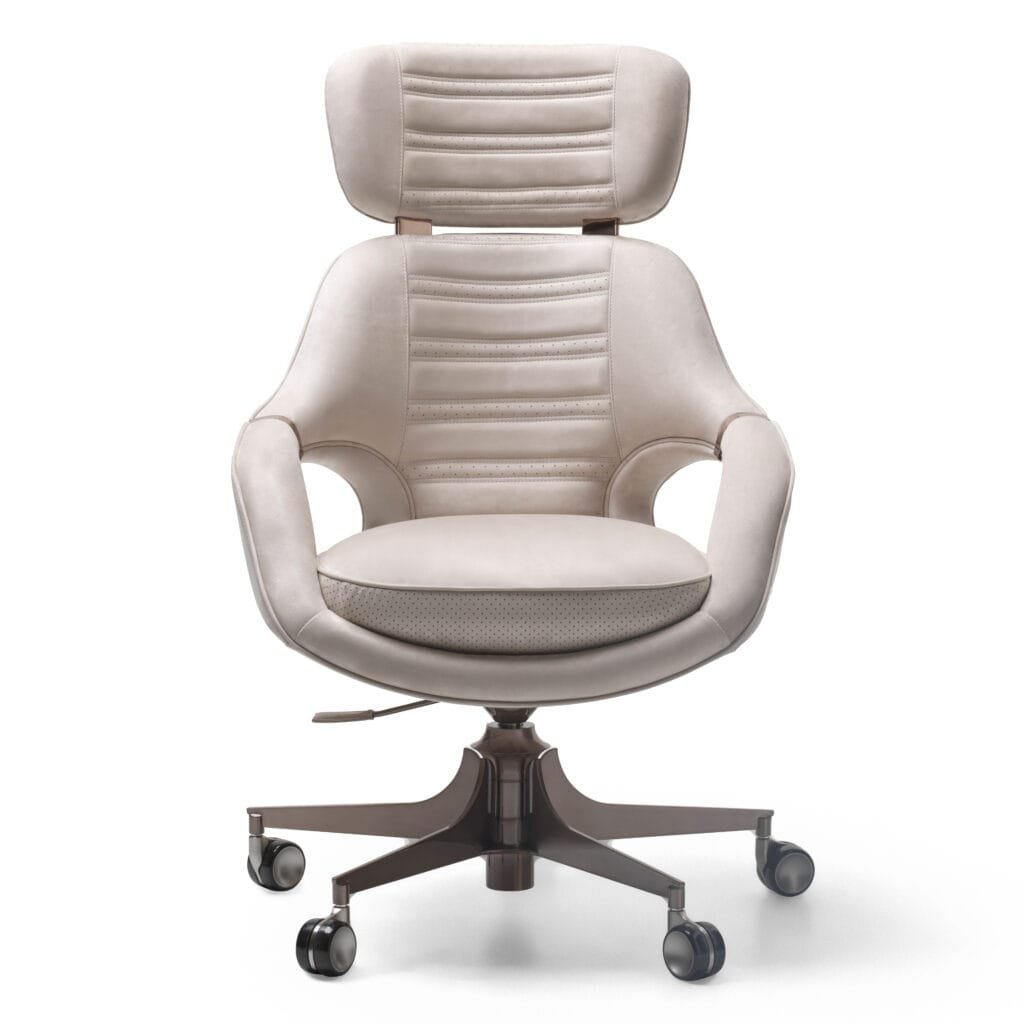
Premium Mesh Back Executive Seating: Increasingly popular in 2025, with emphasis on breathability and elegant design. Industry data from NeoCon 2024 indicates that 3D knit mesh fabrics have become standard in premium executive chairs, with designers prioritizing “simpler, more elegant” shapes over traditional chunky designs.
Adjustable Synchro Mechanism Chairs: Representing the latest innovation frontier, these chairs feature synchronized back and seat movement that adapts to body positioning without manual adjustment. Recent trend analysis demonstrates that synchro mechanism adoption has outpaced traditional three-lever systems in premium market segments.
Gaming Chair Hybrids for Remote Executive Work: A growing niche showing 41.6% search volume increase from January to July 2025, indicating executive adoption of versatile chairs for both work and relaxation. This category appeals to executives working from home offices who require chairs suitable for extended video calls and occasional relaxation.
Material and Aesthetic Trends
Contemporary executive chair design emphasizes several material and aesthetic principles aligned with 2025 workplace trends:
| Trend Category | Design Direction | Market Adoption | Professional Perception |
|---|---|---|---|
| Minimalist Aesthetics | Clean lines, neutral colors, simple geometry | High adoption in tech/startup sectors | Modern, progressive leadership |
| Biophilic Elements | Natural materials, wood accents, organic shapes | Growing in executive suites | Wellness-focused organization |
| Color Diversity | Moving beyond black leather to varied palettes | Mainstream adoption across sectors | Creative, forward-thinking culture |
| Sustainable Materials | Recycled fabrics, eco-friendly bases | Increasing in corporate environments | Environmentally conscious brand values |
| Tech Integration | Built-in USB ports, wireless charging | Premium segment feature | Innovation-forward organization |
The shift toward diverse materials and aesthetics reflects broader organizational values changes, with executive seating now serving as a visual statement about company culture and leadership philosophy.
Misconceptions and Reality: Separating Humor from Function
Common Misunderstandings About Executive Chair Placement
The popularization of the “executive cuck chair” terminology has generated several misconceptions about office furniture design that deserve careful examination. While the meme provides humorous commentary on workplace observation dynamics, actual professional design principles operate differently.
Misconception 1: Intentional Passivity Design
The Myth: Executive chairs are positioned to create intentionally passive or less powerful seating arrangements.
The Reality: Professional office design prioritizes functional requirements including sight lines for operational awareness, proximity to technology infrastructure, access to conference spaces, and accommodation of executive responsibilities that often require monitoring broader office dynamics. The positioning of observation-facing chairs typically reflects these practical needs rather than psychological manipulation.
Misconception 2: Power Dynamics Signaling
The Myth: A chair facing outward signals reduced power or authority compared to desk-facing positions.
The Reality: Executive positioning research indicates that chairs positioned with sight lines to broader office spaces often signal increased authority and monitoring capability. Executives who can observe multiple areas simultaneously without turning typically hold higher-ranking positions. The “passivity” interpretation applies primarily to non-executive contexts.
Misconception 3: Uniform Design Standards
The Myth: All executive offices follow the same seating arrangement pattern.
The Reality: Contemporary executive office design shows tremendous variation based on industry, organizational structure, role-specific requirements, and individual preferences. Tech companies, financial firms, non-profits, and creative agencies each approach executive seating differently based on their specific operational needs.
The Role of Confirmation Bias in Meme Persistence
Psychological research on pattern recognition reveals that once individuals become aware of a specific pattern (such as “executive cuck chairs”), they unconsciously seek confirmation of that pattern, even in contexts where alternative explanations are equally or more plausible.
This cognitive phenomenon, known as confirmation bias, helps explain why the meme has persisted and spread despite limited empirical evidence supporting the original interpretation. People who learn about the “cuck chair” concept become unconsciously primed to notice and interpret chair placements through this lens.
The phenomenon demonstrates broader truths about internet culture:
Meme virality depends on interpretive flexibility – The concept is humorous and engaging enough to drive sharing and discussion
Visual confirmation feels compelling – A photograph of a chair facing a bed appears to “confirm” the interpretation, even though multiple explanations exist
Community reinforcement amplifies perception – Dedicated Reddit communities and TikTok accounts create echo chambers that normalize the interpretation
Humor transcends functionality – The joke is entertaining enough that accuracy matters less than entertainment value
Psychological Dimensions: Power Dynamics and Observation
The Executive Observation Function
Beyond furniture placement humor exists genuine psychological research into how physical positioning impacts behavioral outcomes and organizational dynamics. This research reveals that strategic positioning of executive seating does influence information flow, decision-making patterns, and team awareness.
Research from MIT Sloan and organizational psychology studies establishes clear correlations:
Executives in open-space environments with high visibility experience:
- Increased informal communication (estimated 34% more inter-executive conversations)
- Faster information dissemination across organizational silos
- Greater awareness of operational challenges at ground level
- Improved decision-making through reduced information asymmetry
Executives in isolated positions with limited sight lines experience:
- Information bottlenecks where details pass through CEO rather than between executives
- Reduced collaboration and increased organizational silos
- Potential for misalignment of company priorities across departments
- Less awareness of emerging operational challenges
These research findings explain why some organizations are deliberately restructuring executive seating arrangements away from isolated corner offices toward more integrated layouts—not for humor purposes, but for improved organizational effectiveness.
Environmental Psychology and Seating Arrangement
Contemporary environmental psychology demonstrates that physical space arrangement influences behavior more profoundly than most people consciously recognize. This principle applies directly to executive office design.
Research on spatial arrangement indicates:
The angle of seating (facing inward vs. outward) influences cognitive processing and attention focus. Executives positioned to observe broader office spaces show different attention patterns than those oriented toward individual work.
Visual access to other people affects communication comfort. When executive chairs allow high visibility, subordinates show greater comfort in initiating informal conversations, while isolated positions encourage more formal communication channels.
Perceived accessibility changes based on positioning. An executive whose chair faces toward common areas communicates availability, while desk-facing positions communicate focus on individual work.
These psychological principles explain why workplace designers pay careful attention to executive seating orientation—not because of internet meme humor, but because of substantive impacts on organizational dynamics.
The Executive Cuck Chair Across Different Industries
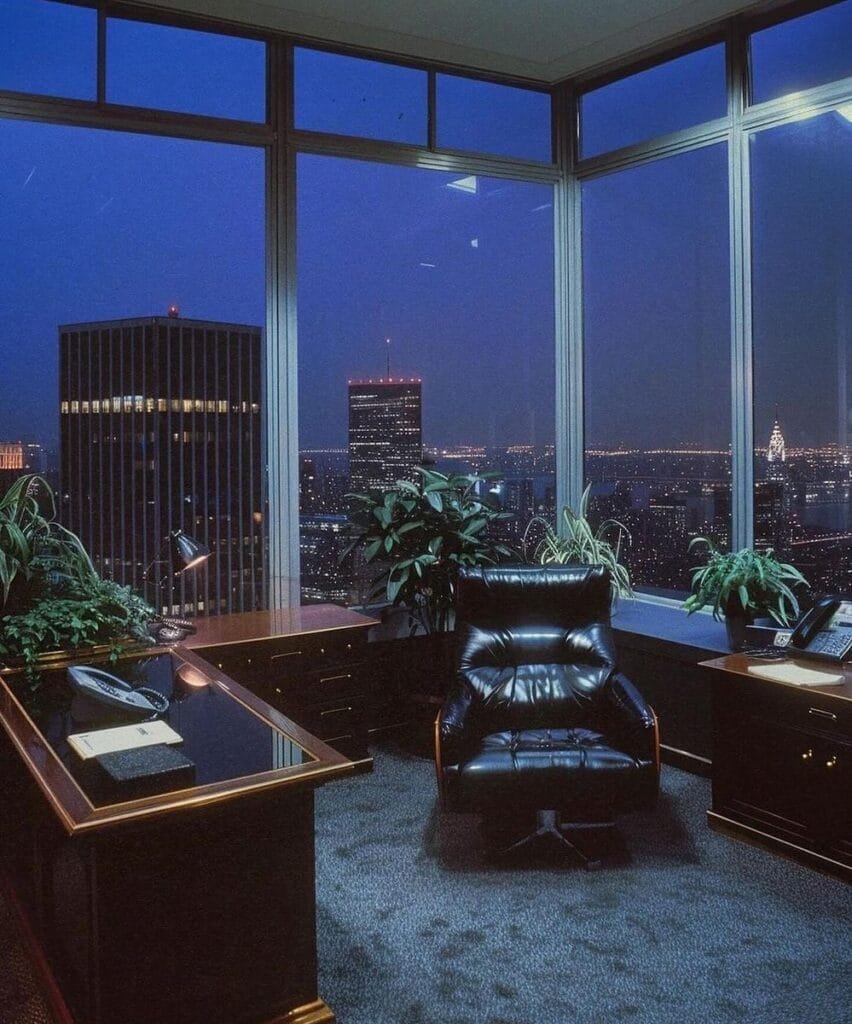
Technology and Startup Environments
In technology companies and venture-backed startups, the concept of the executive cuck chair has taken on specific meanings related to their collaborative cultures:
Tech Industry Characteristics:
- Emphasis on open office layouts and visual accessibility
- Intentional flattening of hierarchies through furniture design
- Executive seating positioned within general office flow rather than isolated spaces
- Use of varied seating options rather than single executive chair paradigm
- Integration of observation and collaboration as intentional design goals
Tech executives often deliberately position their chairs to maintain visibility with engineering and product teams, viewing this arrangement as a functional requirement rather than a power reduction. This positioning facilitates the rapid problem-solving and collaboration that tech cultures prioritize.
Financial Services and Traditional Corporate
Traditional financial and corporate environments approach executive seating differently:
Corporate Finance Characteristics:
- More formal separation between executive and operational spaces
- Executive suites with distinct furniture standards signaling hierarchy
- Observation-oriented positioning as a deliberate authority signal
- Premium chair quality as a status indicator
- Conference room positioning as a distinct role marker
In these environments, executive chairs positioned to observe conference rooms often serve a practical supervisory function rather than humorous passivity.
Legal and Professional Services
Legal firms and professional services demonstrate their own executive seating philosophies:
Professional Services Characteristics:
- Partner offices with traditional hierarchical positioning
- Strategic chair placement near windows and doors for privacy with visibility
- Formal furniture choices signaling expertise and stability
- Conference room observation positions facilitating meeting participation
- Client-facing considerations in office design
Executive seating in these environments often balances the need for privacy (essential for client confidentiality) with the need for accessibility (important for firm management).
Best Practices for Executive Office Design in 2025
Designing Functional Executive Spaces
Modern workplace design experts recommend a multi-dimensional approach to executive seating that balances functionality, psychology, and organizational values:
Step 1: Define Executive Role Requirements
Determine the specific functions your executive must perform:
- Do they require observation of operational spaces?
- How much time do they spend in collaborative versus focused work?
- What technological infrastructure do they need access to?
- How much client or visitor interaction occurs in the office?
Step 2: Assess Organizational Culture Values
Align furniture choices with stated organizational philosophy:
- Does your culture emphasize collaboration or individual focus?
- Should executives signal approachability or authority?
- Does your brand value innovation, tradition, or balance?
Step 3: Select Ergonomically Advanced Seating
Invest in premium chairs that support 8+ hour workdays:
- Prioritize synchro mechanism technology for adaptive support
- Select mesh or premium breathable materials for all-day comfort
- Ensure adjustable lumbar support and optional headrest
- Verify that chair dimensions accommodate your executive’s body type
Step 4: Position Strategically Based on Function
Arrange furniture to support intended work patterns:
- Position observation-facing chairs when supervisory monitoring is required
- Arrange collaboration-facing seating when teamwork is prioritized
- Consider natural lighting and technology access
- Create distinct zones for focused work, collaboration, and client interaction
Step 5: Incorporate Wellness Elements
Modern executive offices increasingly include wellness considerations:
- Standing desk options for movement variety
- Comfortable accent seating for relaxation or small meetings
- Plants and natural materials supporting biophilic design
- Lighting that reduces screen strain and supports circadian rhythms
The Future of Executive Seating and Office Design
Emerging Trends for Executive Environments
As workplace culture continues evolving toward hybrid and flexible models, executive seating design is adapting in several important directions:
Flexible Executive Arrangements: Organizations are moving away from permanent assigned executive offices toward flexible executive spaces that multiple leaders use on different days. This shift requires more adaptable, multipurpose furniture that can serve varied executive roles.
Wellness Integration: 2025 office design trends emphasize wellness zones and spaces that support executive mental health. Executive seating increasingly incorporates relaxation features while maintaining professional functionality.
Technology Integration: Modern executive chairs are beginning to incorporate USB charging ports, wireless charging capabilities, and cable management systems supporting the technology-intensive nature of contemporary executive work.
Sustainability Focus: Environmental consciousness is driving adoption of sustainable materials and manufacturing practices in premium executive seating, with companies selecting chairs made from recycled or eco-friendly materials as a values statement.
Biophilic Design Elements: Moving beyond traditional black leather, executive chairs now incorporate natural materials, varied colors, and organic shapes that connect occupants with natural design principles.
Remote Work and Executive Seating
The rise of hybrid and remote work has fundamentally altered executive seating requirements. Many executives now maintain office chairs in multiple locations (corporate office and home office), driving demand for:
- Versatile chairs suitable for both formal corporate meetings and remote video calls
- Premium gaming chairs adapted for executive use
- Compact executive seating for smaller home offices
- Chairs that project professionalism in video call backgrounds
This evolution suggests that future executive seating will prioritize adaptability and multi-context functionality over traditional single-purpose design.
Understanding Common Questions About Executive Chair Placement
1. Why is the executive chair positioned facing the conference table rather than the desk?
Professional design rationale includes several practical explanations:
- Meeting facilitation: Positioning allows easy participation in planned conferences without full desk repositioning
- Operational awareness: Facing common areas maintains visibility of office activities
- Accessibility signals: Outward-facing positioning subtly communicates executive availability for team interaction
- Technology access: Conference tables often feature integrated technology that executives need sight lines toward
2.Does chair positioning actually influence executive decision-making?
Research suggests positioning has subtle but measurable impacts:
- Executives with high visual access to team members receive more informal input
- Positioning that facilitates natural conversation reduces formal meeting reliance
- Observation capabilities enable faster response to operational issues
- Visual accessibility influences how approachable executives appear to subordinates
However, decision-making quality depends far more on organizational structure, information systems, and leadership philosophy than on chair placement alone.
3. Should organizations deliberately avoid “cuck chair” positioning based on the meme?
The meme terminology is primarily humorous commentary rather than substantive design criticism. Organizations should base positioning decisions on:
- Functional requirements of the executive role
- Organizational culture and values
- Individual executive preferences and comfort
- Practical considerations (technology access, lighting, traffic flow)
Rather than on internet humor or perceived passivity implications.
Conclusion: Integration and Moving Forward
The executive cuck chair phenomenon represents a fascinating intersection of internet culture, workplace humor, office design psychology, and organizational dynamics. What began as lighthearted observation about hotel furniture has evolved into commentary on power dynamics, observation capabilities, and workplace hierarchies in professional settings.
However, behind the humor exists genuine functionality. Executive chair positioning, office layout design, and furniture selection significantly impact organizational effectiveness through their influence on communication patterns, information flow, team collaboration, and decision-making quality.
Modern workplace design in 2025 reflects increasingly sophisticated understanding of how physical space influences organizational behavior. Whether executive chairs face toward windows, conference tables, or individual work surfaces, these choices should reflect deliberate decisions about organizational priorities, leadership philosophy, and executive role requirements—not accidentally replicate internet memes.
Organizations seeking to optimize executive office design should focus on:
- Investing in ergonomic seating that supports all-day comfort and health
- Positioning furniture to support actual executive responsibilities
- Aligning office design with stated organizational values
- Creating flexible spaces that accommodate hybrid work realities
- Incorporating wellness and sustainability principles
The terminology may be humorous, but the underlying principles are seriously important to organizational success. As workplace culture continues evolving, executive seating will remain a meaningful indicator of organizational priorities, leadership philosophy, and commitment to employee (and executive) well-being.
The executive cuck chair—whether as meme, design pattern, or functional reality—ultimately tells us something important about how we work, how we organize our spaces, and what we value in our professional environments. Understanding this phenomenon provides insight not just into furniture design, but into the deeper dynamics of modern organizational life.
About Premium Executive Seating Solutions
Organizations seeking to optimize executive office environments benefit from consulting with workplace design professionals who understand both functional requirements and psychological implications of space design. Professional-grade executive chairs with synchro mechanisms, premium materials, and adjustable ergonomic support represent essential investments in executive productivity, health, and organizational effectiveness.
Contact workplace design specialists to develop executive office solutions tailored to your organization’s specific needs, values, and vision for modern professional environments.