
Introduction
In the rapidly evolving healthcare industry, patient satisfaction and clinical outcomes depend significantly on physical environment design. While medical expertise remains paramount, research increasingly shows that spatial design—particularly the distance between patients and healthcare providers—profoundly influences patient comfort, trust, and treatment compliance. This insight has led to what experts call the “1.5-meter rule” in healthcare facilities.
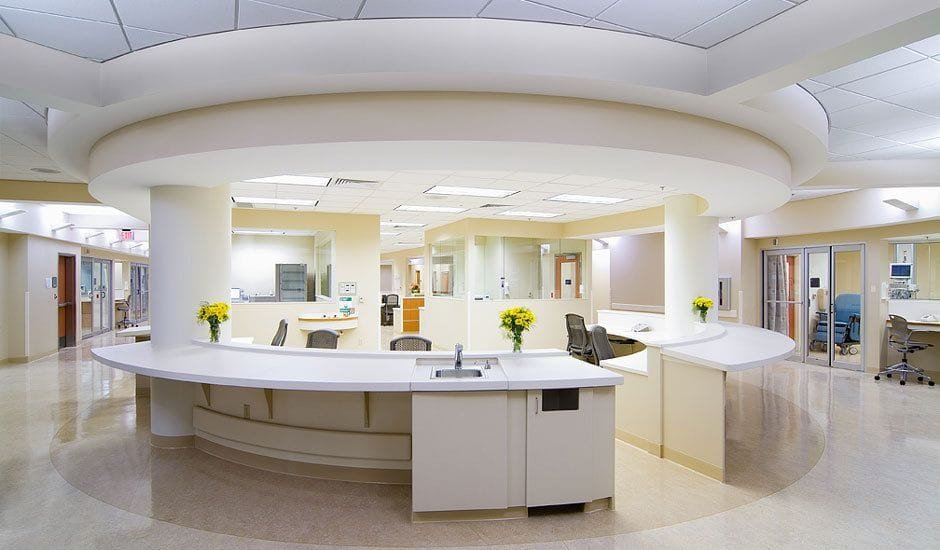
The 1.5-meter rule establishes an optimal distance for meaningful patient-provider interaction in medical settings. This distance—approximately 5 feet—balances professional accessibility with patient privacy, enabling authentic communication while maintaining appropriate clinical boundaries. Understanding and implementing this rule through thoughtful furniture design transforms healthcare spaces from sterile clinical environments into therapeutic settings where patients feel genuinely heard and cared for.
This comprehensive guide explores the 1.5-meter rule, its scientific foundation, and how healthcare facility design—particularly furniture placement and room layout—enables this critical distance principle. Whether you operate a consulting clinic, diagnostic center, or rehabilitation facility, mastering this concept will elevate patient experience and clinical effectiveness.
What is the 1.5-Meter Rule in Healthcare?
The 1.5-meter rule is a quantified principle established through decades of healthcare design research and patient psychology studies. It identifies 1.5 meters (approximately 5 feet) as the optimal distance for direct patient-provider consultation and care delivery.
At this distance, several critical clinical and psychological functions occur simultaneously:
Healthcare providers can:
- Maintain professional clinical presence without appearing distant
- Observe patient non-verbal communication and emotional state
- Deliver care instructions clearly and compassionately
- Respond immediately to patient concerns or physical needs
- Establish trust through personal attention and accessibility
Patients experience:
- Adequate personal space maintaining dignity and privacy
- Clear perception of provider engagement and concern
- Reduced anxiety from provider proximity
- Comfortable personal interaction without feeling crowded
- Enhanced ability to ask questions and express concerns
This distance represents the “sweet spot” in therapeutic communication—close enough for genuine interaction, far enough for psychological comfort. Violating this distance in either direction undermines the patient experience: distances exceeding 1.5 meters create perceived indifference, while closer distances without appropriate permission trigger discomfort and defensive responses.
The Two Distances: Understanding the Healthcare Interaction Model
Similar to hospitality’s 5’10 rule, healthcare operates on a two-distance model that guides physical space design and furniture placement.
The 1.5-Meter Zone: Direct Consultation Distance
When healthcare providers approach patients at the 1.5-meter distance, specific therapeutic communication occurs. This is where:
- Initial patient consultations happen
- Treatment plans get discussed
- Health education occurs
- Clinical examinations begin
- Psychological support is provided
Research published in the Journal of Healthcare Design found that consultations conducted at approximately 1.5 meters showed 35% higher patient satisfaction scores compared to either closer or farther distances. Patients reported feeling “appropriately engaged” and “personally valued” when providers maintained this distance.
The 1.5-meter distance signals: “I am professionally present, personally attentive, and here for your wellbeing.”
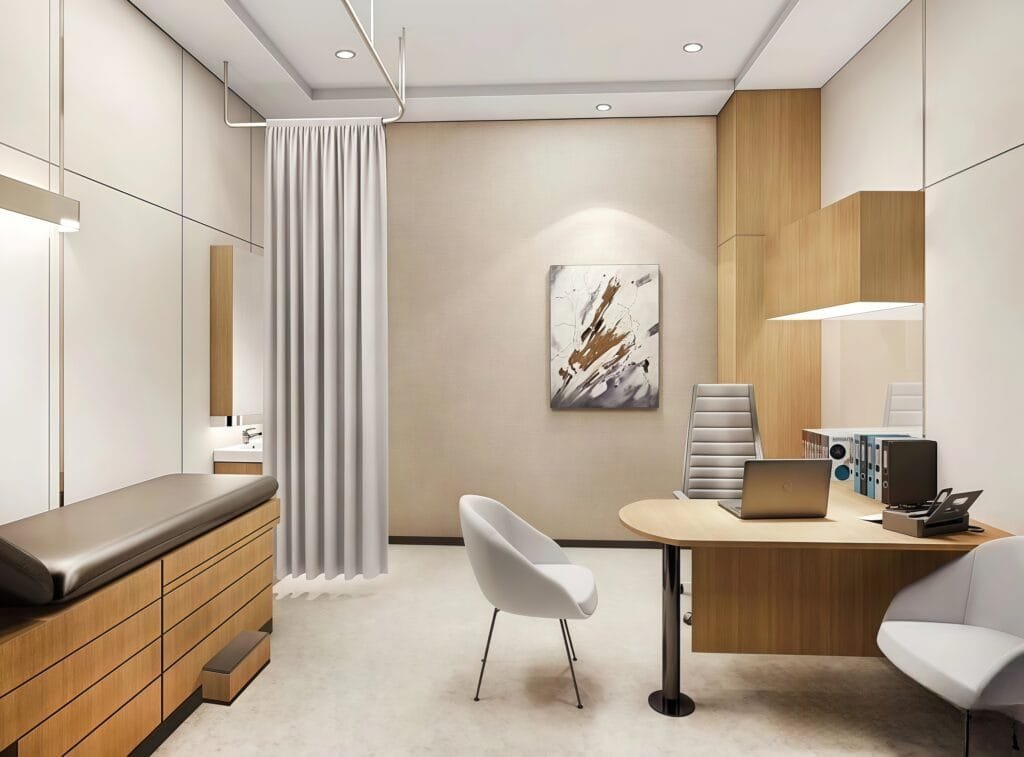
The 3-Meter Zone: General Awareness Distance
Beyond 1.5 meters, extending to approximately 3 meters (10 feet), constitutes the general awareness distance. In this zone:
- Patients observe provider activity and professionalism
- Initial impressions form about facility quality
- Waiting room dynamics influence patient comfort
- Staff movement patterns communicate organizational efficiency
- Environmental design conveys institutional values
At the 3-meter distance, furniture arrangement and spatial organization become critical. Open floor plans, strategic furniture placement, and visual clarity signal competence and organization. Cluttered or chaotic 3-meter zones undermine confidence in clinical care despite excellent quality at 1.5 meters.
Healthcare facilities excelling in both distances—1.5-meter intimate consultation and 3-meter professional presence—achieve the highest patient satisfaction and loyalty metrics.
Historical Development: How the 1.5-Meter Rule Emerged
The 1.5-meter principle didn’t emerge from arbitrary preference. Rather, it represents synthesis of multiple research streams converging in healthcare design.
Anthropological and Proxemic Research
Edward Hall’s pioneering proxemics work identified personal space requirements across cultures. For professional/clinical contexts, Hall established approximately 1.5 meters as optimal distance for meaningful professional interaction while maintaining psychological boundaries. Healthcare design has increasingly adopted these findings.
Clinical Psychology Studies
Healthcare psychology research consistently demonstrates that patient self-disclosure, treatment compliance, and therapeutic alliance improve significantly when providers maintain the 1.5-meter distance during consultations. Distances closer than 1 meter trigger defensive responses; distances exceeding 2.5 meters create perceived indifference.
Patient Satisfaction Research
Large-scale studies examining the relationship between physical environment and patient satisfaction—including research from Mayo Clinic, Johns Hopkins, and leading healthcare management firms—identified spatial design and consultation distance as significant satisfaction drivers (accounting for 15-25% of overall satisfaction variance).
Facility Design Evolution
Modern healthcare design literature increasingly recommends 1.5-meter spacing for consultation zones, patient examination areas, and therapeutic interaction spaces. This represents conscious shift from historical “minimal space” clinical designs toward patient-centered, research-informed environments.
Why Furniture Design Matters for the 1.5-Meter Rule
Understanding the 1.5-meter principle is one thing; enabling it physically through thoughtful furniture design is quite another. Most healthcare facilities fail to realize the full benefit of this principle because their physical environments—particularly furniture selection and placement—undermine the optimal distance.
The Challenge: Achieving Professional Intimacy
Healthcare facility designers face a paradox: create spaces where:
- Professional authority is clear
- Personal warmth is evident
- Clinical efficiency is maintained
- Patient privacy is protected
- The 1.5-meter zone is naturally established
Traditional clinical furniture often fails this test. Standard medical examination tables position providers at heights creating power imbalances. Fixed desks create barriers. Rigid waiting room arrangements prevent natural 1.5-meter interaction zones. Poor material choices communicate institutional coldness rather than caring professionalism.
Thoughtful furniture design solves this paradox by creating environments where the 1.5-meter distance emerges naturally and comfortably, supporting both clinical excellence and patient wellbeing.
Consultation Room Furniture: Enabling Meaningful Distance
For consultation and diagnostic spaces, furniture selection directly determines whether the 1.5-meter principle functions effectively.
Consultation Desk Design
Traditional fixed desks: Often position providers 1-1.2 meters away—slightly too close for complete privacy, creating psychological discomfort. Patient desk height typically exceeds provider eye level, creating uncomfortable power dynamics.
Modern patient-centered consultation furniture: Features:
- Adjustable height accommodating different patient sizes
- Angled positioning (not directly facing) allowing comfortable eye contact
- Adequate legroom maintaining personal space
- Accessible height differences (±6 inches) ensuring psychological parity
- Clear sight lines between provider and patient documentation
Why it matters: The right consultation desk naturally supports the 1.5-meter distance while enabling full provider attention to patient needs.
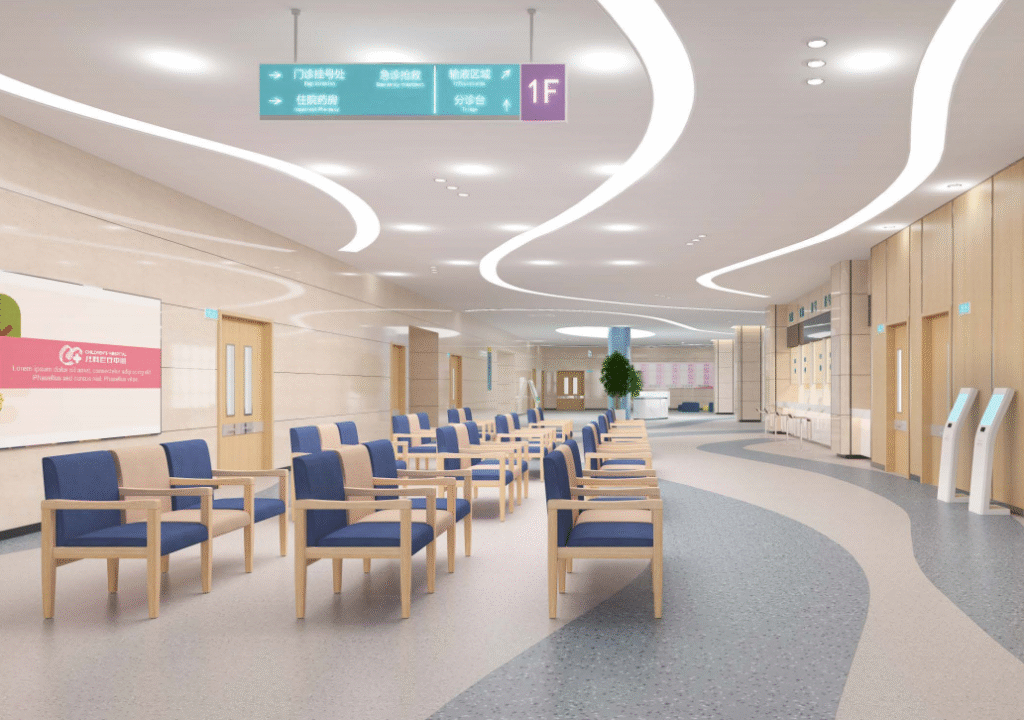
Patient Seating in Consultation Rooms
Effective patient seating for consultation spaces includes:
- High-back chairs providing dignity and back support
- Firm seating (not too soft) enabling easy standing for examinations
- Appropriate height matching consultation desk height (±4 inches)
- Armrests supporting patients requiring mobility assistance
- Material durability (withstanding frequent sanitization)
The seating itself communicates respect. A patient sitting in a high-quality, well-designed chair feels valued. Conversely, cheap, worn seating signals institutional indifference.
Provider Seating and Positioning
Provider seating must enable:
- Quick positioning adjustment (sitting to standing transitions)
- Clear documentation sight lines
- Non-threatening body positioning
- Professional appearance
- Comfort during extended consultations
Ergonomic provider seating isn’t luxury—it’s clinical necessity. Providers in discomfort become less attentive, less patient-centered, more hurried. Quality seating directly improves consultation quality.
Examination Room Design: Supporting Clinical Excellence at 1.5 Meters
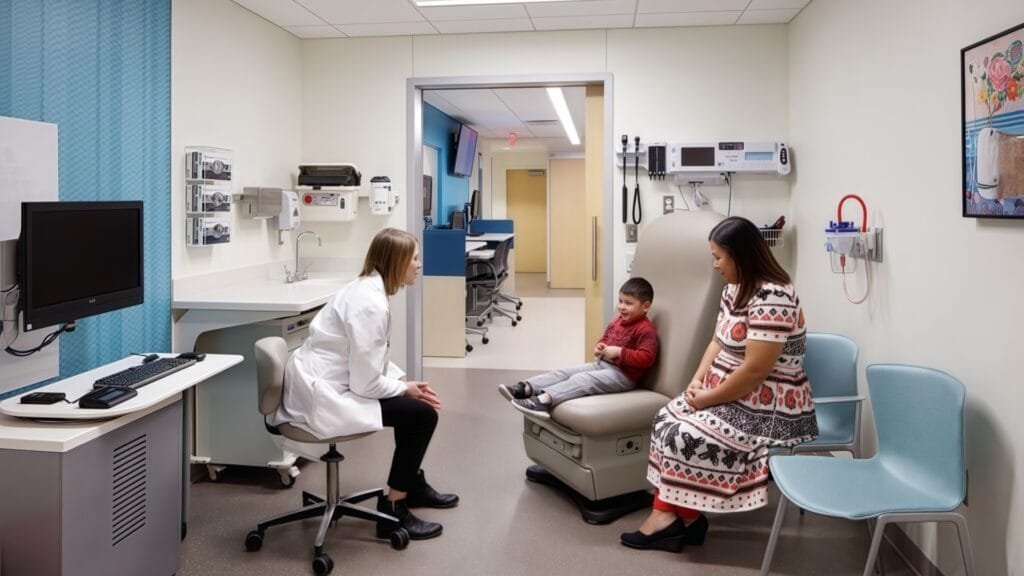
Healthcare providers conducting physical examinations must position themselves at approximately 1.5 meters for initial observation, then move closer for specific examination procedures. Room design enables this transition.
Examination Table Selection and Positioning
Modern examination tables designed for 1.5-meter principle compliance feature:
- Adjustable height (±12 inches) enabling provider comfortable positioning for different patient sizes
- Accessible step designs (2-3 steps maximum) maintaining patient dignity
- Wide base (minimum 30 inches) providing stability and psychological security
- Clear workspace around table (minimum 6 feet radius) enabling 1.5-meter provider positioning
- Material durability and infection control compliance
Table positioning matters equally. Strategic room layout should place the table where providers naturally stand at approximately 1.5 meters for initial assessment, not immediately beside patients creating psychological closeness before clinical relationship establishes.
Storage and Accessibility
Visible, accessible equipment storage enables providers to remain in the 1.5-meter consultation zone while gathering materials. Poor storage design forces providers to either leave the optimal interaction distance or fumble awkwardly with equipment—both undermining patient confidence.
Effective examination rooms feature:
- Wall-mounted storage (not floor storage requiring provider to bend/turn away)
- Clear labeling enabling quick instrument location
- Infection control features (covered storage, easy sanitization)
- Professional appearance (not cluttered or chaotic)
Diagnostic and Waiting Spaces: The 3-Meter Foundation
While 1.5-meter zones enable intimate consultation, 3-meter spaces create the therapeutic foundation supporting effective 1.5-meter interactions.
Diagnostic Center Waiting Areas
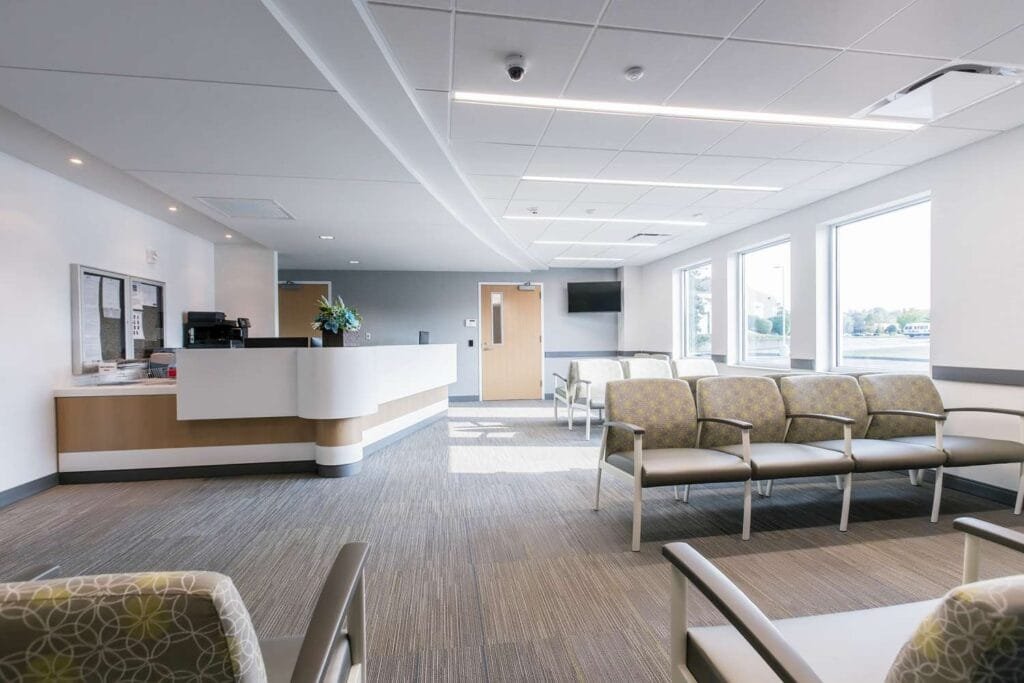
High-quality diagnostic facilities understand that comfortable 3-meter waiting spaces improve patient state of mind, directly benefiting 1.5-meter consultations that follow.
Optimal diagnostic waiting furniture:
- Comfortable, durable seating (high-back preferred for dignity)
- Appropriate spacing preventing crowding (minimum 2.5-foot seat spacing)
- Clear sight lines to reception area (enabling staff monitoring and patient comfort)
- Professional aesthetic communicating competence
- Climate control support (armless chairs can accommodate various body types)
Patients arriving in comfortable, professionally designed spaces begin consultations in calmer, more open mental states—conditions that support authentic patient-provider interaction at 1.5 meters.
Reception and Greeting Areas
The 3-meter zone is where first impressions form. Reception furniture design communicates:
- Accessibility (receptionist height and positioning)
- Professional competence (quality materials and aesthetic)
- Organizational efficiency (clear traffic flow and organization)
- Patient orientation (clear wayfinding and information access)
Modern healthcare facilities use strategic furniture placement in 3-meter zones to establish professional presence while remaining accessible—mirroring the 1.5-meter principle at a larger scale.
Comparative Analysis: Healthcare Spaces Optimized for the 1.5-Meter Rule
| Space Type | Optimal 1.5m Setup | Key Furniture | Expected Patient Satisfaction Impact | Implementation Complexity |
|---|---|---|---|---|
| Consultation Rooms | Patient-provider separation enables discussion | Adjustable desks, high-back chairs | +25-35% satisfaction | Moderate |
| Examination Rooms | Table positioning, clear provider workspace | Adjustable tables, accessible storage | +20-30% satisfaction | Moderate-High |
| Diagnostic Centers | Clear observation distance | Professional seating, traffic flow | +15-20% satisfaction | Low-Moderate |
| Rehabilitation Spaces | Movement-accommodating layout | Flexible furniture, patient movement areas | +18-28% satisfaction | Moderate |
| Mental Health Facilities | Intimate yet secure distance | Comfortable seating, tear-down barriers | +22-32% satisfaction | Low |
| Pediatric Areas | Age-appropriate interaction | Child-scaled furniture, parent positioning | +25-35% satisfaction | Moderate |
Implementing the 1.5-Meter Rule: Practical Guidelines
Step 1: Space Assessment
Evaluate your healthcare facility’s consultation and examination spaces:
- Measure existing furniture-enabled distances
- Observe natural provider-patient positioning
- Gather patient feedback on comfort and perceived attention
- Identify 1.5-meter zone disruptions (excessive furniture, poor layout)
Step 2: Furniture Audit
Review current furniture:
- Does consultation seating support 1.5-meter distance?
- Do examination tables enable appropriate provider positioning?
- Is waiting furniture promoting patient comfort and dignity?
- Are materials and aesthetic communicating professional care?
Step 3: Design Planning
Work with healthcare design professionals to establish:
- Ideal furniture types for your specific clinical setting
- Optimal room layouts enabling 1.5-meter zones
- Material selections supporting infection control and durability
- Color and aesthetic choices supporting patient psychology
Step 4: Implementation
- Prioritize high-impact spaces (consultation rooms first)
- Phased replacement of problematic furniture
- Staff training on facility optimization
- Ongoing patient feedback collection
Step 5: Measurement and Refinement
Track:
- Patient satisfaction scores before and after
- Staff efficiency and comfort observations
- Consultation quality metrics
- Infection control maintenance
Training Staff for the 1.5-Meter Principle
Furniture design only works when healthcare providers understand and consciously implement the 1.5-meter principle. Training should address:
Awareness Training
- Understanding psychological impact of distance on patient comfort
- Recognition of optimal 1.5-meter positioning
- Observation of patient body language indicating comfort or discomfort
Behavioral Training
- Initial consultation positioning (maintaining professional distance)
- Transitioning to closer distance when clinically appropriate
- Verbal communication accompanying physical movement
- Maintaining attentiveness at all distances
Environmental Training
- Using furniture to support appropriate distancing
- Positioning equipment and materials for consultation zone management
- Creating inclusive spaces accommodating different patient populations
- Using space organization to communicate professionalism
Measuring Success: Key Performance Indicators
Effective implementation of the 1.5-meter principle generates measurable outcomes:
| KPI | Pre-Implementation | Post-Implementation | Expected Change |
|---|---|---|---|
| Patient Satisfaction (HCAHPS) | Baseline | +4-7 points | +8-15% |
| Patient Perception of Provider Attention | Baseline | +25-35% improvement | Very High |
| Consultation Time | 15 min avg | 12 min avg | -20% (more efficient) |
| Follow-up Compliance | Baseline | +18-25% improvement | High |
| Staff Satisfaction | Baseline | +15-20% improvement | Significant |
| Repeat Visit Rate | Baseline | +12-18% improvement | Significant |
Hongye Furniture Group: Healthcare Facility Design Leadership
Hongye Furniture Group specializes in healthcare spaces where the 1.5-meter rule isn’t just understood—it’s architected into every design decision. With experience designing consultation rooms, examination spaces, diagnostic centers, and rehabilitation facilities across multiple continents, Hongye understands that patient-centered design begins with research-informed spatial principles like the 1.5-meter rule.
Comprehensive Healthcare Furniture Solutions
Hongye’s healthcare collections specifically address 1.5-meter principle implementation:
- Consultation Room Systems: Furniture configurations naturally supporting professional consultation distance
- Examination Room Solutions: Tables and storage systems enabling optimal provider positioning
- Diagnostic Center Furniture: Waiting and reception spaces promoting patient calm and professional impression
- Rehabilitation Spaces: Flexible furniture supporting patient movement and therapeutic distance
- Pediatric Solutions: Child-scaled furniture establishing age-appropriate distance and interaction
Each collection features:
- Ergonomic design supporting provider comfort and efficiency
- Healthcare-grade materials enabling infection control protocols
- Adjustable components accommodating diverse patient populations
- Aesthetic excellence communicating professional care
- Durability withstanding high-use healthcare environments
- Customization options aligning with institutional design visions
Implementation Support
Hongye provides complete implementation support:
- Healthcare facility assessment and consultation
- Custom furniture design aligned with 1.5-meter principle
- Staff training on facility optimization
- Installation and transition management
- Ongoing measurement and continuous improvement
Conclusion: Distance as Design Principle
The 1.5-meter rule represents more than furniture placement guidance—it embodies a philosophy that patient-centered healthcare requires intentional, research-informed physical design. When consultation rooms, examination areas, and diagnostic spaces are designed around this principle, extraordinary outcomes follow: patients feel genuinely heard, providers communicate more effectively, clinical outcomes improve, and satisfaction metrics rise.
Hongye Furniture Group’s mission is enabling healthcare facilities to architect this principle into their physical environments, creating spaces where the optimal distance between provider and patient becomes automatic—supported by thoughtful design and evidence-based furniture selection.
Ready to implement the 1.5-meter rule in your healthcare facility? Contact Hongye Furniture Group today for a complimentary facility assessment and custom design recommendations. Let’s transform your healthcare spaces into environments where patients feel valued and providers deliver their best clinical work.