
Introduction
Finding the standard height of bar stools is one of the most critical decisions when furnishing a kitchen, restaurant, or commercial bar space. Yet surprisingly, many people make this choice without proper measurement, resulting in uncomfortable seating, poor aesthetics, and wasted investment. This comprehensive guide provides everything you need to know about bar stool height standards, how to measure correctly, and how to select the perfect stools for your specific space.
The core principle is simple: Your bar stool height should maintain approximately 10-12 inches of legroom between the top of the seat and the underside of the counter or bar surface. Understanding this fundamental rule—and learning how to apply it to your unique space—ensures comfort, functionality, and visual harmony.
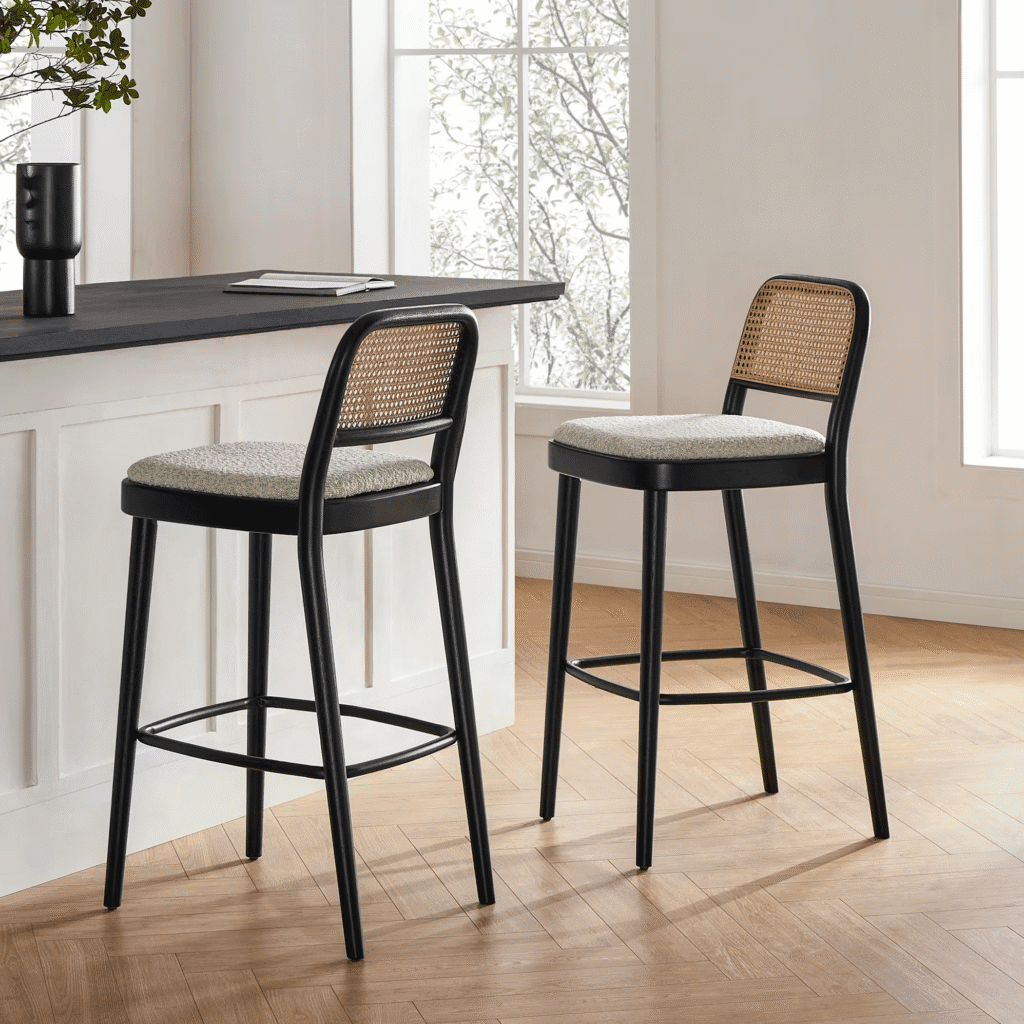
Why Bar Stool Height Matters More Than You Think
Before diving into specific measurements, it’s worth understanding why height selection matters so significantly. The wrong stool height creates a cascade of problems that affect comfort, safety, aesthetics, and even workplace productivity.
The Comfort Impact
Insufficient Legroom (stool too tall): When a stool sits too high, users’ knees and thighs hit the counter underside, creating discomfort during even short sitting periods. This ergonomic failure is one of the primary complaints about poorly selected stools.
Excessive Legroom (stool too short): Conversely, stools that sit too low require uncomfortable stretching to reach the counter surface, creating strain on the back, shoulders, and arms. Research on ergonomic bar design indicates that this uncomfortable positioning can reduce staff productivity by 15-20% in commercial settings.
The Optimal Zone: The 10-12 inch legroom standard exists because it accommodates approximately 95% of adult body types comfortably, allowing seated users to maintain neutral spine alignment while interacting with the counter surface.
Ergonomic and Health Considerations
Commercial bar staff endure long shifts on their feet, followed by seated rest periods on bar stools. Properly-sized stools with appropriate legroom significantly reduce:
- Lower back strain (30% reduction with proper sizing, according to ergonomic research)
- Knee and thigh discomfort (eliminated with proper legroom)
- Shoulder and neck tension (reduced through neutral arm positioning)
- Overall fatigue (15-20% improvement in comfort during long shifts)
Investing in correctly-sized seating directly supports staff wellbeing and operational efficiency.
Aesthetic and Spatial Harmony
Beyond comfort, stool height dramatically affects room aesthetics. Correctly-proportioned stools create visual balance with counter heights, reinforce interior design cohesion, and prevent the “mismatched furniture” appearance that undermines carefully planned spaces.
Practical Daily Functionality
Proper stool height affects everyday usage patterns. Users with correctly-sized stools naturally extend seating to conversations, meals, and work. Uncomfortable stools discourage usage, leaving expensive counter space functionally wasted.
Understanding the Standard Height Categories
Counter Height Stools (Kitchen and Casual Dining)
Seat Height Standard: 24-26 inches from floor to seat top
Overall Height Standard: 32-34 inches total (including backrest if present)
Ideal Counter/Tabletop Height: 34-36 inches
Primary Use Cases:
- Kitchen islands with standard countertops
- Casual dining areas
- Coffee shops and cafés
- Home bar applications with standard counter height
Legroom Calculation:
- 34″ counter – 26″ seat = 8″ legroom (minimum, acceptable for most)
- 36″ counter – 26″ seat = 10″ legroom (optimal)
- 36″ counter – 24″ seat = 12″ legroom (generous, allows larger body types)
Commercial Measurement Standards: In metric dimensions, counter-height stools measure approximately 650-700mm (25-27 inches) in seat height, designed for 900mm (35-36 inch) counter surfaces common in European cafés and commercial kitchens.
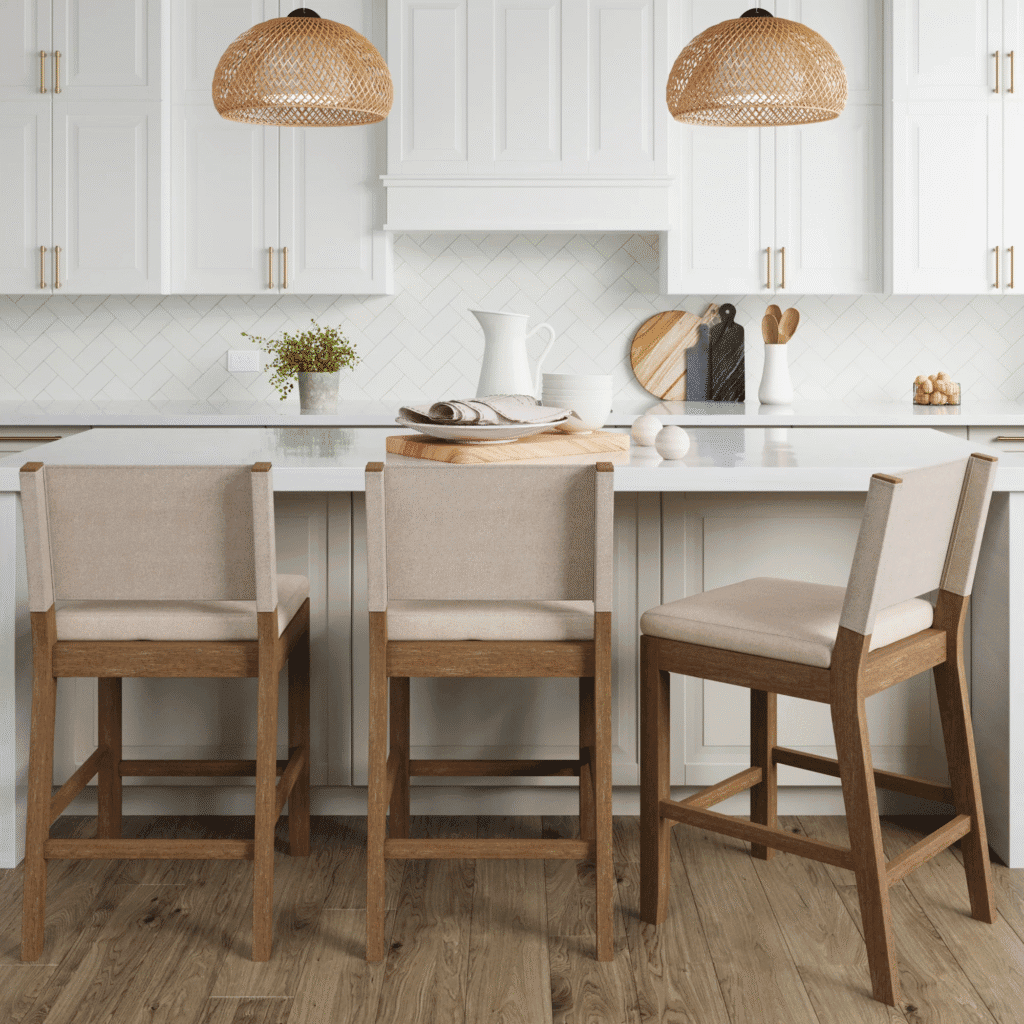
Bar Height Stools (Commercial and Premium Home Bars)
Seat Height Standard: 28-30 inches from floor to seat top
Overall Height Standard: 36-38 inches total (including backrest if present)
Ideal Counter/Tabletop Height: 40-42 inches
Primary Use Cases:
- Commercial bars and restaurants
- Premium home bar installations
- Brewery and hospitality venues
- Tall kitchen islands designed for entertaining
- Standing-height work surfaces
Legroom Calculation:
- 40″ bar – 30″ seat = 10″ legroom (minimum, optimal for most)
- 42″ bar – 30″ seat = 12″ legroom (generous, recommended for premium comfort)
Commercial Measurement Standards: Standard commercial bars measure 1000-1100mm (39-43 inches) in height. Bar stools for these surfaces typically measure 750-810mm (29-32 inches), allowing 250mm (10 inches) of legroom—the architectural standard for unimpeded knee space.
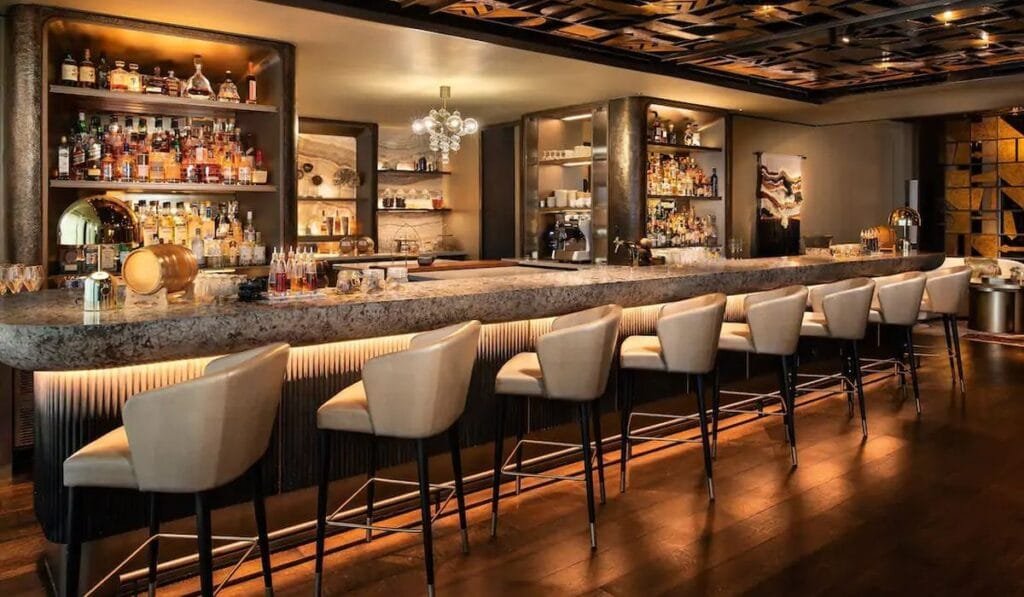
Spectator Height Stools (Extra-Tall Applications)
Seat Height Standard: 32-34 inches from floor to seat top
Overall Height Standard: 40-42 inches total (including backrest if present)
Ideal Counter/Tabletop Height: 45-48 inches
Primary Use Cases:
- Ultra-tall pub tables
- Raised bar counters in modern restaurants
- Commercial kitchens with elevated pass-throughs
- Architectural feature walls with custom heights
- Specialty dining environments
Legroom Calculation:
- 46″ surface – 34″ seat = 12″ legroom (comfortable)
- 48″ surface – 34″ seat = 14″ legroom (generous)
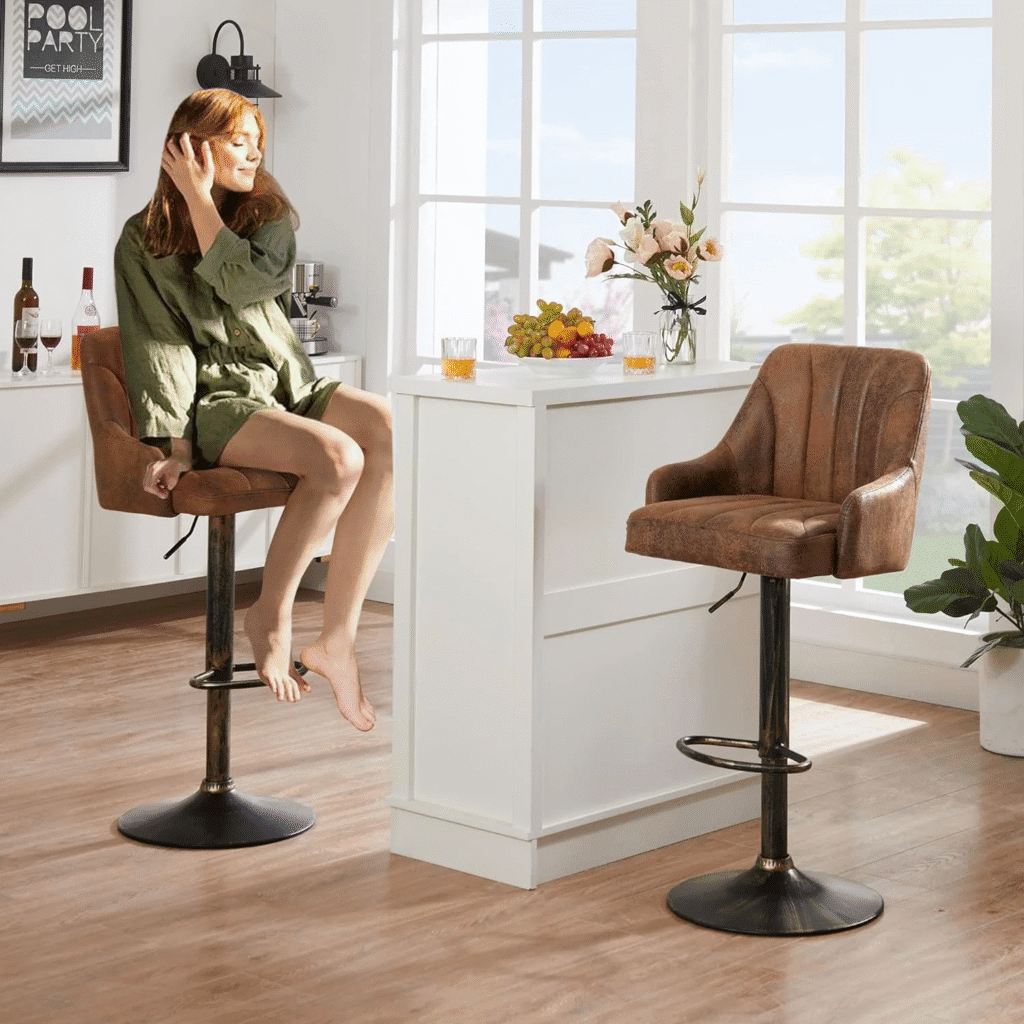
Extra-Tall Stools (Maximum Height Applications)
Seat Height Standard: 36-37 inches from floor to seat top
Overall Height Standard: 44-46 inches total (including backrest if present)
Ideal Counter/Tabletop Height: 50+ inches (highly specialized)
Primary Use Cases:
- Extremely tall custom surfaces
- Loft-style spaces with elevated counter designs
- Specialty architectural applications
- Rare custom installations
Important Note: Stools exceeding 37 inches in seat height become increasingly difficult to mount and dismount safely, making them impractical for most applications. The highest commercially available bar stools measure approximately 40 inches in seat height, reserved exclusively for counters 50+ inches tall.
Height Standards Comparison Table
| Category | Seat Height | Overall Height | Counter Height | Legroom | Best For |
|---|---|---|---|---|---|
| Dining Chair | 16-18″ | 30-32″ | 28-30″ | 10-14″ | Standard dining tables |
| Counter Stool | 24-26″ | 32-34″ | 34-36″ | 8-12″ | Kitchen islands, casual bars |
| Bar Stool | 28-30″ | 36-38″ | 40-42″ | 10-12″ | Commercial bars, premium homes |
| Spectator Stool | 32-34″ | 40-42″ | 45-48″ | 12-14″ | Extra-tall installations |
| Extra-Tall Stool | 36-37″ | 44-46″ | 50+” | 13-14″ | Specialized custom spaces |
How to Measure Your Counter or Bar for Perfect Stool Height
Accurate measurement is the foundation of proper stool selection. A simple miscalculation of 2-3 inches results in noticeably uncomfortable seating. Here’s the precise measurement process:
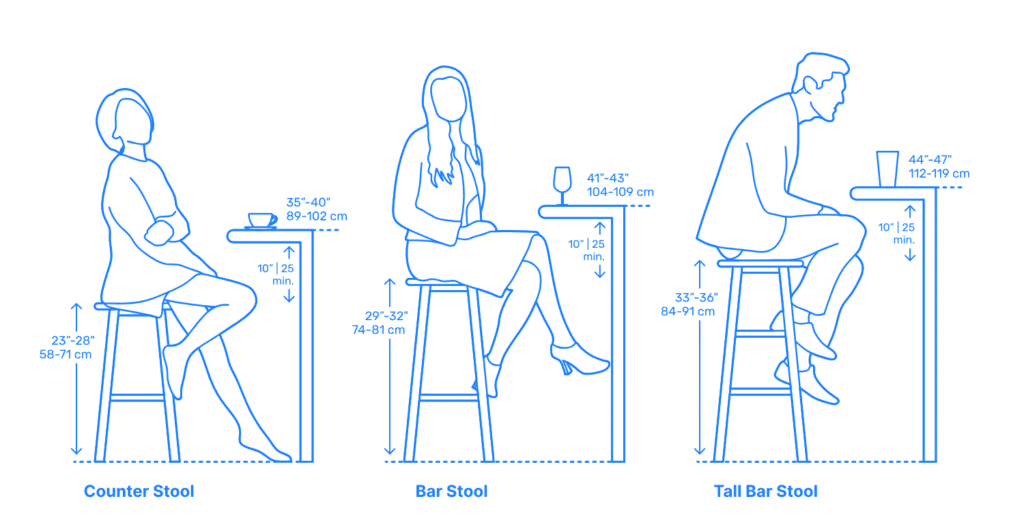
Step 1: Measure Counter Height Accurately
Essential Equipment:
- Steel tape measure (not cloth, which can stretch)
- Straight edge or level
- Notebook to record measurements
Measurement Process:
- Place tape measure vertically against a counter
- Measure from the floor to the top surface of the counter (not the edge of any granite/wood overhang)
- Measure in at least three locations along the counter (front, middle, back) as surfaces often vary slightly
- If measurements vary, note the range and average them for calculating stool height
Common Variations:
- Standard kitchen counters: 34-36 inches (most common)
- Granite or marble countertops: Often 36-38 inches (thicker material raises surface)
- Waterfall islands: May measure 40-42 inches (designed as bar-height)
- Custom installations: Can range from 30-48 inches
Step 2: Determine Desired Legroom
While 10-12 inches is the standard, personal preference and body type affect ideal legroom:
Compact Legroom (8-9 inches):
- Best for: Shorter individuals, tight spaces, casual seating
- Formula: Counter Height – 9 inches = Stool Height
Standard Legroom (10-12 inches):
- Best for: Average adults, most comfortable for 95% of users
- Formula: Counter Height – 11 inches = Stool Height
Generous Legroom (12-14 inches):
- Best for: Taller individuals, extended sitting periods, premium comfort
- Formula: Counter Height – 12 inches = Stool Height
Step 3: Calculate Exact Stool Height Needed
The Formula:
Counter Top Height (inches) - Desired Legroom (9-12 inches) = Ideal Seat HeightPractical Examples:
Standard Kitchen (36″ Counter):
- 36″ – 11″ (standard legroom) = 25″ seat height
- Recommended: Counter stools at 24-26″
Premium Home Bar (42″ Counter):
- 42″ – 11″ (standard legroom) = 31″ seat height
- Recommended: Bar stools at 30″
Tall Custom Counter (46″ Height):
- 46″ – 12″ (generous legroom) = 34″ seat height
- Recommended: Spectator height stools at 32-34″
Extra-Tall Specialty (50″ Counter):
- 50″ – 12″ (generous legroom) = 38″ seat height
- Recommended: Extra-tall stools at 36-37″ (maximum available)
Step 4: Account for Countertop Thickness
Standard countertops add 1-2 inches of thickness. If measuring to the top of a granite or marble slab:
- Finished surface measurement is correct (already accounts for thickness)
- Edge measurement requires adjustment: Add 1-2 inches to account for countertop thickness
Step 5: Consider Stool Width for Spacing
Measurement Process:
- Measure stool width at its widest point (usually seat width)
- Note whether stools have swivel bases (add 2-3 inches to width)
- Determine desired clearance between stools
Spacing Standards:
- Tight spacing (3-4 inches): Accommodates 5-10% of users without armrest contact
- Standard spacing (6 inches): Accommodates 70-80% of users, most popular for commercial bars
- Comfortable spacing (8-10 inches): Accommodates 95%+ of users, recommended for premium comfort
- Luxury spacing (12+ inches): Maximum comfort, reduces seating capacity
Detailed Selection Guide by Application
Kitchen Island Installations
Standard Kitchen Island (Residential):
- Counter height: 34-36 inches
- Recommended stool seat height: 24-26 inches
- Spacing between stools: 24-26 inches (center-to-center)
- Number of stools: Length ÷ 30 inches = approximate capacity (accounting for spacing)
Premium Kitchen with Waterfall Island (Residential):
- Counter height: 40-42 inches (waterfall edge)
- Recommended stool seat height: 30 inches
- Spacing between stools: 24-26 inches
- Creates sophisticated bar-like setting within kitchen
Open Concept Kitchen Island (Contemporary):
- Counter height: 36 inches
- Recommended stool seat height: 26 inches (or adjustable 24-30 inches)
- Spacing: 28-30 inches for conversation seating
- Allows stools to be pushed underneath when not in use
Commercial Bar and Restaurant Applications
Standard Service Bar (Staff Area):
- Counter height: 42 inches
- Recommended stool seat height: 30-32 inches
- Spacing: 6-8 inches side-to-side clearance
- Consider adjustable height for diverse staff
- Prioritize lumbar support for extended shifts
Premium Customer Bar (Hospitality):
- Counter height: 40-42 inches
- Recommended stool seat height: 30 inches
- Spacing: 8-12 inches for customer comfort
- Higher quality materials and design
- Consider aesthetic harmony with overall space
Brewery and Casual Dining:
- Counter height: 40-42 inches
- Recommended stool seat height: 30 inches
- Spacing: 6 inches minimum (backless stools maximize capacity)
- Durability critical due to high volume usage
- Consider foot rail height (standard 7-9 inches below seat)
Coffee Shop and Café:
- Counter height: 35-36 inches (European standard: 900mm)
- Recommended stool seat height: 24-26 inches
- Spacing: 24-26 inches
- Comfort important for extended seating
- Aesthetic consistency with overall café design
Critical Design Factors Beyond Height
Seat Width and Comfort
Standard Seat Widths:
- Compact: 14-15 inches (space-saving, minimal comfort)
- Standard: 16-18 inches (suitable for average adults, most common)
- Oversized: 19-22 inches (premium comfort, requires more spacing)
Legroom Relationship: Wider seats occupy more linear space at the counter, effectively reducing seating capacity. Premium comfort requires balancing seat width with counter length and desired spacing.
Backrest and Lumbar Support
Backless Stools:
- Advantages: Maximize seating count, minimal visual obstruction, easy storage
- Disadvantages: Limited back support, uncomfortable for extended sitting
- Best Use: High-volume commercial bars prioritizing capacity
Low Backrest (6-8 inches):
- Advantages: Provides minimal back support, allows more seating than full backs
- Disadvantages: Insufficient lumbar support for extended periods
- Best Use: Casual dining, light-use environments
Mid-Height Backrest (12-16 inches):
- Advantages: Comfortable lumbar support, moderate back support, standard commercial choice
- Disadvantages: Slightly reduces seating count compared to backless
- Best Use: Most commercial bars, kitchen islands, hospitality settings
Full Backrest (20+ inches):
- Advantages: Maximum comfort, excellent posture support
- Disadvantages: Requires significantly more spacing, reduced capacity
- Best Use: Premium residential, extended-use environments, ergonomic-focused settings
Armrests and Side Support
Backless/Armless:
- Minimum spacing requirement
- Maximum seating capacity
- Less comfortable for extended periods
Side Armrests Only (arms at seat level):
- Provides lateral stability
- Requires 2-3 additional inches of spacing
- Comfortable for medium-duration seating
Full Armrests:
- Maximum comfort and stability
- Requires 4-6 additional inches of spacing
- Recommended for medical facilities, assistive-care settings
Footrest Dimensions and Placement
Footrest Height Standards:
- Standard placement: 7-9 inches below seat height
- Calculation: Seat height – 8 inches = footrest height
- Example: 30″ bar stool should have footrest at 22″ (30 – 8 = 22)
Footrest Width:
- Narrow (3-4 inches): Space-saving, may feel unstable for some users
- Standard (4-6 inches): Comfortable foot placement, most common
- Wide (6-8 inches): Excellent foot support, particularly valuable for tall stools
Ring vs. Platform Footrests:
- Ring design: Minimalist, less visual obstruction, requires precise foot placement
- Platform design: Generous foot surface, more forgiving, appears more substantial
FAQ: Common Bar Stool Height Questions
1. What’s the difference between a bar stool and a counter stool?
Bar Stools measure 28-30 inches from floor to seat and pair with 40-42 inch counters or bars, providing the standard 10-12 inches of legroom. These are designed for full-service bars, restaurants, and premium home entertainment spaces.
Counter Stools measure 24-26 inches from floor to seat and pair with 34-36 inch kitchen counters. These are designed for casual dining, kitchen islands, and home bar applications.
The 12-inch height difference accommodates the difference between casual kitchen counters (typically 36″) and service bars (typically 42″).
2. How do I know if my bar stool height is correct?
Comfort Test:
- Sit on the stool at the counter
- Rest your feet flat on the footrest or floor
- Your knees should rest approximately 10-12 inches below the counter
- Your arms should rest naturally on the counter surface
- Your back should feel supported without excessive strain
Visual Test:
- From a distance, the stool should appear proportional to the counter
- Stools should not appear significantly too tall or too short
- Visual balance enhances the overall room aesthetics
If Too High: Knees hit counter underside, shoulders and arms must stretch upward
If Too Low: Excessive knee bend, strain on thighs and lower back, difficult to reach counter comfortably
3. Can I use bar height stools on a counter height surface?
Short Answer: Not recommended without significant modification.
Why Not:
- Bar stools (30″ seat) on a 36″ counter = only 6 inches of legroom
- This creates cramped, uncomfortable seating
- Knees will touch the counter underside
- Feet may not rest comfortably on footrest or floor
The Exception: Some 28-29″ bar stools designed for high-counter applications (38″ counters) could technically work with 36″ counters, but this creates minimal legroom and is not recommended.
4. What height bar stool for a 36-inch counter?
Calculation:
- 36″ counter – 10-12″ legroom = 24-26″ seat height
- Recommendation: Counter stool at 24-26″ seat height
- Specific Option: 25-26″ seat height provides optimal comfort for average adults
Why Not a Bar Stool? A standard bar stool (30″ seat) on a 36″ counter leaves only 6″ of legroom, insufficient for comfortable seating.
5. What height bar stool for a 42-inch counter?
Calculation:
- 42″ counter – 10-12″ legroom = 30-32″ seat height
- Recommendation: Bar stool at 30″ seat height
- Optimal Setup: Most commercial bars and premium home installations use this combination
Measurement Note: 42-inch counters are standard for full-service bars, restaurants, and entertainment spaces designed for bar-height seating.
6. What height bar stool for a 44-inch counter?
Calculation:
- 44″ counter – 12″ legroom = 32″ seat height
- Recommendation: Spectator height stool at 32-34″ seat height
- Note: 44-inch counters are non-standard; verify actual measurement before ordering
Why This Height? Extra legroom accommodates taller individuals comfortably while maintaining proper ergonomics.
7. What height bar stool for a 48-inch counter?
Calculation:
- 48″ counter – 12-14″ legroom = 34-36″ seat height
- Recommendation: Spectator/extra-tall stool at 34-36″ seat height
- Challenge: Very few commercially available stools exceed 36″ in seat height
Note: 48-inch counters are architectural features, typically found in premium hospitality or specialty dining environments. Stool selection becomes extremely limited at this height.
Specialized Calculations for Non-Standard Surfaces
Waterfall Islands and Feature Counters
Waterfall islands extend from the main counter height down to the floor, creating a continuous visual line. The effective counter height for seating purposes is where guests actually sit, typically 40-42 inches at the waterfall’s top edge.
Calculation:
- Waterfall height (typically 42″) – 11″ = 31″ seat height (bar stool with arm room)
- Or use bar stools at 30″ for slightly more generous legroom
Bent-Plywood and Curved Counters
Curved surfaces require measurement at the specific seating point, not the average height.
Process:
- Measure counter height at each proposed seating location
- Calculate ideal stool height for each location
- Consider whether to use uniform height stools (with varying legroom) or varied stool heights (maintaining consistent legroom)
- Uniform height typically preferred for aesthetic consistency
Tiered and Multi-Level Counters
Complex kitchen layouts with multiple counter heights require individual calculations:
Process:
- Identify each distinct counter height
- Calculate ideal stool height for each surface
- Plan seating layout to match counter heights
- Consider visual harmony when mixing stool types
Example: Kitchen with 36″ main counter and 42″ island bar
- Main counter: 24-26″ stools
- Island bar: 30″ stools
- Visual distinction supports functional differences
Conclusion: Selecting Your Perfect Bar Stool Height
Choosing the correct bar stool height starts with accurate measurement of your counter or bar surface, followed by calculation of desired legroom, ultimately resulting in precise stool height selection that ensures comfort, functionality, and aesthetic harmony.
The fundamental principle—10-12 inches of legroom between seat and counter underside—applies universally. Whether you’re furnishing a kitchen island, commercial bar, or specialty restaurant, this measurement standard ensures comfortable seating for 95% of users.
Beyond height, consider backrest options, armrest availability, footrest positioning, spacing between stools, and material durability. Premium stool selection balances all these factors, resulting in seating that enhances both functionality and design.
With the calculations, standards, and guidelines provided in this guide, you can confidently select bar stools that deliver comfort, durability, and visual perfection for your specific space.
About Premium Bar Stool Solutions
Professional hospitality furniture suppliers offer comprehensive bar stool selections across all standard heights, materials, and design aesthetics. Consultation with seating specialists ensures optimal selection accounting for unique space dimensions, design preferences, and functional requirements. Quality bar stools represent long-term investments in comfort, durability, and aesthetic value—worthy of careful selection and professional guidance.