Hotel spa furniture should be specified by function, exposure conditions and cleaning requirements—not by appearance alone.
A treatment-room cabinet, poolside lounger and changing-room bench may share a design language, but they face different demands. The specification must explain where each item will be used, what it must withstand and how the supplier will demonstrate suitability.
The starting point is exposure: distinguish dry interiors, occasional splash areas and continuously humid or wet environments. Then coordinate the furniture with treatment equipment, accessibility, drainage and maintenance.
This guide explains how to prepare a hotel spa furniture schedule, assess materials, review treatment-table information and request the documents needed for procurement.
Key Takeaways
- Divide the spa into functional zones before selecting furniture.
- Describe actual moisture, temperature and cleaning conditions rather than using “waterproof” as a complete specification.
- Select treatment equipment before finalising room layouts.
- Confirm accessible routes, changing facilities and transfer requirements against applicable local rules.
- Review materials together with joints, fixings, supports and installation details.
- Match cleaning products to the complete furniture assembly, not just the visible surface.
- Request evidence relevant to the proposed product and configuration.
- Separate ordinary furniture supply from specialist equipment and building-work responsibilities.
Define the Spa Zones and Exposure Conditions
A useful hotel spa furniture schedule identifies both the item and its operating environment.
Avoid treating the entire wellness centre as either dry or wet. A reception desk may have no direct water contact, while a nearby bench may be exposed to damp swimwear, cleaning chemicals and repeated splash.
Use a zone schedule to establish the requirements.
| Spa Zone | Typical Items | Conditions to Define |
|---|---|---|
| Reception and retail | Counter, display units, waiting seats | Traffic, cleaning, product spills and security |
| Dry treatment rooms | Treatment equipment, stools, trolleys, cabinets | Oils, lotions, cleaning products, therapist access and equipment movement |
| Changing areas | Lockers, benches, vanities, mirrors | Damp clothing, splash, ventilation, cleaning and accessible use |
| Wet and pool-adjacent areas | Benches, loungers, shower seating | Water contact, humidity, temperature, chemicals and drainage |
| Relaxation lounge | Chaises, lounge chairs, tables, footstools | Damp garments, upholstery cleaning, comfort and maintenance |
For each location, state whether furniture will experience occasional splash, frequent wetting, standing water or a continuously humid atmosphere.
Also identify any steam-room or sauna applications separately. Do not assume that a product suitable beside a pool is suitable inside a high-temperature or steam environment.
Build a Furniture and Equipment Schedule
Give every item a unique code that connects the schedule, drawings, material references and quotation.
The schedule should identify:
- Product description.
- Location.
- Quantity.
- Dimensions.
- Material and finish references.
- Required function.
- Exposure conditions.
- Cleaning requirements.
- Performance evidence.
- Fixing or installation needs.
- Delivery and assembly scope.
- Sample requirements.
Mark specialist equipment separately from ordinary furniture.
For example, an electrically adjustable treatment table requires a different review from a side cabinet. A wall-mounted shower seat also involves different installation responsibilities from a freestanding lounge chair.
Define the Procurement Boundaries
Confirm who supplies and approves:
- Treatment equipment.
- Electrical connections.
- Plumbing.
- Waterproofing.
- Wall reinforcement.
- Anchors and fixings.
- Ventilation.
- Drainage.
- Installation.
- Commissioning.
A furniture quotation should not leave these interfaces to assumption.
Review Spa Treatment Table Specifications Before Fixing the Layout
Choose treatment tables according to the treatments offered, user needs and operating procedures.
Do not select a model from length and width alone. Review the complete equipment dimensions, adjustment range, accessories and clearance requirements.
Ask the equipment supplier to confirm:
- Intended use.
- Overall dimensions, including headrests and accessories.
- Adjustment range.
- Maximum safe working load and its definition.
- Permitted loading positions.
- Stability information.
- Operating controls.
- Pinch-point protection.
- Electrical requirements, where applicable.
- Cleaning restrictions.
- Maintenance instructions.
- Warranty and service arrangements.
Distinguish Static Load From Working Capacity
A static-load figure does not explain every operating condition.
Ask whether the stated capacity applies during lifting, tilting or adjustment, and whether it includes accessories or other loads. The supplier should explain any restrictions.
Also request the applicable product documentation rather than borrowing an unrelated seating standard.
Review Service and Replacement Access
Treatment equipment should be maintainable after installation.
Confirm how technicians will access mechanisms and controls, which parts are replaceable and whether the equipment can pass through the planned delivery route.
These questions belong in the equipment review, not after the room has been completed.
Develop the Hotel Spa Layout Around Equipment and Workflow
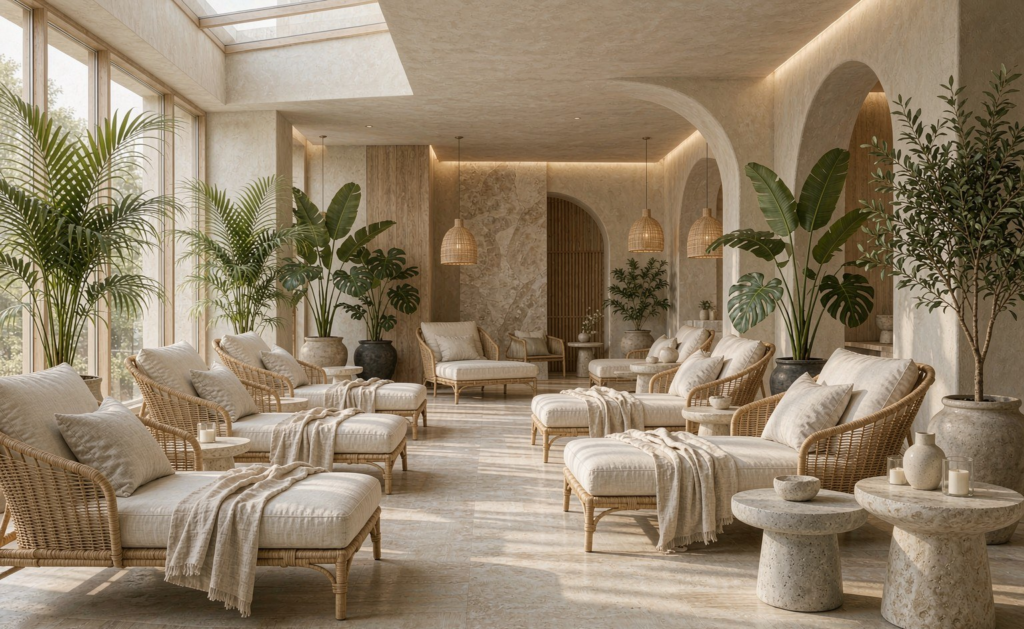
Room area alone does not demonstrate that a treatment room works.
Prepare a coordinated layout showing the selected equipment, storage, doors, utilities and operational clearances.
Review:
- Therapist movement around the equipment.
- Guest entry and changing.
- Access for assistance or transfer.
- Trolley movement.
- Headrest and accessory positions.
- Cabinet and drawer openings.
- Handwashing facilities.
- Electrical outlets and cable routes.
- Cleaning access.
- Emergency access.
- Applicable accessibility requirements.
Use equipment drawings and operational review to confirm the clearances before construction.
Check the Room in Use
Where practical, test the arrangement with a mock-up or a full-size marked layout.
Ask therapists and operations staff to review the working sequence. This can reveal conflicts that are difficult to see in a furniture plan, such as a trolley blocking a cupboard or a door opening into an occupied working area.
Do not describe an illustrative room size or aisle width as a universal minimum.
How to Select Wet-Zone Furniture Materials
Wet-zone suitability depends on the complete assembly.
A resistant surface cannot compensate for unsuitable fixings, exposed substrate, trapped water or inadequate support.
Use material descriptions as the start of the review—not the final approval.
| Material or Construction | Questions to Resolve Before Selection |
|---|---|
| Stainless steel | Which alloy and finish are proposed? What are the exposure, welding, cleaning and inspection conditions? |
| Compact laminate | Is the selected product suitable for the environment? What support, fixing and installation details apply? |
| HPL-faced wood-based panels | How are the substrate, cut edges, openings and joints protected? Is the assembly appropriate for the location? |
| HDPE | What thickness, support and connection details are required? How is movement accommodated? |
| Solid surface | Which product is proposed? What support, joint, temperature and chemical limitations apply? |
| Timber | Which species and construction are used? What moisture exposure and maintenance are permitted? |
| Upholstered assemblies | Are the cover, seams, filling, backing and frame suitable for the intended environment and cleaning regime? |
Do Not Treat 316 Stainless Steel as Corrosion-Proof
Grade 316 may be appropriate for some applications, but it is not a universal solution for every chlorinated or pool-related environment.
Pool-atmosphere guidance identifies corrosion risks for standard stainless grades under particular conditions, including some stressed, difficult-to-clean components. Selection must consider the application, surface condition, exposure and maintenance.
For safety-critical or unusual applications, obtain project-specific advice from a qualified materials or corrosion specialist.
Review Water Traps and Connections
Ask the supplier to show how the design manages:
- Joints and crevices.
- Horizontal surfaces.
- Cut-outs.
- Fastener penetrations.
- Contact between different materials.
- Cleaning access.
- Replaceable components.
The aim is not simply to label the product “moisture resistant.” It is to understand how the assembly performs in its actual location.
Specify Spa Lockers and Changing-Room Furniture
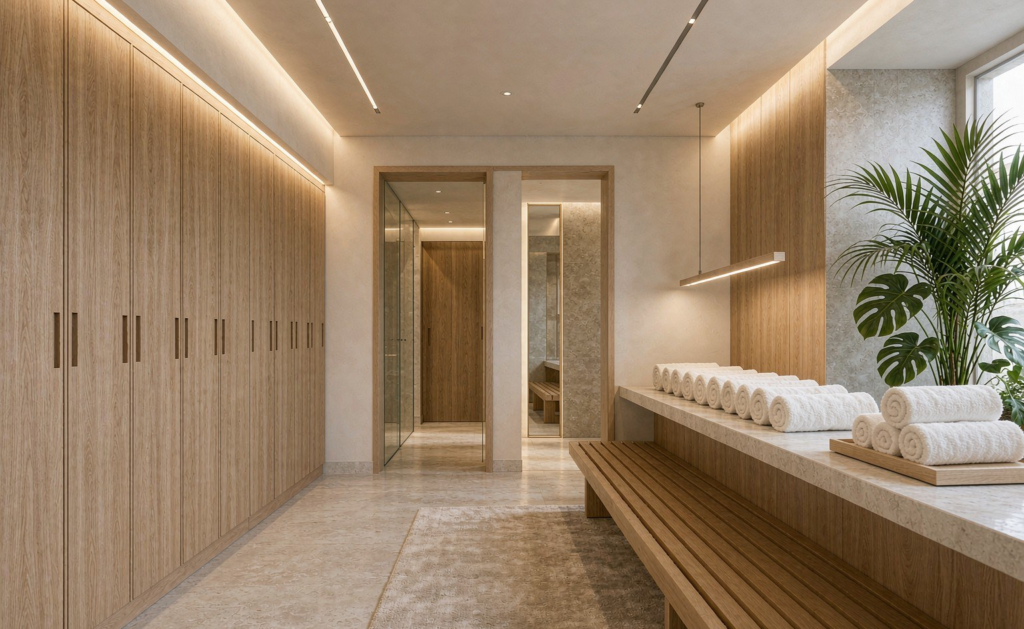
Locker dimensions should follow the storage requirement and intended users.
Confirm whether guests need to store clothing, shoes, bags, robes, valuables or mobility-related items. Then review the internal arrangement and door operation.
The locker specification should address:
- Usable internal space.
- Shelves and hanging arrangements.
- Ventilation.
- Locking system.
- Emergency opening.
- Hinges and door stops.
- Cleaning access.
- Base construction.
- Stability and fixing.
- Accessible provision.
- Replacement parts.
Ventilated doors can support air movement, but they do not replace suitable room ventilation or operating procedures.
Define Storage Performance
ISO 7170:2021 provides test methods for the strength, durability and stability of storage units. It does not establish a universal set of acceptance requirements for every locker project.
Therefore, identify the required loads, use conditions, installation configuration and acceptance basis alongside any referenced test method.
Coordinate Benches With Accessible Use
Do not assume that a standard commercial bench satisfies accessible-changing requirements.
For example, where the relevant U.S. ADA provisions apply, accessible benches have specific requirements for seat dimensions, support, clear space and wet-location performance. These differ from many ordinary seating dimensions.
For every project, confirm the applicable local requirements for:
- Approach and transfer space.
- Seat dimensions.
- Back support.
- Reach ranges.
- Locker access.
- Hooks and shelves.
- Mirror visibility.
- Wet-floor use.
Match Upholstery to Use, Cleaning and Fire Requirements
Relaxation seating needs more than a high abrasion figure.
Review the complete upholstery assembly, including cover material, seams, backing, filling and frame.
Relevant questions include:
- Will guests sit in damp swimwear or robes?
- Will oils or lotions contact the surface?
- How will stains be removed?
- Which disinfectants will be used?
- Can covers or cushions be replaced?
- What fire requirements apply?
- What evidence covers the proposed combination?
Do Not Use Double Rubs as a Lifespan Prediction
ASTM D4157 evaluates abrasion under laboratory conditions. Its results should not be treated as a direct prediction of service life.
ACT also cautions that higher abrasion results do not necessarily indicate longer durability in use.
A high double-rub count does not establish resistance to chlorine, cleaning chemicals, moisture or coating deterioration.
Confirm the Actual Fire-Performance Requirement
Specify fire performance according to the applicable jurisdiction and project requirements.
Check whether the submitted evidence covers the proposed cover, filling and construction. A fabric document alone may not answer every question about the finished upholstered product.
Build a Written Cleaning Compatibility Schedule
Ask the operator to identify its intended cleaning and disinfection products before approving materials.
Record the actual products and conditions rather than requesting a general claim of “chemical resistance.”
Include:
- Product name.
- Active ingredients.
- Use concentration.
- Contact time.
- Frequency.
- Temperature, where relevant.
- Rinsing requirements.
- Application method.
- Prohibited practices.
Then ask the supplier to state compatibility, restrictions and any further evaluation required.
This review should cover the complete assembly: surface, seams, adhesive, edge treatment, hardware and support structure.
If housekeeping changes products later, reassess compatibility before introducing the new regime.
Supplier Documents and Responsibilities Checklist
Use a document register to track what has been submitted, reviewed and approved.
| Review Area | Information to Request | Decision to Record |
|---|---|---|
| Product identity | Item code, model and configuration | Exact product being considered |
| Materials | Product references and construction details | Suitability for the stated environment |
| Performance | Relevant reports and limitations | Whether evidence covers the proposed item |
| Cleaning | Written compatibility and restrictions | Accepted cleaning regime |
| Samples | Identified finishes or product samples | Approval status and comments |
| Installation | Fixing, support and interface requirements | Responsibility and approved detail |
| Equipment | Operating, safety and service information | Conditions for installation and use |
| Maintenance | Inspection, repair and replacement guidance | Handover requirements |
| Commercial scope | Inclusions, exclusions and warranty | Agreed purchasing responsibilities |
Keep preliminary selections separate from approved-for-production documents.
Where information is missing, record the responsible party and the action required before the relevant decision.
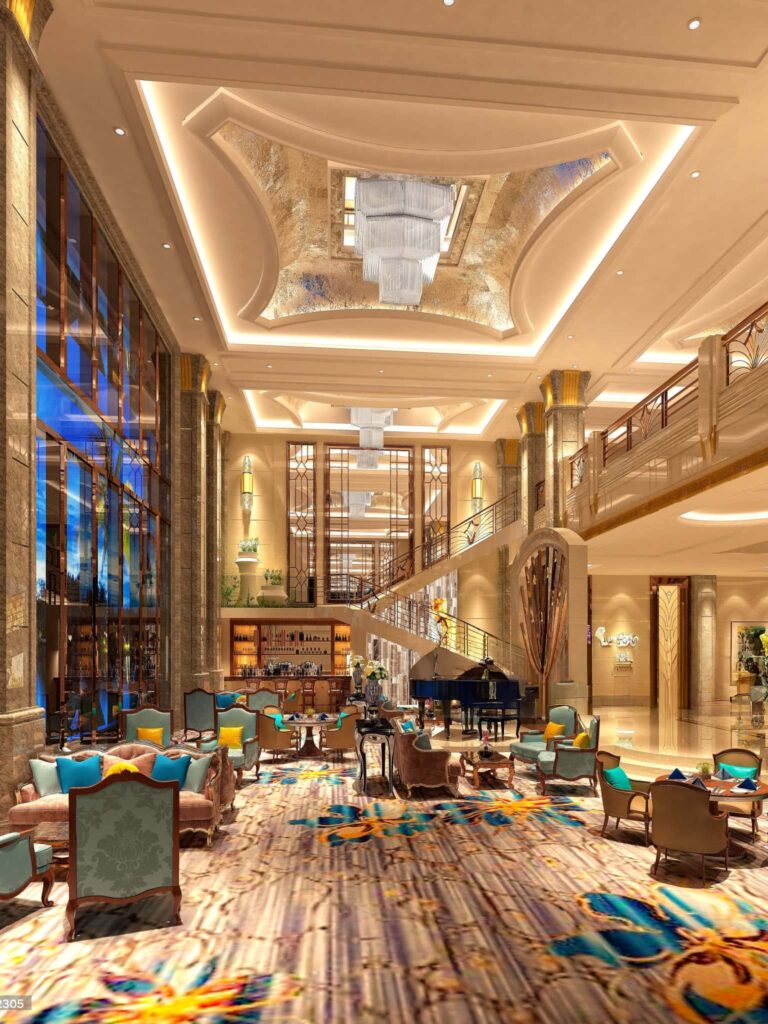
Hotel Furniture
Plan Maintenance and Replacement From Condition
Avoid assigning one lifespan to every item in a dry or wet zone.
Instead, review the manufacturer’s guidance, actual use, cleaning conditions and maintenance history.
Plan inspections for:
- Loose fixings.
- Corrosion.
- Cracked surfaces.
- Damaged joints.
- Worn upholstery.
- Water entry.
- Unstable furniture.
- Faulty locks.
- Equipment adjustment or control problems.
Also identify which parts can be replaced without replacing the entire item.
A maintainable product may offer better operational value than a lower-priced assembly with no practical repair route.
Discuss a Hotel Spa Furniture Package With HONGYE
Hongye Furniture Group can discuss the furniture elements of a hotel spa and wellness brief against the project’s schedule, drawings and environmental requirements.
Confirm the available scope for each item, including any specialist equipment, partner-supplied products or site-installed work.
Useful information for an initial discussion includes:
- Spa zones.
- Treatment-room count.
- Furniture list.
- Wet and dry exposure conditions.
- Layout drawings.
- Material direction.
- Cleaning products.
- Relevant project requirements.
- Delivery destination.
- Target programme.
Explore the hotel furniture range and project case studies for related categories.
Send the brief through the contact page to confirm product availability, review scope and required supporting information. Pricing, documentation and production timing should be agreed for the actual package.
Frequently Asked Questions
What furniture does a hotel spa need?
Start with reception, treatment, changing, wet and relaxation zones.
Create an item schedule for each area and identify specialist equipment separately from ordinary furniture.
What are standard spa treatment table dimensions?
There is no single dimension suitable for every treatment and user.
Select the equipment first, then confirm its complete size, adjustment range, accessories and operating clearances with the supplier.
How much space should a treatment room provide?
Develop the room around the selected equipment, treatment workflow, storage, access and applicable regulations.
A floor-area figure alone does not demonstrate that the room supports safe and effective use.
Which materials are suitable for wet-zone furniture?
Suitability depends on the product, exposure and construction.
Review the proposed material together with its joints, fixings, support, cleaning restrictions and installation details.
Is 316 stainless steel always suitable around a pool?
No. It is not corrosion-proof.
Assess the specific environment, component function, surface condition and maintenance. Some indoor pool applications require more specialised material selection.[assda.asn][bssa.org]
How should spa lockers and changing benches be specified?
Define storage needs, expected use, moisture exposure, stability, locking, cleaning and accessible provision.
Coordinate the furniture with the approved layout and local accessibility requirements.
Does a high abrasion rating prove that upholstery will last longer?
Not by itself.
Laboratory abrasion is one part of performance assessment. Cleaning, seams, filling, moisture exposure and other factors also require review.[store.astm][contracttextiles]
How long should commercial spa furniture last?
Do not rely on one universal lifespan.
Use product-specific guidance, inspection records, condition and maintenance history to plan repairs and replacement.
Specify the Environment Before Selecting the Finish
A coordinated hotel spa package connects each item to its function, exposure conditions and maintenance regime.
Select equipment before finalising layouts. Review materials as complete assemblies. Confirm accessible use, cleaning compatibility and supplier responsibilities.
Those decisions create a stronger procurement basis than a generic “waterproof” label or an unsupported service-life promise.