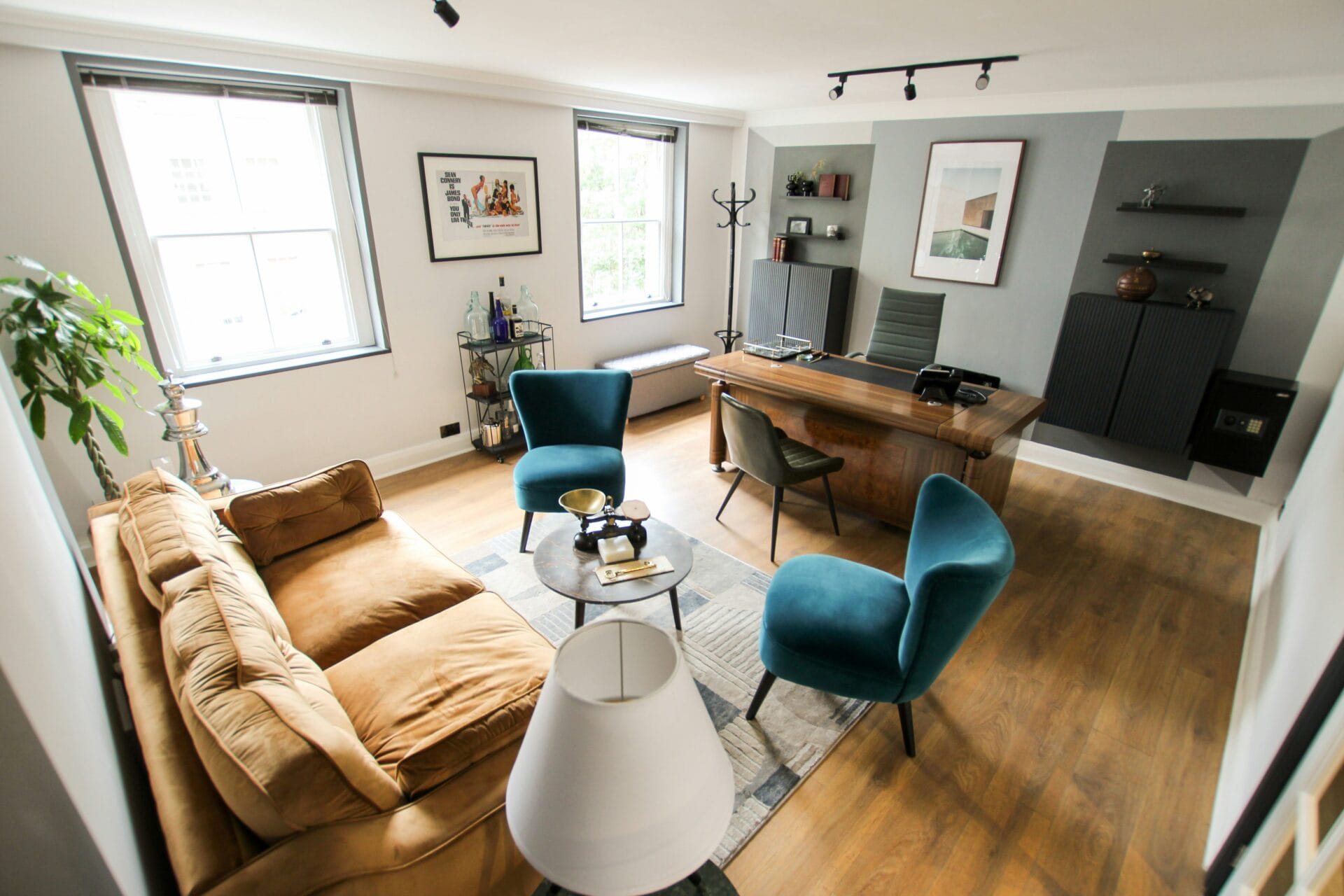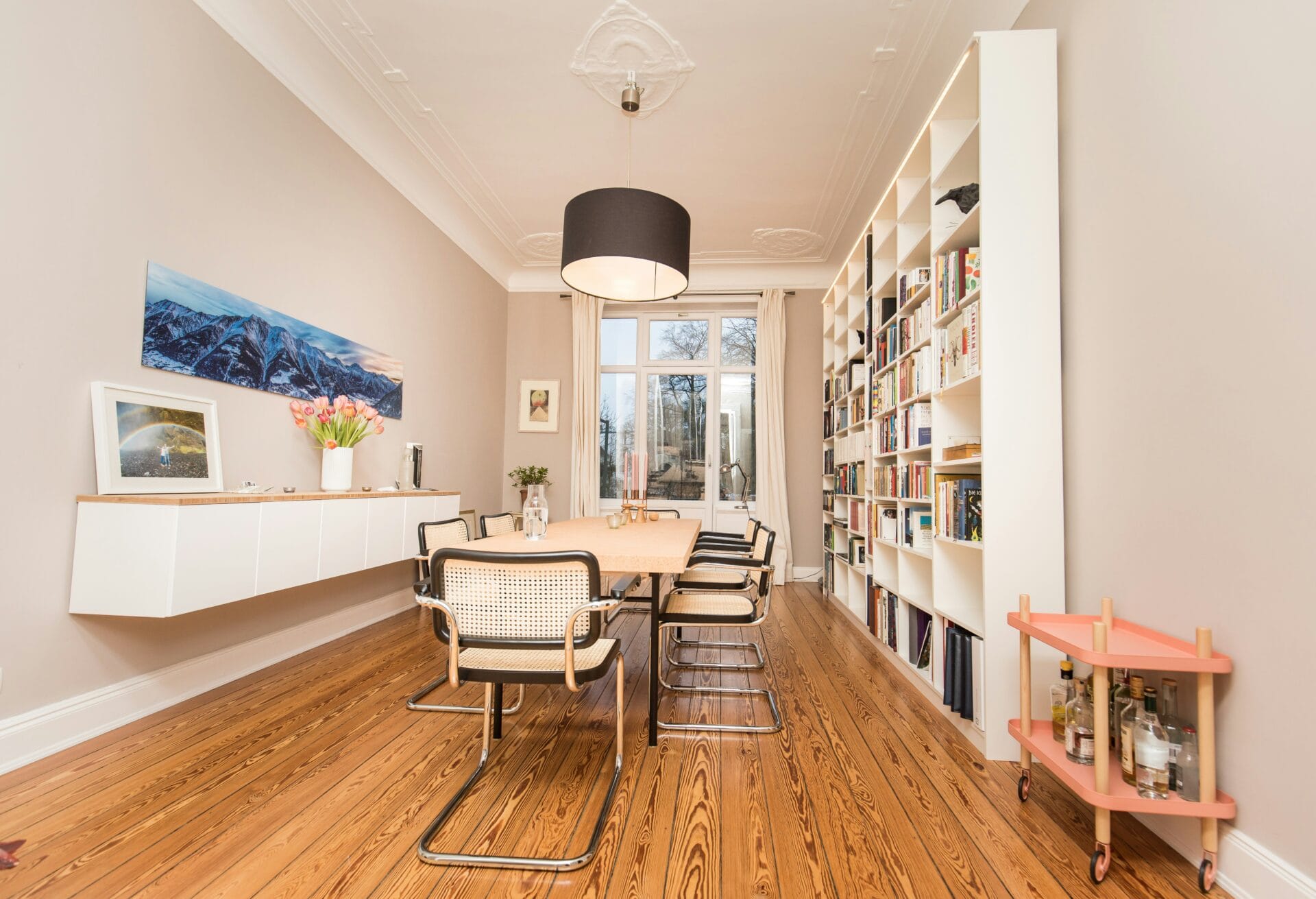
Hotel FF&E sample room approval should record how the proposed room works, which product details have been accepted and what remains unresolved before manufacture.
The review should connect the guest experience with housekeeping, maintenance, building services and the furniture specification. It should also distinguish an accepted appearance from a technically approved product.
The priority is approval scope: everyone should understand what a decision covers, who has authority to make it and which activities may proceed.
This guide focuses on practical guestroom review and the records needed to carry those decisions into production. It includes a hotel sample room checklist, operational scenarios, approval fields and change-control questions.

Key Takeaways
- Define the decisions required before building or reviewing the sample room.
- Identify temporary parts and differences from the proposed production configuration.
- Review the room through realistic guest, housekeeping and maintenance tasks.
- Keep visual and operational assessment separate from formal performance verification.
- Record actual measurements where they are relevant to acceptance.
- Use identified reference samples alongside controlled drawings and specifications.
- Assign conditional approvals to specific items and activities.
- Release production only within the authorised scope.
Define What the Sample Room Review Must Decide
A sample room brings furniture and room interfaces together. Its value depends on the questions the project asks it to answer.
Before the review, agree whether the team is assessing:
- Layout.
- Product dimensions.
- Appearance.
- Seating experience.
- Storage.
- Hardware operation.
- Lighting and controls.
- Cleaning access.
- Maintenance access.
- Installation interfaces.
- Proposed alternatives.
Do not assume that completing the room automatically makes it ready for every type of approval.
Separate the Decisions
A room review can inform several decisions, but they should remain traceable.
Room and Operational Review
This considers how the space functions as a guestroom, including circulation, storage, controls and service tasks.
Product and Material Approval
This records decisions about identified products, materials, finishes, hardware and construction details.
Technical Evidence Review
This checks the reports and other information required for the actual products and project.
Production Release
This authorises specified manufacturing activities once the relevant conditions have been met.
An accepted room arrangement does not automatically release unresolved components for production.
Prepare the Room and Review Documents

Issue a controlled review package before the walkthrough.
Include:
- Room type.
- Furniture layout.
- Item schedule.
- Drawing register.
- Material references.
- Relevant equipment information.
- Previous comments.
- Known deviations.
- Review objectives.
- Approval responsibilities.
Use the same item codes throughout.
A comment such as “desk top requires revision” should connect to a specific product and drawing—not depend on someone remembering which desk was discussed.
Declare Non-Production Details
Ask the suppliers and contractors to identify any temporary or substituted components.
These may include:
- Alternative hardware.
- Sample-only finishes.
- Temporary electrical modules.
- Different filling materials.
- Incomplete fixing.
- Simulated service positions.
- Unconfirmed equipment.
The team may still review the room, but the decision must acknowledge these limitations.
Use a Hotel Sample Room Checklist With Clear Boundaries
Organise the walkthrough by product and activity.
The checklist should show what can be assessed in the room and which evidence remains separate.
| Review Area | What to Assess in the Room | Additional Information to Confirm |
|---|---|---|
| Layout and circulation | Movement, opening positions and furniture relationships | Applicable accessibility and project requirements |
| Casegoods | Dimensions, alignment, storage and operation | Materials, construction, fixing and required performance evidence |
| Upholstery | Fit, support, seams, pattern and user experience | Filling specification, relevant tests and care requirements |
| Finishes | Colour, texture, sheen and adjacent relationships | Product references and agreed acceptance method |
| Hardware | Movement, access, adjustment and usability | Model, installation conditions and relevant evidence |
| Lighting and controls | Position, operation and interaction with furniture | Electrical design, applicable verification and final configuration |
| Vanity and wet-area interfaces | Access, visible joints and coordination | Approved support, materials and installation requirements |
| Curtains and blinds | Operation, obstruction and agreed light-control behaviour | Product specifications and installation details |
| Housekeeping | Cleaning access and servicing tasks | Product-compatible cleaning instructions |
| Maintenance | Access to parts, services and removable panels | Maintenance methods and responsibilities |
Do not treat a successful walkthrough as proof of long-term durability, fire performance, electrical safety or moisture resistance.
Those requirements need appropriate evidence and review.
Review the Room Through Realistic Use Scenarios
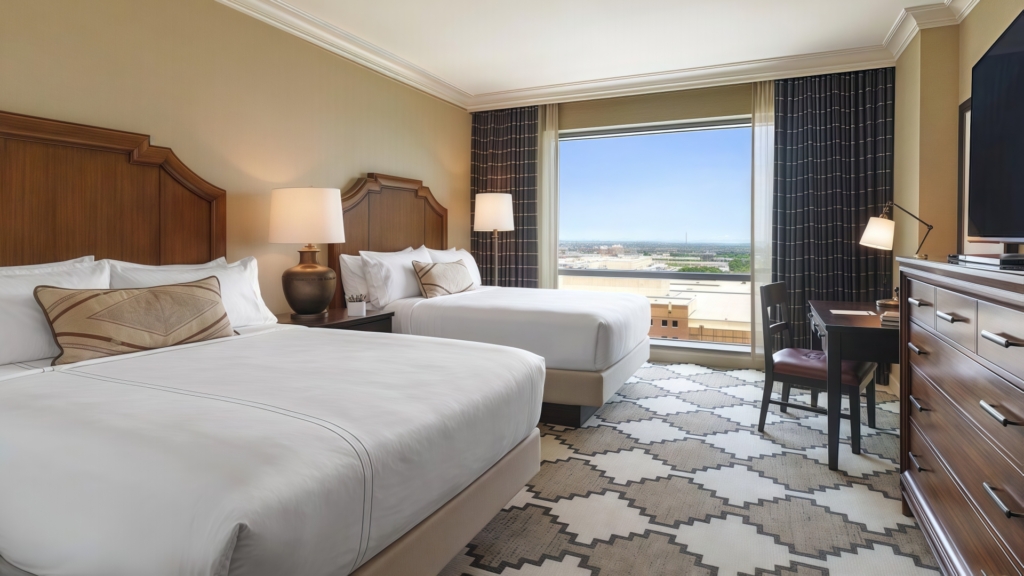
A static inspection can miss issues that appear during normal tasks.
Use agreed scenarios to examine the room. The duration should reflect the review objectives and project conditions, not a mandatory live-in week.
Guest Arrival and Storage
Check how a guest would:
- Enter with luggage.
- Reach the luggage surface.
- Open the wardrobe.
- Store personal items.
- Access the safe.
- Move between the bed and other facilities.
Review doors and drawers in relevant combinations rather than opening each in isolation.
Bedside Use
Assess the relationship between the bed, nightstand, lighting and controls.
Check:
- Reach.
- Visibility.
- Charging access.
- Cable routing.
- Placement of personal items.
- Operation from the intended position.
Record any assumption about the final bed or mattress if it is not present.
Desk and Seating Use
Review the desk with its proposed chair.
Consider the working surface, chair movement, leg space, power and lighting.
If the item has several intended functions, such as work and dressing, assess each one.
Do not approve the desk from its external dimensions alone.
Housekeeping Tasks
Invite relevant operations staff to demonstrate the tasks being reviewed.
Examples include:
- Making the bed.
- Cleaning surfaces.
- Reaching beneath furniture.
- Removing waste.
- Accessing shelves.
- Replacing consumables.
Use approved or agreed demonstration methods. An unplanned cleaning trial should not become a substitute for material-compatibility review.
Maintenance Tasks
Demonstrate access to relevant components.
Check whether staff can inspect, isolate, adjust or replace the intended parts without unnecessary damage or dismantling.
Record which tasks were demonstrated and which still need confirmation.
Decide Whether Extended Use Is Appropriate
Some projects may arrange longer operational trials.
If so, confirm permission, safety, supervision and the purpose of the trial. Do not assume an incomplete or uncommissioned sample room is suitable for guest occupancy.
Measure Against Defined Requirements
Where dimensions affect acceptance, record the actual value and the applicable requirement.
First establish what is being measured.
For example, seat depth may mean an overall dimension or usable seating space. Wardrobe depth may refer to external size or clear internal space.
A discrepancy cannot be assessed reliably if the measurement definitions differ.
Record:
- Item code.
- Drawing revision.
- Measurement point.
- Method.
- Actual value.
- Required value or range.
- Applicable tolerance.
- Review result.
Investigate Before Assigning a Cause
If a dimension differs, confirm the configuration and measurement conditions before deciding why.
Do not assume the cause is foam, finishing, installation or a supplier substitution without evidence.
The same principle applies to movement, alignment and appearance.
Approve Finishes Under Agreed Viewing Conditions
Finish approval should identify the physical reference and the conditions under which it was reviewed.
Record the relevant project lighting and viewing arrangement.
Where instrumental colour measurement is required, define the method and acceptance criteria separately.
A light source’s colour temperature alone does not describe every aspect of its effect on materials. Controlled visual assessment can help identify when samples match under one source but not another.
Use Photographs for Traceability
Photographs can record:
- Sample identity.
- Location.
- Grain direction.
- Pattern.
- Arrangement.
- Defects.
- Review comments.
They should support—not replace—the agreed physical and instrumental comparison process.
Allow for Defined Material Variation
For materials with natural or patterned variation, consider whether an approved range is needed.
A small uniform sample may not represent the intended appearance across larger surfaces or repeated rooms.
State how the accepted reference applies to adjacent pieces and later batches.
Record the Approval With Enough Detail to Use Later
The sign-off record should answer what was reviewed, against which information and with what result.
Measured values and material references support traceability, but they do not automatically establish the cause of a later deviation.
| Approval Field | Information to Record |
|---|---|
| Review reference | Project, room type, date and location |
| Item identity | Product code and configuration |
| Document basis | Drawing and specification revisions |
| Review scope | Appearance, operation, dimension or other stated purpose |
| Measurement | Actual value, method and applicable requirement |
| Sample reference | Identifier, description and approval scope |
| Material information | Proposed product and available batch references |
| Comments | Findings and required actions |
| Status | Accepted, conditional, revise or other defined result |
| Authority | Reviewer and authorised decision-maker |
| Conditions | Outstanding requirements and responsible parties |
| Release | Activities permitted to proceed |
Avoid a single “approved” stamp covering unrelated decisions.
Use Conditional Approval Without Losing Control
A project may need to accept some elements while keeping others open.
Use clear statuses such as:
- Under review.
- Revise and resubmit.
- Accepted with conditions.
- Approved for a stated purpose.
- Released for production.
- Superseded.
For each condition, state:
- Affected item.
- Required action.
- Responsible party.
- Required evidence.
- Decision needed.
- Activity that cannot proceed.
An unresolved comment should not become an accepted deviation by accident. Equally, it does not always require the whole package to stop.
Retain the Right Reference Samples
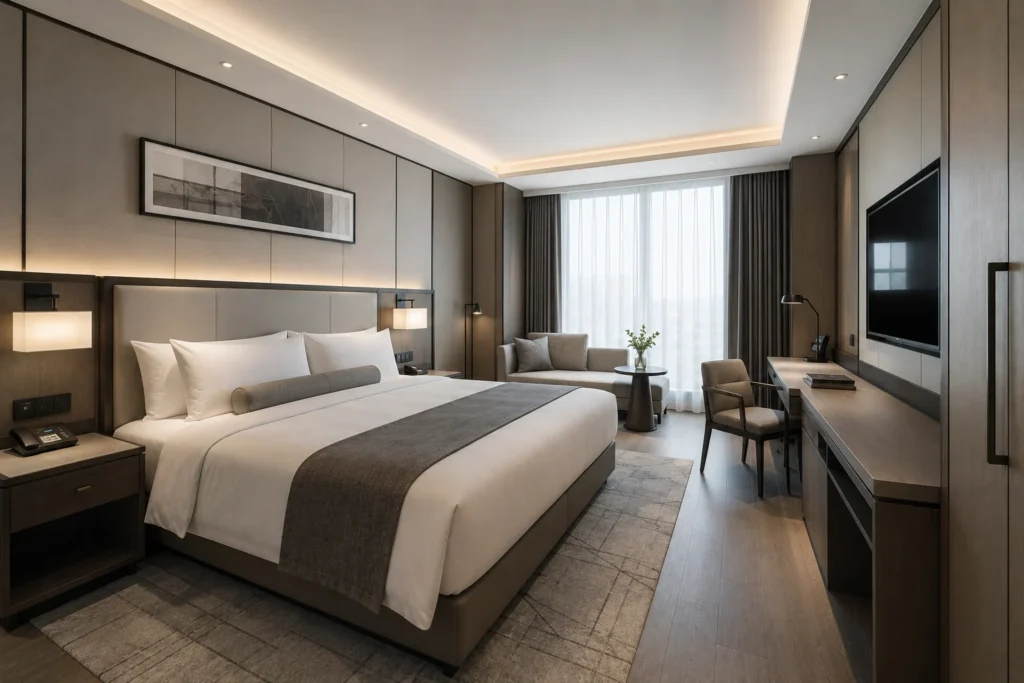
Decide what physical references are needed for manufacture, inspection and future replacement.
Depending on the package, these may include:
- Finish panels.
- Material range samples.
- Hardware.
- Fabric.
- Upholstery components.
- A complete product.
- A verified first item.
Do not assume every component needs a complete duplicate or that one retained object covers all requirements.
Define Custody and Purpose
Record:
- Unique identifier.
- Accepted characteristics.
- Related item codes.
- Location.
- Custodian.
- Storage conditions.
- Retention period.
- Replacement procedure.
Where more than one reference set is used, establish that the sets correspond to the same accepted requirements.
The factory needs access to the governing reference. The project also needs a reliable way to verify that reference later.
Connect Approval to Production Controls
The approved sample room should result in controlled information that production personnel can use.
Issue:
- Revised drawings.
- Item schedules.
- Material references.
- Hardware selections.
- Accepted deviations.
- Sample register.
- Required inspection points.
- Release instructions.
Architectural Woodwork Institute submittal guidance recognises drawings, samples and material data as tools for communicating design intent. The project should define how those tools connect to its approvals.
Agree Verification Points
Depending on the products and risks, the inspection plan may include:
- Material identification.
- First-item review.
- Assembly checks.
- Finish comparison.
- Dimensional inspection.
- Functional checks.
- Pre-shipment inspection.
Define the purpose and acceptance basis of each check.
A first-item review can help identify differences before wider manufacture, but its scope should be agreed rather than treated as a guarantee for the remaining batch.
Assess Changes Before Updating the Approved Baseline
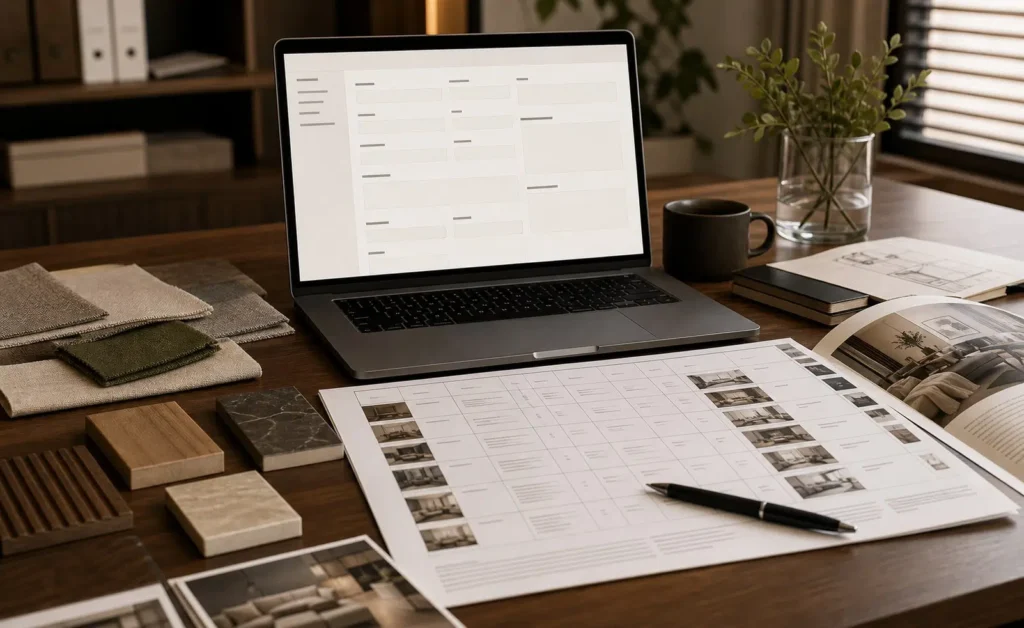
A change should be reviewed according to its effects—not simply its size on the drawing.
Identify:
- Affected items.
- Proposed difference.
- Reason.
- Current procurement and production status.
- Existing evidence affected.
- Samples or verification needed.
- Cost.
- Programme.
- Installation implications.
- Required authorisation.
| Change Area | Questions to Resolve |
|---|---|
| Finish | Does the appearance or reference sample change? |
| Fabric or filling | Does the construction, feel, care or performance evidence change? |
| Hardware | Do function, dimensions, installation or spare parts change? |
| Dimensions | Which interfaces and documents are affected? |
| Added item | What new approvals and coordination are required? |
| Manufacturing arrangement | Does the proposed process or location affect the accepted basis? |
Do not assign a fixed delay to every type of change.
Material commitments matter, but so do design, testing, manufacturing, logistics and approval conditions.
Once accepted, update the documents and identify the information they replace.
Define Production Release for the Actual Scope
Before authorising manufacture, confirm that the relevant conditions are closed.
The release should identify:
- Products.
- Quantities.
- Configurations.
- Document revisions.
- Sample references.
- Accepted deviations.
- Outstanding restrictions.
- Authorised activities.
A limited material reservation should not be interpreted as permission to manufacture the complete product.
Likewise, a room’s operational acceptance should not override an unresolved technical requirement.
Discuss Sample Room Requirements With HONGYE
Hongye Furniture Group can discuss furniture samples and review requirements against the project’s room layouts, item schedule and material references.
Confirm the scope for:
- Product samples.
- Furniture assemblies.
- Finish references.
- Drawing coordination.
- Factory review.
- Retained samples.
- Available documentation.
- Production verification.
Identify which building services, installation details and operational checks are provided by other project parties.
Explore the hotel bedroom furniture range and project case studies for related categories.
For a sampling discussion, send the room types, current drawings, specification status, required review decisions and target programme through the contact page.
Sampling scope, timing, costs and release conditions should be confirmed for the actual project.

Hotel Furniture
Frequently Asked Questions
How long should a hotel sample room take to approve?
Plan the duration around the required review, corrections, evidence and decisions.
There is no single approval period suitable for every room package.
Is a live-in week required?
Not universally.
Use operational scenarios or an authorised extended trial according to the project’s objectives and conditions. Confirm safety and permission before any occupancy.
What is the difference between a sample room and a reference sample?
The room allows the team to review products and interfaces in context.
A reference sample records specific accepted characteristics for later comparison. Neither replaces the complete specification.
Who should approve the room?
Use the project’s responsibility and authority matrix.
Design, operations, technical acceptance, commercial decisions and production release may require different reviewers.
Should actual measurements be recorded?
Yes, where they are relevant to the requirement being assessed.
State the measurement definition, method and applicable tolerance so the record can be used consistently.
Can production start with open comments?
Only within a clearly authorised scope.
Identify which conditions prevent particular activities and which accepted work may proceed.
Does changing foam or hardware always require a complete room review?
Not necessarily.
Assess the affected requirements and determine the appropriate drawings, evidence, samples and approvals for that change.
What should happen after sign-off?
Issue the controlled documents, confirm reference samples and release only the authorised production scope.
Continue verification at the agreed points during manufacture and before shipment.
Make the Review Usable Beyond the Meeting
A useful sample room review leaves more than a signed page.
It records the accepted requirements, operational findings, open conditions and authority for the next stage.
Connect those decisions to the drawings, samples and production instructions. That is what allows a room reviewed once to become a dependable reference for the wider furniture package.