A step-by-step breakdown of how international hotel furniture projects actually move from purchase order to grand opening, with real project snapshots from Hilton and Kempinski deliveries.
What FF&E Procurement Really Means for Hotel Projects
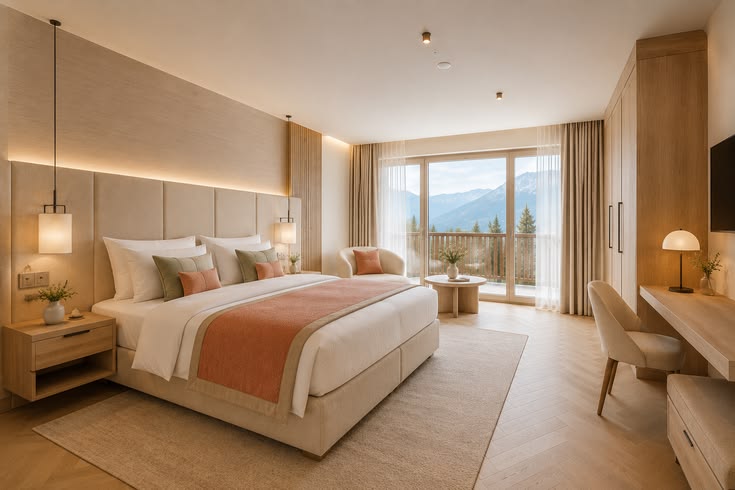
FF&E stands for Furniture, Fixtures, and Equipment. In a hotel context, it covers everything from guest room bed frames and nightstands to lobby seating, restaurant tables, and back-of-house workstations. For a 200-room property, that is easily 2,000-plus individual furniture items crossing borders before opening day.
The procurement timeline is not just about placing an order and waiting. It involves spec sheet reviews, brand standard compliance checks, sample approvals, production scheduling, quality control inspections, container loading, customs clearance, and on-site installation. Miss one link in that chain and the opening date slips. Hotel owners pay for every day of delay in lost revenue and extended pre-opening costs.
This article walks through the full procurement timeline using two real projects Hongye Furniture Group delivered: a Hilton-branded property in Tashkent, Uzbekistan, and a Kempinski resort in Yanbu, Saudi Arabia.
The Six-Phase Hotel FF&E Procurement Timeline
| Phase | Duration | Key Activities | Deliverables |
| 1. Spec & Brand Standard Review | 2-3 weeks | Review brand spec book, confirm dimensions, materials, fire ratings | Approved spec sheets |
| 2. Sample Production & Approval | 2-4 weeks | Produce finish samples, fabric swatches, prototype guest room set | Signed-off samples |
| 3. Mass Production | 6-10 weeks | Full-scale manufacturing, QC checkpoints at 30/60/90% completion | Production photos, QC reports |
| 4. Pre-Shipment Inspection | 1 week | Final QC, packing verification, container loading supervision | PSI report, loading photos |
| 5. Shipping & Customs | 2-6 weeks | Ocean freight, destination port customs, duty payment | Bill of lading, customs clearance |
| 6. On-Site Installation | 2-4 weeks | Unloading, assembly, placement, snagging, handover | Punch list, project completion sign-off |
A typical 5-star hotel FF&E project runs 14 to 24 weeks from purchase order to installation completion. The variance depends on project size, destination country logistics, and how quickly the brand approves samples.
Phase 1 sets the tone for everything that follows. International chains like Hilton, Marriott, and Kempinski each publish their own FF&E specification manuals running hundreds of pages. These cover everything from mattress firmness ratings to the exact distance between a desk chair and the wall. The manufacturer needs to study these documents carefully and flag any items where their standard production process might not meet the brand requirement.
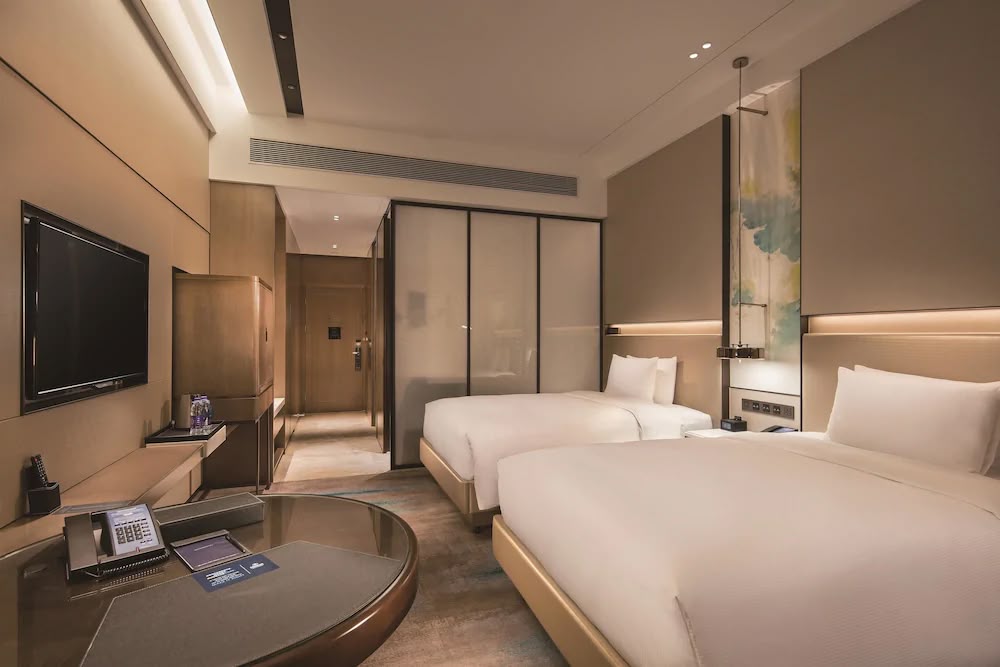
Phase 2 is where you find out whether the factory can actually deliver what was promised on paper. A prototype guest room set gets built in the factory showroom. The owner’s representative or FF&E consultant visits, sits in the chair, opens the drawers, checks the fabric color under natural light. If something is off, the sample gets reworked before mass production starts.
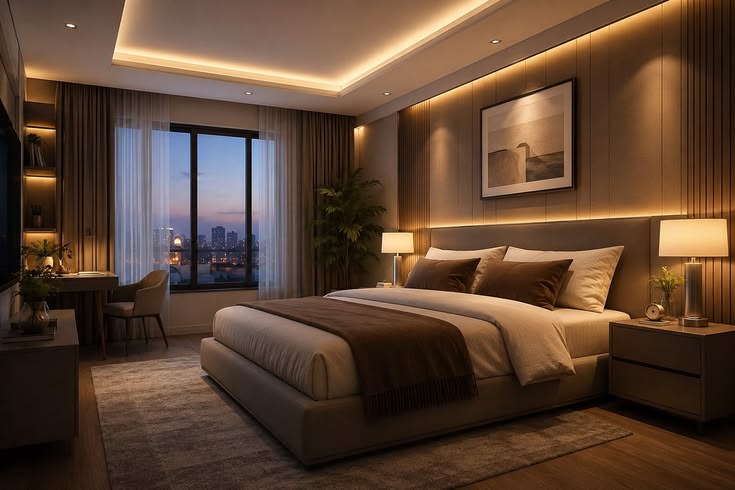
Project Snapshot: Hilton Tashkent City, Uzbekistan
| Field | Detail |
| Project | Hilton Tashkent City, a 5-star international hotel |
| Location | Tashkent, Uzbekistan |
| Scale | 200+ guest rooms, executive lounge, lobby, all-day dining restaurant, ballroom |
| Scope | Guest room FF&E (beds, desks, wardrobes, minibars), lobby seating, restaurant tables and chairs, ballroom banqueting furniture |
| Timeline | 18 weeks from purchase order to installation handover |
| Key challenge | Brand-standard compliance for Hilton’s global specs, plus Central Asia logistics (inland destination, limited direct shipping routes) |
| Outcome | Fully operational hotel opened on schedule with Hilton-approved finishes and fire-rated fabrics throughout |
The Tashkent project illustrates a common pattern for international brands expanding in Central Asia. The destination lacks a major seaport, so containers routed through Bandar Abbas in Iran and then trucked overland. Customs clearance in Uzbekistan required additional documentation for fire-retardant treated fabrics, which Hilton mandates globally. The factory built an extra two-week buffer into the shipping phase to absorb potential border delays. In the end, the last container arrived eleven days before the opening date, and the installation crew worked double shifts to complete assembly on time.
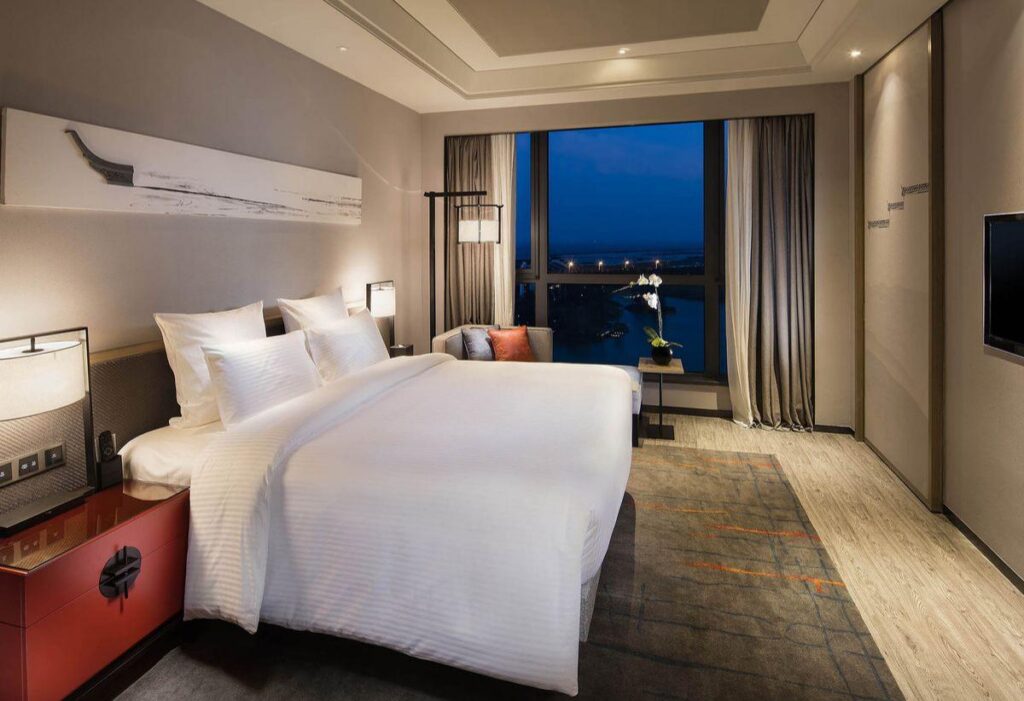
Brand Standards Compliance: What International Chains Actually Require
| Brand | Spec Document | Fire Rating Standard | Fabric Approval Process | Typical Review Time |
| Hilton | Hilton Global Design | Cal 117 / TB 133 | Submit swatches to Hilton Design team | 2-3 weeks |
| Kempinski | Kempinski Design Standards | EN 1021-1/2 (EU) | Regional design director approval | 3-4 weeks |
| Marriott | Marriott FF&E Standards | Cal 117 / NFPA 260 | MARC (Marriott Architecture) portal submission | 2-3 weeks |
| IHG (Holiday Inn) | IHG Design Standards | Cal 117 / BS 5852 | IHG Design Review Board | 2 weeks |
| Wyndham | Wyndham Design Guidelines | Cal 117 | Regional brand manager review | 1-2 weeks |
Each chain approaches compliance differently. Hilton maintains one of the most detailed spec books in the industry, with exact dimensions for every furniture piece and a mandatory fire-retardant treatment for all textiles. Their design team reviews fabric swatches and finish samples before production can begin. Kempinski, being a European luxury brand, follows EN standards rather than California’s TB 133, which means the factory needs to source different fire-retardant chemicals and sometimes different foam densities.
The practical implication is that a manufacturer experienced with one brand’s standards cannot automatically skip the review process for another. A factory that has delivered Hilton projects still needs to go through Kempinski’s European approval path if that is the target brand. Building this review time into the project schedule from the start prevents the most common cause of FF&E delays.
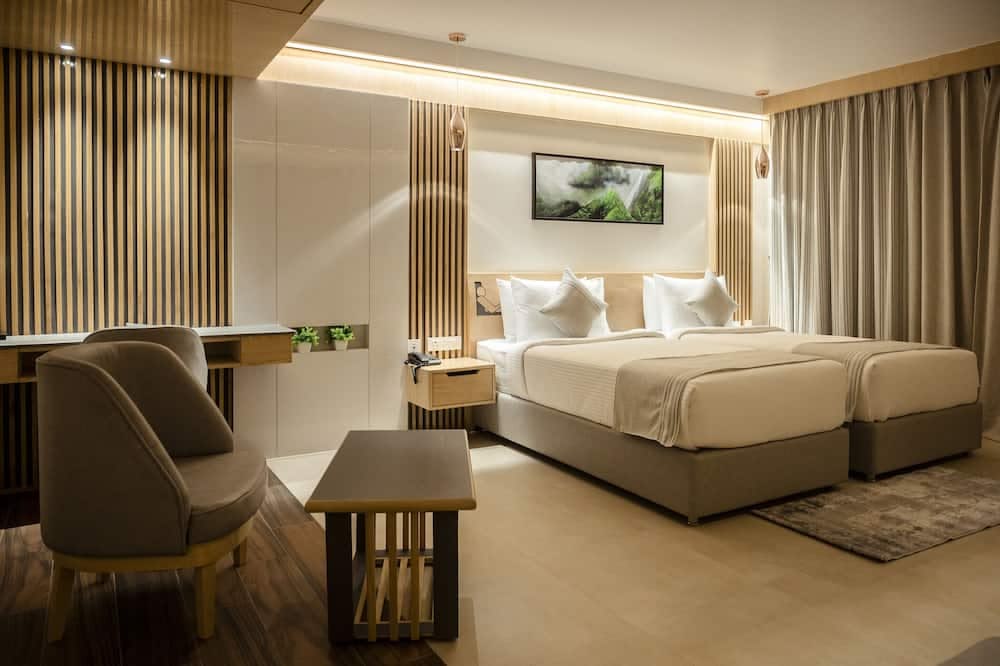
Project Snapshot: Kempinski Hotel & Resort Sariya Yanbu, Saudi Arabia
| Field | Detail |
| Project | Kempinski Hotel & Resort Sariya, a 5-star luxury resort |
| Location | Yanbu, Saudi Arabia (Red Sea coast) |
| Scale | Luxury resort including guest rooms, suites, fine dining restaurants, spa, and outdoor pool areas |
| Scope | Full FF&E package: bedroom furniture, living area pieces, dining furniture, outdoor lounge furniture, spa furnishings |
| Timeline | 22 weeks from PO to handover (longer due to European standard compliance and custom finishes) |
| Key challenge | Meeting Kempinski’s European fire safety standards (EN 1021-1/2) rather than the more common Cal 117, plus custom gold-leaf finish details on lobby furniture |
| Outcome | Resort opened with all Kempinski design standards met, including custom finishes and European-compliant fire treatments |
Yanbu sits on the Red Sea coast, about 350 kilometers from Jeddah. The resort’s design called for several custom finish details that required three rounds of sample approval before the Kempinski regional design director signed off. The gold-leaf accent work on the lobby reception desk alone went through two revisions because the initial application technique did not achieve the depth of finish the design team expected. Once approved, the mass production phase ran smoothly, and the factory maintained a 90-percent completion QC checkpoint with photos sent to the project consultant before final packing.
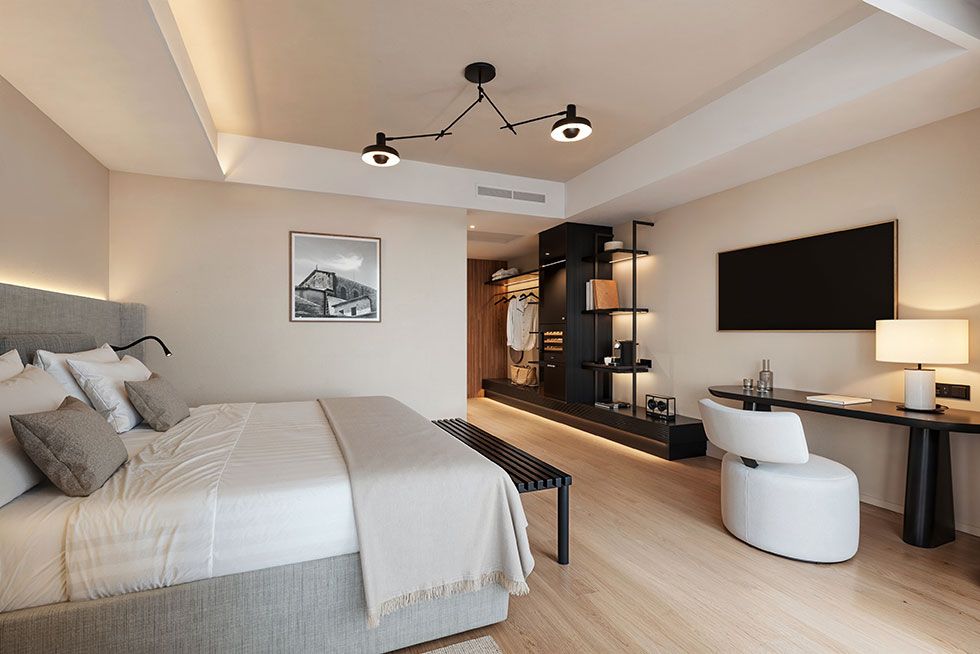
Where Your FF&E Budget Actually Goes
| Cost Category | Typical % of FF&E Budget | What It Covers | Where Owners Overspend |
| Guest room furniture | 40-50% | Beds, desks, wardrobes, nightstands, seating, minibars | Upgrading mattress specs mid-project |
| Public area furniture | 20-30% | Lobby, restaurant, bar, ballroom, meeting rooms | Custom designs not vetted for production feasibility |
| Shipping & logistics | 8-15% | Ocean freight, insurance, destination port, inland transport | Underestimating customs duties or port congestion |
| Installation & snagging | 5-8% | Installation crew, tools, transport, punch list fixes | Insufficient installation time built into schedule |
| Contingency | 5-10% | Unexpected rework, sample revisions, change orders | Not having a contingency fund at all |
Guest room furniture consumes the largest portion of the budget, which is unsurprising given that a 200-room hotel needs 200 bed frames, 400 nightstands, 200 desks, and so on. The public area budget can swing dramatically based on how custom the lobby and restaurant designs are. A standard lobby seating arrangement costs a fraction of what a custom-designed reception desk with integrated lighting and stone cladding runs.
Shipping costs catch many first-time hotel developers off guard. A destination like Tashkent or Yanbu does not have the same freight infrastructure as Shanghai or Los Angeles. Inland transport costs, customs broker fees, and import duties can add 15 percent or more to the landed cost of the furniture. Factoring these costs into the initial budget, rather than treating them as surprises, keeps the project on track financially.
Common Risks and How Experienced Suppliers Mitigate Them
| Risk | Impact | Mitigation Strategy |
| Sample rejection | 2-4 week delay | Submit multiple finish options simultaneously to reduce rework cycles |
| Customs delay | 1-3 week delay | Pre-clear documentation, work with experienced destination broker |
| Production quality issue | Rework or remake | Factory QC checkpoints at 30/60/90% with photo documentation |
| Shipping damage | Partial re-order | Professional packing (foam corner protectors, corrugated wraps), container loading supervision |
| Brand standard non-compliance | Rejection at final inspection | Cross-reference every spec line item before production starts |
The single most effective risk mitigation strategy is building schedule buffers into the timeline. A factory that promises 12 weeks from PO to delivery for a complex 5-star project is either exceptionally experienced or underestimating the process. Eighteen to twenty-two weeks is more realistic for international projects with brand compliance requirements, and that buffer absorbs the inevitable sample revisions, shipping hiccups, and installation adjustments.
Frequently Asked Questions
How far in advance should we order hotel furniture before the opening date?
For a 200-room international brand hotel, place the FF&E purchase order at least 20 weeks before the target opening date. This allows 2-3 weeks for spec review, 3 weeks for sample approval, 8-10 weeks for production, and 4-6 weeks for shipping and installation. If your destination requires complex logistics (inland transport, strict customs), add another 2-3 weeks.
Can a Chinese furniture manufacturer meet Hilton or Marriott brand standards?
Yes. Hongye Furniture Group has delivered multiple Hilton, Marriott, and Kempinski projects. The key is choosing a manufacturer with prior brand experience who understands the spec review process, fire rating requirements, and quality documentation standards that international chains expect.
What happens if the brand rejects a furniture sample?
The factory reworks the sample based on the feedback and resubmits. This typically adds 1-2 weeks to the timeline. To minimize rejections, submit multiple finish or fabric options in the first round so the brand has alternatives to choose from without starting the sample process over.
How are customs duties handled for hotel furniture imports?
Customs duties vary by destination country and product classification. In most markets, hotel FF&E qualifies for some form of duty exemption or reduction because it is imported for a commercial hospitality project, not for resale. Work with a local customs broker who understands hospitality project imports. The manufacturer provides packing lists, commercial invoices, and certificates of origin to support the import process.
Do we need to send someone to the factory for quality control inspections?
It is recommended but not always necessary. An experienced hotel FF&E manufacturer will provide photo and video documentation at 30%, 60%, and 90% production milestones. For large projects (150+ rooms), a pre-shipment inspection by a third-party QC firm costs roughly $500 to $1,000 and can identify issues before the furniture ships, saving far more in potential rework costs.
Ready to Start Your Hotel FF&E Project?
Hongye Furniture Group has delivered furniture for 24 hotel projects across 15 countries, including Hilton, Kempinski, Radisson, Holiday Inn, and Wyndham brands. Our team handles the full procurement timeline from spec review through on-site installation, with brand-standard compliance built into every phase.
Contact us to discuss your project timeline, brand requirements, and FF&E scope.