Hotel FF&E budget planning works best when each room type has its own furniture scope and cost model. A Standard King room, Double Queen room, accessible room and suite may share some furniture, but they rarely carry the same materials, quantities, layout requirements or installation needs.
Therefore, hotel owners should not rely on one average “cost per key” number at the start of a project. Instead, they should build the budget from the room matrix, furniture schedule, public-area programme and delivery scope.
This guide explains how to plan a hotel FF&E budget by room type. It also shows how to separate furniture-only cost, landed furniture cost, installed furniture cost and full FF&E cost.
Quick answer: Price every room type separately. First, define what the budget includes. Next, create a room matrix and furniture schedule. Then, add product cost, freight, customs, local delivery, installation, public areas and project-specific contingency.
Key Takeaways
- Hotel FF&E budget planning should begin with room types, not one average cost-per-key figure.
- A Standard King room, Double Queen room, accessible room, Junior Suite and Executive Suite often need different furniture quantities, layouts, materials and installation details.
- Furniture-only cost is not the same as landed furniture cost, installed furniture cost or total FF&E cost.
- Casegoods, beds, seating, lighting, soft goods, mirrors, public-area furniture and installation may sit in different budget categories.
- Accessible guestrooms should be priced separately because clearances, mounting heights, operating access and layout coordination can change the furniture scope.
- Public-area furniture should be budgeted separately before it is allocated across hotel keys.
- Direct sourcing may reduce product cost for some standardised or higher-volume furniture projects. However, buyers should compare total landed cost, not only factory price.
- Hongye supports qualified hotel projects with room-type furniture schedules, casegoods, seating, public-area furniture, material samples and project-specific documentation where applicable.
What Does Hotel FF&E Budget Mean?
FF&E means Furniture, Fixtures and Equipment.
In hotel development and renovation, FF&E may include:
- Guestroom furniture.
- Bed systems.
- Mattresses.
- Guestroom seating.
- Casegoods.
- Loose furniture.
- Lighting.
- Mirrors.
- Window treatments.
- Soft goods.
- TVs and electronics.
- Artwork.
- Public-area furniture.
- Restaurant furniture.
- Meeting-room furniture.
- Outdoor furniture.
- Selected decorative items.
However, not every project places the same items inside the FF&E budget.
For example, one hotel may include headboards, wall panels and mirrors in the FF&E package. Another hotel may place those items under construction joinery, fit-out or interior works.
Therefore, the first step is to define the budget scope.
Budget rule: A cost figure has no meaning until the buyer knows what is included, excluded and allocated elsewhere.
Hotel Furniture
Define Your Cost Scope
Hotel project teams often use the same phrase—“FF&E cost per room”—to describe different budgets.
That can create confusion during bidding and procurement.
For example, one supplier may quote guestroom furniture only. Another may include bed bases, seating and mirrors. A third may quote delivered and installed furniture.
Therefore, buyers should separate cost layers before comparing prices.
| Cost Term | What It May Include | What Buyers Must Confirm |
|---|---|---|
| Furniture-only cost | Casegoods, beds, seating and selected loose furniture | Whether mattresses, mirrors, lighting and public areas are included |
| Guestroom FF&E cost | Furniture plus project-defined lighting, soft goods, electronics and accessories | Whether freight, installation and OS&E are included |
| Landed furniture cost | Product cost plus packing, freight, insurance, duty, customs and local delivery | Whether storage, room delivery and installation are included |
| Installed furniture cost | Landed cost plus unloading, assembly, placement, wall fixing and waste removal | Whether site readiness and final cleaning are included |
| Whole-property FF&E per key | Guestroom FF&E plus a public-area allocation | Whether F&B, spa, meeting rooms and outdoor areas are included |
For example, a furniture-only quote may look lower than a full FF&E budget. However, the furniture-only quote may exclude lighting, drapery, public areas, freight, installation and local taxes.
Comparison rule: Compare suppliers only after aligning the cost scope, room types, materials, delivery term and installation responsibilities.
Build the Room-Type Matrix
The room-type matrix is the foundation of hotel FF&E budget planning.
It lists every room type, room quantity and furniture scope.
A hotel may include:
- Standard King rooms.
- Standard Twin rooms.
- Double Queen rooms.
- Accessible rooms.
- Deluxe rooms.
- Executive rooms.
- Junior Suites.
- One-bedroom Suites.
- Family rooms.
- Extended-stay rooms.
- Villas.
- Connecting rooms.
- Model rooms.
Each room type can have a different furniture package.
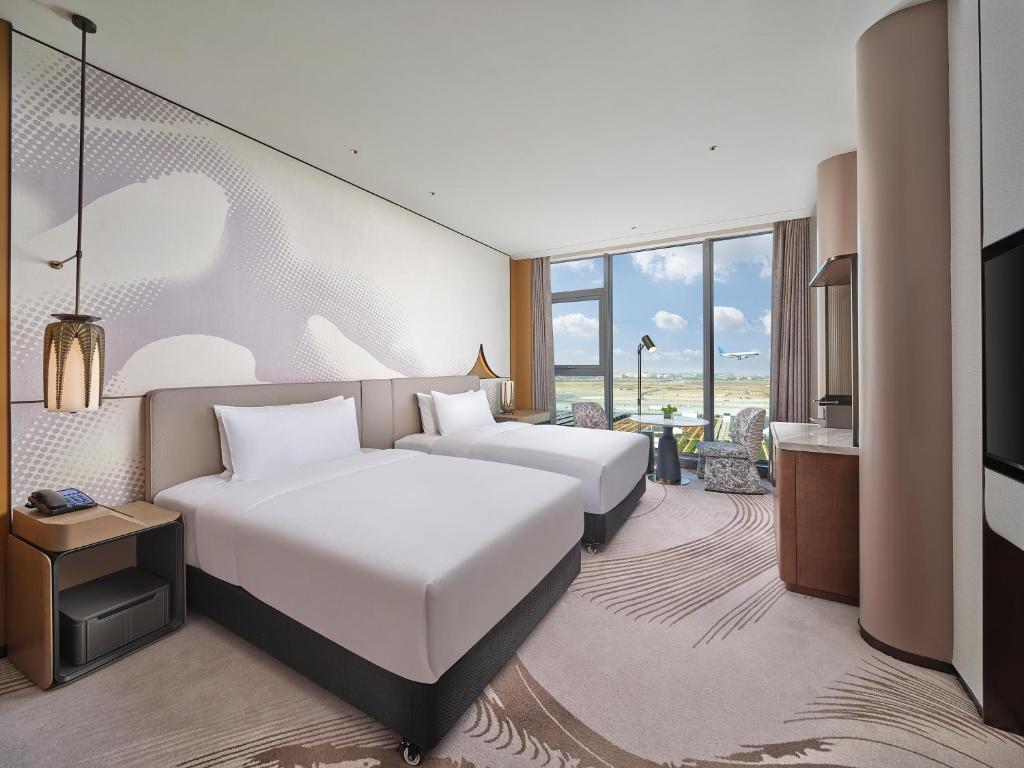
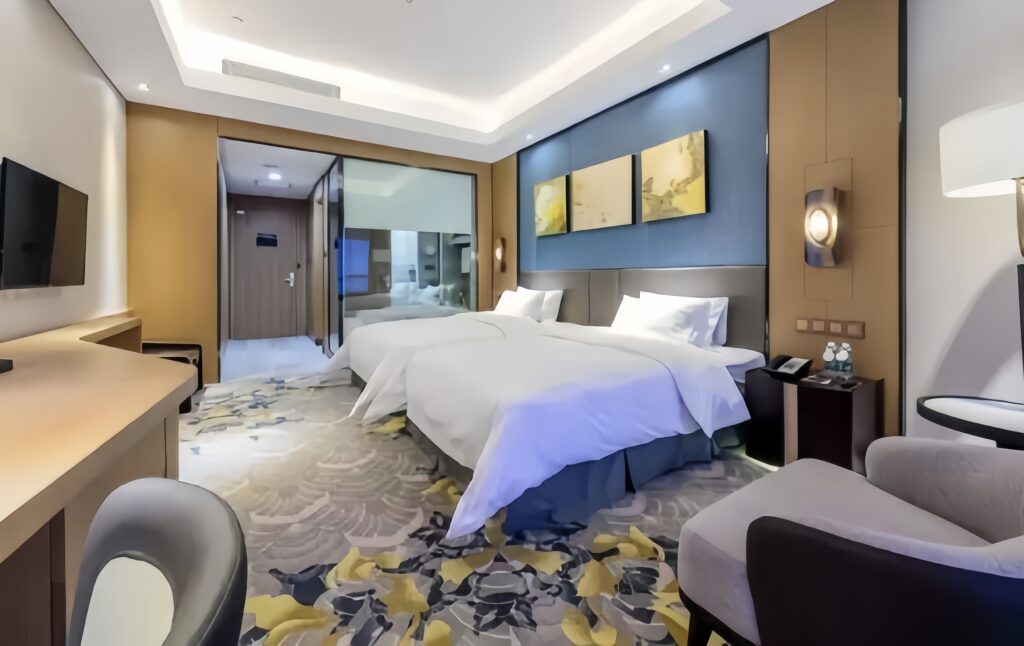
For example, a Double Queen room may need two beds, more bedside furniture and a revised luggage layout. Meanwhile, a suite may need a living area, dining furniture, minibar storage and additional loose seating.
Therefore, buyers should not multiply the Standard King budget by the total number of keys.
Room-Type Cost Drivers
| Room Type | Main Furniture Scope | Main Budget Drivers |
|---|---|---|
| Standard King | Bed, casegoods, desk, chair and luggage support | Material grade, hardware, bed system and room repetition |
| Double Queen | Two-bed layout, bedside furniture and desk | Bed layout, circulation and duplicated furniture |
| Accessible Room | Adjusted furniture layout and operating access | Clearances, mounting, hardware and room coordination |
| Junior Suite | Guestroom plus lounge area and expanded storage | Seating, minibar, coffee tables and room size |
| Executive Suite | Living, work, dining and storage furniture | Custom casegoods, upholstery, dining and decorative elements |
| Villa or Resort Room | Indoor, terrace and possibly outdoor furniture | Outdoor materials, room size, climate and logistics |
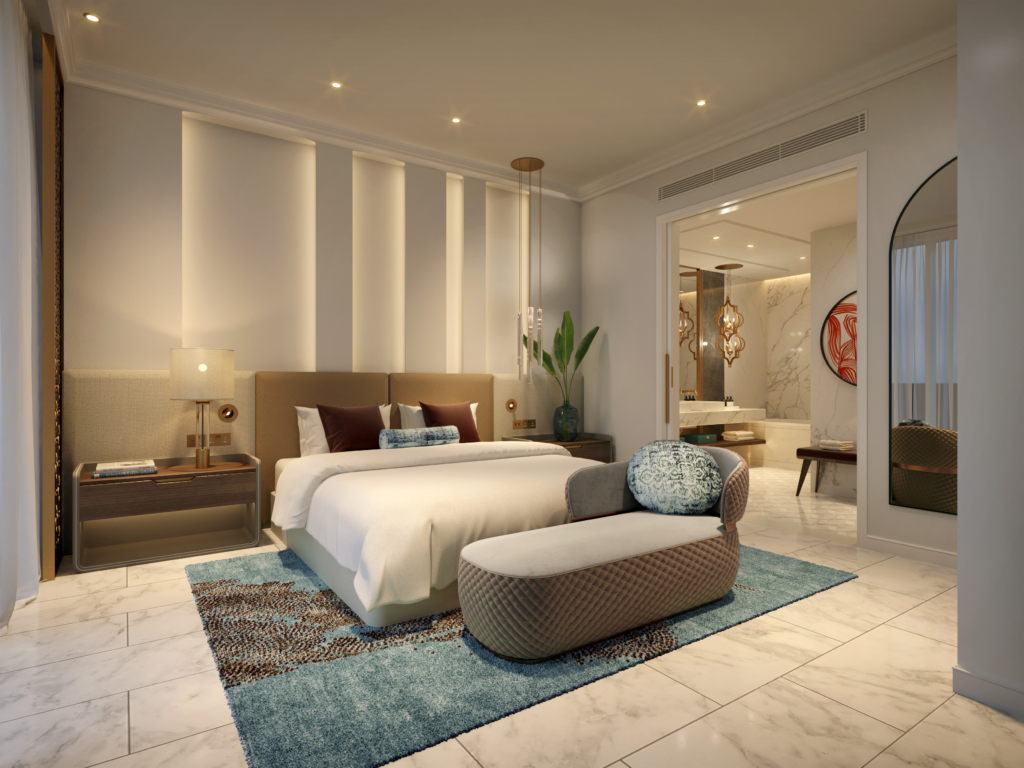
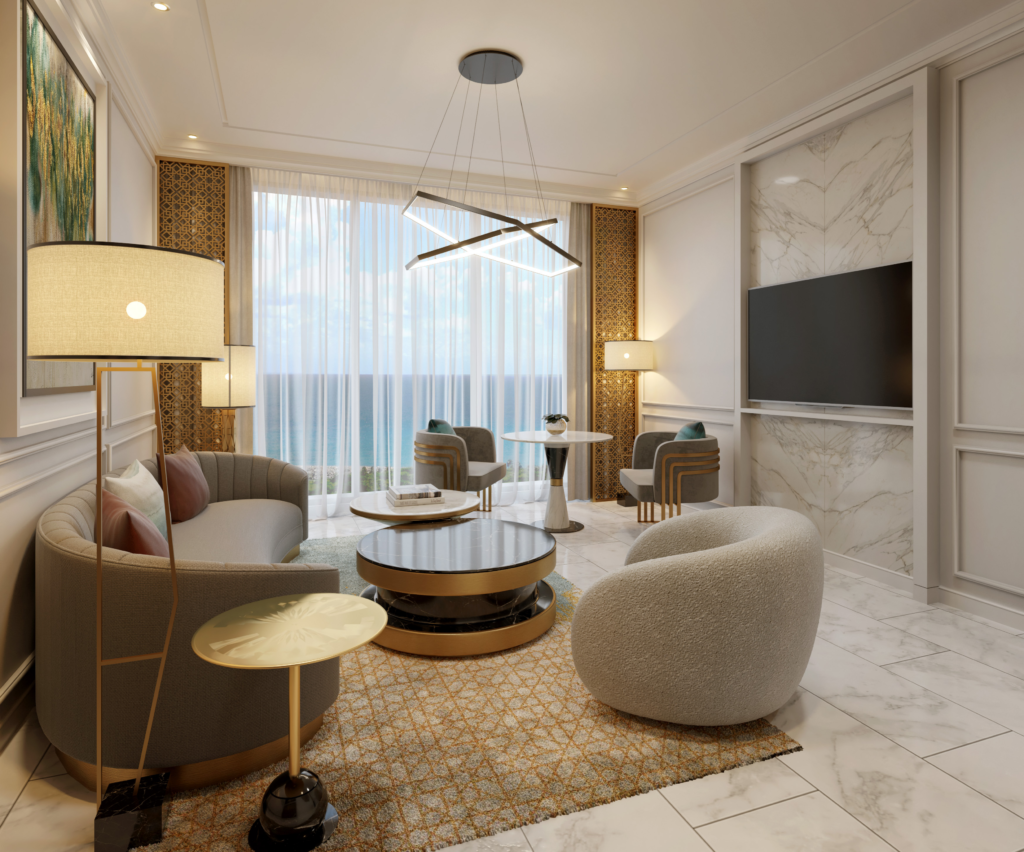
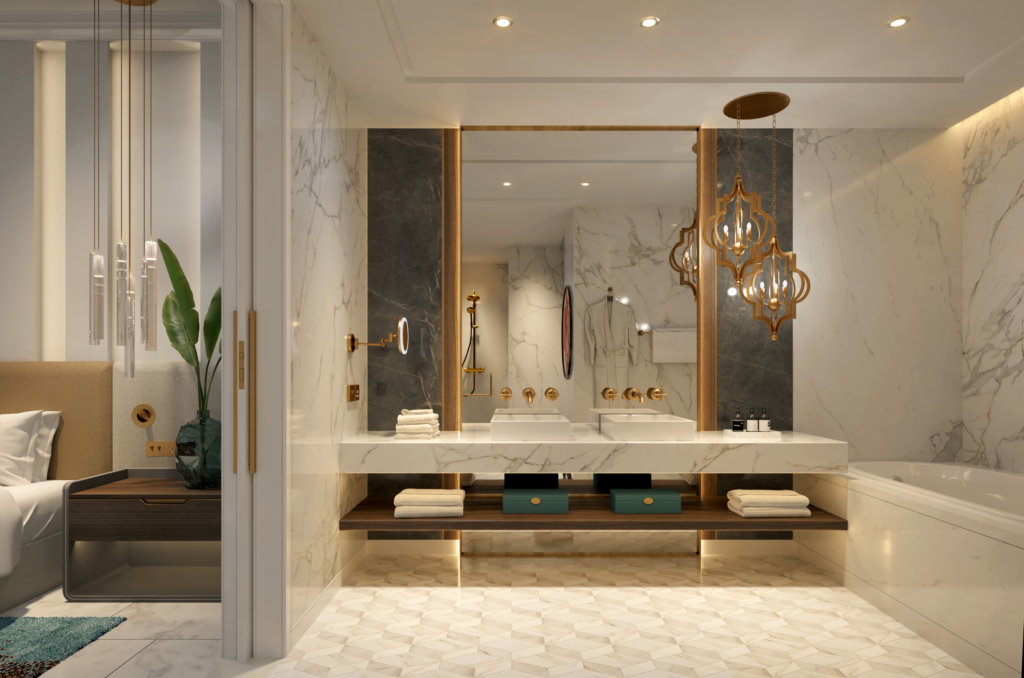
Room-matrix rule: Price each room type separately. Then calculate a weighted average based on the final number of rooms in each category.
Price Accessible Rooms Separately
Accessible guestrooms should have their own furniture schedule and cost model.
The furniture scope may change because of:
- Clear floor space.
- Door swing.
- Bed position.
- Desk height.
- Reach range.
- Hardware location.
- Wardrobe access.
- Mirror height.
- Luggage storage.
- Bathroom coordination.
- Turning radius.
- Circulation route.
- Wall mounting.
However, accessible rooms do not always cost more than standard rooms.
In some layouts, the room may need fewer furniture pieces. In other layouts, the design may require custom dimensions, revised mounting heights, specialised hardware or additional coordination.
Therefore, buyers should not apply one fixed premium to every accessible room.
Accessibility rule: Price accessible guestrooms from approved drawings and applicable project requirements, not from a percentage uplift.
What Drives Guestroom Furniture Cost?
Guestroom furniture cost depends on the visible design and the hidden construction.
For example, two hotel desks may have similar dimensions. However, one desk may use standard laminate, basic drawer slides and a simple panel core. Another may use natural veneer, moisture-resistant plywood, solid timber edging, premium hardware, power modules and custom metal details.
Therefore, the furniture schedule should identify construction details.
Casegoods Cost Drivers
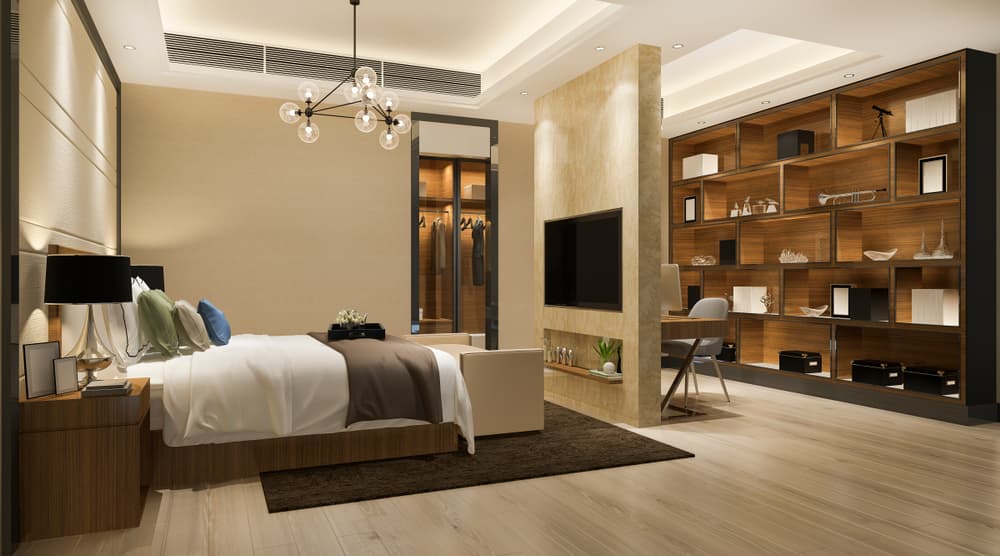
Casegoods often include wardrobes, nightstands, desks, TV units, dressers, minibar cabinets and storage units.
Their cost can change because of:
- Board core.
- Board thickness.
- Moisture resistance.
- Veneer.
- Laminate.
- Lacquer.
- Solid timber edges.
- Drawer construction.
- Drawer slides.
- Hinges.
- Locks.
- Pulls.
- Wall brackets.
- Power modules.
- Cable management.
- Metal details.
- Stone tops.
- Curved panels.
- Custom dimensions.
- Installation method.
- Packaging requirements.
For more guidance, read Hotel Casegoods vs Loose Furniture: What Belongs in Your FF&E Budget.
Loose Furniture Cost Drivers
Loose furniture may include lounge chairs, desk chairs, sofas, ottomans, benches, side tables, coffee tables and dining chairs.
Its cost can change because of:
- Frame construction.
- Upholstery fabric.
- Leather or faux leather.
- Foam type.
- Cushion construction.
- Metal finish.
- Timber finish.
- Glides.
- Castors.
- Mechanisms.
- Cleanability.
- Comfort.
- Fire requirements.
- Outdoor exposure.
- Replacement covers.
- Packaging.
Loose furniture can be easier to replace than built-in furniture. However, it may receive more direct guest contact, movement, cleaning and impact.
Therefore, hotels should consider maintenance and replacement-part availability during procurement.
4-Star, Upscale and Luxury Scope
Hotel positioning can affect FF&E cost. However, star rating alone does not define the budget.
A hotel may position itself as upscale because of service, location, food and beverage or brand standards. Another property may use luxury materials but have a smaller furniture scope.
Therefore, buyers should define the project through the design brief, room matrix and operator requirements.
Higher-positioned hotels may require:
- More custom furniture.
- More room types.
- Larger suites.
- Natural veneers.
- Solid timber.
- Stone.
- Metalwork.
- Premium upholstery.
- Decorative lighting.
- Enhanced storage.
- Integrated technology.
- Tighter finish matching.
- Higher sample approval standards.
- More complex installation.
These requirements can materially increase cost.
However, the correct question is not, “What does a five-star room cost?”
Instead, ask:
“What furniture scope, material level, functional requirement and finish-control level does this room type require?”
Budget Public Areas Separately
Public areas can change the total hotel FF&E budget significantly.
For example, a hotel may include:
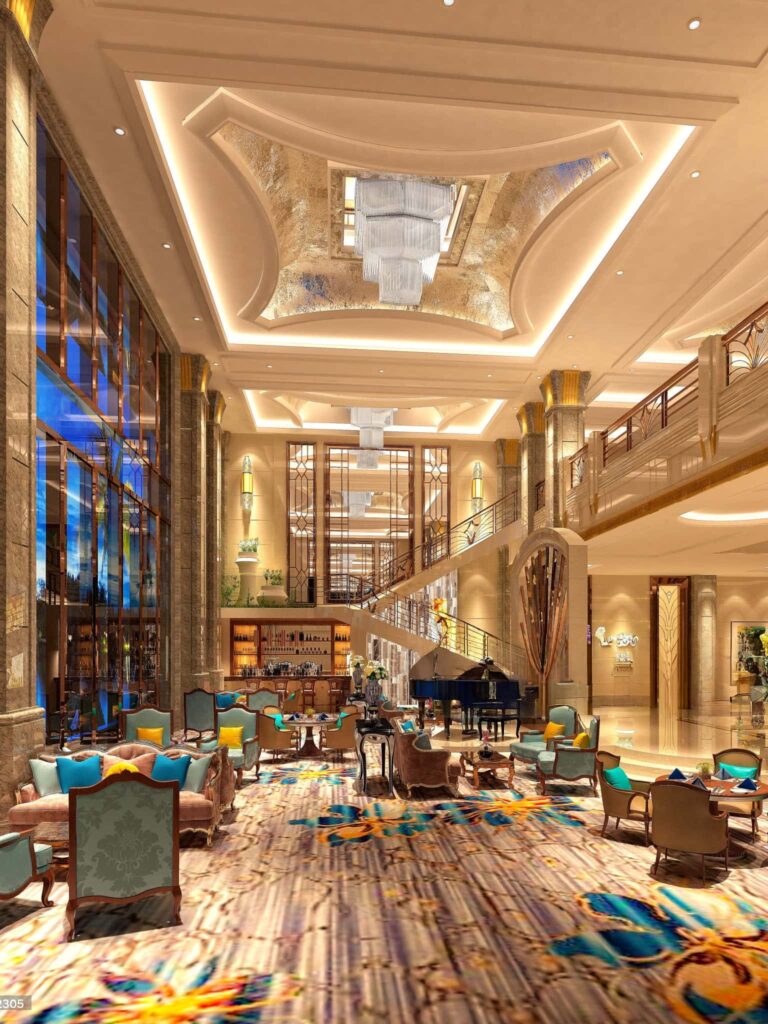
- Lobby seating.
- Reception desk.
- All-day dining.
- Restaurant.
- Bar.
- Meeting rooms.
- Ballroom.
- Spa.
- Fitness area.
- Executive lounge.
- Co-working lounge.
- Terrace.
- Pool deck.
- Beach club.
- Outdoor dining.
- Kids’ club.
A hotel with modest guestrooms but a large restaurant and ballroom may have a higher total furniture budget than a hotel with more guestrooms but limited public areas.
Therefore, public-area furniture should be budgeted separately.
Only after that should the owner decide whether to allocate part of the public-area cost across each hotel key.
Public-area rule: Do not hide lobby, restaurant, meeting-room or outdoor furniture inside a standard guestroom budget.
Direct Sourcing and Landed Cost
Direct sourcing from a manufacturer may reduce product cost for some standardised or higher-volume hotel furniture programmes.
However, buyers should compare total landed cost rather than factory price alone.
The landed furniture budget may include:
Landed Furniture Cost=Product Cost+Export Packing+Origin Charges+Freight+Cargo Insurance+Duties and Taxes+Customs Clearance+Local Delivery+Storage+Installation+Spare Parts+Contingency
For example, a low EXW or FOB price may exclude packing, freight, duties, local delivery, storage, installation or warranty support.
Therefore, a lower factory quotation does not always create a lower installed cost.
Questions to Ask Before Comparing Quotes
- Is the price EXW, FOB, CIF, DDP or installed?
- Does the quotation include export packing?
- Who pays freight and cargo insurance?
- Who pays duty, taxes and customs fees?
- Who is responsible for local delivery?
- Does the price include storage?
- Who unloads containers?
- Who delivers furniture to each room?
- Who assembles and anchors furniture?
- Who removes packaging?
- Are spare parts included?
- What warranty and repair support apply?Landed-cost rule: Compare suppliers using the same product scope, material level, delivery term, installation scope and quality requirements.
Budget Risks to Plan Early
Hotel FF&E budgets can change when the project scope changes.
Common risk areas include:
Freight and Logistics
Freight, customs, local delivery, storage and installation can change based on route, destination, shipping season, container use and site access.
Therefore, use current freight quotations and customs-broker guidance.
Design Changes
A revised headboard, upgraded laminate, different veneer, added power module or new hardware can affect product cost, lead time and packaging.
Therefore, use a written change-control process.
FF&E and OS&E Boundaries
Items such as mirrors, luggage racks, minibar equipment, safes, lamps, artwork, power modules and guestroom accessories can move between budgets.
Therefore, assign ownership per item before purchase-order release.
Site Conditions
A furniture package may need extra labour or protection if the site has:
- Narrow delivery access.
- Small freight lifts.
- Unfinished floors.
- Restricted delivery hours.
- Limited storage.
- Missing room numbers.
- Incomplete walls.
- Ongoing MEP work.
- No waste-removal plan.Risk rule: A furniture budget should include clear assumptions, ownership and contingency for project-specific risks.
A Budgeting Sequence That Holds
A clear process can help hotel owners build a more reliable FF&E budget.
- Define the project scope.
Confirm whether the budget includes guestroom furniture, public-area furniture, lighting, soft goods, equipment, freight, installation and operating supplies. - Create the room matrix.
List every room type, quantity, accessible room, suite, villa and public area. - Build the furniture schedule.
Assign item codes, quantities, dimensions, materials and drawings to each space. - Separate casegoods and loose furniture.
Identify which items are custom, fixed, freestanding, public-area or delivery-related. - Approve material direction.
Define board core, finish, hardware, upholstery, foam, metal and packaging requirements. - Price by room type.
Obtain quotes for Standard King, Double Queen, accessible rooms, suites and public areas separately. - Add landed costs.
Include packing, freight, insurance, duties, customs, local delivery, storage, installation and spare parts. - Add project contingency.
Create an allowance that reflects drawings, freight, site conditions, change orders and schedule risk. - Compare sourcing options.
Compare direct manufacturer, distributor, local supplier and mixed-sourcing options using the same scope. - Lock the budget before production.
Confirm the BOQ, drawings, samples, packaging, delivery term, quality plan and warranty scope.Budgeting rule: A reliable hotel FF&E budget is built from approved scope and room-level detail, not from one broad per-key estimate.
Hongye Hotel FF&E Budget Support
Hongye supports qualified hospitality projects with room-type furniture schedules, casegoods, loose seating, public-area furniture, material samples, mock-up coordination, production planning and project-specific documentation.
During budget development, Hongye can help buyers separate:
- Furniture-only cost.
- Landed furniture cost.
- Installed furniture cost.
- Guestroom furniture scope.
- Public-area furniture scope.
- Casegoods.
- Loose furniture.
- Fixed millwork.
- Installation-related costs.
Hongye states that it has more than 30 years of commercial furniture manufacturing experience and operates a 300,000-square-metre production facility in Heshan, Jiangmen, Guangdong, China.
Before issuing a purchase order, buyers should verify the room matrix, material configuration, packaging, inspection plan, delivery term, installation responsibility and warranty scope.
Frequently Asked Questions
What is included in a hotel FF&E budget?
A hotel FF&E budget may include furniture, fixtures, equipment, lighting, soft goods, window treatments, mirrors, electronics, public-area furniture and decorative items.
However, the exact scope differs by project. Buyers should confirm whether freight, installation, OS&E, artwork, public areas and bathroom items are included.
How should a hotel budget FF&E by room type?
Price each room type separately.
For example, create separate furniture schedules for Standard King rooms, Double Queen rooms, accessible rooms, suites and villas. Then price public areas separately before calculating a weighted per-key average.
Why should accessible guestrooms have a separate budget?
Accessible rooms may have different furniture layouts, clearances, mounting heights, hardware locations and circulation requirements.
The cost may increase or decrease depending on the base room design and approved accessibility requirements. Therefore, buyers should price accessible rooms from drawings rather than applying one fixed premium.
What is the difference between furniture-only cost and landed furniture cost?
Furniture-only cost generally covers the furniture product itself.
Landed furniture cost includes the product plus packing, freight, insurance, duties, customs, local delivery and other shipment-related costs. Installed furniture cost may also include unloading, room delivery, assembly, wall fixing and waste removal.
How do public areas affect hotel FF&E cost?
Public areas such as lobbies, restaurants, bars, meeting rooms, spas, executive lounges and outdoor terraces can materially change the total furniture budget.
Buyers should price public areas separately before allocating any public-area cost across hotel keys.
Does direct sourcing from China reduce hotel FF&E cost?
It may reduce product cost for some standardised or higher-volume projects.
However, buyers should compare total landed cost, including samples, inspection, freight, duty, customs, local delivery, storage, installation, warranty and replacement parts.
How should a hotel compare furniture quotes?
Compare the same room matrix, BOQ, drawings, materials, hardware, packaging, delivery term, freight assumptions, installation scope, quality plan, warranty and lead time.
Do not compare only the headline furniture price.
Build the Budget From the Room Matrix
Hotel FF&E budget planning becomes more reliable when the project team starts with room types and furniture scope.
First, define the cost layer. Next, create the room matrix. Then, price guestroom furniture, public areas, freight and installation separately.
Finally, confirm material requirements, samples, delivery term, inspection plan and warranty before production begins.
By building the budget around approved room-level detail, hotel owners can reduce scope gaps and make more informed decisions about design, sourcing, installation and long-term maintenance.