
Why Bathroom Vanity Height Matters More Than You Think
You’re planning a hotel bathroom renovation or furnishing a new property. The vanity height decision seems straightforward—shouldn’t everyone just install at the “standard” height? Yet this single measurement impacts guest satisfaction, accessibility compliance, operational liability, and long-term property value in ways many hospitality professionals overlook.
The truth is: bathroom vanity height is far more complex than most hotel operators realize.
Get it right, and you create a bathroom that works seamlessly for every guest—from elderly visitors with mobility challenges to tall executives to families with children. Get it wrong, and you face accessibility lawsuits, guest complaints, staff liability, and potential code violations that can cost thousands to remediate.
The stakes are high. Bathroom accessibility violations represent one of the fastest-growing categories of ADA lawsuits in the hospitality industry, with settlements averaging $15,000-$50,000 per occurrence. Non-compliance isn’t just a legal risk—it signals poor operations to guests and can damage your property’s reputation.
This comprehensive guide provides hotel owners, managers, procurement professionals, and designers with the critical information needed to specify, install, and maintain bathroom vanities that satisfy both ADA requirements and guest expectations. We’ll explore the science behind vanity height, break down the legal standards, and provide specific installation guidance for different hotel star ratings and guest demographics.
Understanding the Basics: Bathroom Vanity Height Standards
The Three Key Measurements
When discussing bathroom vanity height, three distinct measurements must be understood:
1. Countertop Surface Height (the key measurement)
- Measured from finished floor to top of countertop
- Standard: 32 inches for residential, 34 inches maximum for ADA compliance
- Range: 30-36 inches in contemporary practice
2. Sink Bowl Rim Height (often overlooked)
- Measured from floor to top rim of sink
- Typically 1-2 inches above countertop (add this to countertop height)
- Critical for reach calculations
3. Vanity Base Height (what fabricators focus on)
- Height of the cabinet itself before countertop installation
- Standard: 30.5 inches (allows for countertop thickness)
- Does NOT include countertop
Why These Distinctions Matter
Hotel procurement staff often specify vanity height incorrectly because they confuse these measurements. Ordering a “32-inch vanity” might result in a 34-36 inch finished countertop height—potentially violating ADA requirements.
Correct Specification Method:
Order by: "Cabinet with 30.5" height + 1.5" countertop = 32" finished surface"
NOT: "Order a 32-inch vanity"
The ADA Standard: Legal Requirements You Cannot Ignore
Maximum Height Requirement (The Hard Limit)
The Americans with Disabilities Act specifies:
Maximum sink/vanity height: 34 inches (measured from finished floor to the highest point of the sink rim or countertop, whichever is higher).
This is non-negotiable in commercial applications.
Why 34 Inches? The Science Behind the Standard
Wheelchair Accessibility: Users in standard wheelchairs (seat height typically 18-19 inches) can reach forward to approximately 48-54 inches at maximum, but comfortable reach depth is only 20-25 inches. At 34 inches height, wheelchair users can comfortably access the sink from a forward position.
Seated Position Use: People using the sink while seated (elderly guests, those with mobility limitations, caregivers assisting children) can reach comfortably to this height.
Average Adult Proportions: ADA standards are based on adult anthropomorphic data:
- Average male height: 5’9″ (69 inches)
- Average female height: 5’4″ (64 inches)
- Comfortable sink reach from standing: approximately 10-12 inches above waist level
- For average adults, this calculates to approximately 34-36 inches
ADA Vanity Installation Checklist
| Requirement | Specification | Notes |
|---|---|---|
| Maximum Height | 34″ from floor to sink rim | Non-negotiable; measured to highest point |
| Knee Clearance (Height) | Minimum 27″ | Space under sink must be open |
| Knee Clearance (Depth) | Minimum 19″ | How far user can pull wheelchair under |
| Toe Clearance (Height) | Minimum 9″ | Space from floor to obstruction |
| Toe Clearance (Depth) | Minimum 6″ | How far toe space extends |
| Clear Floor Space | 30″ wide × 48″ deep | Space in front of vanity for approach |
| Faucet Height | Maximum 48″ reach range | Reachable from seated position |
| Faucet Type | Lever or touchless | Must operate with one hand, no tight grasping |
| Pipe Insulation | All exposed pipes | Protect against burns; required for safety |
| Mirror Height | Bottom edge: 40″ maximum | Allow seated viewing |
Beyond ADA: Comfort Height & Ergonomic Considerations
The Standard vs. Comfort Height Debate
The bathroom vanity market is divided into two camps:
Standard Height Vanities:
- Countertop: 30-32 inches
- Pros: ADA compliant, traditional look, ergonomic for guests 5’4″-5’10”
- Cons: Taller guests (>6’2″) find it slightly low
- Best for: Mixed-use hotels, multi-demographic properties
Comfort Height Vanities:
- Countertop: 36 inches
- Pros: Ergonomic for taller guests, more contemporary aesthetic
- Cons: NOT ADA compliant (exceeds 34″ maximum); requires accommodation for disabled guests
- Best for: Luxury properties, taller demographic target markets
- Legal Risk: High—accessibility violations common
The Compromise: Tiered Approach for Luxury Properties
| Property Type | Primary Vanity | Accessible Rooms | Strategy |
|---|---|---|---|
| Budget/3-Star | 32″ (standard) | 32″ (standard) | Single-height simplicity |
| 4-Star | 32-34″ (transitional) | 32″ standard | All rooms compliant |
| Luxury 5-Star | 34″ accessible | 34″ accessible | Compliant + elegant design |
| Special Needs | Varied heights | 28-32″ adjustable | Multiple accessibility tiers |
Vanity Height by Hotel Star Rating
2-3 Star Hotels (Budget Properties)
Standards:
- Vanity height: 30-32 inches
- Rationale: Cost efficiency; no special accommodation needed
- Guest demographic: Price-conscious, mixed ages
Specification:
"Wall-mounted or floor cabinet vanity:
 - Base height: 30.5"
 - Countertop thickness: 1.5"
 - Finished surface: 32" maximum"
ADA Compliance: ✓ Compliant at 32″
Cost Considerations:
- Standard mass-produced vanities: $150-$300
- Installation: $100-$200 per unit
- No accessibility modifications needed
3-4 Star Hotels (Mid-Range Properties)
Standards:
- Vanity height: 32-34 inches
- Rationale: Balance between guest comfort and accessibility
- Guest demographic: Business travelers (average height), families
Specification:
"Wall-mounted vanity cabinet:
 - Base height: 30.5-31.5"
 - Countertop: 1.5-2.5" thickness
 - Finished surface: 32-34" (verify final height with countertop supplier)"
ADA Compliance: ✓ Fully compliant if ≤34″
Design Considerations:
- Vanity with knee space underneath (open base or cutout)
- Lever faucets (not twist handles)
- Mirror positioned for seated access (bottom edge ≤40″)
- Insulated pipes under sink
Cost Considerations:
- Mid-range vanities: $300-$600
- Accessible design features: +$100-$200
- Total per room: $600-$1,000
4-5 Star Hotels (Luxury Properties)
Standard Height:
- Vanity height: 34 inches
- Rationale: Modern aesthetic, ADA compliant, elegant appearance
- Guest demographic: Affluent guests, business professionals
Specification for Luxury Bathroom:
"Wall-hung vanity in [finishes]:
 - Mounted height: 30.5-31.5" (base)
 - Premium countertop: 2-3" thickness (may include integrated tops)
 - Finished surface: 34" maximum
 - Apron clearance: Open to allow knee access
 - Vanity width: 48-60" (spacious, spa-like feel)
 - Double sinks: 48" minimum center-to-center spacing"
ADA Compliance: ✓ Fully compliant at 34″
Luxury Design Features:
- Floating vanities (contemporary look + accessibility)
- Integrated sinks (seamless aesthetic)
- High-end faucets (still must operate with one hand)
- Backlit mirrors (visual appeal + accessibility)
- Underlit vanities (spa-like ambiance, safe navigation)
Accessibility as Luxury: Modern luxury design incorporates accessibility as a feature, not a compromise:
- Open bases create visual lightness
- Premium materials work at any height
- Accessible bathrooms function beautifully for all guests
Cost Considerations:
- Premium vanities: $1,000-$3,000+
- Luxury countertops (quartz, marble): $2,000-$5,000
- Installation: $500-$1,500
- Total per luxury bathroom: $3,500-$9,500+
The Math: Installation Calculations & Common Mistakes
Correct Specification Formula
Desired Finished Surface Height = 34" (for ADA compliance)

Finished Height = Vanity Base Height + Countertop Thickness

Working Backwards:
34" = Vanity Base (30.5") + Countertop (3.5")  ✗ (Too tall)
34" = Vanity Base (30.5") + Countertop (2.5") + Sink Rim (1")  ✓
32" = Vanity Base (30.5") + Countertop (1.5")  ✓ (Standard)
Common Installation Errors (and Their Costs)
| Error | Cause | Impact | Cost to Fix |
|---|---|---|---|
| Vanity too high (>34″) | Ordered “36” comfort height” | ADA violation; accessibility lawsuit | $5,000-$15,000 (removal + reinstall) |
| Sink rim above 34″ | Overlooked sink bowl depth | Exceeds ADA maximum | $3,000-$8,000 (sink/countertop replacement) |
| No knee clearance | Solid base cabinet used | Wheelchair inaccessible | $2,000-$5,000 (cabinet replacement) |
| Mirror too high | Standard mounting at 48-60″ | Seated guests can’t see reflection | $300-$800 (remount) |
| Faucet too high | Right-angle spout over counter | Difficult reach from seated position | $200-$500 (faucet replacement) |
| Exposed pipes | Cost-cutting during install | Burns hazard; ADA violation | $400-$1,200 (pipe insulation/relocation) |
Accessibility Features: Beyond Height Compliance
Complete Accessible Vanity Installation Specification
A truly accessible bathroom vanity includes more than just correct height:
The Vanity Itself:
□ Height: 34" maximum (measured to rim/counter top)
□ Knee clearance: 27" high, 30" wide, 19" deep
□ Toe clearance: 9" high, 6" deep
□ No sharp edges or projections
□ Stable, non-tipping design
The Sink & Faucet:
□ Sink depth: Shallow (≤6" recommended for reach)
□ Faucet reach distance: ≤25" from wall
□ Faucet type: Lever or touchless (no twist handles)
□ Handle height: ≤48" above floor
□ Hot water control: Clearly marked
□ Anti-scald protection: Required
Utilities & Safety:
□ All exposed pipes: Insulated or covered
□ Drain pipes: Positioned to not block knee clearance
□ Storage shelves: Below 48" (reachable height)
□ Electrical outlets: 15-48" height range
□ Lighting: Adequate for safe use (no glare)
Grab Bars (Related to Vanity Area):
□ Horizontal bars: 33-36" above floor
□ Support capacity: Minimum 250 lbs.
□ Diameter: 1.25-1.5" (graspable)
□ Spacing from wall: 1.5" clearance
□ Located near toilet/tub (not directly at vanity unless sink-specific)
Mirror:
□ Bottom edge: ≤40" from floor (allows seated viewing)
□ Width: ≥24" (adequate reflection)
□ Tilt-up option: Helpful for height variation
□ Reflective quality: Adequate for grooming (quality glass required)
Vanity Types: Height Implications for Each
Wall-Mounted (Floating) Vanities
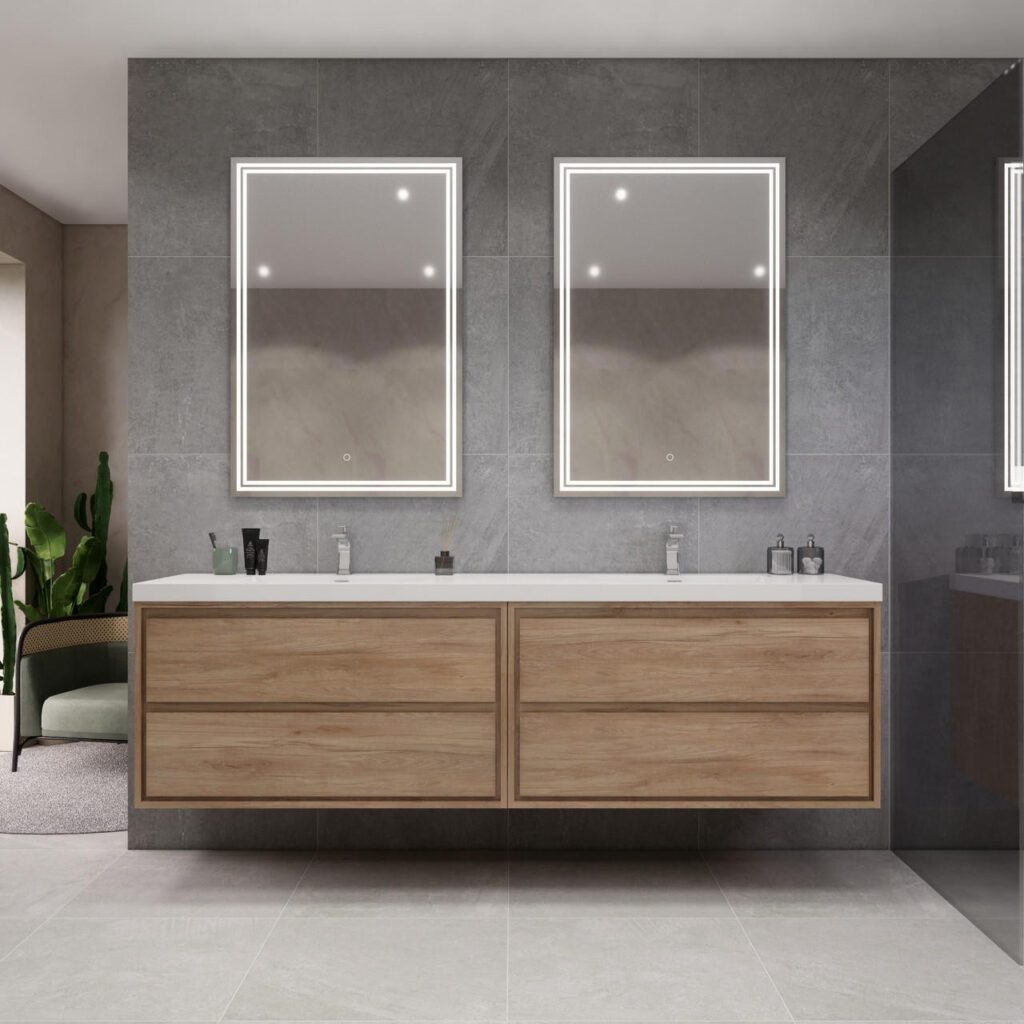
Advantages:
- ✓ Cleaner aesthetic (contemporary look)
- ✓ Easy to install at correct height
- ✓ Natural knee clearance (open below)
- ✓ Easier to clean around
Height Installation:
- Mounting height: 30.5-31.5″ (depends on countertop thickness)
- Final surface: 32-34″
- Bracket positioning: Critical for stability
- Load capacity: Typically 150-300 lbs (verify with mounting hardware)
Best For: ADA-compliant properties, luxury hotels, modern design
Typical Cost: $300-$800 (vanity) + $200-$400 (installation)
Pedestal Sinks
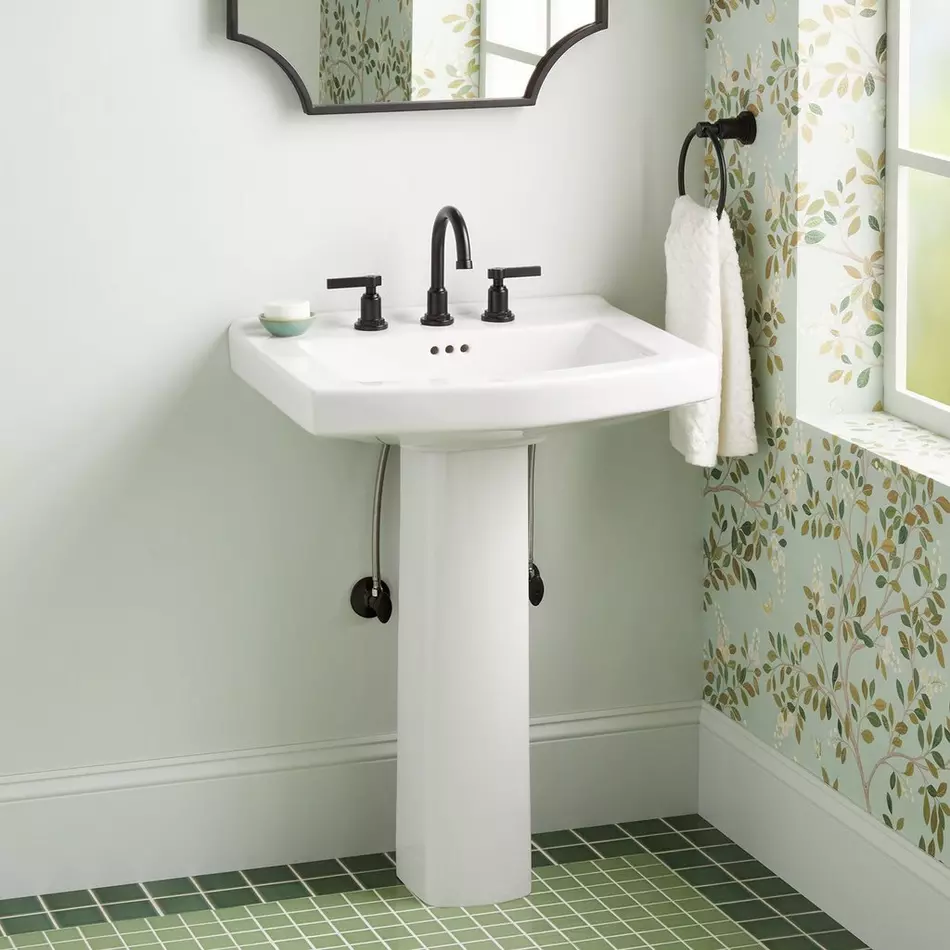
Height Standards:
- Standard pedestal height: 30-32″ (varies by model)
- Countertop surface: 30-34″ (depends on sink design)
- Advantage: Inherent knee clearance
ADA Compliance Challenges:
- Many pedestals designs don’t provide adequate knee clearance
- Limited options in accessibility range
- Modern accessible pedestals available but premium-priced
Typical Cost: $250-$600
Recommendation: Use only if explicitly ADA-compliant design; verify measurements before purchase
Vanity Cabinet (Traditional)
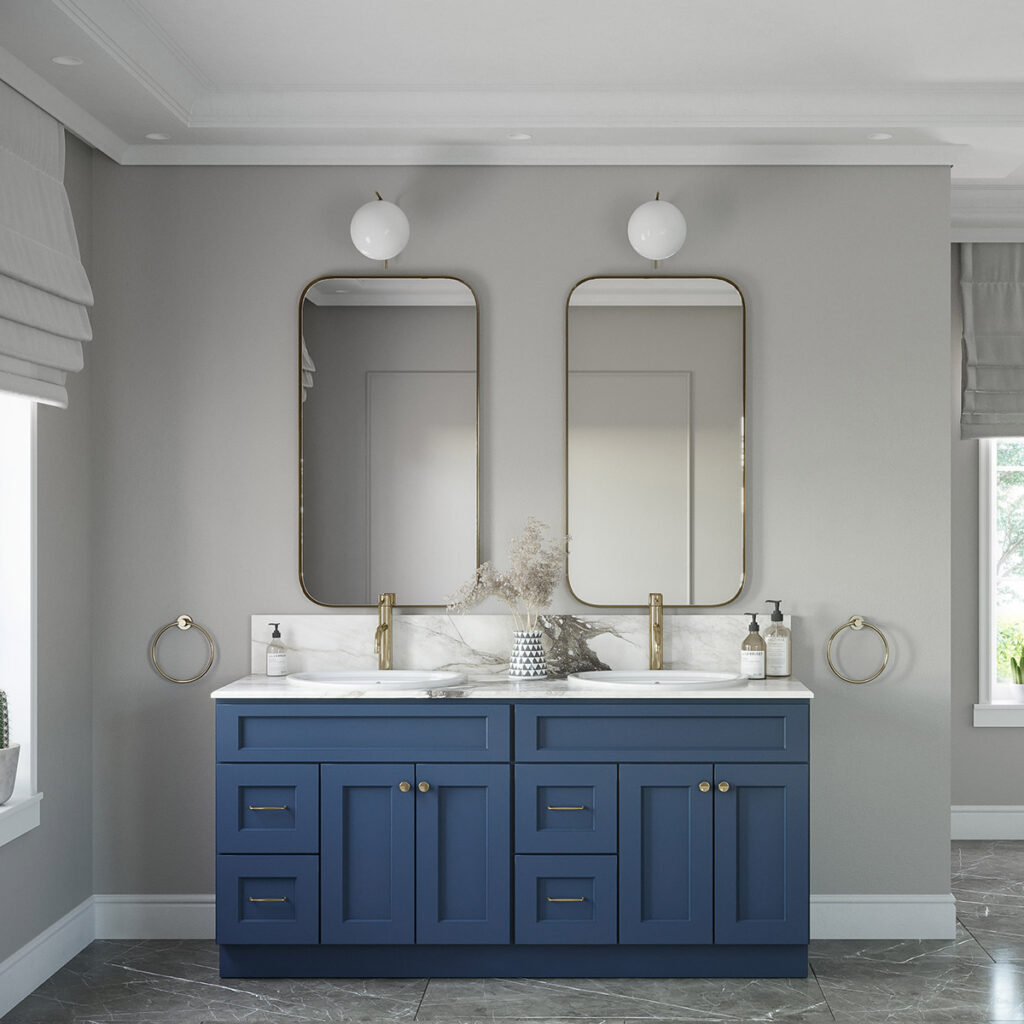
Height Standards:
- Base cabinet: 30-34″ (depending on design)
- With countertop: 32-36″ finished
- Requires knee space cutout for accessibility
ADA Compliance:
- Standard cabinets: Often NOT accessible (no knee space)
- Accessible versions: Specifically designed with open bases or under-counter space
- Cost premium: +15-25% vs. standard
Best For: Mid-range hotels where traditional look is preferred; requires careful specification
Typical Cost: $400-$1,200 (standard), $500-$1,500 (accessible design)
The Science of Guest Comfort: Beyond Minimum Standards
Anthropometric Data for Hotel Guest Heights
While ADA standards are based on average adults (5’4″-5’10”), hotels serve guests across a wide height range:
| Guest Height | Comfortable Vanity Height | Notes |
|---|---|---|
| Very Short (4’6″-5’2″) | 28-30″ | Children, elderly, some women; step stool often used |
| Short (5’2″-5’6″) | 30-32″ | Typical for women; standard height comfortable |
| Average (5’6″-5’10”) | 32-34″ | Targets average adult; ADA compliant |
| Tall (5’10”-6’2″) | 34-36″ | Comfort height; exceeds ADA but preferred by some |
| Very Tall (6’2″+) | 36″+ | Finds standard height slightly low but manageable |
Hotel Implication: A 32-34″ vanity accommodates approximately 85% of guest population comfortably. Guests outside this range adjust (use step stool or bend slightly).
Ergonomic Reach Analysis
Comfortable Sink Reach Distance (from body to faucet):
- Forward reach: 15-20″ (most comfortable)
- Lateral reach: 20-25″ (acceptable)
- Maximum reach: 25-30″ (difficult, not recommended)
Vanity Depth Implication:
- Standard countertop depth: 20-24″
- Ideal for accessibility: ≤20″ (allows comfortable reach)
- Faucet position: Center to back-left/back-right (allows forward reach)
Grab Bars: The Companion to Vanity Height
Critical Difference: Vanity vs. Toilet/Tub Grab Bars
Many hotel professionals incorrectly install a single set of grab bars expecting them to serve all fixtures. Each fixture requires specific grab bar placement:
Grab Bar Height Standard
Universal Requirement: 33-36″ above finished floor (measured to top of gripping surface)
Grab Bars at Vanity Area
| Location | Length | Position | Purpose |
|---|---|---|---|
| Above Vanity | 24-36″ | Centered above sink | Stabilize while washing |
| Side of Vanity | 18-24″ | End of counter | Support standing/transfer |
| Rear Wall | 36″+ | Behind vanity area | Stability while moving |
Installation Critical Points:
- Mount directly into wall studs (not drywall alone)
- Minimum 250 lbs. support capacity
- 1.5″ clearance from wall (allows firm grip)
- Diameter: 1.25-1.5″ (graspable for all users)
Different Hotel Properties: Specific Vanity Recommendations
Hotel Bathroom Vanity Specifications by Star Rating
2-Star Budget Property
Bathroom Size: 35-50 sq ft
Guest Demographic: Price-conscious; wide age range

Vanity Specification:
  Style: Simple wall-mounted or vanity cabinet
  Height: 32" finished surface
  Width: 24-30"
  Material: MDF or basic plywood with laminate
  Faucet: Single-handle lever (budget-friendly)
  Mirror: 18-24" wide, bottom edge 40-44"

ADA Compliance: ✓ Compliant
Accessibility Features: Basic (height only)
Grab Bars: Only at toilet/tub area (not vanity-specific)

Cost per Room: $400-$700
Life Expectancy: 8-10 years
3-Star Standard Property
Bathroom Size: 50-75 sq ft
Guest Demographic: Business travelers, families

Vanity Specification:
  Style: Floating vanity or quality cabinet base
  Height: 32-34" finished surface
  Width: 36-48"
  Material: Plywood with quality laminate or veneer
  Faucet: Single or double-handle lever, chrome or brushed nickel
  Mirror: 24-30" wide, bottom edge 38-42"

ADA Compliance: ✓ Fully Compliant (if ≤34")
Accessibility Features: Moderate
  - Open base for knee clearance
  - Lever faucet
  - Properly positioned mirror
  - Grab bar near vanity

Cost per Room: $800-$1,500
Life Expectancy: 10-15 years
4-Star Upscale Property
Bathroom Size: 75-120 sq ft
Guest Demographic: Business professionals, affluent leisure

Vanity Specification:
  Style: Floating vanity or high-end cabinet
  Height: 34" finished surface
  Width: 48-60" (may include double sinks)
  Material: Solid wood, plywood with high-quality veneer, or custom cabinetry
  Faucet: Designer single-handle or double-handle, high-arc spout
  Mirror: 24-36" wide, bottom edge 36-40"
  Additional: Backsplash, under-lighting, possibly integrated makeup desk

ADA Compliance: ✓ Fully Compliant at 34"
Accessibility Features: Integrated elegantly
  - Open floating design naturally provides access
  - Premium lever faucets
  - Backlit mirror (aesthetic + accessibility)
  - Integrated grab bars (architectural design)

Cost per Room: $2,000-$4,000
Life Expectancy: 15-20 years
5-Star Luxury Property
Bathroom Size: 120-200 sq ft
Guest Demographic: High-end clientele, executives, discerning travelers

Vanity Specification:
  Style: Custom floating vanity or built-in cabinetry
  Height: 34" finished surface (compliance becomes luxury standard)
  Width: 60-120" (may include multiple sinks, makeup area)
  Material: High-end solid wood, custom finishes, exotic veneers
  Faucet: Premium designer faucets, possibly automatic/touchless
  Mirror: Oversized (36-48"), possibly backlit or frameless
  Additional: Heated towel racks, custom lighting, integrated storage
  Spa Features: Possibly separate makeup vanity, higher-end accessories

ADA Compliance: ✓ Fully Compliant
Accessibility Features: Seamlessly integrated
  - Floating vanity seen as modern/premium (not accommodative)
  - Touchless faucets (luxury + accessibility)
  - Spa-like design with accessibility integrated
  - Grab bars designed as architectural elements

Cost per Room: $5,000-$15,000+
Life Expectancy: 20+ years
Common Questions & Answers
Q: Can we use 36-inch “comfort height” vanities in a hotel?
A: Only in non-guest areas or with dedicated accessible guest rooms at lower height. Standard guest rooms must comply with 34″ maximum. Using 36″ vanities exposes the property to ADA liability.
Q: What if some guests complain the vanity is too low?
A: This is rare and manageable (guests can step back slightly). Complaints about accessibility violations (vanity too high) are serious legal exposures. Choose lower height for legal safety; occasional comfort complaints are acceptable risk.
Q: Do we need grab bars directly above the vanity sink?
A: Not required by ADA specifically for sinks; only for toilets and tubs. However, a horizontal bar (24-36″ long) above the vanity at 33-36″ height improves safety and is recommended for hotels serving elderly guests.
Q: How do we specify vanity height when ordering from suppliers?
A: Always specify “finished surface height” and include the phrase “measured to the top of sink rim or counter surface, whichever is higher, not exceeding 34 inches.” Never order by vanity model number alone without verifying final height.
Q: What’s the best vanity height for a mixed-age hotel?
A: 32 inches is optimal. It comfortably serves 85% of guests, complies fully with ADA, and accommodates short guests/children while only slightly lower than ideal for tall guests (who adjust naturally).
Q: If we’re renovating, must we upgrade all vanities to current standards?
A: ADA requires compliance for any area undergoing renovation. If you’re refinishing a bathroom, you must bring vanities into compliance (≤34″). Merely replacing finishes might not trigger requirement, but height issues must be addressed if bathroom is functionally upgraded.
Q: What about accessible guest rooms—can they have different vanity heights?
A: Yes. Accessible rooms can have 32″ vanities (standard) and should focus on other accessibility features (grab bars, clear floor space, etc.). However, 34″ vanities work equally well and ensure all guests—not just those in “accessible rooms”—can use the facility comfortably.
Conclusion: Height as a Strategic Hotel Decision
Bathroom vanity height is far more than a design detail—it’s a strategic decision that impacts ADA compliance, guest satisfaction, liability exposure, and long-term property value.
The Key Principle: 34 inches maximum height is not a limitation; it’s a market opportunity. Modern luxury hotels embrace 34″ vanities as part of contemporary design, not as a compromise. Accessible bathrooms look and feel as beautiful as any other when designed with intention.
The Hotel Owner’s Dilemma: Budget and economy properties benefit from standard 32″ vanities (cost-effective, accessible). Luxury properties should specify 34″ vanities as their standard (modern aesthetic, full accessibility). Mid-range properties walk a line between cost and accessibility.
The Legal Reality: Non-compliance with ADA bathroom standards is increasingly prosecuted. With average settlements of $15,000-$50,000 per violation, and properties often having 50-200 bathrooms, the risk exposure is significant. Correct height specification is cheap insurance.
The Guest Experience: When done right, accessible bathrooms work beautifully for everyone. No guest notices they’re in an “accessible” bathroom—they just enjoy a well-designed space that works for their body.