
Furniture lead times from China involve much more than factory production. A hotel or commercial furniture order must move through drawings, samples, material release, production, inspection, packing, freight booking, customs, inland delivery, and installation.
Therefore, buyers should not ask only, “How many days does production take?” A more useful question is, “What is the full critical path from design approval to furniture handover at the site?”
For a hotel FF&E project, the total timeline depends on product complexity, order quantity, materials, sample approvals, factory capacity, shipping route, customs process, warehouse plan and site readiness.
This guide explains the main stages of furniture lead times from China. It also shows hotel owners, procurement teams, and design firms how to reduce avoidable delays.

Quick answer: Build a project-specific schedule instead of relying on one supplier lead-time number. Separate drawings and samples, production, inspection, export handling, ocean transit, customs, local delivery and installation. Then add a realistic buffer for approvals, logistics changes and site conditions.
Key Takeaways
- Furniture lead times from China include much more than factory production. They also include drawings, samples, material release, inspection, shipping, customs, delivery and installation.
- Production time depends on product complexity, material availability, order quantity, approved drawings, factory workload and packaging requirements.
- Ocean transit changes by origin port, destination port, carrier, routing, transshipment and seasonal demand.
- Red Sea and Suez routing remain volatile. Therefore, buyers should confirm the actual route and contingency plan for the booked service.
- Customs clearance can create delays when product documents, values, classifications or wood-product information do not match the shipment.
- Site readiness is also part of the schedule. Furniture cannot install smoothly if storage, freight lifts, room access, floor protection and final dimensions are not ready.
- A project should use a critical path with milestone dates, risk owners and contingency time.
- Hongye supports qualified furniture projects with drawings, sample coordination, production planning, export packing, inspection coordination and shipment documentation where applicable.
What Does Furniture Lead Time Include?
A furniture supplier may quote a production lead time. However, production is only one stage of the overall delivery process.
For example, a hotel project may need time for:
- Furniture drawings.
- Material approval.
- Finish approval.
- Upholstery approval.
- Pre-production sample review.
- Hardware confirmation.
- Material ordering.
- Bulk production.
- Quality inspection.
- Export packing.
- Container booking.
- Origin handling.
- Ocean freight.
- Destination customs.
- Inland delivery.
- Warehouse receiving.
- Room delivery.
- Installation.
- Punch-list closeout.
As a result, a supplier’s factory lead time should not be treated as the full delivery timeline.
Planning rule: Ask suppliers to show the schedule from approved drawings to site delivery, not only the production days.
Build a Critical Path, Not One Number
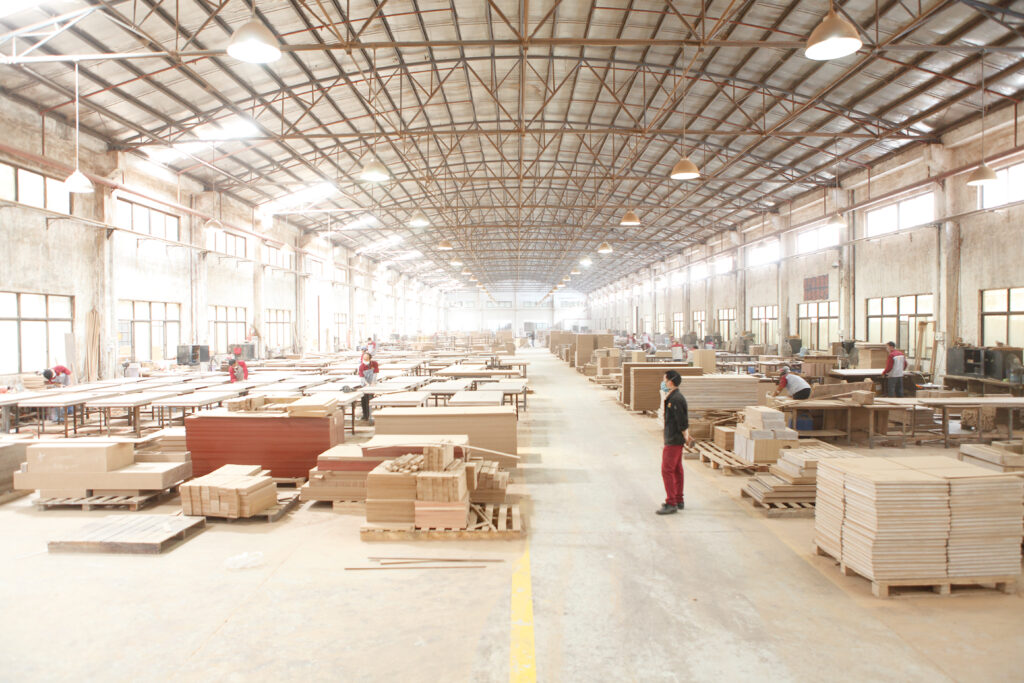
Every furniture project has a critical path.
The critical path shows which approvals, materials, production tasks and logistics events control the final delivery date.
For instance, a hotel headboard may need custom veneer. The veneer cannot be ordered until the buyer approves the finish. Production cannot start until the veneer arrives. Packing cannot begin until finishing is complete. Finally, the container cannot sail until the shipment passes inspection and reaches the port cut-off.
Therefore, one delayed finish approval can move the entire schedule.
A strong FF&E procurement programme should identify:
- Design freeze date.
- Drawing approval date.
- Material approval date.
- Sample approval date.
- Long-lead material release.
- Production start.
- In-process inspection.
- Pre-shipment inspection.
- Container booking.
- Port cut-off.
- Vessel departure.
- Estimated arrival.
- Customs clearance.
- Warehouse delivery.
- Site delivery.
- Installation start.
- Handover date.Critical-path rule: The final hotel opening date should not depend on one optimistic factory completion date.
The Main Stages of Furniture Delivery
The following table shows the core stages that buyers should include in a furniture lead-time plan.
| Stage | What Happens | Main Risk | Buyer Action |
|---|---|---|---|
| Drawings and samples | The team approves drawings, materials, finishes and PP samples | Revision rounds and unclear feedback | Define approval owners, deadlines and revision limits |
| Material release | The supplier orders board, veneer, hardware, fabric, foam and packaging | Long-lead materials or substitutions | Approve BOM and material schedule before release |
| Production | The factory cuts, assembles, finishes and packs furniture | Capacity limits, holidays and late design changes | Track milestone dates and factory progress |
| Inspection | The buyer, supplier or third party checks products | Defects and corrective actions | Book inspection windows and define the quality plan |
| Origin handling | The shipment is booked, loaded and delivered to port | Missed cut-offs, blank sailings or equipment shortage | Reserve freight window early |
| Ocean transit | The vessel moves cargo from China to the destination port | Route changes, transshipment and port congestion | Confirm carrier schedule and backup plan |
| Destination delivery | Customs, terminal release, drayage and warehousing take place | Documentation issues, exams, rail dwell and storage limits | Prepare documents and receiving plan |
| Installation | Furniture moves into rooms or public areas | Site unreadiness, missing room sets or unfinished trades | Coordinate phased delivery and installation sequence |
What Usually Delays Hotel Furniture From China?
Many furniture delays do not begin at the factory.
Instead, they often begin with unclear drawings, late samples, missing approvals, incomplete documents or unready sites.

1. Unapproved Drawings
A factory cannot safely produce custom furniture from unfinished drawings.
For example, a hotel desk may need a final power-module location. A headboard may need confirmed wall brackets. A wardrobe may need a revised room dimension.
Therefore, buyers should issue the latest drawing revision before production starts.
2. Material and Finish Changes
A small change can affect a large production programme.
For instance, changing veneer species, laminate colour, fabric code, drawer slide, power module or metal finish may require new sourcing, samples, drawings and quality checks.
As a result, buyers should control changes through a written approval process.
3. Long-Lead Materials
Some materials need more time than others.
These may include:
- Custom veneer.
- Stone.
- Hardware.
- Power modules.
- Special fabric.
- Leather.
- Foam.
- Glass.
- Metal components.
- Custom laminates.
- Outdoor materials.
- Imported accessories.
Therefore, the supplier should identify long-lead items early.
4. Factory Capacity and Holiday Periods
Furniture factories may have limited capacity during peak production periods.
In addition, public holidays can affect material suppliers, trucking, ports, inspection companies and customs offices.
Therefore, buyers should ask for a production plan that shows the factory’s expected start date, key milestones and packing date.
5. Inspection and Corrective Actions
Inspection can reveal finish problems, missing hardware, incorrect dimensions, packing weaknesses or functional issues.
A quality inspection does not cause the delay. Instead, it identifies problems that would create a bigger delay at the destination.
Therefore, buyers should allow time for corrective action before the planned vessel departure.
6. Freight Booking and Port Cut-Offs
A factory may complete furniture before the shipment can leave.
However, the cargo still needs a booking, container equipment, trucking, export documents, port gate-in and vessel loading.
Missed port cut-offs, rolled bookings or blank sailings can delay the cargo even when the goods are ready.
Therefore, the freight booking should begin before the final packing date.
7. Customs and Documentation
Customs clearance depends on accurate documents.
The commercial invoice, packing list, bill of lading, product descriptions, declared values, country of origin and tariff classification should match.
For wood-based furniture, buyers may also need to confirm destination-market wood-product or import-document requirements.
Therefore, the customs broker should receive draft shipment documents before vessel arrival.
8. Site Readiness
A hotel may receive containers before the building is ready.
For example, the site may lack:
- Secure storage.
- Freight lifts.
- Final flooring.
- Completed walls.
- Room numbers.
- Floor protection.
- Clear delivery access.
- Finished MEP work.
- Installation permits.
- Waste-removal arrangements.
As a result, early arrival can create storage cost, damage risk and installation delays.
Delay rule: Furniture delivery is not complete when the factory packs the goods. It is complete when the hotel receives, installs and accepts the furniture.
Ocean Transit From China: Planning Ranges
Ocean transit depends on the origin port, destination port, carrier, route, vessel rotation, transshipment and terminal conditions.
Therefore, buyers should treat transit ranges as planning tools, not guaranteed delivery dates.

| Destination Region | General Planning Range | Buyer Considerations |
|---|---|---|
| US West Coast | Often around two to three weeks port to port | Direct services may be available; inland rail and trucking add time |
| US East Coast and Gulf | Often around four to six weeks port to port | Routing may use Panama, Suez, Cape or transshipment services |
| Canada West Coast | Often around two to three weeks port to port | Inland rail to eastern destinations adds time |
| North Europe | Often around five to eight weeks, depending on route | Suez or Cape routing changes can affect schedules |
| Middle East | Often around three to five weeks | Port rotation, transshipment and local clearance affect final timing |
| Australia and New Zealand | Often around three to five weeks | Transshipment, seasonal demand and destination handling can affect timing |
Public freight sources commonly show broad China-to-US planning ranges rather than one universal transit time. For example, Shenzhen-to-Los Angeles ocean transit may be around two weeks under some services, while East Coast and inland routes take longer.
Transit rule: Ask the freight forwarder for the current carrier schedule after booking. Do not rely only on a general online transit-time estimate.
Red Sea and Route Volatility
Red Sea and Suez routing can affect Asia-to-Europe and some Asia-to-US East Coast services.
However, conditions can change quickly.
In September 2026, some carriers announced the gradual return of selected services through the Suez Canal. Meanwhile, other carriers continued to use selective routing or Cape of Good Hope diversions because of operational and security concerns.
Therefore, buyers should not assume one fixed route for every shipment.
Before booking, confirm:
- Carrier name.
- Service name.
- Origin port.
- Transshipment port.
- Planned route.
- Destination port.
- Estimated port-to-port transit.
- Contingency route.
- Blank-sailing policy.
- Roll-over procedure.
- Cargo cut-off date.
A Cape diversion can materially extend transit time. However, the impact varies by carrier, port rotation, destination and vessel schedule.
Route rule: Check the booked vessel and service. General news about the Red Sea cannot replace a carrier-specific confirmation.
Customs, Tariffs and Import Documents
Tariffs and import requirements can affect both cost and schedule.
However, duty treatment depends on the exact product classification, origin, construction, trade rules, exclusions and current regulations.
For example, furniture may have different tariff treatment based on:
- HTS or customs classification.
- Country of origin.
- Wood, metal or upholstered construction.
- Product use.
- Component materials.
- Section 301 treatment, where applicable.
- Anti-dumping or countervailing-duty exposure.
- Product-specific exclusions.
- Current trade-policy changes.
Therefore, buyers should request a landed-cost review from a qualified customs broker before placing an order.
For wood-based furniture, the buyer should also confirm current import-document requirements with the broker and relevant destination authorities.
Public sources show that tariff exposure on Chinese-origin furniture can vary by classification and policy. Therefore, buyers should not use one general tariff percentage for every furniture item.
Customs rule: Confirm classification, duty, origin and documentary requirements before production begins. Do not wait until the vessel is already at sea.

Incoterms and Schedule Responsibility
Incoterms define tasks, costs and risk at agreed delivery points.
However, Incoterms do not replace a detailed logistics plan.
The purchase contract should state the chosen Incoterm, named place or port, delivery milestones, document responsibilities and customs roles.
| Incoterm | Buyer Should Confirm |
|---|---|
| EXW | Who collects the goods, handles export clearance, books freight and pays origin charges? |
| FOB | Which named port applies, when does risk transfer under Incoterms® 2020 and who books ocean freight? |
| CIF | Which insurance cover is included, and who manages destination clearance and inland delivery? |
| DDP | Who is the importer of record, who handles duties, customs filings, bond requirements and local compliance obligations? |
Under FOB, risk transfer and obligations should follow the agreed Incoterms® 2020 definition and named port.
Under DDP, the seller generally undertakes delivery duties, including import clearance and duties, subject to the contract and local rules.
Therefore, buyers should confirm importer-of-record, customs-bond and compliance responsibilities in writing.
Incoterm rule: Choose EXW, FOB, CIF, DDP or another term based on freight visibility, customs capability, risk allocation and landed-cost transparency.
How to Reduce Avoidable Delays
Buyers cannot control every vessel, customs exam or port condition.
However, they can reduce many preventable delays.
Freeze the Specification
First, approve drawings, materials, hardware, finishes and packaging requirements before mass production.
A change after production release may require revised drawings, new materials, rework, re-inspection and a new packing plan.
Release Long-Lead Materials Carefully
Next, identify long-lead materials early.
In some cases, the supplier may begin controlled sourcing after preliminary approval. However, bulk production should not begin until the required drawings, materials and change-control conditions are approved.
Book Inspection Early
Then, reserve the inspection window before the expected packing date.
The project should define the inspection scope, defect criteria, sample plan, corrective-action process and release authority.
Where a project uses sampling inspection, the agreement should state the applicable ISO 2859-1 plan, inspection level, lot definition, defect classes and acceptance criteria. “AQL 2.5” alone is not a complete inspection plan.
Reserve Freight Before Goods Are Ready
In addition, begin freight planning before production finishes.
Confirm:
- Carrier options.
- Sailing window.
- Equipment availability.
- Port cut-off.
- Documentation deadline.
- Cargo-ready date.
- Alternative booking.
- Destination delivery plan.
Prepare Customs Documents Early
Meanwhile, send draft invoice, packing list, product descriptions and classification information to the customs broker before arrival.
This gives the broker time to identify missing information or potential classification questions.
Phase Large Programmes
Finally, large hotel projects may benefit from phased shipping.
For example, the buyer may ship sample rooms, early-installation floors, guestrooms, public areas and spare parts in planned stages.
However, phased shipments require clear room-set labels, storage planning, installation sequencing and delivery coordination.
Planning rule: The best schedule is not the shortest promise. It is the schedule that clearly identifies approvals, risks, responsibility and recovery options.
Hongye Export Planning Support
Hongye supports qualified hotel and commercial furniture projects with drawings, samples, production planning, export packing, inspection coordination and shipment documentation.
After reviewing the room matrix, product scope, materials, approval status, quantity and destination, Hongye can provide a project-specific production and delivery schedule.
Depending on the project, the team can also discuss FOB, CIF or other agreed delivery arrangements. These arrangements remain subject to the contract, destination requirements, freight availability and buyer responsibilities.
Hongye states that it has more than 30 years of commercial furniture manufacturing experience and operates a 300,000-square-metre production facility in Heshan, Jiangmen, Guangdong, China.
Before production release, buyers should verify the agreed schedule, inspection plan, Incoterm, customs responsibility, packaging scope, installation requirements and warranty terms.
Frequently Asked Questions
How long does it take to ship furniture from China to the US?
Ocean transit time varies by origin port, destination port, carrier and route.
For planning purposes, China-to-US West Coast ocean transit often takes around two to three weeks. China-to-US East Coast or Gulf routes often take longer because of routing, canal use, transshipment or inland connections.
In addition, buyers should allow time for export handling, customs clearance, terminal release, inland delivery and receiving.
Why do Chinese furniture suppliers quote production lead times instead of delivery lead times?
A factory controls production more directly than ocean freight, customs and inland delivery.
Therefore, many suppliers quote only the factory production period unless the contract includes freight and delivery responsibilities.
Buyers should request a complete schedule from drawing approval through delivery and installation.
What causes container shipping delays from China?
Common causes include late approvals, material shortages, factory capacity limits, inspection corrections, missed vessel cut-offs, blank sailings, route changes, transshipment delays, customs exams, incomplete documents, port congestion, rail dwell and site unreadiness.
How can I get furniture from China faster?
First, freeze drawings and materials early. Next, identify long-lead items before production begins. Then, reserve inspection and freight windows before goods are ready.
In addition, prepare customs documents early and use a phased delivery plan for large programmes.
However, buyers should not sacrifice sample approval, inspection or packing quality only to shorten the schedule.
Is the Red Sea still affecting container shipping in 2026?
Yes, route conditions remain changeable.
Some carriers have resumed selected Suez Canal services, while others continue to use selective routing or Cape diversions. Therefore, buyers should confirm the route, service and contingency plan for the actual booked shipment.
How do tariffs affect furniture lead time?
Tariffs primarily affect cost. However, policy changes can also affect booking patterns, customs scrutiny and importer planning.
Because tariff treatment depends on product classification, origin and current regulations, buyers should confirm duty exposure with a qualified customs broker before placing an order.
What is a realistic hotel FF&E timeline when buying from China?
A realistic FF&E timeline depends on design freeze, samples, custom materials, production, inspections, freight route, customs, site access and installation.
For complex hotel projects, buyers should build a detailed critical path instead of relying on one generic PO-to-site number.
The schedule should include approval time, factory milestones, shipping windows, customs preparation, storage, room delivery, installation and punch-list closeout.
Can Hongye supply furniture for overseas hotel projects?
Hongye supports qualified hotel and commercial furniture projects with custom furniture development, samples, production planning, export packing, inspection coordination and shipment documentation.
The project schedule depends on final drawings, materials, quantity, production capacity, destination, freight route and agreed delivery term.
Plan the Whole Journey
Furniture lead times from China begin before production and end after installation.
First, the project team must approve drawings, materials and samples. Next, the supplier must source materials, manufacture furniture, inspect goods and pack the shipment. Then, the cargo must move through booking, ocean transit, customs, delivery and installation.
Therefore, hotel buyers should plan the entire journey.
A clear critical path, early approvals, defined inspection stages, current freight information and a ready site can reduce many avoidable delays.
By treating furniture delivery as a full procurement and logistics programme, rather than one factory lead-time number, buyers can protect hotel opening dates and manage schedule risk more effectively.