
In the rapidly evolving landscape of global education, the physical environment of a classroom is no longer viewed as a passive backdrop. As we look toward the 2026 academic year, school administrators, facility managers, and investors are increasingly recognizing that furniture is a strategic tool for student engagement, wellness, and long-term institutional value.
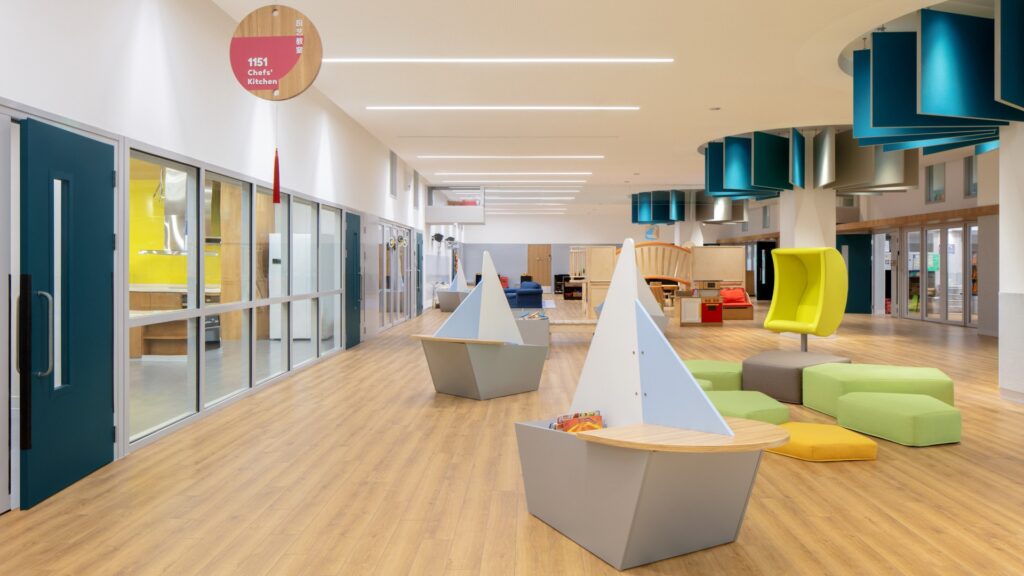
Whether you are outfitting a new “greenfield” international school or refurbishing a local K-12 district, understanding classroom furniture costs is essential for effective capital planning. This comprehensive guide breaks down the pricing tiers, material impacts, hidden expenses, and the return on investment (ROI) of modern educational environments.
1. The Global Outlook: Why 2026 is a Turning Point for Education Procurement
The global educational furniture market is projected to reach approximately $6.14 billion in 2026, driven by a massive shift toward ergonomic, modular, and technology-integrated solutions.
Several factors are influencing prices for the 2026 cycle:
- Material Volatility: While lumber prices saw a decline in 2022, they experienced a 14% resurgence in 2023 due to supply chain complications.
- The Ergonomic Mandate: Over 54% of schools globally are now prioritizing ergonomic furniture to combat the 1,000+ hours students spend sitting annually.
- Sustainability Standards: More than 40% of new educational products now feature sustainable or recycled materials, reflecting a shift toward “Green Labs” and eco-friendly campuses.
2. Total Classroom Outfitting Costs: Budgeting by School Type
One of the most common questions in procurement is: “How much does it cost to furnish a whole classroom?” The answer varies significantly based on student age, specialized curriculum needs, and the desired “flexibility” of the space.
2026 Budget Estimates by Learning Environment
Based on current market data and procurement trends, here is a breakdown of estimated total costs for outfitting a standard-sized classroom (approx. 20–30 students).
| Classroom / Center Type | Estimated Total Cost (USD) | Primary Budget Drivers |
| Toddler / Early Childhood | $4,800 – $7,400 | Safety certifications, nap mats, sensory tables |
| Head Start Center (20 Students) | $20,000 – $31,000 | Multi-zone learning centers, heavy-duty storage, mealtime sets |
| Standard K-12 Classroom | $15,000 – $19,500 | Ergonomic desks/chairs, teacher station, mobile whiteboards |
| Modern STEM / Science Lab | $185,000 – $220,000 | Chemical-resistant casework, fume hoods, integrated gas/plumbing |
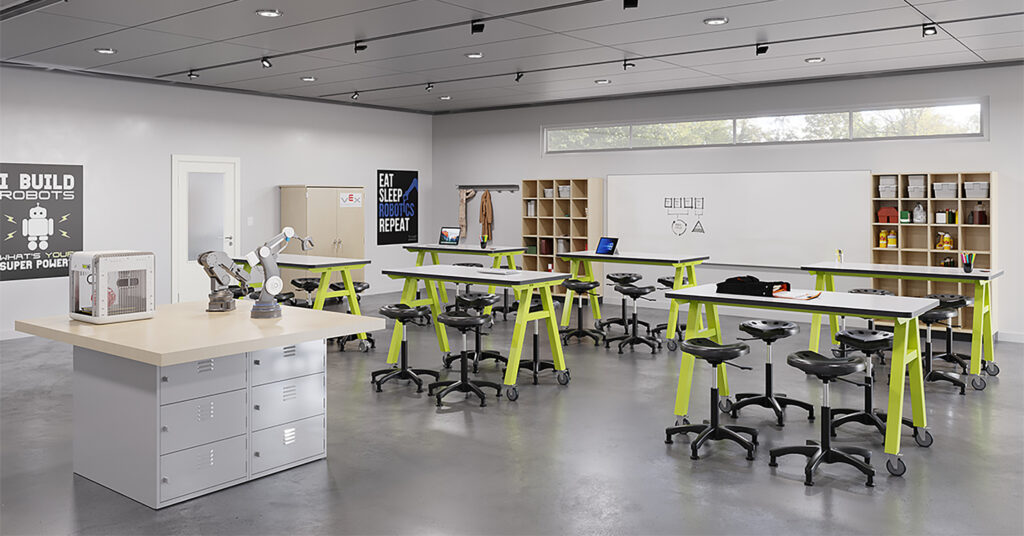
| Collaborative / Agile Space | $22,000 – $35,000 | Height-adjustable desks, “active” seating (wobble stools), modular tech-pods |
3. Itemized Pricing: School Desk and Chair Prices 2026
To build a granular budget, you must look at the “per-unit” cost. In 2026, the market is bifurcated between traditional fixed furniture and “agile” solutions.
Seating Solutions
- Standard Polypropylene Stacking Chairs: $26 – $75 per unit. These are cost-effective but offer limited ergonomic support.
- Ergonomic Student Chairs (BIFMA Compliant): $79 – $150 per unit. These include lumbar support and “waterfall” edges to improve circulation.
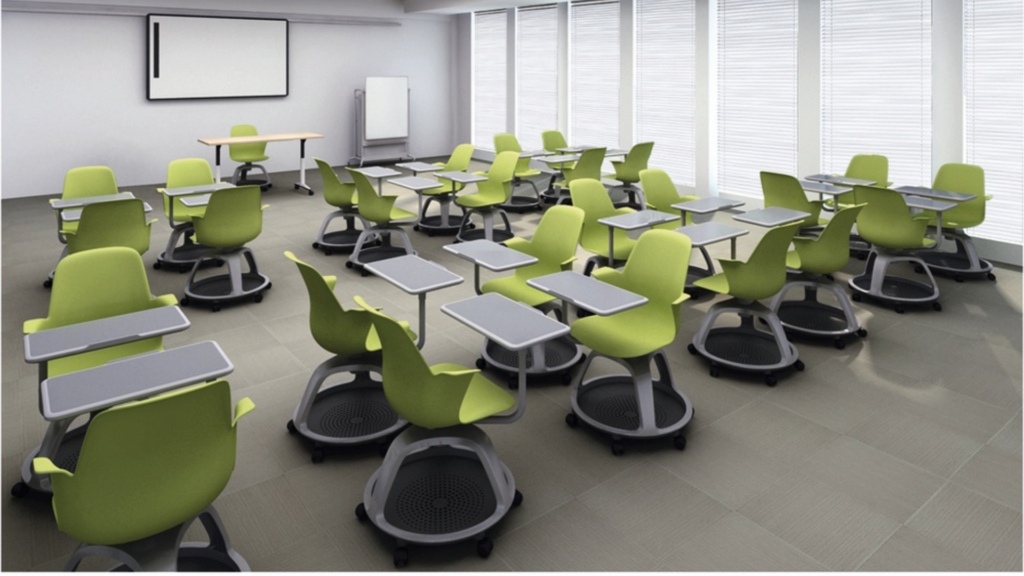
- Active Seating (Wobble Stools / Rockers): $60 – $300 per unit. These encourage gentle movement to help restless students focus.
Desks and Tables
- Traditional Fixed-Leg Desks: $50 – $120 per unit. Simple and durable, but limit classroom reconfiguration.
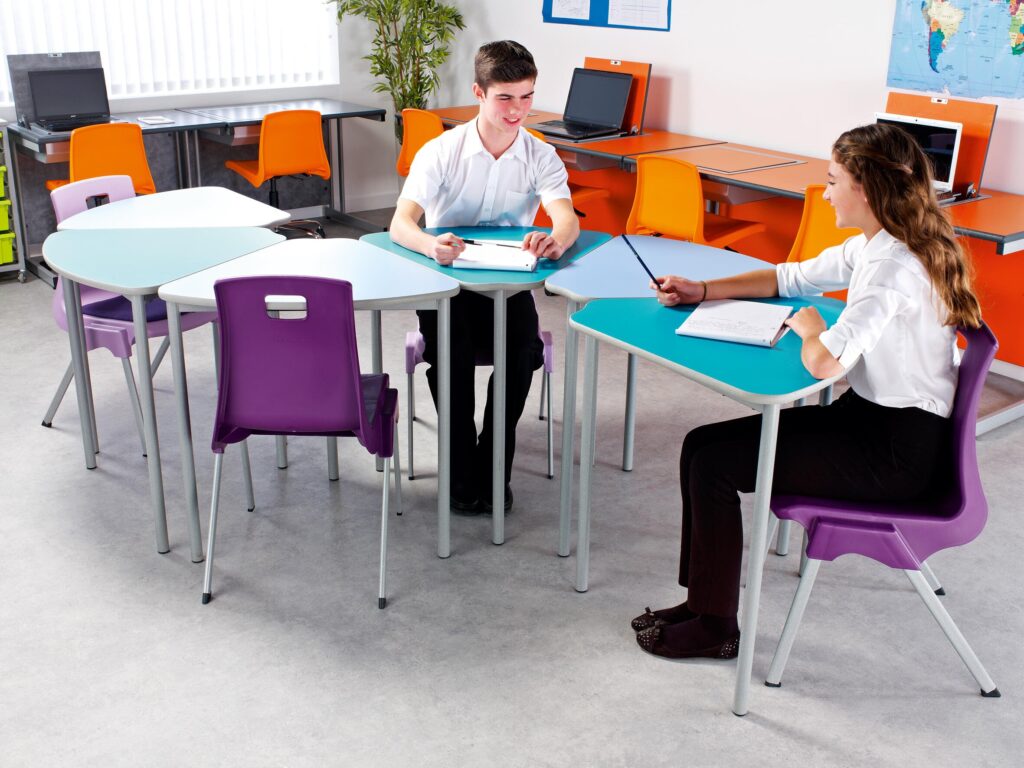
- Individual Ergonomic / Mobile Desks: $250 – $450 per unit. These often feature lockable casters and “boomerang” shapes for group nesting.
- Height-Adjustable (Sit-Stand) Desks: $300 – $650+ per unit. These allow students to switch between sitting and standing, a major trend for 2026 wellness programs.
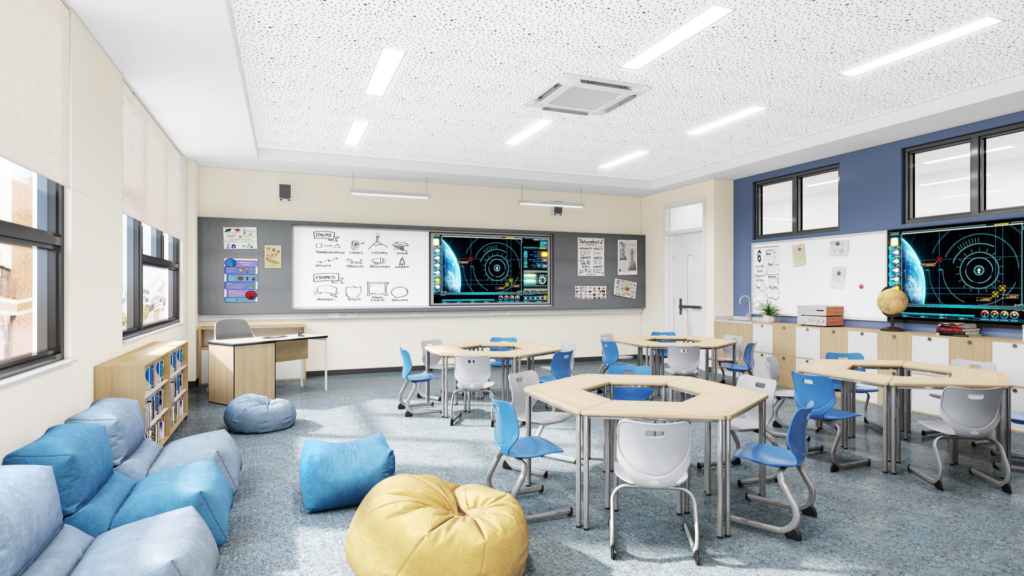
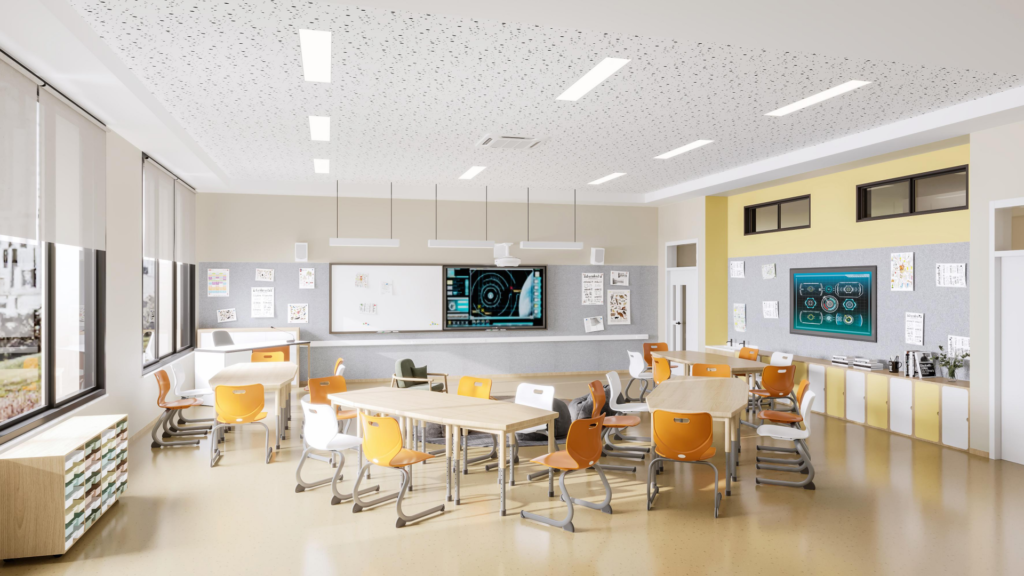
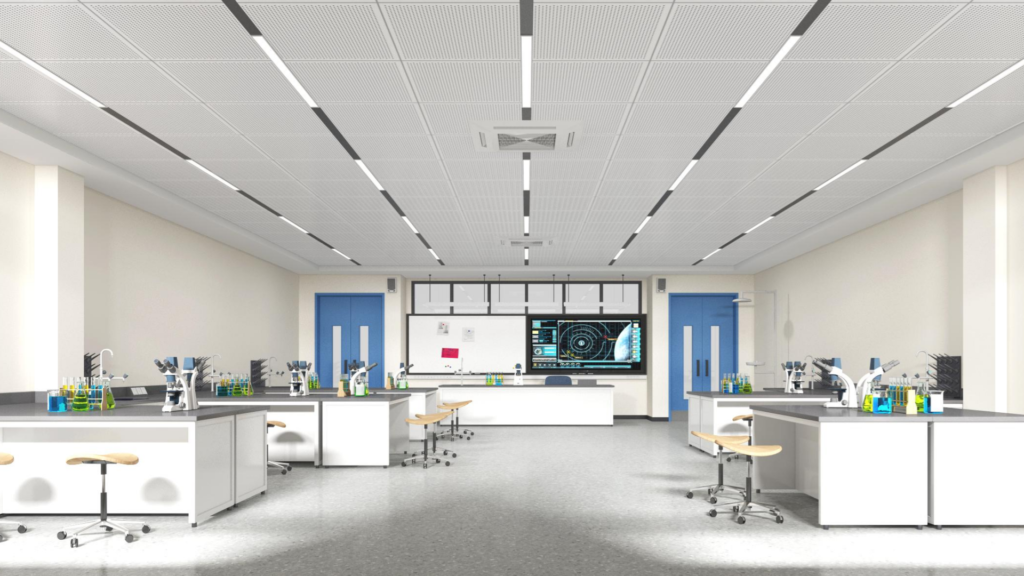
4. Case Study: Charterhouse Lagos – A Blueprint for High-End Education FF&E
When planning a world-class institution, the furniture must match the architectural vision. The Charterhouse Lagos project in Nigeria is a prime example of a “greenfield” investment exceeding $150 million.
As the first British independent school in West Africa, Charterhouse Lagos required a furniture solution that could support a sprawling 70-hectare campus and specialized facilities:
- STEM & Science-Tech Labs: Furnished with industrial-grade, chemical-resistant workbenches designed for longevity.
- 800-Seat Performing Arts Theatre: Required custom-engineered auditorium seating with focus on acoustics and sightlines.
- Collaborative Learning Spaces: The school utilized modular “agile” furniture to allow classrooms to transition from traditional lectures to group workshops seamlessly.
Expert Insight: For projects of this scale, working with a manufacturer that provides end-to-end service—from CAD design and site measurement to global logistics and professional installation—is critical to staying on budget.
5. The “Durability Dividend”: ROI Analysis of Ergonomic Furniture
While a $300 ergonomic desk seems expensive compared to a $100 standard desk, the Total Cost of Ownership (TCO) often favors the higher-quality investment.
The Human and Financial ROI
- Productivity Gains: Research from Cornell University indicates that properly adjusted ergonomic seating can reduce musculoskeletal disorders (MSDs) by 40%.
- Engagement: Studies show that students using adjustable-height desks demonstrate higher engagement and better task performance than those in traditional rigid seating.
- Longevity: Commercial-grade furniture (tested to BIFMA standards) is designed for a 10–20 year lifespan, whereas “economy” retail-grade furniture often requires replacement every 1–3 years.
ROI Calculation Example (500-Student School):
Investing in ergonomic chairs ($150 each) vs. economy chairs ($50 each):
- Economy Chairs: $25,000 initial + 2 replacements over 15 years = $75,000.
- Ergonomic Chairs: $75,000 initial + zero replacements = $75,000.
- The Edge: The ergonomic option delivers better health outcomes and higher student focus for the same long-term cost.
6. Hidden Costs: Shipping, Logistics, and Compliance
When budgeting for school furniture, the purchase price is only roughly 50–60% of the total impact. Administrators must account for:
- Shipping & Freight (10–20% of Budget): Furniture is bulky. Shipping costs vary based on whether the items are “Knock-Down” (KD) or fully assembled. Assembled pieces save labor but cost significantly more to ship due to volume.
- Professional Installation ($25 – $50 per piece): Complex items like STEM casework or height-adjustable desks often require specialized teams to ensure safety and warranty compliance.
- Compliance Testing: Ensure your vendor meets ANSI/BIFMA X6.1-2018 (for educational seating) or BS EN 1729 (for European ergonomic standards). Certified furniture minimizes liability and ensures user safety.
- Annual Maintenance (5–15% annually): Budgeting for tightening bolts, replacing glides, and refinishing surfaces will extend your furniture’s life by a decade.
7. Procurement Strategies: Stretching the 2026 School Budget
Smart schools don’t just “buy”; they source strategically.
- Work Directly with Manufacturers: Going factory-direct can eliminate retail markups of 30–50%.
- The “Kit of Parts” Approach: Standardize supply lists across departments. Buying one approved desk model in bulk for an entire district can reduce costs by 10–30%.
- Phased Roll-outs: If the budget is tight, prioritize “Active Learning” zones or STEM labs first, and phase in general classroom updates over 3–5 years.
- Multi-Functional Design: Choose storage units that double as room dividers or benches with built-in shelves to maximize every square foot of your facility.
8. Conclusion: Designing for the Next Decade
Budgeting for K-12 classroom furniture in 2026 requires a balance between fiscal responsibility and educational vision. While the initial costs for high-quality, ergonomic, and modular pieces may seem steep, the long-term benefits—reduced maintenance, improved student wellness, and a future-proofed learning environment—far outweigh the savings of “budget-tier” alternatives.
As seen in flagship projects like Charterhouse Lagos, the most successful schools are those that treat their furniture not as an expense, but as a core component of their educational mission.
FAQ: Quick Budgeting Reference
- What is the average lifespan of commercial school furniture?
- Typically 10 to 20 years if maintained properly.
- Is BIFMA certification mandatory?
- While not always a legal requirement, it is the industry standard for verifying that furniture can withstand the “beating” of a high-traffic school environment.
- What is the most durable material for school desks?
- Steel frames with high-pressure laminate (HPL) or solid wood with water-based finishes are the most resilient for high-use classrooms.