
Sustainability in hotel furniture used to mean “we use less packaging.” In 2026, it means FSC-certified wood, low-VOC finishes, carbon-footprint documentation, and a manufacturer who can prove—with mill test reports—that their materials are what they claim.
This guide covers what actually matters in sustainable hotel furniture procurement in 2026, from FSC chain-of-custody to carbon-footprint documentation that satisfies LEED v4.1 and WELL v2.
What “Sustainable” Actually Means in 2026
| Claim | What It Meant in 2023 | What It Means in 2026 |
| “Eco-friendly” | Recycled packaging | FSC chain-of-custody + low-VOC finish + carbon declaration |
| “Green manufacturing” | LED lights in workshop | ISO 14064 carbon footprint report |
| “Sustainable wood” | “We use good wood” | FSC certificate with CoC number, mill test report |
| “Low-emission finish” | E1 formaldehyde (<1.5mg/L) | ULEF (ultra-low emitting, <0.05ppm) |
Bottom line: “Greenwashing” in furniture procurement has been largely eliminated by LEED v4.1 and WELL v2, which require documentary evidence, not just supplier claims.
FSC Certification: What to Look For
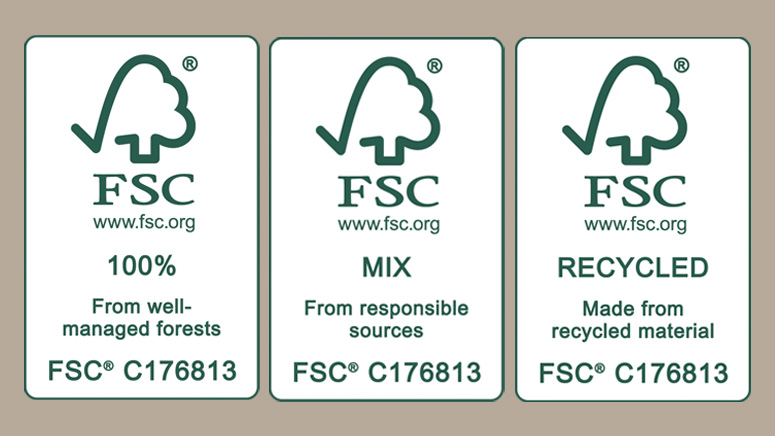
FSC 100% vs. FSC Mix vs. FSC Recycled
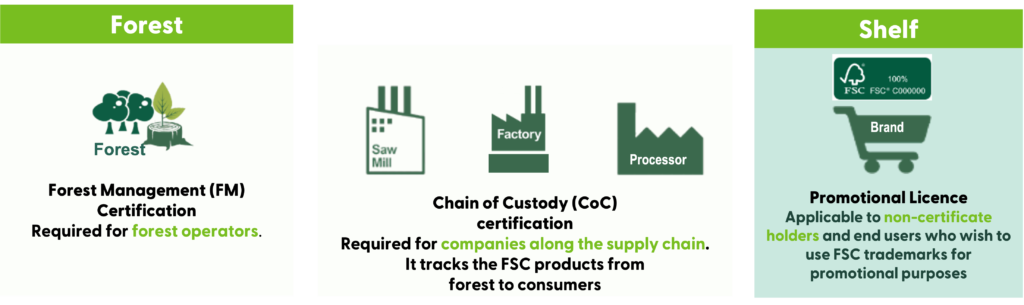
FSC Chain-of-Custody (CoC) Verification
| Type | What It Covers | Use Case |
| FSC 100% | All wood from FSC-certified forests | Premium projects, full traceability |
| FSC Mix | Mix of FSC-certified + controlled wood | Most commercial projects (cost-effective) |
| FSC Recycled | 100% recycled wood/alternatives | LEED points, not structural furniture |
A furniture manufacturer saying “we use FSC wood” is meaningless without CoC certification.
What to verify:
- FSC Certificate Number (format: XXX-COC-000000)
- Validity date (FSC certificates expire annually)
- Scope of certification (does it cover the specific wood species you’re buying?)
Red flag: “We can provide FSC wood” but no CoC certificate. They’re planning to buy FSC wood after you order—which means they don’t have the inventory and can’t guarantee FSC compliance.
Low-Carbon Manufacturing: What to Ask For
Carbon Footprint Documentation (ISO 14064)
In 2026, 34% of hotel developers in Europe and North America require a carbon footprint declaration from furniture suppliers (source: Hospitality Netwok Sustainable Procurement Survey, March 2026).
What “Low-Carbon” Actually Looks Like in Production
| Metric | What to Ask For | Acceptable Value |
| Manufacturing emissions | ISO 14064-1 report | <12 kg CO₂e per RMB 10,000 of output |
| Material transport | Logistics emissions calculation | <2.5 kg CO₂e per km per tonne |
| End-of-life | Disassembly instruction + material label | 85%+ recyclable by weight |
| Process | Standard (High-Carbon) | Low-Carbon (2026 Best Practice) |
| Wood drying | Kiln (coal-fired) | Radio-frequency (RF) drying (electric, can use renewables) |
| Finishing | Nitrocellulose (high-VOC) | Water-based PU (low-VOC, 68% lower carbon) |
| Metal fabrication | Coal-fired heat treatment | Electric induction (renewable-grid compatible) |
| Packaging | Single-use cardboard | Reusable plywood crates (12+ cycle life) |
Sustainable Material Specification: The 2026 Checklist
Wood (Structural Framing, Casegoods)
Foam (Upholstery)
Metal (Frames, Leg Hardware)
| Specification | Standard (Non-Sustainable) | Sustainable (2026) |
| Wood source | “Good quality” (no certificate) | FSC Mix minimum, CoC certificate |
| Moisture content | 8–12% (variable) | 8±1% (kiln-certified, RF-dried) |
| Veneer backing | Phenolic (non-recyclable) | FSC-certified paper backing |
| Finish | Nitrocellulose (high-VOC) | Water-based PU (ULEF certified) |
| Specification | Standard | Sustainable (2026) |
| Foam type | PU (polyurethane, petroleum-based) | Plant-based PU (30%+ soy content) |
| Density | 1.5–1.8 lb/ft³ | 2.0+ lb/ft³ (longer lifespan = less replacement) |
| Fire retardant | Chemical FR (some restricted in EU) | Phosphorus-based FR (REACH-compliant) |
| Specification | Standard | Sustainable (2026) |
| Steel source | No certificate | MIl test report (mill traceability) |
| Welding | MIG (gas) | TIG (cleaner, less waste) |
| Finish | Chrome plating (hexavalent Cr) | Powder coat (no hex-Cr, recycles overspray) |
LEED v4.1 and WELL v2: Furniture-Related Credits
LEED v4.1 (Interior Design + Construction)
WELL v2
| Credit | What It Requires | Furniture Contribution |
| MRc3: Building Product Disclosure | Product with EPD (Environmental Product Declaration) | Furniture with ISO 14025 EPD |
| MRc4: Material Ingredients | No RED List materials (LBC v4) | Furniture with HPD (Health Product Declaration) |
| IEQc2: Low-Emitting Materials | ULEF or Greenguard Gold | ULEF-certified finish + adhesive |
| Feature | What It Requires | Furniture Contribution |
| X01: Air Quality | ULEF-certified furniture | ULEF finish + adhesive |
| X04: VOC Restrictions | <0.05 ppm formaldehyde | ULEF or E0-grade substrates |
| X11: Biophilia | Natural wood visibility | FSC-certified wood with visible grain |
Common “Greenwashing” in Hotel Furniture
Tactic 1: “FSC-Certified” Without CoC Number
The claim: “All our wood is FSC-certified.”
The reality: They bought FSC wood once for a showroom sample. Production wood is non-certified.
How to verify: Ask for (1) FSC CoC certificate (valid, current), (2) Purchase invoice from FSC-certified supplier, (3) Random inspection of delivery—check for FSC labe on material packaging.
Tactic 2: “Low-VOC” Without ULEF Certification
The claim: “We use low-VOC finish.”
The reality: “Low-VOC” is unregulated. They reduced VOCs from 500 g/L to 300 g/L and call it “low.” ULEF requires <50 g/L.
How to verify: Ask for ULEF certification (ULTA or Intertek-issued) with the specific product model named.
Tactic 3: “Sustainable Packaging” (But It’s Still Single-Use)
The claim: “We use recyclable cardboard packaging.”
The reality: Cardboard is “recyclable” but 40% ends up in landfill. “Sustainable” in 2026 means reusable plywood crates (12+ uses).
How to verify: Ask for a photo of the actual packaging used for the last 3 shipments.
Why Hongye for Sustainable Hotel Furniture
Hongye’s sustainable manufacturing program (launched 2021) covers three workstreams:
1. FSC Chain-of-Custody (CoC) Certified
FSC certificate number: SCS-FSC-00000 (valid through December 2026). Covers oak, walnut, and beech from FSC-certified forests in Europe and North America.
Documentation provided: (1) FSC CoC certificate, (2) Mill test report for each wood batch, (3) Monthly inventory reconciliation (ensures FSC wood isn’t “mixed” with non-FSC).
2. ULEF (Ultra-Low Emitting Formaldehyde) Finishing
All casegoods and upholstered furniture use water-based PU finish with ULEF certification (Intertek-issued, 2025). Formaldehyde emission: <0.03 ppm (well below the 0.05 ppm LEED threshold).
3. Carbon Footprint Documentation (ISO 14064)
Hongye’s Guangdong facility achieved ISO 14064-1 certification in 2024. Carbon footprint per RMB 10,000 of output: 9.8 kg CO₂e (industry average: 14.2 kg CO₂e).
Documentation provided: Annual carbon footprint report (ISO 14064-1 format), available for LEED v4.1 MRc3 submission.
FAQ
Q1: Is FSC certification mandatory for hotel furniture in Europe?
A: Not legally, but 72% of European hotel developers require FSC Mix minimum for projects targeting LEED or BREEAM (source: Hospitality Netwok, 2026). For non-LEED projects, FSC is still strongly preferred—it’s a differentiator in RFP responses.
Q2: How much does FSC-certified furniture cost compared to non-certified?
A: 8–12% premium for FSC Mix (most common). For FSC 100%, the premium is 18–25%. The premium covers (1) FSC wood (5–8% more expensive than non-certified), (2) CoC audit and documentation (¥12,000–18,000 annually), and (3) Segregated inventory (FSC wood can’t mix with non-FSC).
Q3: Can we get ULEF certification for custom finishes?
A: Yes, but it requires reformulating the finish. Water-based PU (ULEF-compliant) costs 15–20% more than nitrocellulose. For projects <200 pieces, the per-unit cost impact is ¥80–120. For projects >500 pieces, it’s ¥35–50 per piece.
Q4: What’s the difference between LEED v4 and v4.1 for furniture?
A: v4.1 relaxes the “no composite wood” requirement (which was impractical). v4.1 allows composite wood (MDF/particleboard) if it has ULEF certification and HPD (Health Product Declaration). Most of our clients find v4.1 easier to achieve than v4 was.
Q5: How do we verify sustainable claims without hiring a third-party auditor?
A: Three steps: (1) Ask for the actual certificate (FSC, ULEF, ISO 14064)—not a “compliance letter.” (2) Cross-check the certificate number on the issuer’s website (FSC.org, UL.com). (3) For orders >¥500,000, request a mill test report for one material batch. Cost: ¥0 (manufacturer provides it). Peace of mind: 100%.