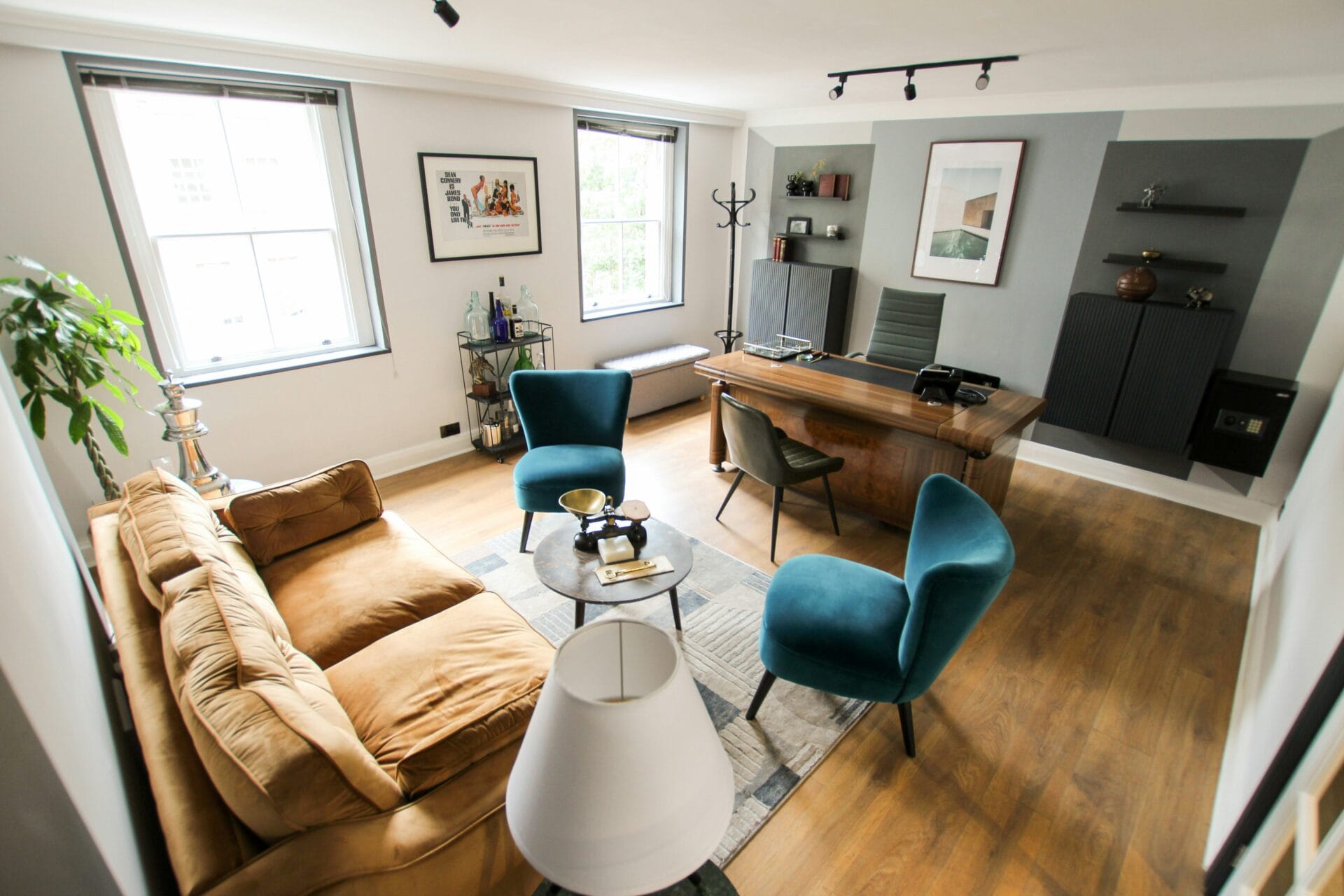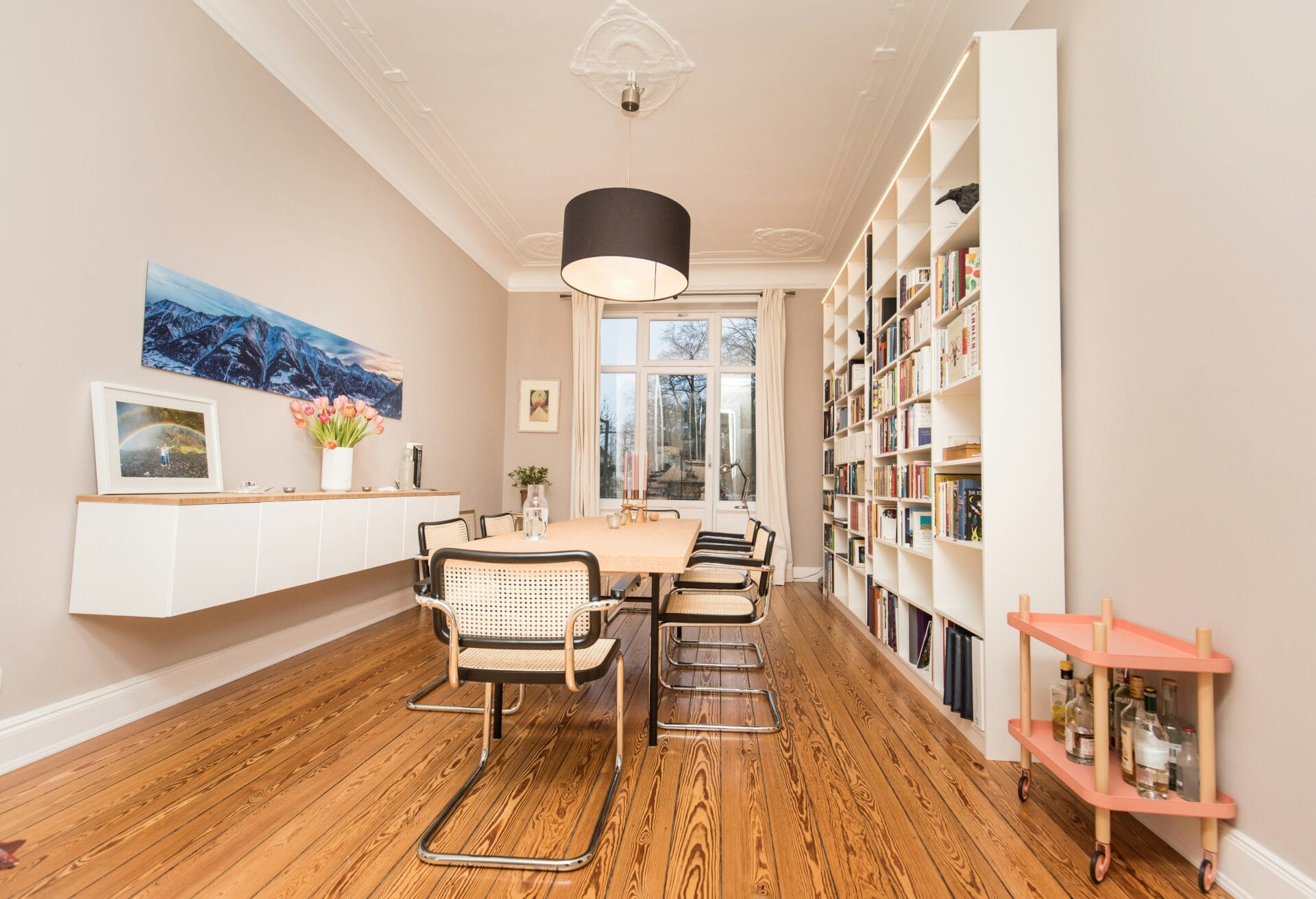
Hotel furniture cost per room can mean very different things. A factory quotation for a guestroom furniture package is not the same as a landed furniture budget, and neither figure is the same as a complete hotel FF&E budget per key.
For accurate 2026 hotel budgeting, owners should separate three cost layers: guestroom furniture product cost, landed furniture cost and total FF&E cost per room. Hotel tier affects the budget, but room size, design complexity, material selection, mattress standard, quantity, destination, logistics, installation and public-area scope often matter just as much.
This guide gives hotel developers, owners, procurement managers, designers, and operators a practical framework for estimating hotel furniture cost per room and comparing quotations accurately.
Budget note: All figures in this article are early-stage planning ranges, not fixed quotations. The final hotel furniture cost depends on the approved room matrix, drawings, materials, quantity, delivery term, destination, taxes, freight, installation conditions, and brand requirements.
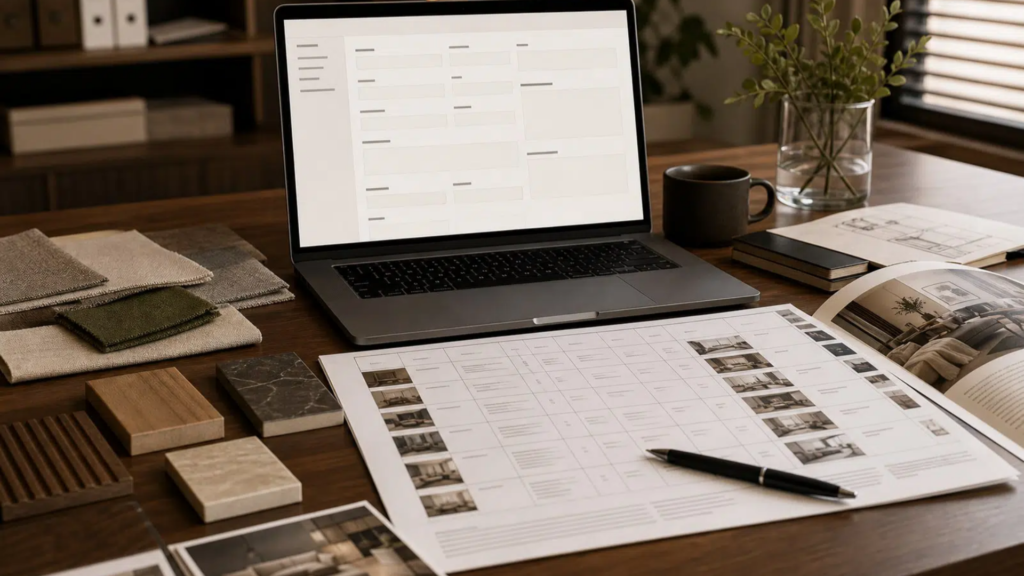
Key Takeaways
- Hotel furniture cost per room should be defined before comparing budgets. A furniture-only price, a landed furniture cost and a complete FF&E per-key budget are different figures.
- A basic guestroom furniture package may include a bed base, headboard, nightstands, desk, wardrobe, seating, luggage bench and occasional furniture. It often excludes soft goods, lighting, TVs, bathroom fixtures, artwork, operating supplies and public-area furniture.
- Product cost can vary significantly by hotel tier, room size, quantity, materials, customisation, hardware, mattress standard and room-type mix.
- Landed cost includes more than factory price. Freight, export packing, insurance, duty, customs clearance, local delivery, storage, installation, spare parts and contingency can materially change the final budget.
- Public-area furniture should usually be budgeted separately. A lobby, restaurant, bar, spa, conference floor, or pool deck can substantially increase a hotel’s overall furniture spend.
- Direct overseas sourcing may reduce product cost for some projects, especially at higher volumes. However, buyers should compare total landed cost, specification equivalence, inspection scope, delivery risk and local warranty support—not only factory price.
- Hongye states that it was founded in 1996, has 30 years of furniture manufacturing experience, and operates a 300,000-square-meter production facility in Heshan, Jiangmen, Guangdong, China.
- Hongye also states that it works with 47+ hotel brand partners and has completed hotel projects across international markets.
How Much Does Hotel Furniture Cost per Room in 2026?
A hotel guestroom furniture package may range from lower-cost, standardized economy furniture to highly customized luxury furniture with premium materials, bespoke detailing, and complex installation requirements.
However, buyers should first define what the budget includes.
A “hotel furniture cost per room” figure may refer to:
- Furniture product cost at the factory.
- Furniture cost delivered to the destination port.
- Landed furniture cost at the hotel site.
- Guestroom furniture plus installation.
- A complete guestroom FF&E budget.
- Whole-property FF&E cost allocated per hotel key.
These terms are not interchangeable.
| Cost Term | Usually Includes | Often Excludes | Best Used For |
|---|---|---|---|
| Guestroom furniture product cost | Casegoods, bed base, headboard, seating, luggage bench and occasional furniture | Freight, duty, installation, soft goods, lighting, TVs, bathrooms and public areas | Factory quotation comparison |
| Landed guestroom furniture cost | Product cost, export packing, freight, insurance, customs, local delivery and sometimes installation | Public areas, design fees, major construction work and OS&E unless listed | Procurement and cash-flow planning |
| Guestroom FF&E cost per key | Furniture plus defined fixtures, soft goods, lighting, electronics and decorative items | Building works, MEP and project soft costs unless included | Owner and developer budgeting |
| Whole-property FF&E cost per key | Guestroom FF&E plus a proportional share of public areas, F&B, meeting rooms, amenities and back-of-house spaces | Core construction costs unless included | Full-project capital planning |
For example, one 2026 market guide estimates 3-star guestroom furniture packages at roughly $2,500–$4,000 per room, 4-star packages at approximately $4,500–$7,000, and 5-star packages at $8,000–$15,000 or more, with scope usually including major guestroom furniture but excluding bathrooms, lighting systems and electronics.
In contrast, a full FF&E per-key budget may be much higher because it can include soft goods, lighting, televisions, public-area furniture, decorative elements, and other project-defined items. Hongye’s existing FF&E budget guide also presents full FF&E estimates that are substantially higher than furniture-only packages.
Buyer rule: Before comparing prices, ask every supplier the same question: “Exactly what is included in the quoted cost per room?”
Hotel Furniture Budget by Tier
The following table provides an early-stage planning framework for a standard guestroom furniture package. It does not represent a final factory quotation or a complete FF&E budget.
| Hotel Segment | Furniture-Only Planning Range per Standard Guestroom | Typical Product Direction | Main Cost Drivers |
|---|---|---|---|
| Economy / limited service | Approximately $1,500–$3,000 | Standardized laminate goods, simple bed system, basic seating, and limited customization | Order volume, board type, laminate, hardware, and room standardization |
| Midscale / upper-midscale | Approximately $2,500–$5,500 | More durable case goods, improved bed system, desk chair, lounge chair, or bench, and branded finishes | Veneer or decorative surfaces, mattress grade, hardware, and number of furniture pieces |
| Upscale / full-service | Approximately $4,500–$9,000 | Greater customization, upgraded finishes, more seating, enhanced room functionality, and higher-quality hardware | Custom case goods, upholstery, veneer, power integration and room-type variation |
| Luxury / boutique | Approximately $8,000–$18,000+ | Bespoke furniture, premium materials, complex finishes, suites and design-led statement pieces | Natural stone, solid wood, metalwork, premium upholstery, custom detailing and sample development |
| Extended stay | Varies widely | More storage, kitchen-adjacent furniture, durable work surfaces and residential-style seating | Casegoods volume, cabinetry, appliance interfaces and longer-stay durability |
| Resort / villa | Varies widely | Indoor-outdoor transitions, larger rooms, patio furniture and regional material requirements | Outdoor furniture, climate exposure, room area and custom layouts |
These ranges should be used only as a starting point. Room count, property location, and scope can substantially affect the result.
For example, a 250-room hotel with two standard room types and high furniture repetition may achieve better production efficiency than a 90-room boutique hotel with ten room types, multiple suite layouts, and extensive custom detailing.
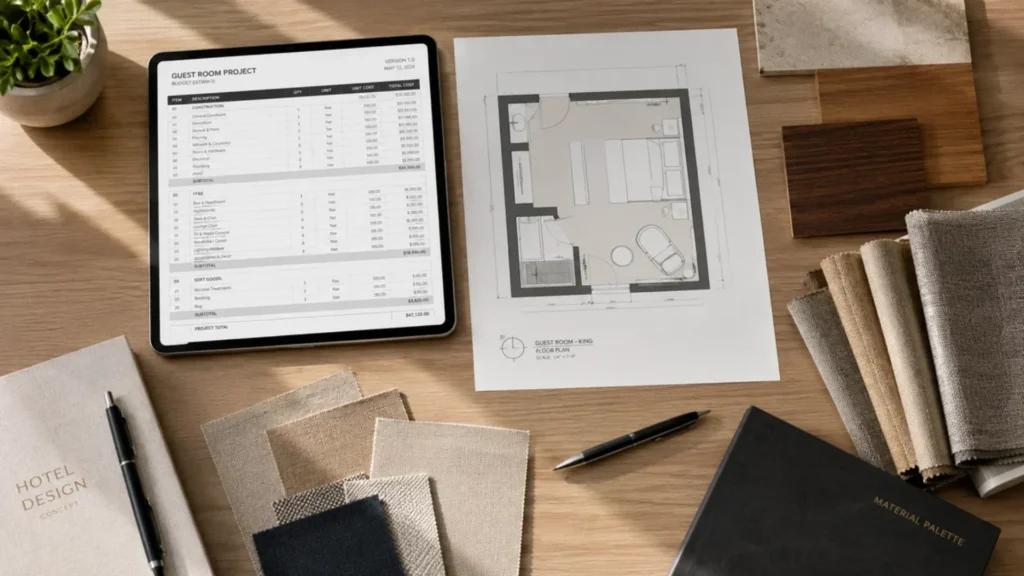
What Is Included in a Guestroom Furniture Package?
A typical hotel guestroom furniture package may include the following items.
| Furniture Category | Typical Items |
|---|---|
| Bed system | Bed base, headboard, bed surround, mattress support, and bed legs |
| Bedside furniture | Nightstands, bedside shelves and integrated power components |
| Storage | Wardrobe, luggage bench, dresser, minibar cabinet and TV unit |
| Work area | Desk, desk chair, task chair, desk return and cable-management parts |
| Seating | Lounge chair, ottoman, accent chair, sofa or bench |
| Occasional furniture | Side table, coffee table, nesting table or bedside stool |
| Vanity area | Vanity desk, mirror frame, stool and selected storage modules |
| Hardware and accessories | Glides, brackets, handles, locks, drawer slides and wall-fixing components |
The exact scope can change significantly by property type.
A select-service hotel room may use a headboard, platform bed, two nightstands, desk, chair, wardrobe and luggage bench. A full-service upscale room may add a lounge chair, ottoman, coffee table, minibar unit, vanity mirror, upholstery panels, decorative metalwork and integrated charging components.
Suites, accessible rooms, family rooms and extended-stay rooms should receive separate budgets. They often have different furniture quantities, dimensions, accessibility requirements and material specifications.
The Main Cost Drivers
Hotel furniture cost per room is not determined by star rating alone. The product specification drives the budget.
Casegoods and Custom Millwork
Casegoods often form one of the largest furniture categories in a guestroom package.
Typical items include:
- Headboards.
- Nightstands.
- Wardrobes.
- TV units.
- Desks.
- Vanities.
- Minibar cabinets.
- Luggage benches.
- Drawer units.
- Decorative wall panels.
Cost increases when projects specify:
- Natural veneer instead of printed or standard laminate.
- Solid-wood edging or complex profiles.
- Custom metal components.
- Stone, sintered stone or solid-surface tops.
- Moisture-resistant boards.
- Premium hardware.
- Complex curves and radius panels.
- Integrated lighting or power.
- Custom wall-fixing systems.
- Many room types with low repetition.
Bed Base and Mattress
Bed systems can include a bed base, headboard, mattress support, mattress, upholstered surround, and associated hardware.
Commercial hospitality mattresses can cost more than residential alternatives because the specification may include durability expectations, fire requirements, operator standards, warranty requirements and replacement planning.
However, the final cost depends on the exact mattress construction, size, local market, brand standard, quantity, and logistics.
Seating and Upholstery
Seating cost depends on:
- Frame construction.
- Upholstery material.
- Foam specification.
- Cushion construction.
- Fire requirements.
- Cleaning requirements.
- Contract-use durability.
- Chair mechanism.
- Metal finish.
- Number of chairs per room.
- Whether the room includes an ottoman, bench or sofa.
For coastal, poolside or semi-outdoor areas, furniture may require outdoor-rated materials chosen for UV, moisture, salt-air and cleaning conditions. That scope should be priced separately from standard indoor guestroom furniture.
Hardware and Functional Features
Small components can have a large cost impact when multiplied across hundreds of rooms.
These may include:
- Soft-close drawer slides.
- Hinges.
- Locks.
- Pulls.
- Adjustable glides.
- Bed connectors.
- Power modules.
- USB or USB-C charging.
- Reading lights.
- Cable-management systems.
- Anti-tip devices.
- Wall brackets.Cost-control principle: Standardising high-cost details across room types can reduce complexity without making every room look identical.
Illustrative Midscale Room Cost Model
The following example shows how a midscale standard-room furniture package may be structured. It is an illustrative model, not a supplier quote.
| Furniture Category | Illustrative Share of Furniture Package | Typical Cost Drivers |
|---|---|---|
| Casegoods | 35–50% | Headboard, nightstands, wardrobe, desk, TV unit, finishes, and hardware |
| Bed base and mattress | 15–30% | Bed configuration, mattress specification, fire requirements and warranty |
| Seating | 10–20% | Lounge chair, desk chair, upholstery, foam and frame |
| Occasional furniture | 5–12% | Luggage bench, side table, coffee table or ottoman |
| Hardware and room interfaces | 3–8% | Brackets, glides, power integration and assembly requirements |
| Packaging allocation | Varies | Carton design, product protection and export requirements |
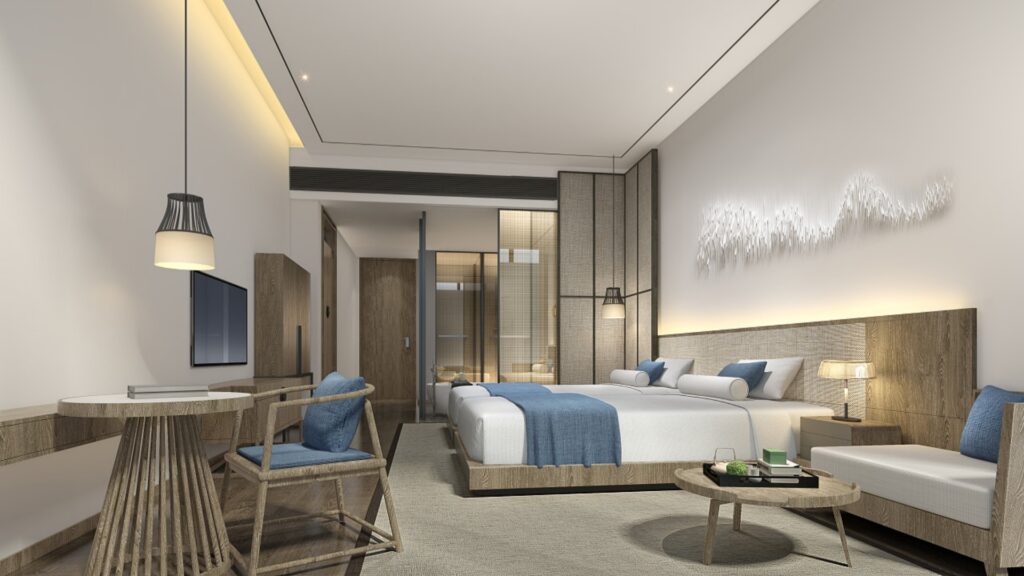
For a standard midscale room, the casegoods package may account for the largest share of the furniture budget. However, the percentage changes if a property uses expensive mattresses, large upholstered headboards, multiple lounge seats, custom stone tops, or high-value electronic integrations.
Furniture-Only Cost vs Landed Cost
A lower factory quotation does not always result in a lower total project cost.
The landed furniture cost should include every required expense from factory completion to usable furniture at the project site.
Landed Furniture Cost=Product Cost+Export Packing+Origin Charges+Freight+Cargo Insurance+Duties and Taxes+Customs Clearance+Local Delivery+Storage+Installation+Spare Parts+Contingency
| Landed-Cost Component | Why It Changes | Buyer Action |
|---|---|---|
| Product cost | Materials, quantity, customisation, room type and hardware | Compare like-for-like BOQs and approved drawings |
| Export packing | Carton design, product fragility, container loading and destination | Confirm export packing scope and damage-protection method |
| Origin charges | Inland transport, export documentation and port handling | Confirm quote basis and Incoterms |
| Freight | Route, container utilisation, fuel, seasonality and port conditions | Request current freight assumptions |
| Cargo insurance | Shipment value, route and delivery term | Confirm insured value and claims procedure |
| Duties and taxes | Destination country, HS code and trade rules | Confirm with a customs broker |
| Customs clearance | Documentation, inspections and local fees | Confirm importer-of-record responsibility |
| Local delivery | Site distance, unloading route, lift access and delivery windows | Review delivery logistics before shipment |
| Storage | Early delivery, phased installation or unavailable site space | Create warehouse and inventory plan |
| Installation | Furniture complexity, wall fixing, local labour and site conditions | Confirm scope, tools, supervision and responsibility |
| Spare parts | Item criticality, lead time, repairability and finish-match risk | Plan attic stock by category rather than one fixed percentage |
| Contingency | Design changes, foreign exchange, site changes and market volatility | Use a project-specific contingency allowance |
Buyer rule: Compare landed furniture cost, not EXW price alone. A quotation is not comparable if it excludes freight, packing, duty, installation, spare parts or key furniture components.
How Direct Overseas Sourcing Affects Cost
Direct overseas sourcing can reduce product cost for some hotel projects, particularly when:
- The project has sufficient volume.
- The room types are standardised.
- The furniture design is finalised early.
- The buyer can consolidate shipments.
- The factory has suitable production capability.
- The buyer has a clear inspection and quality-control plan.
- The delivery schedule allows for manufacturing and shipping lead time.
- Local installation support is planned in advance.
However, buyers should also price the risks and costs that factory quotations may not show.
| Sourcing Route | Potential Benefits | Costs and Risks to Evaluate |
|---|---|---|
| Local supplier | Shorter delivery route, easier site visits, and local service | Potentially higher product cost and limited custom manufacturing capacity |
| Regional supplier | Reduced shipping distance and potentially faster replenishment | Product range, quality consistency, and local warranty coverage |
| Direct overseas manufacturer | Potential volume efficiency, customization, and direct factory communication | Freight, duty, inspections, longer lead time, currency risk, and local installation planning |
| Dealer or distributor | Local contract administration and possible installation support | Dealer margin, reduced factory visibility, and product limitations |
| Mixed sourcing | Specialist capabilities for seating, lighting, outdoor furniture, or artwork | More coordination, more warranties, and harder finish matching |
Direct sourcing should not be marketed as an automatic percentage saving.
Instead, buyers should compare:
- Product scope.
- Bill of quantities.
- Drawings.
- Materials.
- Hardware.
- Delivery term.
- Freight assumptions.
- Customs cost.
- Inspection scope.
- Installation plan.
- Warranty response.
- Replacement-part availability.
- Lead time.
- Change-order process.
How to Build a Hotel Furniture Budget
A structured process produces a more reliable hotel furniture budget.
1. Define the Room Matrix
List every room type before requesting prices.
Typical categories may include:
- Standard king room.
- Standard twin room.
- Accessible room.
- Deluxe room.
- Executive room.
- Junior suite.
- One-bedroom suite.
- Family room.
- Extended-stay room.
- Villa or bungalow.
Do not apply the same furniture budget to every key if room sizes, layouts, and furniture quantities differ.
2. Define the Scope
Clarify whether the budget includes:
- Guestroom furniture only.
- Bed base and mattress.
- Loose furniture.
- Built-in furniture.
- Lighting.
- Window treatments.
- Soft goods.
- TVs and electronics.
- Artwork.
- Bathroom accessories.
- Public-area furniture.
- Outdoor furniture.
- Installation.
- Freight and duty.
3. Build a Furniture Schedule
Use a room-by-room furniture schedule with item codes, dimensions, materials, quantities and drawings.
This makes it easier to compare quotations and identify missing items.
4. Approve a Mock-Up Room
A mock-up room can reveal problems before mass production.
Review:
- Dimensions.
- Comfort.
- Material appearance.
- Functional access.
- Hardware.
- Cleaning.
- Power integration.
- Bed height.
- Storage.
- Installation method.
- Guest experience.
- Operator and brand requirements.
5. Price Each Room Type
Price standard rooms, accessible rooms and suites separately.
Then calculate the weighted average based on the final room matrix.

6. Add Landed-Cost Components
Include packing, freight, insurance, tax, customs, local delivery, storage, installation and attic stock.
7. Add Contingency
Use a project-specific contingency for design changes, material substitutions, exchange-rate movement, site changes and logistics risk.
8. Budget Public Areas Separately
Do not hide public-area furniture inside a guestroom furniture budget.
Public-Area Furniture Budget
Public-area furniture should normally be budgeted as a separate package.
A hotel with the same number of guest rooms can have dramatically different public-area costs depending on whether it includes:
- A large lobby.
- Reception desk.
- All-day dining.
- Restaurant.
- Bar.
- Ballroom.
- Meeting rooms.
- Spa.
- Fitness center.
- Co-working lounge.
- Kids’ club.
- Outdoor terrace.
- Pool deck.
- Beach club.
- Executive lounge.
| Public Area | Typical Furniture Scope | Main Cost Drivers |
|---|---|---|
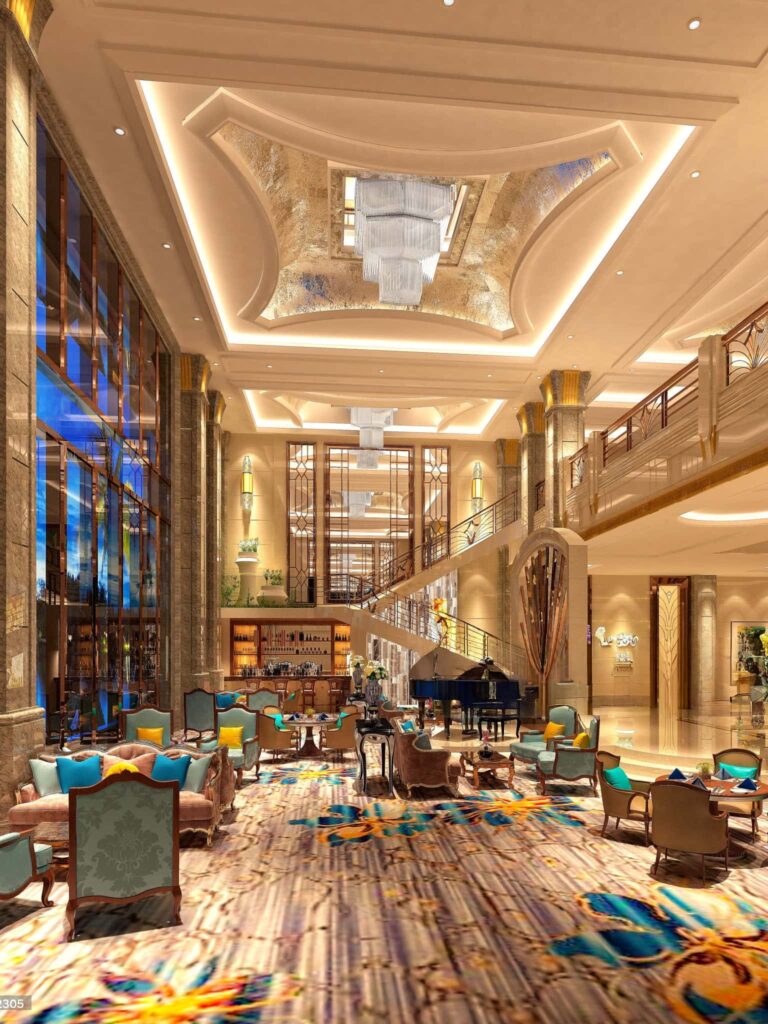
| Lobby | Lounge seating, coffee tables, side tables, reception furniture, and feature pieces | Size, custom reception desk, upholstery, stone, metalwork, and design complexity |
| Restaurant | Dining tables, chairs, banquettes, host stands, and service stations | Seat count, upholstery, table tops, cleanability, and durability |
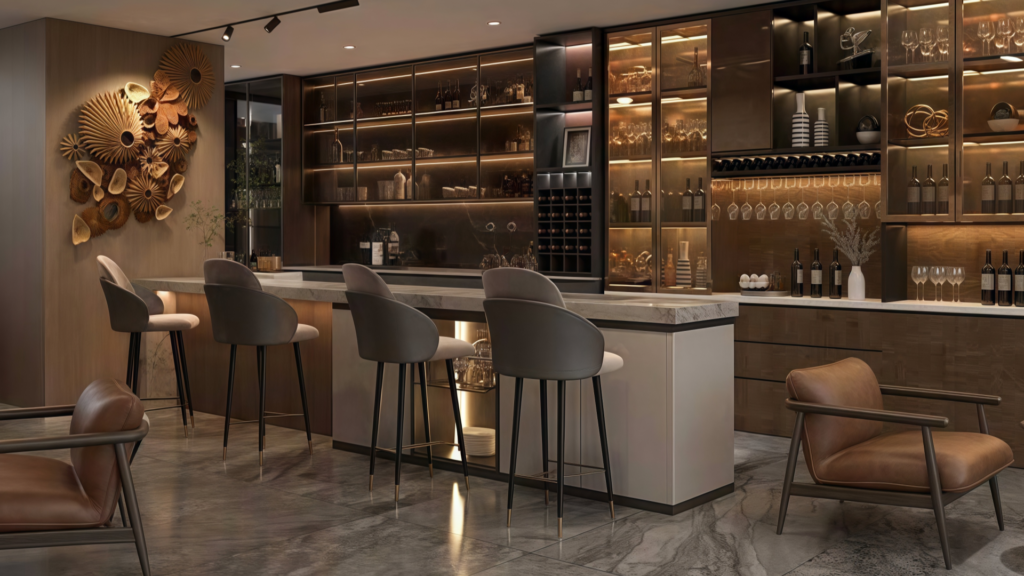
| Bar | Bar stools, lounge seating, high tables, and back-bar furniture | Metal finish, upholstery, lighting coordination, and custom joinery |
| Meeting rooms | Tables, conference chairs, stacking chairs, storage, and AV-integrated furniture | Flexibility, power integration, chair quantity, and storage |
| Outdoor areas | Loungers, dining furniture, cabanas, and side tables | UV, moisture, salt air, frame materials, and cushion construction |
| Spa and fitness | Loungers, reception furniture, lockers, benches, and treatment-area furniture | Moisture tolerance, specialist requirements, and material selection |
A property with extensive public spaces may show a higher whole-property furniture cost per key even if its guestrooms are modest. Industry budgeting guidance similarly notes that suites and common areas can materially increase average per-key FF&E cost.
How Much Attic Stock Should a Hotel Buy?
There is no universal attic-stock percentage for hotel furniture.
Instead, plan spare inventory by item criticality and replacement difficulty.
| Furniture Item | Spare Parts or Attic Stock Consideration |
|---|---|
| Drawer slides and hinges | Keep service parts for high-use case goods. |
| Handles and pulls | Hold extras because finish matching may change over time. |
| Glides and adjustable feet | Keep replacement stock for chairs, tables, and beds. |
| Upholstery fabric | Retain approved fabric and color references for repair. |
| Loose chairs | Consider spare units if the model has a long replacement lead time. |
| Table tops | Assess the risk of damage, especially for stone, glass, or custom laminate. |
| Headboards | Plan replacements carefully because they may be room-specific. |
| Power modules | Hold spare units for integrated bedside and desk charging systems. |
| Outdoor cushions | Consider replaceable covers or extra cushions for high-exposure zones. |
Attic-stock principle: Buy spares where a missing or damaged component would make a room unsellable, visually inconsistent, or expensive to repair.
What Should a Hotel Furniture Quote Include?
A complete hotel furniture quotation should make the scope easy to compare.
| Quote Requirement | What It Should Show |
|---|---|
| Project name and date | Identifies the correct project and quotation version |
| Currency | States USD, EUR, GBP, or another currency clearly |
| Incoterm | Defines EXW, FOB, CIF, DDP, or another agreed delivery basis |
| Item codes | Match the BOQ, furniture schedule, and drawings. |
| Room type | Identifies standard rooms, suites, accessible rooms, and public areas |
| Item description | States exact furniture scope and inclusions |
| Quantity | Shows unit quantities and total project quantity |
| Dimensions | Matches approved drawings |
| Materials and finishes | Identifies board, veneer, laminate, fabric, foam, metal, and hardware |
| Unit price | Shows price for each item |
| Total price | Shows total by room type and project area |
| Packing | Defines export packing and special protection |
| Freight assumptions | States whether freight is included or excluded |
| Duty and tax | Clarifies whether these are estimated, included, or excluded |
| Installation scope | Defines assembly, placement, wall fixing, cleaning, and waste removal |
| Quality process | States sample approval, inspections, and acceptance process |
| Warranty | Defines duration, covered components, exclusions, and claims process |
| Lead time | States sample, production, shipping, and delivery assumptions |
| Spare parts | Lists recommended spares and pricing |
| Validity period | States how long the quotation remains valid |
Hotel Furniture
How to Compare Hotel Furniture Quotes
A lower quotation may not be cheaper if suppliers have priced different materials, quantities, or delivery terms.
Compare quotations using the same baseline.
| Comparison Area | Buyer Check |
|---|---|
| Room matrix | Does each supplier price the same room types and quantities? |
| Furniture schedule | Do item codes, quantities, and descriptions match? |
| Drawings | Is every supplier quoting the same revision? |
| Materials | Are board, veneer, laminate, upholstery, foam, and metal finishes equivalent? |
| Hardware | Are drawer slides, hinges, locks, glides, and power modules the same? |
| Mattress | Does the quote include the same construction, warranty, and fire requirements? |
| Packing | Does the price include export-grade packaging and protection? |
| Delivery term | Are suppliers quoting EXW, FOB, CIF, DDP, or installed cost? |
| Freight | Is freight current, included, and based on realistic container use? |
| Duty and tax | Has the buyer checked the destination-specific import cost? |
| Installation | Who unloads, delivers, assembles, anchors, and cleans? |
| Quality control | Is there a sample, inspection, and non-conformance process? |
| Warranty | Does the warranty cover the same components and conditions? |
| Spare parts | Are replacement hardware, fabric, and components available? |
| Program | Can the supplier meet required production and delivery dates? |
Comparison rule: A furniture quote is comparable only when scope, materials, quantities, quality level, trade terms, and delivery obligations are aligned.
Hongye Hotel Furniture Budget Support
Hongye supports hotel furniture projects with guestroom casegoods, beds, headboards, wardrobes, desks, seating, occasional furniture and selected public-area packages.
Hongye states that it was founded in 1996 and has more than 30 years of commercial furniture manufacturing experience. The company also states that it operates a 300,000-square-meter production facility in Heshan, Jiangmen, Guangdong, China.
Hongye’s hotel furniture materials state that the company works with 47+ international hotel brand partners, including brands named on its website, and provides hotel furniture products for international projects.
For qualified projects, Hongye can support:
- Hotel furniture schedules and BOQ review.
- Room-matrix quantity reconciliation.
- Guestroom and public-area furniture quotations.
- Material and finish sample coordination.
- Mock-up room planning.
- Product drawings and custom furniture development.
- Export-packing requirements.
- Inspection and shipment planning.
- Landed-cost discussion based on delivery terms.
- Spare parts and attic-stock planning.
- Installation support discussions were agreed upon.
Buyers should verify the exact product scope, room type, material specification, test documentation, delivery term, customs responsibility, warranty coverage, installation scope, and destination-market requirements before issuing a purchase order.
Frequently Asked Questions
How much does hotel furniture cost per room in 2026?
Hotel furniture cost per room varies widely by property type, room size, material selection, quantity, design complexity, and scope.
For a standard guestroom furniture package, early-stage planning ranges may start around $1,500–$3,000 for basic limited-service properties, around $2,500–$5,500 for many midscale projects, around $4,500–$9,000 for upscale projects and $8,000–$18,000 or more for luxury or boutique rooms.
These figures are furniture-only planning ranges. They do not necessarily include soft goods, lighting, televisions, bathroom fixtures, public areas, freight, duties, installation, or other FF&E categories.
What is included in the hotel furniture cost per room?
A typical hotel furniture package may include the bed base, headboard, nightstands, wardrobe, desk, desk chair, lounge chair, luggage bench, TV unit, minibar furniture, vanity, and occasional tables.
However, every buyer should verify the quoted scope. Lighting, window treatments, mattresses, televisions, artwork, bathroom fixtures, soft goods, freight, and installation may be included or excluded depending on the supplier and project.
What is the difference between furniture-only cost and FF&E cost per key?
Furniture-only cost generally covers movable and built-in furniture items assigned to a guest room.
FF&E cost per key can include furniture, lighting, soft goods, window treatments, decorative items, electronics, and other fixtures or equipment defined by the project. Whole-property FF&E cost can also allocate part of the public-area budget across every hotel key.
That is why full FF&E-per-key estimates are often significantly higher than furniture-only cost per room.
What is the landed cost for hotel furniture?
Landed cost is the total cost required to move furniture from the factory to the usable project location.
It can include product price, packing, origin charges, freight, insurance, duties, taxes, customs clearance, local delivery, storage, installation, spare parts, and contingency.
Does direct sourcing from China reduce hotel furniture costs?
It can reduce product cost for some projects, particularly where order volumes are high and furniture designs are standardized.
However, buyers should compare total landed cost rather than factory price alone. Freight, duty, tax, customs, inspections, local delivery, installation, currency, warranty support, and schedule risk can change the final result.
How should I budget for public-area hotel furniture?
Budget public-area furniture as a separate package. Then decide whether to allocate it across keys for whole-property financial planning.
A large lobby, restaurant, bar, meeting space, spa, pool deck, or beach club can materially increase total furniture cost even when guest rooms remain standardized.
How much spare furniture should a hotel buy?
There is no universal percentage. Plan attic stock based on item criticality, replacement lead time, room-specific design, finish-match risk and repairability.
Hotels often benefit from spare hardware, glides, drawer slides, handles, power modules, upholstery references, and selected high-risk loose furniture items.
What should a hotel furniture quotation include?
A quotation should include item codes, quantities, dimensions, materials, finishes, unit pricing, totals, currency, Incoterms, packing, freight assumptions, delivery schedule, installation scope, warranty, quality-control process, spare-parts pricing, and quotation validity.
How can I compare hotel furniture suppliers?
Compare suppliers using the same room matrix, furniture schedule, drawings, materials, hardware, mattress standard, delivery term, freight assumptions, duty estimate, installation scope, inspection process, warranty, and lead time.
Do not compare only the headline price.
Build a Budget That Matches the Scope
Hotel furniture cost per room is useful only when every stakeholder uses the same definition of cost.
Start by separating furniture product cost, landed furniture cost, and full FF&E budget. Then price each room type, define every inclusion, build a room matrix, review public areas separately, and compare suppliers on a like-for-like basis.
A disciplined budget process protects more than the purchase price. It helps hotel owners control materials, freight, installation, quality, replacement parts, schedule, and long-term operating costs.