Choosing a hotel furniture manufacturer affects more than the price of beds, nightstands, and lounge chairs. The right supplier can support your brand standards, protect your opening schedule, manage samples and production, and provide a clear path for quality control and after-sales service.
The wrong supplier can create material substitutions, missed delivery milestones, failed inspections, installation delays, and expensive replacement work after opening.
For hotel owners, developers, FF&E directors, and procurement teams, manufacturer selection should follow a structured process. Buyers should evaluate legal identity, relevant hotel experience, product capability, current capacity, material specifications, quality controls, compliance documentation, logistics planning, and contract terms.
This guide explains how to choose a hotel furniture manufacturer in 2026 and gives buyers a practical seven-step selection process.
Key Takeaways
- Match the manufacturer to your hotel tier, room count, brand standard, and project delivery model before requesting quotations.
- Separate FF&E and OS&E scope, budgets, specifications, and delivery responsibility, even when one project manager coordinates both.
- Audit the legal entity, actual production site, capacity plan, quality controls, and relevant reference projects before awarding a large order.
- Write material, performance, finish, fire, and warranty requirements into the RFQ and purchase order.
- Compare quotations using equivalent scope, Incoterms, logistics assumptions, installation requirements, and warranty terms.
- Use approved samples, in-process inspection, and pre-shipment inspection to control production risk.
- Link payment milestones to approved samples, inspection results, shipping documents, and contract delivery obligations.
Quick Answer: What Should You Verify Before Choosing a Hotel Furniture Manufacturer?
Before selecting a hotel furniture manufacturer, verify seven areas:
- The manufacturer’s hotel tier experience and product capability.
- The legal contracting entity, factory site, and available production capacity.
- The FF&E and OS&E responsibility matrix.
- Material, finish, performance, and fire requirements.
- Quote scope, landed cost, lead time, and installation assumptions.
- Sample approval, quality-control gates, and inspection rights.
- Contract terms, payment milestones, warranty, spares, and delivery responsibility.
The best manufacturer is not automatically the lowest-priced supplier or the largest factory. Instead, choose the supplier whose documented capability, materials, delivery plan, and quality controls match your specific hotel project.
Step 1: Match the Manufacturer to Your Hotel Tier
Different hotel tiers need different material standards, design capability, production capacity and after-sales support. A supplier suited to a high-volume select-service program may not be the right partner for bespoke luxury suites. Likewise, a boutique furniture workshop may not be able to deliver 500 standardized rooms on a fixed opening date.
Hotel Tier and Manufacturer Fit
| Hotel Tier | Illustrative Service-Life Planning Range | Typical Furniture Direction | Manufacturer Capability to Prioritise |
|---|---|---|---|
| Economy / budget | 5–7 years | Durable laminate, basic veneer, standardized case goods, and simple seating | High-volume capacity, cost control, and reliable lead time |
| Midscale | 7–9 years | Engineered wood, veneer options, contract-grade seating, and practical storage | Balanced cost, documented QC, and consistent finishes |
| Upscale | 8–12 years | Premium veneer, solid edge details, upgraded upholstery, and custom millwork | Finish precision, engineering, sample development, and FF&E coordination. |
| Luxury / five-star | Project-specific | Bespoke millwork, premium veneer, solid wood, stone, metalwork, and signature upholstery | Custom engineering, hand-finishing, specialist materials, and project management |
These are planning ranges rather than fixed requirements. Actual service life depends on occupancy, maintenance, cleaning, material selection, housekeeping procedures, climate, and brand renovation standards.
Action: Before issuing an RFQ, define the hotel tier, room types, target opening date, expected service life, brand standards and project budget. This process helps manufacturers decide whether their capabilities fit the project before they spend time quoting.
Step 2: Separate FF&E and OS&E Responsibilities
FF&E and OS&E support the same hotel opening, but they usually require different suppliers, specifications, lead times, and quality controls.
FF&E includes long-life furniture and equipment that furnish guest rooms and public areas. OS&E includes the operating supplies and smaller equipment required to run the hotel daily.
| Category | FF&E | OS&E |
|---|---|---|
| Typical items | Casegoods, seating, beds, millwork, lighting, mirrors and selected equipment | Linens, towels, amenities, minibar stock, tableware, uniforms and cleaning supplies |
| Typical supplier | Furniture manufacturer, FF&E procurement partner or project contractor | Hospitality distributor, trading company or specialist supplier |
| Main QC focus | Materials, finish, joinery, performance, fire evidence and installation | Source compliance, packaging, brand consistency and replenishment |
| Typical lead time | Often several weeks or months for custom work | Often shorter for stocked operating supplies |
| Main project risk | Production delay, material substitution, fit problems and installation defects | Missing opening inventory, stock shortage and inconsistent replenishment |
A hotel may use one coordinated project manager for both packages. However, the project should still maintain separate specifications, quality gates, service-level agreements, warranties, and delivery milestones for FF&E and OS&E.
For more detail, read Hotel FF&E and OS&E Package: What’s Included and How to Budget in 2026.
Step 3: Verify the Legal Entity, Factory, and Capacity
A supplier’s website or showroom does not prove that it owns a factory, controls production, or has capacity for your delivery window.
Buyers should confirm the legal entity that will sign the contract, manufacture the products, issue invoices, and receive payment. They should also confirm the actual production site and current production plan.
Factory Audit Areas
| Audit Area | What to Check | Questions to Ask |
|---|---|---|
| Legal entity | Business license, Chinese legal name, Unified Social Credit Code and bank account | Does the contract entity match the invoice and payment entity? |
| Factory site | Physical address, production-site control and live or onsite walkthrough | Where will my products actually be manufactured? |
| Production capability | Relevant woodworking, metalwork, upholstery, finishing and packing processes | Which processes are completed in-house and which are outsourced? |
| Capacity plan | Current orders, assigned production line, workforce and completion date | What capacity will you reserve for my project? |
| Material warehouse | Approved boards, veneer, fabric, foam, hardware and finish materials | Can you show incoming materials that match the approved specification? |
| Quality controls | Incoming inspection, in-process checks, final inspection and corrective action | Can QC stop production when defects appear? |
| Reference projects | Comparable hotel projects, subject to client permission | Can you show similar projects by hotel tier and scope? |
A factory does not need to own its building to be legitimate. However, the buyer should verify that the contracting entity or disclosed manufacturing partner genuinely controls the production site.
For detailed due diligence, see How to Verify a Furniture Factory Before Ordering: Audit Checklist and Red Flags.
Step 4: Write Material and Performance Requirements Into the RFQ
Do not ask manufacturers to quote from mood boards alone. A professional hotel furniture RFQ should include drawings, dimensions, finishes, material specifications, expected use, performance requirements, packaging expectations and warranty terms.
Material Specifications by Zone
Guestroom furniture, public-area seating, and restaurant furniture experience different levels of wear. Therefore, the specification should reflect the actual use of each zone.
| Component | Guestroom Starting Point | Public-Area or Restaurant Starting Point | Buyer Check |
|---|---|---|---|
| Case goods | Suitable core, thickness, and edge construction for expected room use | Higher impact resistance for luggage, carts, and frequent cleaning | Board type, density, thickness, edge detail, and hardware |
| Upholstery | Fabric suitable for guestroom occupancy and cleaning routine | Higher abrasion resistance and cleanability for heavy use | Test method, fabric code, cleanability, and fire evidence |
| Foam | Comfort and recovery suited to guestroom seating | Higher resilience for repeated public use | Foam type, density, IFD or ILD, resilience, and fire requirement |
| Hardware | Drawer slides, hinges and pulls suited to normal guest use | Higher-duty hardware for frequent service use | Hardware brand, cycle evidence, and replacement availability |
| Fire performance | Match project location and brand standard. | Match public-area and occupancy requirements. | Exact fabric, foam, barrier, and furniture construction |
Important Material Notes
Board thickness alone does not determine case good quality. Buyers should specify:
- Core type and density.
- Board thickness for each component.
- Moisture resistance where required.
- Edge treatment and edge-band thickness.
- Hardware brand and cycle expectation.
- Screw-holding requirements.
- Finish type and cleaning compatibility.
- Packaging and corner protection.
Likewise, upholstery durability should identify the actual test method. Wyzenbeek double rubs and Martindale cycles do not convert directly. The RFQ should specify the required method, threshold and furniture zone. Commercial upholstery requirements often increase with use intensity, but the correct threshold depends on the fabric, application and maintenance routine.

Fire and Compliance Requirements
Hotel projects must confirm fire, emissions, structural, and material requirements before production begins.
Potential requirements may include:
- California TB 133 or another applicable U.S. project requirement.
- BS 5852 for applicable UK projects.
- EN 1021 for applicable European upholstery requirements.
- Low-emission documentation for indoor air quality goals.
- FSC Chain of Custody evidence where certified wood sourcing is required.
- Destination-market electrical documentation for integrated lighting, power, or charging modules.
- Product-specific performance evidence for office-style task chairs, storage, or tables where applicable.
Compliance rule: Confirm local codes, hotel brand requirements, insurer expectations, and project specifications before approving materials. A fire test report must match the exact fabric, foam, barrier, and construction used in the finished item.
Step 5: Compare Quotes on Equivalent Scope and Landed Cost
A low factory quote does not always mean a low project cost. Before comparing suppliers, make sure every quotation covers the same products, materials, delivery terms, testing, packaging, and installation responsibility.
Quote Comparison Checklist
| Quote Element | What to Compare |
|---|---|
| Product scope | Furniture list, quantity, dimensions, room types and public-area items |
| Materials | Board, veneer, laminate, metal, foam, fabric, stone, glass and hardware |
| Finish | Colour codes, sheen, grain direction, edge details and approved samples |
| Compliance | Required reports, certificates and product-specific documentation |
| Trade term | EXW, FOB, CIF, DDP, landed or installed scope |
| Logistics | Freight, insurance, duties, customs, storage and inland delivery |
| Installation | Assembly, floor distribution, room placement, packaging removal and punch list |
| Warranty | Frame, finish, hardware, upholstery, foam and labour coverage |
| Spares | Touch-up kits, hardware, fabric, glides, casters and replacement parts |
| Lead time | Drawings, samples, materials, production, inspection, freight and installation milestones |
Warning Signs in Quotations
Investigate further if a quotation:
- Falls significantly below comparable quotes without a clear scope explanation.
- Omits board, fabric, foam, hardware or finish details.
- Includes “free freight” or “free engineering” without defining conditions.
- Does not state a written production and delivery schedule.
- Excludes testing or samples that other suppliers include.
- Uses generic product images instead of project-specific drawings.
- Does not identify warranty scope or spare-part support.
Cost rule: Compare landed and installed cost, not only FOB price. Include furniture, samples, freight, duties, customs, delivery, installation, warranty, and expected maintenance.
For budget planning, read Hotel Furniture Cost per Room: 2026 Pricing Guide by Hotel Tier.
Step 6: Approve Samples and Control Production Through QC Gates
Samples and inspections provide the strongest protection against production drift. The approved sample should become the reference point for finish, material, dimensions, hardware, workmanship, and packaging.
Four Recommended QC Gates
| QC Gate | Trigger | What to Check | Buyer Approval Requirement |
|---|---|---|---|
| Golden sample or pre-production sample | Drawings, BOM and finishes complete | Materials, finish, dimensions, hardware and construction | Signed physical sample and approved material schedule |
| In-process inspection | Critical structure, edging, welding, upholstery frame or finishing underway | Core materials, board thickness, joinery, edge details, finish and workmanship | Inspection report against approved sample and RFQ |
| Pre-shipment inspection | At least 80% complete, with final quantity and packaging available | AQL sampling, dimensions, function, finish, labelling, packaging and quantity | Accepted report plus corrective-action closure |
| Container-loading check | Shipping risk is high or order is complex | Quantities, packing, moisture protection, carton marks and loading sequence | Loading photos, packing list and container seal record |
Pre-shipment inspection is a final quality-control check conducted after production is substantially complete and before the supplier ships the goods. Buyers should define sampling, AQL, critical defects, major defects, minor defects and corrective-action requirements in advance.
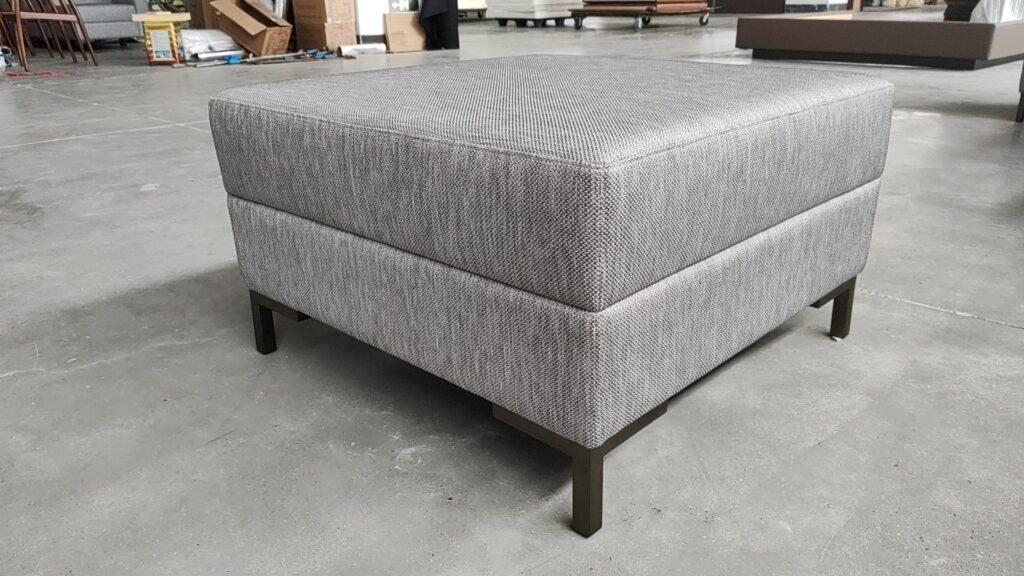
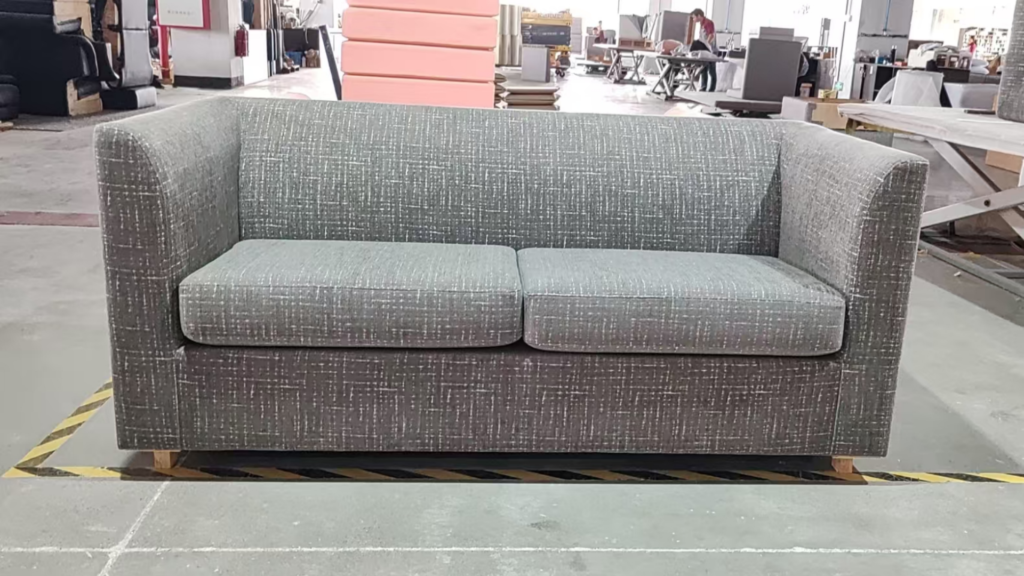
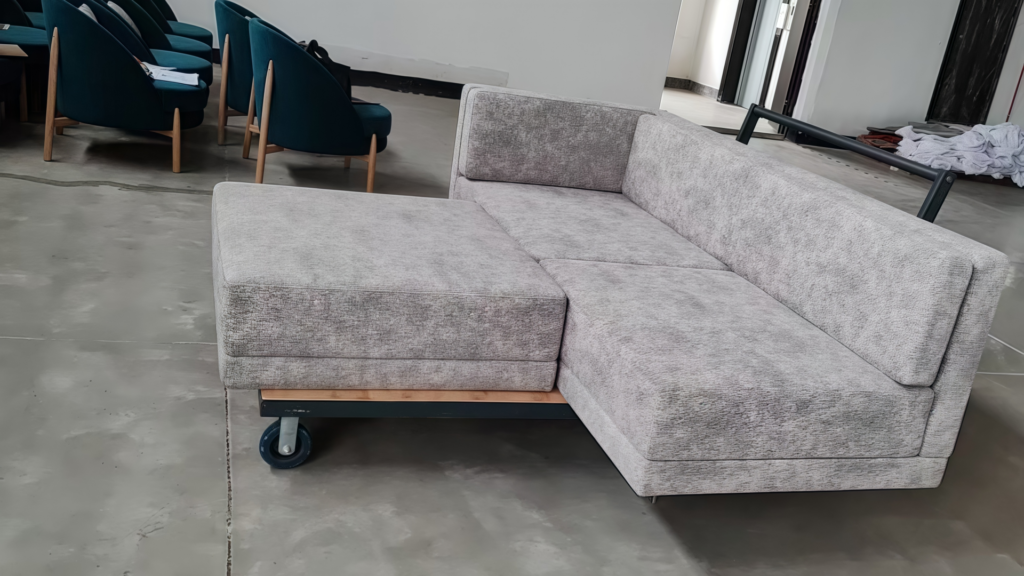
Inspection of Hotel Project Products – Hongye Furniture Group
Payment Hold Points
Buyers should link payment to objective project milestones:
- Deposit after contract, drawings and material specifications are agreed.
- Production payment after approved sample or material confirmation.
- Shipment payment after pre-shipment inspection and document review.
- Retention, where negotiated, after installation or a defined punch-list period.
Do not release final payment solely because the factory says production is complete. Instead, link payment to agreed inspection results, shipping documents and contractual delivery milestones.
Step 7: Protect the Project Through Contract Terms
A hotel FF&E purchase order should act as a project-control document, not only a price confirmation.
Contract Protection Checklist
| Contract Element | Why It Matters |
|---|---|
| Approved drawings and bill of materials | Prevents unapproved changes to dimensions, materials, and construction |
| Material and finish schedule | Locks veneer, board, fabric, foam, hardware, and color standards |
| Retained approved sample | Creates a physical reference for production QC |
| Inspection rights | Allows buyer or third party to inspect before shipment |
| AQL and defect definitions | Defines critical, major and minor defects before disputes occur |
| Production schedule | Links milestones to the hotel opening plan |
| Delay remedies | Defines response to missed production or shipment milestones |
| Packaging and labelling requirements | Prevents transit damage and installation confusion |
| Payment milestones | Links payment to samples, inspection, shipment and delivery |
| Warranty and spare parts | Defines coverage, exclusions, response times and part availability |
| Subcontracting disclosure | Requires supplier approval before outsourcing critical processes |
| Governing law and dispute process | Establishes contract-enforcement and escalation route |
The contract should also define who is responsible for freight claims, cargo insurance, customs delays, site access, installation damage, missing parts and replacement lead times.
Hotel Furniture Manufacturer Red Flags
Immediate-Stop Red Flags
Pause the purchase immediately if:
- The supplier requests payment to a personal account.
- The legal entity on the contract does not match the invoice or bank account.
- The supplier refuses to identify the actual manufacturer.
- The supplier refuses reasonable inspection rights.
- The supplier cannot provide basic material specifications.
- The approved sample clearly differs from the proposed production materials.
- The supplier cannot provide relevant product-level fire or performance evidence where the project requires it.
Issues That Require Further Investigation
Request more evidence if:
- The supplier outsources a core process.
- The factory does not operate an in-house laboratory but can provide third-party reports.
- The price falls far below comparable quotations.
- The supplier relies on test reports for similar rather than identical products.
- Reference projects are confidential and cannot be directly contacted.
- The factory appears fully booked during the required production period.
- The warranty does not match the expected hotel use level.
- The quote lacks detailed lead-time milestones.
A concern does not always make a supplier unsuitable. However, buyers should resolve every material risk before releasing production or increasing payment.
The 7-Step Selection Checklist
Use this sequence before awarding a hotel FF&E order:
- Define hotel tier, room types, budget, brand standards and target opening date.
- Separate FF&E and OS&E scope, responsibilities and delivery schedules.
- Verify the contracting entity, actual factory, product capability and available production capacity.
- Issue an RFQ with drawings, BOM, materials, finish, fire, performance and warranty requirements.
- Compare supplier quotes on equivalent landed and installed scope.
- Approve samples and control production through in-process and pre-shipment QC gates.
- Sign a contract that links payment, inspection, delivery, warranty and corrective action to clear project milestones.
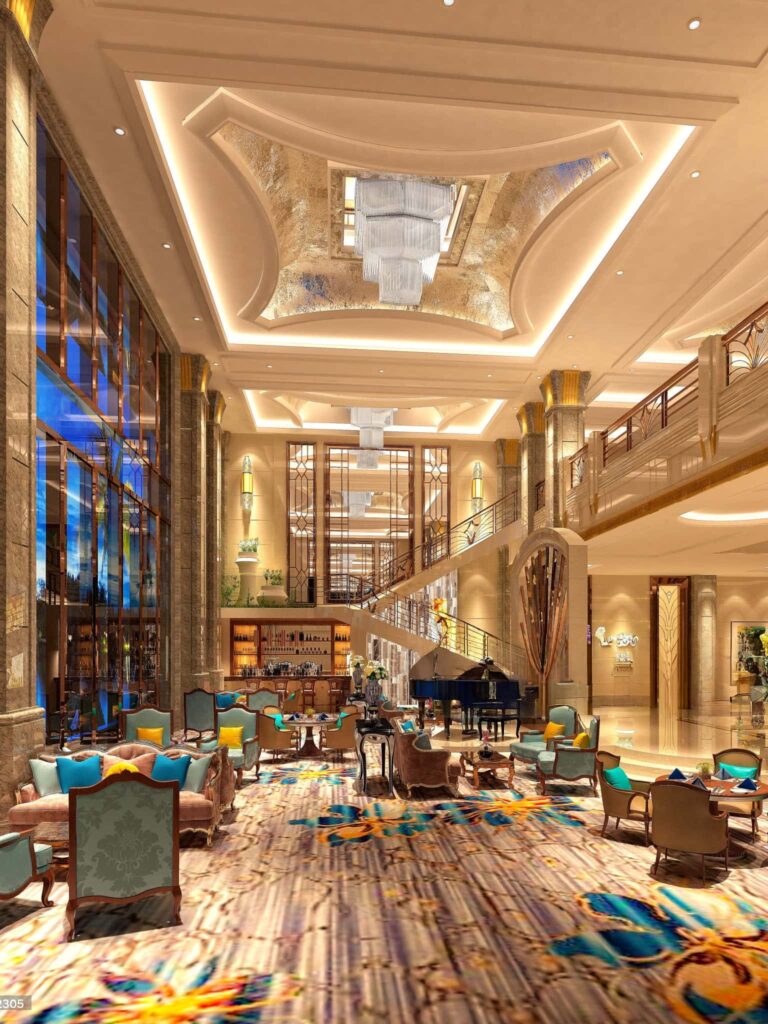
Hotel Furniture
How Hongye Supports Hotel FF&E Procurement
Hongye Furniture Group supports hotel FF&E procurement with guestroom casegoods, bed systems, wardrobes, desks, seating, restaurant furniture, public-area furniture, and selected back-of-house packages.
For qualified hotel projects, Hongye can support:
- Furniture schedules and preliminary project review.
- Product drawings and custom engineering.
- Guestroom, restaurant and public-area furniture packages.
- Material, finish and upholstery sample development.
- Golden sample or model-room support.
- Production planning and lead-time estimates.
- In-process and pre-shipment inspection coordination.
- Export packing, container loading and logistics preparation.
- Project-specific documentation where applicable.
Buyers should independently verify product scope, material details, test evidence, certification validity, installation responsibility, warranty terms and destination-market requirements before approving production.
For a broader risk-management framework, read 5 FF&E Procurement Risks (And How Hongye Mitigates Them).
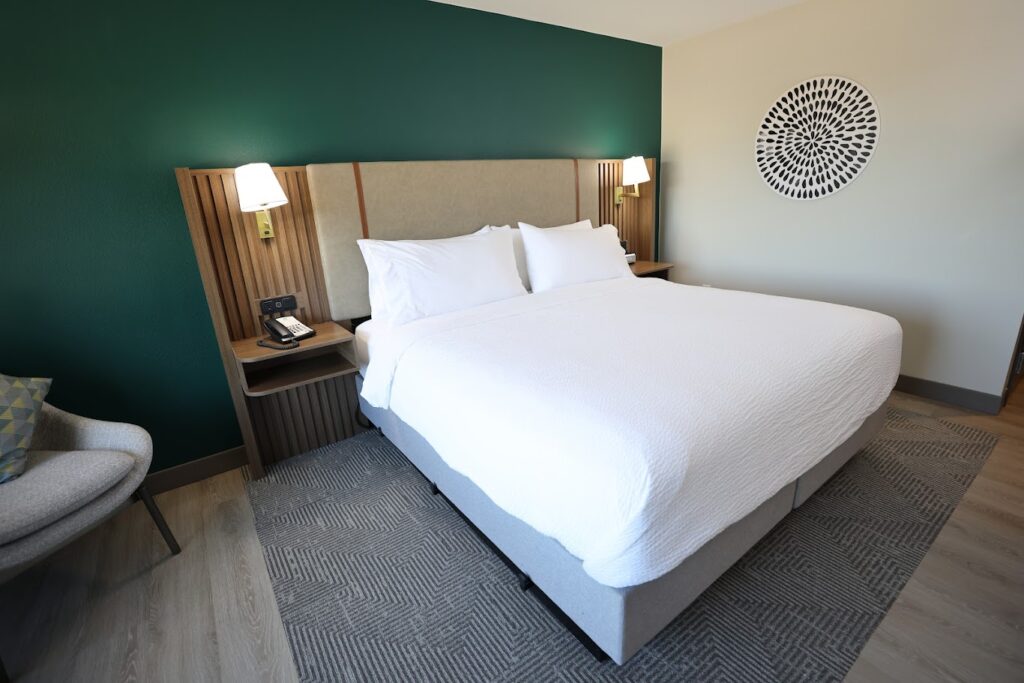
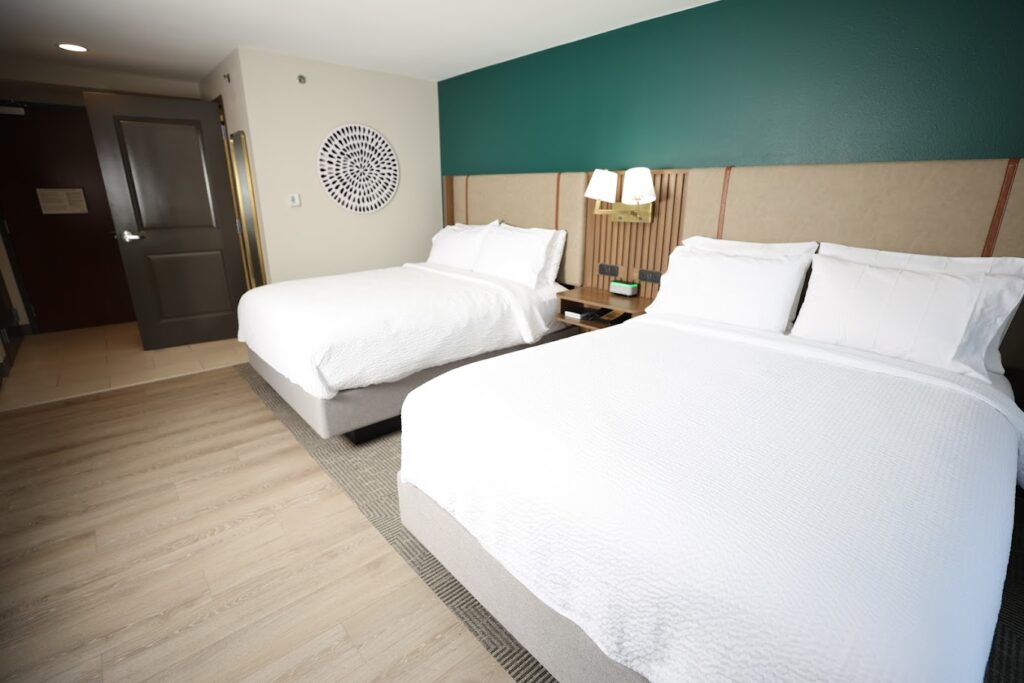
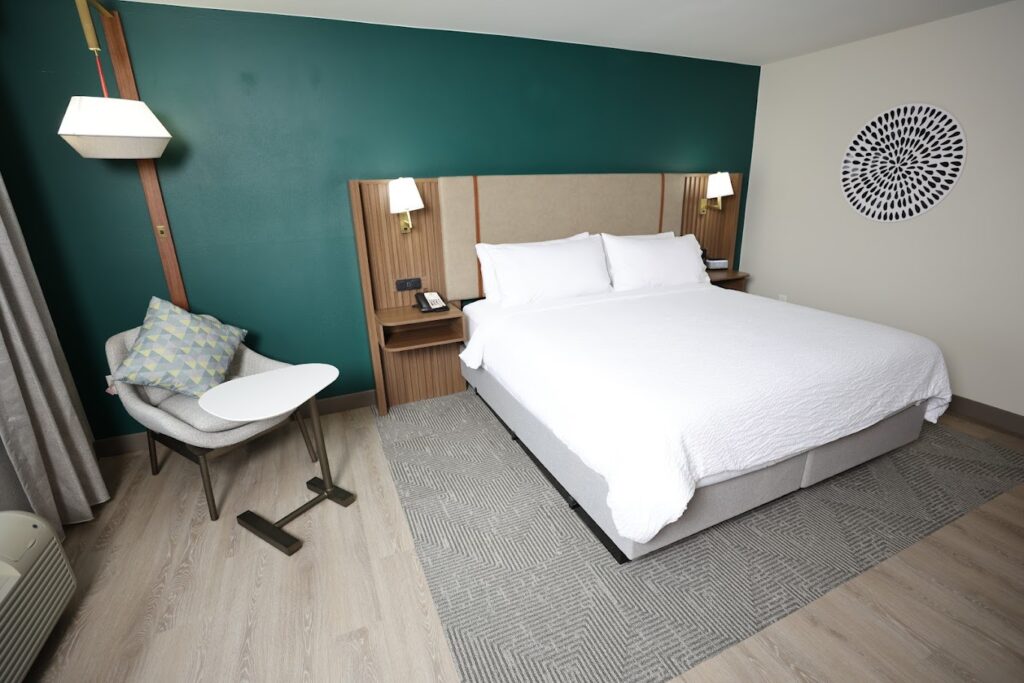
Holiday Inn Fairview Heights | Hospitality Project Solution By Hongye Furniture
Frequently Asked Questions
How do I verify a hotel furniture manufacturer is legitimate?
Verify the legal entity, corporate bank account, actual factory site, relevant production capability, current capacity plan, product-level documentation and comparable project evidence. For larger or more complex projects, consider a buyer visit or independent third-party factory audit.
What is the difference between FF&E and OS&E in hotels?
FF&E includes durable furniture and equipment such as beds, casegoods, seating, millwork, mirrors and public-area furniture. OS&E includes operating supplies such as linens, towels, amenities, tableware, uniforms and cleaning products. They require different budgets, specifications, lead times and quality controls.
How long should hotel furniture last?
Service life depends on use intensity, material construction, maintenance, cleaning practices, occupancy, climate and hotel brand requirements. Rather than relying on one fixed lifespan, hotels should track condition through an asset register and schedule repair, refurbishment or replacement according to actual performance.
What material standards should hotel furniture meet?
The project should specify appropriate structural, finish, durability, fire, emissions, cleanability and material-traceability requirements. The exact standards depend on the furniture category, hotel zone, brand standard and destination market. Require product-specific evidence for the approved configuration.
How much does hotel furniture cost per room in 2026?
Costs depend on scope. Furniture-only guestroom packages, full guestroom FF&E packages and total hotel FF&E cost per key are different budget measures. For planning ranges and a cost formula, read Hotel Furniture Cost per Room: 2026 Pricing Guide by Hotel Tier.
What should a hotel furniture purchase order include?
Include approved drawings, a bill of materials, material and finish schedule, retained sample reference, inspection rights, AQL requirements, payment milestones, delivery schedule, packaging rules, a warranty, spare parts, subcontracting terms, and dispute-resolution provisions.
Choose the Manufacturer That Fits the Project
The strongest hotel furniture manufacturer is not simply the supplier with the lowest quote or the largest showroom. It is the manufacturer that can prove it understands your hotel tier, materials, brand standards, delivery schedule, and quality expectations.
Start with clear scope. Verify the factory and current capacity. Lock materials and finishes in the contract. Then use samples, inspections and payment milestones to protect the project through production and delivery.
By following this structured approach, hotel owners and FF&E directors can reduce avoidable risk and select a furniture manufacturer that supports both the hotel opening and the long-term guest experience.