
Hotel FF&E follow-up after Canton Fair should turn booth conversations into a documented procurement process. Start by organising supplier claims, issue one controlled request for quotation and close the important technical and commercial gaps before placing an order.
Phase 2 of the 140th Canton Fair runs from October 23 to 27, 2026. Once your furniture sourcing visit is complete, the next step is to verify what was discussed—not simply request a lower price.

The priority is a shared baseline: suppliers should price the same products, quantities, specifications and delivery responsibilities.
This guide explains how to build a shortlist, compare quotations, review contract terms and plan inspection and shipment release.
Key Takeaways
- Record what each supplier stated and which claims still need evidence.
- Send shortlisted suppliers the same RFQ documents and revisions.
- Separate base quotations from proposed alternatives.
- Verify the contracting company, manufacturing arrangements and delivery responsibilities.
- Distinguish sample approval from production release.
- Review payment, inspection and shipment-release conditions separately.
- Define the complete sampling plan rather than writing “AQL 2.5” alone.
- Confirm the project programme against actual approvals, procurement and production requirements.
Organise Contacts Before Requesting Quotations
Begin with the information collected at the fair.
Connect each supplier to its booth details, product photographs, meeting notes and follow-up commitments.
Record:
- Company name.
- Contact person.
- Products discussed.
- Relevant project experience.
- Proposed manufacturing location.
- Stated capabilities.
- Preliminary price assumptions.
- Documents promised.
- Outstanding questions.
Separate facts you observed from statements that still require verification.
A displayed sample may demonstrate appearance and basic operation. It does not, by itself, establish how the supplier will manufacture, inspect and deliver the complete order.
Build a Shortlist Around Project Fit
Prioritise suppliers against the actual package.
Consider product coverage, customisation, documentation, communication and the manufacturing arrangements proposed for your project.
Do not eliminate or select a supplier solely because its booth was large, its catalogue was attractive or its indicative price was low.
Use a follow-up register to make the next action visible.
| Stage | Action | Required Output |
|---|---|---|
| Contact review | Organise notes, photographs and supplier details | Traceable candidate list |
| Initial clarification | Confirm product fit and request missing information | Evidence and open-question register |
| RFQ issue | Send the same controlled package | Comparable supplier responses |
| Technical and commercial review | Identify differences and risks | Qualified shortlist |
| Verification | Review capability, samples and relevant documents | Recorded findings and actions |
| Order preparation | Resolve responsibilities and release conditions | Approved purchasing basis |
Set response targets that reflect document completeness and product complexity. Do not force every project into the same six-week timetable.
Issue One Controlled Hotel Furniture RFQ
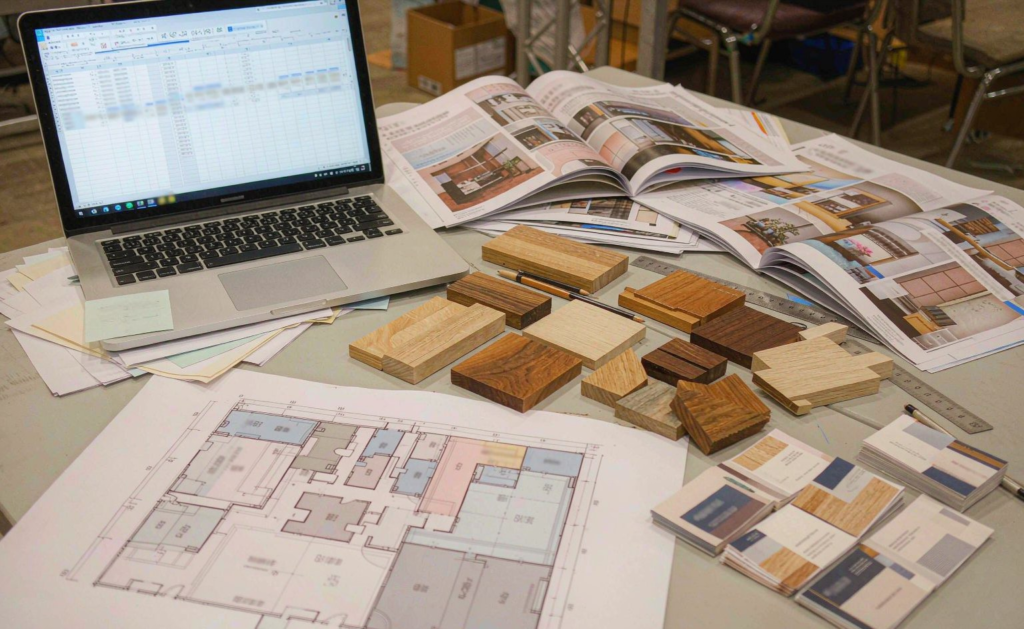
A hotel furniture RFQ should explain what each supplier must price and how its response should be organised.
Include:
- Project location.
- Room count and room types.
- Bill of quantities.
- Item codes.
- Drawings and revisions.
- Material references.
- Hardware requirements.
- Performance requirements.
- Packaging expectations.
- Delivery destination.
- Installation or support scope.
- Target programme.
- Required quotation format.
Identify preliminary information clearly. If a material or quantity remains unconfirmed, ask suppliers to state their assumptions rather than silently fill the gap.
Keep the Base Offer Separate From Alternatives
Require the specified base item to be priced first.
Alternatives should be submitted separately with an explanation of their effects on:
- Appearance.
- Dimensions.
- Construction.
- Performance.
- Cleaning.
- Maintenance.
- Supporting evidence.
- Price.
- Programme.
An internal change is not automatically harmless because guests cannot see it.
Write a Useful Follow-Up Email
A concise message can introduce the RFQ:
Subject: Hotel FF&E RFQ — [Project Name] — [Location]
Thank you for discussing our project at the Canton Fair. Attached are the current item schedule, drawings and material references.
Please confirm the products you can supply, your proposed manufacturing arrangements and any information required before quotation. Return the base offer in the attached format and list exclusions, assumptions and alternatives separately.
Please also identify the proposed sample process, relevant documentation and programme conditions.
This gives the supplier a defined task and creates a record of the information issued.
Compare Quotations Before Comparing Totals
Review scope and assumptions before ranking prices.
Two offers can describe similar-looking furniture while including different materials, components or services.
| Comparison Area | What to Confirm |
|---|---|
| Scope | Same item codes, quantities and room configurations |
| Documents | Same drawings, specifications and revisions |
| Materials | Specified products or clearly declared alternatives |
| Hardware | Proposed models, functions and evidence |
| Samples | Scope, fees, timing and approval arrangements |
| Testing | Existing evidence and additional work required |
| Packaging | Included protection and special requirements |
| Delivery | Applicable rule, named location and included services |
| Installation | Assembly, fixing, supervision and exclusions |
| Programme | Approval conditions and proposed milestones |
| Commercial terms | Currency, validity, payment and warranty |
| Deviations | Explicit list of differences from the RFQ |
A short quotation is not necessarily inadequate. The important question is whether it answers the RFQ and makes differences visible.
Normalise the Commercial Basis
Do not compare a factory supply price directly with a delivered or installed price.
Identify which costs each offer includes, then adjust the comparison to the agreed purchasing basis.
Keep allowances visible where an item remains unresolved.
Define Delivery Responsibilities With the Correct Incoterm
Where Incoterms are used, state the chosen rule, named port, place or point, and edition.
For example:
[Chosen rule] [Named location] Incoterms® 2020
Select the rule for the actual transport arrangement. Do not use “named port” for every delivery term.
Incoterms clarify defined delivery responsibilities, costs and risks, but they do not replace the sales contract or determine every issue, including ownership and payment.
Define those matters separately.
Also confirm the responsibilities for packaging, unloading, storage, site movement and installation where relevant.
Verify the Supplier’s Proposed Delivery Capability

Use the fair discussion as the starting point for verification.
Confirm:
- Contracting entity.
- Payment recipient.
- Manufacturing locations.
- In-house processes.
- Outsourced work.
- Quality responsibilities.
- Packaging arrangements.
- Project coordination.
- Service and warranty contacts.
The objective is transparency and accountability—not simply deciding whether the supplier calls itself a factory or trading company.
Match the Assessment to the Risk
A capability review may include company documents, references, a site visit, third-party assessment or remote review.
Record the scope and limitations of each method.
A live video walkthrough can support initial verification. It should not automatically be treated as equivalent to an independent site assessment.
Review Processes Relevant to Your Order
For casegoods, you may need to examine material control, machining, edging, assembly and finishing.
For upholstered products, the relevant processes may include frames, filling, cutting, sewing and assembly.
Ask how subcontracted components are approved and checked.
A generic tour is less useful than a review connected to the products being quoted.
Agree Samples and Production-Release Conditions
Approved samples should form part of a coordinated specification—not replace it.
Identify the role of each sample:
- Finish reference.
- Material sample.
- Component sample.
- Complete product.
- Room mock-up.
- Production verification sample.
Record the item code, configuration, revision, approval scope and outstanding comments.
Separate Appearance Approval From Technical Acceptance
A finish sample may establish colour, texture and sheen. It does not automatically approve the substrate, structural performance or electrical components.
Likewise, acceptance of a mock-up room does not necessarily release every item for manufacture.
Define the required conditions for production, such as:
- Approved drawings.
- Accepted materials.
- Closed technical queries.
- Required evidence.
- Confirmed quantities.
- Commercial milestones.
- Written release.
Do not rely on an informal message such as “the room looks good” as the complete manufacturing instruction.
Review Hotel FF&E Contract Terms Before Award
The contract should connect the commercial offer with the agreed specification and approval process.
The following are issues to agree and review with the project’s legal advisers. They are not universal clauses suitable for every jurisdiction.
Contract Documents and Priority
Identify the documents included in the agreement and how conflicts will be resolved.
This may include the quotation, item schedule, drawings, samples, clarifications and accepted deviations.
Payment Milestones
Define each payment trigger and the evidence required.
Clarify:
- Who reviews the evidence.
- What happens if inspection identifies nonconformities.
- Whether partial delivery is allowed.
- Whether any retention applies.
- How the final payment relates to the supplier’s actual scope.
Do not assume one deposit-and-balance percentage is standard for every order.
Programme and Delay
State the relevant dates and their starting conditions.
Address notification, dependencies, changes and agreed remedies. Review enforceability and responsibility under the applicable contract and law.
Inspection and Acceptance
Define the inspection rights, criteria, records and response to nonconforming products.
Also explain what shipment release and later acceptance do—and do not—mean.
Changes and Warranty
Require documented change assessment before execution.
For warranty, identify coverage, exclusions, start date, reporting, remedies and associated costs. Avoid relying on headline years without the supporting terms.
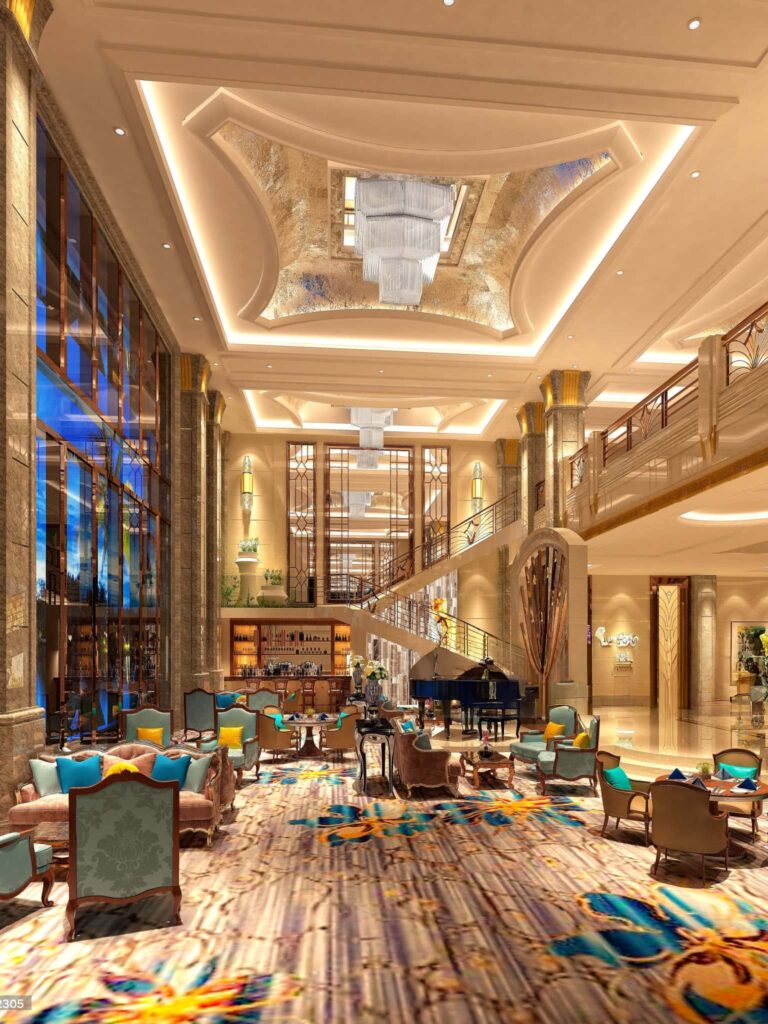
Hotel Furniture
Prepare the Pre-Shipment Inspection Plan Early
Hotel furniture pre-shipment inspection should be planned before the order reaches its final stages.
The plan should identify:
- Products and quantities.
- Inspection lot.
- Documents.
- Required completion status.
- Sampling arrangements.
- Inspection methods.
- Defect classifications.
- Acceptance rules.
- Reporting.
- Reinspection.
Agree which products must be available and how packages will be selected and opened.
Do not allow the inspection to become a review of only the items preselected by the supplier.
Define the Complete AQL Plan
“AQL 2.5” alone does not specify the sample size or acceptance number.
ISO 2859-1 uses sampling schemes indexed by acceptance quality limit. A usable plan also needs the lot size, inspection level and relevant sampling arrangements.
For the agreed edition, document:
- Lot definition.
- Inspection level.
- Sampling scheme.
- Defect categories.
- Sample size.
- Acceptance and rejection rules.
- Safety-related checks.
- Handling of failed results.
Do not interpret AQL as a promise that the entire shipment contains no more than a stated percentage of defects.
Inspect Against the Complete Approved Requirements
Use the specification, drawings, accepted samples and relevant evidence together.
| Inspection Area | What to Review | Release Question |
|---|---|---|
| Identity and quantity | Item codes, configurations and quantities | Is the correct scope available? |
| Dimensions | Approved drawings and item-specific tolerances | Do inspected items meet the defined requirements? |
| Construction | Materials, joints, components and accessible details | Does the assembly match the accepted configuration? |
| Operation | Doors, drawers, mechanisms and relevant functions | Are the required functions satisfactory? |
| Appearance | Samples, viewing conditions and permitted variation | Is the result acceptable under the agreed process? |
| Materials | Identification and relevant measurements | Is the evidence applicable and complete? |
| Packaging | Protection, labels and handling information | Is the packaging consistent with the agreed plan? |
| Nonconformities | Findings, correction and verification | Have release conditions been met? |
Use Material Measurements Appropriately
If moisture measurements are required, identify the material, instrument, method, measurement locations and acceptance basis.
Do not apply one reading or range indiscriminately to solid wood, plywood and fibreboard.
Set Item-Specific Tolerances
Avoid a universal dimensional tolerance for every component.
A decorative panel, drawer interface and site-fitted unit may require different criteria. Use the approved requirements for the actual item.
Assess Appearance Under Agreed Conditions
Identify lighting, viewing arrangements, samples and any instrumental method.
Natural variation and texture should be addressed in the acceptance criteria rather than judged only by a vague instruction such as “no difference at arm’s length.”
Separate Inspection, Payment and Shipment Release

These decisions may be connected, but they are not interchangeable.
A report records findings. The authorised party then evaluates whether the contractual release conditions have been met.
A project may require:
- Correction.
- Reinspection.
- Acceptance of defined exceptions.
- Updated documents.
- Payment authorisation.
- Shipment release.
State the sequence and authority in advance.
Do not assume that receiving a report automatically means the order may be shipped or the payment must be released.
Plan Loading and Arrival Checks Separately
Product inspection does not cover every loading risk.
Where required, a loading review may address:
- Container or vehicle condition.
- Package identity.
- Loading arrangement.
- Restraint.
- Handling.
- Agreed moisture-management measures.
- Seal and shipment records.
After arrival, complete the applicable receiving and installation checks.
Keep records linked to the shipment, but do not treat pre-shipment approval as proof that later transport or site handling caused no damage.
Discuss Post-Fair Follow-Up With HONGYE
Hongye Furniture Group can review a hotel furniture brief against the project’s item schedule, drawings, material references and delivery requirements.
Confirm the proposed scope for:
- Product supply.
- Samples.
- Manufacturing arrangements.
- Documentation.
- Inspection coordination.
- Packaging.
- Delivery.
- Installation information.
- Service and replacement parts.
Explore the hotel bedroom furniture range and loose furniture range to identify relevant categories.
For a quotation discussion, send the BOQ, room mix, drawings, finish direction, delivery destination and target programme through the contact page.
The next step should establish the scope, information gaps and response programme—not promise a fixed production duration before the requirements are reviewed.
Frequently Asked Questions
How soon should I follow up after the Canton Fair?
Organise contacts while meeting details are fresh, then send a structured brief to suitable suppliers.
Agree response targets according to document completeness and the project programme rather than relying on one universal deadline.
Why can a written quotation differ from the booth price?
The written offer may include different quantities, materials, packaging or delivery responsibilities.
Ask for the assumptions behind both figures and compare the defined scope.
What payment structure should a hotel FF&E order use?
Negotiate milestones appropriate to the order and risk allocation.
Define the supporting documents, review authority and response to failed inspection or other unmet conditions.
Is a factory visit always required?
Select the verification method according to the project’s risks.
Documents, references, remote reviews, third-party assessments and site visits provide different types of information. Record their limitations.
What is an approved reference sample?
It is an identified physical reference for specified accepted characteristics.
State what it represents, how it relates to the drawings and how it will be retained.
Does AQL 2.5 provide a complete inspection plan?
No.
The plan also needs the lot definition, inspection level, sampling arrangement, defect categories and acceptance rules.
When should pre-shipment inspection take place?
Agree the timing and required product status in advance.
Allow enough time for inspection, correction and any reinspection before the intended shipment.
How long does hotel FF&E production take after the fair?
Confirm a project-specific programme.
The scope, materials, samples, approvals, manufacturing and inspection requirements determine the schedule.
Turn Fair Contacts Into a Controlled Procurement Process
A productive follow-up connects supplier discussions with a defined RFQ, verified capabilities and documented purchasing conditions.
Resolve scope differences before comparing prices. Establish samples and production-release requirements before manufacture. Then use an agreed inspection plan and clear authority for shipment decisions.
That process gives the owner, procurement team and supplier a more dependable route from exhibition meeting to delivered furniture.