Commercial furniture has traditionally put function ahead of form, but 2026 is reshaping that balance. Trade shows, concept catalogs, and real‑world installations now feature pieces that blur the line between art and equipment—yet still justify their existence through measurable productivity, well-being, or brand impact.
This article highlights 10 unusual commercial furniture trends rather than just single “hero products.” For each trend, you will see concrete examples from real manufacturers and a practical reason why the design breaks convention. If you are sourcing furniture for a flagship headquarters, hospitality project, or client concept pitch, these trends show that unusual commercial furniture can be a deliberate strategy, not a gimmick.
1. Suspended & Enclosed Acoustic Pods
Representative brands: Orangebox Air³ (via Steelcase) and other high‑performance acoustic pod ranges.
What started as simple phone booths has evolved into fully enclosed acoustic pods that feel more like sculptural installations than standard furniture. Orangebox’s Air³ acoustic pods, for example, use modular glass and fabric panels plus an opening roof system to deliver high levels of speech privacy inside open‑plan offices.
Why it’s unusual
- Traditional privacy solutions rely on walls or fixed meeting rooms; acoustic pods add freestanding, reconfigurable “micro‑architecture” in the furniture layer.
- Advanced pods incorporate integrated lighting, ventilation, and technology, so they function as complete work settings rather than single items.
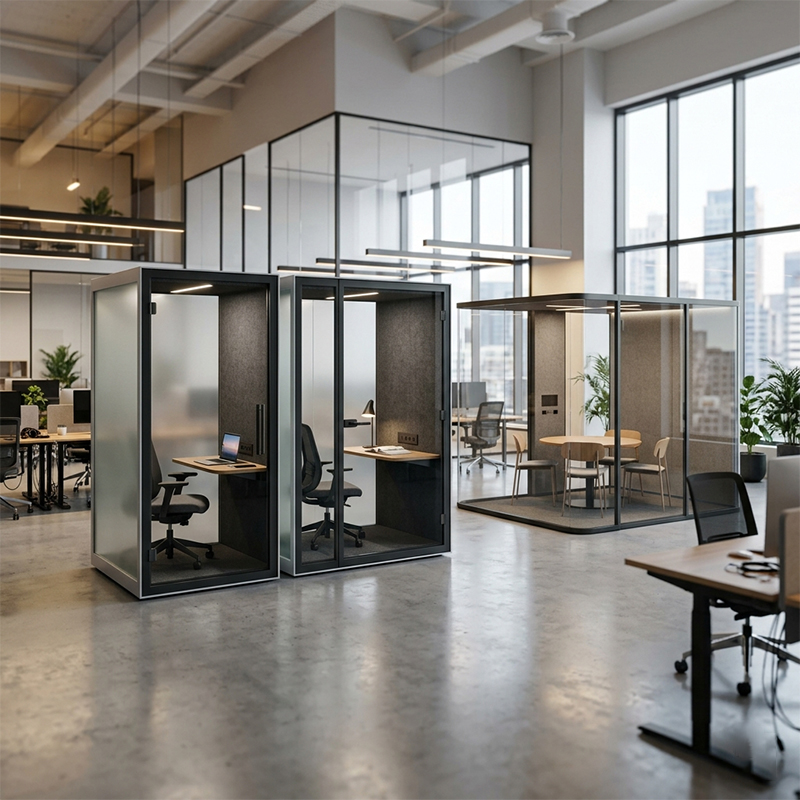
Acoustic Privacy Pods Office Soundproof Solutions
As a specialized office phone booth manufacturer, we deliver high-performance acoustic privacy pods that solve the noise challenges of modern open-plan environments. These collaborative workspace solutions create a dedicated sanctuary for deep focus and confidential meetings without requiring permanent structural changes. Our soundproof office booth designs feature advanced sound-insulating materials that effectively block external distractions, while integrated smart ventilation maintains a fresh, comfortable atmosphere for long-duration tasks. By choosing this silent office pod, businesses can instantly upgrade their workspace functionality…
2. Asymmetric & Curved Conference Tables
Representative brands: Steelcase Ocular™ conference tables and other non‑rectangular collaboration tables.
In 2026, conference tables are increasingly designed around video and hybrid collaboration rather than face‑to‑face boardroom formality. Steelcase’s Ocular™ tables use angled and curved geometry to position participants correctly for cameras and screens, replacing rigid rectangles with shapes that subtly influence group dynamics.
Why it’s unusual
- Instead of a single “head of table,” curved or asymmetric forms create multiple focal points, reducing hierarchical seating tension.
- Geometry becomes a collaboration tool: the table shape itself helps people see and be seen better during virtual meetings, addressing a real problem rather than just being decorative.
3. Biophilic Seating & Indoor Green Platforms
Representative trends: Biophilic seating platforms, integrated planters, artificial turf seating zones—rather than a specific “living grass sofa” product line.
Biophilic design has already brought plants onto walls and ceilings; in 2026, it is moving more deeply into seating and lounge modules. Some brands integrate large planters or hyper‑realistic artificial turf into benches and platforms, giving employees a stronger “outdoor” feeling in indoor break areas.
Why it’s unusual
- Seating becomes a carrier for greenery—planters and turf surfaces built into furniture modules—rather than just a few pots placed nearby.
- This trend responds to research linking natural elements with improved productivity and wellbeing while staying more practical than fully “living grass floors.”
4. Intelligent Ergonomic Chairs with Dynamic Support
Representative brands: Haworth Very series, Kinnarps 6000/8000 task chairs, and Hongye’s sensor‑assisted chair R&D direction.
Contemporary ergonomic office chairs increasingly use dynamic mechanisms that encourage continual micro‑movement instead of fixed positions. Haworth’s Very chair and Kinnarps 6000/8000 series use synchronized tilt or FreeFloat™ mechanisms so seats and backrests move independently or together to support different postures.
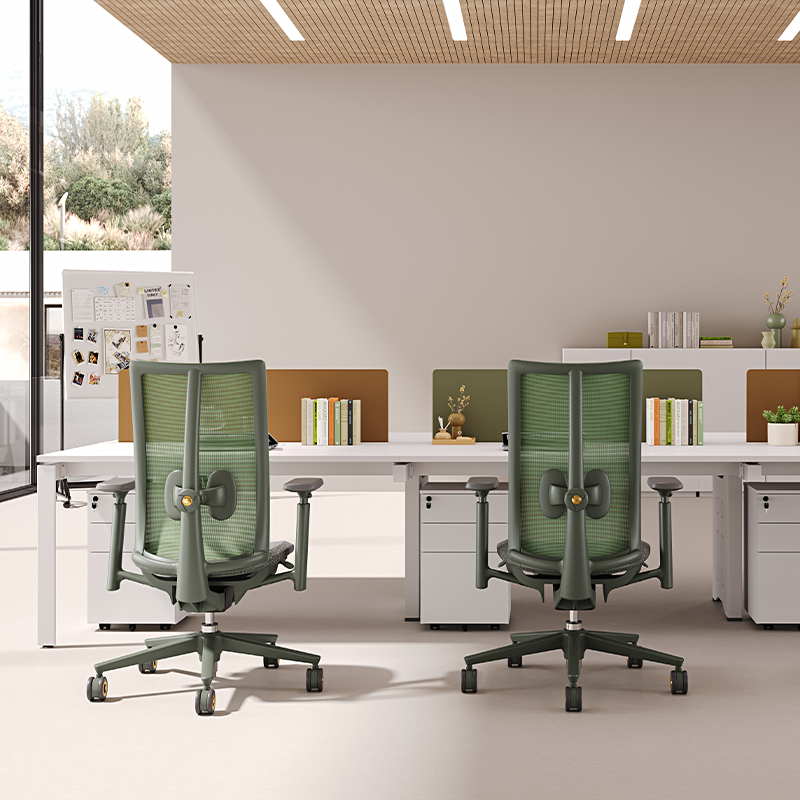
Ergonomic Luka Office Chair Workplace Wellness at NeoCon 2026
Experience the fusion of minimalist architectural design and advanced orthopedic support with the Ergonomic Luka Office Chair. Specifically engineered for modern corporate environments and executive home offices, the Luka series task chair features a signature contoured breathable mesh back and an integrated dynamic lumbar support system that adapts to your spinal curvature in real-time. This high-performance office seating is equipped with a premium weight-sensitive synchronized tilt mechanism, 3D adjustable armrests, and a high-density molded foam seat to ensure long-term pressure…
Why it’s unusual
- The chair actively responds to posture and movement rather than expecting the user to find one “correct” setting and stay there.
5. Responsive Reception Desks & Lobby Surfaces
Representative brands: Viccarbe and other high‑end collaborative space furniture makers.
Although thermochromic temperature‑switch laminates remain largely conceptual, 2026 reception desks and lobby surfaces increasingly use high‑contrast materials, integrated lighting, and embedded media panels to express brand personality dynamically. Viccarbe and similar brands emphasize time‑based and experiential qualities in collaborative and waiting areas.
Why it’s unusual
- Reception furniture is treated as an experience canvas—color, texture, and light interplay—rather than a static counter.
- These designs connect temperature, lighting or content display to visitor perception, echoing your original “thermal‑switch desk” idea without inventing a non‑existent specific product.
6. Rotating & Reconfigurable Privacy Screens
Representative brands: Nowy Styl Sileo rotating walls and similar rotating panel systems.
Nowy Styl’s Sileo wall panels consist of elements that can each rotate 360°, making it easy to change openness and visual shielding. While the market has few fully motorized cylinders as standard products, these rotating panels are already a practical solution in offices and education spaces.
Why it’s unusual
- Privacy is no longer binary; rotating elements create gradients—from open to semi‑private to fully shielded—throughout the day.
- The design supports flexible work modes, enabling quick shifts between collaboration and focused work without relying solely on fixed walls.
7. Adaptive Benches & Communal Seating Systems
Representative brands: Kinnarps Polar is a sit‑stand desk/bench system and other modular benches focused on multi‑user comfort.
The market does not yet offer a mass‑produced “weight‑responsive spring matrix bench” as in your initial concept, but several Nordic brands promote more adaptable bench and long‑table systems. Kinnarps Polaris, for example, supports sit‑stand ergonomics, combined screens and storage, and modular bench configurations for varying team sizes and activities.
Why it’s unusual
- Benches become configurable systems with screens, height variations, and buffer zones rather than single, rigid planks.
- The design goal is to let multiple users share seating while still receiving appropriate support, moving away from “one firmness fits all.”
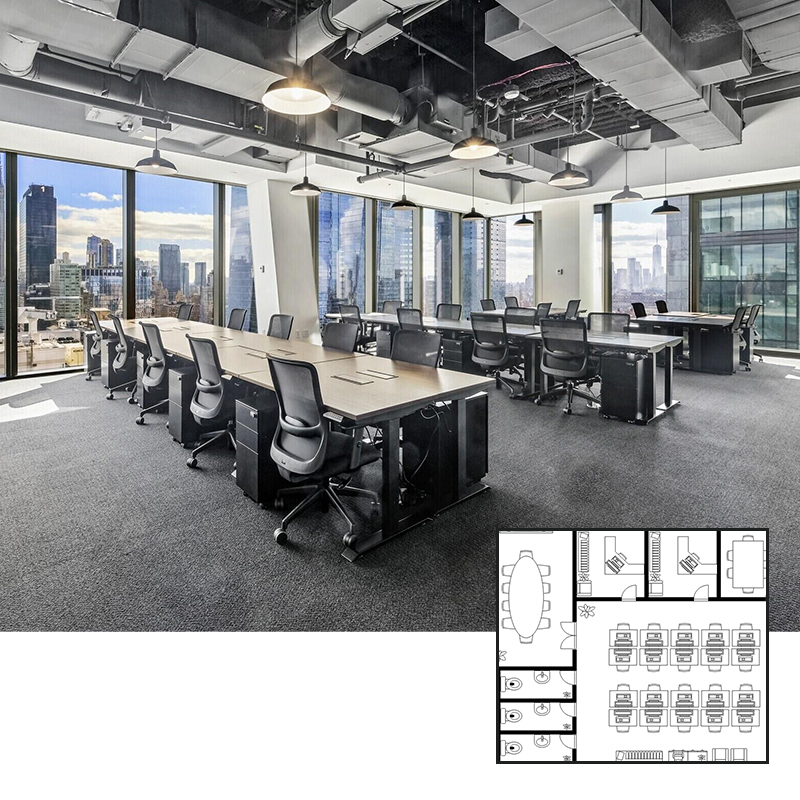
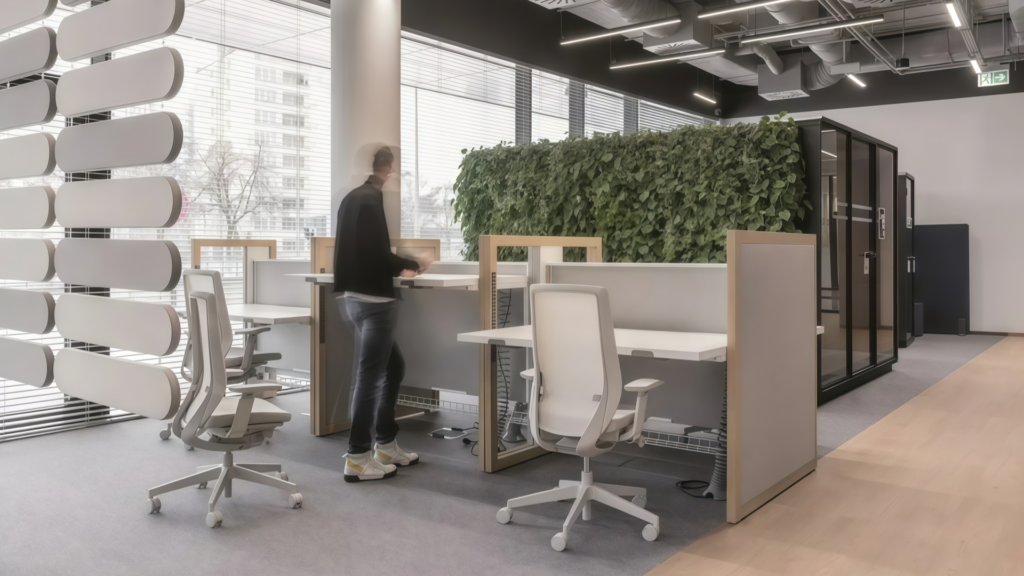
Office Furniture Modern Staff Workstation
Elevate your workplace productivity with our Modern Staff Workstation, a flagship product from Hongye Furniture Group. Specifically designed for contemporary open-plan environments, this modular office workstation blends a sleek, minimalist aesthetic with heavy-duty durability. Featuring high-density melamine-faced chipboard (MFC) and a robust aluminum alloy frame, the workstation offers superior anti-scratch and heat-resistant properties. Its intelligent integrated cable management system ensures a clutter-free desk surface, while the customizable privacy screens (fabric or glass) facilitate a perfect balance between collaborative teamwork and…
8. Interactive Surfaces for Collaboration
Representative trends: Tables and walls with integrated touchscreens, stylus input, and audio/visual feedback in creative workspaces—not a specific vibrating “SoundScape Wall Desk” product.
Research labs such as MIT Media Lab have experimented with haptic feedback surfaces, while commercial environments mostly use electronic whiteboards, digital collaboration tables, and touch‑enabled meeting tables. These solutions make brainstorming more immersive through visual and interactive cues, rather than the purely passive nature of traditional whiteboards.
Why it’s unusual
- Writing or drawing becomes an active interaction with the furniture surface, keeping teams engaged through touch and visual feedback.
- Interactive tables and walls are now common in hotel meeting rooms, coworking spaces, and innovation labs, best presented as a “trend with examples” rather than implying a specific non‑existent product.
9. Suspended & Rail‑Mounted Storage Systems
Representative trends: Ceiling‑ or wall‑mounted rail systems that support hanging cabinets and sliding storage units, derived from closet and wall storage solutions.
In both residential and commercial spaces, systems that hang cabinets from suspension rails already exist—for example, closet and cabinet systems that free floor space. Offices and hospitality projects are beginning to borrow these structures, moving some storage off the floor and onto rails to increase circulation and flexibility.
Why it’s unusual
- Storage furniture shifts from fixed floor‑standing units to movable elements riding on ceiling or wall rails, changing how space flows.
- These systems can incorporate charging modules, soft‑close drawers, and integrated power, turning storage into configurable service nodes rather than static boxes.
10. Sensor‑Assisted Posture & Health Seating
Representative brands & directions: Mainstream ergonomic chairs (Haworth, Kinnarps) plus Hongye’s emerging sensor‑assisted ergonomic chair direction.
Fully commercialized “real‑time posture correction chairs” with tactile prompts are still emerging, but multiple manufacturers and research teams are developing seating and desks with integrated pressure sensors, posture analysis, and health‑data features. Hongye’s Reflex Chair concept fits into this trajectory: pressure sensors detect sustained slouching, lateral leaning, or forward hunching and feed back subtle cues to encourage correction.
Why it’s unusual
- Chairs become part of workplace health monitoring, bridging classic ergonomics with simple biofeedback.
- For Hongye, the value lies in bringing posture technology to the mid‑market at lower prices than many European high‑end brands, framing this as a development direction rather than claiming an already mass‑produced model.
Unusual vs Traditional Commercial Furniture: What Changes
Compared with traditional commercial furniture, these unusual trends bring several consistent differences that procurement teams need to factor into project planning.
- Price range: Statement pieces and highly integrated systems are often 1.5–3× more expensive than standard desks and chairs, but aim to repay that difference through productivity, brand perception, and employee satisfaction gains.
- Lead time: Custom geometry tables, rotating walls, and complex acoustic pods typically require 6–12‑week lead times, which must be aligned with project schedules.
- Customization depth: Innovative furniture usually supports more flexible colour, material, and dimension options; this is an advantage but also demands stricter specification management.
- ROI timeline: Studies show that when space design becomes more distinctive and fit‑for‑purpose, employee satisfaction can rise 15–20%, with positive impacts on retention and creativity—so purchasing decisions should be framed as experience investments, not just unit costs.
How Hongye Furniture Group Uses Innovation Practically
Hongye Furniture Group does not pursue novelty purely for visual impact. Its innovation pipeline—including acoustic solutions, modular seating, and sensor‑assisted ergonomic chairs—is filtered through three pragmatic questions.
- Can this be manufactured at scale with stable quality?
- Can mid‑market buyers afford it as part of real projects, not only flagship showpieces?
- Will it hold up under daily commercial use for at least five years?
Concepts that pass these filters are integrated into Hongye’s commercial catalog as unusual yet practical furniture: acoustic pods that genuinely reduce noise, modular seating that reconfigures quickly, and ergonomic chairs that gently nudge posture without complex manual adjustments.
FAQ: How to Use Unusual Commercial Furniture Strategically
Q: Are unusual commercial furniture designs worth the higher price?
A: If you judge only by cost‑per‑seat, standard furniture often wins. But when you factor in productivity, retention, and brand perception, distinctive designs frequently deliver a positive ROI within 12–18 months, echoing industry studies that link better workplace design with double‑digit gains in employee satisfaction.
Q: Can unusual furniture work in conservative corporate environments?
A: Yes—when deployed selectively. Start with one statement conference table, a single acoustic pod cluster, or a distinctive lounge zone rather than redesigning every room. This approach signals innovation while respecting existing corporate aesthetics.
Q: What maintenance challenges do unusual designs create?
A: Acoustic pods and rotating screens require regular inspection of mechanical and acoustic components; biophilic seating needs irrigation and plant care; sensor‑assisted chairs may require firmware updates and calibration. Most manufacturers offer maintenance guides, so procurement teams should review them early in the selection process.
Q: How can I evaluate whether an unusual design is practical for our project?
A: Ask three questions: (1) Does it solve a documented problem—noise, posture, engagement, or layout flexibility? (2) Can your facilities team maintain it with reasonable effort? (3) Will users actually adopt it rather than avoid it? If all three answers are yes, pilot the design in one zone before scaling.
About Hongye Furniture Group
Hongye Furniture Group is a Chinese commercial furniture manufacturer with more than 38 years of production experience and ISO‑certified facilities. The company operates multiple specialized websites that cover commercial, hotel, office, education, and healthcare furniture, and its Guangdong production base delivers project‑scale solutions to clients in over 60 countries.
Hongye’s design philosophy is “practical innovation”: features that improve workspace performance, engineered for mass manufacturing and priced for mid‑market buyers, not just premium flagship projects. To explore modular seating, acoustic solutions, and emerging sensor‑assisted ergonomic chairs, visit Hongye’s commercial furniture catalog and contact the team for project‑scale proposals aligned with your timeline and budget.