In hotel FF&E procurement, furniture, fixtures, and equipment typically account for 15–25% of a property’s total construction budget. On a 40 million USD midscale hotel, that means 6–10 million USD passes through the FF&E procurement pipeline, where a 5% overrun translates to 300,000–500,000 USD in unplanned costs and weeks of delayed opening. As a result, poorly managed FF&E procurement can cost hotel developers millions in both budget and lost revenue.
Yet the same FF&E procurement mistakes repeat across projects, markets, and experience levels. This guide identifies the ten most expensive hotel FF&E procurement errors, quantifies their impact on a 200-key hotel, and provides prevention strategies for developers, FF&E procurement agents, and project managers who want to keep projects on time and on budget.
What This FF&E Procurement Guide Covers
- The 10 most expensive FF&E procurement mistakes in hotel projects and how they occur.
- A mistake-cost matrix and risk severity assessment for a typical 200-key hotel.
- A phase-based FF&E procurement prevention checklist from pre-design to closeout.
- A case study comparing reactive vs planned FF&E procurement approaches.
- Practical recommendations to turn FF&E procurement into a risk-managed process.
Table 1: Mistake–Cost Matrix at a Glance
This high-level matrix shows how each FF&E procurement mistake affects cost, schedule, and reversibility for a 200-key hotel.
| Mistake | Typical Cost Impact (200-key hotel) | Time Delay | Reversibility |
|---|---|---|---|
| 1. Skipping factory audits | 150,000–400,000 USD remediation | 8–16 weeks | Low – defective stock already shipped |
| 2. Incomplete FF&E specifications | 80,000–200,000 USD change orders | 4–8 weeks | Medium – specs can be clarified mid-production |
| 3. Ignoring lead time reality | 200,000–500,000 USD lost revenue | 4–12 weeks | Very low – schedule already compressed |
| 4. Freight cost misestimation | 40,000–120,000 USD overrun | Minimal | Low – committed after shipment |
| 5. MOQ misalignment | 50,000–150,000 USD excess inventory | 2–4 weeks | Low – product already manufactured |
| 6. Single-supplier dependency | 100,000–300,000 USD mitigation | 12–24 weeks | Very low if supplier fails |
| 7. Compliance oversights | 75,000–250,000 USD retrofit/penalties | 8–16 weeks | Low – items already on site |
| 8. Inadequate packaging spec | 30,000–90,000 USD damage claims | 4–6 weeks | Medium – some items repairable |
| 9. Payment term mismanagement | 20,000–60,000 USD financing cost | Minimal | Medium – partially renegotiable |
| 10. No post-delivery inspection | 50,000–150,000 USD warranty loss | Variable | Low once delivery is signed off |
Mistake 1: Skipping Factory Audits
In hotel FF&E procurement, the single most expensive error is placing large orders with factories that have never been audited. A desk audit — reviewing certificates, photos, and references — cannot replace an on-site evaluation of real production conditions.
When hotel developers skip factory audits, several risks increase: factories subcontract production without disclosure, quality systems exist only on paper, production capacity claims are unrealistic, and material substitutions occur between samples and bulk runs. For example, a 200-room hotel that ordered case goods without a factory audit later found that 40% of units had veneer delamination caused by humidity in an un-air-conditioned subcontractor facility, resulting in 180,000 USD in replacement costs and a 7-week opening delay.
Prevention: Budget 3,000–8,000 USD for a third-party factory audit before signing FF&E purchase orders above 100,000 USD. The audit should review production capacity, quality documentation, worker skill, raw material storage, and finished goods inspection. For overseas manufacturers — including vertically integrated firms in China — the audit verifies that real practices match the documentation you receive.
Mistake 2: Incomplete FF&E Specifications
Incomplete or ambiguous hotel FF&E specification books almost guarantee change orders. Every gap between design intent and written specification becomes a negotiation after production starts.
Common gaps include finish colors described simply as “walnut” without a standard reference, upholstery fabrics specified by name but not by grade or double-rub count, joinery methods left unspecified, foam described as “high density” without numbers, and hardware finishes like “brushed nickel” without brands or models. These gaps lead to inconsistent production, disputes, and expensive rework.
Prevention: Build a detailed FF&E specification book that includes exact material grades, measurable finish standards with tolerance ranges, required construction methods, hardware by manufacturer part number, and clearly defined “approved equal” criteria. Investing in specification detail during design development is far cheaper than funding change orders during production.
Mistake 3: Ignoring Lead Time Reality
Hotel FF&E procurement is not a quick purchase; custom hospitality furniture production typically takes 8–16 weeks for standard items and 16–24 weeks for complex casegoods, plus 4–6 weeks for ocean freight and 2–3 weeks for customs and final-mile delivery. The real pipeline ranges from 14 to 33 weeks.
However, when construction falls behind, developers often delay FF&E orders to preserve cash flow. The assumption is that production can be “expedited” later, but in reality manufacturing lead times are driven by physical processes, not by willingness to rush. A delayed FF&E purchase order simply pushes delivery past the opening date and converts schedule risk into weeks of lost room revenue.
Prevention: Place hotel FF&E purchase orders when the general contractor receives notice to proceed, and build at least a 4-week buffer into the delivery schedule. Negotiate partial shipment milestones (such as 50% of the order at week 14 and 50% at week 16) to spread risk across the installation window. Treat lead time planning as part of overall project scheduling, not as a separate procurement decision.
Mistake 4: Freight Cost Misestimation
International freight is a major variable cost in FF&E procurement for hotels. Ocean freight for 40-foot furniture containers can range from 2,500–8,000 USD depending on route, surcharges, and season. Many developers budget freight based on a single early spot-rate quote, 12–18 months before shipment, which leads to significant overruns.
Hidden FF&E freight costs — port handling fees, customs exams, drayage, warehouse receiving, cross-docking, final-mile delivery, inside service, and debris removal—often push total freight spend well above initial estimates. Under-budgeting freight by even 5–7 percentage points on a multi-million dollar FF&E package can add tens of thousands of dollars in unplanned cost.
Prevention: Budget freight at 18–22% of FOB furniture cost for international FF&E procurement instead of relying on 12–15% spot-rate assumptions, and include a 5–8% freight contingency line. For large hotel projects, engage a freight forwarder early to model route-specific costs and volatility.
Mistake 5: MOQ Misalignment
Minimum Order Quantities (MOQs) are common in commercial furniture manufacturing and protect factories from small, uneconomical runs. In hotel FF&E procurement, typical MOQs are 50–100 units per SKU for upholstered seating, 20–50 for casegoods, and 200–500 for metal items.
The problem arises when project quantities fall below these thresholds, especially for specialty lobby, bar, or spa pieces. Hotels either pay high surcharges for below-MOQ runs or purchase excess inventory that ends up in storage. Both outcomes convert design decisions into long-term cost burdens.
Prevention: During specification, flag all FF&E items that fall below likely MOQs and group them by manufacturer to reach combined MOQs where possible. Alternatively, select catalog items with existing stock for low-volume needs, and reserve custom production for high-volume room-standard pieces.
Mistake 6: Single-Supplier Dependency
Awarding the entire FF&E package to one supplier concentrates risk. If that supplier suffers a factory fire, financial stress, quality crisis, or logistics disruption, the whole hotel project is exposed with no backup.
Single-supplier dependency can turn minor issues into full project delays; diversified FF&E procurement spreads risk across categories and production hubs. Separating casegoods, upholstered seating, public area furniture, and soft goods into 3–5 supplier relationships adds manageable coordination while removing single points of failure.
Prevention: Design a multi-supplier FF&E procurement strategy with one primary and one backup for casegoods and millwork, separate suppliers for upholstered seating and public area furniture, and dedicated vendors for mattresses and soft goods. Conduct at least limited due diligence on backups so they can be activated quickly if necessary.
Mistake 7: Compliance Oversights
Hotel FF&E must meet fire, load, accessibility, sustainability, and chemical regulations. Overlooking any area can trigger expensive retrofits, penalties, or rejections by authorities having jurisdiction.
Typical compliance gaps involve fire code standards for upholstered furniture, ADA accessibility requirements for seating and clearances, structural testing standards like BIFMA or EN 16139 for commercial chairs, sustainability documentation for LEED or similar programs, and chemical disclosures under regulations such as California Proposition 65.
Prevention: Build a compliance matrix early in FF&E specification that maps each product category to relevant standards in your jurisdiction. Require manufacturer test certificates, not just declarations, and include compliance review as a milestone before production approval.
Table 2: FF&E Procurement Risk Severity Assessment
This table summarizes risk probability and cost impact for key FF&E procurement factors in hotel projects.
| Risk Factor | Probability (1–5) | Cost Impact (1–5) | Risk Score | Mitigation Difficulty |
|---|---|---|---|---|
| Factory non-performance | 3 | 5 | 15 (Critical) | High – requires backup sourcing |
| Specification ambiguity | 4 | 3 | 12 (High) | Low – invest in detailed specs upfront |
| Lead time compression | 4 | 4 | 16 (Critical) | Medium – requires schedule discipline |
| Freight cost volatility | 4 | 2 | 8 (Medium) | Low – budget conservatively |
| MOQ excess inventory | 3 | 3 | 9 (Medium) | Medium – negotiate partial shipments |
| Compliance failure | 2 | 5 | 10 (High) | Medium – engage compliance consultant |
| Packaging damage | 3 | 3 | 9 (Medium) | Low – specify packaging standards |
| Payment disputes | 2 | 2 | 4 (Low) | Low – clear contract terms |
| Warranty gap | 3 | 4 | 12 (High) | Low – negotiate warranty terms |
Scores at or above 12 indicate critical risks that can materially impact hotel opening dates and project returns if not addressed.
Mistake 8: Inadequate Packaging Specifications
Furniture damaged in transit is one of the most preventable FF&E losses. Standard factory packaging often uses single-wall cartons and minimal edge protection, which are insufficient for multi-modal international shipping.
Prevention: Include explicit packaging standards in FF&E purchase orders, such as double-wall cartons, foam edge protectors, moisture barriers for upholstery, palletization with stretch wrap, clear “This Side Up” and “Fragile” markings, and desiccant packs for ocean freight, especially for wood products from humid climates.
Mistake 9: Payment Term Mismanagement
Payment terms structure leverage in hotel FF&E procurement. Overpaying deposits, releasing funds before inspection, or waiving final holdbacks weakens the buyer’s position and can increase financing costs.
Prevention: Use staged payments that match actual progress — for example, 30% deposit, 60% after passed inspection and confirmed shipment, and 10% after successful delivery and installation. Keep the final holdback large enough (around 10%) to motivate timely punch-list completion.
Mistake 10: No Post-Delivery Inspection Protocol
Failing to inspect FF&E thoroughly before signing delivery acceptance converts delivery issues into warranty claims, which offer less leverage and slower remedies.
Prevention: Implement a post-delivery inspection protocol: open and inspect all items within 48 hours, document issues with photos and logs, categorize problems by cause (delivery damage, manufacturing defect, specification non-conformance), and withhold formal acceptance until critical issues are resolved.
Table 3: FF&E Procurement Prevention Checklist
This phase-based checklist outlines key FF&E procurement prevention steps for hotel projects.
| Phase | Action Item | Timeline | Accountable Party |
|---|---|---|---|
| Pre-Design | Establish FF&E budget with ~12% contingency | Before schematic design | Developer / Owner |
| Design | Complete FF&E spec book with measurable standards | During design development | Interior designer |
| Bidding | Issue RFP to at least 3 pre-qualified suppliers per category | 12–14 weeks before PO target | FF&E procurement agent |
| Bid Evaluation | Conduct factory audits on shortlisted suppliers | 8–10 weeks before PO target | Third-party inspector |
| Contracting | Negotiate warranty terms, payment schedule, delivery timeline | 6–8 weeks before PO | Procurement + legal |
| Pre-Production | Approve production samples with formal sign-off | After PO, before production | Designer + developer |
| Production | Perform mid-production inspections (30% and 70% completion) | During manufacturing | Third-party inspector |
| Pre-Shipment | Conduct final random inspection (AQL 2.5 or tighter) | Before container loading | Third-party inspector |
| Logistics | Confirm freight forwarder, insurance, and customs broker | 4 weeks before shipment | Logistics coordinator |
| Receiving | Complete post-delivery inspection within 48 hours | At delivery | FF&E contractor |
| Installation | Conduct punch list walk-through within 7 days | After installation | Developer + designer |
| Closeout | Handover warranty documentation and spare parts | Before final payment | Procurement agent |
FAQ: Managing FF&E Procurement Risk in Hotels
1. What is the single most expensive FF&E procurement mistake?
Skipping the factory audit and discovering quality issues after delivery. For a 200-key hotel, remediation costs from defective FF&E can reach $150,000-$400,000, and the associated opening delay compounds the loss at $10,000-$50,000 per day. The $3,000-$8,000 cost of a third-party audit is the highest-ROI prevention investment in FF&E procurement.
2. How far in advance should I order FF&E for a hotel project?
Place purchase orders at least 20-24 weeks before the target on-site date. This allows 12-16 weeks for production, 4-6 weeks for ocean freight, and 2-3 weeks for customs clearance and final-mile delivery. Add a 4-week buffer. For projects with complex custom casegoods or during peak manufacturing seasons (Q3-Q4), add an additional 4-6 weeks.
3. Should I use an FF&E procurement agent or buy directly from manufacturers?
For projects under $1 million in FF&E spend or for developers with in-house procurement expertise, direct purchasing can work. For projects above $1 million, an FF&E procurement agent typically pays for themselves through factory vetting and audits, freight consolidation savings, compliance management, quality inspection coordination, and dispute resolution. Agent fees range from 3-8% of FF&E spend, while the cost of going through the factory prevents an average of 8-16%.
4. What is a reasonable defect rate for hospitality furniture deliveries?
Industry benchmarks for well-managed FF&E procurement suggest defect rates below 3% at delivery. Rates above 5% indicate either inadequate factory quality control or insufficient third-party inspection during production. Specifying AQL 2.5 (Acceptable Quality Limit) for pre-shipment inspection is the standard for hospitality FF&E procurement. Defect rates above 10% suggest fundamental quality system failures requiring supplier replacement.
5. How do I handle warranty claims for furniture purchased from overseas manufacturers?
Document the defect immediately with dated photographs and send a formal claim to the manufacturer. Overseas warranty claims for container-shipped furniture are typically resolved through credit toward future orders (most common), replacement items shipped with the next scheduled container (freight at buyer’s cost), or local repair arranged and reimbursed by the manufacturer. Shipping individual replacement pieces internationally is prohibitively expensive, so batch-processing warranty claims is the industry norm. Manufacturers with integrated production — including reputable China-based firms — often provide more responsive warranty service because they control the entire replacement manufacturing process.
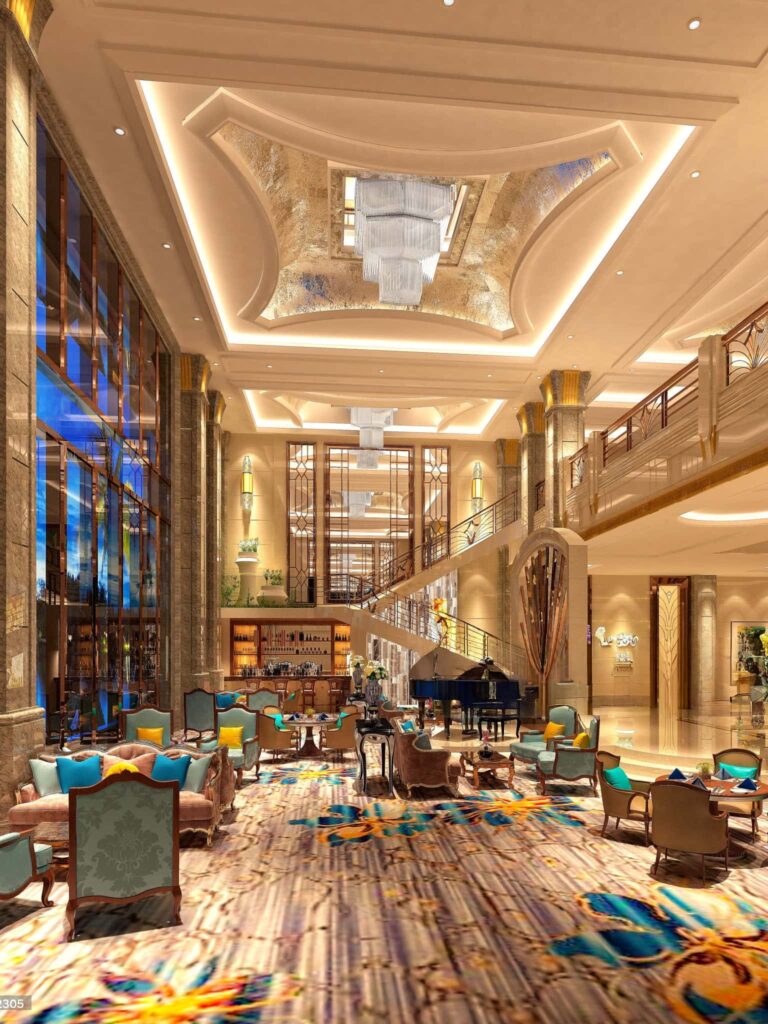
Hotel Furniture
Closing Recommendations: Turn FF&E Procurement Into a Risk-Managed Process
FF&E procurement mistakes are expensive but preventable. On a 6 million USD FF&E budget for a 200-key hotel, the difference between a 3% overrun and a 16% overrun is roughly 780,000 USD — a swing that directly affects project returns.
The highest-ROI prevention measures are factory audits, detailed FF&E specifications, realistic lead time planning, third-party inspections, and multi-supplier sourcing strategies. Hotel developers and FF&E contractors who treat FF&E procurement as a risk-managed process, rather than a simple purchasing task, consistently deliver projects on time and on budget. Those who do not provide the case studies that fill articles like this one.
If you are planning a new hotel or major renovation and want to avoid common FF&E procurement mistakes, consider working with a specialized FF&E procurement team or integrated manufacturer that can manage factory vetting, specification detail, logistics, and warranty support end to end. Request an FF&E procurement checklist and risk assessment matrix before issuing your next RFP—it is often the most profitable document in the project file.