
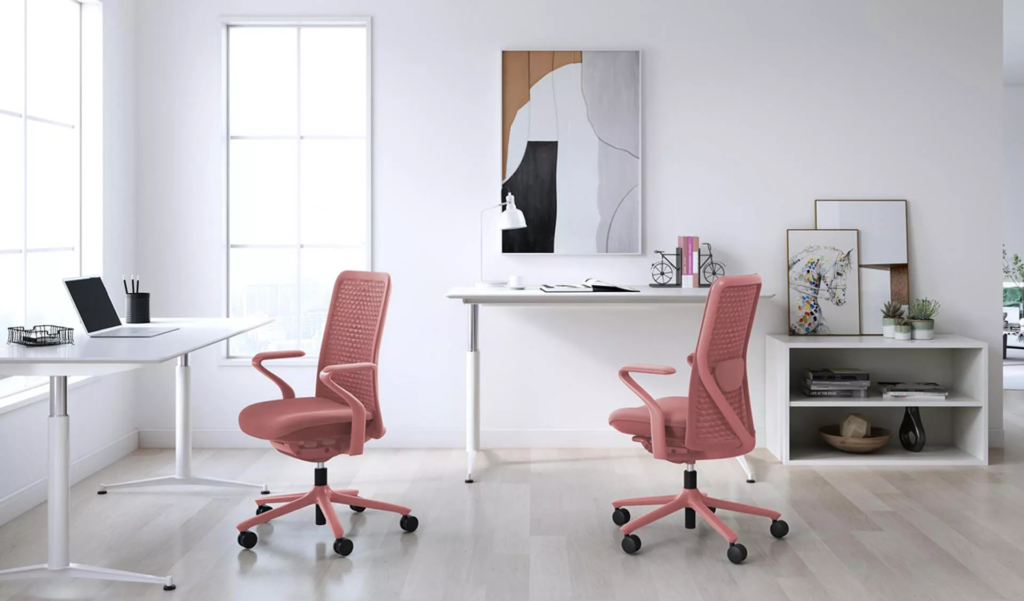
In the world of commercial office furniture, aesthetics are only skin deep. While a chair may look modern and ergonomic in a catalog, its true value is determined by what happens under the surface during years of intensive use. For facility managers, office furniture dealers, and procurement specialists, there is one acronym that separates professional-grade equipment from temporary seating: BIFMA.
If you are responsible for outfitting a corporate office, a healthcare facility, or an educational institution, understanding BIFMA standards is not just a technicality—it is a risk management strategy and a financial necessity.
What is BIFMA? The Backbone of Furniture Standards
BIFMA stands for the Business and Institutional Furniture Manufacturers Association. Founded in 1973, this non-profit organization serves as the voice of the commercial furniture industry. BIFMA’s primary mission is to create engineering and material standards that ensure the safety, durability, and sustainability of furniture used in commercial environments.
When you see a chair labeled as ANSI/BIFMA compliant, it means the product has undergone a rigorous battery of tests co-developed with the American National Standards Institute (ANSI). These tests simulate years of heavy-duty use in a matter of weeks, ensuring that the chair won’t fail when your employees need it most.
The Critical Difference: Residential vs. Commercial Grading
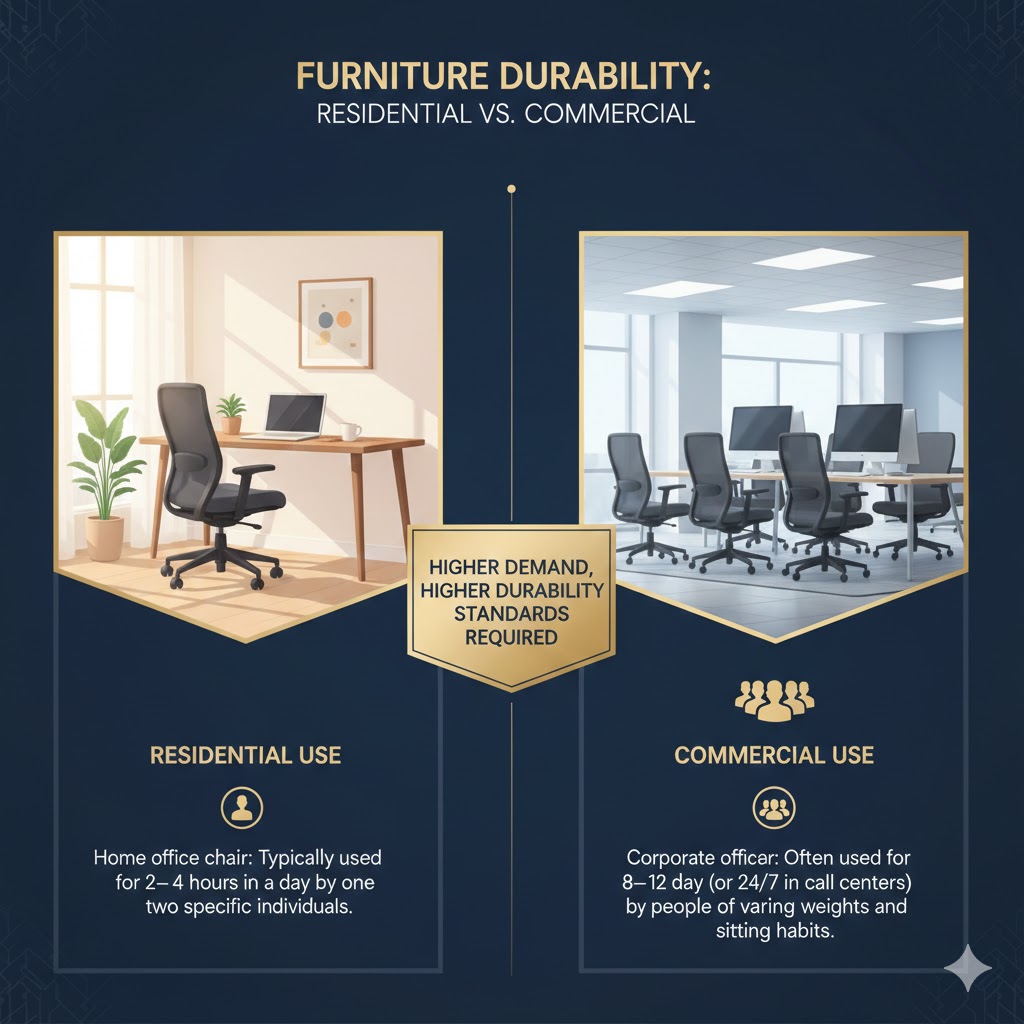
A common mistake in office procurement is purchasing “residential-grade” furniture for a “commercial-grade” environment. To the untrained eye, they look similar. However, the engineering requirements are worlds apart.
- Residential Use: A home office chair is typically used for 2–4 hours a day by one or two specific individuals.
- Commercial Use: An office chair in a corporate setting is often used for 8–12 hours a day (or 24/7 in call centers) by people of varying weights and sitting habits.
BIFMA standards are specifically designed for the “24/7” environment. While a residential chair might last 1–2 years in a corporate setting, a BIFMA-certified chair is engineered to last 10 years or more under the same conditions.
The Science of Durability: Key BIFMA Tests for Office Chairs
To earn the BIFMA stamp of approval, an office chair must pass the ANSI/BIFMA X5.1 (for general-purpose office chairs). This standard involves over 20 different tests. Below are the most critical tests that define a chair’s structural integrity.
1. Backrest Durability Test (Functional & Proof)
This test ensures that the back of the chair can withstand the repeated pressure of a user leaning back.
- The Process: A weight of 100 lbs (45kg) is applied to the backrest for 120,000 cycles.
- The Proof Load: A much heavier force of 337 lbs (150kg) is applied once to ensure the backrest does not fracture or fail under extreme stress.
2. Drop Test (Dynamic Load)
This simulates a user “flopping” or sitting down heavily into the chair—a common occurrence in high-stress office environments.
- Functional Load: A 225 lb (102kg) weight is dropped from a height of 6 inches above the seat. The chair must remain fully functional.
- Proof Load: A 400 lb (181kg) weight is dropped. While the chair may show signs of wear after this extreme test, its structural integrity must not fail catastrophically.
3. Swivel Test (Cycling)
Office chairs are designed to rotate. This test ensures the internal mechanics of the gas lift and swivel base don’t wear out.
- The Process: A 250 lb (113kg) weight is placed on the seat, and the chair is rotated 360 degrees for 120,000 rotations.
4. Caster and Base Durability
Perhaps the most frequent failure point in cheap chairs is the wheels (casters). BIFMA testing is brutal on the base.
- The Process: The chair is loaded with 250 lbs and pulled across a hard surface with obstacles for 2,000 cycles, then across a smooth surface for 30,000 cycles.
BIFMA X5.1 vs. X5.11: Understanding Weight Capacities
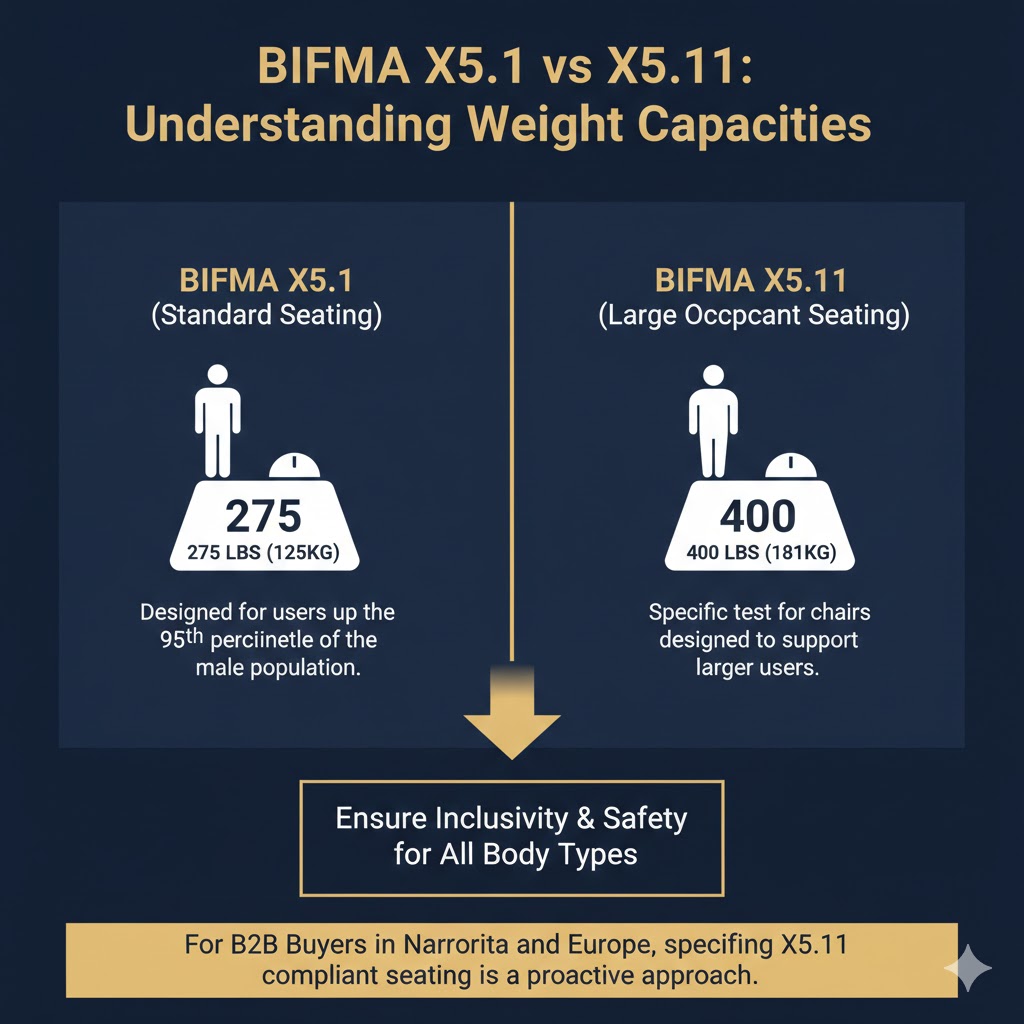
Standard BIFMA X5.1 testing is designed for users up to the 95th percentile of the male population, which is generally cited as 275 lbs (125kg).
However, as the global population changes, BIFMA introduced the X5.11 standard. This is a specific “Large Occupant” test for chairs designed to support users up to 400 lbs (181kg). For B2B buyers in North America and Europe, specifying X5.11 compliant seating for a portion of your office is a proactive way to ensure inclusivity and safety for all body types.
Why B2B Buyers Must Demand BIFMA Certification
Investing in BIFMA-certified furniture isn’t just about “buying quality”—it’s a calculated business decision that impacts your bottom line.
1. Risk Management and Liability
In a commercial setting, if a chair collapses and an employee is injured, the company could be liable for significant workers’ compensation claims. Purchasing BIFMA-compliant furniture serves as documented proof that the employer provided equipment that meets recognized safety standards.
2. Long-Term ROI (Return on Investment)
The math is simple:
- Option A: A non-certified chair costs $150 and lasts 2 years. (Annual cost: $75)
- Option B: A BIFMA-certified chair costs $350 and lasts 10 years. (Annual cost: $35)Over a decade, the certified chair is 53% cheaper, even before considering the labor costs of frequent re-ordering and disposal.
3. Sustainability and ESG Goals
High-quality furniture is inherently more sustainable. Furniture that lasts 10 years stays out of the landfill 5 times longer than cheap alternatives. Many BIFMA-certified products also comply with LEVEL®, BIFMA’s sustainability certification, which tracks a product’s environmental and social impact.
How to Identify a Truly BIFMA-Compliant Chair
Don’t just take a supplier’s word for it. When evaluating commercial-grade office furniture, follow these steps:
- Request the Test Report: A reputable manufacturer will have a third-party laboratory report (from labs like SGS or Intertek) confirming the chair passed ANSI/BIFMA X5.1.
- Check the Warranty: Manufacturers who pass BIFMA testing typically offer a 5-year to 12-year warranty. If the warranty is only 1 year, the chair likely hasn’t been tested to these standards.
- Inspect the Gas Lift: Look for Class 3 or Class 4 gas cylinders. These are the components most likely to be BIFMA-certified for heavy-duty use.
FAQ: Frequently Asked Questions About BIFMA Standards
Q1: Is BIFMA testing mandatory by law?
No. BIFMA is a voluntary standard. However, it is a standard requirement for GSA (Government) contracts and most Fortune 500 RFPs (Request for Proposals). Without it, a manufacturer is often disqualified from large-scale commercial bids.
Q2: What is the difference between BIFMA and ISO?
ISO (International Organization for Standardization) is a broad set of global standards for various industries. BIFMA is specifically focused on furniture engineering for the North American market, though it is used globally as a benchmark for quality.
Q3: Does BIFMA cover ergonomics?
While BIFMA X5.1 focuses on safety and durability, BIFMA also has a separate guideline, G1-2013, which provides specialized recommendations for ergonomic dimensions and adjustments.
Q4: How much weight can a BIFMA chair hold?
The standard test (X5.1) is for a 275 lb user. The heavy-duty test (X5.11) is for a 400 lb user.
Conclusion: Quality You Can Stand (or Sit) On
In the competitive landscape of office furniture, BIFMA testing is the ultimate proof of a product’s “commercial DNA.” It provides the peace of mind that your investment is protected, your employees are safe, and your workspace is built to last.
At Hongye Hotel Furniture, we specialize in bridging the gap between luxury design and industrial-strength durability. Whether you are outfitting a 5-star hotel business center or a modern corporate headquarters, our BIFMA-compliant seating solutions are engineered to meet the highest global standards.
Is your office ready for a durability upgrade? [Click here to browse our latest BIFMA-Certified Ergonomic Chairs or contact our B2B team for a bulk quote.]
Next Step for the User: Since this article focuses on the technical side of seating, would you like me to create a “Commercial Furniture Procurement Checklist” that you can offer as a lead magnet (PDF) on your website?