
Every hotel faces the same dilemma at some point: the furniture looks tired, guest complaints are rising, but the capital budget for a full replacement simply is not available. The good news is that strategic furniture renovation can restore guest satisfaction and extend asset life at a fraction of replacement cost — typically 30-50% savings versus buying new. For hotel developers and hospitality project managers, mastering the art of budget-conscious furniture renovation is an essential skill that directly impacts the bottom line.
This article presents a systematic, checklist-driven approach to hotel furniture renovation. Whether you manage a single boutique property or a multi-hotel portfolio, these strategies will help you maximize value while minimizing expenditure.
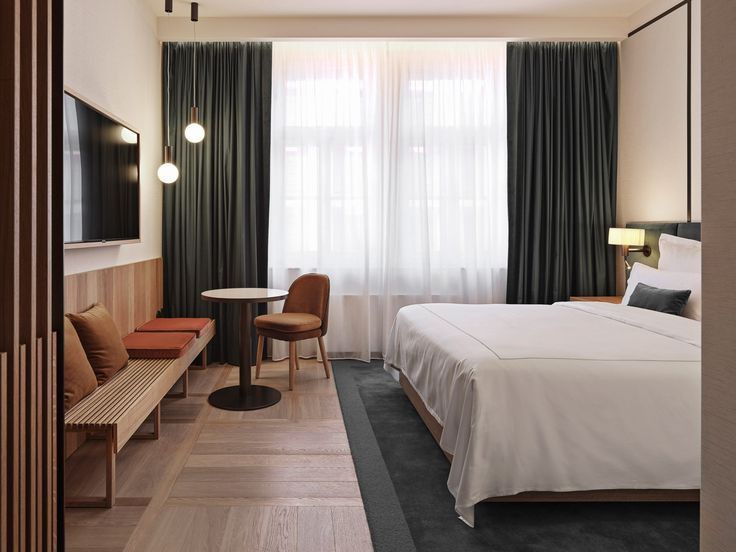
The Renovation vs. Replacement Decision Framework
Before committing to renovation, perform an honest assessment of each furniture category. Renovation makes sense for pieces with solid structural integrity — good frames, functional mechanisms, and stable bases. Replacement is the better choice when structural failure is imminent, when fire safety certifications have expired, or when design obsolescence would undermine a rebranding initiative. The table below maps common scenarios to the optimal decision path.
Table 1: Renovation vs. Replacement Cost-Benefit Analysis
| Furniture Category | Renovation Cost (% of New) | Typical Renovation Scope | When to Replace Instead | Expected Extended Life |
| Upholstered seating (lobby chairs) | 30-45% | Reupholster with new fabric; replace foam if compressed | Frame cracked; mechanism broken; fire label missing | 3-5 years |
| Guest room casegoods (desks, dressers) | 20-35% | Refinish surfaces; replace hardware; repair drawers | Water damage; delamination; out of style for rebrand | 5-7 years |
| Headboards | 25-40% | Recover with new upholstery panel; refresh frame finish | Structural instability; integrated lighting failure | 4-6 years |
| Restaurant/dining chairs | 40-55% | Reupholster seat; reinforce joints; refinish legs | Joints beyond repair; batch inconsistency | 3-4 years |
| Banquet/conference tables | 15-25% | Refinish tops; replace edge banding; service folding mechanisms | Warped tops; rusted frames | 5-8 years |
| Mattresses and box springs | N/A — always replace | Not applicable | Always replace — hygiene and warranty factors | 7-10 years (new) |
| Lighting fixtures | 20-30% | Rewire; replace shades; refinish metal | Obsolescence (LED integration needed) | 5-10 years |
| Outdoor/pool furniture | 35-50% | Restrap sling chairs; powder coat frames; replace cushions | Frame corrosion through metal; UV degradation beyond repair | 2-4 years |
The decision tree simplifies to a clear rule: if the frame is sound and the piece is not a safety or hygiene liability, renovation usually wins on value. Document each piece’s condition with photographs and standardized assessment forms. This documentation supports budget justification with ownership and creates a reference for future renovation cycles.
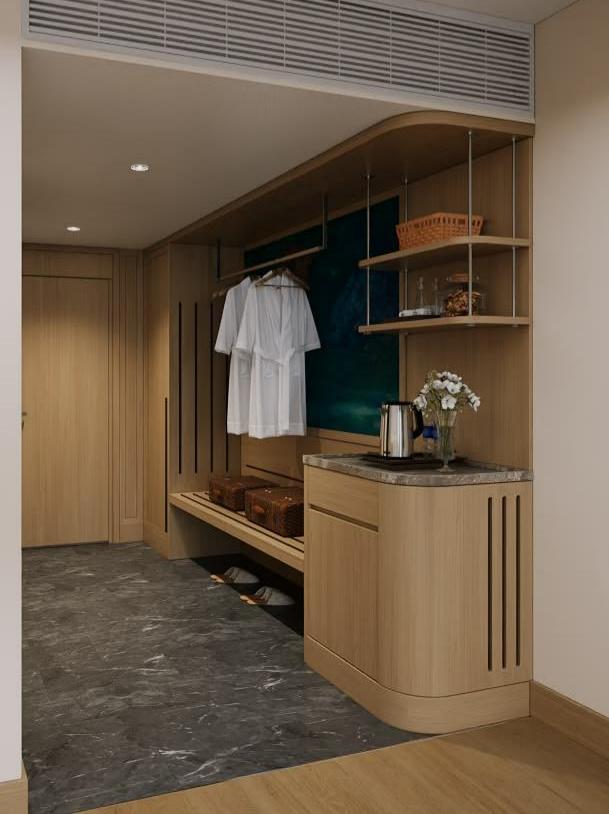
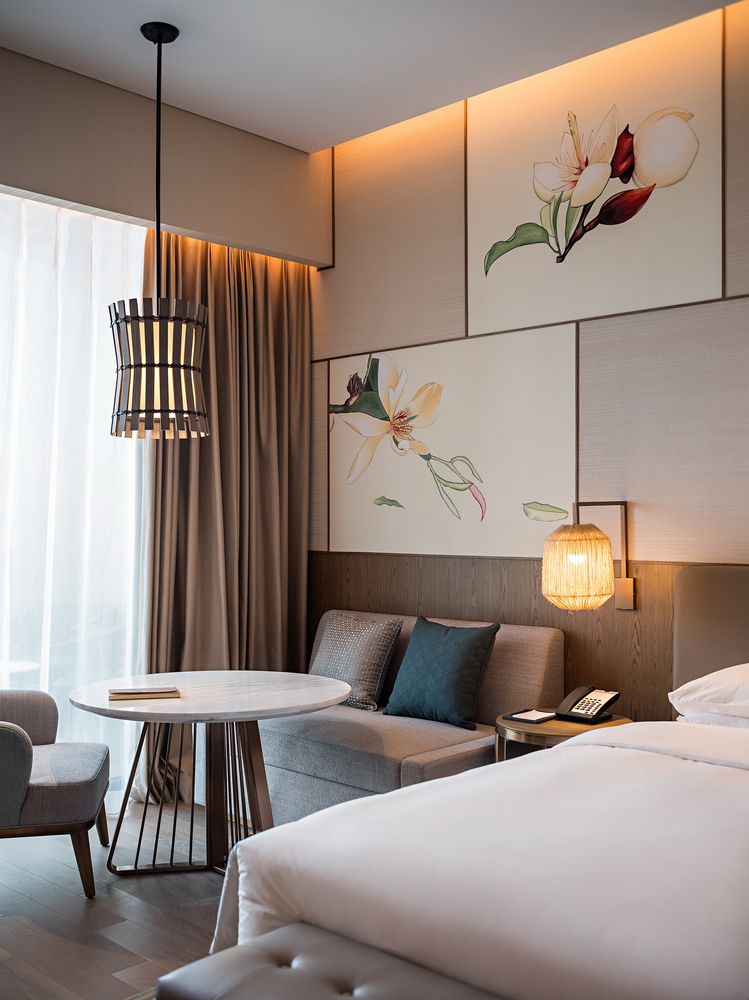
The Pre-Renovation Audit Checklist
Begin every renovation project with a comprehensive audit. Walk every guest room, public space, and back-of-house area with a standardized inspection form. Grade each piece on a three-tier scale:
- Grade A (Good) — Cosmetic wear only. Clean, touch up, or polish. No renovation needed this cycle.
- Grade B (Fair) — Surface damage, worn upholstery, loose joints. Candidate for renovation.
- Grade C (Poor) — Structural damage, safety hazard, or design obsolete. Replace.
Tally quantities by grade and furniture type. This data becomes the foundation of your scope document and budget. Hotels that skip this step routinely over-order replacement pieces for items that could have been renovated, leaving money on the table.
Budget Allocation: Where Every Dollar Goes
Smart budget allocation distinguishes successful renovation projects from those that run over cost. The table below shows a typical distribution for a midscale hotel furniture renovation program, based on aggregated project data from hospitality renovation specialists.
Table 2: Typical Budget Allocation for Furniture Renovation Project
| Budget Category | Percentage of Total | Cost Drivers | Cost-Saving Levers | Notes |
| Upholstery fabric and materials | 25-35% | Fabric grade, yardage per piece, pattern matching waste | Select in-stock fabrics; use Crypton or vinyl grade 2-3 rather than grade 5 | Material cost is 60-70% of reupholstery job cost |
| Labor (skilled trades) | 30-40% | Local wage rates, union vs. non-union, piece complexity | Bundle work by room type; use off-site shops for bulk work | On-site work saves logistics but may disrupt operations |
| Refinishing materials and labor | 10-15% | Number of coats, finish type (catalyzed vs. standard) | Water-based finishes reduce cure time; batch pieces by finish color | Catalyzed finishes cost more but last 3x longer |
| Hardware and components | 5-8% | Drawer slides, hinges, glides, casters, handles | Standardize hardware across rooms; buy in bulk case quantities | One hardware style across property simplifies future maintenance |
| Freight, logistics, and handling | 5-8% | Distance to workshop, number of trips, special handling | Consolidate shipments; use regional workshops | Moving furniture to/from off-site shop is significant cost |
| Contingency reserve | 10-15% | Unexpected structural repairs, change orders | Tight scope control minimizes draw on contingency | Never allocate less than 10% contingency |
| Project management and oversight | 3-5% | In-house PM salary allocation or third-party fee | Combine with other capital projects for PM efficiency | This cost often hidden; make it explicit |
A typical guest room renovation with furniture at the core runs $2,500-$4,500 per room for a midscale property when renovating existing pieces, compared to $5,000-$9,000 per room for full furniture replacement. Over a 150-room property, the differential exceeds $375,000 — enough to fund additional capital improvements elsewhere in the hotel.
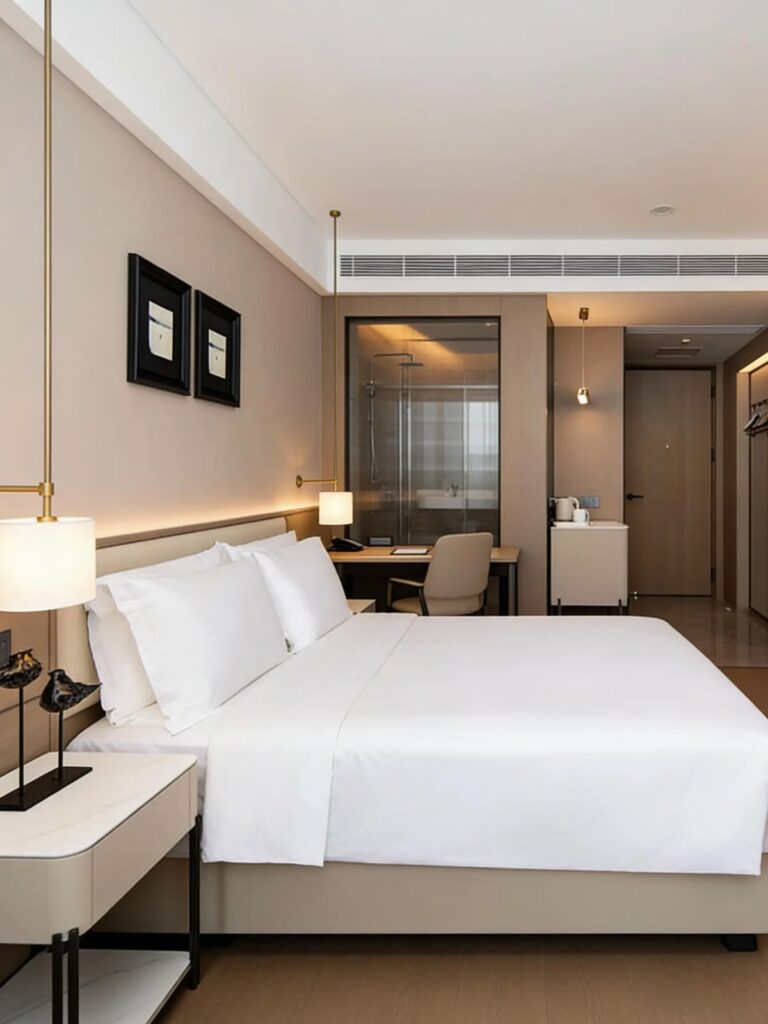
The Renovation Timeline: Phased Execution Without Guest Disruption
Executing a furniture renovation in an operating hotel requires meticulous phasing. Attempting to renovate all rooms simultaneously is rarely feasible. The timeline below assumes a 150-room property undergoing renovation in phases and demonstrates how furniture work integrates with the broader renovation schedule.
Table 3: Furniture Renovation Phased Timeline
| Phase | Duration | Activities | Rooms Offline | Guest Communication | Key Milestone |
| Pre-renovation audit | 1-2 weeks | Inspect all furniture; grade A/B/C; tag for action | None | Internal only | Audit report and scope document |
| Procurement | 3-5 weeks | Order fabrics, finishes, hardware, replacement pieces | None | Not needed | All materials received and inventoried |
| Phase 1 — Pilot (1 floor, ~25 rooms) | 2-3 weeks | Renovate furniture; test processes; refine methods | 25 rooms | “Renovation in progress” notice at booking | Pilot sign-off; process refinement |
| Phase 2 — 50 rooms | 4-6 weeks | Full production speed; 12-15 rooms/week | 25 rooms per week (rolling) | Booking engine block; front desk briefing | Mid-project review |
| Phase 3 — Final 75 rooms | 5-7 weeks | Sustain rate; address punch list from earlier phases | 25 rooms per week (rolling) | Same as Phase 2 | Final walkthrough |
| Public area renovation | 3-4 weeks | Lobby, restaurant, meeting room furniture | Sectional closures, not full shutdown | Signage; alternative seating map | Full public area sign-off |
| Punch list and closeout | 1-2 weeks | Touch-ups, repairs, warranty registration | None | “Renovation complete” — PR opportunity | Final invoice and lien waiver |
| Total Timeline | 14-22 weeks |
Off-site renovation — shipping furniture to a dedicated workshop — adds 1-2 weeks per phase for logistics but often delivers higher quality results at lower total cost. On-site renovation eliminates shipping but may slow down due to space constraints and the need to work around hotel operations. Hybrid models, where simple tasks happen on-site and complex upholstery work goes off-site, frequently deliver the best balance.
Calculating ROI: When Renovation Pays Back
Renovation investments must demonstrate a clear return. The table below quantifies expected ROI across common renovation scenarios, measured through RevPAR improvement, guest satisfaction lift, and extended asset life.
Table 4: ROI Comparison — Renovation vs. Replacement vs. Deferral
| Scenario | Initial Cost (150 rooms) | Annual RevPAR Impact | Guest Satisfaction Lift | Asset Life Extension | 5-Year Net Benefit |
| Full renovation (this approach) | $375,000-$675,000 | +$3-7 ADR increase | 8-15 points on GSS | 4-6 years for renovated items | $250,000-$550,000 |
| Full replacement (all new) | $750,000-$1,350,000 | +$5-10 ADR increase | 10-18 points on GSS | 7-10 years | $150,000-$350,000 |
| Defer maintenance (do nothing) | $0 | -$5-15 ADR decline | 15-25 points decline | Negative — accelerates deterioration | -$300,000 to -$500,000 |
| Spot renovation (worst 30% only) | $100,000-$200,000 | +$1-3 ADR increase | 3-5 points on GSS | 2-3 years | $75,000-$150,000 |
The numbers make a compelling case: full renovation delivers the strongest 5-year net benefit because it achieves meaningful ADR and satisfaction gains without the capital intensity of full replacement. Deferring maintenance produces the worst outcome by far — declining RevPAR, rising guest complaints, and accelerated asset deterioration that makes future renovation more expensive.
For financing, explore FF&E reserve fund allocations (typically 4-5% of gross revenue for branded hotels), SBA 7(a) loans for independent properties, and equipment leasing arrangements that convert capital expenditure into operating expense. Vendor financing through manufacturers may also be available on large orders.
Vendor Selection: Finding the Right Renovation Partner
The quality of renovation work depends heavily on vendor selection. The table below provides a structured evaluation framework for comparing potential partners.
Table 5: Vendor Evaluation Scorecard for Furniture Renovation
| Evaluation Criteria | Weight | Red Flags | Green Flags | Scoring Notes |
| Hospitality experience (projects completed) | 25% | No hotel projects; residential-only portfolio | 10+ hotel projects; references from GMs | Request references from completed projects of similar scale |
| Capacity and timeline commitment | 20% | Vague timeline; unwilling to commit to milestones | Detailed Gantt chart; phased delivery plan | Confirm they have enough skilled workers for your timeline |
| Material sourcing capability | 15% | No trade accounts with major fabric mills | Direct relationships with Crypton, Sunbrella, major mills | Direct accounts mean better pricing and faster delivery |
| Quality control process | 15% | No inspection protocol; “we check everything at the end” | In-process QC gates; photo documentation; defect tracking | Visit workshop if feasible; review QC checklist |
| Warranty and after-service | 10% | Less than 1-year warranty; vague terms | 2+ years on labor; passes through manufacturer material warranties | Get warranty terms in writing in the contract |
| Pricing transparency | 10% | Lump-sum quote without breakdown; refuses to share labor vs. material split | Line-item pricing; open-book on material costs | Transparency correlates with trustworthiness |
| Insurance and compliance | 5% | No workers’ comp; no liability certificate | General liability $2M+; workers’ comp; auto coverage | Verify certificates directly with insurance agent |
Manufacturers that offer both new furniture production and renovation services — such as Hongye Furniture and similar contract-grade manufacturers — bring an advantage: they understand how furniture is originally constructed, which informs more effective renovation techniques. They also maintain consistent material sourcing, ensuring that replacement fabrics and finishes match existing pieces where partial renovation is the strategy.
Cost-Saving Tactics That Do Not Compromise Quality
Beyond the structural decisions of renovation versus replacement, numerous tactical choices can reduce costs without sacrificing the guest experience. Standardize hardware across all guest room furniture — one drawer pull style, one hinge type, one glide specification. This simplifies procurement and reduces inventory complexity for future maintenance. Order fabric in bulk by standardizing upholstery color across multiple furniture types where design allows. One fabric specification for lobby chairs, restaurant banquettes, and corridor benches yields better pricing through volume.
Timing your renovation strategically also saves money. Many contractors offer off-season discounts during the November-February period when hospitality renovation demand dips. Scheduling your project during these windows can yield 5-10% savings on labor rates. Similarly, ordering materials 60-90 days before construction begins allows you to take advantage of mill promotions and avoid rush shipping charges that can add 15-25% to material costs.
Consider partial renovation where appropriate. Guest room desks often need only refinished tops, not full rebuilds. Lobby seating frames in good condition need only new upholstery, not replacement. Granular scope decisions — piece by piece, component by component — generate savings that add up across a full property portfolio.
Implementing a Cyclical Maintenance Program
The most effective budget strategy is preventing the need for major renovation in the first place. A cyclical maintenance program extends furniture life and smooths capital expenditure over time. Establish a rotating schedule: upholstery cleaning every 6 months, touch-up refinishing annually, deep inspection every 2 years, and proactive reupholstery of high-wear pieces on a 3-4 year cycle.
This approach converts unpredictable capital spikes into predictable operating expenses. Hotel brands increasingly mandate cyclical FF&E programs in their property improvement plans (PIPs), recognizing that sustained investment protects brand standards more effectively than episodic overhauls.
Track all furniture assets in a computerized maintenance management system (CMMS) or simple spreadsheet. Record purchase date, manufacturer, warranty period, service history, and condition grade from each inspection. This data informs budget forecasting and provides evidence-based justification for capital requests. A hotel that cannot answer “how old is our lobby furniture and what condition is it in” is flying blind on asset management.
Frequently Asked Questions
1. Can I renovate hotel furniture while the hotel remains open?
Yes, and this is the standard approach. Renovation projects are phased by floor or wing, taking 15-25 rooms offline at a time while the remainder operate normally. Public area renovation requires more careful planning — sectional closures with clear guest signage, and ideally scheduling major lobby work during the lowest occupancy periods. Communicate proactively with guests about renovation timing and offer rooms away from active work zones.
2. How long does a hotel furniture renovation take?
For a 150-room property, a comprehensive furniture renovation typically takes 14-22 weeks from audit to closeout, depending on scope and whether work is done on-site or off-site. Guest room phases run 4-7 weeks per 50-room block. Public areas add 3-4 weeks. The full timeline including procurement and pre-renovation audit extends to approximately 5-6 months total.
3. What certifications should I require from renovation contractors?
Require current general liability insurance ($2 million minimum), workers’ compensation insurance, and any applicable trade licenses for your jurisdiction. If the contractor handles upholstery, verify they use materials with CAL TB 117-2013 compliance and can provide certificates. For properties subject to brand standards (Marriott, Hilton, IHG, etc.), confirm the contractor has completed brand-approved FF&E renovation projects previously.
4. How do I prioritize which furniture to renovate first?
Prioritize guest-facing areas in this order: guest rooms (where guests spend the most time), lobby and public seating (first impression), restaurant and bar (revenue-generating), meeting rooms (group business impact), and finally back-of-house (staff areas). Within guest rooms, prioritize the bed ensemble (headboard, mattress, bedding), then seating (desk chair, lounge chair), then casegoods (desk, dresser, nightstands).
5. What is the minimum budget for a meaningful furniture renovation?
For a midscale hotel, plan for a minimum of $2,500-$3,000 per room for a meaningful renovation that guests will notice. Below this threshold, the scope typically narrows to spot touch-ups that do not move the needle on guest satisfaction. For public areas, allocate $10,000-$25,000 for lobby renovation and $5,000-$15,000 for restaurant/bar areas, depending on size. A hotel-wide minimum effective renovation budget starts at approximately $300,000-$400,000 for a 150-room property, including all spaces.