
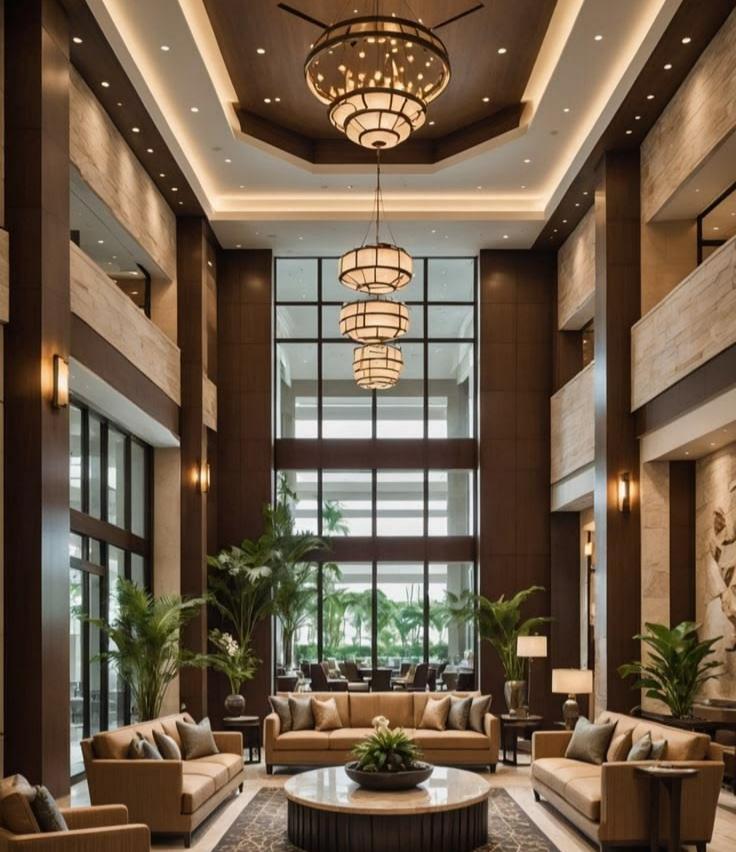
The hotel lobby is the first physical interaction a guest has with your property after stepping through the front door. Within seven seconds of entering, guests form a lasting impression that influences their entire stay and, critically, their likelihood of returning or leaving a positive review. Lobby furniture plays an outsized role in setting this tone — it communicates your brand identity, comfort level, and attention to detail before a single word is spoken at the front desk. For hotel developers and hospitality project managers, getting lobby furniture design right is both an art and a strategic business decision.
Research from the Cornell Center for Hospitality Research confirms that lobby design and furniture comfort rank among the top five factors influencing guest satisfaction scores, trailing only cleanliness and staff service. This is not merely about aesthetics; it is about conversion. A well-designed lobby encourages guests to linger, spend at F&B outlets, and book future stays. This guide provides a comprehensive framework for hotel lobby furniture design, covering everything from zone planning and material selection to lighting integration and cost optimization.
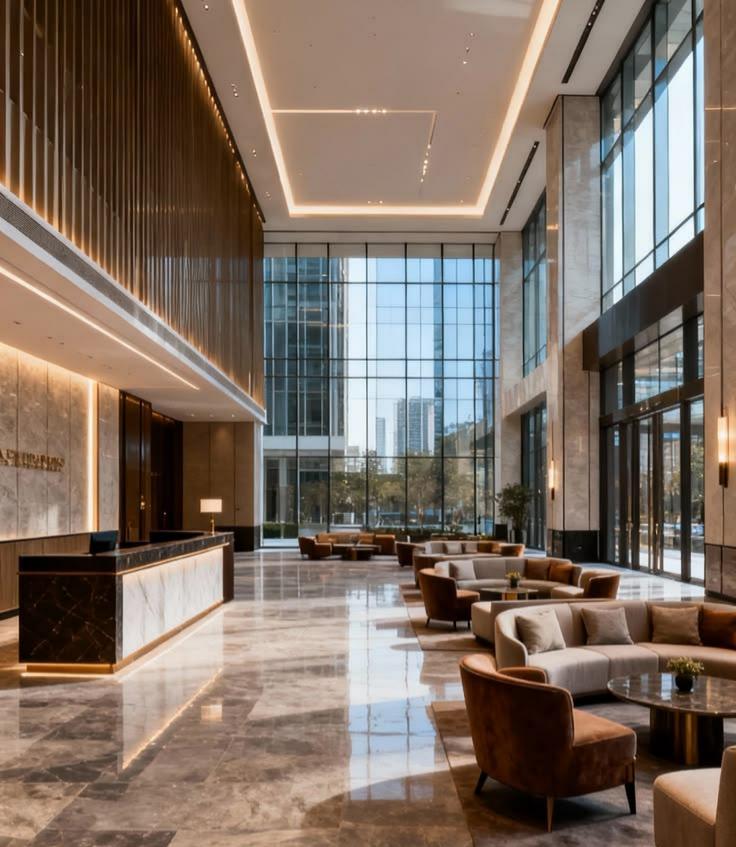
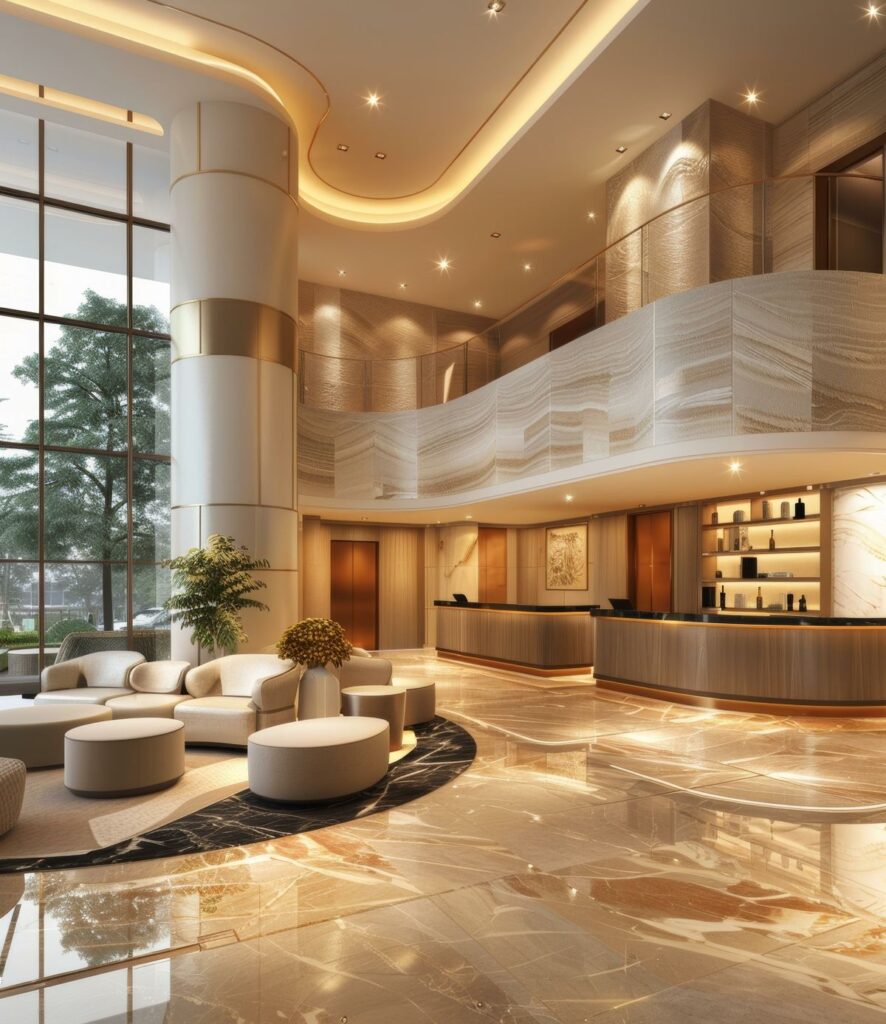
The Psychology of First Impressions in Hotel Lobbies
When a guest walks into your lobby, their brain processes visual information about the space in milliseconds. Neuroscience research indicates that spatial perception, color temperature, and furniture arrangement collectively trigger emotional responses before cognitive evaluation kicks in. Warm wood tones signal comfort and tradition. Clean lines and metallic accents communicate modernity and efficiency. Cluttered or mismatched furniture suggests disorganization, which guests unconsciously associate with poor management.
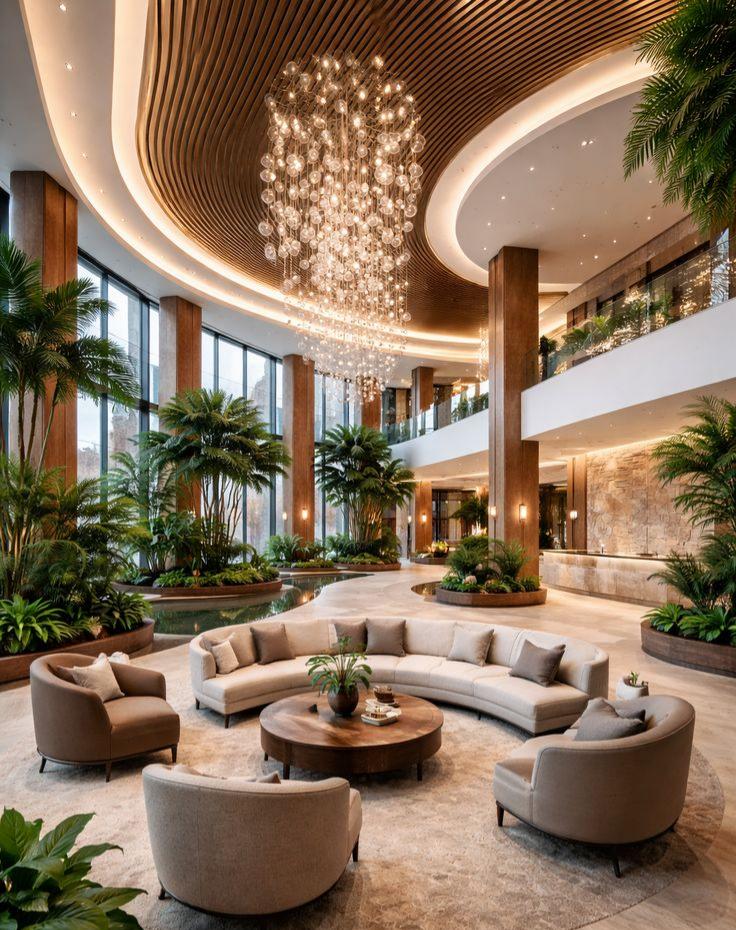
The hospitality industry increasingly recognizes that lobby spaces are not merely transitional areas but revenue-generating environments. Leading hotel chains have transformed their lobbies into multi-functional zones combining check-in, co-working, socializing, and dining. Marriott’s Greatroom concept and citizenM’s living-room lobbies exemplify this trend. Your furniture choices must support multiple use cases simultaneously while maintaining visual coherence.
Lobby Zone Planning: A Furniture Layout Framework
Effective lobby furniture design begins with zone planning. Every lobby can be divided into distinct functional zones, each requiring specific furniture types and configurations. The table below outlines the primary lobby zones and their furniture requirements.
Table 1: Lobby Zone Layout and Furniture Configuration
| Zone | Function | Recommended Furniture | Capacity Planning | Key Design Consideration |
| Arrival/Reception | Check-in, guest orientation | Reception desk, queuing barriers, accent chairs (2-3) | 1 desk per 80 rooms | Sight lines to entrance and elevator banks |
| Waiting/Lounge | Pre-check-in seating, casual meetings | Sofas, armchairs, coffee tables, side tables | Seating for 15-20% of peak occupancy | Group into conversational clusters of 4-6 seats |
| Co-Working | Remote work, device charging | Communal tables, ergonomic chairs, privacy pods | 8-12 workstations for midscale; 20+ for upscale | Power outlets at every seat; task lighting |
| Bar/Refreshment | Beverage service, socializing | Bar stools, high-top tables, banquette seating | 10-15 seats for midscale properties | Proximity to lounge zone; acoustic separation |
| Transitional/Circulation | Guest movement pathways | Occasional benches, console tables | Minimal furniture; clear 48-inch walkways | No furniture that obstructs luggage cart paths |
Zoning is not a one-size-fits-all exercise. A limited-service hotel may consolidate the lounge and co-working zones into a single multi-purpose area, while a luxury resort lobby might include a dedicated concierge zone with premium seating. The guiding principle is to map furniture to guest journey touchpoints: arrival, waiting, working, socializing, and departing. Each touchpoint demands furniture that supports the specific activity without creating friction.
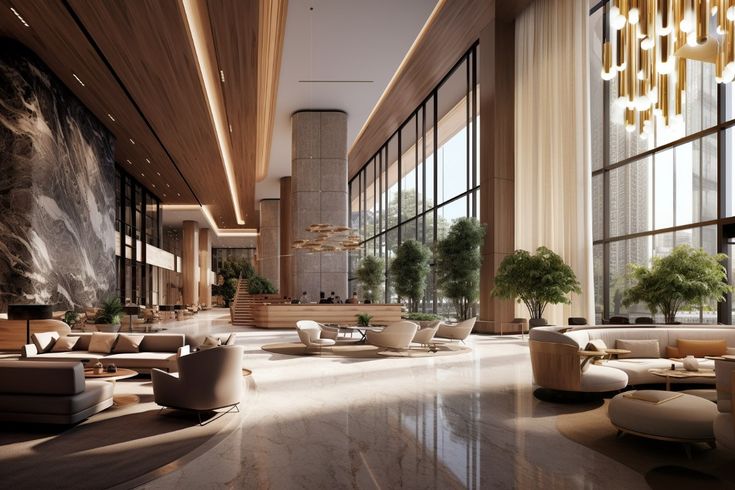
Table 2: Lobby Furniture Style Comparison by Hotel Segment
| Hotel Segment | Dominant Style | Color Palette | Material Emphasis | Signature Pieces | Budget Range (per sq ft) |
| Economy/Limited Service | Contemporary minimalist | Neutral grays, navy accents | Laminate, powder-coated steel | Modular sectional sofas | $18-35 |
| Midscale (3-star) | Transitional (classic-modern blend) | Warm earth tones, teal, mustard | Solid wood veneers, commercial-grade fabric | Wingback chairs, tufted ottomans | $35-65 |
| Upscale (4-star) | Modern classic | Jewel tones, charcoal, cream | Hardwood solids, top-grain leather | Chesterfield sofas, marble-top tables | $65-120 |
| Luxury (5-star) | Bespoke/timeless elegance | Gold, deep burgundy, ivory | Exotic woods, genuine leather, natural stone | Custom-designed lounge collections | $120-250+ |
| Boutique/Lifestyle | Eclectic/curated | Bold contrasts, statement colors | Mixed materials, artisanal finishes | Vintage accent chairs, sculptural tables | $55-150 |
Material Selection: Balancing Aesthetics and Durability
Hotel lobby furniture endures extraordinary wear. A single lobby chair in a 200-room hotel might be used 300-500 times daily during peak season. Materials must withstand this punishment while maintaining their appearance. The intersection of durability, cleanability, and visual appeal defines successful material selection for hospitality environments.
Table 3: Material Durability Comparison for Lobby Furniture
| Material | Abrasion Resistance (Martindale) | Stain Resistance | UV Fade Resistance | Expected Lifespan (Years) | Maintenance Level |
| Commercial-grade vinyl | 100,000+ rubs | Excellent | Good | 7-10 | Low — wipe clean |
| Solution-dyed acrylic | 50,000+ rubs | Very Good | Excellent | 5-8 | Low — mild detergent |
| Crypton fabric | 80,000+ rubs | Excellent (fluid barrier) | Good | 7-10 | Low — bleach cleanable |
| Top-grain leather | 30,000-50,000 rubs | Moderate | Poor (fades) | 3-5 | High — conditioning required |
| Microfiber (polyester blend) | 60,000+ rubs | Very Good | Good | 5-7 | Medium — spot clean |
| Olefin/polypropylene | 40,000+ rubs | Excellent | Good | 5-8 | Low — bleach cleanable |
| Solid wood (oak/maple) | N/A (scratch resistance) | Moderate — requires sealing | Moderate | 15-25 | Medium — refinishing every 3-5 years |
| Powder-coated steel | N/A (chip resistance) | Excellent | Excellent | 15-20 | Low — wipe clean |
For upholstered pieces, a minimum Martindale rating of 40,000 rubs is the industry standard for hospitality applications. Crypton and commercial-grade vinyl lead the pack with ratings exceeding 80,000 rubs, making them ideal for high-traffic lobby environments. Wood furniture should be specified with catalyzed lacquer or polyurethane finishes rated for commercial use. Powder-coated metal frames resist chipping and rust far better than painted alternatives.
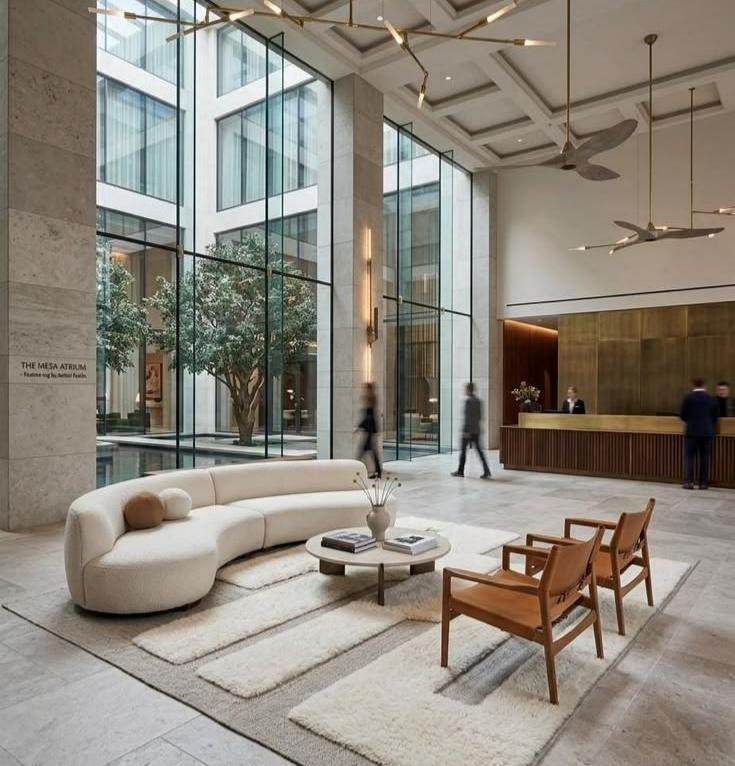
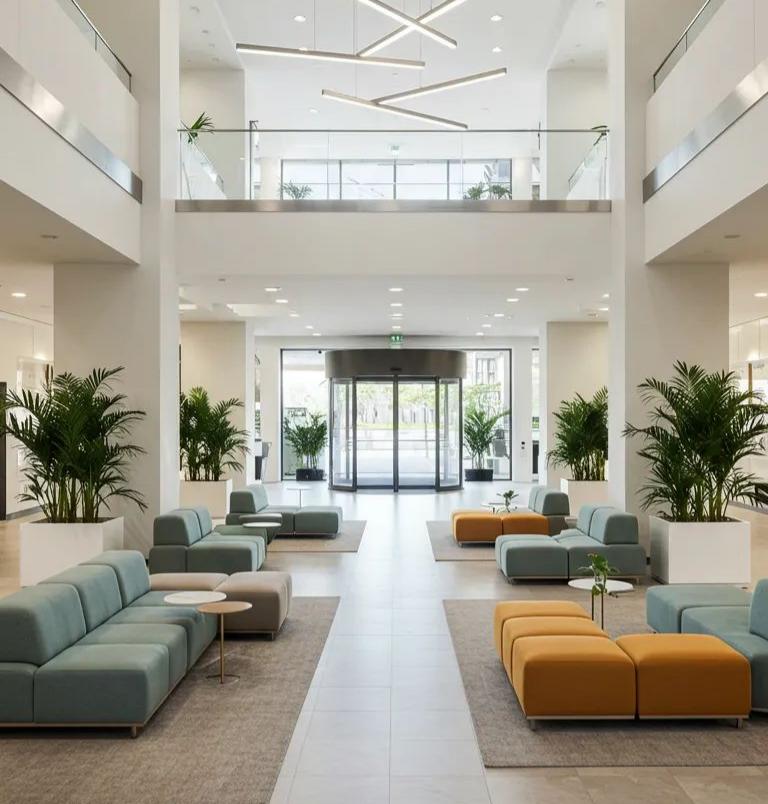
Seating Capacity: The Mathematics of Guest Comfort
Lobby seating must balance two competing priorities: providing enough seats to accommodate peak occupancy without making the space feel empty during off-peak hours. Modular furniture systems solve this elegantly by allowing reconfiguration based on demand, but the baseline planning starts with capacity calculations.
Table 4: Lobby Seating Capacity Planning Guide
| Hotel Size (Rooms) | Minimum Lobby Seats | Optimal Lobby Seats | Seat Types Distribution | Total Lobby Square Footage |
| 50-80 | 12-18 | 18-25 | 60% lounge chairs, 25% sofas, 15% ottomans/benches | 400-700 sq ft |
| 81-150 | 20-30 | 30-45 | 50% lounge chairs, 30% sofas, 20% communal seating | 700-1,200 sq ft |
| 151-250 | 30-45 | 45-65 | 45% lounge chairs, 25% sofas, 20% communal, 10% bar seating | 1,200-2,000 sq ft |
| 251-400 | 45-70 | 65-90 | 40% lounge chairs, 25% sofas, 20% communal, 15% specialty | 2,000-3,500 sq ft |
| 400+ | 70-100 | 90-140 | 35% lounge chairs, 25% sofas, 25% communal, 15% specialty | 3,500-5,500+ sq ft |
The ratio of different seat types matters as much as total count. Solo business travelers gravitate toward individual lounge chairs with side tables, while families and groups prefer sofa configurations. Hip and knee clearance must meet ADA requirements — a minimum of 27 inches from floor to underside of table and 19 inches of clear knee depth. For wheelchair accessibility, at least 5% of seating positions should be accessible with 30-inch by 48-inch clear floor space.
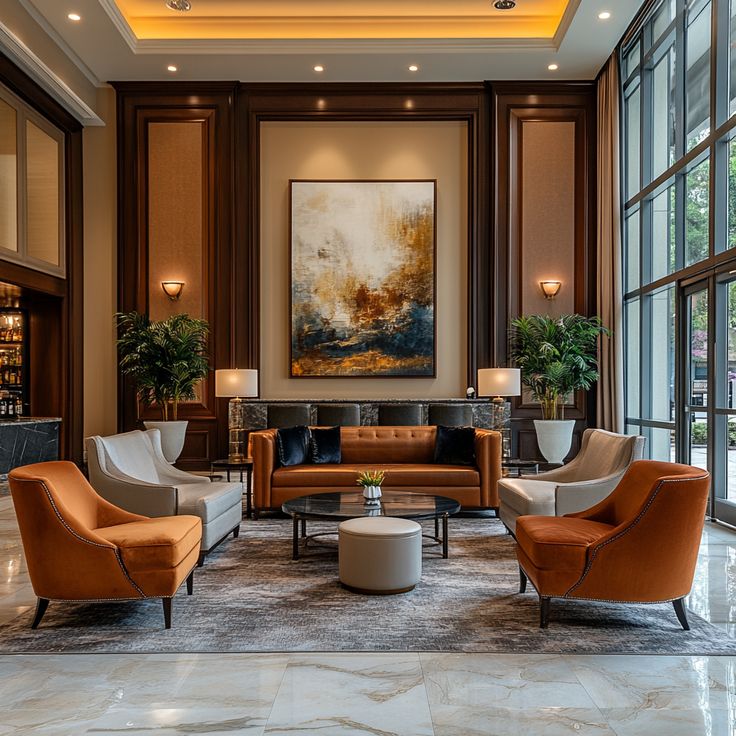
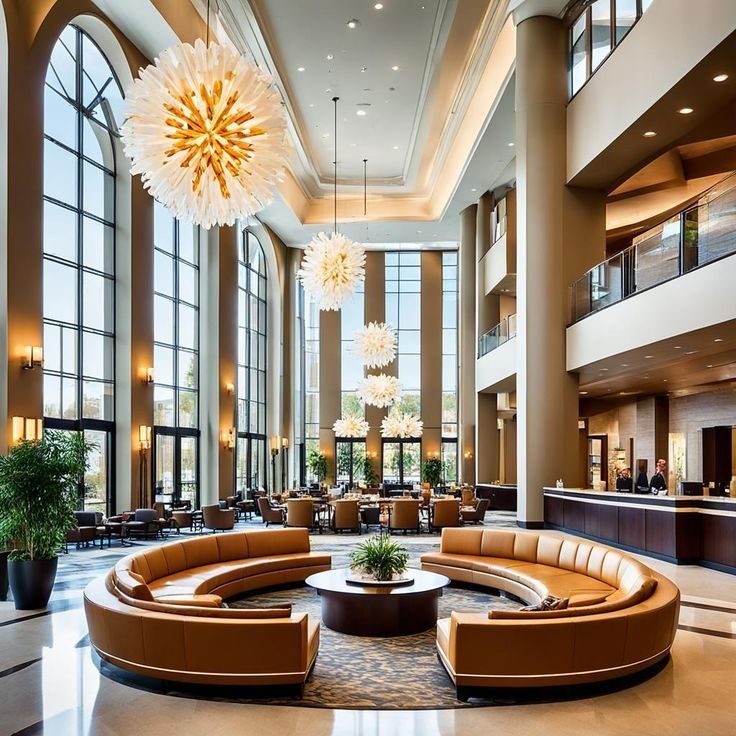
Lighting Integration: Furniture as a Lighting Platform
Lobby lighting is not an independent design consideration — it is inseparable from furniture placement and selection. The interplay between ambient, task, and accent lighting creates depth and guides guest movement through the space. Furniture can serve as a lighting platform, housing integrated LED strips, supporting table lamps, or framing floor lamps that define intimate seating areas.
Table 5: Lighting Integration with Lobby Furniture
| Lighting Type | Fixture Options | Furniture Integration | Recommended Kelvin | Lumen Requirement | Effect Achieved |
| Ambient (general) | Recessed ceiling, cove lighting | N/A — architectural | 2700K-3000K | 20-30 lumens/sq ft | Even, shadow-free illumination |
| Task (reading/work) | Table lamps, floor lamps, desk lamps | Side tables with built-in USB+power; floor lamps flanking sofas | 3000K-3500K | 450-800 lumens per fixture | Focused light for reading and device use |
| Accent (decorative) | Picture lights, shelf lighting, LED strips | Console tables with integrated downlighting; display shelving | 2700K-3000K | 200-400 lumens per accent | Highlights art, textures, and architectural features |
| Wayfinding | Step lights, path markers | Bench bases with perimeter LED; reception desk toe-kick lighting | 2700K-3000K | 50-100 lumens per fixture | Guides movement without glare |
| Mood/Atmosphere | Pendant lights, chandeliers, wall sconces | Chandeliers centered over coffee tables; sconces beside accent chairs | 2200K-2700K | 15-25 lumens/sq ft | Creates intimacy in lounge clusters |
The shift toward smart lighting systems enables hotels to adjust lobby ambiance throughout the day. Bright, cool-toned lighting energizes the morning check-out rush, while warm, dimmed lighting creates evening sophistication. Furniture with integrated power and USB ports supports the functional needs of modern guests without visible cable clutter. Specify furniture pieces with accessible, well-concealed charging ports at every seating cluster.
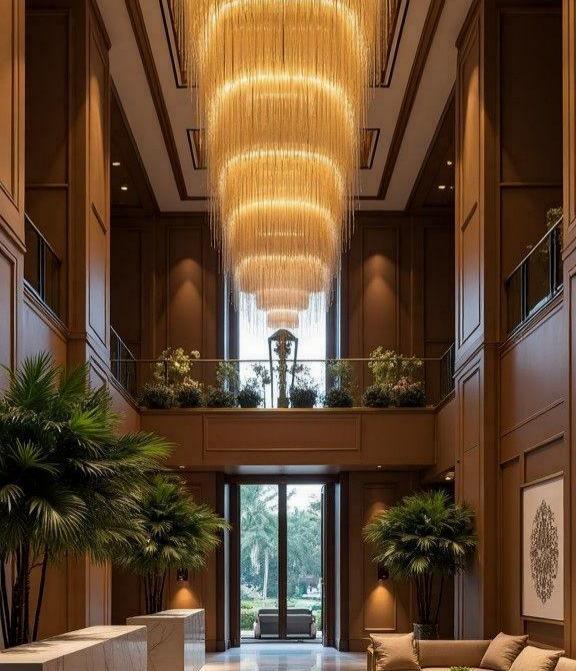
Furniture Procurement: Working with Manufacturers
Selecting the right manufacturer is as important as choosing the right design. Hospitality furniture manufacturers specializing in contract-grade production understand the unique demands of commercial environments — from fire code compliance to weight ratings and warranty requirements.
Experienced manufacturers like Hongye Furniture bring value through their understanding of international hospitality standards, bulk production capabilities, and customization expertise. When evaluating potential suppliers, request detailed specification sheets that include frame construction methods, joinery techniques, foam density ratings (minimum 1.8 lb/ft³ for seat cushions), and finish specifications. Factory visits or third-party quality inspection reports provide confidence in production standards.
Lead times for custom hospitality furniture typically range from 8-16 weeks, depending on complexity and order volume. Factor this into your project timeline and include a 2-3 week buffer for shipping, customs clearance, and on-site installation. Many projects benefit from a hybrid approach: combining stock pieces for standard items with custom-designed signature pieces that define the lobby’s character.
Future-Proofing Your Lobby Investment
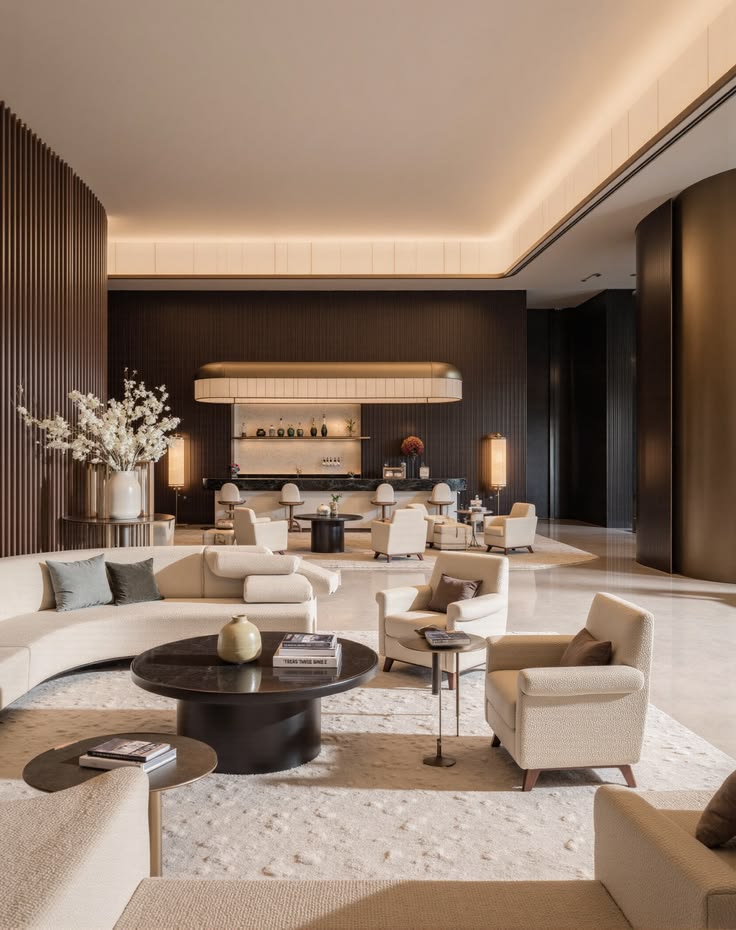
Hotel lobby design trends evolve, but certain principles endure. Invest in neutral, high-quality foundation pieces — sofas, lounge chairs, and tables in classic silhouettes — and refresh through accessories, artwork, and accent furniture that can be updated cost-effectively every 3-5 years. Modular furniture systems that allow reconfiguration extend the useful life of your investment as functional needs change.
Sustainability considerations increasingly influence procurement decisions. Look for manufacturers offering FSC-certified wood, GREENGUARD-certified finishes, and recycled-content fabrics. These credentials matter to environmentally conscious travelers and are increasingly required by brand standards from major hotel chains.
The lobby is your property’s handshake with every guest. Make it firm, warm, and memorable — and the bookings will follow.
Frequently Asked Questions
1. How much should I budget for hotel lobby furniture?
Lobby furniture budgets vary by hotel segment. For a midscale 150-room hotel, expect to invest $35-65 per square foot of lobby space, translating to roughly $25,000-$80,000 for furniture alone. This range covers seating, tables, reception desk, and accent pieces. Luxury properties can exceed $120 per square foot. Always include a 15-20% contingency for unexpected costs, freight, and installation.
2. What is the most durable upholstery fabric for hotel lobbies?
Commercial-grade vinyl and Crypton fabric offer the best combination of durability and cleanability for high-traffic lobby environments. Both achieve Martindale abrasion ratings exceeding 80,000 rubs and resist fluid penetration. Solution-dyed acrylic is the top choice for lobbies with abundant natural light due to its superior UV resistance. Avoid natural fibers like cotton and linen, which stain easily and wear quickly.
3. How often should hotel lobby furniture be replaced?
Well-maintained commercial-grade lobby furniture typically lasts 7-10 years for upholstered pieces and 15-20 years for casegoods under normal use. Factors accelerating replacement include high occupancy rates (above 80%), coastal locations with salt air exposure, and properties with heavy convention business. Schedule a professional furniture audit every 5 years to assess condition and plan phased replacement.
4. What fire safety standards apply to hotel lobby furniture?
In the United States, hotel lobby furniture must comply with CAL TB 117-2013 flammability standards. Many brand standards additionally require compliance with ASTM E84 (surface burning characteristics) and NFPA 260 cigarette ignition resistance testing. UK and EU properties require BS 5852 or EN 1021 certification. Always request fire certificates from manufacturers and verify that labeling is affixed to each piece.
5. Can I mix different furniture styles in one lobby?
Yes, mixing styles creates visual interest when executed with discipline. The most successful mixed-style lobbies follow the 70-30 rule: 70% of pieces share a dominant style (e.g., mid-century modern), while 30% introduce complementary contrast (e.g., industrial accents or classic touches). Unify the mix through a consistent color palette, repeated materials, or a common finish across disparate pieces. Random mixing without a unifying element produces chaos rather than curation.