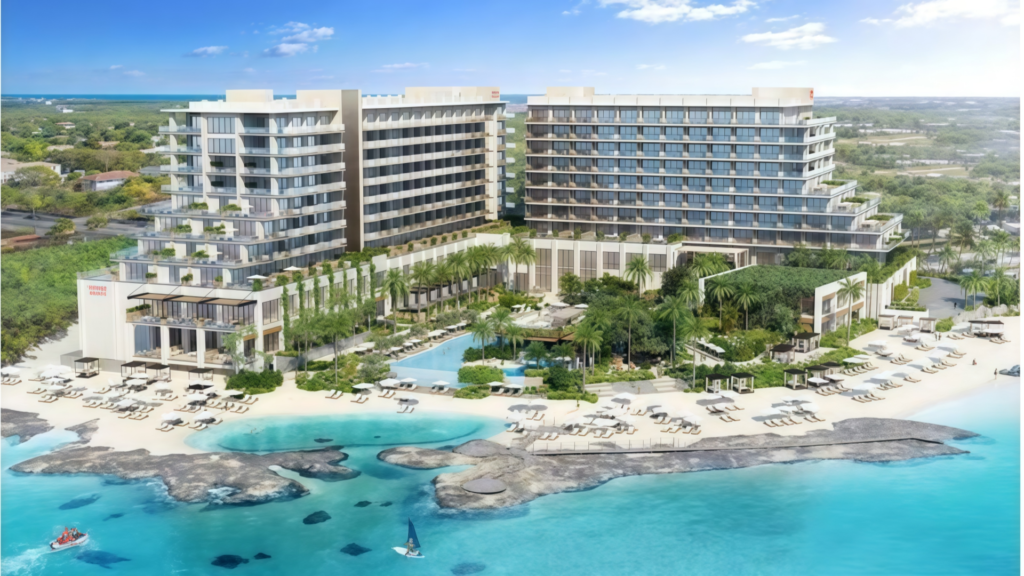
For coastal hotel projects, the right upholstery specification depends less on a marketing label and more on the furniture’s actual exposure to sun, rain, humidity, pool chemicals, and salt air.
Contract-grade upholstery is generally designed for demanding indoor commercial use. Marine-grade or outdoor-rated upholstery is designed for furniture exposed to harsher outdoor or semi-outdoor conditions, including direct UV, rain, splash, dampness, and salt-laden air.
The key decision is not simply “marine-grade or contract-grade.” Hotel owners, designers, and procurement teams should divide the property into three exposure zones:
- Indoor controlled environments.
- Covered or semi-outdoor environments.
- Fully exposed outdoor environments.
A lounge chair in an air-conditioned guestroom, a sofa in a covered beachfront veranda, and a sun lounger beside a pool may all be part of the same hotel—but they should not receive the same furniture specification.
Important: “Marine-grade” is a performance description, not one universal certification. Buyers should define the use environment, material construction, corrosion strategy, maintenance method, and project-specific test evidence before approving a coastal furniture package.
Key Takeaways
- Contract-grade upholstery is usually appropriate for air-conditioned hotel interiors with controlled humidity and no direct rain exposure.
- Outdoor- or marine-oriented upholstery is more suitable for pool decks, cabanas, beachfront dining, open balconies, and exposed verandas.
- Abrasion resistance alone does not determine whether fabric is suitable for a coastal outdoor environment.
- Coastal furniture performance depends on the complete assembly: cover fabric, sewing thread, cushion construction, foam, frame, fasteners, staples, zippers, and drainage design.
- ASTM B117 can provide comparative corrosion information for metal parts and coatings, but salt-spray hours should not be treated as a direct prediction of real coastal service life.
- UV and color-retention evidence must identify the actual test method, exposure cycle, sample construction, and pass/fail criteria.
- Hotels should specify furniture by exposure zone rather than applying one material grade across the entire property.
- Hongye supports hotel furniture projects with indoor casegoods, guestroom seating, covered outdoor furniture, and fully exposed outdoor seating, including coordinated material schedules, samples, and project-specific documentation where applicable. Hongye states that it has more than 30 years of manufacturing experience, a 300,000-square-meter production facility, 47+ hotel brand partners, and 24 hotel projects across 15 countries.
Quick Answer: Which Upholstery Should You Use?
Use contract-grade upholstery for indoor areas that are protected by sealed glazing, continuous HVAC, and normal commercial cleaning procedures.
Use outdoor-rated or marine-oriented upholstery for furniture exposed to direct sun, rain, pool splash, salt air, dampness, or repeated wetting.
For covered outdoor spaces, use a transitional specification. This may include outdoor-rated or solution-dyed cover fabrics, quick-dry cushion construction, corrosion-resistant fasteners and moisture-tolerant frames.
| Hotel Area | Typical Exposure | Recommended Direction |
|---|---|---|
| Guestroom seating | Indoor, air-conditioned, limited direct sun | Contract-grade upholstery |
| Interior lobby seating | Indoor, high traffic, possible window sunlight | Contract-grade upholstery with appropriate colourfastness strategy |
| Restaurant seating indoors | Heavy use, spills and frequent cleaning | Contract-grade upholstery selected for cleanability and commercial use |
| Covered entry or veranda | Wind-driven humidity, salt air, occasional splash | Outdoor-capable or transitional specification |
| Open-air lobby | Heat, UV, wind, salt exposure and changing humidity | Outdoor-rated upholstery and corrosion-resistant assembly |
| Poolside lounger | Direct UV, rain, chlorine splash and wet swimwear | Fully outdoor-rated or marine-oriented construction |
| Beachfront dining | UV, salt air, rain and cleaning exposure | Outdoor-rated fabric, drainage and corrosion-resistant hardware |
| Unprotected balcony | Direct weather, salt air and condensation | Fully outdoor-rated furniture assembly |
What “Contract-Grade” Means
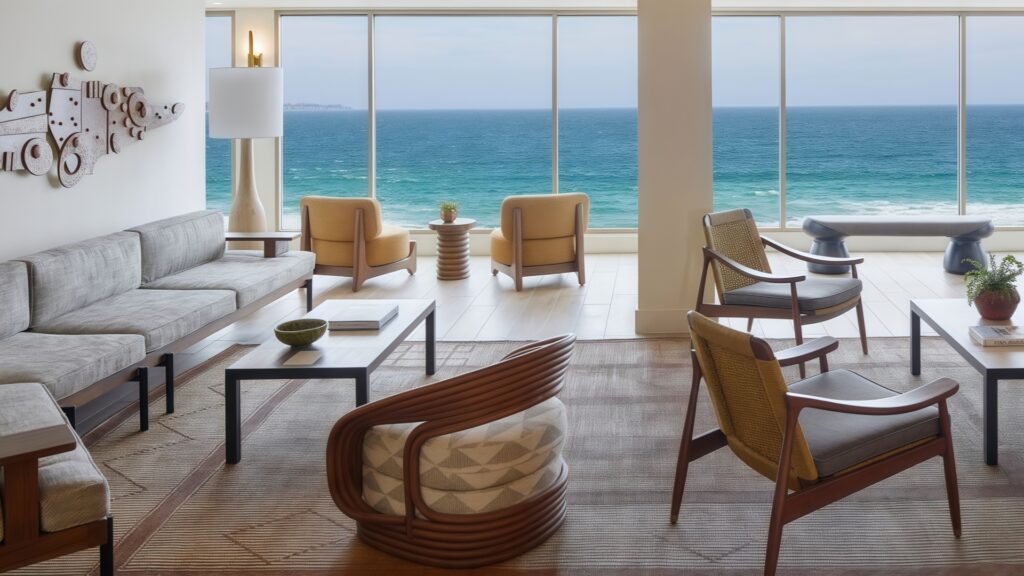
Contract-grade upholstery is usually selected for commercial interiors such as hotels, restaurants, offices, healthcare facilities and public spaces.
The term often refers to materials designed for higher levels of commercial use. Depending on the product and project, buyers may evaluate:
- Abrasion resistance.
- Seam strength.
- Tear strength.
- Colorfastness.
- Cleaning performance.
- Stain resistance.
- Flammability or fire-performance requirements.
- Indoor emissions requirements.
- Material consistency and replacement availability.
Contract-grade does not automatically mean outdoor-safe, marine-safe or salt-air resistant.
A fabric can have a high abrasion rating and still be unsuitable for direct UV, rain, mildew-prone environments or poolside use.
Abrasion Is Only One Requirement
Hotel procurement teams often see Wyzenbeek or Martindale abrasion results in upholstery data sheets.
- Wyzenbeek measures abrasion in double rubs.
- Martindale measures abrasion in cycles.
- The results should not be treated as directly interchangeable.
Higher abrasion performance may help in high-use indoor seating, but it does not replace UV stability, moisture management, mildew resistance, drainage or corrosion protection.
Procurement rule: Do not specify a poolside chair only by double-rub count. Specify the full furniture assembly for its actual exposure conditions.
What “Marine-Grade” Means
Marine-grade upholstery is commonly used to describe materials and furniture assemblies intended for harsh outdoor or coastal conditions.
It may involve:
- Outdoor-rated cover fabrics.
- Solution-dyed acrylics or selected performance textiles.
- Marine vinyl or outdoor vinyl where appropriate.
- UV-resistant thread.
- Moisture-tolerant cushion construction.
- Quick-dry or drainable cushioning.
- Corrosion-resistant fasteners.
- Outdoor-suitable frames.
- Sealed, non-absorbent or properly coated structural components.
- Replaceable cushions, covers, glides or hardware.
However, “marine-grade” should not be accepted as a stand-alone technical requirement.
A supplier should identify the exact cover fabric, foam, frame material, fastener specification, thread, zipper, coating system and intended installation environment.
| Requirement Area | What Buyers Should Ask For |
|---|---|
| Cover fabric | Brand, collection, SKU, composition, colour and approved sample |
| UV performance | Test method, exposure cycle, specimen and pass/fail criteria |
| Moisture management | Cushion cross-section, drainage path and dry-out design |
| Foam and fill | Foam type, wrap, water-management method and replaceability |
| Frame | Frame material, coating, weld treatment and drainage provision |
| Hardware | Material for staples, fasteners, zippers, glides and adjustment mechanisms |
| Thread and seams | Thread type, seam construction and UV suitability |
| Cleaning | Approved cleaning method, prohibited chemicals and maintenance frequency |
| Warranty | Scope, exposure limitations, exclusions and replacement-part policy |
Three Coastal Exposure Zones
The most useful specification approach is to classify furniture by exposure level.
Zone 1: Indoor Controlled Environments
These areas typically include guestrooms, enclosed lobbies, meeting rooms, restaurants, and indoor lounges with sealed glazing and regular HVAC.
Recommended priorities include:
- Commercial-grade abrasion performance appropriate to expected use.
- Cleanability and stain management.
- Suitable indoor fire-performance requirements.
- Replaceable glides, hardware and cushions where practical.
- Colourfastness for seating near large windows.
- Low-emissions documentation where required by the project.
- Material samples approved against interior lighting conditions.
Marine-oriented construction is usually unnecessary if the furniture remains indoors, protected from direct weather and maintained in a controlled environment.
Zone 2: Covered or Semi-Outdoor Environments
These areas may include covered terraces, open-air lobbies, sheltered verandas, roofed cabanas and beachfront entrances.
Furniture may be protected from direct rain but still exposed to:
- Wind-driven rain.
- Salt air.
- High humidity.
- Condensation.
- Direct or reflected sunlight.
- Pool splash.
- Frequent temperature changes.
Recommended priorities include:
- Outdoor-capable or solution-dyed upholstery.
- UV-aware thread and seam construction.
- Moisture-tolerant cushion construction.
- Corrosion-resistant fasteners and hardware.
- Frames that do not trap water.
- Replaceable cushions and covers.
- An approved drying and cleaning plan.
Zone 3: Fully Exposed Outdoor Environments
These areas may include pool decks, beachfront lounges, open balconies, outdoor dining terraces and unprotected cabanas.
Furniture in these zones must withstand repeated combinations of UV, rain, humidity, salt air, wind, wet clothing, sand, cleaning chemicals and pool chemicals.
Recommended priorities include:
- Fully outdoor-rated cover fabrics.
- Quick-dry or drainable cushion construction.
- Outdoor-rated foam or fill system suitable for repeated wetting.
- Corrosion-resistant frame and fastening strategy.
- UV-resistant thread.
- Drainage paths in the frame and cushion base.
- Replaceable covers, cushions, glides and hardware.
- A documented maintenance schedule.
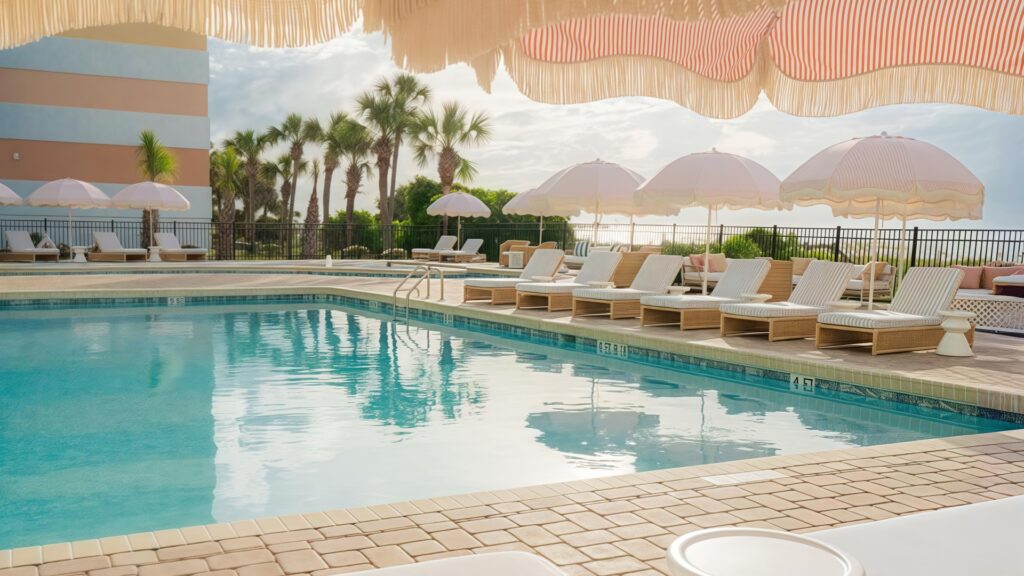
Marine-Grade vs. Contract-Grade Comparison
| Performance Area | Contract-Grade Upholstery | Marine-Oriented or Outdoor Upholstery |
|---|---|---|
| Typical location | Indoor commercial spaces | Coastal outdoor and semi-outdoor spaces |
| Primary concern | Daily commercial wear, cleanability and visual durability | UV, moisture, salt air, mildew, corrosion and drainage |
| Abrasion testing | Often an important selection factor | Relevant but not sufficient on its own |
| UV exposure | May require additional review near glazing | Usually a core specification requirement |
| Rain and wetting | Normally not intended for repeated wetting | Must be addressed in cover, cushions, frame and drainage |
| Mildew risk | Controlled through HVAC and cleaning in interior spaces | Requires material and construction strategy |
| Hardware | Commercial indoor-grade components may be suitable | Corrosion-resistant fasteners and fittings are important |
| Cushion construction | Comfort, fire requirements and indoor durability | Quick-dry, drainage, moisture release and replaceability |
| Frame | Wood, metal or engineered panel depending on the product | Outdoor-suitable materials, coatings and drainage design |
| Maintenance | Upholstery cleaning and spot repair | Regular cleaning, drainage checks, corrosion inspection and manufacturer-approved care |
Decision principle: Outdoor furniture failure is rarely caused by one component alone. A UV-resistant cover fabric cannot fully protect a chair that uses moisture-sensitive foam, rust-prone staples or a frame that retains water.
UV, Salt Air, and Mildew: How to Review Test Evidence
A procurement team should not compare test reports only by the number of test hours.
UV and Colour Retention
AATCC TM16.3 is commonly used to evaluate textile colorfastness to light using a xenon-arc light source. ASTM G154 is a practice for exposing nonmetallic materials to fluorescent UV light and may include moisture exposure cycles. These methods serve different purposes and should not be treated as directly interchangeable.
When reviewing a report, confirm:
- Test method and current version.
- Laboratory identity and accreditation where applicable.
- Exact fabric SKU and colour.
- Sample construction.
- Exposure cycle.
- Exposure duration.
- Evaluation method.
- Colour-change rating or pass/fail threshold.
- Report issue date.
A higher exposure-hour number does not automatically mean a longer service life at a beachfront hotel. Real performance depends on solar intensity, orientation, local climate, cleaning chemicals, installation, drainage and furniture construction.
Salt-Air and Corrosion Evidence
ASTM B117 is a neutral salt-spray or salt-fog test commonly used to compare corrosion resistance of metal materials, coatings and components.
For upholstered furniture, it may be relevant to:
- Frame fasteners.
- Staples.
- Zippers.
- Adjustment mechanisms.
- Metal legs.
- Welded frames.
- Coated metal components.
- Exposed brackets and connectors.
However, ASTM B117 should not be used alone to predict actual outdoor service life. Salt-fog testing does not fully replicate changing temperatures, UV, rain, dry cycles, pollutants, drainage conditions or real installation design.
Ask suppliers to identify:
- Exact component tested.
- Base metal.
- Coating system.
- Test duration.
- Failure criteria.
- Corrosion rating.
- Whether edges, joints, welds and cut-outs were included.
- Whether the tested component matches the furniture being supplied.
Mildew and Fungal Resistance
AATCC TM30 covers methods associated with mildew and rot resistance of textile materials and can be relevant when assessing fabrics intended for damp or humid conditions. It should not be used as a broad claim that a fabric is universally “antimicrobial” or permanently mould-proof.
For coastal furniture, mildew prevention also depends on:
- Water drainage.
- Cushion drying.
- Air movement.
- Housekeeping practices.
- Storage during storms or low season.
- Cleaning method.
- Fabric construction.
- Frame design.
The Hidden Components That Determine Coastal Performance
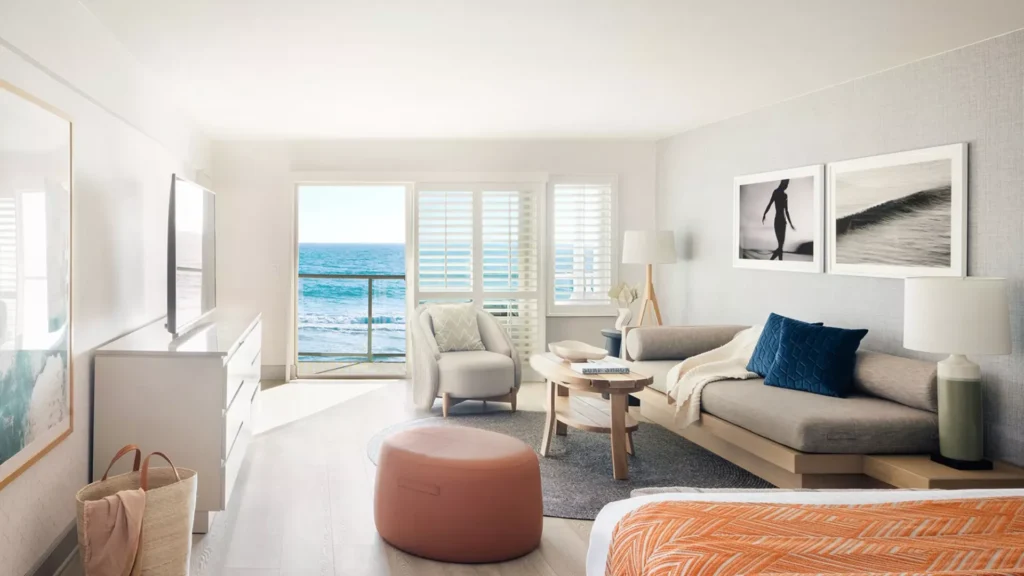
The visible upholstery cover is only part of the specification.
| Component | Indoor Contract Approach | Coastal Outdoor Approach |
|---|---|---|
| Cover fabric | Commercial woven, vinyl or coated textile selected for interior use | Outdoor-rated or marine-oriented fabric selected for UV, moisture and cleaning conditions |
| Sewing thread | Commercial thread appropriate for interior use | UV-resistant thread appropriate for outdoor exposure |
| Cushion fill | Indoor foam and wrap selected for comfort and fire requirements | Moisture-tolerant, quick-dry or drainable construction where repeated wetting is expected |
| Cushion base | Standard upholstered deck or interior support | Drainage-friendly base that does not retain water |
| Staples and tacks | Suitable indoor commercial components | Corrosion-resistant materials appropriate to exposure |
| Zippers | Standard zipper selection | Corrosion-resistant and replaceable zipper system where applicable |
| Fasteners | Commercial fasteners matched to indoor frame construction | Corrosion-resistant fasteners matched to the frame and coastal exposure |
| Frame | Engineered wood, wood, metal or mixed materials | Outdoor-suitable metal, sealed wood construction, synthetic material or other moisture-managed structure |
| Glides and feet | Interior floor-protection components | Outdoor-capable glides, feet and corrosion-resistant adjusters |
| Maintenance access | Upholstery repair where necessary | Removable cushions, replaceable covers and accessible components preferred |
Example: Why a Cover Fabric Alone Is Not Enough
A poolside lounge chair may use an outdoor-rated fabric but still fail prematurely if:
- Water enters and remains inside the cushion.
- The frame traps moisture.
- Staples corrode behind the upholstery.
- Thread loses strength from UV exposure.
- The foam does not dry properly.
- The zipper jams or corrodes.
- Pool chemicals affect the fabric or finish.
- The maintenance team uses an unapproved cleaner.
For exposed coastal furniture, specify the entire chair or sofa assembly—not only the visible textile.
Material Selection by Hotel Location
| Hotel Location | Exposure Profile | Recommended Material Direction |
|---|---|---|
| Standard guestroom | Controlled indoor air, normal hospitality use | Contract-grade upholstery; assess lightfastness near windows |
| Guestroom balcony | Direct weather or salt-air exposure | Fully outdoor-rated seating and cushions |
| Beachfront enclosed lobby | Indoor use with possible high sun through glazing | Contract-grade upholstery with UV-aware colour and material selection |
| Open-air lobby | Humidity, salt air, heat and wind-driven rain | Outdoor-capable cover fabric, corrosion-resistant hardware and quick-dry cushions |
| Covered veranda | Salt air, humidity, partial sun and occasional splash | Transitional outdoor specification with drainage and corrosion strategy |
| Poolside seating | Direct sun, rain, wet swimwear and pool chemicals | Fully outdoor-rated furniture assembly |
| Beach bar stool | Salt air, spills, UV, sand and high guest turnover | Outdoor-rated seating, corrosion-resistant frame and cleanable surfaces |
| Outdoor dining chair | Direct weather, moving furniture and frequent cleaning | UV-resistant material, outdoor frame, protected fasteners and replaceable glides |
| Spa relaxation area | Humidity, oils, cleaning products and wet towels | Moisture-tolerant upholstery or non-upholstered solution, depending on exposure |
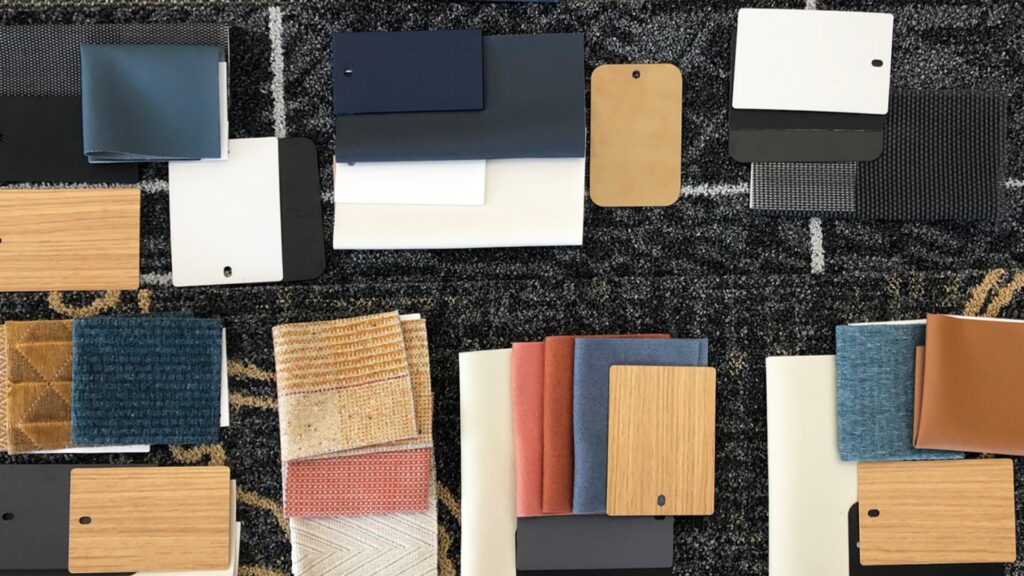
Coastal Furniture Procurement Checklist
Before approving a coastal hotel furniture order, verify the following items in the RFQ, BOQ, furniture schedule, shop drawings and sample approval records.
Location and Exposure
- Define whether each item is indoor, covered outdoor or fully exposed outdoor.
- Identify direct sun, rain, splash, salt air, wind, sand and pool-chemical exposure.
- Confirm whether furniture will be moved, stacked or stored during severe weather.
Upholstery and Cushions
- Name the fabric brand, collection, SKU, colour and composition.
- Approve a physical sample under project lighting.
- Define UV and colour-retention evidence where required.
- Define mildew or fungal-resistance evidence where relevant.
- Specify thread type, seam construction and cushion cover removability.
- Define foam or fill construction, drainage and drying method.
Frames and Hardware
- Define frame material, coating system and finishing method.
- Specify fastener, staple, zipper, glide and adjustment-hardware materials.
- Confirm drainage provisions in frames and cushions.
- Require detail drawings for water-trap risk areas.
- Identify replaceable parts and spare-parts quantities.
Compliance and Documentation
Request documentation only where it applies to the exact item, material, market and project requirement.
Examples may include:
- Relevant structural-performance evidence for the product category.
- Project-required fire documentation for indoor upholstered furniture.
- Indoor-emissions documentation where relevant to interior products.
- Composite-wood formaldehyde-emissions evidence where applicable.
- Wood chain-of-custody evidence when specified.
- UV, weathering, corrosion or mildew-related test evidence for outdoor components.
- Product-specific cleaning, maintenance and warranty documentation.Documentation rule: A manufacturer’s company-level ISO certification, a laboratory name or a broad product brochure does not prove that every furniture configuration meets a project requirement. Confirm the exact product, material, report, test method and scope.
Maintenance Planning for Coastal Upholstery
Outdoor and semi-outdoor furniture requires a maintenance plan from the start of the project.
Hotels should establish procedures for:
- Removing sand and debris before it abrades fabrics.
- Cleaning spills promptly.
- Using only supplier-approved cleaners.
- Testing unfamiliar cleaners in a hidden location first.
- Checking drainage holes and cushion dry-out performance.
- Inspecting corrosion-prone areas, including fasteners and frame joints.
- Checking seam condition and thread deterioration.
- Storing movable furniture during storms, low season or extreme weather.
- Recording replacement part codes, cushion covers and fabric references.
- Reviewing warranty conditions before applying protective treatments.
Do not assume every outdoor fabric requires the same water-repellent treatment or chemical protectant. Follow the fabric and furniture manufacturer’s approved maintenance instructions, particularly where the product carries a warranty.
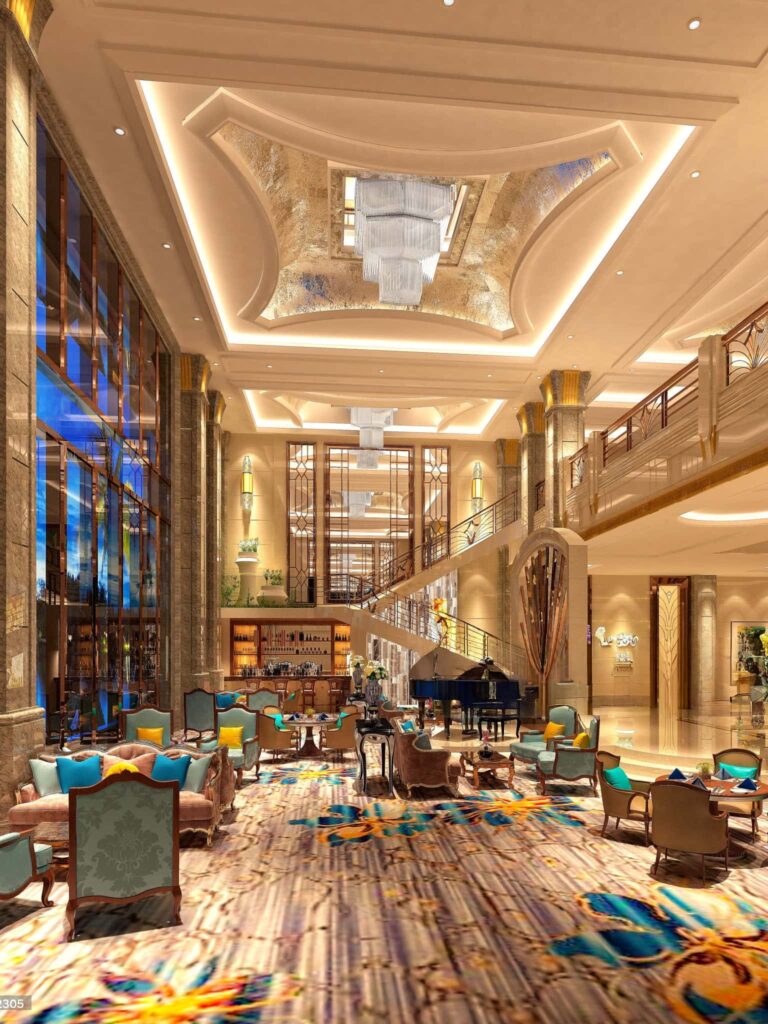
Hotel Furniture
Hongye for Coastal Hotel Furniture Projects
Hongye supports hotel furniture projects that combine indoor casework, guestroom seating, covered outdoor furniture and fully exposed outdoor seating.
For qualified coastal projects, Hongye can coordinate:
- Furniture schedules and BOQ review.
- Indoor, semi-outdoor and outdoor material selection.
- Upholstery samples and finish approvals.
- Cushion, foam, frame and hardware specification discussions.
- Product drawings and project-specific furniture configurations.
- Export packing and container-loading coordination.
- Product-specific documentation where applicable.
- Sample-room, mock-up and inspection coordination.
Hongye states that it has more than 30 years of commercial furniture manufacturing experience, a 300,000-square-metre factory in Jiangmen, China, 47+ hotel brand partners and delivery experience across 24 hotel projects in 15 countries. Its broader company information also describes 1,000+ commercial projects delivered across 50+ countries and a workforce of more than 1,000 skilled employees.
Buyers should verify the exact product configuration, fabric SKU, foam construction, frame material, fastener specification, current test reports, warranty scope, maintenance requirements and destination-market obligations before approving production.
Frequently Asked Questions
What is the difference between marine-grade and contract-grade upholstery?
Contract-grade upholstery is generally designed for indoor commercial wear, cleanability and regular hospitality use. Marine-grade or outdoor-oriented upholstery is intended for more severe exposure such as direct UV, rain, salt air, humidity, wetting and coastal corrosion risk.
Marine-grade is not one universal certification. It is a combined performance approach that should include the fabric, cushion construction, hardware, fasteners, frame, drainage design and maintenance method.
Can contract-grade upholstery be used in a coastal hotel?
Yes. Contract-grade upholstery can be suitable for guestrooms, enclosed lobbies, restaurants and meeting areas with sealed glazing, HVAC and no direct weather exposure.
However, furniture near open-air spaces, pools, beaches, exposed balconies or wind-driven rain should use an outdoor-capable specification appropriate to those conditions.
Does a higher Wyzenbeek abrasion rating mean the fabric is better for poolside furniture?
No. A higher abrasion rating may indicate stronger resistance to surface wear in commercial use, but it does not prove that the fabric can withstand direct UV, repeated wetting, mildew, salt air or pool chemicals.
For poolside furniture, evaluate UV performance, moisture management, drainage, corrosion resistance, seam construction and cleaning requirements in addition to abrasion.
What standards should I ask for on coastal outdoor furniture?
The appropriate evidence depends on the product and location. For example, buyers may request UV or lightfastness evidence for cover fabrics, corrosion information for metal frames and hardware, fungal-resistance evidence where relevant and structural-performance information for the product category.
For any report, confirm the exact material, test method, sample, evaluation criteria, report date and product configuration.
Does ASTM B117 prove that furniture will last in a coastal hotel?
No. ASTM B117 can provide controlled corrosion-comparison information for metals and coatings, but salt-spray test duration should not be converted directly into real-world coastal service life.
Outdoor performance also depends on UV, rain, drying cycles, drainage, cleaning chemicals, pollution, material compatibility and furniture design.
What hidden components should I specify for coastal upholstered furniture?
Specify more than the cover fabric. Review thread, seams, foam, cushion wrap, drainage, zippers, staples, fasteners, frame construction, coatings, feet, glides and accessible replacement parts.
The complete assembly must be suitable for the expected exposure zone.
How should a hotel maintain outdoor upholstery?
Follow the fabric and furniture supplier’s approved care guide. Hotels should remove debris, clean spills promptly, inspect drainage, monitor corrosion, avoid unapproved chemicals and store movable furniture during severe weather when possible.
Before applying any protector or cleaner, confirm that it is compatible with the exact fabric and does not affect warranty coverage.
Can one supplier provide both indoor and outdoor hotel furniture?
Yes. Coordinated sourcing can help hotels align finishes, samples, packing, logistics, warranties and spare-parts planning across guestrooms, public areas and outdoor zones.
However, buyers should still verify the supplier’s actual capability for every furniture category, especially outdoor seating, corrosion-resistant frames, quick-dry cushion construction and coastal installation requirements.
Specify by Exposure, Not by Label
Marine-grade and contract-grade upholstery are not interchangeable, but the correct solution is not always to select the most expensive material.
The better approach is to classify every hotel furniture item by its exposure environment:
- Use contract-grade upholstery for controlled indoor spaces.
- Use transitional outdoor specifications for covered and semi-open environments.
- Use fully outdoor-rated assemblies for pool decks, beaches, exposed balconies and open-air dining areas.
When buyers specify fabric, foam, frame, fasteners, drainage, maintenance and test evidence together, coastal hotel furniture is more likely to remain comfortable, visually consistent and maintainable throughout its intended service period.