Renovating a hotel is not a single expense — it is a cascade of decisions where furniture costs can spiral from a manageable $6,000 per room to an unmanageable $25,000 before you realize what happened. The difference between staying on budget and blowing past it comes down to understanding what drives cost per room and planning for the variables that catch most hotel owners off guard.
With Property Improvement Plans (PIPs) accelerating across North America — particularly for the 57,000 hotels approaching brand-mandated renovation cycles — more owners are facing their first major furniture replacement in a decade. The cost landscape has shifted significantly since their last renovation, and outdated budget assumptions lead to painful financing gaps.
This guide breaks down hotel furniture cost per room into actionable components, explains how PIP requirements affect your budget, and provides a framework for calculating realistic renovation costs.
Understanding the Cost Per Room Framework
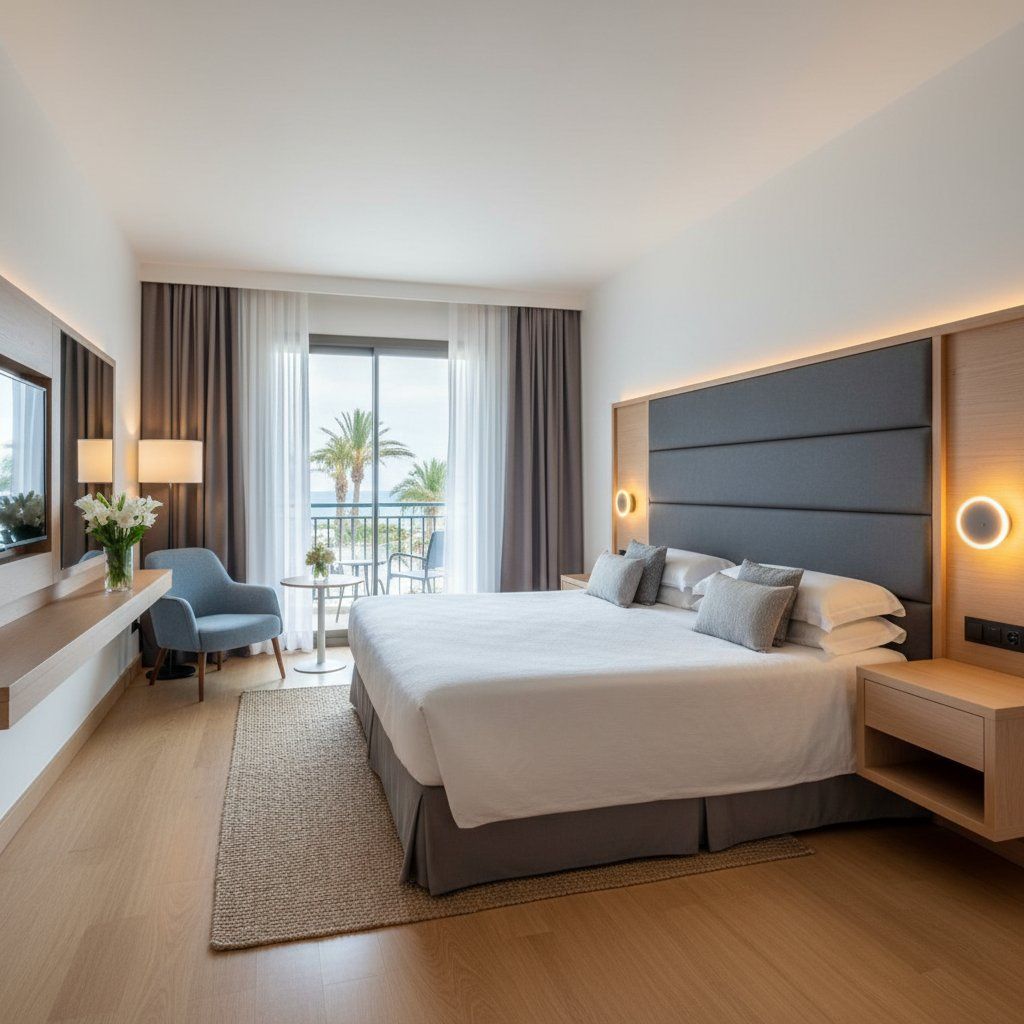
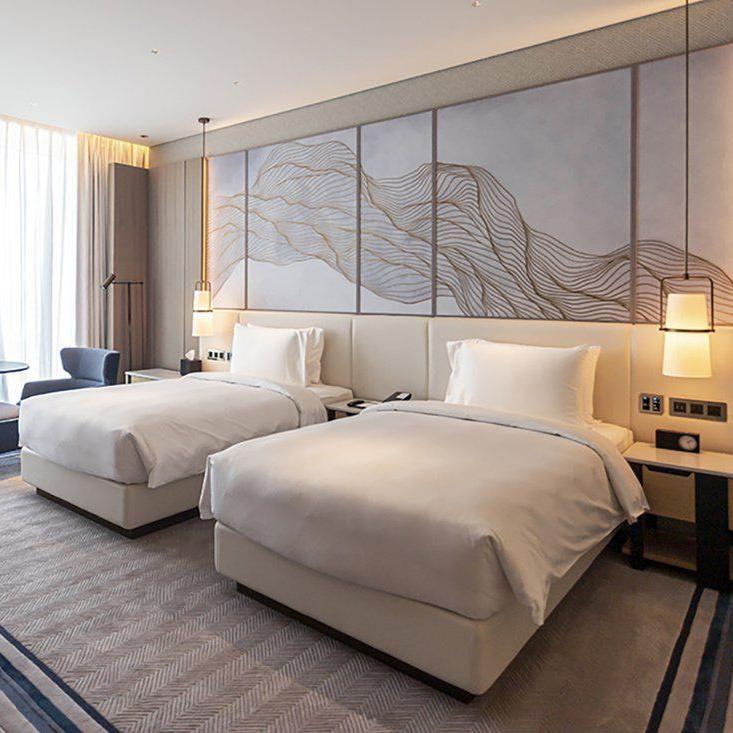
Hotel furniture cost per room is not a single number. It varies by property tier, brand standards, room type, and the scope of work required by your PIP. A limited-service hotel refreshing casegoods will spend differently than a full-service property replacing every furnished surface.
The core cost categories remain consistent across property types. What changes is the allocation within each category and the quality tier of materials specified. Understanding this breakdown helps you identify where savings are possible and where cutting costs will create problems down the line.
| Cost Category | Budget-Service (%) | Mid-Scale (%) | Upper-Upscale (%) |
| Casegoods (desks, dressers, nightstands) | 30-35% | 25-30% | 20-25% |
| Beds and headboards | 25-30% | 20-25% | 20-25% |
| Seating (lounger, desk chair) | 10-15% | 15-20% | 15-20% |
| Soft goods (drapery, bedding) | 8-12% | 10-15% | 12-18% |
| Bathroom accessories and vanity | 10-15% | 12-15% | 10-15% |
| Common area allocation per room | 5-8% | 8-12% | 10-15% |
These percentages shift based on brand requirements. Some franchisors mandate specific mattress grades or casegoods construction methods that lock in minimum spending levels regardless of your budget preferences.
How PIP Requirements Drive Furniture Costs
A Property Improvement Plan is the franchisor’s roadmap for bringing your hotel up to current brand standards. Issued every 7 to 15 years depending on the brand, PIPs specify exactly what must be replaced, upgraded, or added. For many hotel owners — particularly the independent operators who manage a significant portion of branded properties in the United States — the PIP is where budget planning becomes non-negotiable.
Typical PIP furniture requirements include replacing all casegoods that do not meet current construction specifications, upgrading mattresses to brand-specified models, installing new headboard designs, and refreshing soft goods to match updated color schemes. Some PIPs also require lobby furniture upgrades, which add a separate cost layer beyond guest room furniture.
The key to managing PIP furniture costs is understanding which requirements are mandatory versus recommended. Your franchise agreement and the PIP document itself will distinguish between “must replace” items and “should consider” upgrades. Focus your budget on mandatory items first, then allocate remaining funds to recommended upgrades based on their impact on guest satisfaction scores.
Calculating Realistic Per-Room Budgets
Budget ranges for hotel room furniture packages vary dramatically based on property tier and brand. The following ranges reflect 2026 pricing for standard guest rooms, excluding design fees, shipping, and installation labor. Add 18-25% to these figures for a fully loaded project cost.
| Property Tier | Furniture Cost Per Room | Typical Scope | Key Cost Drivers |
| Economy/Budget | $3,500 – $6,000 | Casegoods refresh, mattress, basic seating | RTA furniture, standard fabrics |
| Mid-Scale | $6,000 – $10,000 | Full casegoods, upgraded mattress, task seating | Brand-specified finishes, durability grade |
| Upper-Midscale | $8,000 – $15,000 | Custom casegoods, premium mattress, lounge seating | Design coordination, fire-rated components |
| Upper-Upscale | $12,000 – $22,000 | Designer casegoods, premium bedding suite, tech integration | Brand compliance, custom millwork |
| Luxury | $20,000 – $40,000+ | Bespoke furniture, imported materials, smart room tech | Full design build, premium material grades |
Several factors push costs toward the higher end of each range. Brand-standard furniture compliance often requires specific construction methods — such as dovetail joinery on drawers or minimum drawer slide ratings — that add manufacturing cost. Fire retardancy treatments for fabrics and foams add 8-12% to soft goods pricing. And if your PIP requires technology integration (USB outlets, smart lighting controls), plan for an additional $800-1,500 per room in electrical and component costs.
FF&E Procurement Strategies That Reduce Cost
Hotel FF&E procurement is where experienced owners save the most money. The procurement approach you choose affects not only the unit cost of furniture but also the timeline, quality consistency, and warranty coverage of your entire renovation.
Three primary procurement models exist, each with different cost implications. Direct factory sourcing offers the lowest unit cost but requires you to manage quality control, logistics, and installation independently. A procurement agent adds 5-8% in fees but handles supplier vetting, QC inspections, and export documentation. Full turnkey FF&E providers handle everything from design to installation but charge a premium of 15-25% over direct factory pricing.
| Procurement Model | Cost Impact | Best For | Key Risk |
| Direct factory sourcing | Base cost | Experienced buyers with QC resources | Quality inconsistency, logistics gaps |
| Procurement agent | +5-8% | First-time importers, single-property owners | Agent quality varies widely |
| Turnkey FF&E provider | +15-25% | Multi-property portfolios, tight timelines | Higher upfront cost, less cost transparency |
For owners managing PIP renovations under time pressure, the trade-off between cost and convenience becomes critical. A $2,000 per room savings from direct sourcing evaporates quickly if a container of defective casegoods arrives three weeks past your PIP deadline and triggers brand non-compliance penalties.
Planning Your Renovation Timeline
Furniture production and delivery timelines directly affect your renovation budget. Rush orders carry surcharges of 15-30%, and delayed deliveries extend hotel room downtime — meaning lost revenue for every night a room sits empty waiting for furniture.
A typical hotel furniture production timeline runs 35-60 days from order confirmation to container loading, plus 15-25 days for ocean freight to most North American ports. Add 5-7 days for customs clearance and inland delivery. This means you need to place furniture orders 60-90 days before your installation date.
| Phase | Duration | Key Actions | Budget Impact |
| Design and specification | 30-45 days | Finalize room layouts, select finishes, confirm brand compliance | Design fees, sample costs |
| Production | 35-60 days | Manufacturing, in-line QC, packaging | 30% deposit due at start |
| Shipping and customs | 20-32 days | Ocean freight, customs clearance, inland delivery | Freight and duty costs |
| Installation | 7-14 days | Room-by-room installation, punch list resolution | Installation labor, incidental repairs |
Planning ahead also lets you take advantage of off-peak production scheduling. Chinese furniture manufacturers experience their slowest period from late January through mid-March (Spring Festival and follow-up). Orders placed during this window often receive better pricing and more attentive production scheduling than peak-season orders.
FAQ
- What is the average hotel furniture cost per room in 2026?
For mid-scale properties, expect $6,000 to $10,000 per room in furniture costs. Upper-midscale properties typically range from $8,000 to $15,000. These figures cover casegoods, beds, seating, and soft goods but exclude design fees, shipping, and installation. Add 18-25% for fully loaded project costs.
- How does a PIP affect my furniture budget?
A PIP can increase your furniture budget by 20-40% compared to a voluntary renovation, because it mandates specific replacements and brand-standard compliance. Review your PIP document carefully to distinguish mandatory items from recommended upgrades, and prioritize spending on compliance-critical items first.
- Can I reduce hotel furniture costs by sourcing directly from Chinese manufacturers?
Yes, direct factory sourcing can reduce unit costs by 20-35% compared to domestic distributors. However, you must account for quality control inspections ($300-500 per visit), freight forwarding, customs duties (typically 0-5% for furniture depending on HS code), and the management time required to coordinate overseas production.
- How far in advance should I order hotel furniture for a renovation?
Place orders 60-90 days before your target installation date. Production takes 35-60 days, shipping adds 20-32 days, and you need buffer time for customs and inland delivery. If your PIP deadline is tight, consider air freight for critical-path items, though this increases per-room cost by $1,500-3,000.
- What warranties should I expect on hotel furniture?
Casegoods should carry a 3-5 year structural warranty. Mattresses typically have 7-10 year pro-rated warranties. Upholstered seating should include 2-3 year coverage on frames and 1 year on fabric. Verify warranty terms before ordering, and understand the claims process — overseas manufacturers may require defective items to be shipped back, which is rarely cost-effective.
- How do brand-standard furniture requirements impact my renovation timeline?
Brand standards can extend your timeline by 2-4 weeks if the specified components require custom manufacturing or specific fabric grades that are not in stock. Submit your furniture specifications to the brand for approval before placing orders — unapproved items will be rejected during the brand inspection, forcing reorders and delaying your PIP completion.
Planning a hotel renovation or facing a PIP deadline? Hongye Furniture Group specializes in brand-compliant hotel furniture manufacturing with 15+ years of export experience to North America. From casegoods to complete FF&E packages, we help hotel owners navigate procurement efficiently.
Contact our project team at [info@hyhotelfurniture.com](mailto:info@hyhotelfurniture.com) for a customized furniture quote.