
Government furniture procurement is different from private commercial buying. Public buyers often work under formal solicitation rules, domestic-preference requirements, product standards, sustainability requirements, delivery controls and audit documentation.
However, there is no single “government-grade furniture” rule that applies to every purchase.
Federal, state and local buyers may use different procurement paths. In addition, each solicitation can set its own product standards, domestic-content rules, sustainability documentation, delivery requirements and acceptance process.
Therefore, furniture suppliers should not rely on broad claims such as “GSA compliant” or “government grade.” Instead, they should review the actual solicitation, contract vehicle, product category, destination requirements and delivery scope before submitting a bid.
This guide explains how government furniture procurement works, what buyers should include in an RFQ and which documents suppliers may need to provide.
Procurement note: This article provides general information for furniture RFQ planning. Federal, state and local procurement rules can change and vary by contract. Buyers and suppliers should follow the solicitation, agency guidance, applicable law and qualified procurement or legal advice for each purchase.
Key Takeaways
- Government furniture procurement follows the solicitation and contract requirements. It does not follow one universal “government-grade” furniture label.
- Federal buyers may use GSA Multiple Award Schedule contracts and other authorised procurement vehicles. State and local buyers may use state contracts, cooperative purchasing or open municipal tenders.
- Domestic-preference eligibility depends on the contract, product origin, manufacturing location, domestic-content rules, trade-agreement thresholds and applicable exceptions.
- ANSI/BIFMA standards may apply to specific furniture product categories. However, buyers should request the correct standard for the exact chair, desk, table or storage product.
- FAR Part 23 addresses sustainable acquisition and material safety. The specific environmental documents depend on the solicitation and applicable purchasing requirements.
- For applicable composite wood products entering the United States, buyers may need EPA TSCA Title VI compliance documentation.
- Furniture RFQs should define product standards, domestic-preference rules, packaging, installation, asset records, warranty, inspection and acceptance requirements.
- Hongye supports qualified public-sector, education, healthcare, office and hospitality furniture projects with drawings, samples, packaging and project-specific documentation where applicable.
What Is Government Furniture Procurement?
Government furniture procurement is the process of buying furniture for public-sector spaces.
These spaces may include:
- Federal offices.
- State offices.
- Municipal buildings.
- Public universities.
- School districts.
- Courthouses.
- Libraries.
- Healthcare facilities.
- Public housing.
- Community centres.
- Transit facilities.
- Military or government housing.
- Public meeting spaces.
Unlike many private purchases, government furniture procurement often requires formal documentation.
The buyer may need to evaluate:
- Contract vehicle.
- Bid eligibility.
- Domestic-preference rules.
- Product standards.
- Sustainability requirements.
- Composite wood requirements.
- Fire requirements.
- Accessibility requirements.
- Warranty.
- Delivery.
- Installation.
- Asset tracking.
- Payment conditions.
- Inspection and acceptance.
Therefore, the furniture itself is only one part of the procurement decision.
Government procurement rule: A compliant bid includes product information, contract documentation, delivery planning and evidence for the requirements stated in the solicitation.
Federal, State and Local Buying Paths
Public buyers do not all use the same purchasing method.
A federal agency may use the GSA Multiple Award Schedule, an agency-specific contract, a blanket purchase agreement, an IDIQ contract, an open-market procurement method or another authorised vehicle.
Meanwhile, state and local buyers may use state contracts, cooperative purchasing arrangements, education purchasing groups or open municipal tenders.
Therefore, suppliers should identify the buying path before preparing a bid.
| Buying Path | Typical User | Buyer Should Check |
|---|---|---|
| GSA Multiple Award Schedule | Eligible federal buyers and authorised users | Relevant Special Item Number, contract terms, product scope and ordering procedures |
| Agency-specific contract | Federal agency or department | Agency clauses, domestic-preference rules, evaluation criteria and delivery requirements |
| State or cooperative contract | State, local or eligible public entities | Local procurement authority, cooperative rules and contract eligibility |
| Open municipal tender | Cities, school districts and public universities | Local code, bid requirements, evaluation criteria and delivery conditions |
| Public construction or fit-out contract | Government-funded building or renovation project | Contractor responsibilities, installation scope, submittal process and site conditions |
GSA describes the Multiple Award Schedule as a source of long-term, governmentwide contracts that provide access to commercial products and services. However, buyers should still review the relevant contract category, ordering rules and solicitation requirements.

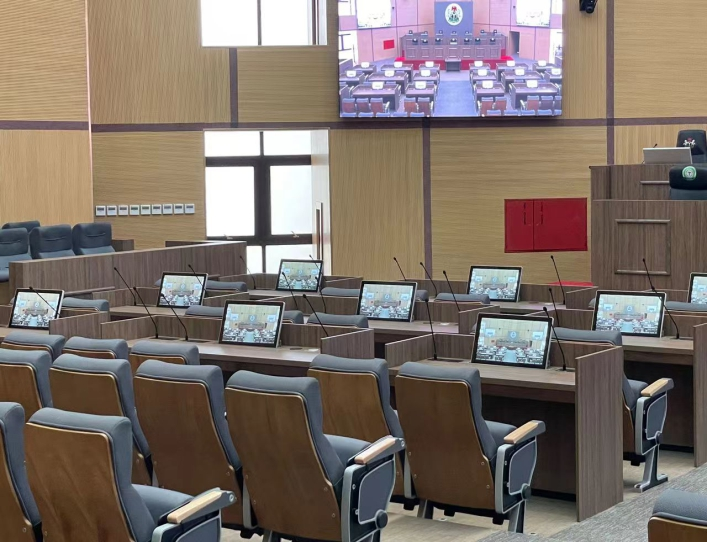
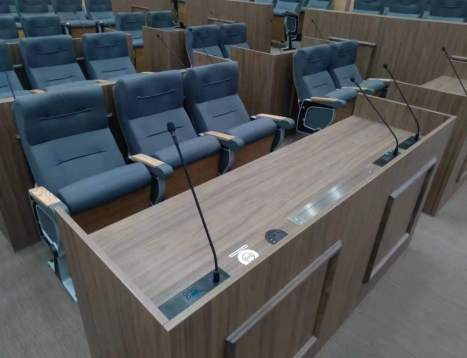
Buying-path rule: The solicitation, contract vehicle and funding source determine the compliance file. Do not assume that every public furniture project follows GSA rules.
Domestic Preference Rules
Domestic-preference rules can affect whether a furniture product is eligible for a federal contract.
However, the rules are contract-specific.
For covered federal Buy American acquisitions, a manufactured end product generally must be manufactured in the United States and meet the applicable domestic-content threshold.
The current FAR framework also includes exceptions, waivers, trade-agreement treatment, commercially available off-the-shelf rules and other procurement-specific conditions.
Therefore, a supplier should not make a “Buy American compliant” claim based only on:
- Country of shipment.
- Final assembly location.
- Brand headquarters.
- Distributor location.
- U.S. warehouse location.
- One U.S.-made component.
The bidder should review the solicitation clauses, product origin, component cost, delivery period, contract value and manufacturing process before making a domestic-preference representation.
FAR Subpart 25.1 includes domestic-content requirements for covered manufactured end products. It also identifies domestic-content thresholds and exceptions that may affect eligibility.
Questions to Ask Before Bidding
- Does the solicitation include Buy American clauses?
- Does the procurement fall under the Trade Agreements Act?
- Does a trade-agreement threshold apply?
- Is the product a manufactured end product?
- Where does final manufacture occur?
- What components are used?
- What domestic-content rule applies to the contract period?
- Does an exception or waiver apply?
- Does the agency require a domestic-content certificate?
- Which party is responsible for the origin statement?Domestic-preference rule: Confirm eligibility before bid submission. Do not wait until furniture production is complete.
Sustainable Acquisition Requirements
FAR Part 23 addresses environment, sustainable acquisition and material safety.
However, FAR Part 23 does not create one universal furniture document package.
Instead, the solicitation may identify specific sustainable-acquisition requirements.
For example, an RFQ may ask for:
- Recycled-content information.
- Low-emissions documentation.
- Composite wood compliance.
- Responsible wood sourcing.
- Environmental product declarations.
- Packaging information.
- Chemical declarations.
- End-of-life information.
- Energy or water information for selected products.
- Facility sustainability information.
The buyer should follow the exact evidence format requested in the solicitation.
For example, one public project may request GREENGUARD Gold or an accepted equivalent for selected indoor furniture. Another may request recycled-content documentation for metal furniture. A third may request FSC or PEFC evidence for eligible wood products.
FAR Part 23 includes sustainable-acquisition requirements and refers to environmentally preferable purchasing programmes.
Sustainability rule: Do not submit every environmental certificate available. Submit the specific evidence required by the solicitation and the product category.
Product Standards and Evidence
Product standards should match the furniture category.
A general statement such as “BIFMA compliant” is not enough for a public-sector RFQ.
Instead, the buyer should identify the furniture type and the applicable standard.
| Requirement | Possible Evidence |
|---|---|
| Domestic preference | Product-origin statement and contract-specific domestic-content analysis |
| Composite wood emissions | TSCA Title VI documentation for applicable panels or finished products |
| Office chair performance | Applicable ANSI/BIFMA X5.1 report where required |
| Public or lounge seating | Applicable ANSI/BIFMA X5.4 report where required |
| Desk and table products | Applicable ANSI/BIFMA X5.5 report where required |
| Office storage units | Applicable ANSI/BIFMA X5.9 report where required |
| Low-emissions requirement | Solicitation-required product or material emissions evidence |
| Responsible wood sourcing | Solicitation-required FSC, PEFC or equivalent claim |
| Electrical furniture | Market-specific electrical and conformity documentation |
| Upholstered furniture | Project-specific fire, abrasion, cleanability and structural evidence |
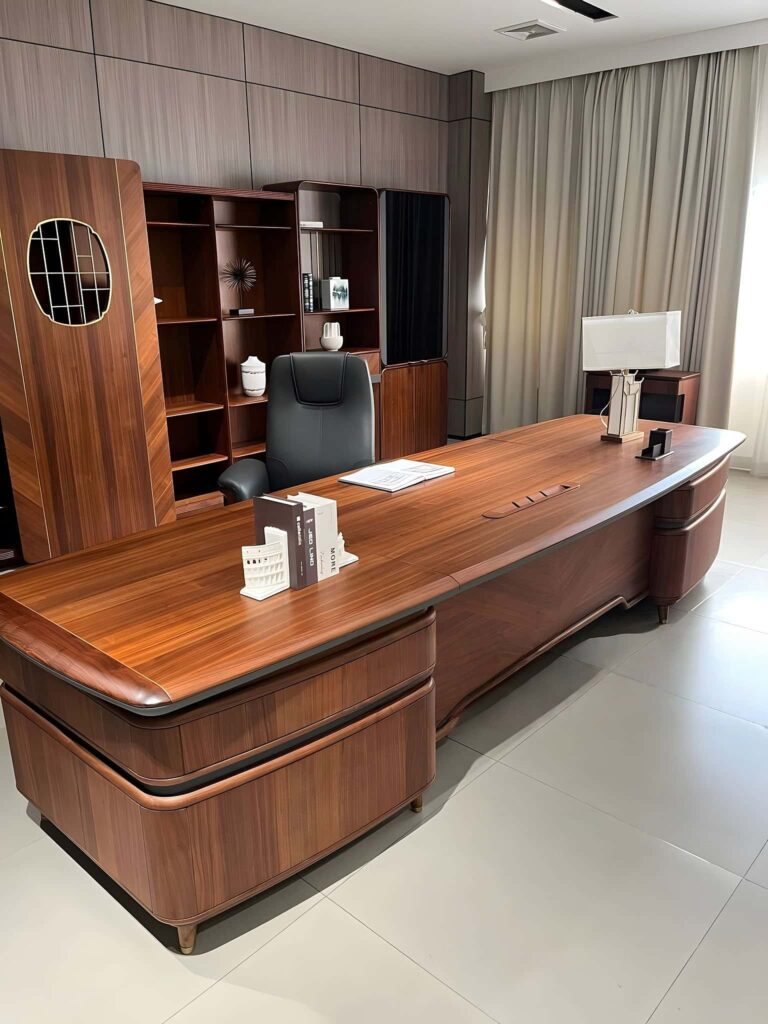
Office Furniture
ANSI/BIFMA Standards
ANSI/BIFMA standards apply to defined furniture categories.
For example:
- ANSI/BIFMA X5.1 applies to general-purpose office chairs.
- ANSI/BIFMA X5.4 applies to public and lounge seating.
- ANSI/BIFMA X5.5 applies to desk and table products.
- ANSI/BIFMA X5.9 applies to office storage units.
Therefore, buyers should not require one BIFMA standard for every government furniture item.
A courthouse lounge chair, office task chair, conference table, storage cabinet and outdoor bench may each require different performance evidence.
Standards rule: Specify the exact standard, edition and product category. Avoid vague phrases such as “government grade” or “contract grade.”
Composite Wood Documentation
For applicable composite wood products entering the United States, EPA TSCA Title VI may require compliance documentation.
The EPA explains that regulated composite wood products must be labelled as TSCA Title VI compliant. In addition, panels and finished goods may need to meet certification and recordkeeping requirements.
However, the required evidence can vary by product and supply-chain role.
Therefore, buyers should confirm:
- Which panel type applies.
- Whether the finished product is regulated.
- Which supplier provides the panel.
- Which records are required.
- Whether labels and invoices match the product.
- Whether the documentation applies to the delivered batch or product configuration.
Fire, Upholstery and Public Use
Fire and upholstery requirements depend on the jurisdiction, building code, occupancy type, furniture category and solicitation.
For example, a public waiting room, library, dormitory, healthcare facility and office may have different requirements.
Therefore, buyers should not automatically apply one fabric or foam standard to every public project.
The solicitation should define:
- Applicable fire-performance requirement.
- Product scope.
- Test method.
- Required laboratory evidence.
- Material configuration.
- Cleaning requirements.
- Upholstery performance requirements.
- Replacement-material requirements.Compliance rule: Ask for evidence that matches the exact product, material configuration and use environment.
A 12-Line Furniture RFQ Checklist
A government furniture RFQ should define the required product evidence and delivery responsibilities.
Not every line below applies to every procurement. However, the checklist helps buyers identify common gaps before release.
| RFQ Field | Buyer Should State |
|---|---|
| Contract vehicle | GSA, agency, state, local or cooperative pathway |
| Domestic preference | Applicable Buy American, Trade Agreements Act or other clause |
| Product standards | Exact standard and edition required |
| Composite wood | Required emissions documentation |
| Sustainability | Required evidence and evaluation method |
| Upholstery | Applicable fire, abrasion and cleanability requirement |
| Hardware | Performance, replacement parts and warranty requirement |
| Finish | Cleaning, chemical resistance and colour requirements |
| Packaging | Protection, labels, delivery and storage requirements |
| Installation | Scope, site conditions and responsibility |
| Asset handover | Asset list, manuals, warranty and as-built information |
| Acceptance | Inspection, punch-list, payment and corrective-action process |
Why Delivery Documentation Matters
Public buyers may need a clear handover record.
Depending on the project, this may include:
- Product codes.
- Room or area allocations.
- Serial numbers where applicable.
- Asset tags.
- Installation records.
- Warranty documents.
- Maintenance manuals.
- Spare-parts lists.
- As-built drawings.
- Punch-list status.
- Delivery receipts.
- Inspection records.Handover rule: Furniture delivery is not complete when cartons arrive. It is complete when the receiving team can verify, install, record and accept the furniture.

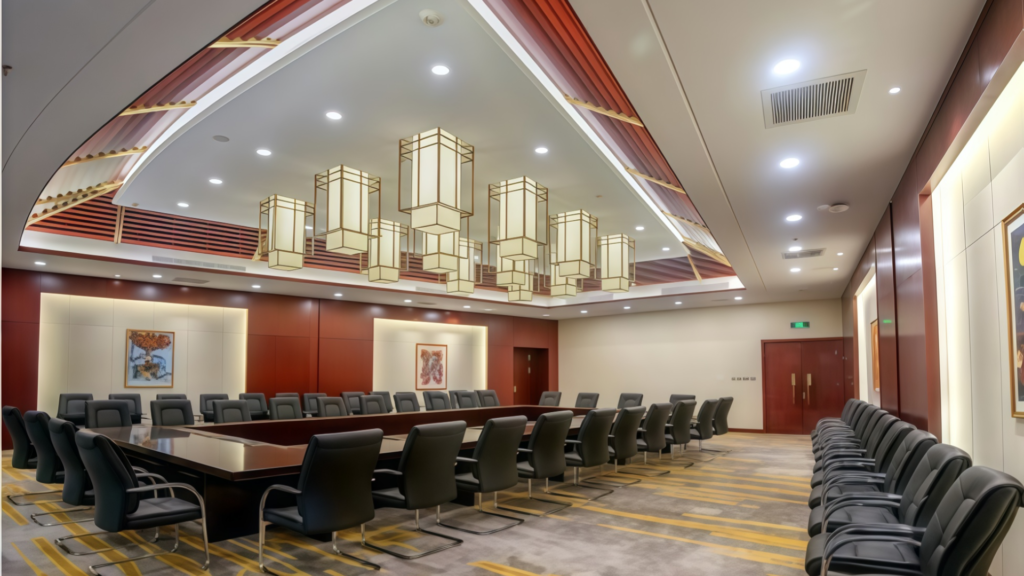

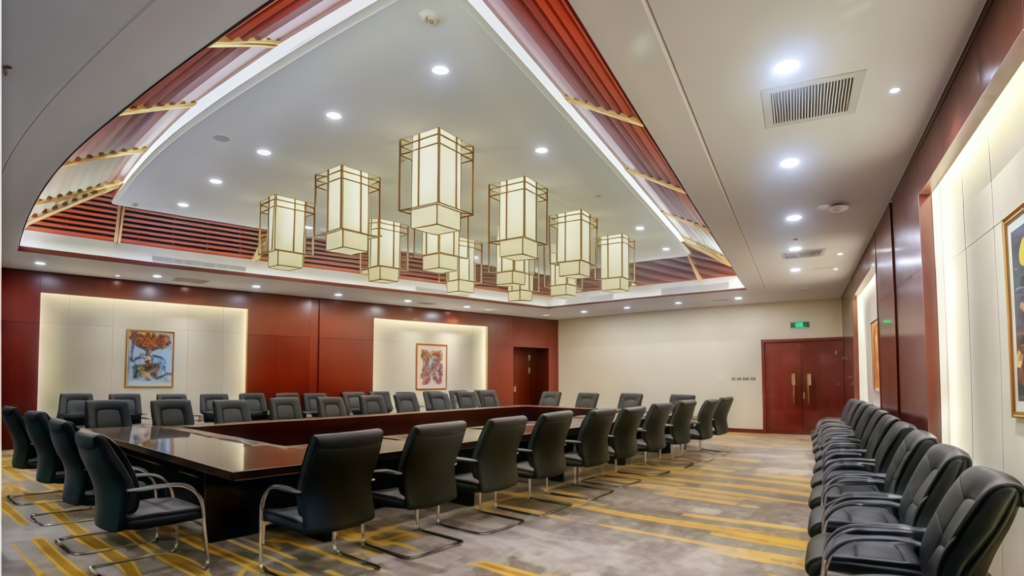
Papua New Guinea International Convention Center | Office Project By Hongye Furniture
Delivery, Installation and Asset Handover
Government furniture projects often involve multiple stakeholders.
For example, the owner, project manager, facilities team, general contractor, installer, IT team, security team and maintenance department may all need information before acceptance.
Therefore, the furniture supplier should coordinate with the project delivery plan.
Before shipment, confirm:
- Delivery address.
- Receiving contact.
- Delivery hours.
- Security clearance.
- Dock access.
- Freight-lift capacity.
- Floor protection.
- Site storage.
- Room numbering.
- Asset tagging.
- Installation scope.
- Waste removal.
- Final cleaning.
- Punch-list process.
For public projects, installation records can be as important as product documents.
A seating system may meet the correct performance standard. However, it can still fail operationally if the installation team uses incorrect anchors, blocks access routes or does not provide asset records.
Installation rule: Define delivery, installation and handover responsibilities in the contract before production begins.
Common Government Furniture Procurement Mistakes
Copying Requirements From Another Jurisdiction
A public RFQ can become difficult to bid when it mixes unrelated requirements.
For example, a tender may combine federal domestic-preference clauses, state furniture rules, international fire standards and unrelated chemical requirements.
Instead, the buyer should identify one primary legal and code framework. Then, it should list any additional project-specific requirements clearly.
Using General Marketing Terms
Terms such as “government grade,” “contract grade,” “commercial quality” and “green furniture” do not define a measurable requirement.
Instead, use standards, materials, performance levels, drawings, warranty terms and inspection criteria.
Requesting Certificates Without Product Scope
A supplier may submit a company-level certificate that does not apply to the furniture being purchased.
For example, an ISO certificate can support factory due diligence. However, it does not prove that a task chair meets ANSI/BIFMA X5.1 or that a composite wood panel meets TSCA Title VI.
Therefore, buyers should match every document to the product, material and destination market.
Ignoring Delivery and Receiving Controls
Furniture can arrive with the correct documents but still create problems if the receiving team does not inspect carton condition, count items, record shortages or manage installation.
Therefore, public projects should define a receiving and punch-list process before delivery.
Treating Warranty as a Headline Term
A “five-year warranty” may not identify which components are covered or who pays labour, freight, removal and reinstallation.
Instead, buyers should request a component-based warranty matrix with defined terms, exclusions, remedies and claim procedures.
Procurement rule: Strong documentation does not slow procurement. It reduces unclear bids, change orders and delivery disputes.
Hongye Government and Institutional Furniture Support
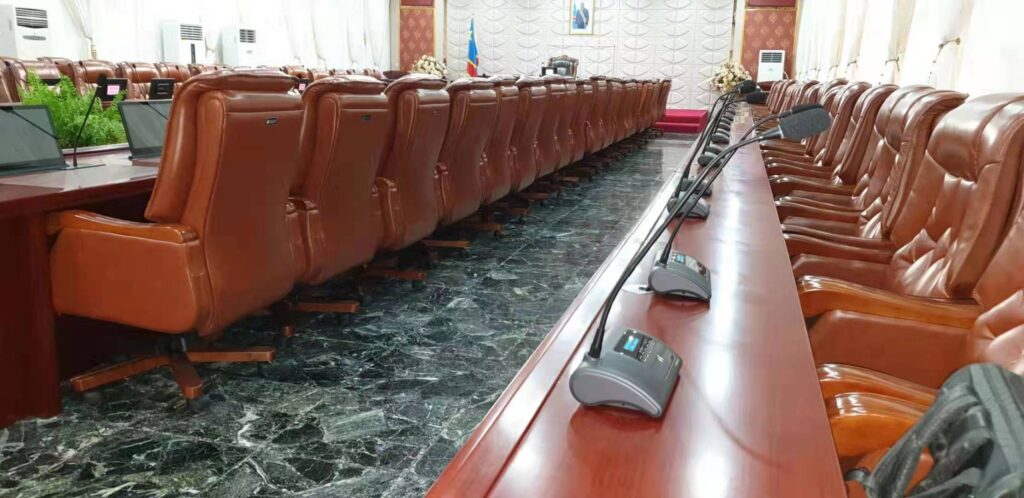
Hongye supports qualified public-sector, education, healthcare, office and hospitality furniture projects with product drawings, material schedules, samples, quality planning, packaging and project-specific documentation where applicable.
For U.S. public-sector opportunities, buyers and suppliers should first review:
- Solicitation requirements.
- Contract vehicle.
- Domestic-preference clauses.
- Product standards.
- Destination requirements.
- Delivery responsibilities.
- Installation scope.
- Required documentation.
Where the project permits the proposed source, Hongye can discuss product-specific documentation, including relevant performance reports, composite-wood compliance records, responsible wood-sourcing claims, indoor-emissions documents, fire-performance evidence and electrical documentation where applicable.
Hongye states that it has more than 30 years of commercial furniture manufacturing experience and operates a 300,000-square-metre production facility in Heshan, Jiangmen, Guangdong, China.
Before bid submission or production release, buyers should verify eligibility, legal requirements, product scope and delivery responsibilities with procurement and legal advisers.
Frequently Asked Questions
Do municipal buyers have to follow GSA furniture specifications?
No.
Municipal buyers are governed by their own procurement rules. However, they may use cooperative contracts, state schedules or familiar federal-style specifications where local rules allow.
The solicitation determines the required furniture standards, documents and delivery conditions.
Can a foreign manufacturer supply furniture to a U.S. government project?
Eligibility depends on the solicitation, contract vehicle, domestic-preference clauses, trade-agreement treatment, product origin, manufacturing location and applicable exceptions.
Therefore, foreign suppliers should review the solicitation with qualified procurement, customs and legal advisers before submitting a bid.
What does “government-grade furniture” mean?
“Government grade” is a marketing phrase, not a universal legal standard.
A compliant government furniture product should meet the specific requirements written in the solicitation, such as applicable product standards, domestic-preference clauses, emissions requirements, fire requirements, delivery requirements and warranty terms.
What BIFMA standards apply to government furniture?
The right ANSI/BIFMA standard depends on the product category.
For example, ANSI/BIFMA X5.1 applies to general-purpose office chairs, X5.4 applies to public and lounge seating, X5.5 applies to desk and table products, and X5.9 applies to office storage units.
Buyers should state the exact required standard and edition in the RFQ.
What composite wood documents should a government furniture buyer request?
For applicable U.S. composite wood products, buyers may request EPA TSCA Title VI compliance documentation, relevant supplier records, product labels and panel information.
However, the exact documents depend on the product type, supply chain and solicitation requirements.
Is GREENGUARD Gold required for all government furniture?
No.
Some solicitations may require GREENGUARD Gold, an equivalent low-emissions document or another indoor-air-quality requirement. Other procurements may not.
Buyers should follow the exact solicitation requirement and confirm that the documentation matches the specific product configuration.
How long should a government furniture warranty last?
Warranty terms depend on the solicitation, furniture category, use environment and contract.
A useful warranty should identify covered components, exclusions, remedies, freight responsibility, labour responsibility, claim process and response expectations.
What should be included in government furniture asset handover?
The project may require asset lists, product codes, serial numbers, room or area allocation, installation records, maintenance manuals, warranty documents, spare-parts lists, as-built drawings, inspection reports and punch-list status.
The exact handover package should follow the solicitation and contract requirements.
Build the RFQ Around Evidence
Government furniture procurement requires more than a list of quantities and finishes.
First, identify the purchasing path and contract vehicle. Next, review domestic-preference rules, product standards, sustainability requirements and delivery responsibilities. Then, specify the product evidence, asset records, installation scope and acceptance process.
By building the RFQ around clear evidence and project-specific requirements, public buyers can compare bids more fairly and reduce compliance gaps before furniture reaches the site.