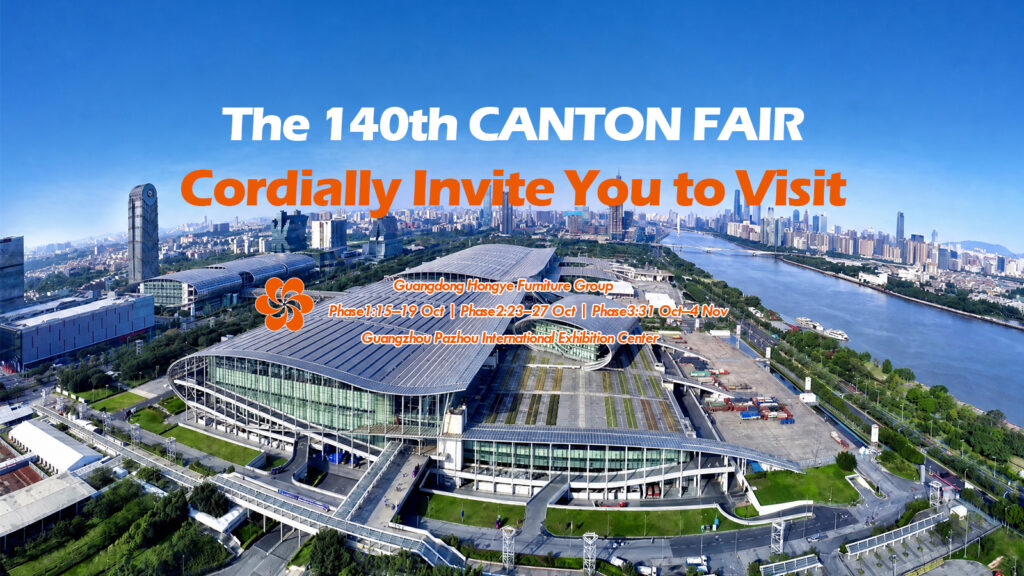
Hotel furniture buyers should prioritise Phase 2 of the 140th Canton Fair, October 23–27, 2026, in Guangzhou. The organiser’s exhibition information lists furniture within the second phase.
However, choosing the right week is only the first step. Once inside the halls, you need a way to distinguish a promising conversation from a supplier that deserves further technical and commercial review.
Effective hotel furniture sourcing at Canton Fair starts with a clear project brief and an evidence-based shortlist. Ask who will manufacture the products, which requirements they can meet and what supporting information they will provide.
This guide gives hotel owners, designers and FF&E procurement teams a practical screening process—from booth questions and sample checks to factory visits and post-fair quotation review.
Key Takeaways
- Attend Phase 2, October 23–27, for furniture sourcing, then confirm each shortlisted supplier’s booth and displayed products.
- Treat booth discussions as initial screening, not a completed supplier audit.
- Verify the contracting company, manufacturing location and responsibility for outsourced processes.
- Request project references that match your product scope, scale and delivery requirements.
- Review samples against written specifications rather than appearance alone.
- Check whether reports and other documents apply to the proposed product or material.
- Plan factory visits around the processes relevant to your project.
- Compare suppliers using the same furniture schedule, drawing revisions and commercial scope.
Before the Fair: Prepare a Hotel Furniture Brief
A supplier can respond more usefully when your requirements are written down.
Prepare a concise brief before arranging appointments. It does not need to be a complete tender package, but it should distinguish confirmed requirements from preliminary assumptions.
Include:
- Hotel location.
- New-build or renovation status.
- Room count and room types.
- Guestroom and public-area scope.
- Furniture quantities, where available.
- Drawings and dimensional references.
- Material and finish direction.
- Required delivery or installation period.
- Relevant product requirements.
- Delivery and installation responsibilities.
- Current design and approval status.
For example, “120 guestrooms with custom casegoods and loose seating” gives a starting point. A room matrix, item schedule and drawing set provide a much stronger basis for discussion.
Identify Your Screening Priorities
Decide which capabilities matter most before walking the halls.
A custom guestroom package may require detailed drawing coordination and finish control. A public-area seating package may place more emphasis on upholstery, frame construction and replacement materials.
Use those priorities to select appointments. Do not assume that a supplier displaying one attractive product can manufacture every category in your project.
Which Canton Fair Phase Should Hotel Furniture Buyers Attend?
Phase 2 of the 140th Canton Fair runs from October 23 to 27, 2026, and includes furniture. It is the main starting point for hotel furniture sourcing.
The fair takes place at the Canton Fair Complex, No. 382, Yuejiang Zhong Road, Guangzhou. Check the official exhibitor information and venue details before departure.
If your hotel scope includes specialist equipment, verify those products separately. A spa, clinic or wellness area can contain several categories, so the project’s use alone does not determine the correct exhibition phase.
Before confirming a meeting, ask the supplier for:
- Exhibiting company name.
- Phase.
- Hall and booth number.
- Products displayed.
- Meeting contact.
- Available technical support.
A company’s website catalogue may be broader than the range available at its booth.
Three Checks for Screening Hotel Furniture Suppliers
Start with project fit, manufacturing responsibility and delivery capability.
These checks help you decide which suppliers deserve further review. They do not replace document verification, sample approval or a project-specific audit.
1. Check Relevant Project Experience
Ask about projects similar to yours.
Useful details include:
- City and country.
- Approximate room count.
- Product categories supplied.
- Custom or standard products.
- Delivery phasing.
- Installation responsibilities.
- Sample and inspection arrangements.
Request permission to review suitable supporting material. Depending on confidentiality restrictions, this may include project photographs, anonymised schedules or an authorised reference contact.
A hotel logo alone does not explain what the supplier delivered. Likewise, a supplier that cannot publicly name a client should still be able to describe its scope and explain what evidence it can share.
2. Identify Who Manufactures and Who Remains Accountable
Do not reduce screening to “factory versus trading company.”
Instead, establish the supply-chain structure:
- Which company will sign the contract?
- Which company will receive payment?
- Where will the furniture be manufactured?
- Which processes are completed in-house?
- Which processes are outsourced?
- Who approves subcontracted materials and components?
- Who handles inspection, defects and warranty claims?
Subcontracting does not automatically disqualify a supplier. The important questions concern transparency, control and contractual responsibility.
Record any manufacturing location that still requires confirmation.
3. Review Delivery and Export Planning
Ask how the supplier would prepare your products for the proposed route and destination.
Discuss:
- Assembled or knock-down construction.
- Packaging by item type.
- Protection for corners, finishes and fragile parts.
- Labelling.
- Loading sequence.
- Replacement parts.
- Shipping documents.
- Site handling.
- Installation, if included.
Request examples of relevant packaging and loading records. Then ask how those examples relate to your products.
A previous shipment photograph can support a discussion, but it does not establish that the same method is suitable for every item.
Hotel Furniture Supplier Checklist: Questions and Evidence
Use consistent questions so the project team can compare responses afterwards.
| Screening Area | Question to Ask | Evidence or Follow-Up to Request |
|---|---|---|
| Project fit | Which comparable hotel packages have you delivered? | Scope, room count, location and shareable project records |
| Contracting responsibility | Which company will contract and receive payment? | Legal company details for review |
| Manufacturing | Where will these products be made? | Manufacturing address and process allocation |
| Outsourcing | Which materials or processes come from partners? | Explanation of supplier control and incoming inspection |
| Drawings | How do you manage shop drawings and revisions? | Example submission and approval workflow |
| Materials | What materials are proposed for our specification? | Material references, samples and applicable documentation |
| Samples | What is included in your sample or mock-up proposal? | Scope, cost, timing, ownership and approval process |
| Quality | What checks apply to these product categories? | Relevant inspection plan and example records |
| Packaging | How would you protect these items for our route? | Item-specific packaging proposal |
| Programme | What conditions must be met before production starts? | Milestone programme and release requirements |
| Warranty | Who manages defects and replacement requests? | Written terms and claim procedure |
If an answer requires engineering input, record the question and agree on a response date.
A clear commitment to provide evidence is more useful than an immediate answer that cannot later be supported.
A Practical One-Day Screening Plan
Use one day to build and organise a shortlist—not to complete supplier qualification.
Arrange the most important meetings first, then leave time for discovery and follow-up.
| Part of the Day | Activity | Record Before Moving On |
|---|---|---|
| Morning | Pre-booked meetings with priority suppliers | Project fit, manufacturing structure and evidence gaps |
| Midday | Review notes and adjust the route | Suppliers to revisit and questions still open |
| Early afternoon | Targeted discovery of additional candidates | Booth details, relevant products and contact person |
| Late afternoon | Return to promising suppliers | Technical follow-up, sample requirements and next steps |
| After the visit | Consolidate the shortlist | Responsible person, requested documents and due dates |
This is an illustrative schedule. Adjust it for hall locations, walking time and meeting complexity.
Keep Every Record Traceable
With permission, photograph samples together with a visible product reference. Record the supplier and booth separately in your notes.
For each meeting, distinguish:
- What the supplier stated.
- What you observed.
- What evidence you received.
- What remains unverified.
- What should happen next.
This prevents an attractive sample from becoming an unsupported approval several days later.
How to Check Furniture Samples at the Booth
A display sample can help you assess appearance and construction details. However, it may not represent the exact configuration offered for your project.
Ask whether it is:
- A standard catalogue product.
- A custom sample.
- A display-only model.
- The proposed construction for your quotation.
Then compare it with your written requirements.
Materials and Finishes
Review colour, texture, sheen and edge treatment.
Ask for the material reference and substrate details where relevant. If a finish will be matched later, clarify the sample submission and approval process.
Hardware and Function
Check accessible moving parts such as drawers, hinges and locks.
Confirm the proposed model, function and replacement arrangements. Where the specification requires a particular brand or model, verify that the quotation identifies it.
Unbranded hardware is not automatically unsuitable, but “premium hardware” is not a complete specification.
Structure and Installation
Review construction details that affect your application.
For fixed furniture, discuss site measurement, wall conditions, fixing requirements and interfaces with other trades. A booth sample cannot confirm those site conditions.
Upholstery
Inspect seams, cushion construction and accessible frame details.
Request the proposed fabric, filling and performance information. Do not treat a foam label or a general “fire-retardant” statement as complete evidence of compliance.
Verify Documents Against the Proposed Product
Ask what test reports, certification records, material claims or conformity documents apply to the quoted items.
For each relevant document, review:
- Issuing organisation.
- Document number.
- Holder.
- Product or material identification.
- Model or configuration.
- Test method or stated scope.
- Date and applicable status.
- Results or limitations.
- Verification route.
Different documents cover different things. A report may apply to a finished chair, a panel material, a coating or an upholstery fabric.
Therefore, do not assume that every report should match a finish code—or that one certificate covers the supplier’s entire catalogue.
Where evidence concerns a related product rather than the proposed item, ask for an explanation. The project’s authorised reviewer should decide whether it is acceptable.
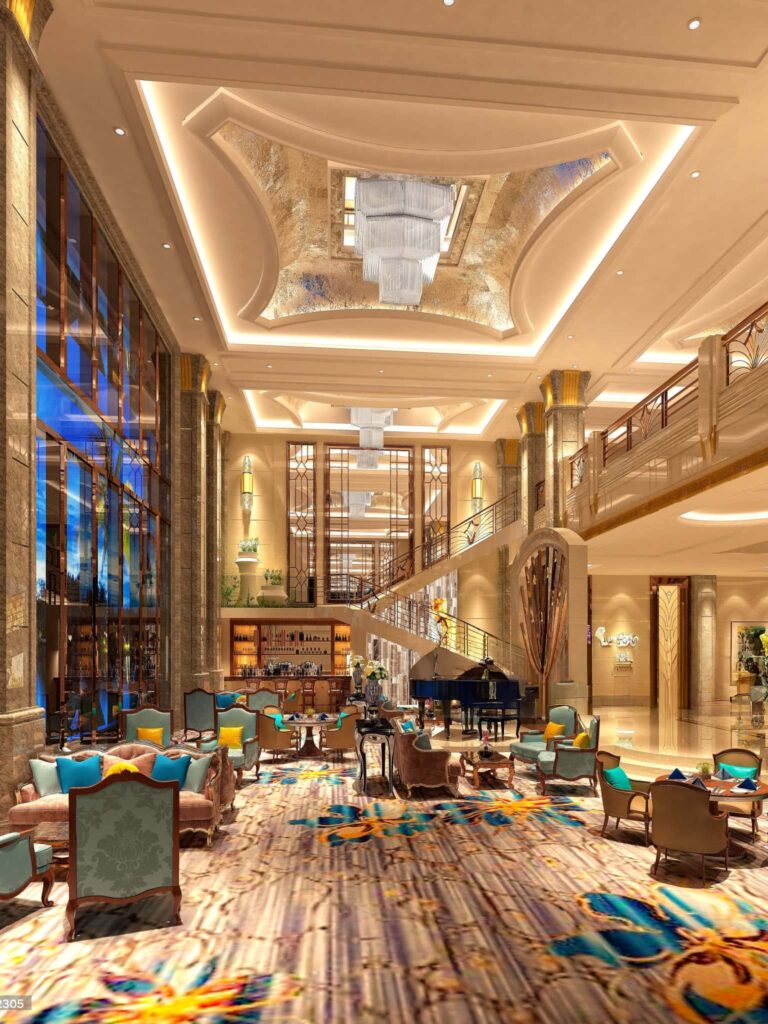
Hotel Furniture
What to Verify During a Hotel Furniture Factory Visit
Plan the visit around the processes your project requires.
For casegoods, that may include material storage, cutting, edging, assembly, finishing and packing. For upholstery, it may include frames, foam, cutting, sewing and final assembly.
If important processes are outsourced, ask how the supplier approves partners and checks incoming work.
Follow an Item Through the Process
Where access permits, use a relevant product or work order to discuss:
- Material identification.
- Drawing revision.
- Production instructions.
- Inspection points.
- Rework.
- Product labelling.
- Packing records.
Ask to review representative records without assuming that confidential customer information will be available.
Separate Existing Samples From Project Mock-Ups
A showroom visit is not the same as reviewing a project-specific sample.
For a custom mock-up, agree in advance on:
- Products included.
- Drawings.
- Materials.
- Cost.
- Preparation programme.
- Delivery or viewing location.
- Review criteria.
- Approval responsibility.
Do not assume that a new mock-up room can be prepared at short notice.
Finally, document findings and open actions. Visiting a factory does not automatically mean it has passed the project’s qualification requirements.
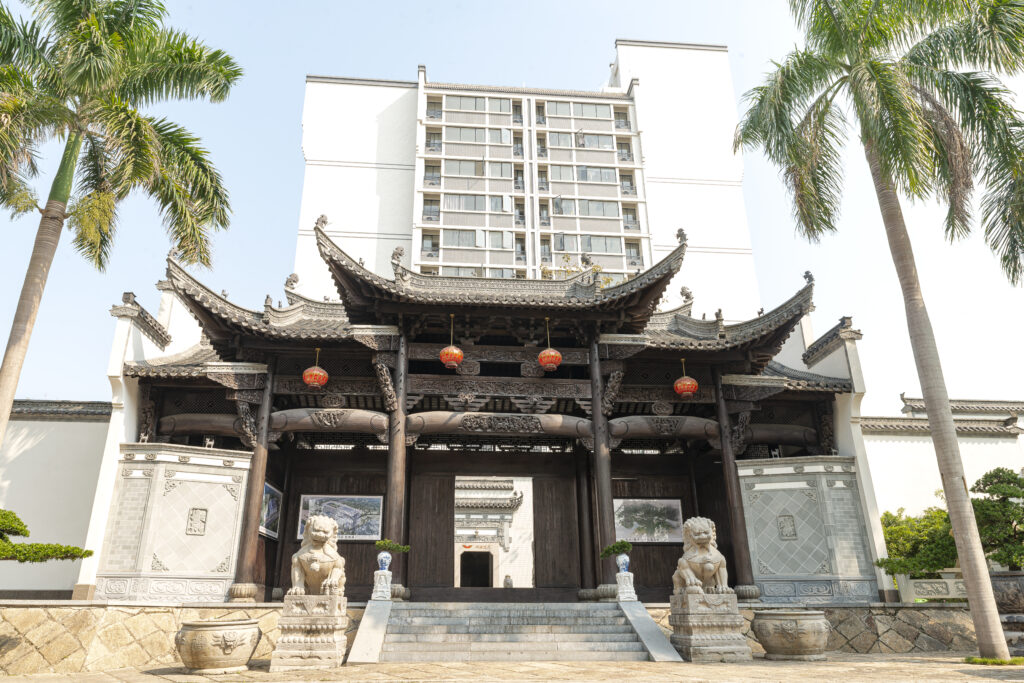
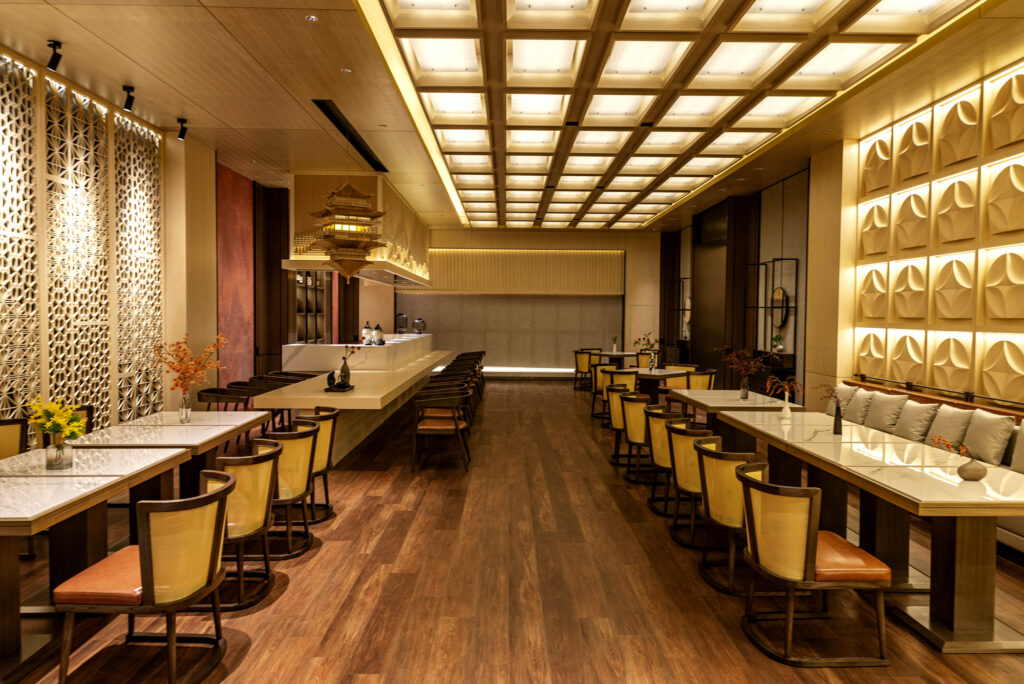
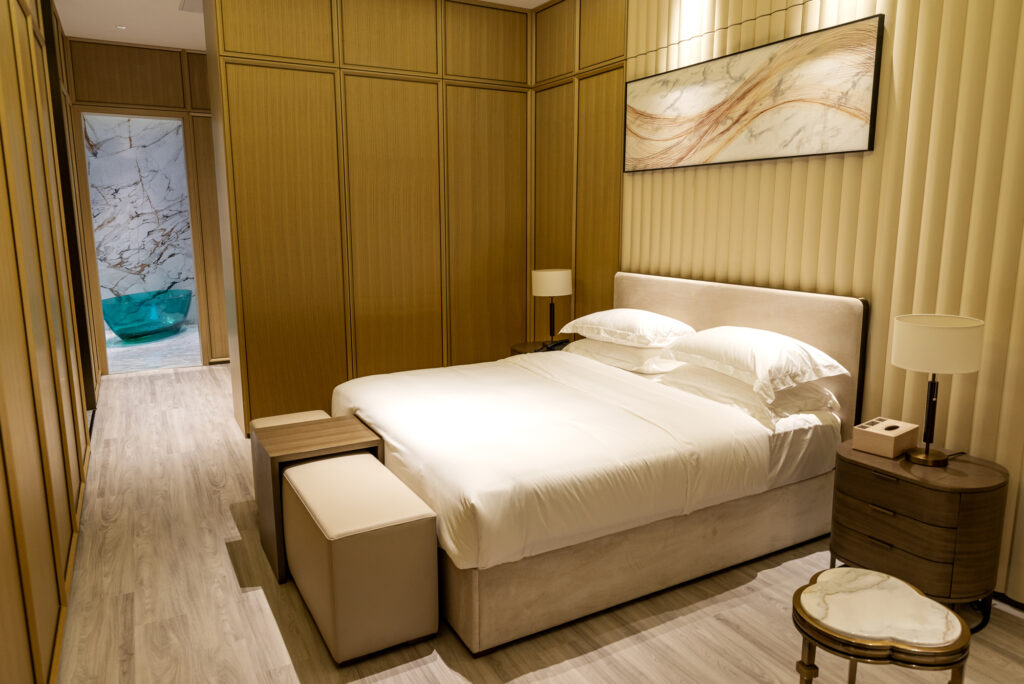
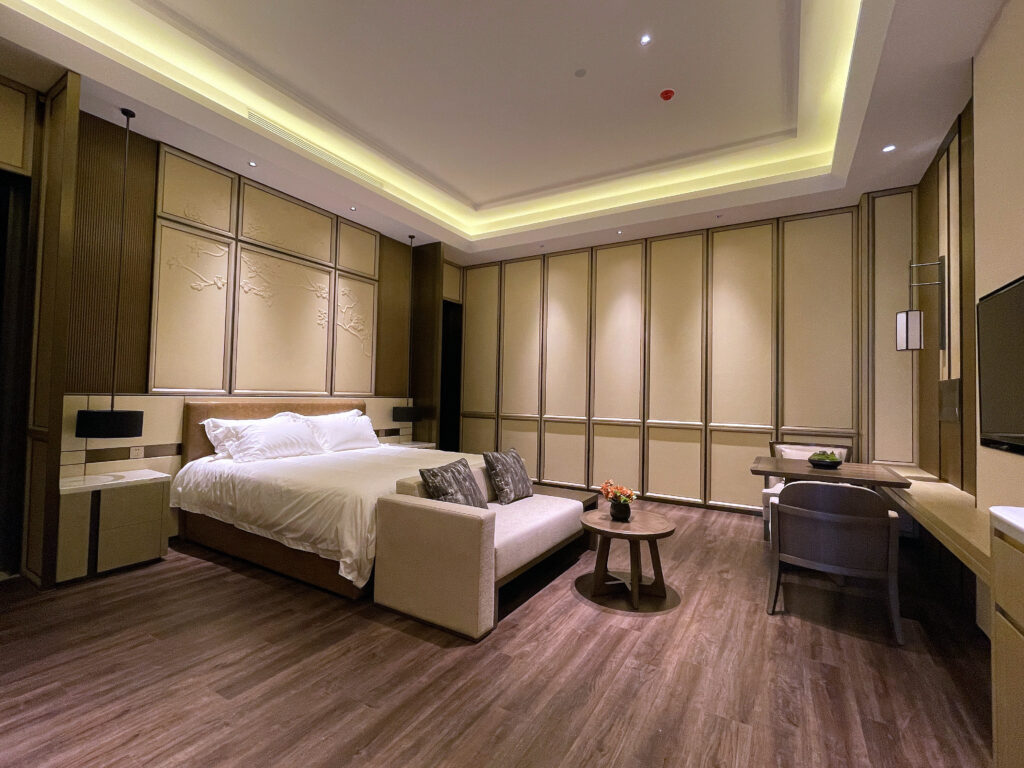
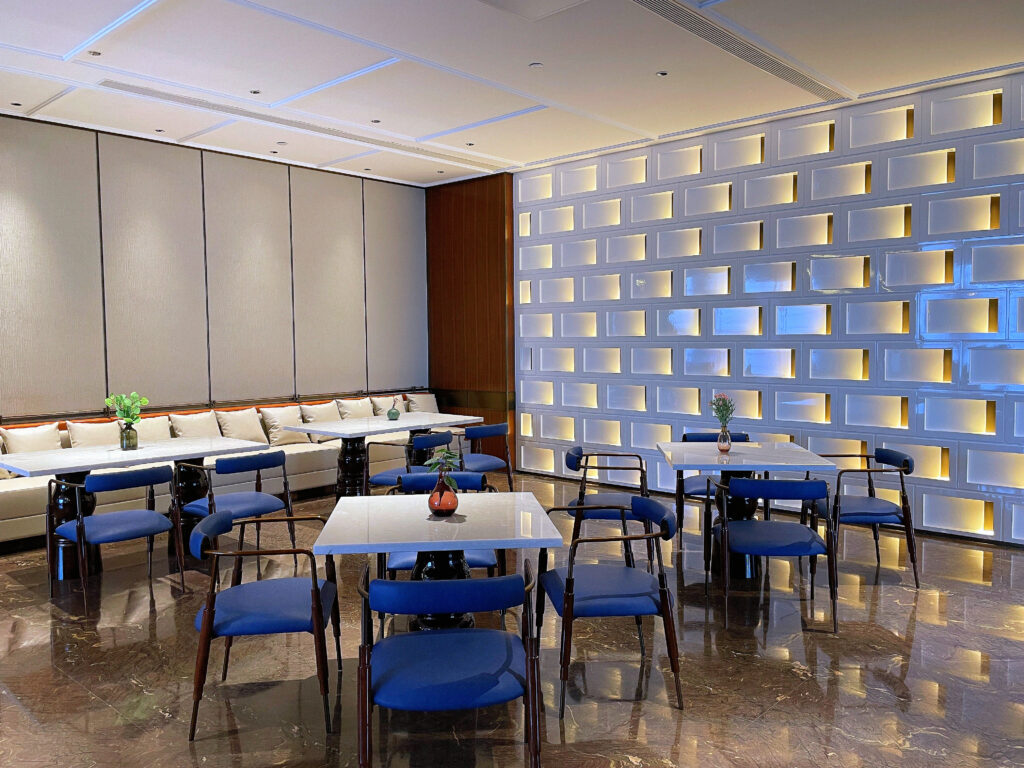
Hongye Hotel Furniture Showroom
What to Request After the Fair
Send the same enquiry package to shortlisted suppliers.
Include the current schedule, drawings, material references and quantity basis. Ask suppliers to identify deviations rather than silently changing the scope.
| Response Area | What the Supplier Should Clarify |
|---|---|
| Product scope | Item codes, quantities and configurations priced |
| Materials | Specified materials and proposed alternatives |
| Drawings | Revisions used and outstanding technical questions |
| Samples | Proposal, cost, timing and approval process |
| Documents | Available evidence and items requiring further review |
| Programme | Submission, approval, procurement and production milestones |
| Packaging | Included method and additional requirements |
| Commercial basis | Currency, delivery term, named place and quotation validity |
| Installation | Included work, exclusions and site assumptions |
| Warranty | Coverage, limitations and claim arrangements |
Compare quotations only after these differences are understood.
Also, distinguish sample-stage payments from the conditions for releasing a production order. Those decisions should follow the agreed commercial and approval process.
Arrange a Project Discussion With HONGYE
Hongye Furniture Group can discuss hotel furniture requirements for guestrooms and public areas against a buyer’s project brief.
Relevant discussion topics may include:
- Casegoods.
- Loose furniture.
- Fixed furniture interfaces.
- Material and finish options.
- Samples and mock-ups.
- Packaging.
- Delivery phasing.
- Project-specific documentation.
Review the hotel bedroom furniture range and loose furniture range to identify categories for discussion.
For meetings during the Canton Fair period, request current appointment availability and confirmed exhibition details directly. Do not assume a particular booth or phase without confirmation.
HONGYE’s contact page lists its Heshan, Jiangmen address and communication channels. Factory access, the visit agenda and any project-specific sample review should be arranged in advance.
Send your room mix, furniture schedule, drawings and delivery destination through the contact page, together with your preferred meeting dates.
Frequently Asked Questions
Which Canton Fair phase has hotel furniture in 2026?
Furniture is included in Phase 2 of the 140th Canton Fair, October 23–27, 2026.
Confirm each supplier’s booth, exhibiting company and displayed products before arranging meetings.[cebu.china-consulate.gov][cantonfair.org]
How do I screen hotel furniture suppliers at the fair?
Start with product fit, manufacturing responsibility and delivery planning.
Record claims, request evidence and identify the next verification step. A booth conversation should create a shortlist rather than replace supplier qualification.
Is a manufacturer always better than a trading company?
Not automatically.
Review who manufactures the products, how outsourced work is controlled and which company remains accountable for the contract, quality and warranty.
What should I bring to supplier meetings?
Bring the room count, product scope, quantities, drawings, material direction and required delivery period.
Mark preliminary information clearly so suppliers know which assumptions still need confirmation.
Can I complete supplier screening in one day?
You can build an initial shortlist in one well-planned day.
Document review, references, factory evaluation and sample approval may require additional work after the exhibition.
What should I check in a furniture test report?
Check the product or material covered, configuration, test method, results, issuing laboratory and limitations.
Then confirm whether the evidence applies to the proposed item and project requirements.
Can I arrange a factory visit during the Canton Fair period?
Request an appointment directly with the supplier.
Confirm the manufacturing address, relevant production areas, meeting participants and travel arrangements. Project-specific samples require a separate preparation agreement.
Leave the Fair With Clear Next Steps
The most useful result of a fair visit is a manageable shortlist with documented evidence requirements.
For each candidate, record what fits, what remains uncertain and who must respond. Then use the same project package to compare quotations and close technical gaps.
That approach turns exhibition conversations into a controlled hotel furniture procurement process.