A hotel FF&E budget per key is the total cost of a defined furniture, fixtures and equipment package divided by the number of sellable guestrooms. It is useful for planning and comparison—but only when the scope is clear.
A guestroom furniture quotation is not the same as a complete hotel FF&E budget. Public-area furniture, equipment, freight, installation and taxes can change the total considerably.
Start by defining what the budget includes. Then calculate quantities by room type, allocate shared-area costs and compare supplier quotations on the same commercial basis.
This guide explains how to build a hotel furniture capex plan, calculate costs per room and assess new-build or renovation requirements without relying on unsupported universal price ranges.
Key Takeaways
- Define the budget scope before choosing a per-key target.
- Separate guestroom furniture supply, guestroom FF&E and total-property FF&E.
- Calculate standard rooms, accessible rooms and suites individually before combining the costs.
- Show public-area allocations separately from guestroom costs.
- Identify where equipment, mattresses, linen and operating supplies are budgeted.
- Compare supplier quotations using the same quantities, materials, delivery basis and installation responsibilities.
- Build renovation budgets from the actual replacement scope rather than a fixed percentage of new-build cost.
- Use published benchmarks as context, not as substitutes for project-specific quantities and quotations.
What Does “Hotel FF&E Budget per Key” Mean?
A key represents one sellable guestroom. A hotel with 120 sellable rooms therefore has 120 keys, even if some suites contain more than one bedroom.
The basic calculation is:

However, the result does not explain what the hotel is purchasing.
Two properties can have the same per-key budget but different room sizes, furniture quantities, suite ratios and public-area requirements. Consequently, every figure should carry a scope statement.
For example:
Guestroom furniture supply and listed public-area furniture for a 120-key hotel. Excludes operating supplies, kitchen equipment, international freight, import charges and installation.
That statement makes the number more useful than a price range without assumptions.
Separate Furniture Cost From the Full FF&E Budget
Before reviewing hotel furniture cost per room, distinguish the purchasing package from the overall development budget.
| Budget Level | Defined Scope | What the Figure Helps You Assess |
|---|---|---|
| Guestroom furniture supply | Specified casegoods, seating and other furniture supplied for guestrooms | Furniture procurement cost per room |
| Guestroom FF&E | Furniture plus the lighting, textiles, equipment and other items included in the guestroom package | Cost of the defined guestroom fit-out package |
| Public-area FF&E | Included lobby, restaurant, meeting-space and other shared-area items | Shared-space investment |
| Total-property FF&E | All FF&E packages included in the project budget | Overall FF&E investment per key |
| Defined delivered or installed budget | Relevant supply costs plus included logistics, taxes, handling and installation | Cost at the agreed delivery or completion point |
Published development studies may include a broader package than a furniture manufacturer’s quotation. For example, HVS’s development-cost scope includes guestroom and public-area furniture as well as kitchen and laundry equipment. Those figures should not be compared directly with furniture-only supply prices.
Create an Inclusion and Exclusion Register
List each purchasing category and identify the budget that contains it.
Pay particular attention to:
- Mattresses and bed bases.
- Drapery and decorative textiles.
- Bed linen and other operating supplies.
- Televisions.
- Minibars and safes.
- Decorative lighting.
- Artwork and mirrors.
- Kitchen and laundry equipment.
- Fixed joinery.
- Installation and site handling.
Projects can assign these items to different procurement packages. The register should ensure that each cost is included once, rather than omitted or counted twice.
How to Calculate a Hotel FF&E Budget per Key
Build the budget from quantities and defined packages, then calculate the per-key result.
Step 1: Confirm the Room Mix
Separate room categories where dimensions or furniture requirements differ.
These may include:
- Standard king rooms.
- Standard twin rooms.
- Accessible rooms.
- Premium rooms.
- Junior suites.
- Larger suites.
Record the number of each room type and the furniture required per room.
Do not apply the standard-room allowance to suites without reviewing their additional pieces, dimensions and finishes.
Step 2: Calculate Guestroom Package Costs
For each room type:
Room-type furniture cost=Number of rooms×Furniture package cost per room
Then add the room-type totals.
Use the current furniture schedule to establish the package price. Where designs remain incomplete, record the assumption and identify when it will be confirmed.
Step 3: Add Public-Area Packages
Calculate shared areas separately, including the spaces within your scope.
For example:
- Lobby and reception.
- Restaurant and breakfast area.
- Lounge and bar.
- Meeting rooms.
- Corridors and lift lobbies.
- Outdoor guest areas.
- Included back-of-house spaces.
The public-area allocation per key is:

This allocation helps explain why a hotel with extensive shared facilities can have a higher overall per-key figure without more expensive standard guestrooms.
Step 4: Add Defined Delivery and Installation Costs
Identify which costs are already included in supplier prices.
Then add only the remaining relevant amounts, such as transport, site handling or installation. Record the treatment of taxes and duties with the project’s financial advisers.
Step 5: Record Allowances and Risks Separately
Keep unresolved scope allowances and project contingency visible.
An allowance for unselected artwork is different from contingency for an unexpected cost. Naming each amount makes later budget changes easier to explain.
Hotel FF&E Budget Breakdown: An Illustrative Calculation
The following example demonstrates the method. It is not a 2026 market benchmark, supplier quotation or recommended spending level.
Assume a 120-key hotel with 100 standard guestrooms and 20 suites.
| Budget Line | Illustrative Calculation | Amount |
|---|---|---|
| Standard-room furniture | 100 rooms × USD 8,000 | USD 800,000 |
| Suite furniture | 20 suites × USD 14,000 | USD 280,000 |
| Guestroom furniture subtotal | Standard rooms plus suites | USD 1,080,000 |
| Included public-area furniture | Separately defined package | USD 240,000 |
| Furniture supply subtotal | Guestrooms plus public areas | USD 1,320,000 |
| Additional delivery and installation | Costs not included above | USD 180,000 |
| Defined package total | Supply plus listed additional costs | USD 1,500,000 |
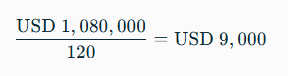
The guestroom furniture supply cost per key is:
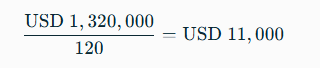
The furniture supply cost including public areas is:
The defined package cost including the listed delivery and installation amounts is:
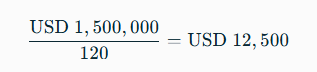
These are three different figures from the same project.
If lighting, textiles, equipment or other FF&E categories are excluded, none should be labelled as the complete hotel FF&E cost.
How Hotel Positioning Changes the Budget
Hotel positioning influences design requirements, but it does not produce a universal furniture price.
A limited-service property may have a compact public-area scope. A full-service hotel may need restaurants, meeting rooms and additional guest facilities. Luxury projects can also involve more custom products, larger rooms and a greater suite share.
However, star ratings and market segments are not interchangeable classification systems.
Use Benchmarks With Their Original Categories
HVS’s 2026 U.S. Hotel Development Cost Survey uses categories such as limited-service, extended-stay, select-service, full-service and luxury. Its data comes from projects proposed or under construction during 2025, rather than a global set of 2026 furniture quotations.[hvs]
The report also cautions against using the survey to determine the cost of a specific project.
Therefore, when using an external benchmark, record:
- Publication date.
- Underlying data period.
- Geographic coverage.
- Hotel category.
- Included cost categories.
- Whether the figure is an average, median or range.
- Relevant limitations.
A benchmark can help test a preliminary assumption. Current project specifications and quotations must then establish the purchasing budget.
Regional Costs: Build From the Destination, Not a Continental Index
A regional label alone is not enough to estimate delivered furniture costs.
Instead, separate the manufacturing price from the costs of getting the products to the project and installing them.
Collect current information for:
- Manufacturing and material choices.
- Quotation currency.
- Shipping origin and destination.
- Shipment volume.
- Transport route.
- Import charges.
- Inland delivery.
- Storage.
- Site access.
- Installation labour.
- Required product documentation.
Avoid adding a generic regional multiplier and then charging the same freight or installation costs again.
Compare Equivalent Commercial Bases
For every quotation, identify the delivery term, named place and inclusions.
A factory supply offer should not be compared directly with an installed price without adjusting the scope.
Similarly, hotel operating data should not be used as evidence of furniture prices. STR reports commonly benchmark occupancy, average daily rate and revenue per available room; these measures describe operating performance, not FF&E supply costs.
How to Build a Hotel Casegoods Budget
Casegoods should be priced against a coordinated item schedule and drawings.
Typical guestroom items may include:
- Headboards.
- Bedside tables.
- Desks.
- Wardrobes.
- Luggage benches.
- Minibar cabinets.
- Television panels.
- Storage units.
For each item, define the dimensions, construction, finish and hardware.
Then identify what changes between room types. A shared finish does not mean two products have the same cost if their sizes or internal construction differ.
Review Value-Engineering Options Explicitly
Potential changes may involve materials, dimensions, component repetition or hardware.
For each proposal, record its effect on:
- Price.
- Appearance.
- Performance.
- Cleaning.
- Maintenance.
- Replacement.
- Installation.
- Programme.
Do not treat a lower price as a saving until the revised product still meets the agreed project requirements.
Plan Renovation Costs From the Actual Replacement Scope
A hotel renovation budget per key should begin with an inventory and condition review.
Do not assume that renovation will cost a fixed percentage of a new-build package.
Soft-Goods Refresh
Define the textiles and decorative items being replaced. Identify retained furniture and any associated repair work.
Partial Furniture Replacement
List the specific casegoods or seating items requiring replacement. Check how new pieces will coordinate with retained finishes and dimensions.
Full FF&E Replacement
Build the budget from a complete replacement schedule. Add the relevant costs of removal, storage, phased delivery and installation.
For an operating hotel, also review working hours, room-release sequences and access restrictions.
Record business interruption or lost-room revenue separately from the furniture procurement budget.
Set Replacement Timing Through Review
Product condition, maintenance history, brand requirements and replacement availability should guide renewal planning.
A brand refresh date is not necessarily the end of a product’s usable life. Conversely, damaged hardware may require attention before a planned renovation.
Compare Supplier Quotations Before Comparing Totals
Issue the same scope to shortlisted suppliers.
Then review their responses for differences before ranking the prices.
| Comparison Area | Required Check |
|---|---|
| Quantities | Same room mix, base quantities and separately identified spares |
| Products | Same item codes and configurations |
| Materials | Same specified materials or declared alternatives |
| Drawings | Same revisions and dimensional assumptions |
| Performance | Required evidence and stated exceptions |
| Packaging | Included protection and any additional requirements |
| Commercial basis | Currency, delivery term, named place and validity |
| Logistics | Transport, handling and storage inclusions |
| Installation | Assembly, fixing, access and crew responsibilities |
| Programme | Approval conditions and proposed milestones |
| Warranty | Scope, exclusions and claim arrangements |
Ask suppliers to price the base specification first. Alternatives should be separate, with a clear explanation of the changes.
This allows the project team to compare like-for-like offers and evaluate substitutions without losing the original scope.
Protect the Budget Through Approvals and Change Control
A budget becomes more dependable when decisions remain traceable.
Before production, confirm the required drawings, materials, samples and quantities. Where appropriate, use a mock-up room to review the combined result.
After approval, log changes against the affected items.
Each change record should identify:
- The requested revision.
- Reason for the change.
- Price effect.
- Programme effect.
- Approval responsibility.
- Decision date.
Keep owner contingency separate from supplier prices. Release it through the project’s agreed controls rather than allowing it to conceal incomplete scope.
How HONGYE Supports Scope-Based Furniture Budgeting
Hongye Furniture Group can discuss hotel furniture requirements against a buyer’s room matrix, item schedule, drawings and material references.
Depending on the agreed project scope, the review may cover:
- Guestroom casegoods.
- Loose furniture.
- Fixed furniture interfaces.
- Public-area seating and tables.
- Material options.
- Samples.
- Packaging.
- Delivery phasing.
- Available product-specific documentation.
Prices, production timing and document availability should be confirmed for the actual products and order conditions.
Explore the hotel furniture product range, custom furniture options and project case studies to identify relevant categories.
For a budget discussion, send the room count, room-type matrix, furniture schedule, delivery destination and target programme through the contact page. Identify which public areas and additional services should be included.

Frequently Asked Questions
What is a hotel FF&E budget per key?
It is the total cost of a defined furniture, fixtures and equipment scope divided by the number of sellable guestrooms.
The figure should state its inclusions, exclusions and delivery basis.
What is a realistic hotel FF&E budget per key in 2026?
There is no single reliable amount for every hotel.
Use relevant published cost studies for initial context, then validate the budget against room types, public areas, specifications and current quotations. Check the underlying data period and scope before applying a published figure.[hvs]
Is hotel furniture cost per room the same as FF&E cost per key?
Not necessarily.
Furniture supply may exclude lighting, textiles, equipment, transport and installation. A complete FF&E budget can cover a wider range of products and services.
How should public-area costs be allocated?
Price the included public-area package separately, then divide that amount by the number of keys.
Keep this allocation visible so it does not obscure the cost of the guestroom furniture itself.
How do I set a hotel renovation budget per key?
Create a replacement schedule based on the actual renovation scope.
Identify retained products, new items, removal, storage, phased delivery and installation. Avoid assuming that every renovation is a fixed percentage of new-build cost.
Does hotel star rating determine the furniture budget?
No. Classification provides context, but room size, suite mix, shared facilities, materials and customisation also affect the scope.
Use the category definitions attached to any published benchmark rather than treating market segments and star ratings as equivalent.
How can I reduce furniture costs without losing the specification?
Compare documented value-engineering options.
Evaluate price alongside appearance, performance, maintenance and installation. Approve changes in writing before incorporating them into the purchasing scope.
Build the Budget From a Defined Package
A useful per-key figure starts with a room matrix, furniture schedule and clear commercial scope.
Calculate guestrooms by type. Add public areas separately. Identify delivery and installation costs, then compare supplier offers on the same basis.
That process turns a broad planning allowance into a budget the project team can review, update and use for procurement.