FF&E procurement is the process of planning, sourcing, approving, buying, delivering and installing furniture, fixtures and equipment for a hotel or commercial project.
For hotel owners, FF&E procurement involves much more than buying furniture. It connects the design concept, room matrix, project budget, supplier choice, material approvals, factory production, freight planning, installation and final handover.
As a result, a clear FF&E procurement process can reduce missing items, unclear quotations, material substitutions, late deliveries and opening-day defects.
This guide explains the seven main stages of FF&E procurement. In addition, it shows the documents, approvals and quality checks that hotel owners should control before placing an order.

Planning note: Each hotel project follows a different programme. Room count, product complexity, sample approvals, long-lead materials, freight routes, customs procedures and site readiness can all affect the final schedule.
Key Takeaways
- FF&E procurement manages furniture, fixtures and equipment from early planning through installation, punch-list closeout and handover.
- First, hotel teams should define the room matrix, brand requirements, budget, public-area scope and responsibility matrix.
- Next, the procurement package should include a clear BOQ, furniture schedule, drawings, material schedule and delivery requirements.
- Clear specifications reduce quotation gaps, material substitutions, quantity errors and supplier disputes.
- Supplier qualification should review product capability, capacity, references, quality systems, export experience, financial stability and warranty support.
- In addition, an approved golden sample can act as a physical quality reference when the contract identifies it clearly.
- Production control should include pre-production review, in-process checks, pre-shipment inspection, receiving inspection and installation inspection.
- Finally, the project team should manage installation, punch-list closeout, warranties, maintenance guides and spare-parts records before handover.
What Is FF&E Procurement?
FF&E procurement means the structured management of furniture, fixtures and equipment for a hotel or commercial project.
In a hotel, the process may cover guestroom furniture, public-area seating, restaurant furniture, meeting-room furniture, reception desks, outdoor furniture, selected lighting and decorative items.
However, the exact FF&E scope differs by project. Some hotel owners include lighting, mirrors, artwork and decorative accessories in the FF&E budget. Others place those items in separate purchasing packages.
Therefore, the owner, operator, designer and procurement team should agree on the scope before requesting quotations.
| FF&E Category | Common Hotel Items |
|---|---|
| Guestroom furniture | Bed bases, headboards, wardrobes, desks, nightstands, vanities and luggage benches |
| Guestroom seating | Desk chairs, lounge chairs, ottomans, benches and sofas |
| Public-area furniture | Lobby seating, coffee tables, reception desks, restaurant tables and bar stools |
| Meeting and event furniture | Conference tables, training chairs, stacking chairs and storage furniture |
| Outdoor furniture | Pool loungers, dining tables, cabanas, patio chairs and side tables |
| Decorative furniture | Accent tables, mirrors, screens, planters and feature furniture |
| Project-specific equipment | Minibars, integrated power modules, safes and selected accessories |
Simple definition: FF&E procurement turns an approved hotel design into installed, functional and documented furniture and equipment.
FF&E vs OS&E
Hotels often use both FF&E and OS&E budgets. Although these terms are related, they usually describe different purchasing categories.
| Category | Typical Meaning | Examples |
|---|---|---|
| FF&E | Furniture, fixtures and equipment that shape the hotel environment | Casegoods, beds, seating, desks, wardrobes, restaurant furniture and lobby furniture |
| OS&E | Operating supplies and equipment for daily hotel operations | Linens, tableware, housekeeping tools, uniforms, small appliances and guest amenities |
Still, the boundary can change from one hotel project to another.
For example, one property may include minibars, guestroom safes and task lights in the FF&E package. Another property may purchase the same items under OS&E or equipment contracts.
Because of this, the team should define responsibilities early. A written responsibility matrix can prevent duplicated orders, missing scope and budget conflicts.
The 7 Stages of FF&E Procurement
A hotel FF&E procurement process usually includes seven connected stages.
| Stage | Process | Main Output |
|---|---|---|
| 1 | Align brief, brand and budget | Room matrix, project scope, preliminary budget and responsibility matrix |
| 2 | Define scope and FF&E schedule | BOQ, drawings, furniture schedule, material schedule and exclusions |
| 3 | Tender, quote and bid levelling | RFQ package, comparable quotes, landed-cost review and risk register |
| 4 | Qualify suppliers and award contracts | Due diligence, supplier selection, contract, payment plan and warranty terms |
| 5 | Approve drawings, samples and mock-up | Shop drawings, finish samples, prototype, sample room and golden sample |
| 6 | Control production, inspection and logistics | Production programme, inspection plan, export packing and freight plan |
| 7 | Install, snag, hand over and support | Receiving report, installation record, punch list, manuals and warranty package |
Although the stages appear in sequence, some activities overlap.
For instance, a project may need to approve long-lead casegoods before the team fully finalises public-area decorative items. Likewise, suppliers may begin shop drawings while the owner reviews freight routes and storage options.
However, every production release should follow a documented approval process.
Stage 1: Align Brief, Brand and Budget
The first stage defines what the hotel needs, what the project can spend and who controls each decision.
Before the team contacts suppliers, it should agree on the hotel programme.
This programme may include:
- Hotel positioning and brand requirements.
- Number of guestrooms.
- Room types and suite categories.
- Accessible-room requirements.
- Guestroom furniture scope.
- Lobby and public-area programme.
- Restaurant, bar and meeting-room requirements.
- Spa, fitness and outdoor areas.
- Delivery location.
- Target opening date.
- Preliminary budget.
- Project responsibilities.
Stage 1 Documents
| Document | Purpose |
|---|---|
| Project brief | Defines hotel positioning, operational needs and procurement scope |
| Room matrix | Lists room types, room quantities and key count |
| Brand standards | Identifies design, operational and material requirements |
| Preliminary budget | Sets financial limits before tendering |
| Responsibility matrix | Defines owner, operator, designer, supplier and contractor roles |
| Project programme | Tracks design freeze, sample approval, production, delivery and opening milestones |
| Risk register | Identifies long-lead, freight, customs and site-readiness risks |
Define the Budget Scope
Hotel owners should separate several cost layers.
| Budget Layer | Possible Inclusions |
|---|---|
| Guestroom furniture | Bed bases, headboards, nightstands, wardrobes, desks, seating and luggage benches |
| Guestroom FF&E | Furniture plus project-defined lighting, soft goods, mirrors, TVs, decorative items and accessories |
| Public-area furniture | Lobby, restaurant, bar, meeting room, spa, terrace and outdoor furniture |
| Landed furniture cost | Product price, packing, freight, insurance, duty, storage, delivery and installation |
| Whole-property FF&E | Guestroom FF&E plus allocated public-area and operational furniture costs |
A full-service hotel often needs a more detailed budget than a select-service hotel.
For example, a property with a ballroom, spa, all-day dining venue, rooftop bar and outdoor pool may have public-area furniture costs that exceed a simple per-room calculation.
For budget planning, read Hotel Furniture Cost per Room in 2026: Furniture-Only and Landed Budget Guide.
Budget rule: A cost-per-key estimate can support early planning. However, it should not replace a room-by-room furniture schedule and a line-by-line quotation.
Stage 2: Define Scope and the FF&E Schedule
At this stage, the design team converts a concept into documents that suppliers can quote and manufacture.
The BOQ, or Bill of Quantities, is often the core commercial document. Meanwhile, drawings, material schedules and cutting sheets provide the technical detail behind each BOQ line.
A complete FF&E package should allow a supplier to understand what to make without guessing.
Core FF&E Documents
| Document | Main Purpose |
|---|---|
| Furniture schedule | Lists furniture items by code, room type, area and quantity |
| BOQ | Defines commercial scope, units, quantities and pricing structure |
| Furniture drawings | Show dimensions, construction, materials and installation details |
| Material schedule | Defines board, veneer, laminate, fabric, foam, metal, stone and hardware |
| Cuttings book | Records approved fabric, leather, finish and sample references |
| Room matrix | Connects furniture quantities to room types |
| Compliance schedule | Lists applicable project, market and product requirements |
| Revision register | Controls drawing versions and approved changes |
| Delivery plan | Defines room-set labels, floor sequence and installation phases |
What a Good BOQ Includes
| BOQ Field | Why It Matters |
|---|---|
| Item code | Links the item to drawings, samples, cartons and installation records |
| Room or area | Shows where each item belongs |
| Clear description | Defines the furniture scope |
| Quantity and unit | Controls ordering and pricing |
| Dimensions | Supports factory engineering and site fit |
| Materials and finishes | Reduces substitution risk |
| Hardware and accessories | Prevents missing functional components |
| Drawing reference | Links the item to the correct revision |
| Delivery phase | Supports room-set packing and installation |
| Price basis | Helps buyers compare quotations |
| Approval status | Prevents production release before decisions are closed |
For example, “Desk, wood finish” does not give suppliers enough information.
Instead, use a detailed line such as:
GR-06 Desk, 1200 × 600 × 750 mm, plywood core, HPL worktop, powder-coated steel leg, cable grommet, adjustable glides, per drawing FF-GR-106 Rev C.
That level of detail helps suppliers quote accurately. Moreover, it helps buyers spot material substitutions before production begins.
For a complete BOQ checklist, read How to Read a Hotel Furniture BOQ: 15 Lines Procurement Must Verify.
Stage 3: Tender, Quote and Bid Levelling
Once the team finalises the RFQ package, it can invite qualified suppliers to quote.
Every supplier should receive the same documents. Otherwise, one supplier may include mattresses, wall brackets and freight, while another may exclude them.
As a result, a low quotation may look attractive but fail to reflect the total project cost.
RFQ Package Checklist
- Project brief.
- Furniture schedule.
- BOQ.
- Latest furniture drawings.
- Material and finish schedule.
- Cuttings book.
- Room matrix.
- Quality requirements.
- Delivery requirements.
- Warranty requirements.
- Installation scope.
- Destination details.
- Sample requirements.
- Quote template.
- Submission date.
- Change-control procedure.
Compare Quotes on the Same Scope
| Comparison Area | Buyer Check |
|---|---|
| Furniture items | Does every supplier quote the same item code and quantity? |
| Drawings | Does every quote use the same approved revision? |
| Materials | Are board, veneer, laminate, fabric, foam and metal finishes equivalent? |
| Hardware | Are slides, hinges, locks, glides and power modules included? |
| Packaging | Does the supplier include export packing and protection? |
| Delivery term | Is the quote EXW, FOB, CIF, DDP or another agreed basis? |
| Freight | Does the quote include freight, or does it use an estimate? |
| Customs | Who pays duty, taxes and clearance charges? |
| Installation | Who unloads, moves, assembles, anchors and cleans furniture? |
| Warranty | Does the warranty cover the same products and conditions? |
| Spare parts | Does the supplier include or price replacement parts? |
| Programme | Can the supplier meet sample, production and shipping milestones? |
Build a Risk Register
A procurement risk register helps the team identify problems before award.
| Risk | Example | Control Method |
|---|---|---|
| Scope gap | Mattress, wall brackets or power modules excluded | Add clarification before contract award |
| Material substitution | Lower-grade board or different upholstery proposed | Compare with the approved material schedule |
| Production delay | Factory programme conflicts with hotel opening date | Review capacity and milestone plan |
| Freight delay | Port congestion or peak-season shipping affects delivery | Confirm route and add schedule buffer |
| Site issue | Hotel has no secure storage area | Arrange third-party warehouse or staged delivery |
| Warranty gap | Local repair support remains unclear | Define claims and spare-parts process |
| Currency risk | Supplier quotes in a different currency | Agree currency and price-validity terms |
| Compliance gap | Required documentation is unavailable | Verify before production release |
Bid levelling rule: Compare like-for-like landed scope, not only headline factory price.

Stage 4: Qualify Suppliers and Award Contracts
Supplier qualification should confirm whether a company can deliver the actual project.
A polished website, a low quotation or a company-level certificate cannot prove that a supplier can make the required furniture at the required quality and within the required programme.
Therefore, hotel owners should use a structured due-diligence process.
Supplier Qualification Scorecard
| Due-Diligence Area | Questions to Ask |
|---|---|
| Product capability | Can the supplier manufacture the specified casegoods, seating, metalwork, upholstery or outdoor furniture? |
| Capacity and programme | Can the supplier meet the project quantity, room-set sequence and delivery date? |
| Quality system | Does the factory document incoming inspection, in-process checks and corrective actions? |
| Comparable projects | Has the supplier completed similar projects recently? |
| Financial stability | Can the supplier support material purchasing, production and warranty obligations? |
| Compliance evidence | Can the supplier provide product-specific documents where required? |
| Export experience | Can the supplier manage packing, carton labels, customs documents and shipping coordination? |
| Warranty support | Who handles defects, repair, replacement parts and post-handover claims? |
| Contract readiness | Can the supplier agree on changes, inspection rights, delays and dispute procedures? |
Certifications Support, But Do Not Replace, Due Diligence
Certifications can be useful. However, buyers should request evidence that relates to the exact product and market.
For example:
- ISO 9001 relates to quality-management systems.
- FSC Chain of Custody may apply to eligible wood supply chains.
- GREENGUARD may apply to specific indoor products or materials.
- Fire requirements depend on the market, product and construction.
- Electrical compliance applies only where electrical components are included.
- BIFMA applies to specific office and institutional furniture categories.
Therefore, a factory certificate should never replace product-specific verification.
Supplier rule: Verify the factory, the product, the test evidence, the material configuration and the project programme.
Contract Award Checklist
Before issuing a purchase order, confirm:
- Final BOQ and quotation.
- Approved drawings.
- Material and finish schedule.
- Sample requirements.
- Mock-up requirements.
- Payment milestones.
- Currency.
- Delivery term.
- Production programme.
- Inspection rights.
- Acceptance criteria.
- Warranty terms.
- Spare-parts plan.
- Change-order procedure.
- Delay and corrective-action responsibilities.
- Installation responsibilities.
- Intellectual-property requirements where relevant.
- Dispute-resolution process.
Stage 5: Approve Drawings, Samples and Mock-Up
After selecting the supplier, the project team should close key product decisions before mass production starts.
This stage often includes technical drawings, finish samples, prototypes, pre-production samples and mock-up rooms.
Approval Deliverables
| Approval Item | Main Purpose |
|---|---|
| Shop drawing | Confirms dimensions, construction, joints, wall fixing and installation details |
| Material sample | Confirms veneer, laminate, paint, fabric, foam, metal, stone and hardware |
| Prototype | Tests form, function, comfort and construction |
| Pre-production sample | Confirms the production-ready product |
| Mock-up room | Tests the complete guestroom package in a realistic setting |
| Golden sample | Provides a physical quality reference when included in the contract |
What Is a Golden Sample?
A golden sample is an approved physical reference for a finished product, component or material.
When the contract identifies the sample by item code, revision, date and approval signature, the project team can use it to assess later production.
The approval team should label, photograph and store the sample carefully. In addition, the sample record should list the fabric, veneer, laminate, paint, foam, hardware and other key components.
However, a golden sample does not replace drawings or written specifications.
The project should still retain:
- Approved drawings.
- Material schedules.
- Finish references.
- Product specifications.
- Test requirements.
- Quality criteria.
- Packing requirements.
- Warranty terms.Approval rule: Do not begin mass production while material, drawing, sample or mock-up comments remain open.
Stage 6: Control Production, Inspection and Logistics
Production control helps buyers find problems before goods leave the factory.
A quality plan should define inspection points, acceptance criteria, reporting methods, defect definitions and corrective-action responsibilities before the supplier begins production.
FF&E Quality Gates
| Quality Gate | Purpose | Typical Evidence |
|---|---|---|
| Pre-production review | Confirms drawings, samples, materials, BOM and packing requirements | Approved production-release record |
| Incoming material review | Confirms key materials before factory use | Material inspection record |
| In-process inspection | Identifies structural or dimensional issues before finishing hides them | Inspection report and corrective-action log |
| Pre-shipment inspection | Verifies finished furniture before dispatch | Inspection report, photos and release decision |
| Loading inspection | Checks packing, quantity, labels and container condition | Container-loading report |
| Receiving inspection | Records carton counts, visible damage and shortages | Receiving report and photographs |
| Installation inspection | Verifies placement, assembly, function and appearance | Punch-list register |
| Handover inspection | Confirms closure of critical issues | Acceptance record |
Why In-Process Inspection Matters
Finished furniture can hide problems.
For example, upholstery can conceal weak chair frames. Likewise, laminate can conceal poor edge treatment, while paint can hide rough welding.
Therefore, inspection at agreed production milestones can reduce late-stage rework.
AQL Inspection
Some hotel projects use AQL sampling during pre-shipment inspection.
AQL means Acceptable Quality Limit. It is a sampling approach that helps buyers inspect a production lot without checking every unit.
ISO 2859-1 provides sampling procedures for inspection by attributes. However, the hotel contract must define the actual inspection rules.
The contract should identify:
- Product lot definition.
- Sample size.
- Inspection level.
- AQL values where applicable.
- Critical defects.
- Major defects.
- Minor defects.
- Acceptance criteria.
- Re-inspection requirements.
- Corrective-action process.
- Responsibility for rework or repeat inspection.Quality rule: AQL is a sampling method, not a substitute for a clear product specification.
Logistics Planning
Furniture logistics should begin before production finishes.
| Logistics Area | What to Confirm |
|---|---|
| Export packing | Carton design, corner protection, moisture protection and pallet requirements |
| Carton labels | Item code, room type, room set, floor, zone and handling marks |
| Container loading | Loading order, weight distribution and fragile-item protection |
| Delivery term | EXW, FOB, CIF, DDP or another agreed Incoterm |
| Freight route | Port, vessel schedule, transit time and destination requirements |
| Cargo insurance | Insured value, responsibility and claim procedure |
| Customs | Importer of record, duties, HS codes and document requirements |
| Warehousing | Storage conditions, stock control and staged-delivery plan |
| Site access | Dock access, freight lifts, delivery hours and floor protection |
| Installation sequence | Delivery by room type, floor, room set or project phase |
Logistics rule: Production completion does not always mean the goods should ship immediately. Confirm storage, access, receiving and installation readiness first.

Stage 7: Install, Snag, Hand Over and Support
The final stage moves furniture from cartons and storage areas into guest-ready rooms.
At this point, the team coordinates receiving, staging, room delivery, assembly, wall fixing, functional testing, punch-list management, cleaning and final handover.
Installation Controls
| Installation Activity | Main Control Point |
|---|---|
| Site readiness review | Confirm access, floors, walls, storage, drawings and work permits |
| Receiving | Count cartons, inspect visible damage and record exceptions |
| Room-set staging | Deliver correct furniture to each room, floor or zone |
| Fixed-furniture installation | Check wall substrate, datum lines, level, fixing and alignment |
| Casegoods placement | Check layout, dimensions, drawer function, clearances and finish |
| Loose-furniture placement | Check quantity, stability, glides, orientation and upholstery condition |
| Electrical interfaces | Test charging ports, lights and cable management where included |
| Final cleaning | Remove cartons, clean surfaces and reset the approved room layout |
| Punch-list review | Record, assign, correct and verify issues |
| Handover | Transfer documentation, warranties, spare parts and maintenance records |
What Is a Punch List?
A punch list, also known as a snag list, records defects, incomplete work, shortages and functional issues found during installation.
Each entry should include:
- Punch-list number.
- Room, floor or area.
- Furniture item code.
- Drawing revision.
- Defect category.
- Severity level.
- Written description.
- Photo or video evidence.
- Responsible party.
- Target closeout date.
- Corrective action.
- Closure evidence.
- Verification owner.
- Status.
Common Punch-List Categories
| Category | Example |
|---|---|
| Transit damage | Crushed carton, chipped casegood, bent leg or cracked mirror |
| Missing item | Absent hardware, chair, cushion or room-set component |
| Wrong item | Incorrect finish, size, item code or room allocation |
| Manufacturing defect | Uneven finish, incorrect dimension, weak joint or faulty slide |
| Installation defect | Misaligned headboard, loose fixing or damaged floor surface |
| Site-interface issue | Uneven wall, missing outlet or incorrect opening size |
| Functional defect | Power failure, lock failure, unstable chair or drawer malfunction |
For a detailed guide, see Hotel FF&E Installation and Punch List: From Delivery to Handover.
Handover Package
| Handover Document | Why It Matters |
|---|---|
| Final furniture schedule | Records installed scope and quantities |
| As-built room matrix | Confirms furniture allocation by room |
| Approved drawings | Supports repair, maintenance and replacement |
| Warranty information | Defines claims process, coverage and exclusions |
| Maintenance manuals | Helps hotel teams clean and maintain furniture correctly |
| Spare-parts list | Supports repair after opening |
| Touch-up-material record | Helps correct small finish damage |
| Material references | Supports future fabric, veneer and laminate matching |
| Inspection records | Shows quality-control and acceptance history |
| Punch-list register | Records open, completed and accepted issues |
| Compliance documents | Supports applicable product or operational requirements |
Handover rule: A hotel room is not fully handed over until furniture, warranties, maintenance instructions, spare parts and outstanding issues are documented.
How Long Does FF&E Procurement Take?
The FF&E procurement timeline depends on the project’s critical path.
Some standardised projects can move quickly. In contrast, custom luxury projects may need more time for shop drawings, prototypes, mock-up rooms, custom veneers, stone, upholstery, testing and international shipping.
| Programme Driver | Why It Can Extend the Timeline |
|---|---|
| Design freeze | Unapproved drawings can cause repricing and sample rework |
| Room-type variety | More room types require more drawings, samples and furniture codes |
| Custom finishes | Veneer matching, paint development and special coatings need approval |
| Long-lead materials | Hardware, fabric, foam, stone, lighting and power components may delay release |
| Testing requirements | Fire, structural, electrical or emissions documents may require time |
| Factory workload | Production capacity and existing order commitments affect scheduling |
| Freight and customs | Shipping routes, vessel schedules, port congestion and customs review can delay delivery |
| Site readiness | Incomplete access, storage, floors, walls or utilities can delay installation |
| Mock-up approval | Changes after a sample room may affect the complete production programme |
| Public-area complexity | Reception desks, banquettes, restaurants and meeting rooms often need more coordination |
Programme principle: Release long-lead furniture only after the drawings, materials, samples and approvals are complete.
Should a Hotel Use One FF&E Supplier?
One supplier can provide a large hotel furniture package. However, consolidated sourcing is not always the best solution.
A single supplier may simplify finish matching, communication, packing, freight planning and warranty administration. On the other hand, a specialist supplier may offer stronger expertise in outdoor furniture, complex seating, lighting, stonework or integrated technology.
| Sourcing Model | Potential Advantage | Main Risk |
|---|---|---|
| Single supplier | Fewer contracts, coordinated finishes and consolidated logistics | The supplier may lack proven expertise in one product category |
| Multiple specialists | Deep knowledge in each furniture category | More coordination, freight planning and warranty contacts |
| Hybrid model | Core furniture from one supplier plus selected specialist items | Requires strong procurement and project-management control |
Therefore, hotel teams should choose the sourcing model that best controls quality, lead time, logistics and warranty risk.
Sourcing rule: Choose suppliers based on proven capability, not only on the number of categories shown in a catalogue.
Hongye FF&E Procurement Support
Hongye supports qualified hotel and commercial projects with guestroom furniture, casegoods, seating, public-area furniture, sample coordination, production planning, export packing, inspection coordination and project-specific documentation where applicable.
Founded in 1996, Hongye states that it has more than 30 years of commercial furniture manufacturing experience. The company also states that it operates a 300,000-square-metre manufacturing facility in Heshan, Jiangmen, Guangdong, China.
In addition, Hongye states that it works with 47+ hotel brand partners and supports hotel furniture projects across international markets.
For qualified projects, Hongye can support:
- Hotel furniture BOQ review.
- Room-matrix quantity review.
- Guestroom and public-area furniture quotations.
- Shop-drawing coordination.
- Material and finish sample development.
- Prototype and mock-up discussions.
- Production planning.
- Room-set labelling.
- Export packing.
- Inspection coordination.
- Delivery-plan discussions.
- Installation-support discussions where agreed.
- Spare-parts and warranty documentation.
Before placing an order, buyers should verify the exact furniture scope, material configuration, sample approvals, test requirements, delivery term, installation responsibility, warranty coverage and destination-market requirements.
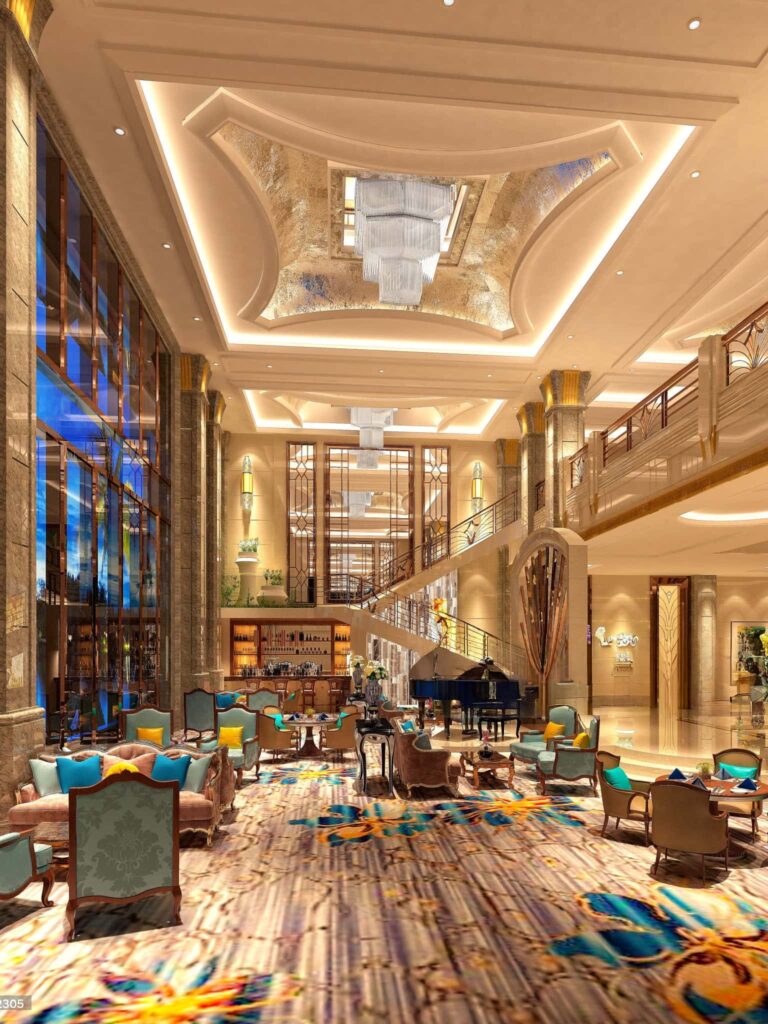
Hotel Furniture
Frequently Asked Questions
What is FF&E procurement?
FF&E procurement is the process of planning, specifying, sourcing, approving, buying, manufacturing, delivering, installing and handing over furniture, fixtures and equipment for a hotel or commercial project.
It usually includes budgeting, BOQ development, supplier qualification, sample approval, production control, logistics, installation and punch-list closeout.
What is the difference between FF&E and OS&E?
FF&E generally covers furniture, fixtures and equipment that support the hotel’s built environment and guest experience.
OS&E generally covers operating supplies and smaller equipment used in day-to-day hotel operations, such as linens, uniforms, tableware, guest amenities and housekeeping supplies.
However, each project may define the categories differently.
How long does FF&E procurement take for a hotel?
The timeline depends on room count, design complexity, custom furniture, sample approvals, material lead time, factory capacity, freight route, customs procedures and installation conditions.
Many hotel projects require several months from design freeze to final handover. Luxury hotels, boutique projects, suites and custom public areas may require more time.
What documents should be approved before production begins?
Before mass production, buyers should approve the purchase order, BOQ, furniture drawings, material schedule, finishes, hardware, sample requirements, prototype or pre-production sample, inspection plan, packing plan, delivery term and production programme.
What is a golden sample in FF&E procurement?
A golden sample is an approved physical reference for a product, component or material.
The project can use it to compare mass-production goods if the contract identifies the sample by item code, revision, date and approval signature.
What is bid levelling?
Bid levelling is the process of comparing supplier quotations using the same scope, quantities, materials, delivery terms, warranty conditions, quality requirements and installation obligations.
As a result, buyers can identify exclusions, substitutions and hidden costs before awarding a contract.
What is AQL inspection?
AQL inspection uses an agreed sampling method to assess whether a production lot meets defined quality requirements.
Projects that use AQL should define sample size, inspection level, defect categories, acceptance criteria, re-inspection requirements and corrective-action procedures. ISO 2859-1 provides a commonly used framework for attribute-based sampling.
What should an FF&E handover package include?
A strong handover package should include final furniture schedules, approved drawings, warranties, maintenance manuals, spare-parts lists, touch-up records, material references, inspection reports, punch-list status and applicable product documents.
Build FF&E Procurement Around Control
Strong FF&E procurement does not rely on one low quotation or one attractive sample.
Instead, it relies on a documented process that starts with a clear brief, budget and room matrix. Next, the team creates detailed specifications, compares supplier quotes fairly and completes supplier due diligence.
After that, approved drawings, samples and inspections guide production and delivery. Finally, installation, punch-list management and handover records turn delivered furniture into guest-ready hotel rooms.
When all seven stages connect, hotel owners gain better control over cost, quality, schedule, materials, logistics and long-term maintenance.