Verifying a furniture factory before placing an order is one of the most important steps in commercial furniture procurement. A professional-looking website, catalogue, showroom, or video call does not prove that a supplier owns a production facility, has capacity for your order, or can meet your quality and compliance requirements.

A proper verification process reduces risk. It does not guarantee that a supplier will never have a problem. However, it helps buyers identify legal, capacity, quality, compliance, and delivery risks before they pay a deposit or release production.
To verify a furniture factory, buyers should check six areas:
- The contracting legal entity.
- The actual production site.
- Capacity for the specific order.
- Quality-control systems and product evidence.
- Project-relevant compliance documents.
- Export, logistics and reference capability.
This 2026 furniture factory audit checklist explains how to review each area, which red flags require further investigation and when to use a third-party audit or inspection company.
Key Takeaways
- A furniture factory audit should verify the supplier’s legal entity, physical production site, capacity, quality system, compliance evidence and export capability.
- Buyers should use the supplier’s full Chinese legal name and Unified Social Credit Code to verify corporate information through China’s official enterprise information system.
- A live video tour can support early screening, but it does not replace a buyer-directed factory visit or independent audit for high-risk orders.
- Factory size, registered capital and machinery count do not prove that a supplier has capacity for your project. Buyers should review the current production plan and order allocation.
- Certification claims should match the product category, destination market and project requirement. One certification does not cover all products or all markets.
- Buyers should classify red flags into immediate-stop issues and issues that require further investigation.
- For new suppliers, high-value orders, customised furniture or opening-date-sensitive projects, independent audit and inspection can provide meaningful risk reduction.
Quick Answer: How Do You Verify a Furniture Factory?
Buyers should verify a furniture factory through a layered due-diligence process:
- Confirm the legal entity that will sign the contract and receive payment.
- Confirm the actual production site through a live walkthrough, onsite visit, or independent audit.
- Review current production capacity for the exact product, quantity, and delivery window.
- Check quality-control procedures, inspection records, and product samples.
- Verify project-relevant test reports, certifications, and material documents.
- Review export experience, logistics documents, and customer references.
- Approve samples, pilot production, or a model room before issuing a full production order.
A strong audit does not rely on one document, one factory photo, or one certificate. Instead, it compares information from several sources until the legal entity, production site, capacity plan, and product evidence all align.
Layer 1: Verify the Contracting Legal Entity
The first step is to confirm who you are actually buying from. A supplier may use an English trading name, a showroom name or a group name that differs from the legal entity on its business license, contract, and bank account.
Request the following before discussing deposits:
- Full Chinese legal company name.
- Unified Social Credit Code.
- Current business license.
- Registered address.
- Legal representative name.
- Business scope.
- Corporate bank account details.
- Factory address, if different from the registered address.
What to Check
| Check Item | Why It Matters | Buyer Action |
|---|---|---|
| Chinese legal company name | Identifies the entity that can sign contracts and issue invoices | Use the full Chinese name on the contract. |
| Unified Social Credit Code | Provides a unique business identifier | Search it in the official enterprise database. |
| Business license | Shows registration status, legal representative, and business scope | Compare it with the contract, invoice, and bank account details. |
| Business scope | Indicates whether the company lists manufacturing, production, sales, or export activity | Confirm it supports the supplier’s claimed role. |
| Registered address | Creates a traceable legal location | Compare it with the actual production-site address. |
| Bank account | Identifies the payee entity | Confirm the bank account name matches the contracting entity. |
| Legal representative | Supports corporate identity checks | Cross-check against official registration records |
China’s National Enterprise Credit Information Publicity System can help buyers verify basic company information. Use the full Chinese legal company name or Unified Social Credit Code rather than an English trade name.
Immediate stop: Do not pay a personal bank account for a commercial furniture order. The contractual supplier, invoice entity, and receiving bank account should match, unless the supplier provides a clear, documented, and legally acceptable explanation.

Layer 2: Confirm the Actual Production Site
A registered office, sales showroom and production factory may be different locations. That is not automatically a problem. However, buyers need to know where their furniture will actually be made and which entity controls the site.
How to Confirm the Site
| Verification Method | Best Use | Limitation |
|---|---|---|
| Satellite imagery and map review | Confirms industrial location, building footprint and loading area | Does not prove current production activity |
| Buyer-directed live video tour | Screens suppliers remotely and checks real-time production | Does not fully verify capacity or quality systems |
| Onsite buyer visit | Reviews operations, people, equipment and materials directly | Requires travel time and expense |
| Third-party factory audit | Provides structured independent review and photos | Scope depends on the audit brief |
| Pre-shipment inspection | Verifies finished goods before delivery | Does not replace a capacity or legal-entity audit |
What a Live Video Tour Should Show
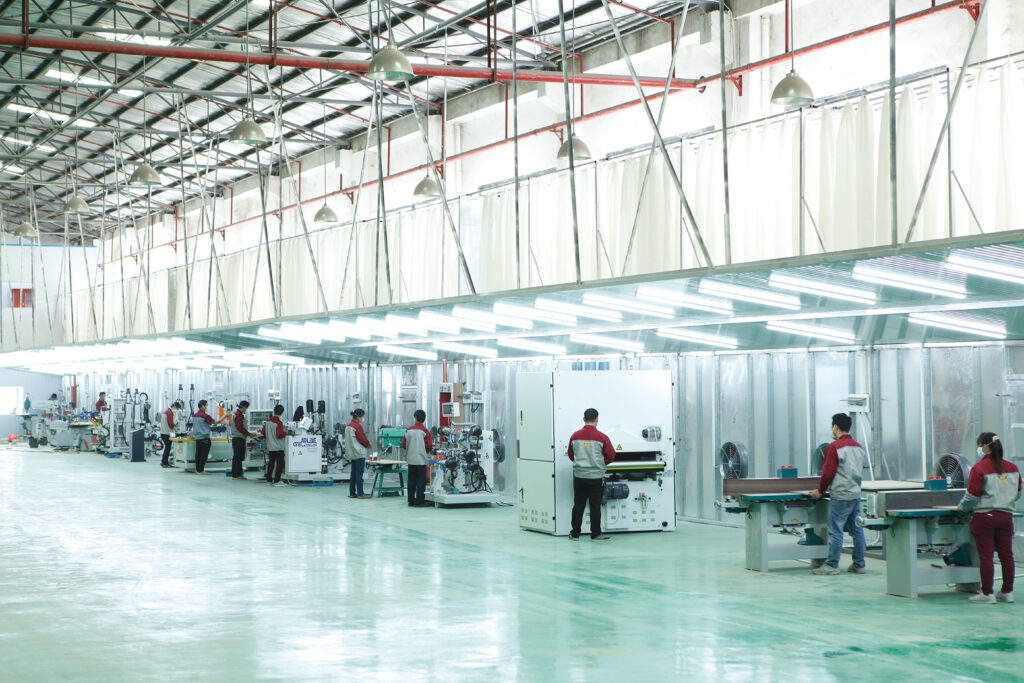
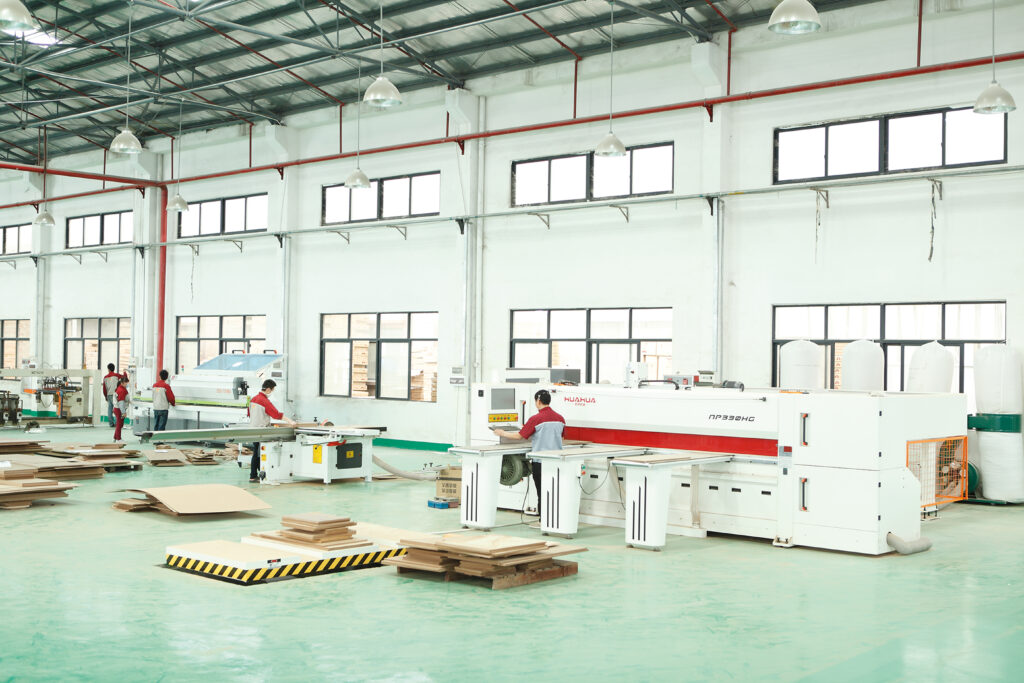
Ask the supplier to start outside the main gate and then show:
- Factory sign and address marker.
- Raw-material warehouse.
- Cutting and machining area.
- Panel processing or woodworking area.
- Metal fabrication, welding or powder-coating area where relevant.
- Upholstery, sewing and foam-processing area where relevant.
- Finishing and paint area.
- Quality-control area.
- Finished-goods warehouse.
- Loading area and active shipments.
Practical advice: Use a buyer-directed live video call. Ask the supplier to show specific production areas, today’s date, current work orders, and randomly selected products. Pre-recorded promotional videos cannot confirm current operations.
Factory vs. Trading Company
A trading company is not automatically unsuitable. Some trading companies provide useful sourcing, design, logistics and project-management services. The risk arises when a supplier claims to be a factory but hides the actual manufacturer, outsourcing arrangements or responsibility for quality.
Ask directly:
- Which legal entity manufactures my order?
- Which processes are completed in-house?
- Which processes are outsourced?
- Who controls raw-material purchasing?
- Who owns quality responsibility for subcontracted processes?
- Who will issue the invoice and receive payment?
- Who handles warranty claims after delivery?
Layer 3: Verify Capacity for Your Specific Order
A large factory does not automatically have capacity for your project. A smaller factory may be suitable if it has the right equipment, skilled workforce and production window.
Therefore, buyers should verify available capacity during their actual production period.

Capacity Questions to Ask
| Capacity Area | Questions to Ask |
|---|---|
| Current production schedule | Which production line, shift and completion date are assigned to my order? |
| Labour availability | How many workers will handle cutting, welding, upholstery, finishing, QC and packing? |
| Machine availability | Which machines will produce my order, and are they available during the required production period? |
| Material readiness | Which materials are in stock, and which require special ordering? |
| Order priority | Where does my project sit relative to current confirmed orders? |
| Production buffer | What happens if samples, materials or rework cause delay? |
| Subcontracting | Which processes are outsourced, and who controls quality? |
| Packaging capacity | Can the factory pack and load the order according to the shipping plan? |
Evidence to Request
- Current production schedule.
- Dated work-in-progress photos or live walkthrough.
- Machine list relevant to your product category.
- Workforce allocation by department.
- Sample production records.
- Recent production or shipment records for comparable products.
- Anonymised bills of lading or export documentation where appropriate.
- Written production plan for your order.
Capacity rule: Do not ask only, “How many containers can you produce each month?” Ask, “What capacity will you reserve for my order during the weeks I need production?”
Layer 4: Audit Quality Controls and Product Evidence
A supplier may have good machines and a large facility but still lack a reliable quality-control system. Buyers should assess whether the factory controls materials, work in progress, finished products and corrective actions.
Quality-Control Stages
| QC Stage | What to Check | Buyer Question |
|---|---|---|
| Incoming materials | Boards, veneer, fabric, foam, steel, hardware, and finish materials | How do you inspect and approve incoming materials? |
| First article or sample | Initial unit made before mass production | Who approves the first production sample? |
| In-process inspection | Dimensions, assembly, welding, edging, upholstery and finish | Where are the inspection checkpoints? |
| Final inspection | Appearance, function, packing, labels and quantity | What sampling plan and defect classification apply? |
| Pre-shipment inspection | Finished-goods audit before loading | Will you accept independent inspection before shipment? |
| Corrective action | Rework, replacement and root-cause response | How do you record and close quality issues? |
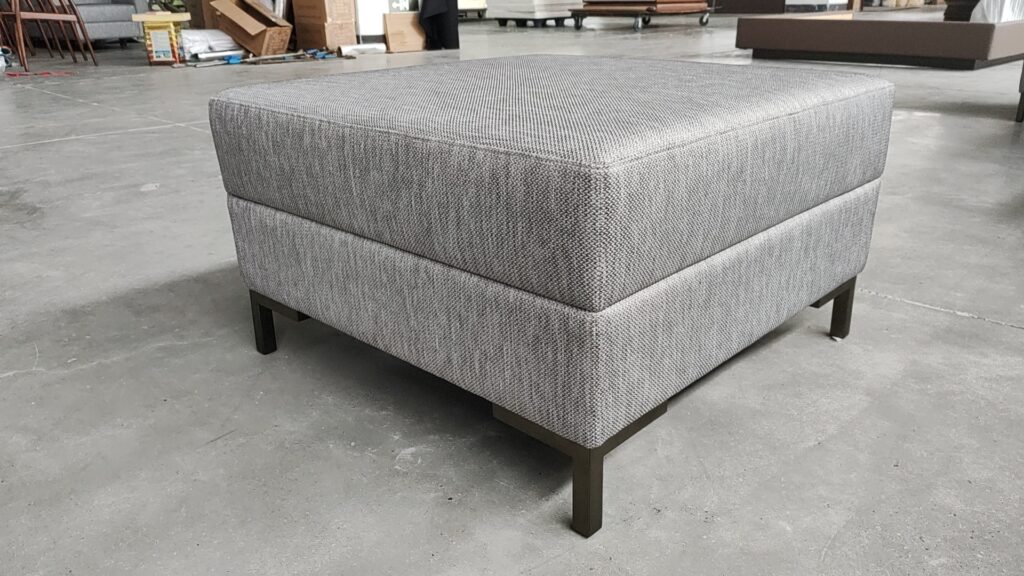
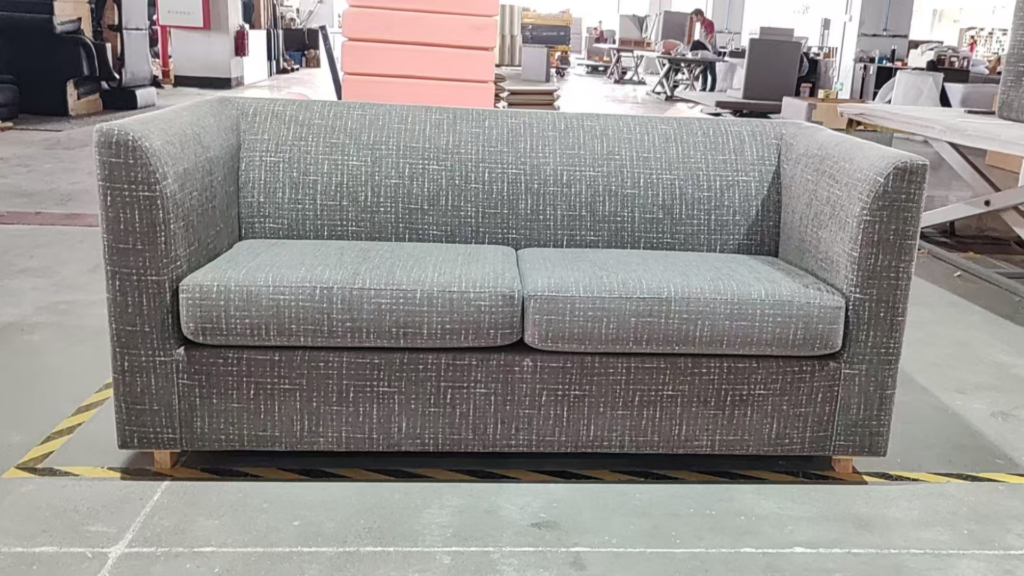
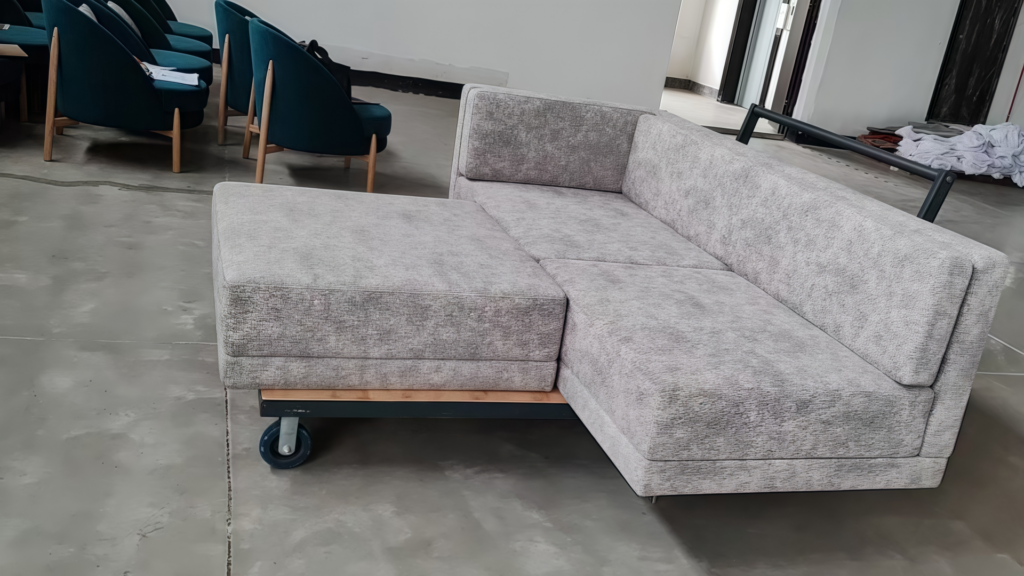
Inspection of Hotel Project Products – Hongye Furniture Group
What to Look for During an Audit
- Material receiving records.
- Approved reference samples.
- Work instructions at production stations.
- Inspection checklists.
- Non-conforming product areas.
- Rework records.
- Calibration records for measurement tools.
- Quality-manager authority to stop or reject work.
- Packaging standards and loading plans.
Do not rely on a universal inspector-to-worker ratio or defect percentage. Instead, define the inspection scope, sampling plan, AQL, defect categories and corrective-action process in the purchase order.
For custom furniture, buyers should approve a sample, mock-up, pilot batch or model room before mass production. This process can prevent a finish, dimension, material or functionality issue from being repeated across hundreds of items.
Layer 5: Verify Project-Relevant Compliance Documents
Not every furniture project requires the same certifications. A hotel sofa, office chair, classroom desk, healthcare waiting-room chair and outdoor lounge chair may each require different performance, fire, emissions, material-traceability, or electrical documentation.
Therefore, buyers should verify only the documents relevant to their project.
Documentation Matrix
| Project Requirement | Evidence to Request | Buyer Check |
|---|---|---|
| Office chair durability | Applicable ANSI/BIFMA or EN test report | Confirm exact chair model and configuration. |
| Desk or table performance | Applicable desk/table performance evidence | Confirm product scope and test relevance. |
| Hotel upholstery fire requirement | Project-required fire-performance report | Confirm exact fabric, foam, and construction. |
| Low chemical emissions | GREENGUARD or equivalent product/material evidence | Confirm specific product or configuration coverage. |
| Wood traceability | FSC Chain of Custody documentation where required | Confirm active code, legal entity, and product scope. |
| Composite-wood emissions | Relevant formaldehyde or low-emission evidence | Confirm the actual board or finished-product scope. |
| EU electrical furniture | Declaration of Conformity where applicable | Confirm product category and intended market. |
| Outdoor durability | UV, corrosion, and weather-resistance documentation | Confirm local climate and material suitability. |
| Factory quality system | ISO 9001 certificate | Confirm current validity and applicable factory site. |
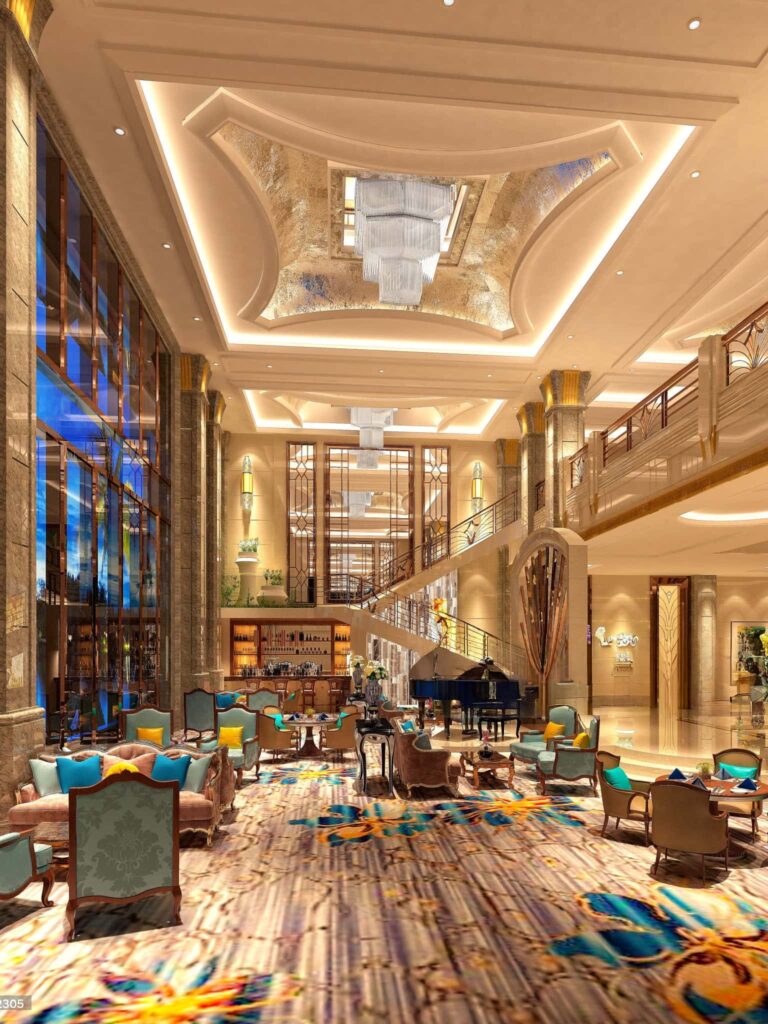
Hotel Furniture
How to Verify Certification Claims
- Ask for a certificate or report number, not only a photo.
- Check the issuing organization’s official database where available.
- Confirm the certificate holder matches the contracting entity or disclosed production site.
- Confirm the certificate remains active.
- Review scope, product group, and facility coverage.
- Check whether the product configuration matches your approved specification.
Buyers can use FSC public search tools to check FSC certificate status, certificate holder, and scope. They can also use the UL SPOT database to search eligible UL-certified products, components, and materials, including GREENGUARD-related listings.
Important: A certificate can be genuine but irrelevant. A valid certificate for one factory, material, or product line does not automatically cover every item in your order.
Layer 6: Check Export, Logistics, and Reference Capability
A factory may manufacture good furniture for the domestic market but have limited experience with export documentation, packaging, container loading or destination-market requirements.

Export and Logistics Questions
| Area | What to Verify |
|---|---|
| Comparable export history | Has the supplier shipped similar products to comparable markets? |
| Trade terms | Does the team understand EXW, FOB, CIF, DDP, and buyer responsibilities? |
| Documentation | Can it prepare invoices, packing lists, certificates of origin and other required documents? |
| Packaging | Does packaging protect furniture during international transport? |
| Container loading | Can the supplier provide a loading plan and loading photos? |
| Destination requirements | Does the supplier understand fumigation, ISPM-15, labelling and customs documentation where applicable? |
| Logistics coordination | Who books freight, clears customs and handles inland delivery? |
| References | Can the supplier provide relevant references subject to client permission? |
Ask for anonymized examples of packing lists, loading photos, or exported documents for comparable projects. The supplier does not need to disclose confidential customer information. However, it should demonstrate that it understands commercial export processes.
Checking References
Request references that match your project as closely as possible:
- Similar furniture category.
- Comparable order value or volume.
- Comparable destination market.
- Similar customisation level.
- Comparable delivery and installation complexity.
When permitted, ask references:
- Did the supplier deliver according to the agreed schedule?
- Did the materials and workmanship match approved samples?
- How did the supplier handle defects or missing parts?
- Did the supplier respond during installation and punch-list work?
- Would you use the supplier again?
Red Flags That Require Action
Not every concern requires immediate termination. Buyers should separate critical risks from issues that need additional evidence.
Immediate-Stop Red Flags
Stop payment or pause the supplier discussion if:
- The supplier asks for payment to a personal bank account.
- The contract entity, invoice entity, and bank account do not match without a clear legal explanation.
- The supplier refuses to disclose the actual manufacturer while claiming to be a factory.
- The supplier refuses to provide basic legal-entity information.
- The supplier refuses any reasonable independent inspection or audit.
- The supplier cannot provide any evidence of the production site it claims to operate.
Red Flags That Require Further Investigation
Request more evidence if:
- The registered address differs from the factory address.
- The supplier relies on an older test report or an “equivalent model” claim.
- The factory outsources a core production process.
- The supplier has limited export experience in your destination market.
- The price is significantly below comparable quotations.
- The factory appears fully booked during your required production period.
- The supplier uses only pre-recorded videos rather than live walkthroughs.
- The supplier cannot explain quality checkpoints or corrective-action procedures.
- The supplier provides certificate photos without report or certificate numbers.
- The warranty and spare-parts process remains unclear.
A red flag does not always mean the supplier is unsuitable. However, unresolved red flags should delay production release and payment.
Factory Audit Options, Timeline, and Budget
Audit scope determines time, cost and confidence level.
| Verification Route | Typical Timeline | Typical Cost Range | Best Use |
|---|---|---|---|
| Document review | 1–3 days | Low or internal cost | First-stage supplier screening |
| Buyer-directed live video walkthrough | 1–2 hours | Usually no direct cost | Remote screening and early verification |
| Onsite self-audit | 1–2 days plus travel | Travel and local expenses | Strategic or repeat supplier relationships |
| Basic third-party audit | 1 auditor-day plus reporting | Several hundred dollars per auditor-day | Legal, site, capacity and basic quality review |
| Comprehensive or specialist audit | Multiple days depending on scope | Higher, depending on travel, testing and technical scope | High-value, complex or regulated projects |
| Audit plus sample or pilot run | Depends on product complexity | Depends on sample engineering, testing and freight | Custom furniture, new suppliers and opening-critical projects |
Basic factory audits may cost several hundred dollars per auditor-day. Comprehensive audits, social-compliance reviews, multi-site audits, specialist engineering reviews and sample testing can cost more.
When to Use Independent Audit or Inspection
Strongly consider third-party verification when:
- You are working with a new supplier.
- The order is high value.
- The product is customised.
- The product affects safety, fire performance or regulatory compliance.
- The project has a fixed opening date.
- The order involves international shipping and complex documentation.
- The supplier will produce a large volume before buyer inspection.
For many projects, buyers combine a factory audit, approved sample, in-process inspection and pre-shipment inspection. The correct combination depends on risk, product complexity and order value.
Furniture Factory Audit Checklist
Use this checklist before paying a deposit or releasing production:
- [ ] Full Chinese legal entity name received.
- [ ] Unified Social Credit Code verified.
- [ ] Business license reviewed.
- [ ] Contract, invoice and bank-account entities match.
- [ ] Factory address verified through live video, audit or onsite visit.
- [ ] Actual manufacturer identified.
- [ ] In-house and outsourced processes disclosed.
- [ ] Current production plan reviewed for the required delivery window.
- [ ] Relevant machines, workforce and packaging capability verified.
- [ ] Quality-control process reviewed from incoming material to pre-shipment stage.
- [ ] Sample, pilot batch or model-room approval process defined.
- [ ] Inspection plan, AQL and defect definitions written into the purchase order.
- [ ] Product-specific compliance documentation requested.
- [ ] Certification numbers, report scope and current validity verified.
- [ ] Export and logistics capability reviewed for the destination market.
- [ ] Relevant customer references requested, subject to permission.
- [ ] Warranty, spare parts and after-sales responsibility confirmed.
- [ ] Payment milestones tied to verified progress and inspection results.
- [ ] Independent inspection rights included in the contract.
How Hongye Supports Buyer Due Diligence
Hongye welcomes buyer-led due diligence for qualified commercial furniture projects. Subject to visitor safety and confidentiality requirements, buyers may request the Chinese legal-entity details needed for contract review, schedule a factory visit or live walkthrough, review project-relevant documentation and appoint an independent audit or inspection agency.
For approved project scope, Hongye can also support:
- Production planning and capacity discussions.
- Material and finish approvals.
- Product drawings and shop drawings.
- Sample, mock-up or model-room coordination.
- Quality-control and inspection coordination.
- Export packing and shipping documentation.
- Project-specific documentation where applicable.
Buyers should independently verify all certificates, test reports, references and destination-market requirements before issuing a purchase order.
For a broader sourcing workflow, read Office Furniture Procurement: B2B Buying Guide with Total Cost Analysis.
Frequently Asked Questions
How do I check if a furniture factory is legitimate?
Request the full Chinese legal name, Unified Social Credit Code and business license. Verify the company through China’s official enterprise information system. Then confirm the actual production site through a live walkthrough, onsite visit or independent audit. Finally, review capacity, quality controls, compliance evidence, export capability and customer references.
How much does a factory audit cost?
Cost depends on the location, audit scope, auditor experience, travel and whether the review includes social compliance, capacity analysis, technical testing or follow-up inspection. A basic third-party audit may cost several hundred dollars per auditor-day, while comprehensive multi-day or specialist audits cost more. qcadvisor
What certifications should a furniture factory have?
Request only documents relevant to your product and market. For example, office chairs may require performance evidence, hotel upholstery may require fire-performance documentation, wood products may require chain-of-custody evidence and indoor furniture may require low-emission documentation. Requirements vary by destination market and project specification.
What is the biggest red flag when choosing a furniture factory?
Payment to a personal bank account is one of the most serious red flags because it breaks the link between the legal contracting entity and the receiving payee. Other critical concerns include refusal to identify the actual manufacturer, refusal to provide legal documents and refusal to allow reasonable independent inspection.
Should I use a third-party inspection company?
Consider independent audit or inspection for new suppliers, high-value orders, customised furniture, safety-critical products, complex export projects or opening-date-sensitive deliveries. The right inspection scope depends on project risk, product complexity and order value.
Can a trading company still be a reliable furniture supplier?
Yes. A trading company can provide value through sourcing, design coordination, logistics and project management. However, it should disclose the actual manufacturer, subcontracting arrangements, quality responsibility, warranty ownership and payment entity. Buyers should not assume that a trading company is a factory or that it controls production without evidence.
Verify Before You Commit
Furniture factory verification is not about finding a perfect supplier. It is about reducing avoidable uncertainty before you commit funds, production time and opening-date risk.
Start with the legal entity. Confirm the actual factory. Verify capacity for your order. Review quality controls and project-relevant documentation. Finally, check export capability, references and contract terms.
When these six verification layers align, buyers can move forward with greater confidence and a stronger record for procurement approval, quality control and project delivery.