
Hotel developers who source FF&E from China consistently save 30–50% compared to domestic suppliers, but the process has pitfalls that can erase those savings overnight. I’ve watched projects lose six figures to quality failures, shipping delays, and compliance gaps that proper FF&E procurement China planning would have prevented.
This guide breaks down the full FF&E procurement cycle for hotel projects, with a specific focus on China sourcing. Whether you’re managing a 200‑room limited‑service property or a 500‑room luxury resort, the framework below will help you structure your hotel FF&E procurement from initial budgeting through final installation.
What This FF&E Procurement China Guide Covers
Before we dive into tables and timelines, it helps to see the full picture. This FF&E procurement China guide for hotel developers covers:
- What FF&E actually includes and how budget per key breaks down across categories.
- A realistic 9‑step FF&E procurement timeline from budget sign‑off to installation.
- Why China remains the dominant destination for hotel furniture sourcing and how savings work.
- Quality control and fire‑safety compliance frameworks to manage China manufacturing risk.
- Shipping, landed cost, payment terms, and how Hongye supports hotel projects with turnkey service.
With these pieces in mind, you can plan FF&E procurement in China proactively instead of reacting to delays and defects.
What FF&E Procurement Actually Includes
FF&E stands for Furniture, Fixtures, and Equipment. In a hotel context, it covers everything that is not bolted directly to the building structure. In practice, the scope is broader than most developers expect.
| Category | Typical Items | % of Total FF&E Budget |
|---|---|---|
| Guest Room Furniture | Beds, nightstands, desks, wardrobes, luggage racks | 35–40% |
| Public Area Furniture | Lobby seating, restaurant tables, bar stools, lounges | 20–25% |
| Casegoods | Vanities, credenzas, shelving units, TV panels | 15–18% |
| Soft Seating | Sofas, armchairs, ottomans with upholstery | 10–15% |
| FF&E Accessories | Artwork, mirrors, lighting, window treatments | 8–12% |
| Operating Equipment | In‑room amenities, mini‑bars, safes | 5–8% |
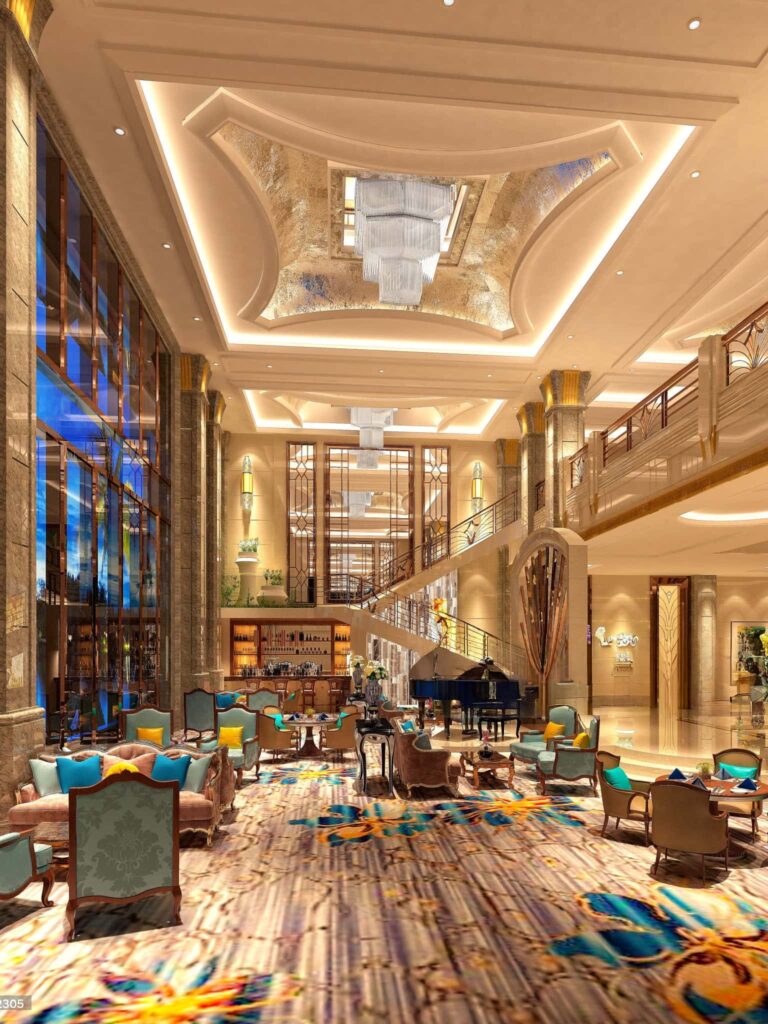
Hotel Furniture
The total FF&E budget for a mid-scale hotel typically runs 8,000–15,000 USD per key. For luxury properties, that figure climbs to 20,000–45,000 USD per key. These ranges are based on 2024–2026 FF&E benchmarks and should be treated as planning references rather than firm quotations. Understanding where your project falls in this band is the starting point for any hotel FF&E procurement and for deciding how much of the scope you will source from China.
For a deeper breakdown of per‑key budgets, categories, and brand‑standard alignment, you can also refer to our dedicated Hotel FF&E Procurement Guide on hysdfurniture.com.
The 9‑Step FF&E Procurement Timeline
Once you know your FF&E scope, the next step is to map the procurement timeline. Hotel FF&E procurement follows a structured sequence. If you rush it, you will face quality compromises; if you drag it out, you will miss installation windows and opening dates.
Here is a realistic timeline based on hotel projects we have supplied:
| Step | Duration | Key Activities | Common Delays |
|---|---|---|---|
| 1. Budget & Spec Definition | 3–4 weeks | Set per-key budget, define brand standards | Unclear brand requirements |
| 2. Supplier Shortlisting | 2–3 weeks | Factory audits, capability assessment | Too few qualified suppliers |
| 3. Design Development | 4–6 weeks | Material selection, finish samples | Design revisions |
| 4. Quotation & Negotiation | 2–3 weeks | Compare quotes, negotiate terms | Price gap vs expectations |
| 5. Prototyping & Approval | 3–5 weeks | Sample production, client approval | Sample quality issues |
| 6. Production | 8–12 weeks | Mass production, in-line QC | Material shortages, rework |
| 7. Quality Inspection | 1–2 weeks | Pre‑shipment inspection, lab testing | Test failures requiring rework |
| 8. Shipping & Logistics | 4–6 weeks | Container loading, customs clearance | Port congestion, documentation |
| 9. Installation & Punch List | 3–4 weeks | On‑site delivery, assembly, defect resolution | Site readiness delays |
In total, FF&E procurement in China requires about 21–34 weeks from budget sign‑off to full installation. The biggest variable is production time for custom items, especially when engineering and sampling add 4–6 weeks at the front end. Planning your hotel FF&E procurement on this timeline keeps budgets, design teams, and site schedules aligned.
For an even more detailed step‑by‑step checklist, you can consult our online Hotel FF&E Procurement Guide, which expands each phase with sample RFP clauses and punch‑list examples.
Why China for Hotel FF&E: Cost and Capability
From a cost and capability perspective, China remains the dominant destination for hotel FF&E procurement. The manufacturing ecosystem in Guangdong, Zhejiang and Jiangsu provinces offers capacities and price points that few regions can match.
Cost Comparison by Product Category
The table below shows typical mid-scale hotel pricing for standard commercial‑grade specifications on FOB terms. Actual quotes vary by design and material mix, but the savings pattern is consistent.
| Product Category | China Factory Price | US/EU Equivalent | Savings % |
|---|---|---|---|
| Guest Room Case Goods | 180–350 USD / set | 500–900 USD / set | 50–60% |
| Upholstered Seating | 120–280 USD / unit | 350–700 USD / unit | 55–65% |
| Lobby Furniture (Custom) | 400–800 USD / set | 1,200–2,500 USD / set | 60–70% |
| Restaurant Tables | 80–200 USD / unit | 250–500 USD / unit | 55–65% |
| Bed Frames (Platform) | 90–180 USD / unit | 250–500 USD / unit | 55–65% |
These prices assume standard hotel‑grade materials and finishes. At luxury levels, the gap narrows slightly, but savings remain significant even when you specify higher‑end veneers, stone, and bespoke metalwork. For most FF&E procurement China strategies, landed cost still ends up 30–45% below domestic sourcing once freight and duties are included.
Manufacturing Capability Matrix
However, China factories do not compete on price alone. The best facilities offer full‑service capabilities that matter to hotel developers.
| Capability | Tier 1 Factories | Tier 2 Factories | Tier 3 Factories |
|---|---|---|---|
| Custom Design | Full engineering team | Basic customization | Catalog only |
| Material Range | Solid wood, veneer, metal, stone, upholstery | Wood, metal, basic upholstery | Limited standard materials |
| Compliance Testing | In‑house lab + third‑party | Third‑party only | No testing capability |
| MOQ Flexibility | 50–100 sets | 200+ sets | 500+ sets |
| Lead Time | 30–45 days (stock), 60–75 days (custom) | 45–60 days | 60–90 days |
| Quality System | ISO 9001, BIFMA, custom QC protocol | ISO 9001 basic | Informal QC |
Working with Tier 1 factories costs roughly 10–20% more than Tier 3 options. Nevertheless, the reduction in defects, delays, and compliance failures makes that premium worthwhile for any hotel FF&E procurement China project above 100 rooms.
Quality Control: The Non‑Negotiable Framework
Because quality issues are the single biggest risk in FF&E procurement in China, you need a robust QC framework. With the right checks, you can prevent most common problems long before furniture arrives on site.
Pre‑Production Quality Gates
| Gate | What to Check | Who Verifies | Red Flags |
|---|---|---|---|
| Material Approval | Wood species, foam density, fabric grade | Your QC or third‑party | Substitutions without notice |
| Finish Sample | Colour, texture, sheen match | Design team | “Close enough” approvals |
| Hardware Spec | Hinge, slide, caster grade | Factory + independent | Unbranded hardware |
| Structural Test | Weight capacity, stability | Lab test report | No test data available |
| Fire Compliance | BS 5852 / TB 133 / EN 1021 | Certified lab | Fake or expired certificates |
During production, I recommend at least two inspections:
- 20% completion check: Verify materials match approved samples, production methods follow the specification, and dimensions are correct.
- 80% completion check: Confirm finish quality, hardware installation, upholstery patterns, and packaging standards meet expectations.
Pre‑Shipment Inspection Checklist
| Check Point | Standard | Pass Criteria |
|---|---|---|
| Dimensional accuracy | ±2 mm for casegoods, ±5 mm for upholstered | 100% within tolerance |
| Finish quality | No visible defects at 1 m distance | Zero defects on A‑face surfaces |
| Hardware function | Full operation cycles | All drawers/doors operate smoothly |
| Upholstery | Pattern alignment, stitching quality | No puckering, pattern ≤3 mm offset |
| Packaging | Double‑wall carton + corner protectors | ISTA 3A drop test pass |
| Labelling | PO number, item code, room number | 100% accuracy |
By treating these quality gates as non‑negotiable, you turn FF&E procurement in China from a risk into a repeatable process. For a deeper dive into typical pitfalls and failure modes, you can also read our FF&E Procurement Risks guide.
Fire‑Safety Compliance by Market
Even with good quality, hotel FF&E must meet fire‑safety standards in the destination market. This is not optional. Non‑compliant furniture can be rejected at customs or fail brand and code inspections.
| Market | Fire Standard | Scope | Testing Method |
|---|---|---|---|
| United States | TB 133 / CAL 116 | Seating in public spaces | Open flame, cigarette |
| United Kingdom | BS 5852 (Part 1 & 2) | All upholstered furniture | Cigarette & match ignition |
| European Union | EN 1021‑1/2 | Upholstered seating | Cigarette & match |
| Saudi Arabia | SASO + Civil Defense | All hotel FF&E | Based on BS/EN standards |
| Australia/NZ | AS/NZS 3744 | Upholstered furniture | Smouldering & flaming |
| UAE | Dubai Civil Defense | All hotel FF&E | Local certification |
You should budget roughly 2,000–5,000 USD per product category for compliance testing and allow 3–4 weeks for lab results. Some Tier 1 factories maintain pre-certified material combinations for common hotel applications; where available, these can shorten the FF&E procurement China timeline by removing the need for new tests.
Shipping and Logistics: Avoiding Common Traps
In practice, shipping from China involves more than booking a container. The choices you make on container type, routing, and warehousing will affect both landed cost and schedule.
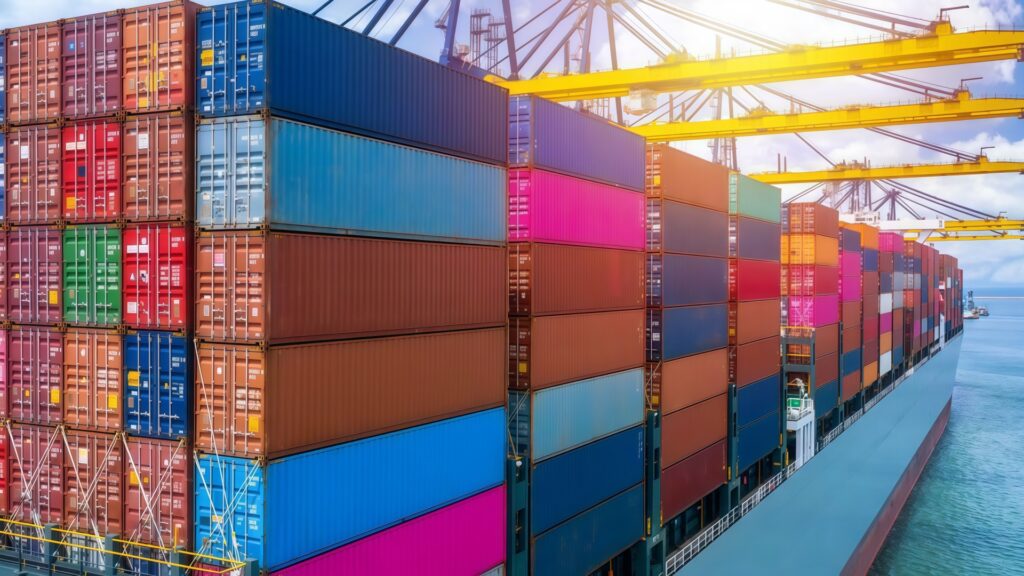
Container Loading Strategy
| Factor | 40 ft HQ Container | 20 ft Container |
|---|---|---|
| Volume capacity | 67 CBM | 33 CBM |
| Weight limit | ~28,000 kg | ~22,000 kg |
| Typical guest room sets | 15–25 sets | 8–12 sets |
| Approximate freight (2026) | 3,500–6,500 USD | 2,000–3,500 USD |
| Best for | Full project shipments | Partial / urgent orders |
Landed Cost Calculator
Sticker FOB price is not your landed cost. To estimate true project cost for FF&E procurement China, factor in the following:
| Cost Component | Typical Range | Notes |
|---|---|---|
| Ocean Freight | 8–15% of FOB | Varies by route and season |
| Marine Insurance | 0.3–0.5% of CIF | Covers transit damage |
| Import Duties (US) | 0–25% | Depends on HS classification |
| Customs Brokerage | 200–500 USD / container | Flat fee per shipment |
| Inland Transportation | 5–10% of FOB | Port‑to‑site delivery |
| Warehousing | 0.50–1.50 USD / CBM / day | If site is not ready |
A practical rule of thumb: landed cost ≈ FOB price × 1.25–1.45 for US destinations, and × 1.20–1.35 for Middle East destinations. This multiplier helps you compare FF&E procurement in China against domestic quotes on a like‑for‑like basis.
If you prefer to avoid managing freight, customs, and warehousing yourself, you can explore our Turnkey Furniture Solution service, which bundles procurement, logistics, and installation under one contract.
Payment Terms and Risk Management
Standard payment terms for FF&E procurement from China follow a staged pattern that protects both buyer and factory:
| Stage | Typical Terms | Purpose |
|---|---|---|
| Order Confirmation | 30% deposit | Confirms commitment, funds materials |
| Production Midpoint | 30% at 50% completion | Maintains production cash flow |
| Pre‑Shipment | 35% after inspection pass | Triggers packing and shipping |
| Post‑Delivery | 5% retention (30–60 days) | Covers on‑site defects |
For first‑time supplier relationships, you should consider using a letter of credit (L/C) for additional security. The cost is typically 0.15–0.3% of the transaction value, which is a small price for protection on FF&E procurement China orders above 50,000 USD.
Working with Hongye: What Sets Us Apart
After you understand the FF&E procurement China process, the final question is which partner can execute it reliably. Hongye Furniture Group has supplied FF&E for hotel projects across 80+ countries, and our approach is designed to address the pain points developers most often face when sourcing from China.
| Service | Standard China Factory | Hongye Approach |
|---|---|---|
| Design Support | You provide drawings; they produce | We engineer from concept sketches or brand standards |
| Prototyping | 1–2 rounds; samples at your cost | Up to 3 rounds included, shipped to your office |
| QC Process | Basic final inspection | 3‑stage inspection with photo/video reports |
| Compliance | You arrange testing separately | In‑house testing lab and pre‑certified material packs |
| Project Management | Factory sales rep only | Dedicated project coordinator per order |
| Installation Support | Not available | On‑site supervision for 100+ room projects |
| Warranty | 1 year, factory defects only | 2–5 year warranty with on‑site service options |
If you are planning FF&E procurement in China for a hotel project between 100 and 500 rooms, Hongye’s project team can build a schedule and cost plan aligned with your brand standards, opening date, and risk tolerance.
FF&E Procurement China FAQ
What does FF&E procurement include?
FF&E procurement covers all furniture, fixtures, and equipment in a hotel project. This includes guest room furniture (beds, desks, wardrobes), public area furniture (lobby seating, restaurant tables), casegoods (vanities, shelving), soft seating, accessories, and operating equipment. In most hotel developments, FF&E represents around 8–12% of total project cost.
How long does FF&E procurement from China take?
A realistic FF&E procurement China timeline is 21–34 weeks from budget approval to full installation. This breaks down into specification (3–4 weeks), supplier selection (2–3 weeks), prototyping (3–5 weeks), production (8–12 weeks), and shipping plus installation (7–10 weeks). Fully custom designs can add 4–6 weeks for engineering and sampling.
What fire‑safety standards must hotel furniture meet?
Requirements vary by market. The US typically requires TB 133 for public‑space seating, the UK requires BS 5852, and the EU requires EN 1021. Many Middle Eastern markets require local certification on top of international standards. You should budget 2,000–5,000 USD per product category for testing and allow 3–4 weeks for laboratory results.
How much can I save sourcing hotel furniture from China?
Typical savings range from 50–65% compared to US or European manufacturers on a like‑for‑like basis. Casegoods often deliver the highest savings (around 50–60%), while custom upholstered items see 40–55% savings. Once you add shipping, duties and inland logistics, total landed savings usually remain in the 30–45% range.
What is the minimum order quantity (MOQ) for hotel furniture from China?
Tier 1 factories typically accept orders of 50–100 room sets for standard products and 100+ sets for fully custom designs. Some manufacturers offer pilot orders of 5–10 sets for prototype approval before committing to full production. For smaller boutique properties, working with factories that maintain stock lines can reduce MOQs to 20–30 sets.